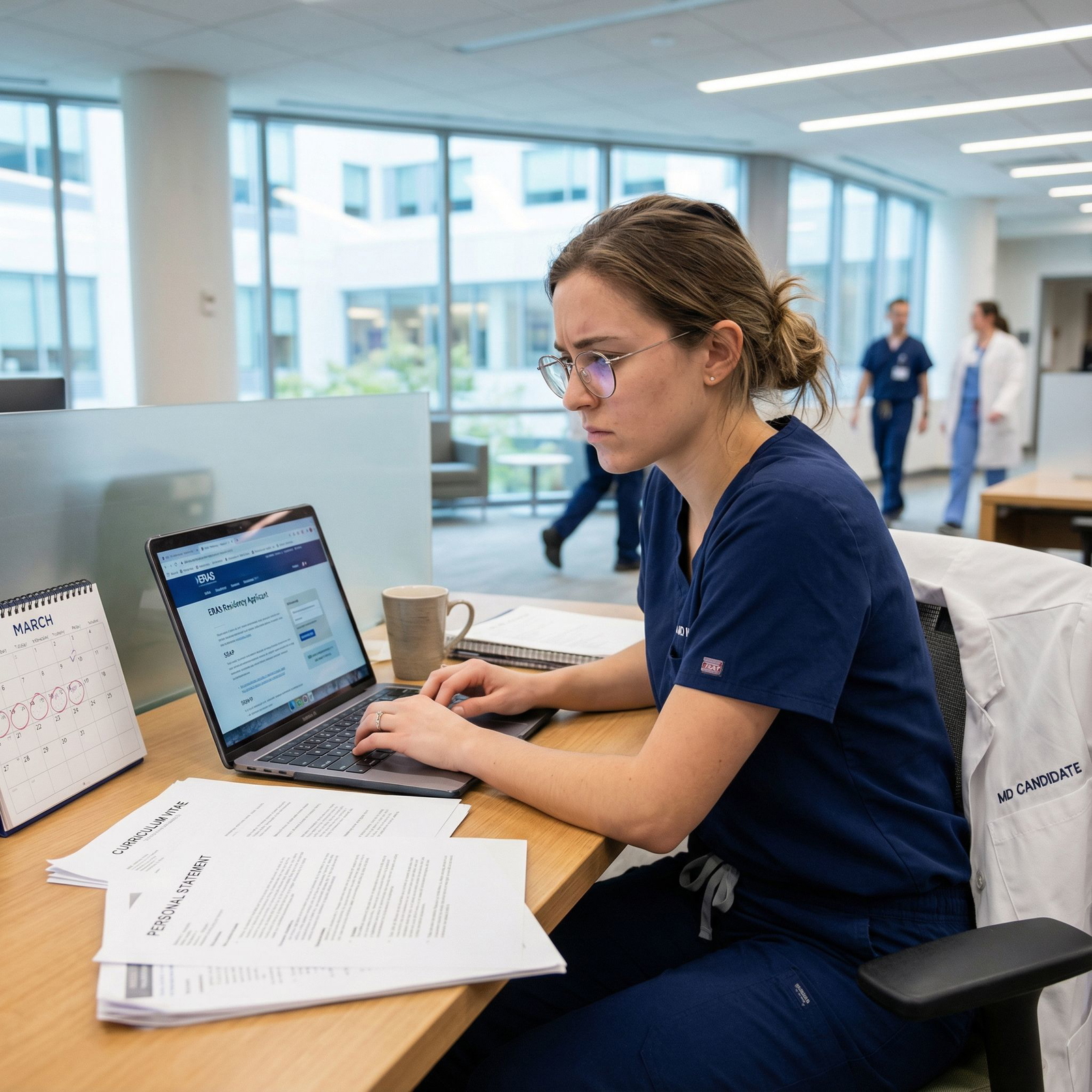
As a DO graduate targeting a Preliminary Medicine (prelim IM) position, you’re already navigating a more nuanced path than categorical applicants. When the Match doesn’t go as planned, the Supplemental Offer and Acceptance Program (SOAP) becomes your rapid-fire second chance. The difference between scrambling and executing a plan often determines whether you secure a prelim spot or sit out a cycle.
This article walks you through a step‑by‑step SOAP preparation strategy tailored specifically to DO graduates aiming for a preliminary medicine year. You’ll learn how to prepare before Match Week, what to do during SOAP, and how to think strategically about your long‑term goals.
Understanding SOAP as a DO Applicant in Preliminary Medicine
Before you can prepare properly, you need a clear grasp of how SOAP works and how it interacts with your goals as a DO seeking a preliminary medicine year.
What is SOAP?
SOAP (Supplemental Offer and Acceptance Program) is an NRMP‑run process during Match Week that helps unmatched or partially matched applicants fill unfilled residency positions in a structured, time‑limited way.
Key features of SOAP:
- Takes place during Match Week (Monday–Thursday)
- Only for applicants who are:
- Unmatched, or
- Partially matched (e.g., secured an advanced/PGY‑2 spot but not a preliminary year)
- You apply only to programs NRMP designates as SOAP‑participating and unfilled
- You submit applications in ERAS, interview (usually virtually), and receive offers in timed rounds
Understanding what is SOAP also means understanding how it differs from the old “scramble”: SOAP is organized, rule‑driven, and highly time‑compressed. You cannot simply cold‑call programs; all communication must follow NRMP rules.
Why SOAP Matters for DO Graduates in Prelim IM
As a DO graduate, you might be:
- Using a preliminary medicine year as:
- A bridge to a PGY‑2 advanced position (e.g., Neurology, Anesthesiology, PM&R)
- A way to strengthen your Internal Medicine portfolio before reapplying for a categorical IM spot
- A structured transitional year to improve USMLE/COMLEX standing and research
The osteopathic residency match has become fully integrated with ACGME, but subtle bias and program familiarity still play roles. DO applicants sometimes find fewer interviews than MD peers, making SOAP preparation particularly important.
Prelim IM is SOAP‑friendly because:
- Many Internal Medicine programs leave prelim spots unfilled
- Some programs value DO grads for their hands‑on clinical skills and osteopathic approach
- Your flexibility (willingness to move, take night‑heavy positions, etc.) can be a competitive advantage
Your overarching SOAP goal: convert an unmatched or partially matched status into a solid, strategically chosen preliminary medicine year that moves your career forward.
Pre‑SOAP Preparation: What to Do Before Match Week
Strong SOAP performance is almost entirely determined by how you prepare before Match Week starts. Assume you might need SOAP and prepare accordingly—it does not hurt you if you match.
1. Clarify Your Career Strategy Around a Preliminary Medicine Year
Not all prelim IM years are equal for every DO graduate. Before SOAP, decide:
What is your ultimate goal?
- Categorical Internal Medicine?
- A different specialty (e.g., Neurology, Radiology, Anesthesiology, Derm, PM&R)?
- Hospitalist or primary care eventually (via categorical IM later)?
How will a specific prelim program help you get there?
- Strong teaching hospital with subspecialty exposure?
- Research opportunities and letter‑writing attendings?
- Geographic location where you want to build a network?
Are you flexible about:
- Geographic region?
- Community vs academic center?
- Call schedule and workload?
Actionable tip: Write a one‑page personal “SOAP strategy brief” for yourself:
- Top 3 long‑term career goals
- Types of prelim IM programs that fit those goals
- Geographic or personal constraints (family, visas, finances)
This document will help you make faster decisions when seconds count.
2. Update Your ERAS Materials with SOAP in Mind
Your ERAS profile is still your application vehicle during SOAP. Before Rank Order List certification:
CV and Personal Info
- Confirm all entries are accurate and up‑to‑date
- Add any new rotations, research, presentations, or volunteer work
- Double‑check your degree: DO clearly listed, graduation date correct
Personal Statement Create (at least) one SOAP‑ready statement focused on Preliminary Internal Medicine:
- Emphasize:
- Your motivation to serve as an intern in medicine
- Your osteopathic training and whole‑person care perspective
- Evidence of resilience, work ethic, and teamwork
- Keep it adaptable: suitable for both community and academic prelim IM programs
If you also applied to, say, Neurology as an advanced position, consider:
- A Prelim Medicine–focused PS
- A Specialty‑focused PS (for advanced programs, if they appear in SOAP)
- Emphasize:
Letters of Recommendation (LORs) Before Match Week:
- Aim for 2–3 strong Internal Medicine‑based LORs
- At least one from an IM inpatient attending
- Ideally one from a DO or faculty who understands osteopathic training
- Label letters appropriately in ERAS (e.g., “Internal Medicine – Prelim/Categorical”)
You won’t have time to request new LORs during SOAP, so prepare now.
- Aim for 2–3 strong Internal Medicine‑based LORs
COMLEX/USMLE Scores
- Verify they are all uploaded and visible
- If you have both COMLEX and USMLE, be ready to address score differences
- If you only have COMLEX, prepare a brief explanation of your performance and why it reflects your capabilities

3. Build a Target List of Potential SOAP Programs
You won't know exactly which programs are unfilled until SOAP begins, but you can build a primed target list.
How to pre‑build your list:
Review programs that:
- Already offered you interviews (even if you did not rank them highly)
- Are DO‑friendly (historically took DOs; check resident rosters and program websites)
- Have prelim IM tracks every year (filtered in FRIEDA or program lists)
Classify each potential program:
- Tier A: Ideal for your goals (location, teaching, specialty connections)
- Tier B: Good training, more flexible on location or prestige
- Tier C: Acceptable as a solid prelim year if other options fail
For each, note:
- Number of prelim positions historically
- Presence of DO residents or faculty
- Program features that align with your goals (research, subspecialties, community exposure)
This tiered list will help you quickly sort through the official SOAP unfilled list on Monday.
4. Technical and Logistical SOAP Preparation
During SOAP, administrative delays can sink you. Before Match Week:
ERAS readiness
- Confirm your ERAS log‑in works
- Ensure a reliable computer and high‑speed internet
- Test your webcam, microphone, and video conferencing tools (Zoom/Teams)
Interview space
- Prepare a quiet, professional background
- Plan for time blocks each afternoon Monday–Thursday for potential interviews
- Have a “SOAP interview outfit” ready (professional attire)
Communication plan
- Share your schedule with loved ones; ask for minimized interruptions
- Coordinate with your medical school’s advising office for SOAP support
- Ensure your phone number and email in ERAS are correct and monitored constantly
5. Mental and Emotional Preparation
SOAP can be emotionally intense, especially for DO graduates who may already have felt disadvantages during the main match.
- Accept that SOAP is common and does not define your worth or future.
- Plan basic self‑care:
- Sleep adequately the weekend before Match Week
- Meal prep for quick, healthy food during SOAP days
- Designate a friend, partner, or mentor as your “emotional check‑in” point
Having a calm mindset helps you interview better and make clearer decisions.
Match Week: Executing Your SOAP Strategy for Preliminary Medicine
Once Match Week starts, the pacing changes. Here’s how to navigate each phase tactically.
Monday: Unmatched Notification and Initial Response
On Monday, you find out if you are unmatched or partially matched (common if you matched an advanced spot but not a prelim IM year).
Immediate actions:
Process your emotions quickly but intentionally.
- Give yourself 30–60 minutes to react, talk to a trusted person, and regroup.
- Then shift into action mode.
Confirm SOAP eligibility.
- Log into NRMP to see your status and SOAP eligibility confirmation.
Obtain the List of Unfilled Programs.
- NRMP releases the List of Unfilled Programs to SOAP‑eligible applicants.
- Filter for:
- Internal Medicine – Preliminary (PGY‑1)
- Transitional Year (if you’re willing to consider these as equivalent to prelim IM for certain specialties)
- Your advanced specialty (if applicable) for open PGY‑2 spots
Match the list with your pre‑built tiers.
- Cross‑reference your prepared Tier A/B/C programs with the actual unfilled list.
- Start building your SOAP application target list.
Strategically Choosing Prelim IM Programs in SOAP
NRMP rules limit the number of programs you can apply to via SOAP (typically 45 total, across all specialties).
For a DO graduate in preliminary medicine:
Prioritize Prelim IM programs that:
- Historically accept DOs
- Offer strong medicine training and career mentorship
- Align with your geographic and career goals
Decide whether to include:
- Transitional Year programs (broad exposure; may satisfy some advanced specialty requirements)
- Categorical Internal Medicine programs (if any unfilled and you would happily switch to categorical)
Example SOAP application spread (for a DO prelim IM‑focused applicant):
- 20–25 Prelim IM positions (mix of academic and community, multiple regions)
- 10–15 Transitional Year positions (if your advanced specialty accepts these)
- 5–10 categorical IM positions (if they appear and fit your goals)

Crafting Your SOAP Application as a DO Graduate
Once you’ve prioritized programs, it’s time to tailor how you present yourself.
1. Tailor Your Personal Statement for Prelim IM
During SOAP, you generally cannot upload completely new documents, but you can choose which existing PS to send to each program. If you prepared a prelim‑focused statement:
- Highlight:
- Your comfort with high‑volume, inpatient medicine
- Specific inpatient rotations (Sub‑I in Medicine, ICU, CCU) and what you learned
- Your strengths as a DO: manual skills, patient communication, holistic assessment
- Make clear that:
- You understand the temporary nature of a preliminary medicine year
- You are committed to being a reliable, hard‑working intern regardless of your long‑term specialty
- You value the opportunity to train in that specific program environment
Example phrasing:
“As a DO graduate, my training has emphasized whole‑person care, hands‑on assessment, and close collaboration with multidisciplinary teams. I’m seeking a Preliminary Internal Medicine position where I can provide high‑quality inpatient care while building a strong foundation for my long‑term career in [specialty or internal medicine].”
2. Focus Your Experiences and ERAS Entries
Programs reviewing SOAP applications work under time pressure. Make it easy for them:
Ensure your Experiences section highlights:
- Leadership roles (chief of a rotation, committee work)
- Team‑based experiences (ED, inpatient wards, night float)
- Quality improvement or research related to Internal Medicine or your advanced specialty
Rewrite short descriptions (if time allows before SOAP begins) to emphasize:
- Reliability
- Work ethic
- Clinical judgment
- Fit for an intern role
3. Use Letters of Recommendation Strategically
During SOAP, you can assign existing letters but usually cannot add new ones. For each program type:
- Prelim IM: prioritize:
- Internal Medicine attendings
- Inpatient rotation supervisors
- Transitional Year: mix of IM, EM, and other rotations that show versatility
- Advanced specialty (if applying for open PGY‑2 spots): specialty‑specific letters
Keep the number of letters per program to a manageable 3–4, focusing on quality and relevance.
SOAP Interviewing and Acceptance Strategy
Programs can begin reviewing SOAP applications Monday and start interviewing shortly afterward. Interviews are usually short and focused.
1. Common SOAP Interview Themes for Prelim IM
Expect questions like:
- “Tell me about yourself and why you’re interested in this Preliminary Medicine year.”
- “Why are you currently seeking a position through SOAP?”
- “What did you learn from this application cycle?”
- “How does a prelim year here fit into your long‑term goals?”
- “Can you describe a challenging inpatient case you managed and what you learned?”
As a DO graduate, you may also be asked:
- “Tell us about your osteopathic training and how it shapes your approach.”
- “Do you perform OMT and how might that fit into your practice as our intern?”
Prepare 2–3 polished, concise stories that show:
- Clinical competence
- Professionalism and resilience
- Effective communication with patients and teams
2. Addressing Being in SOAP Without Sounding Defensive
You must be honest but forward‑looking. For example:
“I received several interviews this cycle and was ranked at programs I would be proud to join. Unfortunately, I did not match, which I recognize is partly due to the competitiveness of this year and my [scores/late specialty switch/limited geographic flexibility]. Having reflected on this, I’m focused on maximizing the opportunity a Preliminary Medicine year offers—especially at a program like yours where I can develop strong inpatient skills and build relationships that will help me contribute meaningfully to patient care and to your team.”
This acknowledges reality without dwelling on failure.
3. Highlighting Your DO Background as a Strength
In SOAP, differentiation matters. Emphasize:
- Hands‑on exam skills: “As a DO, I rely heavily on a thorough physical exam, which is invaluable when labs or imaging are delayed.”
- Holistic viewpoint: “I’m trained to consider musculoskeletal, psychological, and social factors contributing to disease.”
- Team collaboration: DO curricula often emphasize communication and empathy; highlight this explicitly.
4. Ranking and Accepting Offers During SOAP
SOAP offers occur in several “Rounds” where programs extend invitations and you decide whether to accept.
Key principles:
- Do not treat SOAP as hypothetical. If you accept a SOAP offer, you are committed to that program.
- Build a real‑time priority list of programs that interviewed you:
- Rank them internally by fit, training quality, location, and future prospects.
- When an offer comes:
- If it’s from a top‑tier choice, strongly consider accepting early.
- If it’s from a lower‑tier but you’re at risk of no offers, weigh carefully; you may not get another.
For a DO graduate relying on a preliminary medicine year to bridge to a future specialty, it is often better to:
- Accept a solid, reputable prelim IM program
- Avoid rolling the dice hoping a categorical or “perfect” program materializes in a later SOAP round
After SOAP: Maximizing Your Preliminary Medicine Year as a DO
Once you secure a prelim IM or equivalent position through SOAP, the focus shifts from preparation to optimization.
1. Plan Your PGY‑1 Year with Future Applications in Mind
Before starting:
- Clarify with your program director:
- Expectations for intern responsibilities
- Opportunities for research, QI, or teaching
- Possibilities for mentorship in your target specialty or Internal Medicine
During the year:
- Seek strong clinical evaluations and future letters of recommendation.
- Identify 2–3 faculty members early who could eventually write detailed, supportive letters.
2. Leverage Your DO Training During Internship
As a DO in prelim IM:
- Offer to teach OMT or musculoskeletal exam pearls to students or co‑interns.
- Use your holistic approach to stand out in patient care:
- Pain management
- Functional assessment
- Addressing social and behavioral drivers of illness
These contributions can make you memorable to faculty and PDs when reapplying or seeking advanced positions.
3. Reassess Your Long‑Term Goals
During or after your prelim year:
- Reevaluate whether you want:
- Categorical Internal Medicine
- Your originally intended specialty
- A new direction based on experience and opportunities
Use your newfound clinical credibility as an intern to support whichever path you choose.
Frequently Asked Questions (FAQ)
1. As a DO graduate, should I focus only on osteopathic‑friendly programs during SOAP?
Not exclusively, but DO‑friendly programs deserve priority. Many ACGME‑accredited programs are now fully integrated and comfortable training DOs. Look for:
- Programs with current or recent DO residents
- PDs or faculty with DO backgrounds
- Explicit statements of welcoming DO applicants on their websites
During SOAP, you often have limited time to investigate every program in depth, so use your pre‑built research and quick checks of resident rosters and program profiles.
2. How does a preliminary medicine year compare to a transitional year for my future specialty?
Both can satisfy PGY‑1 requirements for certain advanced specialties, but there are differences:
Prelim Medicine (Prelim IM):
- Heavier internal medicine inpatient exposure
- Better preparation for IM‑based specialties (Cards, GI, Heme/Onc) and hospitalist paths
- Often more rigorous in terms of call and ward time
Transitional Year:
- Broader mix (IM, surgery, EM, electives)
- Sometimes perceived as less intense, depending on program
- May be ideal if your advanced specialty is not IM‑centric (e.g., Radiology, Derm, Anesthesia)
Check your advanced specialty’s PGY‑1 requirements, then choose accordingly during SOAP.
3. What if I don’t secure any position through SOAP?
If SOAP ends without an offer:
- Meet with your medical school’s advising or career office immediately.
- Develop a 12‑month plan that might include:
- Research positions or clinical fellowships
- Additional observerships, especially in your target specialty
- Retaking or completing licensing exams (if needed)
- Prepare for the next application cycle:
- Strengthen weak parts of your application (scores, LORs, clinical experience)
- Consider broadening your specialty options or geographic preferences
- Use your DO network and alumni connections aggressively
Many applicants successfully match the following year after a strategic, well‑planned gap year.
4. How can I best explain a low COMLEX/USMLE score during SOAP interviews?
Be brief, honest, and focused on growth:
- Acknowledge the score without making excuses.
- Provide a concise context if relevant (e.g., illness, adjustment to test format).
- Emphasize evidence of improvement and clinical performance.
Example:
“My Level 1 score was below my expectation, which was disappointing. Since then, I’ve adjusted my study strategies and time management, as reflected in my stronger clinical evaluations and [later exam/Level 2] performance. On the wards, I consistently receive feedback that I’m thorough, reliable, and clinically sound, which is what I bring to a Preliminary Medicine role.”
Thoughtful SOAP preparation positions you to act decisively when Match Week pressure is highest. As a DO graduate aiming for a preliminary medicine year, align your pre‑SOAP planning, your application materials, and your interview messaging with a clear long‑term strategy. A well‑chosen prelim IM position can be a powerful launchpad toward the residency and career you ultimately want.