Understanding SOAP for a DO Graduate Targeting Preliminary Surgery
The Supplemental Offer and Acceptance Program (SOAP) can feel overwhelming—especially if you’re a DO graduate aiming for a preliminary surgery residency after an initial disappointment in the Match. Yet with structured SOAP preparation, you can turn a setback into a strategic pivot that strengthens your surgical career trajectory.
As a DO graduate in particular, you bring unique strengths—holistic training, strong clinical skills, and often robust letters from community rotations. The key is to package those strengths quickly and convincingly for programs offering preliminary surgery year positions during SOAP.
This article will walk you through:
- What SOAP is and how it works, with a focus on Prelim Surgery opportunities
- Strategic planning specifically for DO graduates
- How to prepare documents before Match Week (so you’re not scrambling)
- Tactics to identify and target preliminary surgery residency positions
- Communication, interviewing, and decision-making strategies during SOAP
- What to do after SOAP, whether you match into a prelim year or not
Throughout, you’ll see practical, step-by-step advice and examples suitable for your situation as a DO graduate interested in surgery.
1. What Is SOAP and Why It Matters for DO Graduates in Surgery
What is SOAP?
SOAP stands for Supplemental Offer and Acceptance Program. It is NRMP’s structured process that allows unmatched or partially matched applicants to obtain positions that went unfilled after the main Match.
In simple terms:
- Programs review applications and build preference lists.
- Applicants apply via ERAS to unfilled positions.
- NRMP runs multiple offer rounds where programs extend offers to candidates on their preference lists.
- Applicants can accept or reject offers in each round, but may hold only one position at a time.
Understanding “what is SOAP” ahead of time is crucial. You can’t improvise your way successfully through a hectic 72–96 hours without prior preparation—especially when your goal is to secure a prelim surgery residency spot.
Why SOAP Is Particularly Important for DO Graduates
For a DO graduate targeting a preliminary surgery year, SOAP can be:
- A vital safety net if a categorical surgery or other program doesn’t work out.
- A launchpad into surgery, as many categorical spots later open to strong prelims.
- An opportunity to demonstrate your value in a surgical environment and obtain powerful letters and experience.
Unique DO considerations:
- Some allopathic (MD) programs may be less familiar with osteopathic training, though this has improved considerably.
- COMLEX vs USMLE: programs vary in comfort level with COMLEX-only scores. If you have USMLE, highlight them. If you are COMLEX-only, be prepared to explain your scores clearly and confidently.
- Many DO graduates have robust community-based clinical experience that can be a significant asset in prelim surgery, where clinical work ethic is prized.
2. Pre-Match Week SOAP Preparation: Setting Yourself Up Before You Need It
To use SOAP effectively, you must prepare well before Match Week. Think of SOAP preparation as an insurance policy: you hope you won’t need it, but if you do, it can dramatically change your outcome.

2.1 Know Your Risk and Build Contingency Plans
Ask yourself frankly:
- Am I applying to a competitive specialty (e.g., categorical general surgery) with borderline metrics?
- Is my geographic preference very narrow?
- Do I have red flags (low scores, gaps in training, attempts, professionalism issues)?
If the answer to any is “yes,” you should proactively build a SOAP strategy:
Clarify priorities:
- Is your top priority any surgical experience (even prelim) over a categorical spot in another field?
- Are you willing to do a preliminary surgery year and then re-apply to categorical surgery or another specialty?
- Are you open to other transitional or prelim medicine positions if no prelim surgery options materialize?
Define acceptable locations:
SOAP moves fast; there is no time for prolonged family or partner debates. Align early on:- Which regions or states are non-negotiable?
- Can you relocate anywhere for one year if it’s a prelim surgery residency?
2.2 Update and Optimize Your ERAS Profile
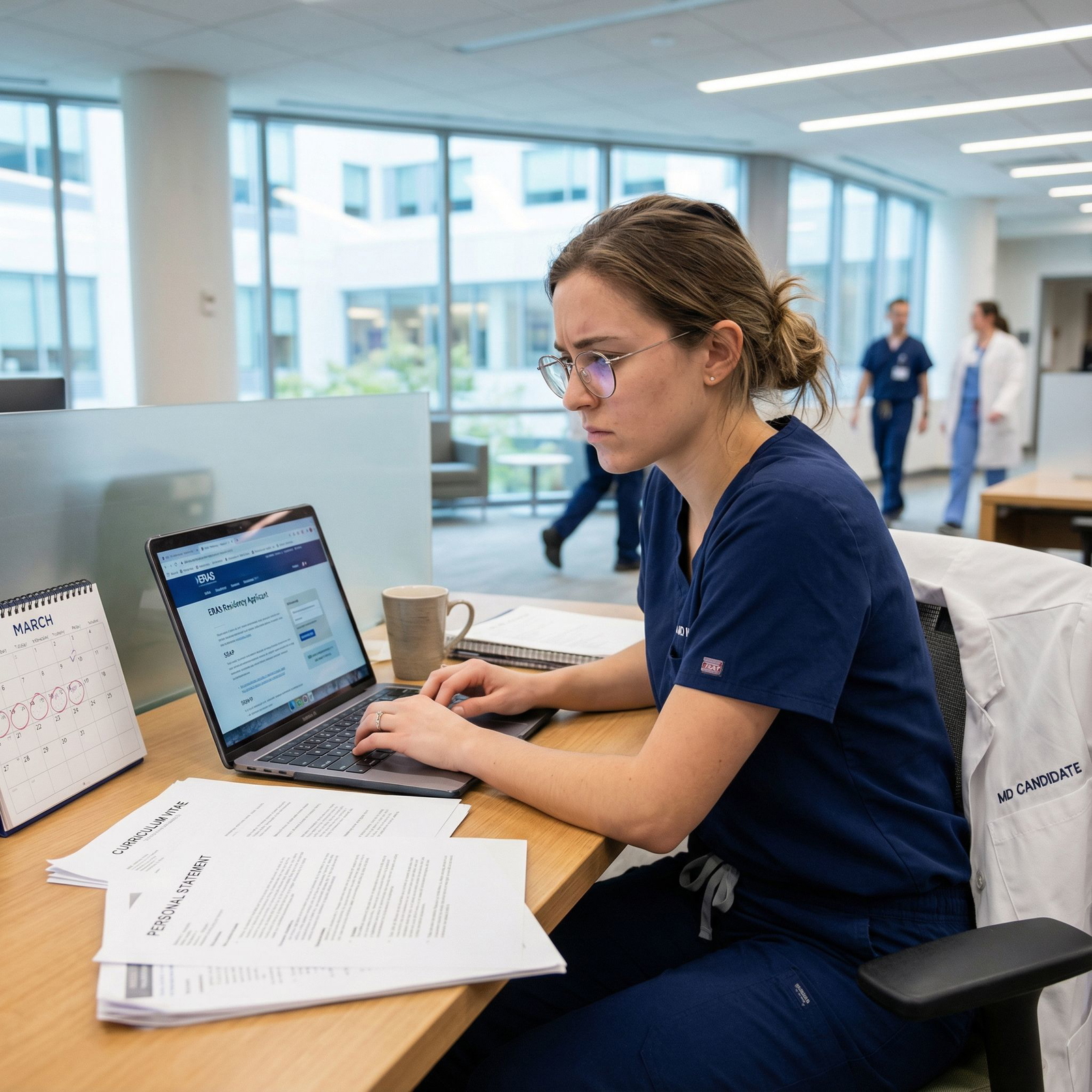
Everything you submit during SOAP flows through ERAS, so make your ERAS as SOAP-ready as possible by late January–early February.
Key steps:
CV and Experiences
- Make sure your surgery-relevant experiences (sub-internships, trauma rotations, OR exposure, research) are clearly highlighted and quantified.
- Clearly identify any osteopathic manipulative treatment (OMT) work, but emphasize aspects that showcase procedural skills, manual dexterity, and teamwork—these translate well into surgery.
Personal Statement(s)
- Have at least two versions pre-written:
- Primary: For categorical surgery or your initial target.
- SOAP version for Preliminary Surgery:
Emphasize:- Desire for a robust surgical foundation
- Comfort with rigorous, team-based, high-acuity work
- Long-term plan (e.g., re-apply to categorical surgery or use the year to decide among surgical subspecialties)
- An understanding that prelim surgery is intense but valuable
- Have at least two versions pre-written:
Letters of Recommendation (LORs)
- Secure at least two strong surgery letters if possible:
- From surgeons who know your work ethic and technical promise.
- From rotations where you performed well (DO-friendly surgery departments, community surgery sites).
- Have letters loaded into ERAS and assigned flexibly, so they can be used for both categorical and prelim programs.
- Secure at least two strong surgery letters if possible:
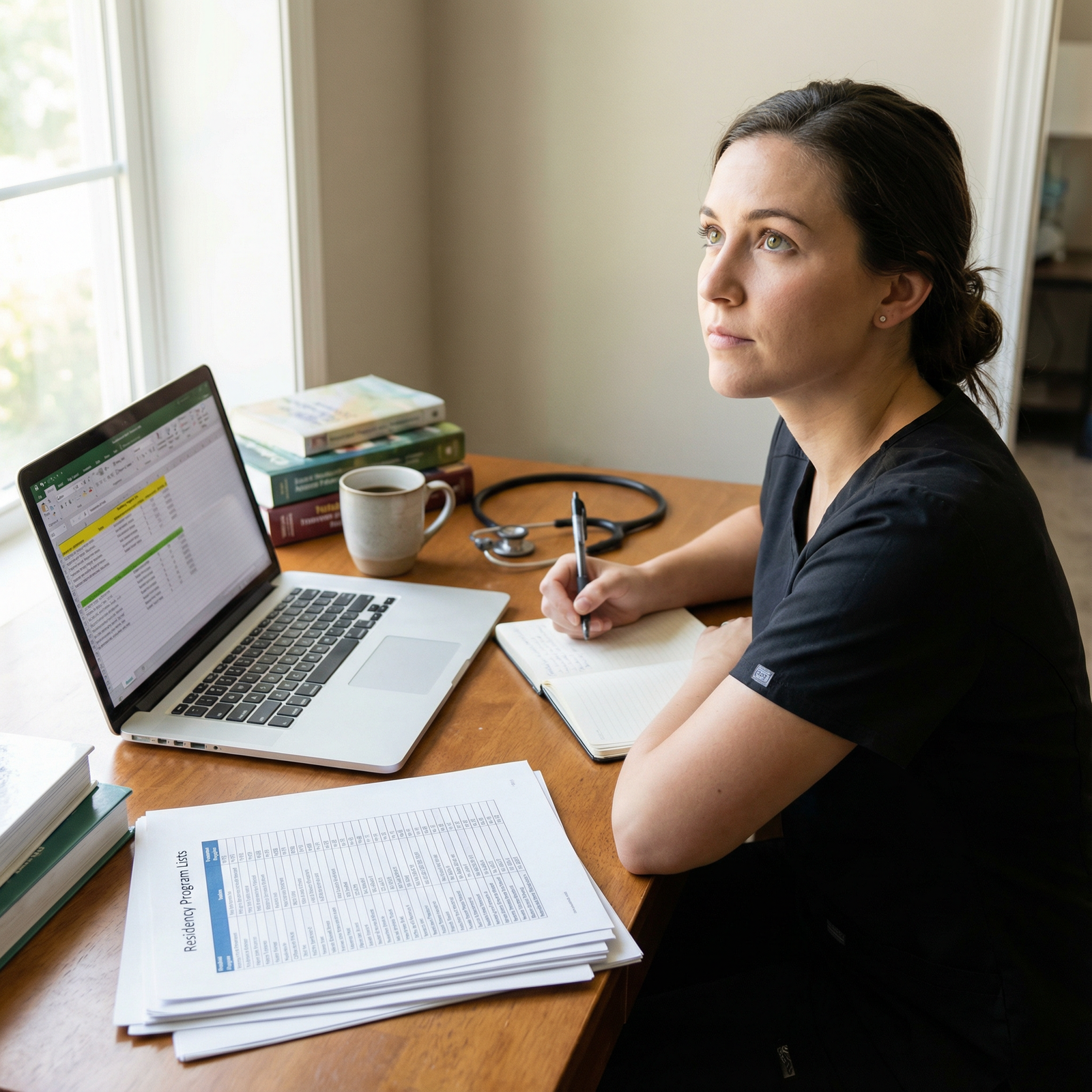
2.3 SOAP Preparation Documents and Lists
In early February, assemble:
SOAP Contact List
- Program directors and coordinators for surgery, prelim and transitional year programs where you have:
- Rotated
- Established connections
- Alumni ties (especially DO-friendly institutions)
- Include:
- Names, emails, phone numbers
- Notes on prior contact or shared connections
- Program directors and coordinators for surgery, prelim and transitional year programs where you have:
Program Target Tiers
- Tier 1: Programs you ideally want to SOAP into for prelim surgery (based on reputation, teaching structure, DO friendliness).
- Tier 2: Programs that are acceptable or neutral.
- Tier 3: Programs you would accept if necessary, based on geography or other constraints.
SOAP-Ready Email Templates
- General introduction email: short, professional, highlighting:
- That you are a DO graduate interested in preliminary surgery year
- Key strengths (USMLE/COMLEX scores, surgery rotations, research)
- Connection to the program or region
- A follow-up template for after you apply via ERAS.
- General introduction email: short, professional, highlighting:
Having these templates ready means you won’t waste precious Match Week hours writing from scratch.
3. Match Week: Step-by-Step SOAP Strategy for a DO Seeking Preliminary Surgery
3.1 Monday Morning: Unmatched or Partially Matched Status
On Match Week Monday, you learn whether you’re:
- Completely unmatched, or
- Partially matched (e.g., advanced position without a preliminary year).
If you are unmatched or need a prelim year, you become eligible to participate in SOAP (as long as you’re ERAS registered and NRMP-participating).
Your mindset needs to be:
- Calm, structured, and realistic
- Focused on action, not regret
3.2 Accessing the List of Unfilled Positions
NRMP releases the list of unfilled programs on Monday (time may vary by year). This list includes program type (categorical, preliminary, transitional) and specialty.
Action steps:
Filter for Surgery-Related Positions
- “General Surgery – Preliminary”
- “Surgery – Preliminary”
- Some Transitional Year and Prelim Internal Medicine programs known to pipeline into surgical subspecialties.
Assess DO Friendliness Quickly
- Look at:
- Past residents’ backgrounds on program websites (any DOs in recent years?).
- Your school’s match list or alumni network for prior placements.
- DO-friendly programs can be especially valuable if they have:
- Faculty familiar with osteopathic training.
- A track record of moving prelims into categorical surgery locally or regionally.
- Look at:
Cross-Reference With Your Pre-Made Tiers
- Update your Tier 1–3 lists based on the actual unfilled positions.
- Note which programs offer preliminary surgery residency versus other prelim/transitional spots.
3.3 Strategically Using Your Limited SOAP Applications
The NRMP limits how many programs you can apply to during SOAP (historically 45 total, but always verify the current year’s number). You must be tactical:
Prioritize Preliminary Surgery First
- Target as many prelim surgery positions as reasonably possible in your first wave, especially:
- DO-friendly programs
- Places where you have a regional or personal connection
- Academic centers that regularly fill categorical spots from their prelim pool
- Target as many prelim surgery positions as reasonably possible in your first wave, especially:
Use Remaining Slots Strategically
- Add Transitional Year (TY) and Prelim Medicine programs that:
- Have strong procedural exposure (ICU, ED, subspecialty rotations).
- Have historically helped residents transition into surgical or other competitive specialties.
- Add Transitional Year (TY) and Prelim Medicine programs that:
Tailor Documents
- Assign your SOAP prelim surgery personal statement to all prelim surgery programs.
- For TY or prelim medicine positions, consider a modified SOAP PS that:
- Emphasizes interest in a broad clinical foundation
- Still mentions a long-term surgical or procedure-oriented career where appropriate.
3.4 Communicating with Programs During SOAP
During SOAP, programs can initiate contact with you, but you must follow NRMP rules and do not cold-call programs before they’ve received your application. Check the current NRMP guidelines carefully; they change periodically.
Once your applications are in:
- Be ready for:
- Rapid-response emails
- Short, often same-day interviews (video/phone)
- Requests for updates (USMLE/COMLEX score report, transcript, MSPE)
When contacted by a program:
- Respond promptly and professionally (within 30–60 minutes when possible during business hours).
- If they request an interview:
- Offer several specific time slots that same day or next day.
- Confirm the video platform and ensure your technology works.
4. Acing SOAP Interviews for Preliminary Surgery as a DO Graduate
SOAP interviews are compressed: programs have little time, and they often need to fill service-heavy prelim spots quickly. Your goal is to convey:
- Reliability
- Work ethic
- Coachability
- Genuine interest in a surgical environment

4.1 Core Messages to Communicate
As a DO applicant to a prelim surgery residency, focus on these themes:
You Understand the Nature of a Prelim Surgery Year
- Heavy work hours, high service demands
- Uncertain long-term position (not guaranteed progression to categorical)
- High-intensity learning environment
Example phrase:
“I recognize that a preliminary surgery year is intense and service-heavy. I’m prepared for that level of commitment and see it as an opportunity to build my operative, floor, and ICU skills while proving myself as a reliable part of the team.”You Are Clear About Your Goals
- Whether it’s:
- Re-apply to categorical general surgery
- Explore a variety of surgical subspecialties
- Build a strong procedural foundation for another field (EM, anesthesia, etc.)
But do not imply you see the prelim year as a mere “placeholder”; frame it as integral training.
- Whether it’s:
You Bring DO-Specific Strengths
- Holistic approach to patient care
- Strong communication and bedside manner
- Often strong experience with community settings and diverse populations
Example:
“My osteopathic training emphasized hands-on assessment, patient communication, and functional anatomy, all of which I bring into perioperative care and postoperative management.”
4.2 Common SOAP Interview Questions for Prelim Surgery
Prepare concise, 1–2 minute answers for:
- “Why are you interested in a preliminary surgery year?”
- “Why did you not match in the main cycle?” (If applicable)
- “What would your senior residents say are your strengths and weaknesses?”
- “How do you handle long hours and stress in the hospital?”
- “What are your career goals after this year?”
When discussing not matching:
- Be honest but brief and constructive:
- “I applied somewhat narrowly and in hindsight, I should have…”
- “My Step/COMLEX scores were lower than I’d hoped, but in my sub-internships I consistently received strong feedback on…”
- Immediately pivot to:
- What you learned
- How you’ve improved (e.g., additional rotations, research, improved time management)
4.3 Presenting Your DO Credentials Confidently
If asked about your DO background or COMLEX:
- Avoid defensiveness.
- Emphasize:
- Your performance on clinical rotations and sub-Is.
- Any USMLE scores if you have them.
- The alignment between osteopathic principles and good surgical care (whole-patient focus, functional outcomes).
If you’re COMLEX-only and sense hesitation:
- Calmly explain score context (e.g., improvement over time, challenges overcome).
- Reinforce your clinical evaluations and letters from surgeons as strong indicators of your potential.
5. Managing SOAP Offers and Planning Beyond the Preliminary Surgery Year
SOAP consists of multiple offer rounds over Wednesday–Thursday of Match Week. You must be burning clear in your priorities when offers come in.
5.1 Deciding Which Offers to Accept
When you receive a SOAP offer:
- You can accept or reject it within the time window (often a few hours).
- If you accept:
- You’re contractually committed to that position for the coming year.
- You exit subsequent SOAP rounds.
For a DO graduate with a surgical focus, weigh:
Prelim Surgery vs. Non-Surgery Spots
- If your long-term goal is surgery, a preliminary surgery residency offer is typically more advantageous than non-surgical prelims, even if the location is less ideal.
- Exceptions:
- Program has a known toxic culture or serious ACGME concerns.
- Personal or family constraints make the location untenable.
DO-Friendly Environment
- If choosing between multiple prelim programs:
- Historically DO-inclusive faculty and residents may provide stronger mentorship and advocacy for your next application cycle.
- If choosing between multiple prelim programs:
Pathway to Categorical Positions
- Ask politely (before or during interview):
“How often do your preliminary surgery residents transition into categorical positions here or elsewhere?” - Look for programs that:
- Occasionally pick up prelims to fill unexpected categorical vacancies.
- Have a track record of strong placements for their prelims into categorical spots elsewhere.
- Ask politely (before or during interview):
5.2 Using Your Prelim Surgery Year Strategically
Once you secure a preliminary surgery year through SOAP:
Clarify Expectations Early
- Meet with your program director or associate PD.
- Understand:
- Call schedules
- Service assignments
- Evaluation metrics
- Ask about:
- Research opportunities
- Pathways to categorical positions (formally or informally)
Excel Clinically
- Show up early, stay a bit late when needed.
- Own your patients; know their labs, imaging, and plans.
- Be proactive in the OR: learn instruments, anticipate next steps, practice suturing/knot-tying.
Build Relationships and Mentorship
- Seek mentors among:
- Program leadership
- Senior residents
- Fellows
- Express your long-term goals honestly and ask for feedback:
- “How can I position myself to be competitive for a categorical surgery position after this prelim year?”
- Seek mentors among:
Prepare to Re-Apply if Needed
- Continue working on:
- Research, case reports
- Conference presentations
- Enhanced letters from your new surgical team
- Keep track of procedures, responsibilities, and achievements for future ERAS updates.
- Continue working on:
6. If You Don’t Secure a Prelim Surgery Spot in SOAP
Not all paths are linear. If, despite your best SOAP preparation, you do not obtain a prelim surgery residency, you still have options.
6.1 Non-Surgery SOAP Positions
You may receive offers in:
- Transitional Year
- Preliminary Medicine
- Other non-surgical fields
These can still be valuable if:
- You use them to strengthen your CV (research, strong clinical evals).
- You remain engaged in surgical or procedural opportunities (ICU, ED, interventional rotations).
Be realistic, though:
- Transitioning into surgery from a non-surgery prelim or TY is more challenging, but not impossible.
- Some DO graduates pivot successfully to anesthesia, EM, radiology, or other procedure-heavy specialties using their preliminary foundation.
6.2 Post-SOAP Pathways
If you end SOAP without a position:
Contact Your Dean’s Office and Career Advisors
- Discuss:
- Off-cycle positions
- Research fellowships in surgery
- Additional clinical or observership options
- Discuss:
Consider a Dedicated Surgical Research Year
- Especially at academic centers with robust surgical departments.
- Aim for:
- Publications
- Active involvement in clinical studies
- Mentorship with faculty who can strongly support your next application
Address Application Weaknesses
- If scores are the main issue:
- Improve test-taking skills, consider retakes if allowed/applicable.
- If clinical performance or professionalism is the concern:
- Seek feedback and opportunities to demonstrate growth and reliability.
- If scores are the main issue:
Plan a Stronger Re-Application
- Clarify: Do you still want general surgery categorical as your primary goal?
- Consider a more broad-based application strategy next time, including:
- More programs
- Wider geography
- DO-friendly institutions
- Use your time post-SOAP to build a narrative of resilience, growth, and sustained commitment.
FAQs: SOAP Preparation for DO Graduates in Preliminary Surgery
1. As a DO graduate, am I at a disadvantage in SOAP for preliminary surgery positions?
Not necessarily. Many programs are increasingly DO-friendly and value the strong clinical and communication skills DOs bring. Your competitiveness in the osteopathic residency match and SOAP depends more on your overall portfolio: exam scores (COMLEX and/or USMLE), grades, sub-internship performance, and letters of recommendation. During SOAP, highlight surgery-specific strengths and DO advantages (holistic care, hands-on training), and target programs with a history of training osteopathic residents.
2. How should my SOAP personal statement differ for a preliminary surgery year vs categorical surgery?
For prelim surgery residency applications, explicitly acknowledge the nature of a prelim year: high workload, service-heavy, non-guaranteed continuation. Emphasize your readiness for that intensity, your eagerness to learn, and your long-term plan (re-apply to categorical surgery, explore subspecialties, or build a procedural base). Keep the tone realistic but optimistic—programs want residents who understand what they’re signing up for and will be reliable contributors.
3. If I get a transitional or prelim medicine position in SOAP, can I still pursue surgery later?
It’s harder, but it can be done. To maximize chances:
- Seek rotations during that year that overlap with surgery or critical care (ICU, trauma, ED, interventional subspecialties).
- Stay connected with surgical mentors, attend conferences, and present research if possible.
- Be prepared to explain the path clearly in your next ERAS application. Some DO graduates successfully transition from preliminary medicine or transitional year to surgical or procedure-heavy specialties with strong performance and mentorship.
4. What are the most important steps for effective SOAP preparation for a DO graduate aiming for preliminary surgery?
Key steps include:
- Honest risk assessment and early planning (January–February).
- Keeping your ERAS fully updated and SOAP-ready (CV, LORs, multiple personal statements).
- Creating a pre-populated list of prelim surgery, transitional, and prelim medicine programs, with notes on DO-friendliness and priorities.
- Preparing concise, honest answers about not matching and your goals for a preliminary surgery year.
- Understanding what is SOAP operationally so you can move quickly: application limits, offer rounds, and communication rules.
With thoughtful SOAP preparation and a clear strategy tailored to your goals as a DO graduate, a preliminary surgery year can be a powerful stepping stone—either toward a future categorical surgery position or a rewarding, procedure-focused career path.