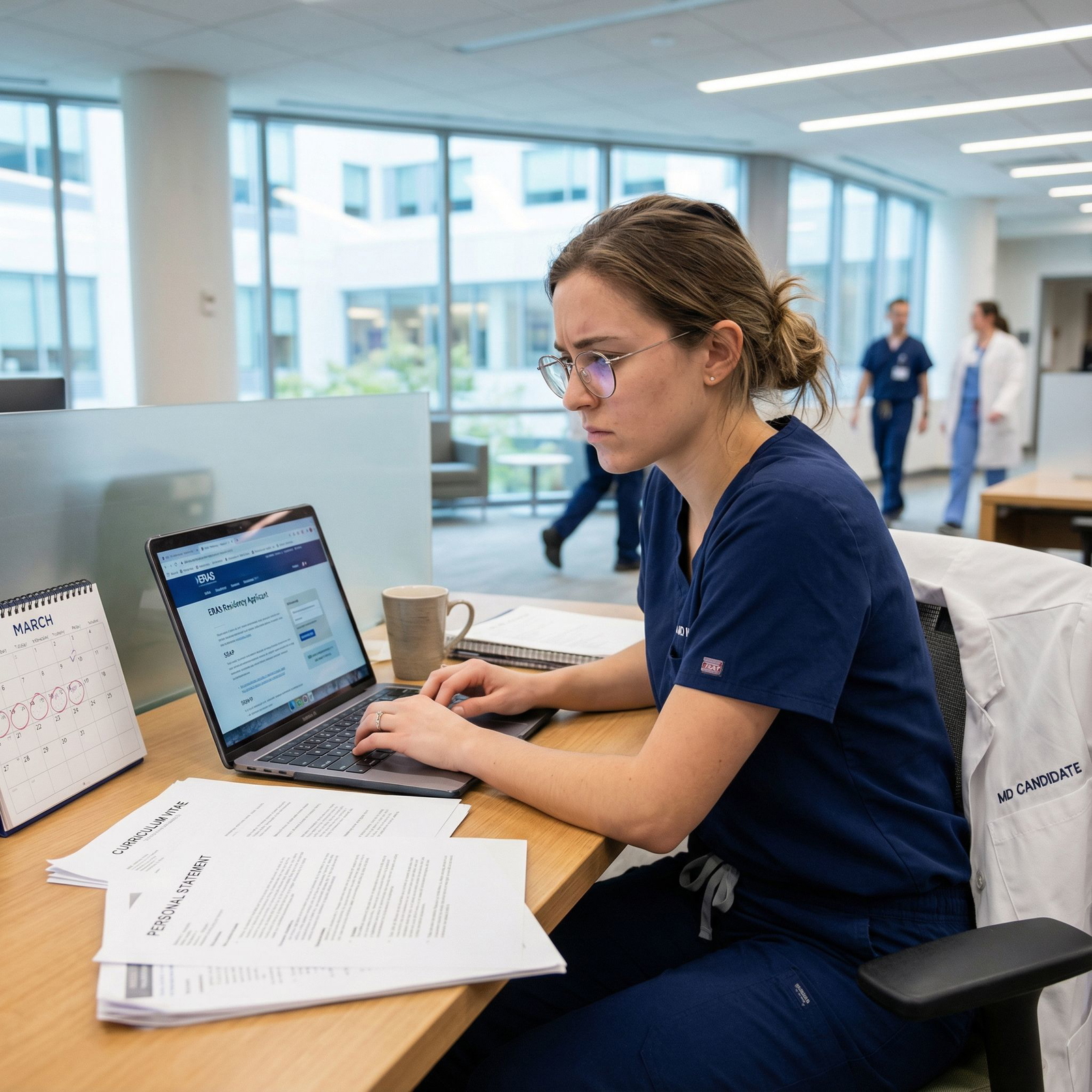
Applying to radiation oncology is demanding in any year; navigating the Supplemental Offer and Acceptance Program (SOAP) as a DO graduate in this specialty adds another layer of complexity. Yet many applicants successfully pivot through SOAP and go on to excellent careers. The key is preparation—well before Match Week.
This guide focuses specifically on SOAP preparation for a DO graduate aiming for radiation oncology (rad onc), with realistic strategies, timelines, and examples. Even if you ultimately match in the main osteopathic residency match or NRMP Match, being SOAP‑ready is an essential safety net.
Understanding SOAP: What It Is and Why It Matters for a DO in Radiation Oncology
Before you can prepare effectively, you need to understand what SOAP is and how it functions in the context of a competitive subspecialty like radiation oncology.
What is SOAP?
The Supplemental Offer and Acceptance Program (SOAP) is an NRMP-managed process that allows eligible unmatched or partially matched applicants to apply to and receive offers from unfilled residency positions during Match Week. It is not a free-form scramble; it’s a structured, time‑limited, rules‑driven mini‑Match.
Key features:
- You receive SOAP eligibility notification on the Monday of Match Week.
- You learn whether you are:
- Fully matched
- Partially matched
- Unmatched
- Eligible unmatched/partially matched applicants can:
- Access the list of unfilled programs
- Apply to a maximum number of programs via ERAS (usually 45)
- Complete several rounds of offers over a few days
SOAP is especially relevant for radiation oncology residency applicants because:
- Rad onc has small numbers of positions at baseline.
- The rad onc match has been volatile—some years with unfilled positions, other years exceptionally tight.
- As a DO graduate, you may face additional screening barriers, making it essential to have a SOAP contingency plan if you target this highly specialized field.
SOAP vs. the Main Match for a DO in Radiation Oncology
For a DO graduate, the osteopathic residency match landscape is now integrated with the ACGME system. Many radiation oncology programs do consider DOs, but variability remains:
- Some radiation oncology programs explicitly welcome DO graduates and have DO faculty.
- Others may implicitly prioritize MD applicants, often reflected in their historical match lists.
Where SOAP fits:
- Main Match: Your primary strategy to secure a radiation oncology residency.
- SOAP: Your contingency strategy—more likely to land you in:
- Transitional year (TY)
- Preliminary internal medicine or surgery
- Occasionally, other categorical specialties
- Rarely, radiation oncology positions (but they do appear some years)
The strategic question for a DO graduate in rad onc is not just “How do I SOAP into radiation oncology?” but also “How do I use SOAP to protect my long-term path into rad onc if I do not match initially?”
Pre‑Match SOAP Preparation: What DO Applicants Should Do Before Rank List Certification
The most effective SOAP preparation happens months before Match Week, ideally even before ERAS submissions. Think of SOAP prep as part of your overall risk management strategy.
1. Realistically Assess Your Radiation Oncology Profile as a DO Graduate
Have an honest, data‑driven conversation with yourself and with mentors:
- Board scores/COMLEX/USMLE:
- Are your scores at, above, or below typical rad onc match ranges?
- Did you take USMLE in addition to COMLEX (many rad onc programs still prefer/require USMLE)?
- Oncology exposure:
- Rad onc rotations & away rotations
- Oncology research (clinical, basic science, physics, or outcomes)
- Presentations/posters/publications
- Letters of recommendation:
- At least one or two from radiation oncologists?
- Strong narrative letters describing concrete skills?
If your profile is borderline for rad onc, build SOAP strategy early:
- Consider applying to backup specialties now, not only via SOAP later.
- Discuss separate rank lists or a broader range of programs with your dean or advisor.
2. Assemble a SOAP‑Ready Application Packet in ERAS
During SOAP, you cannot rewrite your entire ERAS application. You can edit certain sections and add documents, but time and bandwidth are extremely limited. Prepare now:
Core elements to have in place before Match Week:
- A standard, polished personal statement for:
- Radiation oncology
- At least one backup specialty (e.g., internal medicine, transitional year, preliminary medicine)
- A CV and ERAS experiences section that:
- Is clear, concise, and free of errors
- Highlights skills transferable beyond rad onc (procedures, clinical reasoning, communication, teamwork)
- Multiple letters of recommendation (LoRs):
- At least 2 from rad onc/oncology
- At least 1 from internal medicine or surgery if you might SOAP into those fields
- A well‑organized document folder (locally and in the cloud) with:
- PDFs of personal statements for each specialty
- List of potential backup specialties prioritized
- Contact info for mentors and advisors
DO‑specific tip:
Ask at least one mentor (preferably in internal medicine, surgery, or primary care) to write a letter that speaks to your general clinical skillset, not just your radiotherapy interest. This letter can be very useful if you pivot into SOAP positions outside of rad onc.
3. Identify Rational SOAP Targets Ahead of Time
Because radiation oncology has relatively few programs, the chance of multiple rad onc positions appearing in SOAP is low. You should be ready with a prioritized list of alternative targets:
Common SOAP‑accessible options relevant to future rad onc:
- Transitional Year (TY):
- Provides broad clinical exposure
- Leaves doors open to apply again to radiation oncology the following year
- Preliminary Internal Medicine or Surgery:
- Builds strong clinical foundation
- Widely respected background for applicants re‑entering the rad onc match
- Categorical Internal Medicine:
- Can lead to oncology-related career paths (heme/onc, palliative care, etc.)
- Still possible to pivot to rad onc later with more effort
Ask yourself:
- “If I had to practice for life in one of these fields, which would I most accept?”
- “Which path keeps me closest to oncology or procedural work?”
Draft a SOAP specialty ranking (for yourself):
- Transitional Year in a strong academic or community program
- Preliminary Internal Medicine in a hospital with oncology exposure
- Categorical Internal Medicine (preferably with robust cancer center affiliations)
- Other fields that align with your interests (e.g., Family Medicine with oncology focus, palliative care exposure)
This list will guide rapid decision‑making once you see the unfilled positions.

What Happens During Match Week: Timeline and Action Plan for SOAP
Understanding the SOAP timeline helps you avoid panic and make rational decisions when emotions are high.
Monday of Match Week: Eligibility & Unfilled List
Morning: SOAP Eligibility Notification
- You learn whether you matched (but not where).
- If you’re unmatched or partially matched, you also receive your SOAP eligibility status.
- Only SOAP‑eligible applicants can participate.
If you’re unmatched or partially matched in rad onc:
- Take 15–30 minutes to process your emotions.
- Immediately alert:
- Your dean’s office
- Any key radiation oncology or oncology mentors
- A trusted advisor in your backup specialty (IM, TY, etc.)
Midday: Unfilled Program List Becomes Available
- NRMP releases the list of programs with unfilled positions.
- This list includes:
- Number of openings
- Program name, specialty, and often a link to the website
- Both you and your school’s advising team should quickly review the list.
Prioritizing Programs: Strategy for a DO Applicant
For a DO graduate from an osteopathic school, prioritize programs that historically have taken DOs or are DO‑friendly:
Clues that a program may be DO‑friendly:
- Current or recent residents include DOs (check website or FREIDA).
- Affiliated with institutions that host osteopathic medical students on rotations.
- Program director or faculty biographies include DO training.
In the context of SOAP, look for:
- Transitional Years and Preliminary IM at institutions with active cancer programs
These may offer rotations in med onc, rad onc, palliative care, etc.
When scanning the unfilled list:
- Mark any radiation oncology residency positions immediately.
- These may be ultra‑competitive even in SOAP.
- Confirm program requirements (USMLE, visa policy, DO acceptance history).
- List high‑priority backup specialties:
- TY and prelim IM in locations you’re willing to move to.
- Rank programs roughly (A, B, C tiers) based on:
- Fit with your long‑term rad onc goals
- DO‑friendliness
- Geographic preferences (but be flexible; SOAP limits luxury of strict geography)
Application Phase: Submitting SOAP Applications
You will have a defined window (usually a few hours) to submit your applications through ERAS, up to the maximum allowed (commonly 45 programs).
Key tactics:
- Use your pre‑written personal statements:
- Radiation oncology PS for rad onc spots (if any).
- IM/TY‑specific PS for those applications.
- Tailor where you can:
- A brief paragraph in your PS can be generic enough to apply widely, while still making clear your interest in oncology and patient care.
- Attach the appropriate LoRs to each specialty:
- Rad onc letters to rad onc programs.
- IM/surgery letters to IM/TY/prelim programs.
Avoid common mistakes:
- Do not send a radiation oncology–specific PS to a categorical family medicine program that never mentions primary care; it signals mismatch.
- Don’t waste applications on programs demanding USMLE if you only have COMLEX and no history of DO residents.
Communicating Your Story: How to Frame Your Rad Onc Interest During SOAP
One of the most challenging parts of SOAP for a rad onc‑focused DO graduate is messaging. You must balance:
- Honest commitment to radiation oncology and oncology.
- Genuine openness to other fields—without sounding like you’re simply using them as a temporary bridge.
For Programs Within Oncology Ecosystems (IM, TY at Cancer Centers)
If you’re applying to internal medicine or transitional year programs at institutions with strong cancer centers:
- Emphasize your longstanding interest in oncology, but:
- Highlight that you are fully prepared to commit to excellence in the specialty you’re applying to.
- Showcase skills that translate across specialties (communication, complex decision‑making, empathy with serious illness).
Example SOAP email/statement theme:
“My clinical and research experiences in oncology have prepared me to care for complex, medically fragile patients. I am deeply committed to pursuing a residency where I can develop a strong foundation in internal medicine, contribute meaningfully to the care of patients with cancer and other serious illnesses, and grow as a clinician-educator. I would be honored to train in your program and invest myself fully in the responsibilities of an internal medicine resident.”
For Non-Oncology Oriented Programs
If you are SOAPing into fields more distant from oncology (e.g., family medicine in a rural setting without major oncology exposure), focus on:
- Your enthusiasm for longitudinal patient care, preventive medicine, and community impact.
- Transferable skills such as procedural ability, comfort with diagnostic imaging, or palliative care exposure.
Do not say you see the program solely as a “stepping stone” to radiation oncology. Program leadership wants residents who can be fully present and invested.

Interviewing and Decision-Making During SOAP: Practical Tips for DO Graduates
SOAP interviews are rapid, often virtual, and highly focused. You may have multiple conversations within a few hours.
Preparing for SOAP Interviews
Have a concise narrative ready:
- Who you are: “I’m a graduating DO from [School], with a strong interest in oncology and complex patient care.”
- Why you’re in SOAP:
- Avoid oversharing or blaming.
- Frame as competitive specialty, small number of positions, or late pivot.
- Why you’re interested in this program:
- Refer to strengths of the program (teaching culture, cancer center affiliation, patient population).
- What you bring:
- Specific examples of work ethic, teamwork, research, teaching, or leadership.
Common SOAP Interview Questions and Sample Approaches
1. “Why are you in SOAP?”
- For a rad onc applicant:
“Radiation oncology is a very small and competitive field, and while I had strong mentorship and clinical evaluations, there are always more qualified applicants than positions. I remain passionate about oncology, but I am also genuinely excited about the opportunity to train in a strong [IM/TY/etc.] program where I can become an excellent clinician and contribute fully.”
2. “If you’re so interested in radiation oncology, will you leave our program?”
- Acknowledge your long-term interests without undermining your commitment: “I have an ongoing interest in oncology, but I take residency commitments very seriously. If I join your program, my focus will be on becoming the best [internal medicine/family medicine] physician I can be, contributing to the team, and honoring the full term of my contract. I’m looking for a place to grow and invest myself fully.”
3. “Why should we rank you highly in this time-pressured process?”
- Emphasize readiness and maturity: “I’ve thought carefully about backup plans and I’m prepared to step in as a dependable, hardworking intern from day one. My evaluations show I handle high-acuity patients well, communicate clearly, and work effectively on teams. I also bring specific experience with complex oncology patients that can benefit your ward and ICU teams.”
Decision-Making When Offers Arrive
SOAP involves time-limited offers; you may have only a couple of hours to accept or reject. Consider in advance:
- Is there any scenario where you would prefer to go unmatched and reapply to radiation oncology, rather than accept an available SOAP position?
- This is a deeply personal and financial decision.
- How important are:
- Geography
- Program reputation
- Specialty alignment with your long‑term rad onc goals
For most DO graduates aiming for rad onc, accepting a strong TY or prelim IM SOAP position:
- Helps you build clinical credibility.
- Allows you to reenter the rad onc match with stronger letters and experience.
- Preserves momentum in training and income.
Long-Term Strategy: If You Don’t Match Radiation Oncology Through SOAP
If SOAP does not result in a radiation oncology position—and it often won’t—your goal is to strategically protect your long-term oncology career.
1. Make the Most of a Non-Rad Onc Internship
During your TY or IM year:
- Seek oncology‑related rotations:
- Medical oncology
- Inpatient oncology wards
- Palliative care
- Radiation oncology electives if available
- Build relationships with:
- Oncologists who can write updated LoRs
- Program director who can vouch for your work ethic and performance
Document:
- Concrete achievements (QIs, case presentations, teaching conferences).
- Any research or QI projects you complete.
2. Maintain and Expand Your Radiation Oncology Profile
Even while training outside radiation oncology:
- Stay engaged with the rad onc community:
- Join ASTRO (residents/trainees section if applicable).
- Attend virtual tumor boards if allowed.
- Maintain contact with past rad onc mentors.
- Pursue research:
- Multi‑institutional collaborative projects.
- Retrospective chart reviews or outcomes research.
- Literature reviews or educational projects.
A DO graduate who completes a strong TY/IM year plus meaningful oncology output may become more competitive for subsequent rad onc match cycles.
3. Reassessing Your Career Goals
After SOAP and possibly after a year of clinical practice, revisit:
- Your satisfaction with your current field.
- Feasibility of reentering the rad onc match (availability of positions, your updated profile).
- Other oncology‑adjacent paths:
- Hospice and palliative medicine
- Hematology/oncology (if coming via IM)
- Primary care with focused oncology collaboration
This is not “giving up” on rad onc; it’s actively steering toward a fulfilling, sustainable oncology-related career, even if the exact path differs from your initial plan.
FAQs: SOAP Preparation for DO Graduates in Radiation Oncology
1. As a DO graduate, what are my realistic chances of getting radiation oncology through SOAP?
Radiation oncology positions occasionally appear in SOAP, but the numbers are very small and highly competitive. Many applicants (including MDs) target these rare openings. As a DO, your chances depend on:
- Having strong scores, research, and rad onc letters.
- Meeting any USMLE or institutional requirements.
- Prior connection to the program (e.g., away rotation).
You should be prepared for the possibility that you will not get rad onc via SOAP and have a solid backup plan.
2. How should I balance applying to radiation oncology vs. backup specialties during SOAP?
If any rad onc positions appear:
- It’s reasonable to apply to all rad onc SOAP openings for which you meet basic criteria.
- However, reserve most of your application slots for realistic backup specialties (TY, prelim IM, categorical IM, etc.). Remember, you’re limited in the total number of programs you can apply to (commonly 45), so over‑focusing on ultra-rare rad onc positions can leave you exposed if those don’t work out.
3. What can I do now, before Match Week, to optimize my SOAP prospects as a DO?
Key actions:
- Write separate, polished personal statements for rad onc and at least one backup specialty.
- Secure generalist LoRs in addition to rad onc letters (e.g., internal medicine faculty).
- Build a tentative list of backup specialties and program types you’d target during SOAP.
- Meet with advisors and rad onc mentors to discuss realistic outcomes and mental preparation. Having these pieces ready will dramatically reduce panic and allow you to act strategically if you become SOAP‑eligible.
4. If I accept a SOAP position outside radiation oncology, will it hurt my chances of matching rad onc later?
Most radiation oncology program directors recognize that:
- Many excellent candidates start in other fields (IM, TY) before reapplying.
- Completing a rigorous non‑rad onc internship can strengthen your application if you:
- Perform well clinically.
- Obtain strong new LoRs.
- Continue meaningful oncology-related work.
What can hurt you is poor performance or appearing disengaged from your current specialty. If you accept a SOAP position, commit to excelling there while thoughtfully maintaining your rad onc profile.
Being SOAP‑ready as a DO graduate aiming for radiation oncology is about more than having backup paperwork—it’s about crafting a flexible, reality‑based career strategy. By preparing early, understanding the rad onc match dynamics, and approaching SOAP with clarity and professionalism, you can navigate Match Week with far more control, even in the face of uncertainty.