Understanding SOAP for IMGs Targeting General Surgery
The Supplemental Offer and Acceptance Program (SOAP) can feel intense and confusing—especially for an international medical graduate (IMG) aiming for a highly competitive field like general surgery. Yet with deliberate SOAP preparation, you can turn a stressful week into a structured second chance at the surgery residency match.
This IMG residency guide will walk you step-by-step through:
- What SOAP is and how it works (and what it is not)
- How to prepare before Match Week
- Strategy specifically tailored to general surgery and surgery‑adjacent options
- How to act during SOAP: communication, ranking, and professionalism
- What to do if SOAP does not result in a general surgery residency
Throughout, the focus is on realistic, IMG‑friendly, general-surgery–specific strategies that you can start using right away.
What Is SOAP and How Does It Work?
If you are aiming for general surgery residency, understanding exactly what is SOAP is critical for planning. Misunderstanding the process is one of the most common reasons candidates underperform during Match Week.
Basic Definition
The Supplemental Offer and Acceptance Program (SOAP) is an organized process run by NRMP during Match Week to fill unfilled, NRMP-participating residency positions and to place eligible unmatched or partially matched applicants into these spots.
Key points:
- It happens only during Match Week (Monday–Thursday).
- All activity is managed through ERAS (applications) and NRMP R3 (offers/acceptances).
- Programs see your application and may interview you by phone or video—often briefly.
- Offers are extended in rounds, and you can only accept one position.
SOAP is not a separate match service; it’s a structured, time-limited matching process for unfilled positions that occurs after the initial main match rank order list is processed.
Who Is Eligible for SOAP?
To participate in SOAP, you must:
- Be registered for the NRMP Match.
- Be unmatched or partially matched after the main match algorithm.
- Have certification or eligibility appropriate to your pathway:
- IMGs (US and non-US) generally need ECFMG certification by the NRMP’s SOAP eligibility deadline (or meet the NRMP’s exact stated criteria).
- Not have accepted a position outside the Match that violates NRMP rules.
For an international medical graduate targeting general surgery residency:
- Double-check your ECFMG status and exam results (USMLE/COMLEX equivalents).
- Confirm you meet any state-specific requirements for where you might apply.
SOAP Timeline Overview (Typical Structure)
Specific times change slightly year to year, but the structure is stable:
Monday
- 10:00 AM ET: Match results become available.
- Unmatched/partially matched applicants find out they are SOAP-eligible.
- List of unfilled programs becomes available.
- Applicants revise and finalize their ERAS applications and send them to selected programs (up to a maximum number, commonly 45 programs across all specialties).
Monday–Thursday (Daytime Hours, ET)
- Programs review applications.
- Interview calls/emails begin (often short, focused, fast-paced).
- SOAP offers are extended in multiple rounds.
Thursday
- Final round of SOAP offers.
- SOAP concludes; any remaining positions convert to post-SOAP open positions that programs can fill outside SOAP rules.
The SOAP residency process moves quickly; strong preparation before Match Week is what separates organized, competitive candidates from overwhelmed ones.
Pre-SOAP Preparation: Foundation for an IMG in General Surgery
Your SOAP success often depends less on what you do during the week itself and more on the groundwork you lay weeks to months in advance. For an international medical graduate interested in general surgery, targeted preparation is essential.
Step 1: Honest Assessment of Your Application
Before planning your SOAP strategy, assess your current general surgery residency profile:
Consider:
- USMLE Step 1/Step 2 CK scores (or equivalent)
- Attempts on exams (repeats matter to many surgery programs)
- Medical school reputation and date of graduation
- US clinical experience (USCE), particularly in surgery or surgical subspecialties
- Letters of recommendation:
- From US surgeons?
- Recent (within 12–18 months)?
- Research experience, especially surgical or outcomes research
- Red flags: gaps, exam failures, professionalism issues
Ask yourself:
- “If I were a program director in general surgery, what would make me hesitate?”
- “What strengths stand out: work ethic, technical skills, research, language skills, serving underserved populations?”
Write down:
- 3–5 strengths
- 3–5 weaknesses or concerns
You will use this list during SOAP interviews to frame your narrative: owning your weaknesses while emphasizing growth and your commitment to surgery.
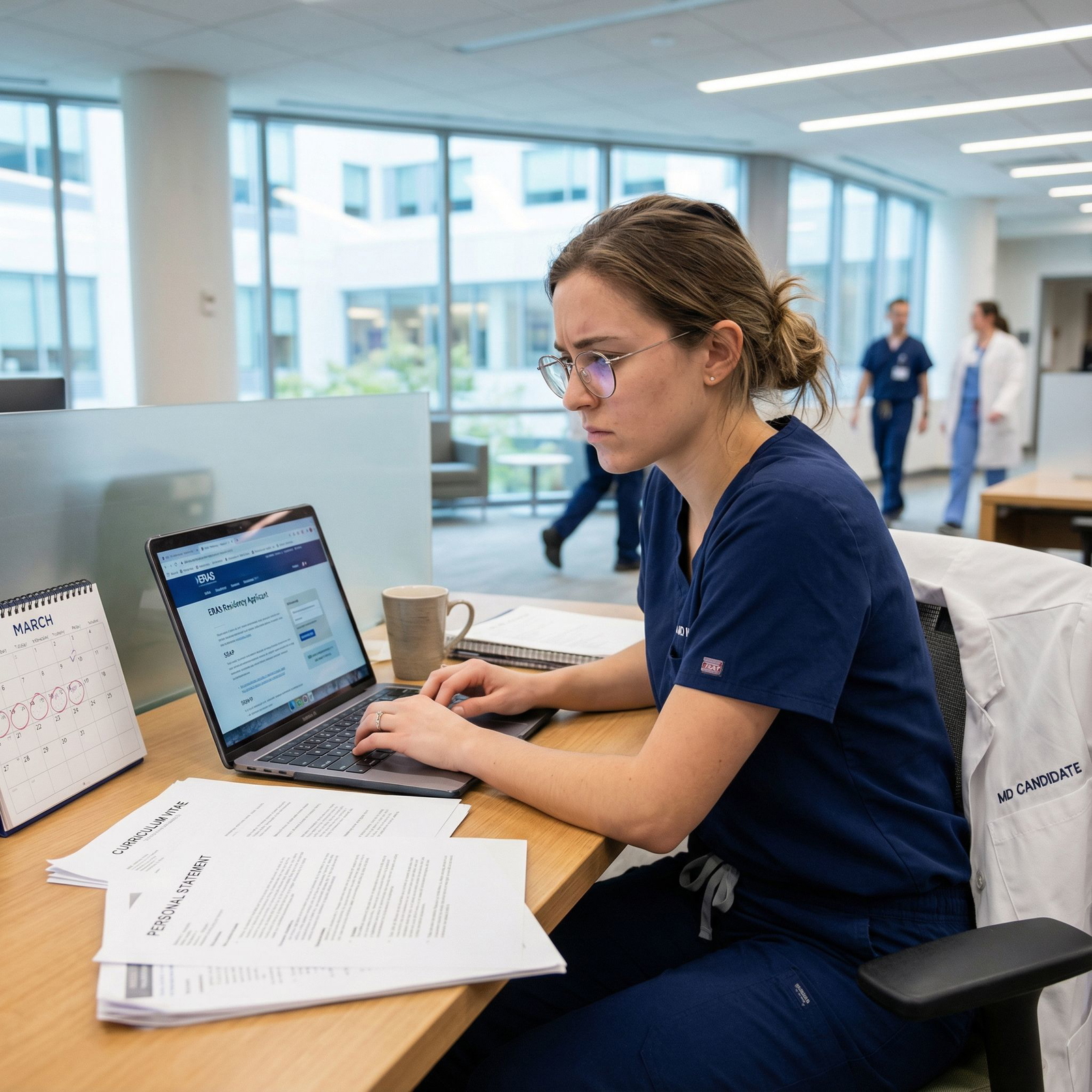
Step 2: Update and Optimize ERAS Documents for SOAP
Even if you don’t know whether you’ll enter SOAP, you should prepare SOAP-ready application materials.
Personal Statement Strategy
You may need:
- One general surgery SOAP personal statement
- One “surgical mindset” prelim/transitional year personal statement (if you are also open to prelim or categorical in other specialties)
For SOAP, your statement must be:
- Focused and concise (programs often skim quickly)
- Clearly pro-surgery:
- Why surgery, not just “why medicine”?
- Evidence of commitment: clerkships, electives, research, observerships.
- Emphasis on teamwork, resilience, manual dexterity, and ability to handle stress.
You may want a slightly different version for:
- Categorical general surgery positions
- Preliminary general surgery positions
- Surgery-adjacent specialties or transitional year spots
Do not rewrite from scratch during SOAP week. Instead, have saved versions ready to swap in ERAS within minutes.
CV / Experiences Section
For an IMG residency guide, your experiences should:
- Highlight US clinical experience, especially any surgical rotations, sub-internships, or observerships.
- Include procedural experiences when relevant (e.g., assisting in laparoscopic cholecystectomies, central line placement under supervision).
- Show longitudinal commitment: years of involvement in surgery-interest organizations, quality improvement, or research.
Update before SOAP:
- Ensure all dates and roles are accurate.
- Add recent experiences:
- Research projects
- Volunteer work
- Simulation lab participation
- Teaching or tutoring
Letters of Recommendation
LORs are hard to change at the last minute. Prior to Match Week:
- Confirm you have at least two letters from surgeons (preferably US-based).
- If you have a strong non-surgical letter (e.g., medicine attending who knows you well), keep it—but try to avoid having only non-surgical LORs for surgery programs.
If you anticipate SOAP, consider:
- Asking a surgical mentor if they can upload an updated letter emphasizing:
- Your work ethic
- Operative potential
- Professionalism
- Team integration
- Communication skills (especially for IMGs)
Step 3: Build a Targeted Program List Framework in Advance
You will not know which programs are unfilled until Monday of Match Week, but you can build templates based on:
- Program type:
- Categorical General Surgery
- Preliminary General Surgery
- Surgery-adjacent prelims (e.g., prelim in surgical specialties, transitional year with heavy surgical exposure)
- Geography:
- States that historically have more IMG-friendly programs
- States where you meet licensure/exam requirements
- IMG-friendliness:
- Review previous years’ match data.
- Use resources like program websites, forums, or institutional match lists.
- Identify programs that historically take IMGs or have a diverse resident pool.
Prepare an excel sheet or note with columns such as:
- Program name
- State
- Program type (categorical/prelim)
- IMG-friendly? (Y/N/Unknown)
- USMLE cutoff (if known)
- Visa sponsorship status (J-1, H‑1B, none)
- Priority level (High / Medium / Low)
When the SOAP unfilled list is released, you will rapidly plug in available programs into this template instead of starting from scratch.

SOAP Week Strategy for General Surgery: Step-by-Step
Once Monday of Match Week arrives, the priority is speed + strategy + professionalism.
Monday Morning: Immediate Actions After Unmatched Results
Process Emotion Quickly but Constructively
- Give yourself 30–60 minutes to react, call a trusted friend or mentor, then shift into problem-solving mode.
- Avoid posting emotional messages about being unmatched on social media; programs may see them.
Confirm SOAP Eligibility
- Log into NRMP and ERAS to verify your SOAP-eligible status.
- Carefully read any guidance from NRMP and your dean’s office.
Obtain the Unfilled Positions List
- Once released, export or print the list.
- Filter by:
- Specialty: General Surgery
- Program Type: Categorical vs Preliminary
- Also look at related options:
- Prelim internal medicine with strong surgical ICU exposure.
- Transitional year programs linked to surgery departments.
Choosing Between Categorical and Preliminary Surgery in SOAP
For many IMGs, most SOAP opportunities in surgery will be preliminary general surgery spots rather than categorical. You must be honest about your risk tolerance and long-term goals.
Categorical General Surgery (Direct Path to Board Eligibility)
- Typically few positions in SOAP.
- Extremely competitive, especially for IMGs.
- You should apply to:
- All categorical general surgery SOAP positions where you meet basic criteria.
- Prioritize IMG-friendly or community programs if identifiable.
Preliminary General Surgery (1–2 Years of Surgery Training)
- Common in SOAP.
- Often used as:
- A stepping stone to reapply for categorical positions.
- A year to gain US surgical experience and strong LORs.
As an IMG:
- Strongly consider applying to many prelim general surgery positions.
- View a prelim year not as a failure, but as an investment in building a more competitive profile for a future categorical position.
Prioritizing Programs: A Practical Framework
Given typical SOAP application caps (e.g., 45 programs total), divide them roughly as:
- 10–20 applications:
- Categorical general surgery (if available and minimally plausible)
- 20–30 applications:
- Preliminary general surgery
- Remaining spots:
- Transitional year or other prelims with strong surgical exposure or critical care.
Adjust based on:
- Your scores
- Red flags
- Number of categorical surgery spots actually available
Example Prioritization Criteria for an IMG
Rank higher the programs that:
- Historically or visibly take IMGs
- Have multiple prelim positions (more opportunities)
- Provide J-1 visa sponsorship (if needed; H‑1B is rarer in SOAP)
- Are in regions with more community hospitals (often more IMG-friendly than highly competitive urban academic centers)
- State on their website or materials a clear education-focused culture and support for prelims
Communication and Interview Strategy During SOAP
During SOAP, interviews are often:
- Short (5–20 minutes)
- Scheduled with minimal notice
- Conducted by phone or video (Zoom/Teams)
You must be reachable at all times and prepared with concise, confident answers.
Prepare Your Environment
- Quiet, well-lit space with neutral background.
- Reliable phone and/or internet connection.
- Headset with microphone to avoid echo.
- Printed copy or screen view of:
- Your CV
- Personal statement highlights
- Bullet lists of key points (strengths, weaknesses, reasons for surgery)
Core Questions for General Surgery SOAP Interviews
“Why general surgery?”
- Emphasize:
- Love for acute care and procedural work
- Commitment to long hours and team-based environment
- Specific experiences (e.g., managing acute abdomen cases, assisting in ORs)
- Emphasize:
“Why are you interested in our program?”
- Mention:
- Case volume and hands-on opportunities
- Supportive culture or community service
- Any unique aspect: trauma center level, rural/urban mix
- Show that you are flexible geographically and eager to serve their patient population.
- Mention:
“You went unmatched/partially matched—what happened?”
- Avoid blame.
- Use honest, reflective language:
- “I applied relatively late in the cycle,”
- “My Step 1 score was lower than average for categorical surgery, but since then I have shown improvement with a stronger Step 2 CK, USCE, and research.”
- End with:
- “I’m fully committed to proving myself, including through a rigorous preliminary year if needed.”
“Are you interested in a preliminary position?” (If not clearly categorical)
- If you are open to it, say:
- “Yes. I see a preliminary general surgery year as an opportunity to demonstrate my value, gain strong operative experience, and strengthen my candidacy for a future categorical spot.”
- Be explicit that you will commit fully even if there is no guarantee of internal promotion.
- If you are open to it, say:
“Do you have any questions for us?”
- Ask thoughtful, program-directed questions:
- “How are preliminary residents integrated into your call schedule and operative rotations?”
- “What have been common pathways for your prelim grads after finishing your program?”
- “How do you support IMGs adjusting to the US system?”
- Ask thoughtful, program-directed questions:
Practice answers out loud with a mentor or peer before Match Week, so you can respond naturally even under stress.

Professionalism, Ranking, and Accepting an Offer
SOAP is not only about being chosen; it is also about how you conduct yourself during one of the most stressful weeks of your career.
Professional Conduct Expectations
- Respond promptly to phone calls, emails, and interview invitations.
- If you miss a call, return it immediately with a polite apology.
- Keep a simple log:
- Programs that reached out
- Dates/times of interviews
- Names of interviewers
- Your impressions
Avoid:
- Criticizing programs, other candidates, or the match process.
- Negotiating like a job offer (e.g., “Can you guarantee me X cases?”).
- Making verbal promises you cannot keep (“If you offer me a spot, I guarantee I will stay here for 7 years…”).
SOAP Offer Rounds and Decision-Making
During offer rounds:
- NRMP will present official offers through the R3 system.
- You may:
- Accept
- Reject
- Let expire (highly discouraged; always make a clear choice)
- You may hold only one accepted SOAP offer at any time.
When deciding:
Do not wait for a “perfect” offer in a competitive field like surgery.
- If you receive a preliminary surgery offer from a reasonably solid program, it is often wise to accept rather than risk ending SOAP unmatched.
Consider visa and location practicality:
- J-1 vs H‑1B options.
- Cost of living and support systems nearby.
Think about your long-term pathway:
- For an IMG, a strong prelim general surgery year can:
- Provide US-based LORs
- Demonstrate performance under US system demands
- Facilitate transfer or reapplication
- For an IMG, a strong prelim general surgery year can:
When you accept an offer:
- Commit fully. Ethically and professionally, you should not back out to chase a post-SOAP opportunity elsewhere.
If You Don’t Match Through SOAP: Recovery and Future Strategy
Even with strong SOAP preparation, not everyone secures a general surgery residency through SOAP. If this happens, your response still shapes your future.
Immediate Post-SOAP Steps
Stabilize Emotionally
- Give yourself a day or two to process disappointment with family or mentors.
- Avoid impulsive decisions like withdrawing from medicine altogether.
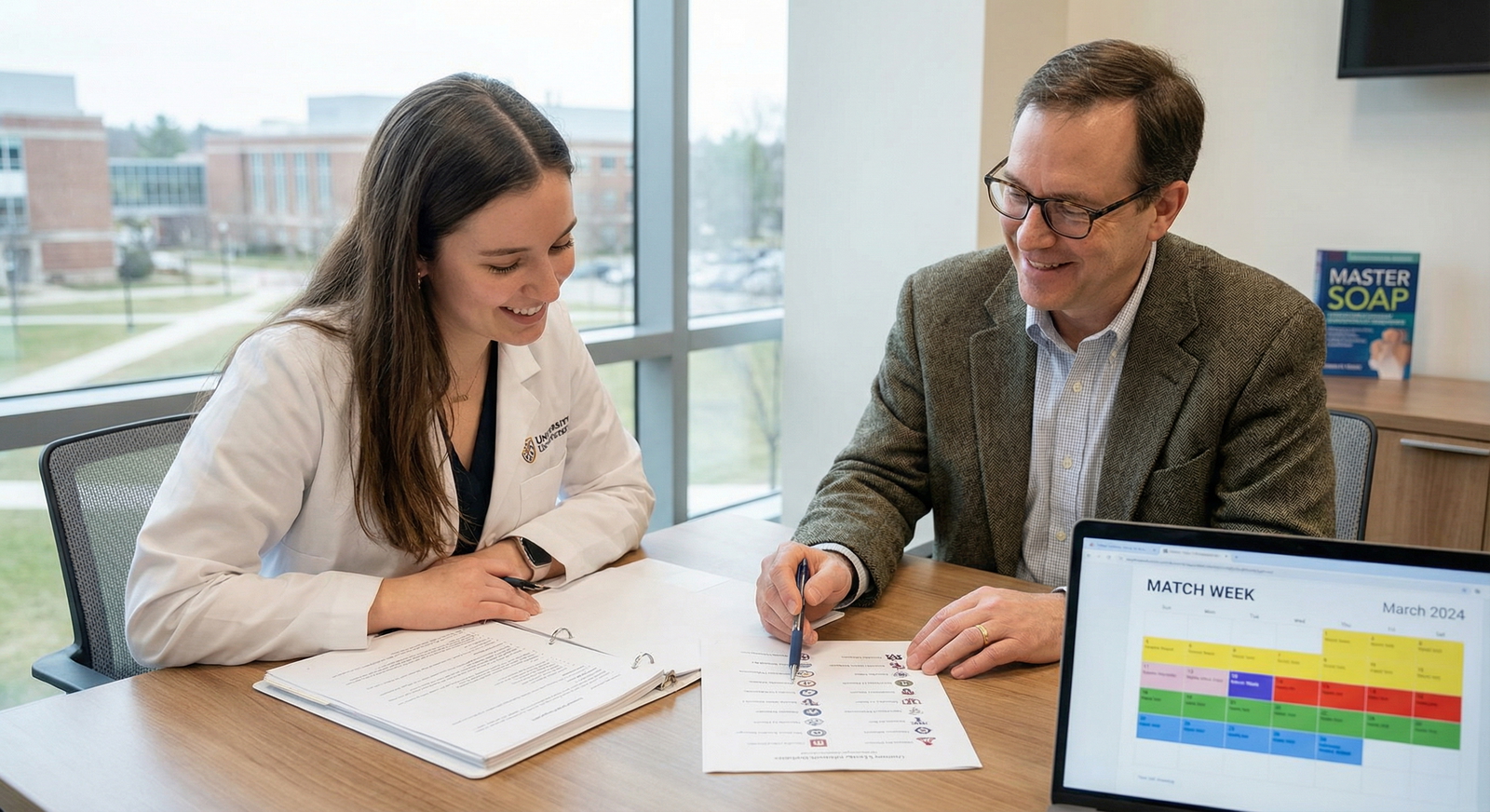
Debrief with Advisors
- Meet with:
- Your medical school dean’s office (if applicable).
- A trusted advisor/mentor in surgery or graduate medical education.
- Ask for honest feedback on:
- Application weaknesses
- Interview style
- Specialty choice realism
- Meet with:
Review Open Positions Post-SOAP
- Some programs may still have open positions after SOAP and can recruit outside NRMP rules.
- These are often non-ACGME or less structured programs, but they might provide:
- Clinical exposure
- Research roles
- Observerships or fellowships
Building a One-Year “Bridge Plan”
If you remain committed to general surgery residency:
Consider structuring the next 12 months around three pillars:
Clinical Exposure (Preferably Surgical or Acute Care)
- Observerships in surgery or surgical subspecialties.
- Surgical ICU experiences.
- Hospital-based roles allowed under your visa/immigration status (e.g., research coordinator with clinical exposure).
Research and Scholarly Productivity
- Join a surgical research group.
- Work on:
- Retrospective chart reviews
- Outcomes research
- Quality improvement projects
- Aim for:
- Abstracts
- Posters (especially at surgical conferences)
- Manuscripts (even case reports or review articles help)
Skill and Exam Enhancement
- If Step 2 CK is mediocre, consider:
- Strong performance on Step 3 (where allowed).
- Take courses in:
- Surgical skills labs
- ATLS/BLS/ACLS (if eligible)
- Practice English communication, especially for patient interaction and team handoffs.
- If Step 2 CK is mediocre, consider:
Then, re-enter the match with:
- Stronger LORs (from US surgeons)
- Evidence that you have used the year productively
- A refined, realistic lists of:
- Categorical general surgery programs
- Prelim surgery programs
- Alternative specialties where surgical skills are valuable (e.g., anesthesia, emergency medicine, interventional subspecialties—depending on competitiveness and your profile)
Practical SOAP Preparation Checklist for IMGs in General Surgery
Use this quick checklist as you approach Match Week:
2–3 Months Before Match Week
- Confirm ECFMG status and exam requirements.
- Create or update SOAP-ready personal statements:
- Categorical general surgery
- Prelim general surgery / surgical-adjacent
- Update ERAS experiences and CV.
- Ensure at least two current letters from surgeons.
- Build a program list template with columns for IMG-friendliness, visa, etc.
- Practice common SOAP interview questions, especially:
- Why surgery?
- Why our program?
- Why unmatched?
1–2 Weeks Before Match Week
- Prepare quiet, professional space for phone/video interviews.
- Test phone, internet, webcam, microphone.
- Prepare a log sheet for tracking program contacts.
- Rehearse 30–60 second “elevator pitch” summarizing who you are and why you fit surgery.
Match Week – Monday Morning
- Log in to NRMP and confirm SOAP eligibility.
- Access the unfilled positions list.
- Filter for:
- Categorical general surgery
- Prelim general surgery
- Surgical-adjacent prelims/transitional years
- Populate your program list template with real programs.
- Submit your SOAP applications in ERAS rapidly but thoughtfully.
During SOAP (Monday–Thursday)
- Keep phone fully charged and with you at all times.
- Answer all unknown US numbers professionally.
- Track each contact: program, interviewer name, key discussion points.
- Remain flexible on prelim vs categorical positions within your comfort zone.
- Review each SOAP offer carefully, then accept one in good faith.
Frequently Asked Questions (FAQ)
1. As an IMG, do I realistically have a chance at general surgery through SOAP?
Yes, but primarily through preliminary general surgery positions rather than categorical spots. Categorical general surgery positions in SOAP are rare and highly competitive. Many successful IMG surgeons began with a prelim year, used it to build strong US-based LORs and operative experience, and then matched into categorical positions later. Focus on demonstrating work ethic, reliability, and growth potential.
2. How should I balance applications between general surgery and other specialties during SOAP?
For most IMGs committed to surgery, a good approach is:
- Prioritize:
- All feasible categorical general surgery positions.
- A large number of prelim general surgery positions.
- Then consider:
- Transitional year programs connected to strong surgical departments.
- Other prelims (e.g., internal medicine) at institutions where you can maintain surgical exposure.
If your profile is very weak for surgery (e.g., multiple exam failures, no US surgical exposure), you may decide to allocate some SOAP applications to alternative specialties where you are more competitive.
3. Should I accept a preliminary surgery position if the program has no history of promoting prelims to categorical spots?
Usually yes, if you are committed to a surgical career and have no categorical offer. A prelim year without promotion opportunities can still provide:
- US surgical LORs
- OR experience
- A performance record in the US system
However, go in with eyes open: you may need to reapply nationwide for categorical spots, and there is no guarantee of internal advancement. Clarify the program’s track record for prelims during interviews.
4. What is the difference between SOAP and post-SOAP open positions?
SOAP is the formal NRMP process during Match Week where:
- Applications are managed through ERAS.
- Offers follow a structured schedule.
- Rules about communication and offers are strictly enforced.
After SOAP ends, any unfilled positions become post-SOAP open positions:
- Programs can recruit more flexibly, sometimes outside ERAS.
- Rules about structured rounds no longer apply.
- Many positions may be non-ACGME or less traditional paths.
For an IMG focused on general surgery residency, your best structured opportunity is during SOAP itself, so prepare thoroughly and make the most of that window.
By approaching SOAP with clear knowledge of the process, realistic self-assessment, and a focused strategy tailored to general surgery, you substantially improve your chances of turning Match Week into a meaningful step forward—even if the path includes a preliminary year or a future reapplication.