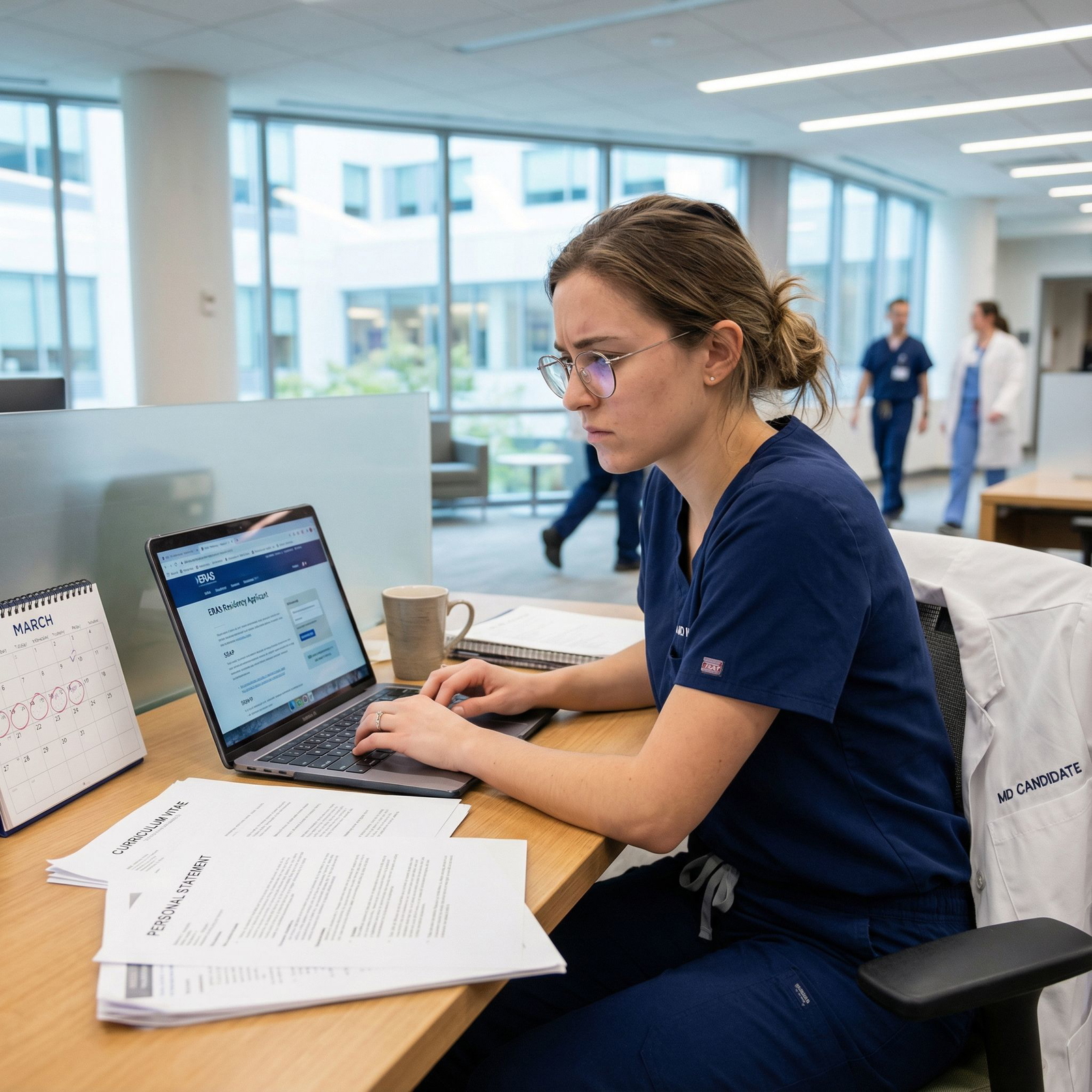
Understanding SOAP for IMGs Aiming at Medical Genetics
The Supplemental Offer and Acceptance Program (SOAP) can feel like a high‑pressure, last‑minute scramble—especially for an international medical graduate (IMG) targeting a niche specialty like medical genetics. But with the right planning, SOAP can become a structured, strategic second chance rather than a blind rush.
What is SOAP?
SOAP is an organized process during Match Week that allows unmatched or partially matched applicants to apply to unfilled residency positions. It is not a separate match, but a mechanism run through NRMP and ERAS to fill remaining positions fairly and transparently.
Key elements:
- Runs during Match Week (usually Monday–Thursday)
- You can apply only to unfilled programs on the SOAP list
- All communication and offers are controlled through ERAS/NRMP
- Multiple “offer rounds” happen across two days
- You must accept or reject offers within tight time windows
Understanding SOAP well before Match Week matters—especially when you’re an international medical graduate and your margin for error is smaller.
Why SOAP Planning Is Crucial for IMGs in Medical Genetics
Medical genetics is a small specialty with limited positions, and many programs preferentially select candidates with:
- Strong US clinical experience (USCE)
- Solid USMLE scores
- Research in genetics, genomics, or related fields
- Clear commitment to patient-centered, multidisciplinary care
For IMGs, opportunities in medical genetics residency through SOAP are fewer but can be strategically approached. You must be prepared for both:
- Direct medical genetics training pathways (rare in SOAP)
- Stepping-stone pathways (e.g., prelim internal medicine/pediatrics or categorical positions that align with future genetics fellowship goals)
Your SOAP preparation should therefore address two layers:
- SOAP logistics and execution
- Strategic thinking about genetics-related careers, even if you don’t SOAP directly into medical genetics
Pre-Match Week Preparation: Laying the Groundwork
The most successful SOAP experiences are decided months before Match Week, not on Monday morning when results are released.
1. Know Your Eligibility and Status
To participate in SOAP, you must:
- Be registered for NRMP and have certified a rank order list (or be eligible under specific NRMP rules)
- Be unmatched or partially matched as defined by NRMP
- Have ERAS access for that application year
- Meet ECFMG certification requirements (for IMGs), or be on track per NRMP rules
If you are an international medical graduate:
- Confirm your ECFMG certification status and timelines
- Ensure all USMLE results (Step 1, Step 2 CK; OET if needed) are uploaded
- Resolve any visa or documentation issues early (ideally 3–6 months before Match)
2. Build a SOAP-Ready ERAS Application
Your ERAS application for the regular Match becomes your SOAP application. During SOAP, you will not have time for major restructuring—only targeted edits and document uploads. So you must prepare in advance.
Focus on:
- Personal statement strategy
- Targeted experiences
- Letters of recommendation (LoRs)
- CV elements that highlight genetics-related interest
Personal Statements: Have Multiple Versions Ready
You may apply through SOAP to:
- Categorical Medical Genetics and Genomics programs (if available)
- Combined programs (e.g., Pediatrics-Medical Genetics, IM-Medical Genetics)
- Categorical or prelim Internal Medicine, Pediatrics, Transitional Year, or other fields that can serve as a path toward later genetics training
Prepare at least 3 versions of a personal statement:
Medical Genetics-focused PS
- Emphasize:
- Long-term goal to become a clinical geneticist
- Experience with genetic disorders, dysmorphology, metabolic diseases, or genomics research
- Comfort with multidisciplinary teams and lifelong patient relationships
- Example statement theme:
“From my first encounter with a child with an undiagnosed congenital anomaly, I realized the power of genetics not only to explain disease, but to guide an entire family’s future…”
- Emphasize:
Pediatrics-focused PS with genetics interest
- Highlight:
- Love of longitudinal care of children
- Interest in developmental disorders, congenital conditions, metabolic diseases
- Career plan: Pediatrics first, then Medical Genetics fellowship
- Highlight:
Internal Medicine or Transitional/Prelim PS with genetics connection
- Emphasize:
- Interest in adult-onset genetic conditions, cancer genetics, cardiogenetics
- Comfort with complex, multisystem disease
- Plan for future genetics fellowship or genomics-focused practice
- Emphasize:
You can quickly attach the most appropriate personal statement to each SOAP application category.
Letters of Recommendation: Build a Flexible Pool
Aim to have:
- 1–2 letters strongly tied to medical genetics or related research
- 1–2 letters from core clinical rotations (Internal Medicine, Pediatrics, Family Medicine)
- 1 letter flexible for multiple fields (e.g., from a program director or department chair)
Before Match Week:
- Ask letter writers if they’re comfortable with you using their letters for SOAP applications
- Ensure letters are uploaded to ERAS early so they can be assigned quickly
3. Document Your Medical Genetics Interest Clearly
Within your CV and ERAS:
- Highlight:
- Genetics or genomics research projects
- Presentations or posters about genetic syndromes, dysmorphology, rare diseases
- Electives in clinical genetics, pediatric neurology, oncology, or metabolic medicine
- Any exposure to:
- Genetic counseling sessions
- Tumor boards with genetics focus
- NICU/PICU cases with congenital anomalies
For an IMG residency guide in medical genetics, your story should be consistent: your past learning and your future goals align with genetics, even if your SOAP options end up in partner specialties like pediatrics or internal medicine.
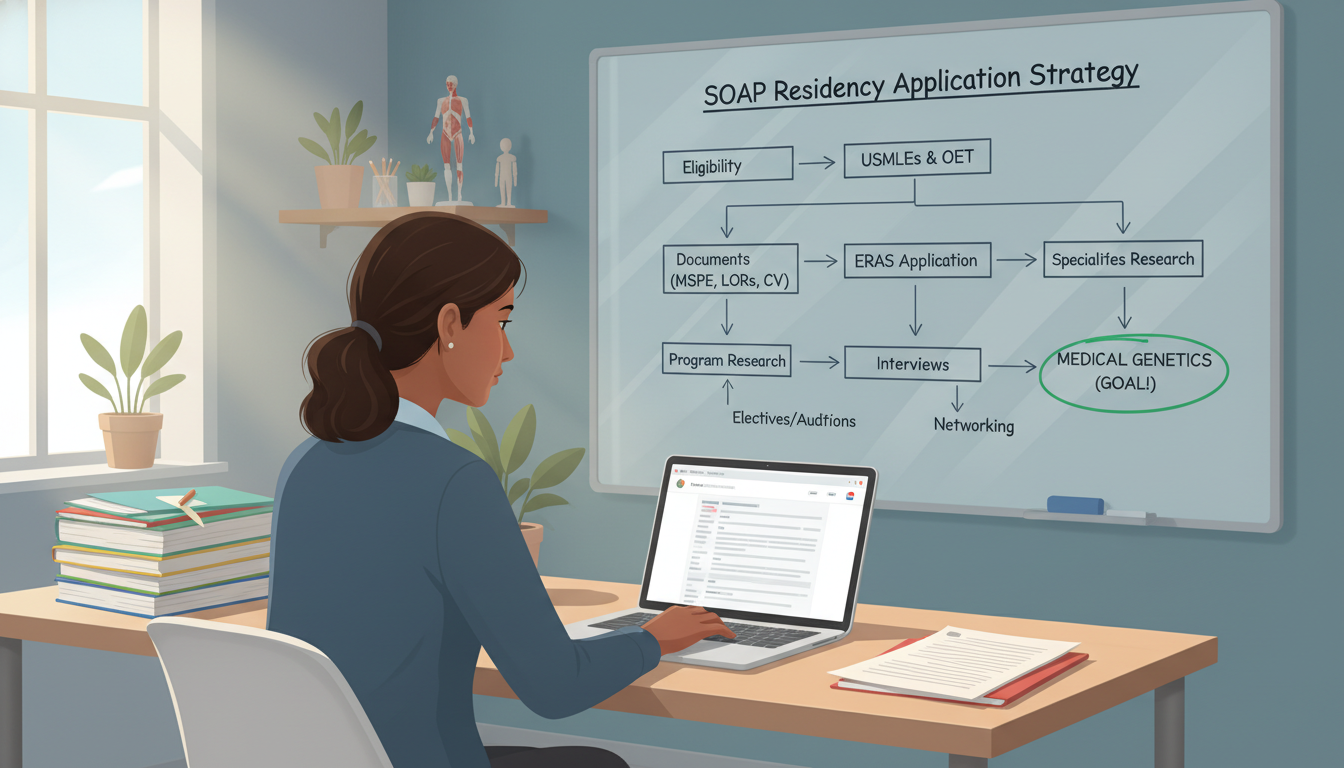
Strategic SOAP Planning: Scenarios and Pathways for Genetics
Because the number of medical genetics residency positions is relatively small, many IMGs must think beyond just “genetics or nothing.” A smart strategy considers realistic SOAP targets that keep you as close as possible to your long-term genetics career.
1. Understand the Training Pathways in Medical Genetics
In the US, common routes to become a clinical geneticist include:
- Combined programs:
- Pediatrics–Medical Genetics
- Internal Medicine–Medical Genetics
- Stand-alone Medical Genetics and Genomics after primary residency (Peds/IM/FM/OB-GYN/Neurology, etc.)
From a SOAP preparation viewpoint, this means:
- If direct combined genetics programs appear in SOAP, prioritize them.
- If not, focus on residencies that are recognized pathways to genetics fellowship, primarily:
- Categorical Pediatrics
- Categorical Internal Medicine
- Occasionally Family Medicine or OB-GYN (depending on your future niche in genetics)
2. Define Your SOAP Tiers Early
Before Match Week, create SOAP application tiers:
Tier 1: Direct or Combined Medical Genetics Programs
If any appear on the SOAP unfilled list:
- Prioritize programs that:
- Accept IMGs
- Are affiliated with academic centers with busy genetics services
- Have established visa support policies
Tier 2: Pediatrics or Internal Medicine Programs with Strong Genetics Presence
In your research before Match Week, identify:
- Hospitals with:
- Active genetics divisions or genetic counseling services
- Metabolic clinics, dysmorphology clinics, or cancer genetics programs
- Programs with faculty involved in genetics research or genomics initiatives
Even if the residency itself is not genetics, being in such an environment supports your eventual genetics fellowship or research.
Tier 3: Transitional Year or Prelim Positions as a Bridge
As part of your IMG residency guide strategy:
- Consider preliminary internal medicine or transitional year roles when categorical spots in Peds/IM are unavailable
- During that year, you can:
- Gain US clinical experience
- Network with genetics departments
- Strengthen your CV for a subsequent genetics or categorical match
- Document that you understand the bridge nature of these positions and have a clear plan for the next steps
3. Evaluate Programs Quickly but Thoughtfully
During SOAP, you will see a list of unfilled programs on Monday. You’ll have limited time to:
- Filter by specialty
- Check program websites
- Assess IMG-friendliness and visa support
Create a pre-SOAP spreadsheet with columns for:
- Program name
- Specialty type (Genetics, Peds, IM, TY, Prelim)
- State/location
- Known ECFMG/IMG status
- Sponsorship type (J-1, H-1B, none)
- Presence of genetics division or related services
- Your tier ranking (1–3)
This allows you to rapidly plug information in during SOAP, rather than starting from scratch under pressure.
Executing During SOAP Week: Step-by-Step
Match Week is emotionally intense. A practical, timed plan can turn chaos into ordered action.
Monday Morning: Outcome and Emotional Reset
When you receive your NRMP email indicating that you are unmatched or partially matched:
- Give yourself a defined window for emotion (30–60 minutes).
- Afterward, shift into structured action mode:
- This week is about solutions, not self-criticism.
Remind yourself: Many excellent IMGs end up in SOAP; the process does not define your worth or future.
Monday Midday: Analyzing the Unfilled List
Once the SOAP-eligible unfilled list is released:
Filter for Medical Genetics and Genomics, combined programs, and partner specialties:
- Medical Genetics / Medical Genetics & Genomics
- Pediatrics
- Internal Medicine
- Transitional Year / Prelim IM
Assign each program to your Tier 1/2/3 framework.
Cross-check:
- Do they take ECFMG-certified IMGs?
- Do they have any noted visa sponsorship limitations?
Monday–Tuesday: Finalizing Application Materials
You have a limited number of programs you can apply to (NRMP sets the cap; typically, 45 total programs across all specialties).
Action steps:
- Decide how many applications per tier (e.g., 5–10 Tier 1, 20–25 Tier 2, remainder Tier 3).
- For each specialty:
- Attach the appropriate personal statement.
- Assign the strongest relevant LoRs (e.g., genetics-related letters for genetics programs; pediatrics letters for pediatric programs).
Tip for IMGs: For SOAP residency applications, your clarity of goals is an advantage. While you must be flexible, you can explicitly state your interest in genetics as a long-term objective without sounding unfocused, as long as you connect it convincingly to the program’s strengths.
Tuesday–Thursday: Communication, Interviews, and Offers
During SOAP:
- Programs can contact you for interviews (phone, Zoom, or short structured interviews).
- You cannot initiate contact unless allowed under NRMP rules. Check the yearly NRMP SOAP communication guidelines carefully.
- Offers are extended in multiple rounds, and:
- You must accept or reject within a strict deadline.
- Once you accept an offer, you are locked in and exit SOAP.
Interview preparation focus for medical genetics–oriented IMGs:
Be ready to succinctly explain:
Why this specialty and this program?
- If it’s genetics:
- Your long-standing interest in genetic mechanisms and family-based care
- Specific experiences (case examples, research, observerships)
- If it’s pediatrics or IM:
- How their patient population and faculty align with your genetics or rare-disease interests
- If it’s genetics:
Why are you unmatched, and what have you learned?
- Be honest, brief, and non-defensive:
- USMLE score limitations
- Late application
- Limited USCE due to timing or global issues (e.g., pandemic)
- Immediately pivot to:
- How you’ve improved
- Why you’re now well-prepared for training
- Be honest, brief, and non-defensive:
What is your long-term plan?
- Genetics-focused example:
“My long-term goal is to complete residency training in pediatrics and then pursue a fellowship in Medical Genetics and Genomics. I am especially interested in caring for children with congenital anomalies and metabolic diseases, and in contributing to family counseling and precision medicine initiatives.”
- Genetics-focused example:
Decision-making during offer rounds:
- Before offers start, rank your preferences independently of perceived competitiveness.
- If a direct or combined genetics spot appears and is realistic, that’s usually top priority.
- For pediatrics and IM:
- Prioritize programs with strong genetics exposure and better overall training environments, even if in less glamorous locations.
- Avoid accepting a position that clearly does not support your long-term viability (e.g., no visa support if you need one, or a field you cannot see yourself completing).

Strengthening Your Profile Specifically for Genetics (Before and After SOAP)
Whether you SOAP into genetics, pediatrics, internal medicine, or a bridge role, your career aim remains the same: becoming a strong candidate in the genetics match or fellowship match later.
Pre-SOAP: Steps to Enhance a Genetics-Oriented Application
Even in the months before SOAP, you can do the following:
- Get involved in genetics projects:
- Case reports about rare genetic syndromes
- Chart reviews in dysmorphology or metabolic clinic
- Research with a genetics faculty mentor (even remotely)
- Attend genetics-related conferences or webinars:
- American College of Medical Genetics and Genomics (ACMG)
- Local hospital seminars on genomics or precision medicine
- Complete online genetics coursework:
- Coursera/edX modules on human genetics, genomics, or bioinformatics
- Free institutional CME on genetic testing and counseling basics
In your ERAS application, present these activities clearly under Research, Experiences, and Publications, showing a coherent narrative that supports your interest in medical genetics.
Post-SOAP: If You Do Match (But Not Directly into Genetics)
If SOAP places you into:
Pediatrics or Internal Medicine:
- Seek rotations with:
- Medical genetics clinic
- Metabolic service
- Oncology/genetics or cardiology/genetics collaboration
- Ask for mentorship from:
- Clinical geneticists
- Genetic counselors
- Continue or initiate genetics research projects as a resident
- Seek rotations with:
Transitional Year / Prelim IM:
- Focus on building:
- Strong US evaluations (excellent performance reports)
- Networking with faculty from genetics-related disciplines
- Use your time to prepare a stronger application for:
- Categorical Pediatrics/IM next cycle
- Or, in some cases, a future Medical Genetics and Genomics residency or fellowship
- Focus on building:
Post-SOAP: If You Don’t Match at All
If you emerge from SOAP unmatched, see this as a one-year strategic interval, not the end.
Action plan:
Clinical Exposure:
- Secure observerships or research roles in departments with active genetics services.
- Gain US clinical letters from supervising physicians with reputable affiliations.
Academic Productivity:
- Focus on at least 1–2 tangible outputs:
- Case report on a genetic disorder
- Review article on a genetics topic
- Present at regional or national conferences if possible.
- Focus on at least 1–2 tangible outputs:
Application Gap Analysis:
- Discuss your profile with:
- Residency advisors
- Genetics faculty
- IMGs who successfully matched into genetics or partner specialties
- Identify if your main weaknesses are:
- USMLE scores
- Lack of USCE
- Limited research
- Poor personal statement or interview skills
- Build a targeted plan to fix them before the next cycle.
- Discuss your profile with:
Practical Tips and Common Pitfalls for IMGs in SOAP
Practical Tips
- Have a SOAP playbook ready:
- A one-page document summarizing:
- Your tier system
- Preferred specialties
- Key talking points for interviews
- A one-page document summarizing:
- Practice SOAP-style interviews:
- Short, direct responses
- Emphasis on readiness to work hard, adapt quickly, and learn
- Know your visa story:
- If you need J-1 or H-1B:
- State it clearly when asked
- Be familiar with J-1 obligations, return requirements, etc.
- If you need J-1 or H-1B:
- Stay organized:
- Keep track of which programs you applied to, whom you spoke to, and what they emphasized during communication.
Common Pitfalls to Avoid
- Panic applying to every available program without thought for fit, visas, or long-term goals
- Having only one generic personal statement that doesn’t speak to the specialty
- Failing to articulate why you are unmatched in a composed and constructive manner
- Sounding too rigid about only wanting genetics, which may make a pediatrics or internal medicine program worry you won’t commit to their training
- Ignoring your mental health and physical well-being during Match Week—exhaustion can hurt your interview performance
FAQs: SOAP Preparation for IMGs in Medical Genetics
1. As an international medical graduate, how realistic is it to enter medical genetics via SOAP?
Direct entry into a Medical Genetics and Genomics residency via SOAP is relatively uncommon because the specialty is small, and many positions fill during the main match. That said, it is not impossible, and you should be prepared if such positions appear. More realistically for IMGs, SOAP can be used to secure pediatrics, internal medicine, or prelim positions that keep you on a viable path to a future genetics fellowship or combined program. The key is to maintain a consistent genetics-focused narrative while showing full commitment to whichever residency you join.
2. Should I mention my genetics interest when applying to pediatrics or internal medicine through SOAP?
Yes, but frame it strategically. Programs want residents who will complete their training and contribute to their specialty. You can say, for example, that you are deeply interested in genetic and metabolic diseases within pediatrics or adult-onset hereditary disorders within internal medicine, and that you see residency as the essential foundation for any future subspecialty, including genetics. Emphasize that you are committed to doing your best work as a pediatrician or internist first, even as you keep long-term career goals in mind.
3. What is SOAP in residency, and how is it different from the regular Match?
SOAP (Supplemental Offer and Acceptance Program) is a structured process during Match Week that fills unfilled residency positions. In the regular Match, you submit rank lists and receive a single outcome on Match Day. In SOAP, unmatched or partially matched applicants can apply to programs with unfilled positions through ERAS, be interviewed remotely, and receive offers in multiple rounds. You cannot negotiate outside the system, and communication rules are strict. SOAP is designed to be fair and organized compared to informal post-Match scrambling.
4. How can I prepare specifically for SOAP interviews as an IMG interested in genetics?
Focus on three areas:
- Your story: Be able to explain your journey as an IMG, your sustained interest in medical genetics, and why you applied to that specific specialty/program.
- Resilience and readiness: Show that you have processed the disappointment of going unmatched and are now fully focused on using this opportunity productively.
- Clarity of plans: Whether you’re interviewing for genetics, pediatrics, or internal medicine, articulate how that training fits your long-term career path, without suggesting that you will devalue or abandon the primary specialty.
Simulating 5–10 short, high-pressure mock interviews with mentors or peers—especially focusing on questions about being unmatched and being an IMG—will significantly improve your confidence and performance during SOAP.
By treating SOAP not as a desperate last resort, but as a structured, strategic process, you can position yourself, as an international medical graduate, to stay on track toward a career in medical genetics—whether through direct entry, a related residency, or a carefully planned bridge year.