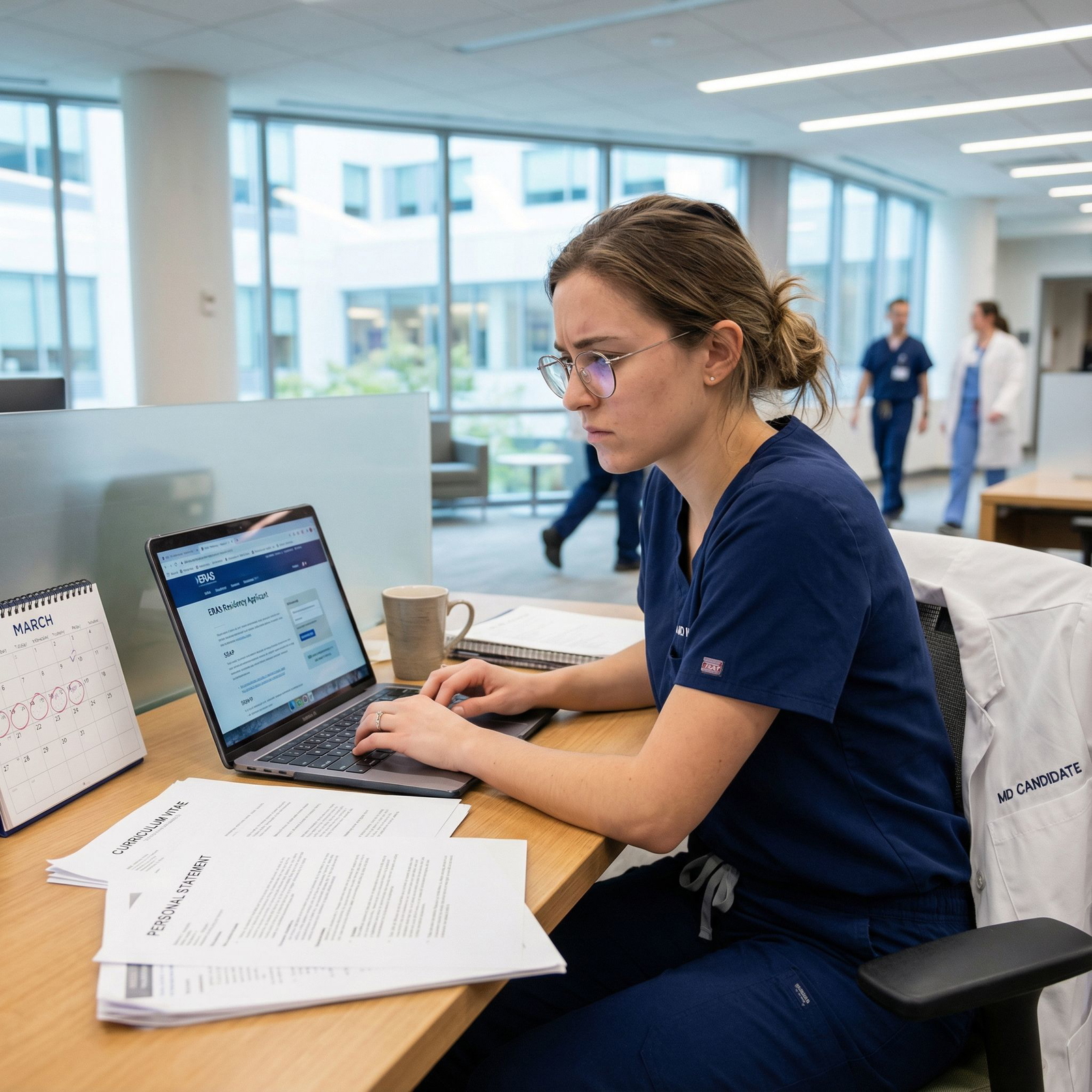
Understanding SOAP for the OB GYN–Bound IMG
The Supplemental Offer and Acceptance Program (SOAP) is your structured, time‑compressed second chance to obtain a residency position if you go unmatched or partially matched after the main NRMP Match. For an international medical graduate (IMG) pursuing OB GYN residency, SOAP can be both an opportunity and a high‑pressure experience.
Before you can prepare effectively, you must clearly understand what is SOAP, how it works, and what it is not:
What SOAP is
- A formal NRMP process during Match Week that allows eligible unmatched and partially matched applicants to apply to unfilled positions.
- Conducted over several rounds of offers (usually Monday–Thursday of Match Week).
- Fully electronic and time‑sensitive; communication rules are strictly regulated.
What SOAP is not
- It is not the same as the post‑Match “scramble” that existed before 2012.
- It is not a guaranteed route into OB GYN residency; unfilled OB GYN positions are often very limited.
- It is not a time to begin preparing your application; by Monday of Match Week you should already be fully prepared.
SOAP‑eligibility basics
- Registered for the NRMP Match and not withdrawn.
- Eligible to start training on July 1 (ECFMG certified or expected to be certified in time, depending on program requirements).
- Fully or partially unmatched at the start of SOAP.
- Not holding a position in a concurrent Year‑1 residency program.
For an IMG, especially in a competitive field like OB GYN, SOAP preparation must begin months before Match Week. Think of this as your insurance policy: you hope not to need it, but you must be ready in case you do.
Strategic Mindset for IMGs Pursuing OB GYN Through SOAP
The reality of the OB GYN SOAP landscape
OB GYN is a moderately competitive specialty and is particularly challenging for IMGs. In many years:
- Most OB GYN positions fill in the main Match.
- Only a small number of unfilled OB GYN positions (if any) appear on the SOAP list.
- Some OB GYN–interested IMGs successfully SOAP into preliminary surgery, transitional year, or categorical family medicine while planning to re‑apply to OB GYN later.
You should approach SOAP with a tiered strategy:
Tier 1 – OB GYN categorical (if available)
- Prioritize any categorical OB GYN opportunities that appear in the SOAP list.
- Realistically, there may be zero or very few spots.
Tier 2 – Related fields that keep you surgically and women’s health–oriented
- Transitional Year (TY) with good OB GYN exposure.
- Preliminary surgery or preliminary medicine in hospitals with strong OB GYN departments.
- Family Medicine programs with strong women’s health, prenatal care, and L&D exposure.
Tier 3 – Any viable PGY‑1 position
- Categorical Internal Medicine, Pediatrics, or other specialties that keep you clinically active in the U.S. system while improving your portfolio for a future OB GYN application.
This tiered, realistic mindset is a core part of IMG residency guide strategies tailored for the obstetrics match.
Emotional preparation
Being unmatched can be devastating. For IMGs, the stakes often include visas, finances, and family expectations. Effective SOAP preparation includes emotional resilience:
- Accept that you may need Plan B or Plan C without giving up on your long‑term OB GYN goals.
- Recognize that matching into any ACGME‑accredited residency can be more valuable than staying out of training for another year, depending on your circumstances.
- Reframe SOAP as a structured second opportunity, not a failure.
Pre‑SOAP Preparation: What To Do Months Before Match Week
You should begin preparing for SOAP as early as November–January, long before you know your Match result. Much of this preparation is similar to your original ERAS work—but adapted for multiple potential specialties and a rapid timeline.
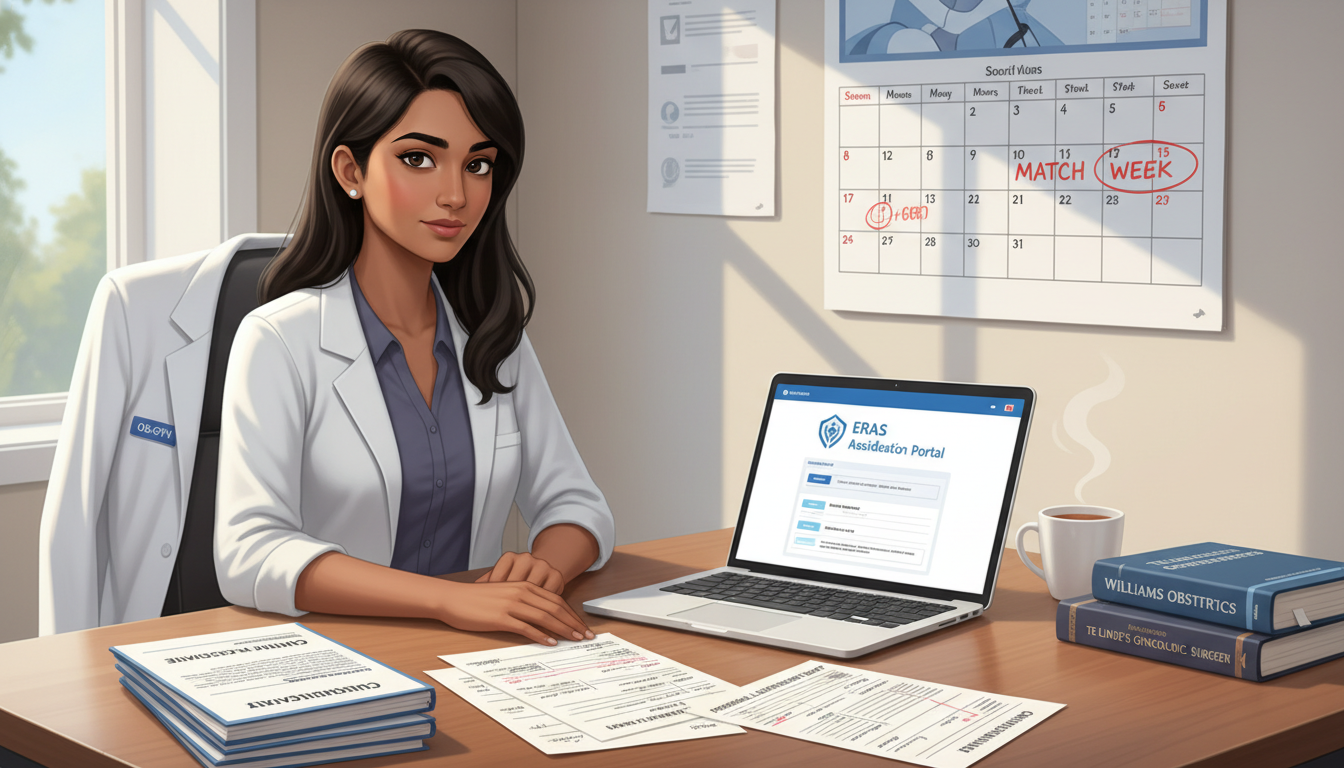
1. Optimize your ERAS profile for flexibility
Your ERAS application is the backbone of your SOAP file. During SOAP, most programs will see the same underlying application you used for the main Match.
Key steps:
Update your CV
- Add any new observerships, electives, research, publications, quality improvement projects, or conferences.
- Highlight women’s health, surgery, and L&D exposure for OB GYN; for broader SOAP strategy, also highlight general inpatient, outpatient, and procedural experience.
Clarify your clinical timeline
- Ensure all dates (graduation, internships, observerships) are accurate and clearly described.
- Address gaps proactively: brief descriptions such as “Dedicated period for USMLE preparation and part‑time clinical volunteering.”
Board scores and exam status
- Confirm that USMLE (or COMLEX) results are correctly uploaded.
- If you have Step 3, emphasize it; it can be a plus for IMGs, especially for visa‑requiring candidates in SOAP.
2. Craft multiple personal statement variants
For SOAP, you need pre‑written, specialty‑specific personal statements because you will not have time to write from scratch during Match Week.
Create at least:
Core OB GYN personal statement
- Focus: motivation for women’s health, exposure to labor & delivery, surgical interest, long‑term OB GYN goals.
- Include:
- A defining OB GYN clinical experience.
- How your home‑country training and any U.S. women’s health experiences prepared you.
- Your commitment to patient safety, teamwork, and evidence‑based practice.
Women’s health–oriented generalist statement
- Usable for Family Medicine, Transitional Year, or Internal Medicine programs with strong women’s health exposure.
- Emphasize primary care, continuity of care, prenatal management, and preventive women’s health.
General medicine/surgery statement
- More flexible for broader SOAP targets (e.g., internal medicine, preliminary surgery).
- Highlight your adaptability, eagerness to gain U.S. clinical experience, and openness to diverse patient populations.
Practical advice:
Name your documents clearly (e.g., “PS_OBGYN_vFinal,” “PS_FM_WomensHealth,” “PS_IM_General”) and store them in cloud storage so you can quickly upload or assign them as needed.
3. Prepare a short, adaptable “SOAP summary” paragraph
Many programs read quickly during SOAP. Prepare a concise, 3–5 sentence summary that you can:
- Paste into emails (if allowed post‑SOAP) or interview chats.
- Use as an introduction during quick phone/online meetings.
Example for an OB GYN–oriented IMG:
I am an international medical graduate from [Country] with strong clinical experience in obstetrics and gynecology, including over 12 months on labor and delivery and operating room services. I completed USMLE Step 1 and Step 2 with scores of [XXX/Pass], am ECFMG certified, and have recent U.S. clinical observerships in women’s health and high‑risk obstetrics. I am deeply committed to a career in OB GYN and bring strong work ethic, cultural sensitivity, and dedication to quality improvement.
You can create variants tailored for Internal Medicine, Family Medicine, or Transitional Year.
4. Line up letters of recommendation with SOAP in mind
Strong and recent letters are critical, especially for IMGs.
OB GYN–specific letters
- Ideally, 1–2 letters from OB GYN faculty, especially from U.S. clinical or research experiences.
- Ask letter writers to mention:
- Your hands‑on involvement in L&D or OR (if allowed).
- Your work ethic, professionalism, and communication with patients.
- How you compare with U.S. graduates they have supervised.
Generalist or other specialty letters
- At least 1–2 letters from Internal Medicine, Family Medicine, Surgery, or Transitional Year‑relevant rotations.
- These will support your broader SOAP applications.
Confirm that letters are:
- Uploaded to ERAS well before Match Week.
- Assigned thoughtfully for each potential specialty (you can re‑assign within ERAS during SOAP).
5. Understand SOAP residency logistics and rules
Familiarize yourself with the official NRMP SOAP guidelines:
The SOAP timeline:
- Monday of Match Week: You learn if you are unmatched/partially matched.
- Monday–Thursday: Multiple offer rounds and acceptance windows.
- Thursday afternoon: SOAP concludes.
Communication rules:
- During active SOAP rounds, unsolicited applicant‑to‑program contact is generally prohibited.
- Programs may initiate contact with you via ERAS messaging or phone; you must respond promptly and professionally.
This foundational knowledge of SOAP residency mechanics prevents rule violations that could jeopardize your chances.
Detailed SOAP Strategy During Match Week for the OB GYN–Focused IMG
When Monday arrives and the NRMP notifies you of an unmatched or partially matched result, you must switch into execution mode. Good SOAP preparation allows you to act with clarity rather than panic.
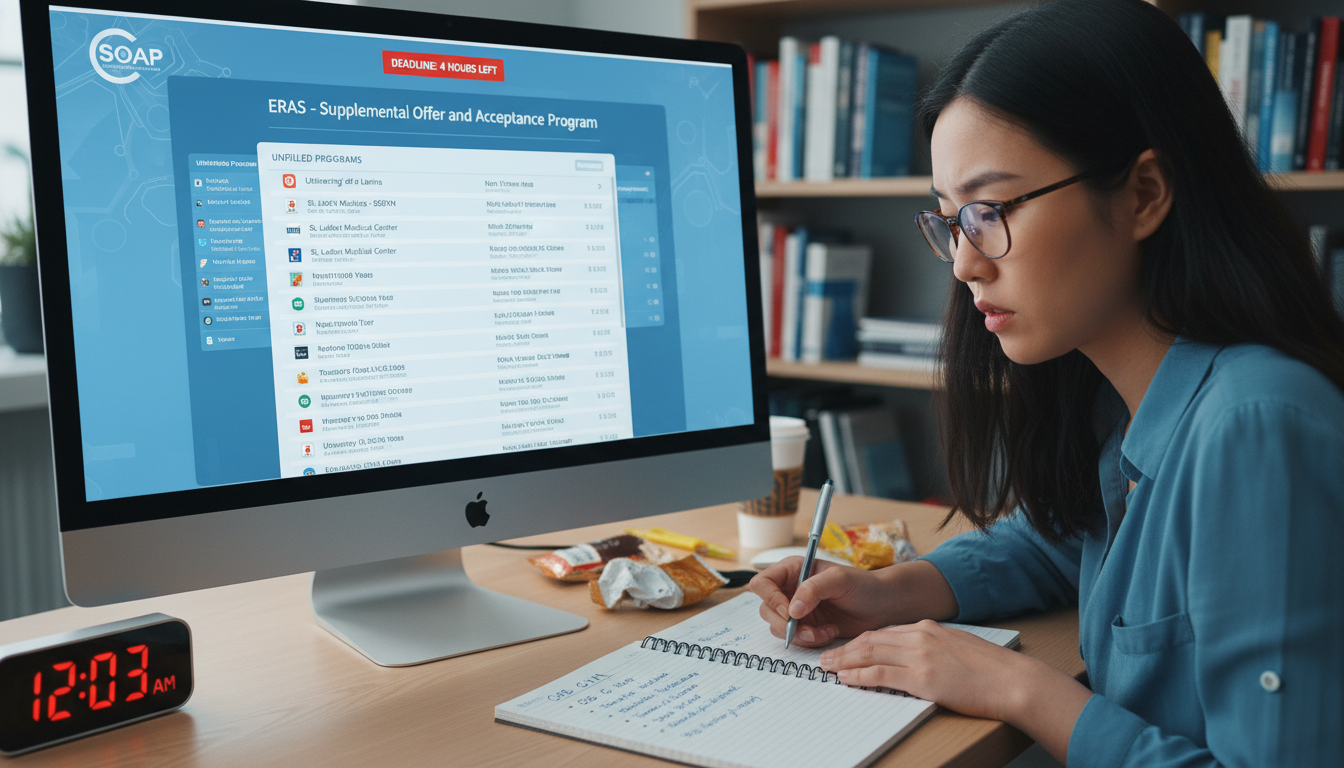
Step 1: Confirm SOAP eligibility and review your status
On Monday:
- Log into NRMP and ERAS early.
- Confirm:
- Whether you are fully unmatched or partially matched (e.g., matched to an advanced position but no prelim year).
- Your SOAP-eligibility is confirmed in your NRMP status.
If you are partially matched to a later‑starting OB GYN advanced position (rare scenario in OB GYN but possible in other specialties), SOAP may be used to find a preliminary year. For OB GYN, however, positions are usually categorical PGY‑1.
Step 2: Analyze the List of Unfilled Programs
Once the List of Unfilled Programs is released:
Filter by specialty
- Look for “Obstetrics and Gynecology” (categorical or preliminary, if any exist).
- Then explore:
- Family Medicine with women’s health emphasis.
- Transitional Year.
- Internal Medicine or Pediatrics at academic centers with strong OB GYN exposure.
Group programs by priority tiers
- Tier A – Core OB GYN positions:
- Any categorical OB GYN spots.
- Consider geographical preferences secondary; take a broad, pragmatic view.
- Tier B – Related positions bridging to OB GYN:
- TY or FM programs with significant OB, prenatal care, and gynecologic procedures.
- Medicine prelims in hospitals with large OB GYN departments.
- Tier C – Viable positions ensuring clinical training:
- Categorical IM or Pediatrics, or other specialties that keep you engaged and competitive.
- Tier A – Core OB GYN positions:
Research quickly but systematically
- For each program:
- Check their website and resident profiles.
- Identify if they have a history of accepting IMGs.
- Note visa sponsorship policies (J‑1, H‑1B).
- For each program:
Maintain a simple spreadsheet with columns:
- Program name and code
- Specialty
- Tier (A/B/C)
- IMG‑friendliness (yes/no/unknown)
- Visa policy
- Notes (OB exposure, hospital size, etc.)
Step 3: Decide on your application allocation strategy
During SOAP, ERAS typically limits the number of programs you can apply to (e.g., 45 total; confirm the current year’s rule). You must allocate these slots wisely.
For an OB GYN‑focused IMG, one possible template:
- 5–10 applications: OB GYN categorical (if available).
- 15–20 applications: Family Medicine / Transitional Year / Preliminary programs with strong women’s health exposure.
- Remaining applications: Internal Medicine or Pediatrics categorical and other viable PGY‑1 posts.
Factors to consider:
- Your competitiveness profile (USMLE scores, YOG, ECFMG status, U.S. clinical experience).
- Visa needs (some programs in SOAP may not sponsor visas).
- Geographic flexibility (SOAP rewards broad geographic openness).
Step 4: Tailor your ERAS documents rapidly
For each specialty category:
- Assign the appropriate personal statement (OB GYN, women’s health–oriented, or generalist).
- Assign letters of recommendation:
- For OB GYN programs: prioritize OB GYN letters plus 1–2 strong general clinical letters.
- For FM/TY/IM: use a mix of IM/FM and at least one OB GYN or women’s health letter if it fits your narrative.
- Ensure your Program Signaling (if applicable in that year) is used strategically; some systems limit signals even in SOAP.
Given the time pressure, you may not perfectly optimize each program individually, but you should at least specialty‑tailor your application sets.
Step 5: Prepare for rapid interviews and contacts
Programs may:
- Email you via ERAS.
- Call you directly.
- Invite you to a brief virtual interview (often same‑day scheduling).
For OB GYN and related programs:
Prepare 2–3 minute answers for:
- Why OB GYN?
- Why our program (based on quick research)?
- How your IMG background and women’s health experience add value.
- How you handle stress, night shifts, or high acuity situations on L&D.
Be ready to explain:
- Why you are in SOAP (e.g., competitiveness of OB GYN, late ECFMG certification, visa constraints).
- Why you are still highly motivated and well‑prepared for residency.
Remember, SOAP interactions are often short and focused; clarity and professionalism matter more than long, elaborate stories.
Step 6: Managing offers and acceptance
During the SOAP offer rounds:
- You may receive:
- No offers,
- One offer, or
- Multiple offers (rare but possible).
Key rules:
- You can only accept one offer at a time.
- Once you accept, you are bound to that program and withdrawn from other SOAP activities.
- Declining an offer is risky; there is no guarantee of a better one in later rounds.
For OB GYN‑aspiring IMGs:
- If you receive a categorical OB GYN offer: this is usually your top priority.
- If you receive non‑OB GYN offers:
- Consider long‑term strategy:
- Is the program supportive?
- Is the specialty acceptable as a possible permanent career if re‑applying to OB GYN later does not work out?
- Remember that having any ACGME‑accredited residency training can be better than remaining unmatched another year, but this depends on your personal goals, finances, and visa issues.
- Consider long‑term strategy:
Long‑Term Strategy: If You Don’t Match Into OB GYN Through SOAP
Not all IMGs will secure OB GYN positions in SOAP. Your next steps should be deliberate and strategic.
If you SOAP into another specialty
If you match into, say, Family Medicine, Internal Medicine, or a Transitional Year, you can:
Focus on providing excellent patient care and earning strong evaluations.
Seek electives or rotations that keep you connected to women’s health:
- OB clinics, L&D elective months, gynecology clinics.
- Women’s health special interest groups or clinics.
Engage in:
- Research projects related to obstetrics, gynecology, maternal health, or reproductive epidemiology.
- Quality improvement projects involving L&D outcomes or women’s preventive care.
In 1–2 years, if you still desire OB GYN, you may re‑enter the obstetrics match with:
- Strong U.S. experience.
- Faculty advocates.
- A more robust CV.
However, be realistic: changing specialties is never guaranteed.
If you remain unmatched after SOAP
If you do not secure a position at all:
Conduct a post‑SOAP debrief:
- Analyze your application weaknesses: scores, YOG, lack of U.S. clinical experience, limited research, or inadequate letters.
- Seek honest feedback from mentors, advisors, or program leaders where you had observerships.
Build a structured gap year (or more):
- Obtain U.S. clinical experience in OB GYN or related fields (women’s health, FM, IM).
- Engage in research—ideally in academic OB GYN departments.
- Improve your profile:
- Gain Step 3 (if not yet taken and allowed by your pathway).
- Strengthen English communication and presentation skills.
- Publish or present at conferences.
Refine your application for the next cycle:
- Target a broader range of specialties if OB GYN alone remains too competitive.
- Emphasize growth and reflection in updated personal statements.
This long‑term planning is an essential part of any IMG residency guide focusing on competitive specialties.
Practical Tips and Common Pitfalls in SOAP Preparation
Practical tips
Create a SOAP command center
- One central folder (cloud‑based) with:
- CV
- All personal statement versions
- Copies of your LOR list
- Spreadsheet for unfilled programs
- A daily timeline for Match Week
- One central folder (cloud‑based) with:
Practice “micro‑interviews”
- Ask friends or mentors to call you randomly and conduct a 5‑minute mock SOAP interview.
- Practice concise, structured answers.
Time‑zone awareness
- Many IMGs are outside the U.S. during SOAP; ensure your phone and communication channels are available during U.S. business hours.
- Have a quiet environment ready for sudden interviews.
Visa documents ready
- Have digital copies of:
- Passport
- ECFMG certificate
- USMLE transcripts
- Be ready to discuss your visa status clearly and confidently.
- Have digital copies of:
Common pitfalls for IMGs
- Over‑focusing solely on OB GYN
- Applying only to OB GYN programs when there are very few unfilled spots can leave you with no position at all.
- Underestimating the time pressure
- Trying to write new personal statements or request new letters during SOAP week is typically unrealistic.
- Ignoring communication rules
- Unsolicited calls/emails to programs during restricted periods can hurt your chances.
- Emotional decision‑making
- Declining a viable offer in hopes of a “perfect” one that may never come.
A measured, prepared approach to SOAP preparation improves your odds of securing a position that advances your career—even if it is not your ideal OB GYN spot immediately.
FAQs: SOAP Preparation for OB GYN–Bound IMGs
1. Is it realistic for an IMG to get an OB GYN residency through SOAP?
It is possible but uncommon. OB GYN generally fills most of its positions in the main Match, so few (if any) OB GYN categorical positions may appear in SOAP. However, some years do have unfilled OB GYN spots, particularly in less popular geographic regions or newly accredited programs. Your best strategy is to apply to any OB GYN positions that appear, while also applying broadly to other suitable specialties to avoid going entirely unmatched.
2. How should I explain being in SOAP during an interview?
Be honest yet concise, avoiding self‑criticism or blame. For example:
OB GYN is highly competitive, and while I had strong clinical experiences and strong letters, my application likely faced challenges due to [late ECFMG certification / slightly lower Step scores / limited U.S. clinical exposure]. I remain fully committed to residency training and have used this period to strengthen my skills and reflection. I am grateful for this opportunity to be considered by your program.
Programs understand that SOAP includes many qualified candidates.
3. What is SOAP’s timeline, and how can I avoid missing critical steps?
SOAP typically runs Monday–Thursday of Match Week:
- Monday morning: You learn unmatched/partially matched status.
- Monday: You review unfilled programs and submit applications through ERAS.
- Tuesday–Thursday: Multiple rounds of program offers and applicant acceptances.
To avoid missing steps:
- Set reminders and alarms for each offer round.
- Keep your phone and email available at all times.
- Act promptly on any interviews or invitations received.
Always review the current year’s official NRMP schedule for precise times.
4. Should I prioritize any residency over waiting and re‑applying to OB GYN?
This depends on your personal goals, finances, visa situation, and tolerance for uncertainty. Advantages of accepting a non‑OB GYN position through SOAP include:
- Entry into the U.S. GME system.
- Eligibility for loans, visas (if sponsored), and salary.
- Opportunity to build a stronger U.S. portfolio.
However, some applicants choose to wait and re‑apply if they feel a different specialty would not be an acceptable long‑term career. Discuss your individual circumstances with trusted mentors or advisors before SOAP week so you can make fast, informed decisions.
By understanding what is SOAP, planning SOAP preparation months in advance, and adopting a flexible, tiered strategy for the obstetrics match, international medical graduates can navigate Match Week with greater confidence. While matching directly into OB GYN residency through SOAP is challenging, a well‑executed plan—grounded in realism, professionalism, and resilience—maximizes your chances of securing a position that moves your medical career forward.