Understanding SOAP for IMGs Targeting Vascular Surgery
SOAP (Supplemental Offer and Acceptance Program) is a structured process that allows unmatched or partially matched applicants to obtain unfilled residency positions after the NRMP Main Match. For an international medical graduate interested in vascular surgery, understanding what SOAP is and how it works is essential, even if your primary goal is to match directly.
What is SOAP?
SOAP is a time‑compressed, rules‑driven application and offer process that takes place during Match Week. It allows eligible applicants who are unmatched or partially matched to apply to unfilled residency positions listed in the NRMP’s List of Unfilled Programs.
Key characteristics:
- Time‑limited: Takes place over several tightly scheduled days in Match Week.
- Electronic only: All applications and communication go through ERAS and NRMP systems.
- Strict rules: No unsolicited communication with programs (email/phone/LinkedIn) about positions during SOAP.
- Multiple rounds of offers: Programs send offers in rounds; applicants accept, reject, or let offers expire.
For most IMGs targeting vascular surgery, SOAP often becomes more relevant for backup specialties (e.g., preliminary general surgery, transitional year, or categorical general surgery) rather than vascular surgery itself, because:
- Vascular surgery residuecies are highly competitive.
- Integrated vascular program spots rarely go unfilled.
- Most SOAP opportunities around vascular surgery relate to preliminary surgery or occasionally categorical general surgery that may position you for vascular exposure later.
Who Is Eligible for SOAP?
To participate in SOAP, you must:
- Be eligible for the Main Match.
- Be registered for NRMP and certified for the Match by the ROL deadline.
- Be partially matched (e.g., advanced position only without a preliminary year) or unmatched.
- Have ERAS access (through your medical school or ECFMG).
- For IMGs: Have ECFMG certification or verification of completion of requirements by NRMP’s SOAP eligibility deadline.
If you do not meet these conditions, you cannot use SOAP and must pursue post‑SOAP or off‑cycle strategies instead.
Setting a Realistic Strategy as an IMG in Vascular Surgery
Before discussing concrete SOAP preparation steps, you need a realistic framework about vascular surgery pathways and what SOAP can (and cannot) do for you.
Pathways to a Vascular Surgery Career
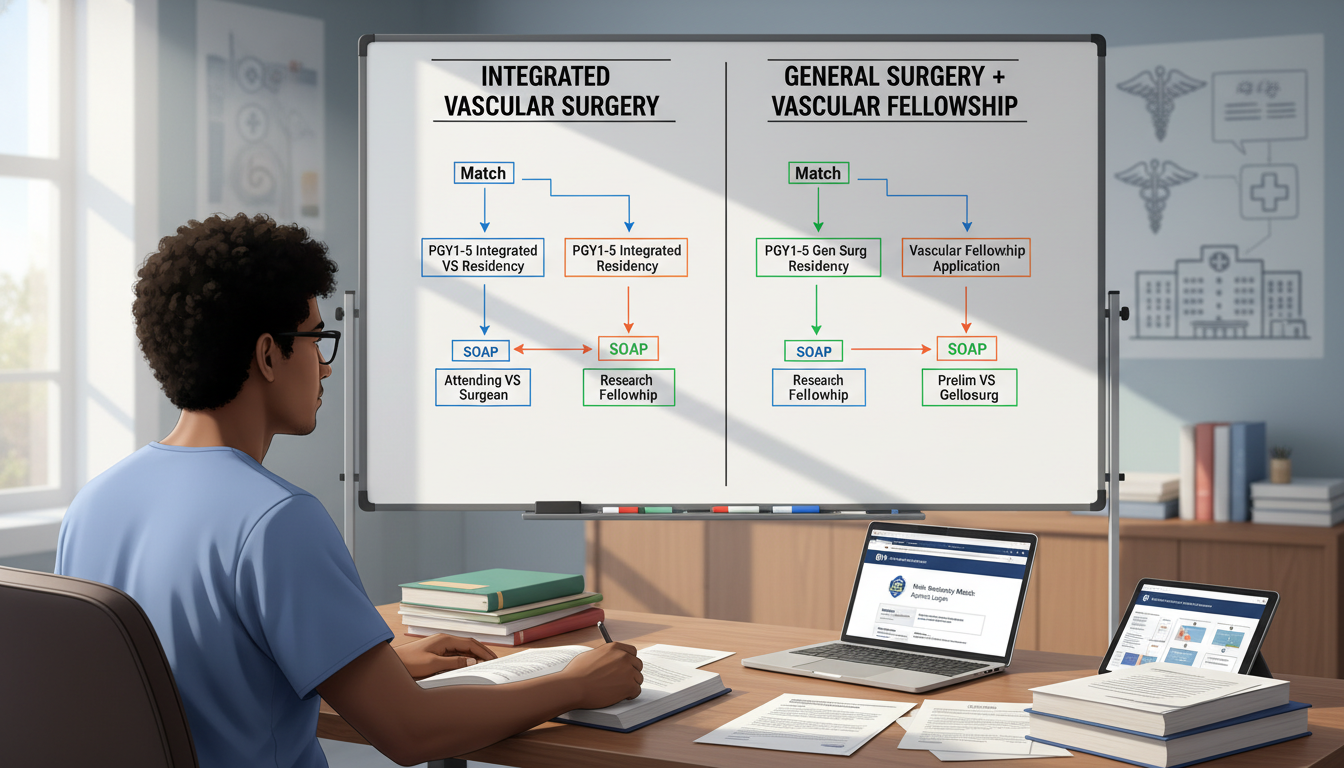
As an international medical graduate, your path into vascular surgery in the U.S. typically follows one of two routes:
Integrated Vascular Surgery Residency (0+5)
- Match directly into a 5‑year vascular surgery program.
- Extremely competitive, with small numbers of positions.
- SOAP opportunities are rare to non‑existent in this pathway, because almost all spots fill in the Main Match.
Traditional Pathway (General Surgery → Vascular Fellowship)
- Match into categorical general surgery (5 years), then apply to a 2-year vascular surgery fellowship.
- More positions exist; some unfilled categorical or preliminary general surgery spots may appear in SOAP.
- This is the pathway where SOAP is most relevant for an IMG.
How SOAP Fits into a Vascular Surgery Plan
If your ideal goal is an integrated vascular program, your SOAP plan should focus on:
- Securing a high-quality general surgery position (categorical or prelim) where you can:
- Gain vascular surgery exposure.
- Build research and clinical relationships with vascular surgeons.
- Strengthen your candidacy for a future integrated re‑application or vascular fellowship.
SOAP should not be seen as a failure, but as a strategic pivot to stay in the system and keep moving toward vascular surgery.
Practical example:
You apply to 20 integrated vascular programs and 60 general surgery programs in the Main Match. You get no match results on Monday. During SOAP, you focus on:
- All available categorical general surgery spots (priority).
- Strong preliminary general surgery programs at academic centers where vascular faculty are active.
This keeps your vascular surgery aspirations alive.
Pre‑Match SOAP Preparation: Start Months Before Match Week
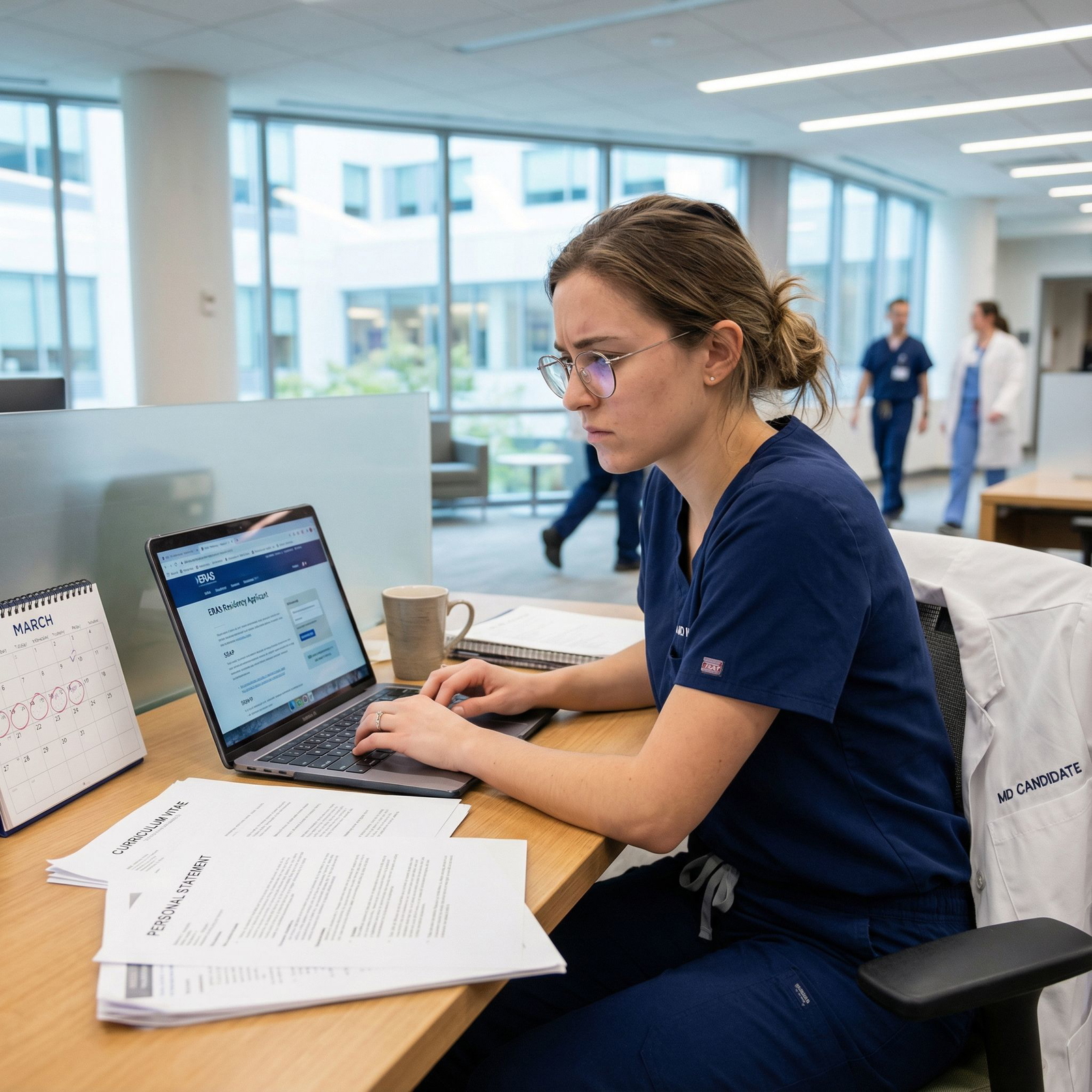
SOAP preparation should begin well before Match Week. As an IMG in a competitive field like vascular surgery, you cannot afford to improvise during SOAP.
1. Clarify Your Backup Plan Early
By the time you submit your ERAS application (September–October), you should already know:
- Plan A: Integrated vascular surgery and/or strong categorical general surgery.
- Plan B (SOAP focus):
- Categorical general surgery (unfilled spots).
- Preliminary general surgery positions.
- In some cases, transitional year (TY) with strong surgery exposure.
Ask yourself:
- If I don’t match integrated vascular, what is my best alternative that still keeps me on a vascular track?
- Am I willing to move anywhere in the country for a prelim surg spot to stay in the system?
- Are there regions or program types I absolutely cannot consider (e.g., visa restrictions, family needs)?
Write this down explicitly as a SOAP decision framework; during SOAP’s chaotic days, clear pre‑written rules prevent emotional, rushed decisions.
2. Tailor Your Application for SOAP Resilience
Your ERAS application for vascular surgery will naturally emphasize:
- Vascular surgery electives and observerships.
- Vascular research (aneurysms, peripheral arterial disease, endovascular techniques).
- Letters from vascular surgeons.
To make your application SOAP‑ready, also ensure it is attractive for general surgery:
- Include broad surgical experiences (trauma, acute care, general surgery cases).
- Highlight teamwork, call responsibilities, and adaptability that matter in any surgery program.
- Maintain at least 1–2 letters from general surgeons (not purely vascular) if possible.
3. Write a SOAP‑Compatible Personal Statement
Many IMGs write a single, highly subspecialized statement entirely focused on vascular surgery. That can hurt your chances with general surgery programs in SOAP.
Recommended approach:
- Primary PS (Vascular‑Focused):
Used for integrated vascular programs and possibly some general surgery programs in the regular cycle. - Secondary PS (General Surgery–Compatible):
Focuses on:- Your commitment to surgical training in general.
- How general surgery provides a foundation for vascular surgery.
- Your flexibility about pathway (integrated vs. traditional fellowship track).
You can then use or adapt the general surgery–compatible statement quickly for SOAP applications.
Actionable tip:
Draft a SOAP-specific version of your personal statement in advance—shorter, more direct, clearly emphasizing:
- Your readiness to start now.
- Your resilience and work ethic.
- Your fit for intense surgical training rather than only vascular details.
4. Prepare Documents and Logistics
Before February:
- Confirm ECFMG status and visa‑related documents (USMLE scores submitted, OET/English requirements met).
- Ensure all transcripts, MSPE, and LORs are uploaded and verified in ERAS.
- Keep a PDF folder on your laptop with:
- Updated CV.
- Short personal statement alternatives.
- Summary of your vascular and general surgery experiences (for interviews).
- Clarify contact information:
- Reliable phone number for calls and texts during Match Week.
- Professional voicemail recording.
- Email notifications enabled on your phone.
5. Mental Preparation and Contingency Planning
SOAP is emotionally intense, especially when your dream is integrated vascular surgery. Prepare mentally:
- Acknowledge that not matching is a real possibility, especially as an IMG.
- View SOAP as a second structured chance, not as a verdict on your potential.
- Discuss with mentors and family in advance what you will do if:
- You receive a prelim general surgery offer in a remote area.
- Your only offers are non-surgery (e.g., internal medicine prelim).
Knowing your lines in advance reduces paralysis when the clock is ticking.
Match Week: Step‑by‑Step SOAP Execution for IMGs
Once Match Week starts, you must act quickly and strategically. Here is how the week unfolds and what you should do at each stage.
Monday: Unmatched Status and Immediate Response
On Monday of Match Week, you learn whether you:
- Matched fully
- Partially matched
- Did not match
If you are unmatched or partially matched, you may be SOAP‑eligible. If eligible:
Stay calm and organized.
Give yourself 30–60 minutes to process emotions, then shift into action mode.Meet with your advisor/mentor same day.
- For IMGs, this might be a faculty mentor, program director from an observership, or an institutional IMG advisor.
- Clarify: Are you going to focus entirely on surgical‑track positions in SOAP, or will you be open to non‑surgical fields?
Tuesday Morning: Reviewing the List of Unfilled Programs
When the NRMP releases the List of Unfilled Programs to SOAP‑eligible applicants:
Filter by Specialty
- Look for:
- Integrated vascular surgery (unlikely but check).
- Categorical general surgery.
- Preliminary general surgery.
- Also note any strong transitional year programs with surgical exposure if they are on your radar.
- Look for:
Assess Feasibility Quickly For each program, ask:
- Does it sponsor your visa type (J‑1, potentially H‑1B if you qualify)?
- Is it academically robust with some vascular exposure (faculty, rotation, or partnership)?
Create Priority Tiers
- Tier 1: Categorical general surgery programs (anywhere in the U.S.).
- Tier 2: Preliminary general surgery at academic centers with vascular presence.
- Tier 3: Other prelim/TY spots if you are open to them.
Tuesday–Wednesday: Submitting SOAP Applications via ERAS
SOAP applicants can apply to up to 45 programs in total through ERAS during SOAP.
Strategy for an IMG with vascular aspirations:
- Use the majority of your applications on:
- Categorical general surgery spots.
- High‑quality prelim surgery spots.
- Consider a small fraction on non‑surgical positions only if:
- Your USMLE scores are relatively low.
- You have few interviews in the main cycle.
- You foresee difficulty even in SOAP for surgery.
Customize where possible:
- Update your personal statement selection to the general surgery–compatible or SOAP‑specific version for those programs.
- Make sure your ERAS program signaling/preferences (where applicable) match your SOAP priorities.
During SOAP: Communication Rules and Conduct
During the official SOAP period:
- You cannot contact programs to solicit interviews or positions.
- Programs may contact you by:
- Phone
- ERAS/NRMP messaging or video platforms
When a program contacts you:
- Respond promptly and professionally.
- Be ready with:
- A brief, clear explanation of your vascular interests that still shows commitment to general surgery training.
- Awareness of the program’s features (location, size, vascular opportunities).
Example elevator introduction (30–60 seconds):
“I am an international medical graduate from [Country] with strong interest in vascular surgery, but I fully understand that excellent vascular surgeons start as excellent general surgeons. My clinical experience in [trauma/acute care/vascular rotations] taught me the importance of teamwork, technical skills, and resilience. I am looking for a rigorous general surgery program where I can grow as a surgeon, contribute to research, and, in the long-term, pursue vascular training through the traditional pathway.”
SOAP Offer Rounds: Making Rapid Decisions
SOAP has multiple rounds of offers (typically four). In each round:
- You may receive 0, 1, or multiple offers.
- You must accept one offer or let all expire; you cannot hold multiple.
General decision guidelines for an IMG with a vascular focus:
- Categorical general surgery > preliminary surgery > any non-surgical prelim or TY, if you are determined to stay in the vascular track.
- Evaluate visa sponsorship and program stability before accepting.
- Consider geography last, unless you have serious constraints (health, legal status, family commitments).
If you get multiple offers in different types of programs:
- Take a categorical general surgery position almost always over a prelim.
- Between two prelims:
- Prefer the one at an academic center with active vascular faculty.
- Consider the program’s historical transition rate of prelims to categorical spots (in‑house or elsewhere).

Positioning Yourself for Future Vascular Opportunities After SOAP
Accepting a SOAP position—whether categorical or prelim—marks the beginning of a new strategic phase in your vascular surgery journey.
If You Secure a Categorical General Surgery Spot
This is an excellent outcome for most IMGs interested in vascular surgery.
Immediate steps (first 6–12 months):
- Identify vascular surgeons at your institution; introduce yourself early.
- Request to participate in:
- Vascular clinics.
- Vascular OR days.
- Vascular call or consults (if allowed for your PGY level).
- Join or start a vascular research project, even small retrospective studies.
Long‑term goals:
- Aim to become a strong overall general surgery resident:
- Excellent technical skills.
- Professionalism.
- Dependability under pressure.
- Build a portfolio that will make you competitive for:
- Vascular fellowship after general surgery.
- In some cases, potential transfer to an integrated vascular program (rare, but occasionally happens when programs open new slots).
If You Match to a Preliminary General Surgery Spot
As an IMG, a solid prelim year in general surgery can still be a powerful step:
Treat the prelim year as a 12‑month audition:
- Be reliable, hardworking, and teachable.
- Ask consistently for feedback and act on it.
Maximize vascular exposure:
- Request early for vascular rotations.
- Volunteer to assist whenever vascular cases need coverage.
- Offer help with vascular research, QI projects, or case reports.
Plan your next step by mid‑year:
- Discuss options with your program leadership:
- Possibility of an in‑house categorical conversion.
- Strong letters of recommendation for the next match.
- Reapply to:
- Categorical general surgery in the upcoming Match.
- Possibly integrated vascular programs if your CV improves dramatically.
- Discuss options with your program leadership:
If You Do Not Secure a Surgical Position Through SOAP
This outcome is difficult but not uncommon. Your path forward still exists:
- Explore post‑SOAP open positions (programs sometimes advertise positions later).
- Consider:
- Research positions in vascular or general surgery departments.
- Non‑ACGME surgical internships or fellowships (some hospitals offer them to IMGs).
- Use 1–2 years to:
- Strengthen your research profile.
- Build mentorship relationships in vascular surgery.
- Reapply with a stronger, more mature application.
Practical Tips and Common Pitfalls for IMGs in SOAP
Key Practical Tips
Have a written SOAP “playbook”
- Your tiered list of specialties and program types.
- Pre‑written email templates (for replies, thank‑yous).
- A one‑page summary of your story and goals.
Practice brief interview responses
Likely SOAP questions:- “Why were you not matched in the main cycle?”
- “Why general surgery now if your interest is vascular?”
- “If we only have prelim spots, how will you make use of this year?”
Highlight IMG strengths
- Resilience and adaptability.
- Multilingual skills and cross‑cultural patient communication.
- Work experience in resource‑limited settings, which can transfer to complex vascular practice.
Be fully honest but constructive about not matching
- Acknowledge competition and areas you’re working to improve (scores, timing, visa, etc.).
- Emphasize reflection and growth, not blame.
Common Pitfalls to Avoid
- Overly rigid specialty focus:
Refusing all non‑vascular or non‑surgical positions might leave you completely outside the system. Decide beforehand how flexible you are. - Neglecting visa reality:
Applying widely in SOAP but ignoring visa requirements may waste precious applications. - Unprofessional communication:
Casual or delayed replies to program contacts can cost you offers. - Lack of preparation for “why SOAP?” question:
Programs want reassurance that you are not demoralized but ready to work.
FAQs: SOAP Preparation for IMGs in Vascular Surgery
1. Are there usually integrated vascular surgery residency spots in SOAP?
Very rarely. Integrated vascular programs are few and highly competitive, and almost all positions fill in the Main Match. As an international medical graduate, your SOAP strategy should primarily target categorical or preliminary general surgery positions, which can still lead to a vascular career through the traditional fellowship pathway.
2. How should I answer “why did you not match?” during SOAP interviews?
Be honest and concise. For example:
“Vascular surgery is a very competitive field, and as an IMG, I knew my application faced additional challenges, especially related to [USMLE score timing/visa constraints/limited U.S. clinical experience]. I have reflected on this, strengthened my [clinical skills/research/communication], and I am fully committed to starting rigorous general surgery training now. I see this as an opportunity to grow and prove myself.” Avoid blaming programs, the process, or others.
3. If I only get a preliminary general surgery offer in SOAP, is it worth taking as an IMG?
In many cases, yes—especially at academic centers with vascular faculty. A strong prelim year can:
- Provide U.S. surgical experience and letters from U.S. surgeons.
- Open doors to categorical positions in the next cycle.
- Keep you in the surgical pipeline toward future vascular training.
However, you must be realistic about the program’s track record of helping prelims transition to categorical roles and whether visa sponsorship is solid.
4. What can I do now, months before Match Week, to prepare specifically for SOAP?
- Draft a SOAP‑ready personal statement that emphasizes general surgery as a core pathway.
- Clarify a backup hierarchy: categorical gen surg → prelim surg → others (if any).
- Discuss your plans with mentors and identify programs that might be receptive to IMGs during SOAP.
- Organize all documents (ECFMG status, CV, LORs) and ensure your contact information is current.
- Mentally prepare for both outcomes (match vs. SOAP) so that you can act quickly if SOAP becomes necessary.
By preparing systematically for SOAP as an international medical graduate pursuing vascular surgery, you transform a stressful safety net into a deliberate, strategic tool. Whether you secure a categorical general surgery position, a prelim spot, or a different bridge opportunity, thoughtful SOAP preparation keeps your long‑term goal—becoming a vascular surgeon—within reach.