Understanding SOAP for the MD Graduate in Dermatology
For an MD graduate aiming for dermatology residency, the Supplemental Offer and Acceptance Program (SOAP) is your structured second chance if you don’t initially match. To prepare effectively, you must understand both what SOAP is and how it works, then tailor your strategy to a dermatology-focused career path—even if you temporarily pursue a different specialty.
What Is SOAP?
SOAP (Supplemental Offer and Acceptance Program) is an NRMP-managed process during Match Week that helps eligible unmatched or partially matched applicants obtain unfilled residency positions in a structured, time-limited way. It is not a free‑for‑all scramble; it has strict rules, timelines, and communication policies.
Key points:
- Eligibility:
- You registered for the NRMP Main Residency Match
- You are unmatched or partially matched as of Monday of Match Week
- You are SOAP-eligible according to NRMP criteria (check your R3 status)
- Purpose: Fill unfilled residency positions while maintaining fairness and minimizing chaos.
- Timing: Runs from Monday (11 a.m. ET, when you learn if you matched) through Thursday of Match Week, across multiple offer rounds.
MD Graduate in Dermatology: Why SOAP Planning Matters
Dermatology is one of the most competitive specialties in the allopathic medical school match. Even excellent applicants may end up unmatched due to:
- Limited number of dermatology residency positions
- High density of top-performing candidates
- Heavy emphasis on research productivity
- Program preferences for home or “known” applicants
Because of this competitiveness, you should prepare for SOAP months in advance, even if you feel confident about your derm match chances. Strong applicants still benefit from a contingency plan that:
- Protects you from a career gap
- Maximizes your chance of landing any accredited residency position
- Keeps long-term dermatology pathways open (e.g., internal medicine → dermatology, transitional year → research → dermatology)
SOAP is not failure; it is risk management and smart career planning.
Pre‑Match SOAP Preparation: Laying the Groundwork Early
Effective SOAP preparation for an MD graduate seeking dermatology begins well before Match Week. This section will help you build a robust “Plan B” while keeping a dermatology-focused trajectory.
1. Know Your Risk Profile for the Allopathic Medical School Match
Assess your likelihood of matching into dermatology honestly:
- USMLE scores (or Step pass/fail outcomes and Step 2 CK score)
- Class rank, AOA, honors in key clerkships
- Research output: publications, posters, derm-specific projects
- Number and quality of audition rotations/sub‑internships in dermatology
- Strength and specificity of dermatology letters of recommendation
- Number of derm programs ranked, breadth and geographic diversity
- History of SOAP in previous match cycles with a similar profile (program advisors can help)
If multiple risk factors are present (limited derm interviews, few programs ranked, weaker Step 2 CK, minimal research), you should invest more time in structured SOAP preparation.
2. Clarify Your Dermatology‑Focused Plan B and Plan C
You need clear back‑up pathways that still align with a long‑term dermatology career. Consider:
- Derm-adjacent specialties:
- Internal Medicine (with possible dermatology fellowship in complex medical derm or collaborative derm clinics later)
- Pediatrics (for pediatric dermatology collaboration)
- Family Medicine (for community skin care, skin procedures, teledermatology)
- Transitional Year (TY) or Preliminary Medicine Surgery:
- TY or prelim medicine can buy you time, keep you clinically active, and allow you to reapply to dermatology with added experience or research.
- Research or gap year (outside SOAP but part of planning):
- If SOAP options are limited, a structured research year in dermatology at an academic center may strengthen a future derm application.
Ask yourself:
- “If I cannot start dermatology this July, what next best position would still move me toward a derm career or a satisfying alternative?”
- “Would I rather SOAP into IM/FM/Peds now, or pursue a derm research year and reapply?”
Write these scenarios down so you’re ready to act quickly during SOAP.
3. Prepare SOAP‑Specific Materials in Advance
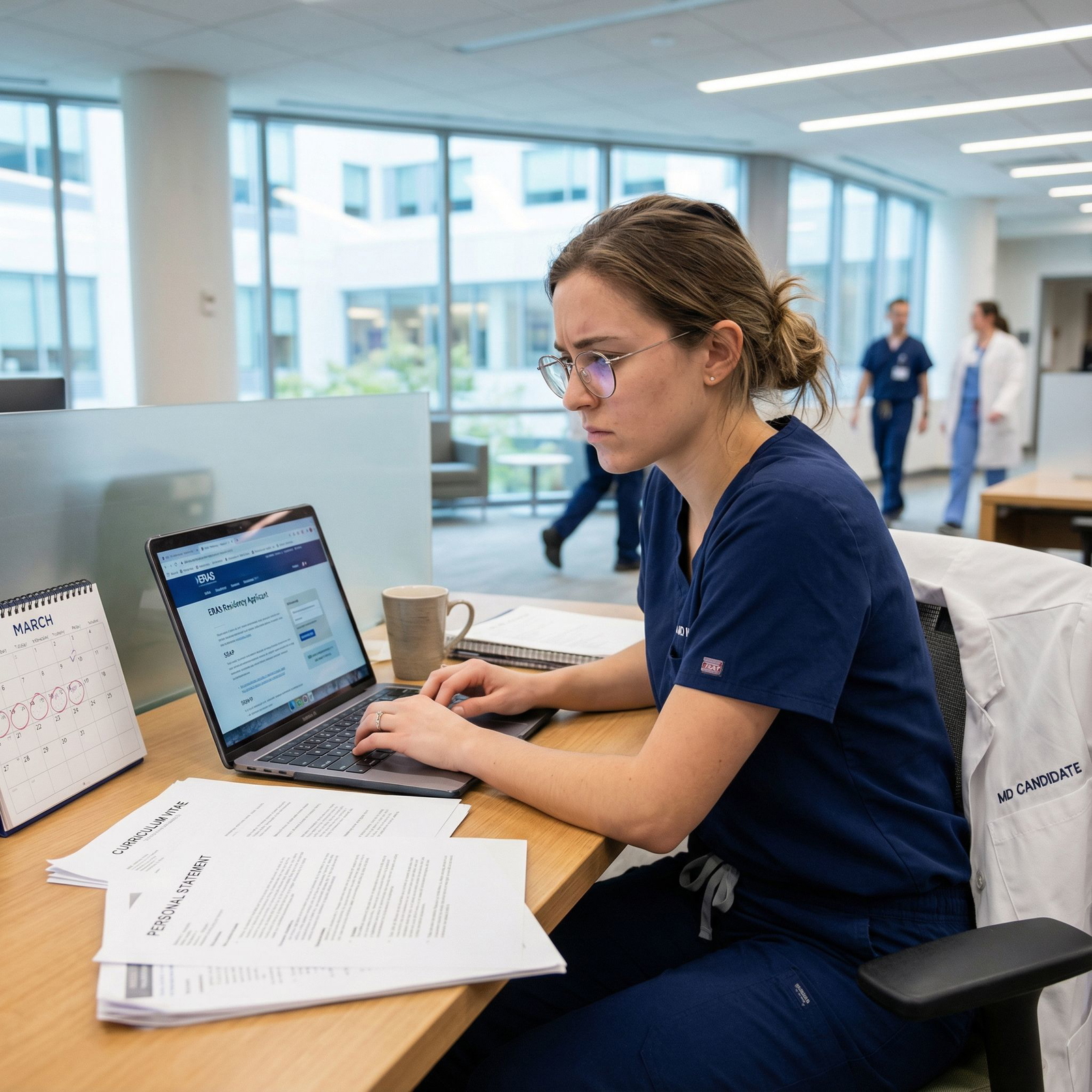
You cannot edit your ERAS application itself once SOAP starts, but you can prepare SOAP-specific documents and strategies:
- Updated CV emphasizing:
- Any new publications, posters, presentations
- Recent derm-related activities, QI projects, or electives
- SOAP-targeted personal statements:
- One for Internal Medicine
- One for Family Medicine
- One for Pediatrics
- Optional: one for Transitional Year / Preliminary Medicine
- Short paragraphs or bullet points:
- Why you’re interested in each alternative specialty
- How your derm interests translate (e.g., chronic disease management, procedural skills, outpatient continuity)
- Reference list and contact info for letter writers willing to vouch for you if programs reach out (where allowed by SOAP rules).
This way, if you need to pivot from a pure derm match strategy to SOAP residency options, you’re not starting from zero while under time pressure.
4. Learn the Rules and Timeline of SOAP
Not understanding SOAP logistics can sink an otherwise strong candidate.
Key high‑yield points:
- Monday 10 a.m. ET: You learn whether you matched (but not where).
- Monday 11 a.m. ET: Unmatched/partially matched candidates learn SOAP eligibility and begin seeing unfilled positions in ERAS.
- Application period: You can submit up to a fixed number of applications (historically 45, check current rules) to unfilled programs through ERAS.
- Offer Rounds (Tuesday–Thursday): Multiple timed rounds where programs send offers to applicants. You can:
- Accept one offer (ending your SOAP participation)
- Reject or let offers expire (to wait for other possibilities, but risky)
Communication rules:
- You may not initiate contact with programs; they contact you.
- No private negotiations outside the SOAP process.
- Violation of SOAP or NRMP rules can jeopardize current and future matches.
Bookmark NRMP’s official SOAP schedule and policies, and review them at least twice before Match Week.

Match Week: Step‑by‑Step SOAP Strategy for the Derm‑Focused MD
Once Match Week begins, emotions run high. A disciplined, pre‑planned system helps you pivot effectively if you don’t secure a dermatology residency position initially.
1. Monday Morning: Receiving Unmatched or Partially Matched Status
If you find out at 10 a.m. ET that you are unmatched or only partially matched (e.g., matched into a prelim year but not advanced), you must quickly shift into SOAP execution mode:
- Take 30–60 minutes to process the news and stabilize emotionally.
- Reach out briefly to your Student Affairs Dean, Program Director, or Dermatology mentor to:
- Confirm SOAP eligibility
- Get immediate advice on realistic target specialties and programs
Avoid impulsive decisions; your goal is to protect your long‑term dermatology trajectory while securing a solid residency placement.
2. Reviewing the List of Unfilled Positions
At 11 a.m. ET, SOAP-eligible applicants see the list of unfilled programs in ERAS.
For the derm‑focused MD graduate:
Accept reality quickly:
True dermatology residency positions in SOAP are extraordinarily rare. Assume you will likely be targeting other specialties or a preliminary/TY year instead of a derm match during SOAP.Filter for derm‑compatible pathways:
- Internal Medicine programs at institutions with strong dermatology departments
- Family Medicine or Pediatrics programs with a track record of derm collaboration, strong outpatient training, or procedural opportunities
- Transitional Year or Preliminary Medicine spots at academic centers known for derm research
Prioritize programs strategically:
- Academic medical centers or community programs affiliated with derm departments
- Regions where you have geographic ties (higher likelihood of interest)
- Programs with reputations for supporting residents’ fellowships, electives, or research
Create a tiered list (A/B/C) within your 45-application limit.
3. Crafting and Submitting Applications During SOAP
Use your pre-written materials to move quickly:
Personal Statements:
- Use the alternate specialty–specific statements you drafted pre‑Match.
- Briefly address your interest in the specialty without over‑explaining dermatology reapplication plans.
- Emphasize skills and qualities valued in that specialty: teamwork, outpatient care, chronic disease management, procedural competence.
Program-Specific Customization (within time limits):
- When possible, briefly tailor:
- One line about why that region/hospital fits you
- Mention any known connections (e.g., prior rotation, mentor, family ties)
- When possible, briefly tailor:
Application Timing:
- Submit early in the SOAP window; programs start reviewing almost immediately.
- Don’t wait to craft the perfect statement for each program; prioritize on‑time and polished over hyper‑customized and late.
4. Responding to Program Outreach During SOAP
Programs may contact you (according to NRMP rules) via phone or virtual interviews.
Be prepared to answer:
Why this specialty?
Frame dermatology interest as an asset, not a liability:“My initial focus on dermatology reflects my interest in chronic disease management, outpatient continuity, and procedural skills. I’ve realized those same strengths are central to Internal Medicine, and I’m excited to develop them in a broader clinical context.”
Why this program?
Connect program strengths to:- Outpatient exposure
- Research or QI projects
- Opportunities to develop procedural or dermatology‑relevant skills
How will you handle not matching your first choice?
Demonstrate resilience and professionalism:“I’m disappointed, of course, but I’m fully committed to succeeding in whichever training environment I join. My priority is to become an excellent physician, and your program offers the structure and mentorship to do that.”
Avoid language that suggests you see their specialty as “just a backup.”
Long‑Term Dermatology Strategy Within a SOAP Outcome
Even if SOAP leads you into a non‑derm residency, you can still build a strong dermatology-focused career path.
1. If You SOAP into Internal Medicine, Family Medicine, or Pediatrics
Consider this a strategic pivot, not an end to dermatology goals.
Derm‑aligned steps you can take:
Electives and Rotations:
- Schedule dermatology electives during residency
- Seek clinic time with derm specialists for complex skin cases in your specialty
Research and Scholarly Activity:
- Join or initiate derm‑related research with your institution’s dermatology department
- Work on case series of dermatologic conditions seen in IM/FM/Peds
- Present at dermatology or primary care conferences
Networking and Mentorship:
- Maintain or build relationships with dermatology faculty
- Ask to attend grand rounds or journal clubs in dermatology
Even if you ultimately remain in IM/FM/Peds without a derm fellowship, you can establish yourself as a skin disease expert within your primary specialty.
2. If You SOAP into a Transitional Year or Preliminary Position
This is often a platform year for future applications:
Clinical Excellence:
- Aim for top evaluations, strong professionalism, and procedural skill
- Build a reputation as a reliable, high-performing intern
Dermatology Engagement:
- Use elective time for derm clinic, derm pathology, or research
- Develop concrete derm output: posters, publications, QI projects
Strategic Planning for Re‑Application:
- Meet with dermatology program leadership to discuss feasibility of reapplying
- Update your application with:
- Strong intern year performance
- New derm research or experiences
- Letters from your current program and derm mentors
This pathway can significantly strengthen a later derm match attempt compared with reapplying from a gap year alone.
3. If You Do Not Secure a SOAP Residency Position
This scenario is tough but not uncommon in highly competitive specialties.
Immediate steps:
Meet with your Dean/Advisors to discuss:
- Research fellowships in dermatology or related fields
- MPH/MSc or other advanced degrees aligned with clinical research
- Reapplication timelines and alternative specialties
Consider:
- Dermatology research fellowship at an academic center
- Clinical research roles with strong mentorship and publications
If you pursue a research year:
- Treat it like a full‑time job: show up, produce work, present at meetings.
- Aim for:
- Multiple abstracts/posters at dermatology meetings
- Co‑authored manuscripts
- Strong letters from derm faculty highlighting your contributions
This can meaningfully change your competitiveness for future derm applications.

Practical SOAP Preparation Checklist for the Derm‑Bound MD Graduate
Use this checklist starting 2–4 months before Match Week; it aligns with best strategies for SOAP for an MD graduate targeting dermatology.
A. Academic and Application Readiness
- Review your derm application with your Dean or advisor for risk assessment.
- Identify realistic alternative specialties (IM/FM/Peds/TY/Prelim Med).
- Collect contact info for 2–3 mentors willing to advise you rapidly during Match Week.
B. Document and Narrative Preparation
- Update your CV with all derm and non-derm achievements.
- Draft personal statements for:
- Internal Medicine
- Family Medicine
- Pediatrics
- Transitional Year / Preliminary Medicine
- Prepare 3–5 bullet points for each specialty explaining:
- Why you’re a fit
- How your derm background is an asset, not a distraction
- Organize all documents in clearly labeled folders for quick access.
C. Knowledge of SOAP Mechanics
- Review NRMP’s “What is SOAP” resources and official handbook.
- Understand SOAP residency rules for communication—what you can and cannot do.
- Familiarize yourself with the typical SOAP timeline and offer rounds.
- Ensure you can access ERAS and NRMP R3 portals without technical issues.
D. Emotional and Logistical Preparation
- Identify support people you can contact if you don’t match (family, friends, mentors).
- Block your calendar for Match Week to allow full participation in SOAP.
- Plan where you’ll physically be (quiet, private space, stable internet).
- Prepare a short script for phone or virtual SOAP interviews.
Common Pitfalls MD Graduates in Dermatology Should Avoid During SOAP
1. Denial and Delayed Action
Hoping that “somehow it will work out” without concrete planning is risky. Begin SOAP preparation early, even if you’re optimistic about your derm match.
2. Overly Narrow SOAP Applications
Refusing to apply outside dermatology during SOAP is usually unrealistic and can leave you without any residency position. Dermatology spots almost never appear as SOAP positions; be ready to use SOAP to secure a bridge specialty or preliminary year.
3. Undermining the Alternate Specialty
Programs want residents who are genuinely committed. Avoid:
- Saying directly that you are “only here until I get derm”
- Over-emphasizing your intention to reapply to derm during the initial SOAP conversation
Instead, show authentic respect for their specialty while internally maintaining your longer-term derm goals.
4. Violating SOAP Communication Rules
Unapproved outreach can result in NRMP violations. When in doubt during Match Week:
- Ask your Dean’s Office or GME advisor
- Err on the side of caution and follow NRMP guidance strictly
FAQs: SOAP Preparation for MD Graduate in Dermatology
1. If I’m strongly derm-focused, should I apply only to dermatology positions during SOAP?
No. True dermatology residency positions in SOAP are exceptionally rare. As an MD graduate from an allopathic medical school, you should use SOAP to secure a realistic alternative (IM/FM/Peds/TY/Prelim) that preserves or supports your long-term derm ambitions. Ignoring other specialties in SOAP commonly leaves applicants without any position.
2. How can I keep a dermatology trajectory if I match into another specialty through SOAP?
Focus on dermatology-aligned experiences within your new residency: derm electives, research projects, collaboration with dermatology faculty, and conference presentations. Many physicians build derm-focused careers within internal medicine, family medicine, or pediatrics, or use these pathways as stepping stones toward derm fellowships or future derm applications.
3. What is SOAP preparation I can do during my final year of medical school?
SOAP preparation includes:
- Honest risk assessment for your dermatology match
- Drafting alternate specialty personal statements
- Updating your CV and keeping a list of programs that would be logical back‑ups
- Learning the NRMP rules about SOAP residency processes
- Arranging mentorship so you can get rapid guidance during Match Week.
Doing this early prevents last-minute panic if you end up unmatched.
4. If I don’t get any offers during SOAP, is my dermatology career over?
Not necessarily. Many derm applicants who do not secure a position (even through SOAP) pursue dermatology research fellowships, advanced degrees, or subsequent applications with stronger profiles. Success requires structure: committed research involvement, strong mentorship, tangible academic output, and a realistic plan for re-applying either to dermatology or a satisfying alternative specialty.
By understanding the SOAP process, planning early, and building thoughtful alternative pathways, an MD graduate targeting dermatology can transform Match Week uncertainty into a structured set of options. While the ideal derm match is never guaranteed, proactive SOAP preparation ensures that your training—and your long-term dermatology aspirations—remain firmly on track.