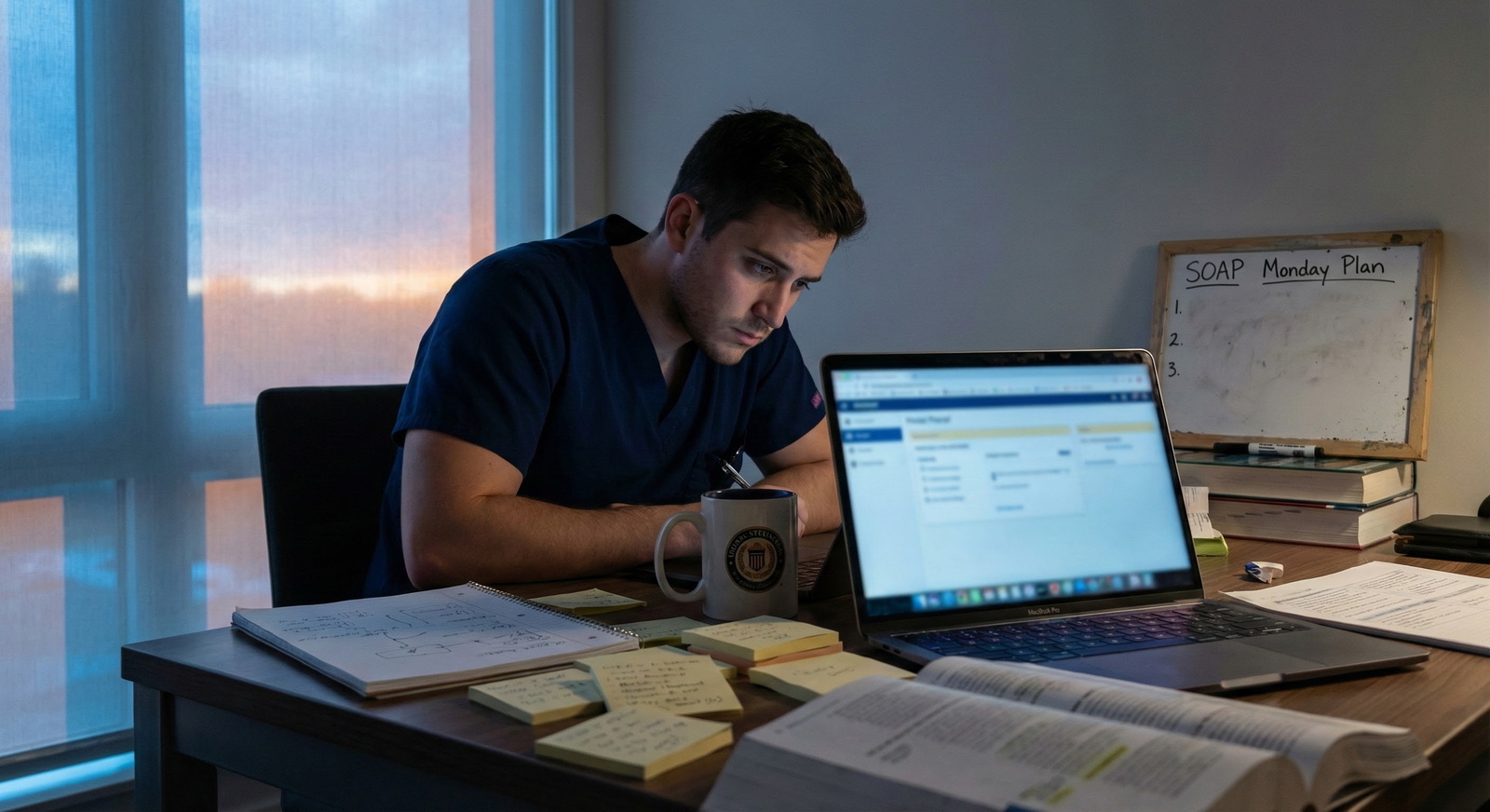
Interventional Radiology (IR) is one of the most competitive and rapidly evolving specialties in medicine. For an MD graduate in Interventional Radiology, the allopathic medical school match process can be stressful even in the best of circumstances—and if you don’t match in the main round, it can feel devastating. But if you’re entering SOAP (the Supplemental Offer and Acceptance Program), you still have powerful options—provided you prepare strategically and early.
This article walks you through SOAP preparation specifically tailored to an MD graduate interested in Interventional Radiology, whether your goal is to:
- Secure a categorical IR position (rare but possible in SOAP),
- Match into a Diagnostic Radiology (DR) position with a plan for an IR fellowship later, or
- Pivot intelligently into another residency that preserves your long‑term IR or procedural career goals.
Understanding SOAP: What It Is and Why It Matters for IR
Before planning, you need absolute clarity on what is SOAP, how it works, and how it intersects with an IR match strategy.
What is SOAP?
SOAP (Supplemental Offer and Acceptance Program) is a structured process that allows unmatched or partially matched applicants to apply to unfilled residency positions during Match Week. You can only participate if the NRMP determines you are SOAP-eligible.
Key points:
Who is SOAP-eligible?
- Registered for the Match
- Fully or partially unmatched when results are released
- Graduated or expected to graduate from an accredited medical school (including allopathic MD programs) or an eligible international school
- Not already holding a binding residency contract for the same year
Where does SOAP happen?
- Entirely through ERAS + NRMP; no external offers can be made during SOAP
- Communication is tightly regulated; programs cannot offer positions outside the official SOAP rounds
What does SOAP actually provide?
- A list of unfilled programs by specialty and location
- Ability to apply to a limited number of programs (historically up to 45 total)
- Up to four “rounds” of offers over two days during Match Week
For an MD graduate in Interventional Radiology, SOAP represents both a safety net and a strategic pivot point. While interventional radiology residency positions are extremely rare in SOAP, diagnostic radiology and prelim/transitional year positions frequently appear. These can keep you aligned with your IR ambitions while preserving forward momentum in your training.
Strategic Mindset: Reframing SOAP as Part of Your IR Plan
Many allopathic medical school graduates aiming for an interventional radiology residency view SOAP as “plan B.” That mentality can lead to rushed, poorly thought-out decisions.
Instead, think of SOAP as:
- An integrated part of your IR journey, not an afterthought.
- An opportunity to optimize your trajectory, even if it means restructuring your path (e.g., DR then IR fellowship, or a related procedural specialty).
- A test of professionalism and resilience, qualities that IR program directors highly value.
Clarify Your Priorities Before Match Week
Before SOAP begins, you should know:
- Is your absolute priority practicing IR, or are you also open to DR-only or other specialties?
- How strongly are you tied to geographic preferences?
- Are you willing to reapply to IR/DR next cycle if you don’t get something aligned this cycle?
This clarity will drive all SOAP preparation decisions, such as:
- Whether to prioritize Diagnostic Radiology in SOAP over non-radiology fields
- Whether to seek a Transitional Year or Preliminary Medicine/Surgery with strong procedural exposure
- Whether to pivot to another field altogether (e.g., Anesthesiology, Vascular Surgery, Internal Medicine with a focus on interventional subspecialties)

Pre-SOAP Preparation Timeline for the IR-Focused MD Graduate
SOAP preparation should start months before Match Day—especially for a competitive area like IR. Below is a structured timeline for an MD graduate in Interventional Radiology.
3–6 Months Before Match Week: Honest Risk Assessment
Use your application data to judge your IR match risk:
- Step scores / USMLE pass-fail status:
- Did you pass all exams on first attempt?
- Any red flags (fails, long gaps)?
- Grades and clinical performance:
- Strong performance in core clerkships and radiology rotations?
- Honors in surgery, internal medicine, or related fields?
- Research and IR involvement:
- IR-focused projects, case reports, or publications
- Membership and involvement in societies (e.g., SIR)
- Interview performance and number of invites:
- For IR: number of integrated IR and DR interviews
- How your interviewers responded to your IR narrative
If your profile is borderline or limited in interviews, assume you may need SOAP and start building a SOAP strategy now, not after you learn you’re unmatched.
1–2 Months Before Match Week: Build SOAP-Ready Materials
Whether or not you ultimately need SOAP, prepare as if you will. This will reduce panic and improve the quality of your choices.
1. Prepare a SOAP-Optimized Personal Statement Library
Create several versions of your personal statement:
IR/DR-aligned Statement
- Emphasize your long-term goal of IR but highlight robust interest and commitment to diagnostic radiology and imaging.
- Show that you understand the value of a strong DR foundation for a future IR practice.
Transitional Year / Preliminary Medicine/Surgery Statement
- Emphasize your interest in becoming an excellent, holistic clinician.
- Highlight procedural aptitude, teamwork in acute care, and an interest in managing medically complex patients.
Alternative Specialty Statement (If Applicable)
- If you’re seriously considering a pivot (e.g., anesthesiology, internal medicine), write a focused statement that shows authenticity and understanding of that field.
Key tip:
Do not recycle your integrated IR-only statement unchanged for DR programs in SOAP. Many DR programs are wary of applicants who seem only interested in IR and might not be satisfied with a DR-only pathway.
2. Update Your CV and ERAS Content
Even though ERAS is “locked” in many fields by this point, you can:
- Draft an updated CV for quick reference during SOAP interviews.
- Prepare a concise one-page “IR/DR-focused” CV that emphasizes:
- Radiology rotations and evaluations
- IR exposure (shadowing, electives, away rotations)
- Imaging or procedural research
- Procedural skills from surgery, emergency medicine, or critical care
3. Line Up References Proactively
Reach out to mentors who would support you during SOAP:
- IR or DR faculty:
- Ask if they would be available for last-minute program emails or phone calls to advocate for you if needed.
- Clinical preceptors in medicine/surgery:
- Particularly valuable if you plan to SOAP into prelim or TY programs.
You typically won’t upload new letters during SOAP, but faculty advocacy and quick emails to programs can still influence decisions.
Constructing a SOAP Strategy for an IR-Oriented Career
When the allopathic medical school match results are released and you learn that you are unmatched or partially matched, emotions can overwhelm rational planning. Having a pre-determined SOAP strategy for an IR path prevents impulsive decisions.
Step 1: Clarify Your Primary Goal for this SOAP Cycle
Ask yourself directly:
- Is the goal to secure any accredited residency to start training this year?
- Is the goal to preserve an IR-compatible trajectory even if it means not matching this year?
For most MD graduates, a dual-goal strategy works best:
“Secure a high-quality position that keeps IR or procedural practice open, while preserving my professional reputation and mental health.”
Step 2: Rank-Order Pathways That Still Lead to IR or Procedural Careers
Here are common pathways to IR if you don’t match directly into an IR residency:
Diagnostic Radiology → Early Specialization in IR (ESIR) → Independent IR
- DR residency (often available in SOAP) can remain your primary target.
- During DR, apply for ESIR and then complete an independent IR residency.
Diagnostic Radiology → Traditional IR Fellowship
- Less common with current training structures, but some pathways remain via independent IR programs.
Alternate Procedural or Imaging-Focused Careers
- Vascular Surgery (if you love endovascular procedures broadly).
- Interventional Cardiology (cardiology first, then interventional).
- Anesthesiology with peri-procedural and pain interventional focus.
- Hospital Medicine or Pulmonology with procedural emphasis (lines, thoracentesis, bronchoscopies, etc.).
Strong Transitional Year or Prelim Medicine/Surgery Year
- If DR spots are limited in SOAP, a high-quality TY or prelim year with strong mentorship may position you to reapply successfully to DR/IR next cycle.
Step 3: Know Which Specialties Commonly Appear in SOAP
Historically, more likely to appear:
- Preliminary Medicine / Preliminary Surgery
- Transitional Year (TY)
- Some Diagnostic Radiology positions
- Internal Medicine, Family Medicine, Psychiatry, Pediatrics, Pathology
Rare in SOAP:
- Integrated Interventional Radiology positions
- Competitive surgical subspecialties
Plan accordingly: your IR match after SOAP is most likely via a DR seat or a strong prelim/TY and a reapplication plan.

Tactically Executing SOAP: Step-by-Step Guide for the IR-Focused MD
Once SOAP begins, everything moves quickly. Here’s a clear operational plan.
1. Morning of SOAP Eligibility Notification
When you receive notice that you are SOAP-eligible and unmatched or partially matched:
- Pause for 15–30 minutes.
- Regulate emotions before making decisions.
- Confirm your SOAP eligibility status in NRMP.
- Check the List of Unfilled Programs as soon as it’s released.
- Filter by Diagnostic Radiology first.
- Then Transitional Year, Prelim Medicine, Prelim Surgery.
- Consider geography only after considering pathway alignment.
2. Build a Rational Program List (Up to the Application Limit)
You will be allowed a limited number of SOAP applications (historically 45). Use them strategically:
Priority 1: Diagnostic Radiology Programs
- Apply broadly to DR programs that:
- Accept MD graduates from US allopathic schools.
- Are in regions where you could realistically live.
- Have academic or community settings that support IR exposure (check program websites for IR faculty presence, IR call, ESIR availability).
Priority 2: Transitional Year or Prelim Years in Strong Institutions
- Prefer TY/Prelim programs at:
- Large academic centers with radiology and IR divisions.
- Places known for strong teaching, procedural volume, and mentorship.
Priority 3: Alternate Acceptable Fields
- If you have genuine interest in another specialty (e.g., internal medicine with procedural subspecialty goals), add these thoughtfully.
- Avoid applying to fields you have zero intent to pursue; that can lead to future professional dissatisfaction and possible attrition.
3. Customize Your Materials Efficiently
For each group of programs:
DR programs:
- Use your IR/DR-focused personal statement version.
- In your communication, emphasize:
- Your commitment to becoming an excellent diagnostic radiologist.
- Appreciation of the central role of imaging interpretation in IR.
- Understanding that not all DR graduates become interventionalists and that you respect whichever pathway you ultimately follow.
TY / Prelim Medicine / Prelim Surgery:
- Use the prelim/TY personal statement.
- Highlight:
- Clinical excellence, reliability, and strong work ethic.
- Team-based care, resilience under stress, and procedures you’ve already performed or assisted with.
Alternate specialties:
- Use a tailored statement that demonstrates real intent and knowledge.
4. Prepare for SOAP Interviews
SOAP interviews are often brief, efficient, and focused. You might get contacted via:
- ERAS messaging
- Phone calls (often same-day)
Common questions for an MD graduate in Interventional Radiology:
- “Why were you originally interested in IR?”
- “Why are you now applying to DR / prelim / TY through SOAP?”
- “How do you handle setbacks or disappointment?”
- “What will you do if you don’t end up in IR?”
Answering strategically:
- Be honest about your IR passion, but also:
- Emphasize your flexibility and realism.
- Make clear you understand the training pathway and are fully committed to excelling in the position you’re applying to.
- Avoid implying:
- That you view their program purely as a “stepping stone” or “backup.”
- That you would be unhappy or disengaged if you didn’t ultimately reach IR.
5. During Offer Rounds: Making Smart, Time-Sensitive Decisions
SOAP offer rounds come quickly, with short windows to accept or reject an offer.
Key decision rules:
Have pre-defined criteria before offers start:
- For example:
- “I will accept any DR position that offers a supportive learning environment, regardless of location.”
- “I will accept a prelim/TY at an academic center with radiology exposure over a categorical position in a field I have no interest in.”
- For example:
Avoid declining a reasonable offer in the optimistic hope of something “better” in a later round unless:
- You have a clear, data-based reason to expect another offer.
- You are prepared to remain unmatched if that offer does not appear.
Remember: Any accepted SOAP offer is binding and removes you from further SOAP participation.
Long-Term Planning if You SOAP Outside of IR
Even if you don’t match into interventional radiology residency or diagnostic radiology through SOAP, you can still chart a future that leverages your strengths and interests.
If You SOAP into Diagnostic Radiology
You’ve actually preserved an excellent IR pathway:
- Seek programs with ESIR or substantial IR exposure.
- Early in PGY-2:
- Meet with the IR division chief/program director.
- Express your interest in an IR track; ask about ESIR competitiveness and expectations.
- Build a CV during DR residency that includes:
- IR rotations and electives
- IR-related QI projects, case logs, or research
- Strong performance in call and procedural skills
If You SOAP into a TY or Prelim Position
Use this year strategically:
- Seek rotations that:
- Expose you to radiology, IR, vascular surgery, cardiology, or ICU settings.
- Highlight procedural competence (lines, LPs, thoracentesis, paracentesis, etc.).
- Maintain contact with your IR mentors and research projects.
- Reapply to DR/IR early in the next cycle with:
- Strong new clinical evaluations
- Letters from your transitional/prelim faculty
- Evidence of maturity and resilience after an unmatched year
If You Pivot to Another Specialty
If SOAP leads you to a different field:
- Fully commit to excellence in that specialty.
- Look for ways to incorporate:
- Imaging
- Procedural opportunities
- Team-based care with IR and other proceduralists
Residency directors notice and value those who adapt gracefully and invest fully in their new path.
Frequently Asked Questions (FAQ)
1. As an MD graduate from an allopathic medical school, do I have an advantage in SOAP for DR or IR-related spots?
Generally, US allopathic MD graduates are viewed favorably in the allopathic medical school match and subsequent SOAP, particularly for core specialties like Internal Medicine and Pediatrics, and often in Diagnostic Radiology as well. However:
- In SOAP, competition is still intense, especially for DR.
- Your academic record, exam performance, professionalism, and interview history remain critical.
- Being an MD graduate helps, but strategic preparation and realistic targeting are what truly move the needle.
2. Is it realistic to expect an integrated IR position through SOAP?
Integrated interventional radiology residency positions are extremely rare in SOAP, and in many cycles there may be none at all. You should not structure your SOAP preparation around finding an integrated IR spot.
Instead, focus on:
- Diagnostic radiology positions that may be available, and
- Strong prelim/TY programs that set you up to reapply for DR/IR.
Think of SOAP as an opportunity to preserve the potential for an IR career, rather than a direct IR match.
3. How can I talk about IR interest in a DR SOAP interview without sounding like I’m not committed to DR?
Balance is key. Try an approach like:
“My long-term goal has been to practice interventional radiology, but through my experiences I’ve come to appreciate how essential diagnostic radiology is as a foundation. I’m committed to becoming an excellent diagnostic radiologist first—interpreting studies accurately, communicating effectively with clinicians, and understanding the whole patient. If opportunities for IR training arise down the line, that would be ideal, but regardless, I would be proud to practice as a strong DR-trained radiologist.”
This framing shows:
- Clear IR interest
- Genuine respect for DR
- Commitment to doing the job you’re applying for
4. What should I do now if I’m months away from the Match and worried I may need SOAP?
Start your SOAP preparation early:
- Create alternate personal statements (DR-focused, TY/prelim, alternate specialty if applicable).
- Update your CV and collect documentation of your IR and procedural experiences.
- Talk with mentors in IR and DR about realistic outcomes and SOAP planning.
- Educate yourself about SOAP rules and timelines (NRMP and ERAS resources).
- Mentally rehearse how you’ll respond if you are unmatched so that you can act quickly and calmly.
Preparing early does not mean you expect to fail; it means you’re approaching the IR match and SOAP with the same methodical, evidence-based mindset you bring to patient care.
By approaching SOAP with clarity, preparation, and strategic flexibility, an MD graduate in Interventional Radiology can transform a difficult moment into a launching point for a successful, meaningful career—whether that ultimately lies in IR, DR, or another procedural specialty where your skills and interests can thrive.