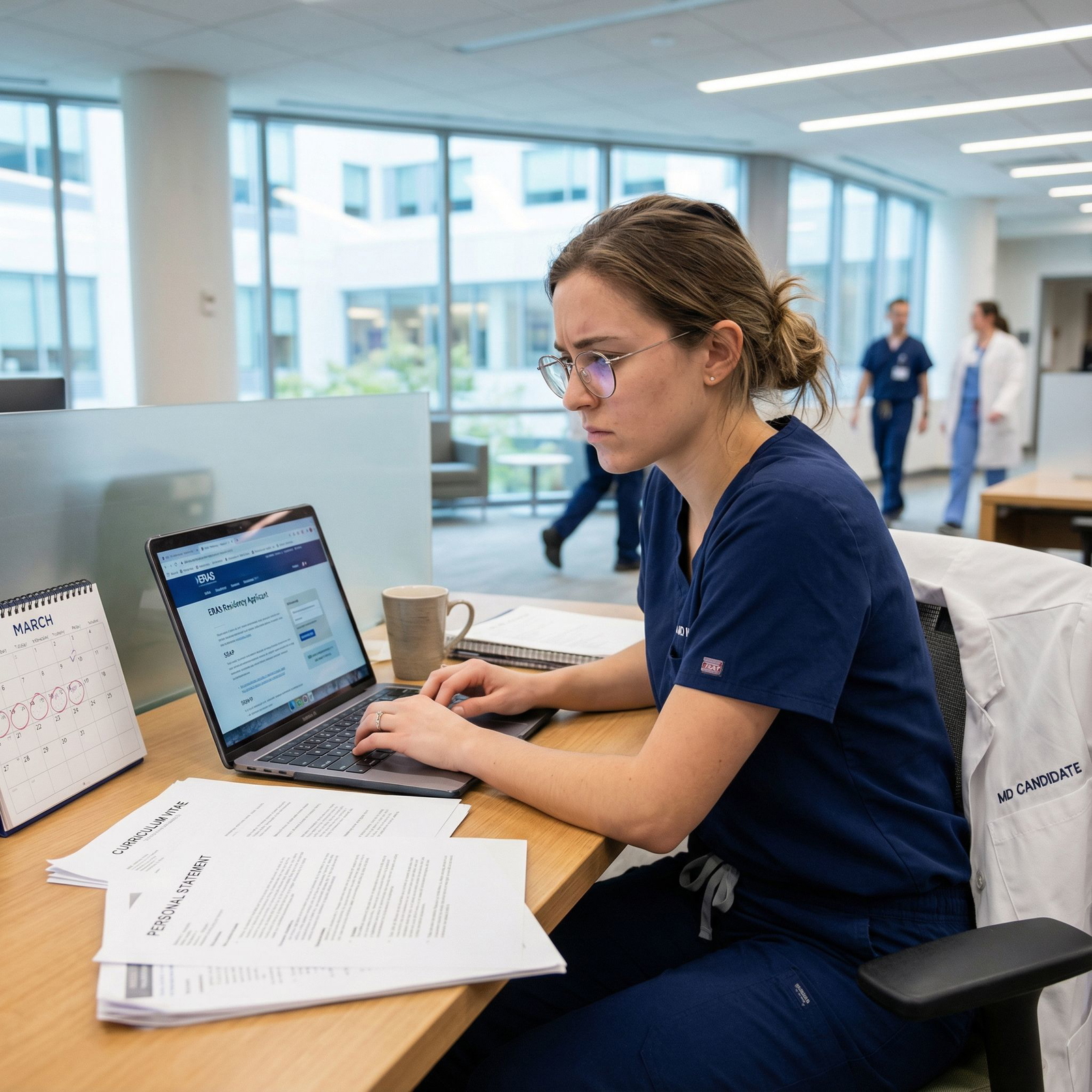
Understanding SOAP for Neurology-Bound MD Graduates
As an MD graduate targeting neurology residency, you are entering one of the most rapidly evolving and competitive fields. Even strong applicants sometimes find themselves unmatched after the main allopathic medical school match. That’s where the Supplemental Offer and Acceptance Program (SOAP) becomes critical.
What is SOAP?
The Supplemental Offer and Acceptance Program is an organized process run by the NRMP that allows unmatched (or partially matched) applicants to apply to unfilled residency positions after the main Match. It is not a separate match but an offer/acceptance system with multiple rounds over a few intense days during Match Week.
For an MD graduate with neurology as the goal, understanding the SOAP process and preparing early can be the difference between:
- Securing a categorical neurology position
- Entering a prelim or transitional year that keeps you on track for a future neuro match
- Having to spend an unplanned gap year
Why Neurology Applicants Should Care About SOAP
Neurology has grown more competitive, with:
- Increased interest among US MD graduates
- Rising board score expectations at many academic programs
- Variable numbers of categorical versus advanced positions year to year
Because of this, even good candidates may:
- Not match at their desired level of program competitiveness
- Match only to an advanced neurology spot but not a prelim year
- End up completely unmatched and need a backup plan
SOAP offers:
- A second chance at neurology residency (sometimes categorical, sometimes advanced)
- An opportunity to secure a preliminary medicine, transitional year, or occasionally preliminary neurology spot that can support a future neuro match
- A structured, time-limited pathway to avoid complete derailment of your training timeline
The key is SOAP preparation—planning before Match Week so that if you need SOAP, you are ready to execute effectively, quickly, and strategically.
Step 1: Pre-Match Planning – Setting Up a Strong SOAP Safety Net
Effective SOAP preparation starts months before Match Week. As an MD graduate aiming for neurology, you should assume you might need SOAP and prepare accordingly—even if you are confident about matching.
A. Honest Self-Assessment of Your Neurology Competitiveness
Before rank lists are due, do a realistic appraisal:
- USMLE/COMLEX: Are your scores at, above, or below your target programs’ averages?
- Neurology letters of recommendation:
- Do you have at least two strong neuro letters (ideally from academic neurologists)?
- Are there any red flags (late, generic, lukewarm)?
- Clinical performance: Honors or high passes in medicine and neurology rotations?
- Research: Any neurology-related abstracts, posters, or publications?
- Red flags:
- Any exam failures?
- Remediation?
- Gaps in training?
- Professionalism concerns?
If your profile is borderline for your target neurology tier (e.g., mostly top-20 academic programs) and you did not apply more broadly, SOAP planning becomes even more important.
B. Build a Neurology-Forward but Flexible Application
Even before Match Week, keep your application oriented toward neurology but flexible enough to be appealing for:
- Categorical neurology programs
- Preliminary medicine or transitional year programs
- Internal medicine or psychiatry programs that might serve as a stepping stone
Actionable tips:
Personal Statement Strategy
- Primary statement: Neurology-focused, highlighting your interest in brain science, patient stories, and career goals in neurology.
- Backup statement (created in advance, kept ready): Slightly broader, emphasizing your internal medicine foundation and adaptability. This can be uploaded quickly during SOAP if you pivot to prelim or categorical medicine programs.
CV and ERAS Content
- Highlight neurology-related experiences (rotations, electives, sub-Is, research, case reports).
- Emphasize skills that transfer to other fields: diagnostic reasoning, complex case management, communication with families, longitudinal care.
Letters of Recommendation
- Have 3–4 letters in ERAS. At least two from neurologists; at least one from an internal medicine attending.
- This gives you flexibility to tailor which letters you assign to neurology vs prelim/traditional medicine programs during SOAP.
C. Emotional and Practical Pre-Planning
SOAP week is stressful; you won’t think clearly if you are blindsided. Prepare for both outcomes:
Psychological preparation:
- Acknowledge that SOAP is common and does not define your worth or future as a neurologist.
- Discuss contingency plans with a trusted mentor before rank list certification.
Logistical setup:
- Have a quiet place and a reliable internet connection ready for Match Week.
- Ensure your NRMP and ERAS logins, security questions, and contact information are updated.
- Block your schedule for Match Week—especially Monday–Thursday—so you’re not in clinic or on call when you need to respond to offers or work with advisors.

Step 2: Knowing the SOAP Timeline and Rules (Specifics That Matter)
A well-prepared neurology applicant understands not just what is SOAP, but also its structural rules, which heavily influence your strategy.
A. Core SOAP Eligibility Points
To participate in SOAP, you must:
- Be registered for the NRMP match.
- Be eligible to start residency on July 1 (i.e., completed MD requirements, passed required licensing exams where applicable).
- Be unmatched or partially matched at the start of Match Week.
You’ll learn whether you’re eligible for SOAP on Match Week Monday at 10:00 AM ET when NRMP releases results indicating:
- You are fully matched (not SOAP-eligible)
- You are partially matched (SOAP-eligible)
- You are fully unmatched (SOAP-eligible)
B. SOAP Positions Relevant to Neurology
During SOAP, programs with unfilled seats post positions in the NRMP’s List of Unfilled Programs (visible only to SOAP-eligible applicants).
Positions neurology-bound MD graduates should look for:
- Categorical Neurology (PGY-1) – Ideal outcome
- Advanced Neurology (PGY-2) – Requires a separate PGY-1 year (medicine, transitional, occasionally surgery or prelim neurology)
- Preliminary Medicine – Often the best PGY-1 preparation for neurology
- Transitional Year – Broad PGY-1 experience, also acceptable before advanced neurology
- Categorical Internal Medicine or Psychiatry – Potential re-route if neurology positions are extremely tight, but should be considered thoughtfully with a mentor
Understanding the nuances:
- Some neurology programs are categorical (include the PGY-1 year).
- Some are advanced (PGY-2+), and you must secure a separate PGY-1 position.
- If you SOAP into only a PGY-1 spot, you’ll later need to re-enter the neuro match for PGY-2.
C. Limits and Structure of SOAP Applications
Key structural points:
- You can apply to up to 45 programs total during SOAP.
- There are multiple offer rounds (commonly four) over several days.
- There is no interviewing in person, but programs may contact you by phone or video.
- You cannot initiate contact with programs prior to them contacting you; unsolicited calls/emails to unfilled programs violate rules.
- You can hold only one position at a time; if you accept a SOAP offer, you are matched and withdrawn from further consideration.
This means you need:
- A prioritized list of SOAP targets (neurology first, then prelim/transitional options) ready to deploy.
- A clear internal policy on which offer you will accept if multiple possibilities arise (e.g., categorical neurology vs strong categorical IM vs local transitional year).
Step 3: Strategic SOAP Preparation Specifically for Neurology
SOAP is fast, but neurology applicants can still be strategic. Your goal: maximize your chance of training in or near neurology while maintaining a realistic backup.
A. Data-Driven Targeting
Before Match Week, review historical data:
- Use NRMP and FREIDA to identify neurology programs that:
- Historically have variable fill rates
- Are newer or expanding
- Are in less competitive geographic regions
- Look up prelim and transitional year programs that:
- Have a track record of sending residents into neurology
- Are geographically close to neurology programs you might target later
Create a spreadsheet with:
- Program name
- Type (categorical neuro, advanced neuro, prelim med, TY, etc.)
- Location
- Size and program features
- Notes on your level of interest (high/medium/low)
This becomes your SOAP target list you can quickly refine once the official unfilled list appears.
B. Tiered Application Strategy
When the unfilled list is released:
First priority – Neurology positions
- Apply to all categorical neurology positions where you are plausibly competitive.
- Consider all advanced neurology PGY-2 spots, but remember you must pair them with a PGY-1.
Second priority – Strong PGY-1 options
- Prelim medicine programs known to be neuro-friendly.
- Transitional year programs in academic centers with neurology departments.
Third priority – Broader backup paths
- Categorical internal medicine programs that align with your clinical interests.
- These can serve as a long-term alternate path if neurology is fully closed during SOAP.
A practical rule of thumb for a neurology-focused MD graduate:
- Aim for at least 15–25 neurology or neuro-adjacent (prelim/TY) applications if available.
- Use remaining slots for solid internal medicine/transitional year programs that you’d be willing to attend.
C. Tailoring Your Application Quickly but Effectively
Even under time pressure, you can individualize:
Personal Statement
- For neurology programs: Use your primary neurology statement.
- For prelim/TY: Use your backup statement focusing on your dedication to broad clinical training, teamwork, and how this year will prepare you for neurology.
- Minor quick edits: Mention the program type or setting (e.g., “I am particularly drawn to your strong inpatient medicine training…”).
Letters of Recommendation
- Neurology programs: Primarily neurologist letters, plus one strong IM letter if available.
- Prelim/TY/IM programs: At least one solid IM letter, plus neuro letters that emphasize your general reliability, work ethic, and medical knowledge.
Be ready to reassign letters and statements in ERAS as needed to fit the program’s focus.

Step 4: Execution During Match Week – Day-by-Day Neurology SOAP Playbook
Once Match Week starts, emotions run high. Having a detailed action plan tailored for a neurology applicant keeps you organized and focused.
Monday: Unmatched or Partially Matched – Immediate Steps
Process the outcome
- Give yourself 30–60 minutes to react and regroup. Feeling disappointed or shocked is normal. Then shift to action mode.
Confirm SOAP eligibility via NRMP dashboard.
Contact key people immediately
- Neurology advisor or clerkship director
- Your Dean or Student Affairs office
- A trusted resident or fellow in neurology (for real-time advice)
Review your application critically
- Identify potential weaknesses that might explain why you didn’t match.
- Decide if your SOAP focus will remain fully neurology or need to broaden.
Tuesday Morning: Unfilled List Release and Target Finalization
When the NRMP unfilled list opens:
Filter for “Neurology” and related programs
- Highlight all categorical and advanced neurology positions.
- Flag those you are realistically competitive for, considering region, program type, and your metrics.
Filter for “Internal Medicine,” “Transitional Year,” and “Preliminary”
- Identify programs known to be neuro-friendly (academic centers, hospitals with neurology departments).
- Prioritize geographic areas where you may want to eventually do a neurology residency.
Finalize your 45 applications
- Top priority: neurology positions (categorical and advanced).
- Next: prelim or transitional programs that fit your neurology trajectory.
- Last: categorical IM/TY that align with your interests and fallback plan.
Tuesday Afternoon: Application Submission and Outreach Readiness
Submit SOAP applications on ERAS
- Ensure personal statements and letters are correctly assigned.
- Double check all details before finalizing.
Prepare for rapid communication
- Keep your phone on, charged, and in a quiet environment.
- Be ready for brief phone or video “interviews” that may occur the same day or Wednesday.
Anticipate common neurology SOAP interview questions
- “What did you learn from going unmatched?”
- “Why neurology?” (for direct neuro positions)
- “If you end up in a prelim/TY spot, what are your long-term goals?”
- “How will you contribute to our program as a SOAP applicant?”
Frame your answers with:
- Accountability (no blaming)
- Growth mindset (what you learned and improved)
- Clear, consistent commitment to neurology or patient-centered clinical care
Wednesday–Thursday: Offer Rounds and Decision-Making
During each SOAP offer round:
Review any offers quickly but thoughtfully
For a neurology-bound MD graduate, an approximate decision hierarchy might be:- Categorical neurology residency
- Advanced neurology + strong prelim year
- Highly reputable prelim medicine or transitional year with pathways into neurology
- Categorical internal medicine at a program you would be comfortable at long-term
- Transitional year without a clear neuro connection (still better than no spot if future plans are flexible)
This is individual—adjust based on your personal circumstances and mentor advice.
Accepting vs waiting
- Once you accept an offer, your SOAP process ends. You are matched and cannot pursue other positions.
- Do not gamble on “something better” in later rounds unless you have specific, realistic reasons (e.g., strong signals from a neurology program that they will rank you highly next round).
Document everything
- Keep track of offers, communication, and decisions.
- This documentation helps if you need to reflect on your path for future applications or licensing paperwork.
Step 5: Long-Term Planning if You SOAP into a Non-Neurology Position
Even if you don’t land a neurology residency through SOAP, you can still maintain a neurology-focused trajectory.
A. If You SOAP into a Preliminary Medicine or Transitional Year
This is often an excellent outcome for someone committed to neurology.
Action steps:
During your PGY-1 year:
- Seek neurology electives and inpatient consult rotations.
- Ask neurology faculty for mentorship and updated letters of recommendation.
- Get involved in neurology quality-improvement projects or case reports where possible.
Re-enter the neuro match:
- Apply for advanced PGY-2 neurology positions in the following cycle.
- Use your stronger, postgraduate clinical evaluations and expanded neurology exposure to bolster your application.
B. If You SOAP into Categorical Internal Medicine or Psychiatry
Some applicants discover they enjoy IM or psychiatry and choose to stay. Others still aim for neurology, especially neuro-related fellowships (neurocritical care, vascular neurology, behavioral neurology, etc.).
If you’re still neurology-focused:
- Maximize neurology-related rotations and electives.
- Build collaborative relationships with the neurology department.
- Consider whether you might eventually apply for a neurology residency again or pursue neuro-oriented fellowships after completing your initial specialty.
C. If You Do Not Match Through SOAP
If you remain unmatched after SOAP:
- Meet with your Dean and neurology advisors to debrief candidly.
- Identify specific areas to strengthen: exams, clinical performance, communication, professionalism, or documentation.
- Consider constructive gap-year options:
- Neurology or neuroscience research positions
- Clinical research coordinator roles
- Postdoctoral fellowships (if heavily research-oriented)
- Additional clinical exposure (e.g., as a teaching assistant or in supervised clinical roles if allowed)
Then, plan a deliberate re-application strategy to the allopathic medical school match, potentially with expanded program lists and earlier outreach to neurology program directors.
FAQs: SOAP Preparation for Neurology-Bound MD Graduates
1. As an MD graduate aiming for neurology, should I still plan for SOAP even if my application is strong?
Yes. Even competitive neurology applicants may go unmatched due to program preferences, geographic clustering, or interview performance. SOAP preparation is an insurance policy—it does not hurt you if you match but becomes critical if you don’t. Having backup personal statements, a prioritized list of neurology and prelim/TY programs, and advisor support in place before Match Week puts you in a far better position.
2. How many neurology programs usually appear in the unfilled list, and can I rely on getting a neuro spot through SOAP?
The number of unfilled neurology positions varies each year and is generally limited, especially for categorical spots. Some years, there may be only a handful of neurology positions (or none in certain regions). You should not rely on SOAP as your primary neuro match strategy. Instead, use SOAP to pursue neurology positions if available, and to secure a strong PGY-1 year (prelim or transitional) that keeps you competitive for a future neuro match.
3. If I SOAP into a preliminary medicine spot, will that hurt my chances of matching into neurology later?
No—if anything, it can help if you perform well. Many advanced neurology programs prefer applicants who have completed a robust prelim medicine year. Strong PGY-1 evaluations, neurology electives, and updated letters from both internists and neurologists can significantly strengthen your next application cycle. The key is to remain engaged with neurology departments and clearly communicate your long-term neuro goals.
4. What is the biggest mistake neurology applicants make during SOAP?
Common pitfalls include:
- Waiting too long to accept a solid offer, hoping for an ideal neurology position that may never come.
- Applying too narrowly (only to neurology) and missing out on good prelim/TY opportunities.
- Failing to tailor personal statements and letters appropriately for different program types.
- Letting stress impair communication with programs—appearing disorganized or overly pessimistic.
A balanced, strategic approach—prioritizing neurology but respecting reality and timelines—usually leads to the best outcome.
Thoughtful SOAP preparation gives each MD graduate targeting neurology the best chance to stay aligned with their long-term goals, whether through a direct neurology residency, a neuro-focused PGY-1 year, or a carefully planned alternate path. By understanding the allopathic medical school match landscape, knowing exactly what SOAP is and how it works, and executing a structured neuro match backup strategy, you can navigate Match Week with clarity instead of chaos.