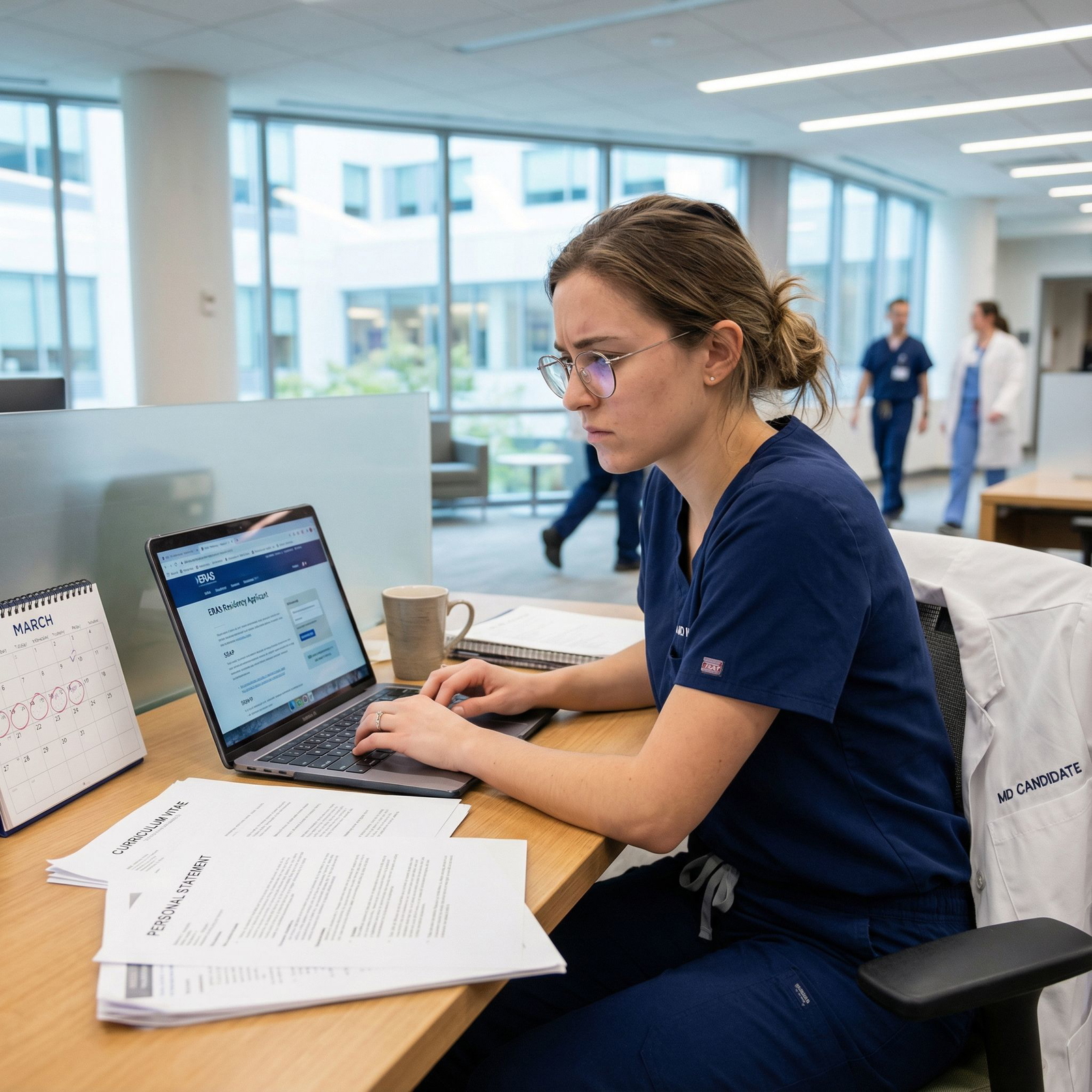
Applying to orthopedic surgery is challenging under any circumstances, and finding yourself headed toward the Supplemental Offer and Acceptance Program (SOAP) can feel especially stressful. As an MD graduate from an allopathic medical school, you do have strong structural advantages—but success in the SOAP residency process requires strategy, speed, and emotional steadiness.
This guide walks you through SOAP preparation specifically tailored to MD graduates aiming for orthopedic surgery residency or related alternatives. It focuses on what you can do before Match Week, how to respond during SOAP, and how to protect your long‑term orthopedic career goals even if the ortho match doesn’t work out this year.
Understanding SOAP: What It Is and Why It Matters for Ortho
Before you can prepare well, you need a clear, practical answer to “what is SOAP?” in the context of the allopathic medical school match.
What Is SOAP?
The Supplemental Offer and Acceptance Program (SOAP) is an organized, time‑compressed process run by the NRMP during Match Week to help unmatched or partially matched applicants obtain unfilled residency positions.
Key points:
- It starts on Monday of Match Week when you learn if you are matched, partially matched, or unmatched.
- It proceeds through several offer rounds (often 4) over several days.
- Participation is by invitation only from NRMP.
- Applications are submitted through ERAS to programs with unfilled positions.
- The goal is to provide a structured, fair, time‑bound way to fill open positions rather than a chaotic free‑for‑all.
Why Is SOAP Especially Important for Orthopedic Applicants?
Orthopedic surgery is a highly competitive specialty with limited positions. Even strong MD candidates from allopathic medical schools may:
- Rank a small list of highly competitive programs
- Miss the orthopedic surgery residency match by a narrow margin
- Have strong credentials but a few strategic weak spots (e.g., research, Step scores, late away rotations)
If you don’t match into orthopedics, SOAP can:
- Provide a bridge year (preliminary surgery, transition year, or another specialty)
- Allow you to stay clinically active, maintain letters, and build your CV
- Keep you eligible and competitive for a future ortho match attempt
Going into the match cycle with deliberate SOAP preparation is a hallmark of strategic planning, not pessimism.
Pre‑Match SOAP Preparation: What to Do Before Match Week
The best time to prepare for SOAP is well before Match Week—ideally as you submit or finalize your applications. As an MD graduate, you may be juggling sub‑internships, Step 2 CK, and interviews, but dedicated SOAP planning can profoundly influence your outcome if you don’t match.
1. Clarify Your Priorities and Boundaries
Before the emotional intensity of Match Week hits, decide:
- Primary goal: Is your top priority to stay as close as possible to orthopedic surgery (e.g., prelim surgery, categorical general surgery, PM&R), or is your top priority geographic, lifestyle, or another field altogether?
- Non‑negotiables: Are there locations, program types, or specialties you absolutely will not accept—even through SOAP? Be realistic but honest with yourself.
- 1‑year vs. long‑term: Would you accept a preliminary year with no guarantee of advanced placement, knowing you’ll need to reapply? How comfortable are you with that uncertainty?
Write these out—in a document you can revisit. They will guide your decisions when time is short and emotions are high.
2. Build Multiple Application Pathways
When applying to the allopathic medical school match, most orthopedic applicants focus on orthopedic surgery alone. If you are serious about being prepared for SOAP, consider parallel or backup strategies:
- Primary track: Orthopedic surgery residency
- High‑yield adjacent tracks:
- Categorical general surgery
- Preliminary general surgery
- Preliminary surgical or transitional year
- PM&R (physical medicine & rehabilitation)
- Occasionally anesthesiology or radiology, depending on your interests and program structures
These fields maintain procedural exposure, MSK relevance, and often connect you with surgeons or ortho services.
Actionable step: Early in the cycle, discuss with your mentor or program director:
- Whether to include general surgery or prelim programs on your initial rank list
- Whether to express strong interest in PM&R as a MSK‑aligned backup
- How many “backup” apps are realistic relative to your ortho volume
3. Optimize Your ERAS Profile for Flexibility
During SOAP, you won’t have time to substantially rewrite your entire application. Plan ahead:
- Personal statement strategy:
- Have one ortho‑focused personal statement.
- Create a generic surgery/MSK‑oriented personal statement that could work for prelim surgery, general surgery, or PM&R.
- Experience descriptions:
- Highlight universally valuable traits: teamwork, leadership, resilience, communication, procedural aptitude.
- Phrase surgical experiences so they appeal to both ortho and general surgery (e.g., emphasis on operative exposure, perioperative care, critical thinking).
- USMLE / COMLEX scores and attempts: Make sure they’re reported accurately and contextualized (if needed) in your MSPE or personal statement.
- Letters of recommendation:
- At least 2–3 orthopedic surgery letters.
- Ideally 1 letter from a general surgeon, PM&R physician, or core clerkship director who can speak broadly to your clinical performance.
This allows rapid re‑assignment of application materials to non‑ortho spots during SOAP without major edits.
4. Identify and Contact Mentors Before Match Week
Proactive mentorship is one of your strongest tools as an MD applicant:
- Orthopedic faculty mentor: Helps you interpret your ortho competitiveness and plan a reapplication if needed.
- Program director or Dean’s office contact: Guides SOAP logistics and institutional expectations.
- Senior residents (ortho and general surgery): Provide up‑to‑date insights on which SOAP programs may be realistic and how to navigate interviews.
Tell them explicitly:
“I want to be prepared if SOAP becomes necessary. Could I reach out to you quickly during Match Week if I don’t match?”
This sets expectations and ensures you’re not reaching out cold in a crisis.

Match Week: Step‑by‑Step SOAP Strategy for Ortho‑Focused MDs
When Monday of Match Week arrives, your preparation should translate into rapid, calm action. Here’s how to approach each phase with an orthopedic‑specific lens.
Step 1: Process the Unmatched or Partially Matched Result
If you receive the notification that you are unmatched or partially matched:
- Take one hour to decompress. Strong emotions are normal—shock, disappointment, self‑doubt. Allow them, but don’t let them control your strategy.
- Contact your support network:
- Family or close friends for emotional support
- Your mentor, faculty advisor, or dean for practical planning
- Remind yourself:
- Many successful orthopedic surgeons did not match on their first attempt.
- As an MD graduate, you typically remain more competitive than many applicant groups for SOAP positions, especially prelim years.
Step 2: Understand Your SOAP Eligibility and Logistics
Confirm via NRMP and your school:
- Are you SOAP‑eligible?
- Typically yes, if you registered for the Match, are unmatched/partially matched, and meet NRMP/ERAS requirements.
- What can you apply to?
- Any unfilled programs that appear on the SOAP list for which you’re eligible (e.g., prelim surgery, transitional year, PM&R, sometimes categorical positions in various specialties).
- Number of programs:
- You may apply to a limited number of programs per SOAP round (check the current year’s rules—commonly 45 total programs).
Your school or home program often has a SOAP coordinator who can help with real‑time logistics.
Step 3: Review the Unfilled Positions List Strategically
When the SOAP residency unfilled list is released:
Filter by:
- Specialty: Preliminary surgery, categorical surgery, transitional year, PM&R, internal medicine, etc.
- Location: States/regions you can realistically live in.
- Program type: Academic vs community, trauma‑heavy vs general, etc.
Prioritize programs that:
- Are preliminary general surgery or transitional years at institutions with orthopedic surgery departments.
- Have strong MSK or procedural exposure (e.g., PM&R programs with robust MSK clinics or interventional pain, surgery programs with high operative volume).
- Have a history (if known) of advancing prelims into categorical or advanced positions—especially in surgery.
Create tiers:
- Tier 1: Prelim surgery at academic centers with ortho departments and fellowship programs.
- Tier 2: Transitional year with significant surgical exposure; PM&R in MSK‑heavy centers.
- Tier 3: Other IM, FM, or categorical positions you would still be willing to complete if you pivot long‑term away from ortho.
Step 4: Tailor and Deploy Applications Rapidly
With your pre‑created materials, you should be able to:
- Assign:
- Ortho personal statement → any remaining ortho or clearly surgery‑aligned roles.
- Generic surgery/MSK personal statement → prelim surgery, general surgery, PM&R, transitional, and some IM.
- Re‑organize letters:
- For prelim/categorical surgery: Use a mix of ortho + general surgery letters.
- For PM&R: Prioritize letters emphasizing MSK, rehabilitation, and patient‑centered care, plus 1 ortho letter.
- For internal medicine / other: Include at least 1 core clerkship or medicine‑oriented letter if available.
Speed matters, but so does fit. Do not shotgun applications to every unfilled position. Carefully select those consistent with your long‑term goals and minimum boundaries.
Step 5: Prepare for SOAP Interviews (Often Same‑Day)
Programs may conduct phone or video interviews with very short notice. Keep yourself:
- Always reachable: Maintain your phone nearby, ensure voicemail is clear and professional, and monitor email closely.
- Professional appearance: Have a clean, neutral background and interview attire ready for same‑day video calls.
- Structured talking points ready:
- Why SOAP? What happened in your initial match?
- Why this specialty or program?
- How you see this position fitting into your future orthopedic or MSK career.
Sample SOAP Interview Framework for Ortho‑Aspirant MDs
“Why didn’t you match orthopedics?”
- Brief, honest, non‑defensive:
- “Orthopedic surgery is extremely competitive. My application was focused on ortho, and while I had strong clinical evaluations and solid scores, I likely under‑applied to backup specialties and over‑concentrated my rank list. I’ve reflected on this and am committed to maximizing the opportunity of a position like this one.”
“Why are you interested in this preliminary surgery / PM&R position?”
- Connect to MSK and your long‑term goals:
- “My long‑term career goals are MSK‑focused. A prelim surgery year here would provide intensive operative and perioperative experience that will make me a stronger future orthopedic candidate—or a stronger surgeon in whatever field I ultimately pursue. I’m particularly drawn to your trauma volume / MSK clinics / interdisciplinary approach.”
“If you love orthopedics, won’t you just leave after one year?”
- Show commitment and professionalism:
- “I intend to give my full effort and commitment to any program that selects me through SOAP. While I do hope to ultimately work in MSK care, I understand that may involve reapplying while I’m here or potentially completing a different path entirely. Regardless, I would approach this position with the intention of being a reliable, hard‑working resident and a positive member of the team.”

Optimizing Your SOAP Choices for an Orthopedic Future
Whether you land a preliminary surgery year, a categorical position in another field, or a transitional year, your decisions during SOAP can heavily influence your odds in a future orthopedic surgery residency application.
1. Ideal SOAP Outcomes for an Orthopedic‑Bound MD
Among common SOAP options, those typically most favorable for a future ortho match are:
Preliminary General Surgery (PGY‑1) at a hospital with an ortho residency
- Direct interaction with ortho attendings and residents
- Opportunities to rotate or moonlight with ortho services (depending on policies)
- Strong letters from surgeons, especially trauma/orthopedics
Transitional Year with strong surgical/orthopedic exposure
- Rotations in ortho clinics, ortho call, or trauma surgery
- Time and flexibility for research and networking
PM&R with MSK and sports medicine emphasis
- Maintains clear MSK trajectory if you later decide on a non‑operative MSK career
- Still valued background for applicants who pivot toward non‑surgical MSK roles
2. Situations Where a Categorical Non‑Ortho Path Makes Sense
For some MD graduates, especially those with:
- Multiple exam failures
- Significant academic or professionalism issues
- Limited surgical exposure or fit
…a categorical position in internal medicine, family medicine, or PM&R through SOAP may be a better long‑term choice than an uncertain year‑to‑year reapplication strategy.
In such cases:
- Think deeply about which roles you can see yourself doing for decades.
- Ask honestly whether the path back to orthopedics is realistic given your full application profile, not just your desire.
3. Maximizing a Bridge Year for Future Ortho Competitiveness
If you SOAP into a prelim or transitional position and plan to reapply to orthopedics:
Early conversation with program leadership:
- Be transparent (when appropriate) about your long‑term ortho interests.
- Emphasize your commitment to fully contributing during your year.
- Ask about opportunities for ortho rotations or research.
Engage deeply with orthopedic services:
- Request to cover orthopedic call or trauma cases when feasible.
- Ask for feedback from ortho attendings.
- Seek at least one new, strong letter from your current year.
Continue or initiate research:
- Multi‑center ortho studies, retrospective chart reviews, QI projects related to trauma, joint replacement, spine, etc.
- Aim for publications, posters, or podium presentations before the next application cycle.
Address prior weaknesses explicitly:
- If Step 1/Step 2 CK scores were a weakness, consider research productivity, strong clinical evaluations, and letters to counterbalance.
- If your original application lacked leadership or community involvement, demonstrate growth through your bridge year.
Emotional Resilience and Professionalism During SOAP
The SOAP process tests more than your CV—it tests your emotional resilience and professionalism.
Reframing SOAP as Strategy, Not Failure
As an MD graduate, you’ve already succeeded in multiple competitive processes. SOAP is:
- A structured second chance, not an indictment of your worth.
- An opportunity to demonstrate maturity under pressure.
- A crucible that can deepen your empathy for patients who face disappointment and uncertainty.
Communicating with Peers and Faculty
Be honest but composed:
- With classmates:
- “I didn’t match this cycle and I’m participating in SOAP. It’s stressful, but I’m working closely with my mentors and focusing on strong backup options.”
- With faculty:
- “I value your feedback on my application and would appreciate any guidance on SOAP choices that could set me up for an orthopedic or MSK‑focused career.”
Avoid venting unprofessionally on social media; residency programs and future colleagues may see it.
Self‑Care in a Compressed Timeline
During Match Week:
- Maintain basic routines: sleep, hydration, nutrition.
- Schedule brief mental breaks: walks, mindfulness apps, exercise.
- Plan time with supportive people once SOAP rounds conclude—regardless of the outcome.
Your ability to stay calm, organized, and kind under pressure will be noticed by programs and mentors alike.
Long‑Term Planning If You Do Not Secure a Position Through SOAP
Occasionally, even with strong SOAP preparation, an applicant may end Match Week without a position. This is devastating but not career‑ending.
Immediate Steps Post‑SOAP
- Meet with:
- Your home ortho program director or faculty mentor
- A dean or advisor at your medical school
- Conduct a full application autopsy:
- Board scores, clerkship grades, letters, personal statement, interview performance, number and type of programs applied to.
- Clarify:
- Whether a future orthopedic match is realistic
- What your next 12–18 months should look like
Productive Gap Year Options
If you do not secure a residency:
- Ortho research fellowship:
- Clinical, translational, or biomechanics research with high‑volume publications.
- Build relationships with faculty who can advocate in the next cycle.
- Non‑ACGME clinical roles:
- Clinical research coordinators, ortho physician extenders (in some systems), or hospitalist extenders where allowed by regulation.
- Additional academic work:
- MPH, MS in clinical research, or related degrees—with significant ortho projects.
During this time, maintain clinical exposure, update letters, and refine your narrative.
FAQs: SOAP Preparation for MD Graduate in Orthopedic Surgery
1. As an MD graduate, do I really need to prepare for SOAP if my ortho application is strong?
Yes. Orthopedic surgery is consistently among the most competitive specialties. Even applicants with excellent scores, research, and letters can go unmatched due to limited positions and program preferences. SOAP preparation doesn’t signal doubt; it reflects mature risk management. Having backup materials ready does not weaken your ortho candidacy—in fact, it often allows you to pivot quickly into positions that keep you surgically active.
2. What types of SOAP positions are best if I plan to reapply to orthopedic surgery?
Priority targets are:
- Preliminary general surgery at hospitals with an orthopedic residency or high surgical volume
- Transitional year programs with significant surgical/orthopedic exposure
- PM&R programs with strong MSK, sports medicine, or spine components
These options maintain your MSK focus, provide opportunities for ortho‑related letters, and show continued clinical growth when you reapply to the ortho match.
3. How should I explain not matching orthopedics during a SOAP interview?
Use a brief, honest, and non‑defensive explanation:
- Acknowledge the competitiveness of orthopedics.
- Identify realistic factors (e.g., number of applications, rank list strategy, slight score or research limitations).
- Emphasize reflection and growth:
- “I’ve learned from this experience, adjusted my strategy, and I’m fully committed to contributing to your program if given the opportunity.”
Avoid blaming individual programs, mentors, or the system.
4. If I accept a categorical position in another specialty through SOAP, is returning to orthopedics still possible?
It’s possible but often more difficult and context‑dependent. Factors include:
- Your performance in the categorical program (evaluations, letters, exams).
- How clearly your new role supports an MSK‑related narrative (e.g., PM&R vs categorical IM with minimal procedure exposure).
- Willingness of programs to consider a specialty switch.
For many, a categorical SOAP position may become a new long‑term path, while for others a reapplication to orthopedics may still be feasible. Discuss your specific situation with mentors before the Match Week deadlines.
Thoughtful SOAP preparation positions you to protect your orthopedic ambitions while honoring practical realities. As an MD graduate, you bring strong training and institutional support to this process. By planning early, acting strategically during Match Week, and maintaining professionalism throughout, you substantially increase your chances of landing in a role that keeps your orthopedic surgery dreams alive—whether that happens this year or in the near future.