
Understanding SOAP for the Pediatrics Applicant
If you’re an MD graduate who did not initially match into a pediatrics residency, the Supplemental Offer and Acceptance Program (SOAP) is your structured second chance. Knowing exactly what SOAP is, how it works, and how pediatrics differs from other specialties is critical to maximizing your options.
What is SOAP?
SOAP (Supplemental Offer and Acceptance Program) is an NRMP-managed process that:
- Occurs during Match Week (Monday–Thursday)
- Allows eligible unmatched or partially matched applicants to apply to unfilled residency positions
- Uses ERAS as the application platform
- Proceeds through multiple offer rounds in a tightly controlled schedule
Think of SOAP as a mini, accelerated Match for the remaining unfilled positions.
Who is Eligible?
For MD graduates from an allopathic medical school seeking a pediatrics residency, you’re typically eligible if:
- You registered for the Main Residency Match and certified a rank order list (or had one certified on your behalf), and
- You are fully or partially unmatched on Monday of Match Week, and
- You do not have a binding position from any other matching program that would conflict.
NRMP posts official SOAP eligibility criteria every year—verify through your NRMP account well before Match Week.
Pediatrics and the SOAP Landscape
Historically, pediatrics is one of the more accessible specialties for MD graduates, but that doesn’t mean it’s guaranteed in SOAP. Key points:
- Categorical Pediatrics (Peds categorical) may have some unfilled spots, but:
- The number of unfilled pediatrics residency positions varies year to year.
- Many of these spots are at less competitive, smaller programs or community hospitals.
- Preliminary positions: Sometimes, internal medicine, surgery, or transitional year positions remain unfilled and may be worth considering if:
- You want to preserve clinical continuity while planning to re-apply to the peds match next cycle.
- Peds-adjacent programs: Combined med-peds, peds-neuro, or child neurology often have fewer SOAP options and can be more competitive.
Your strategy should be:
- Prioritize categorical pediatrics, especially if being a general pediatrician is your primary goal.
- Have a backup plan involving preliminary/transitional year programs if pediatrics is limited.
- Keep your mind open to a geographically and institutionally broader range than you targeted in the main match.
Step-by-Step SOAP Preparation Timeline for MD Peds Graduates
Effective SOAP preparation starts months before Match Week. You need to anticipate the possibility of not matching and build a contingency plan.
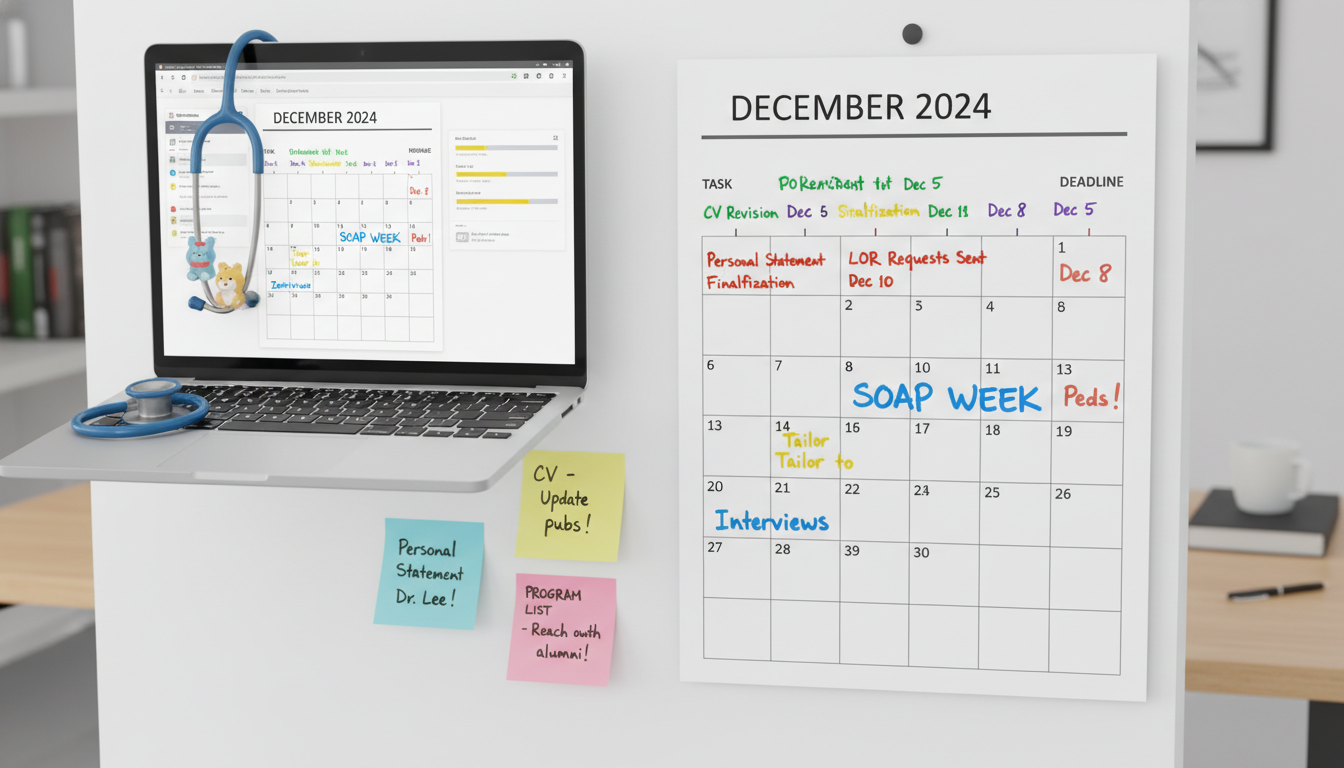
3–6 Months Before Match Week: Build a “SOAP-Ready” Foundation
Even if you’re optimistic about matching, prepare as if SOAP might be necessary.
Clarify your realistic competitiveness
- Compare your application to recent pediatrics residents at various programs:
- USMLE/COMLEX scores
- Clerkship grades, especially pediatrics and medicine
- Research, QI, and leadership in child-related activities
- Ask faculty advisors or your institution’s career office for a frank assessment:
- “Am I at risk of going unmatched for pediatrics?”
- If your risk is moderate or high, take SOAP preparation seriously.
- Compare your application to recent pediatrics residents at various programs:
Draft a pediatrics-focused SOAP personal statement
- This is not your generic peds statement. It should:
- Emphasize clinical readiness and ability to “hit the ground running”
- Highlight reliability, teamwork, communication with families
- Address any major concerns (e.g., exam failures, gaps) briefly and constructively
- Keep it roughly 650–800 words so it can be tailored quickly.
- Save a few version templates:
- Pediatrics categorical
- Pediatrics prelim/1-year position (if any)
- Transitional/preliminary (non-peds) as backup
- This is not your generic peds statement. It should:
Confirm all documents are updated in ERAS
- CV / MyERAS application fully updated:
- New publications, presentations, volunteer work, leadership since initial submission
- Any additional peds-related experiences (school clinics, community outreach, mentoring kids)
- Ensure you have:
- At least 2–3 strong pediatrics letters of recommendation (LORs)
- 1 departmental chair or program director letter if possible
- Double-check licensing exam documents and MSPE are correctly uploaded.
- CV / MyERAS application fully updated:
Inform key mentors that SOAP is a possibility
- Discreetly tell:
- Your pediatrics clerkship director
- A trusted faculty advisor or mentor
- Your dean’s office or career advisor
- Ask if they would be willing to:
- Take calls from PDs during SOAP
- Provide last-minute emails or advocacy if needed
- Discreetly tell:
1–2 Months Before Match Week: Create a Concrete SOAP Plan
Understand the SOAP mechanics in detail
- Learn:
- How to access the List of Unfilled Programs in NRMP
- How many ERAS applications you are allowed during SOAP (commonly 45, but verify for the year you’re applying)
- The schedule of offer rounds (Monday–Thursday)
- Carefully read NRMP’s SOAP handbook and your school’s internal SOAP guide.
- Learn:
Define your preference tiers in advance
- Tier 1: Categorical pediatrics programs you’d strongly consider anywhere in the country.
- Tier 2: Categorical peds in less desirable locations or smaller community hospitals.
- Tier 3: Transitional or preliminary year positions that you’d accept if no peds spots are available, as a bridge year.
- Tier 4: Roles you absolutely would not accept—know your boundaries now to avoid emotional decisions under pressure.
Prepare communication templates
- Short email template for program coordinators/directors:
- Introduction
- Why pediatrics and why their program specifically
- Key strengths + one concrete example
- Short script for phone calls:
- 30–60 second concise “pitch”
- Can be adapted for different programs quickly.
- Short email template for program coordinators/directors:
Practice rapid interviews
- SOAP interviews may be:
- Phone calls
- Zoom/Teams video calls
- Very brief (10–20 minutes)
- Practice:
- “Tell me about yourself” with a strong pediatrics narrative
- Explaining why you are in SOAP without sounding defensive
- Highlighting resilience, professionalism, and growth from any setbacks
- SOAP interviews may be:
1–2 Weeks Before Match Week: Finalize Logistics
Confirm you have a quiet, private environment for SOAP
- Reliable internet and backup (hotspot if necessary)
- Headphones, charged devices
- A printed or electronic SOAP workbook with:
- Program notes
- Pros/cons
- Space for interview impressions and calls
- Contact information of mentors, dean’s office, and career advisors.
Rehearse key explanations
- Example situations:
- “Why do you think you didn’t match initially?”
- “Why pediatrics, and why now?”
- “What have you done since submitting your application to improve yourself as a candidate?”
- Be honest but concise; end each answer with a growth-oriented takeaway.
- Example situations:
Review your ERAS materials for consistency
- Make sure your pediatrics story is cohesive:
- Peds experiences, advocacy for children, longitudinal interest
- No unexplained gaps or conflicting information
- Make sure your pediatrics story is cohesive:
Match Week: Executing an Effective SOAP Strategy
Match Week is emotionally intense and logistically compressed. Having a clear, stepwise plan for each SOAP phase is essential.

Monday Morning: Discovering Unmatched / Partially Matched Status
If at 11:00 a.m. ET Monday you learn you are unmatched or partially matched:
Pause before acting
- Take a moment to process. This is emotionally heavy, but you must shift quickly into problem-solving mode.
Immediately contact your dean’s office / advisor
- Many schools hold a SOAP briefing right after emails go out.
- Ask:
- Is there a school-based SOAP support team?
- Will they help review your updated personal statement or program list?
Access the List of Unfilled Programs
- Log into NRMP to see the SOAP-eligible unfilled positions list once it becomes available.
- Filter for:
- Pediatrics categorical
- Combined med-peds (if you are open to it)
- Transitional year / prelim IM or surgery (backup).
Map your pre-planned tiers to reality
- Place actual programs into Tier 1–3 based on:
- Specialty (peds first)
- Geographic flexibility
- Program type (academic vs community)
- Visa needs (if applicable)
- Place actual programs into Tier 1–3 based on:
Monday Afternoon: Submitting SOAP Applications via ERAS
Prioritize applications strategically
- You may only have a limited number of applications (e.g., 45). Focus on:
- All available categorical pediatrics positions that you’d realistically attend
- Then med-peds or peds-related programs
- Lastly, transitional/preliminary programs that keep you clinically active
- You may only have a limited number of applications (e.g., 45). Focus on:
Tailor your personal statement just enough
- Group programs by similarity (e.g., community-based peds in the Midwest).
- Make small adjustments:
- One paragraph referencing type of institution or patient population
- Avoid over-editing that causes delays. In SOAP, speed matters, but not at the expense of obvious errors.
Confirm document assignments
- Ensure the correct:
- Personal statement version
- LORs (especially pediatrics-focused)
- Are assigned to each program before submitting.
- Ensure the correct:
Monday Evening–Tuesday: Outreach and Interviews
Email programs after applications are submitted
- Use a concise email:
- Subject: “SOAP Applicant – [Your Name], MD – Pediatrics Residency Interest”
- Brief statement of interest, one or two key strengths, mention that your ERAS application is available.
- Do not mass-mail with obvious form letters; slight customization helps.
- Use a concise email:
Prepare for same-day or next-day interviews
- Keep:
- Professional attire ready for video calls.
- A one-page “program snapshot” for each program you applied to:
- Location, hospital type
- Unique features
- Why you’re a fit
- Practice 2–3 core themes you want every PD to remember:
- “Reliable, patient-centered, and ready to start caring for children tomorrow”
- “Team player, calm under pressure, communicates clearly with families”
- Keep:
Communicate your unmatched story confidently
- Example:
“I applied fairly broadly in pediatrics, but my application was mid-range for some of the most competitive regions. Looking back, my geography preferences may have limited my options. I’ve taken this as an opportunity to really clarify that pediatrics is my long-term commitment, and I’m prepared to relocate and work hard wherever I match.”
- Example:
Log every interaction
- For each program:
- Date/time of contact
- Who you spoke with
- Their tone and feedback
- Your impressions after the call/interview
- This helps if you receive multiple offers later and must decide quickly.
- For each program:
Wednesday–Thursday: Navigating SOAP Offers
Understand how SOAP offers work
- Offers come in several rounds, usually starting Wednesday.
- If you receive an offer:
- You have a restricted time window (e.g., 2 hours) to accept or reject.
- If you accept, you are contractually bound and exit SOAP.
- If you do not respond within the window, the offer expires and may not return.
Create a decision hierarchy in advance
- Rank potential outcomes:
- Categorical pediatrics (any location)
- Combined med-peds (if you’re truly interested)
- Transitional/prelim in a supportive institution + strong plan to reapply to pediatrics
- Also define deal-breakers:
- Places where you would struggle severely (family constraints, major health limitations, etc.).
- Rank potential outcomes:
When you receive an offer
- Quickly review your notes.
- Check in with a trusted mentor or advisor only if time permits.
- If it’s a categorical pediatrics residency and you have no conflicting higher-priority options, it is usually wise to accept.
If SOAP ends without any offer
- Decompress briefly, then:
- Meet with your dean’s office and pediatrics mentors.
- Develop a 12-month plan to:
- Pursue a research or clinical position
- Strengthen your application
- Reapply in the next allopathic medical school match for pediatrics or a suitable alternative specialty.
- Decompress briefly, then:
Optimizing Your Pediatrics-Specific SOAP Application
For pediatrics, program directors are looking for MD graduates who can connect with children and families, function on busy inpatient wards and clinics, and be reliable team members.
Highlight Core Pediatric Competencies
Communication with children and families
- Provide concrete examples:
- Explaining asthma action plans to a teenager
- Coaching parents of a newborn on feeding and safe sleep
- Show maturity, empathy, and cultural sensitivity.
- Provide concrete examples:
Team-based care and professionalism
- Peds is highly collaborative (nurses, social workers, child life specialists).
- List experiences that demonstrate:
- Effective interprofessional teamwork
- Reliable follow-through on tasks
- Positive feedback from staff and peers
Longitudinal commitment to child health
- Include:
- Pediatric volunteer work (camps, schools, shelters)
- Child advocacy, global child health, or public health projects
- Mentoring or teaching roles involving kids or adolescents
- Include:
Addressing Red Flags Honestly but Constructively
If you’re in SOAP for reasons like:
- Failing Step 1 or Step 2 CK on first attempt
- Significant gap in training
- Poor clerkship evaluations
Use a simple 3-part framework:
- Own it briefly
- “I failed Step 1 on my first attempt.”
- Explain context without making excuses
- “During that year, I was balancing family responsibilities I didn’t manage well. I learned I needed stronger time management and support systems.”
- Demonstrate corrective action and improved performance
- “I restructured my study approach, used validated resources, built a peer study group, and passed on my second attempt with a significantly higher score. Since then, my clinical evaluations in core rotations have been strong.”
Programs need to see that the problem is unlikely to recur during residency.
Crafting a Strong Peds SOAP Personal Statement
Aim to answer three core questions:
Why pediatrics?
- A specific, clinical story is more memorable:
- A child with chronic disease you followed during multiple encounters
- An experience that showed you children’s resilience and family dynamics
- A specific, clinical story is more memorable:
Why you will thrive in residency now
- Focus on:
- Work ethic
- Emotional resilience
- Willingness to learn and seek feedback
- Readiness to manage typical pediatric scenarios (bronchiolitis, dehydration, asthma, newborn care)
- Focus on:
Why SOAP doesn’t define your long-term trajectory
- Briefly frame SOAP as a detour, not a derailment:
- “Not matching initially was deeply disappointing, but it clarified my commitment to pediatrics. I’m ready to work hard in any environment where I can grow into a compassionate, competent pediatrician.”
- Briefly frame SOAP as a detour, not a derailment:
Backup Strategies: If Pediatrics Positions Are Scarce in SOAP
Even in years where the peds match is favorable, the number of categorical pediatrics spots in SOAP can be limited. Having backup plans does not mean you are abandoning pediatrics; it shows strategic planning.
Option 1: Transitional Year or Preliminary Internal Medicine
These can help you:
- Maintain clinical skills
- Collect strong new LORs about:
- Reliability
- Clinical judgment
- Professionalism
- Reapply to pediatrics in the next match cycle with fresh, positive evaluations
If you pursue this:
- Make your intention to reapply to pediatrics clear to mentors at that institution.
- Seek rotations that involve adolescent medicine, family medicine with peds exposure, or inpatient wards that are relevant to child care.
Option 2: Research or Hospitalist Assistant Positions
If you do not match into any residency position:
- Look for:
- Pediatrics research fellow roles
- Clinical research coordinator positions in child health
- Hospital-based scribe or clinical assistant positions in pediatric units
- These can strengthen:
- Your pediatrics CV
- Your connections to faculty who can advocate strongly in the next allopathic medical school match.
Option 3: Reassessing Specialty Choice
This is highly individual. Some MD graduates remain fully committed to pediatrics and simply work to bolster their profile. Others may realize:
- Their goals align with family medicine with heavy peds exposure
- Or another specialty that competitively fits better with their scores, experiences, and lifestyle preferences.
Talk frankly with multiple mentors before making this decision.
FAQs on SOAP Preparation for MD Graduates in Pediatrics
1. How do I decide whether to accept a non-pediatrics SOAP offer or wait and reapply to pediatrics next year?
Weigh:
- How essential pediatrics is to your long-term fulfillment
- The quality and supportiveness of the non-peds program
- Your financial and personal situation if you remain unmatched
If pediatrics is a core identity goal and your mentors believe you have a realistic chance of improving and matching next year, it may be better to strengthen your pediatrics application rather than enter a specialty you don’t want. However, if financial pressures or visa issues are major constraints, accepting a strong transitional or prelim position may be wise.
2. Should I tell programs during SOAP that I will reapply to pediatrics if I accept a prelim or transitional year?
Be honest but tactful. For transitional or prelim programs:
- It’s acceptable to state that you are committed to a career in pediatrics, and you see this year as:
- “A chance to strengthen my clinical foundation while contributing fully to your team.”
- Reassure them that:
- You will work hard, be reliable, and represent the program positively regardless of your future plans.
Avoid sounding like you’ll be disengaged or constantly focused elsewhere.
- You will work hard, be reliable, and represent the program positively regardless of your future plans.
3. What common mistakes do pediatrics applicants make during SOAP?
Frequent pitfalls include:
- Waiting too long to prepare, assuming they will match
- Applying only to a narrow geographic range despite being in SOAP
- Sending generic emails and not tailoring communication at all
- Failing to address major red flags or not having a concise explanation ready
- Panicking during offers and accepting a position that they already know is a very poor fit without consulting anyone
Avoid these by planning early, being flexible, and maintaining open communication with mentors.
4. How does SOAP residency performance influence future fellowship or job prospects in pediatrics?
Once you secure a solid categorical pediatrics residency and perform well:
- Your SOAP status matters very little long-term.
- Fellowship and job decisions hinge on:
- Residency evaluations
- Board exam performance
- Letters of recommendation
- Research or QI involvement, if applicable
SOAP is rarely more than a brief line in your story—what matters is how you grow and perform as a resident.
By preparing early, understanding how the allopathic medical school match and SOAP residency process intertwine, and tailoring your materials and strategy specifically for pediatrics, you maximize your chances of turning an initially disappointing Monday into a secure and promising pediatrics residency position by Thursday.