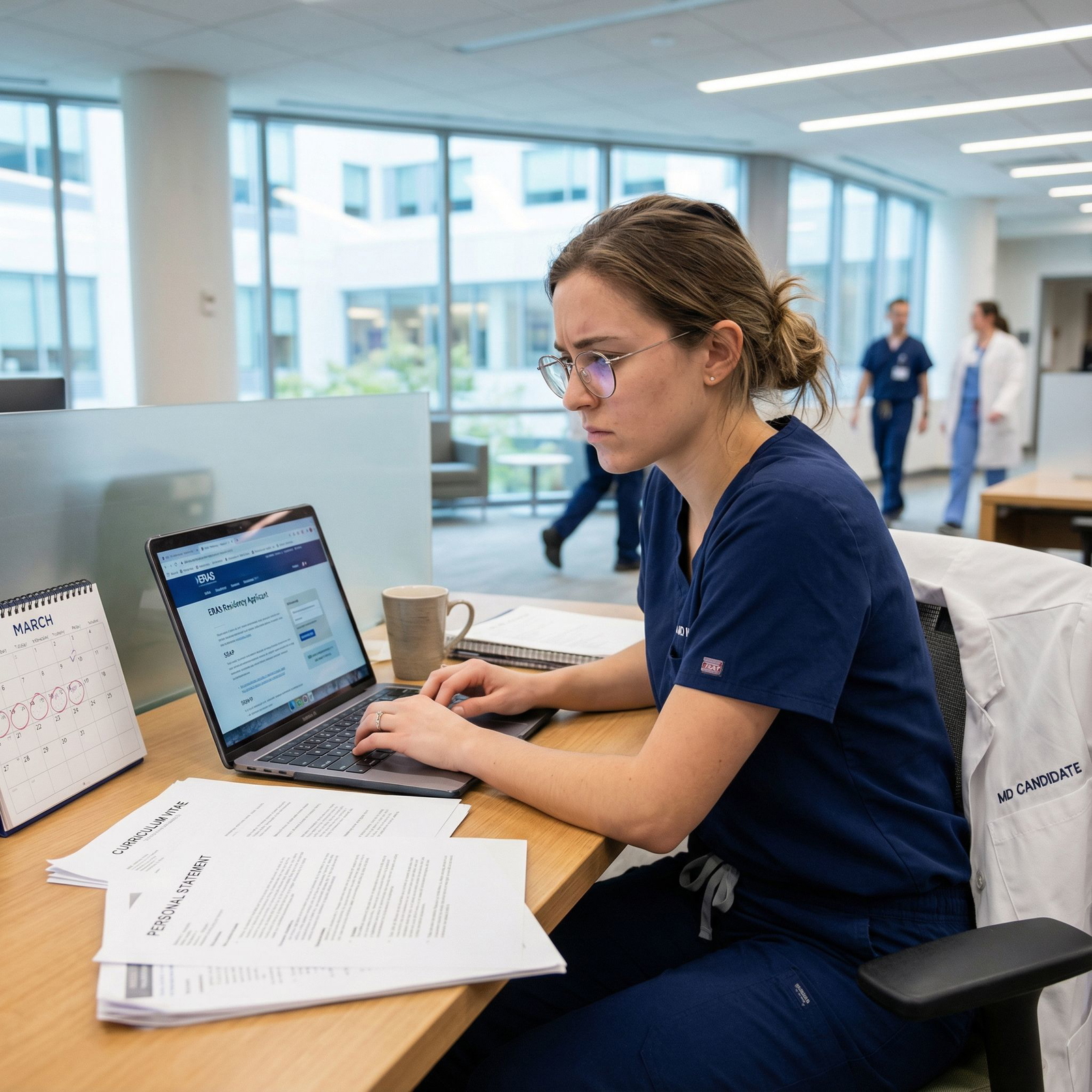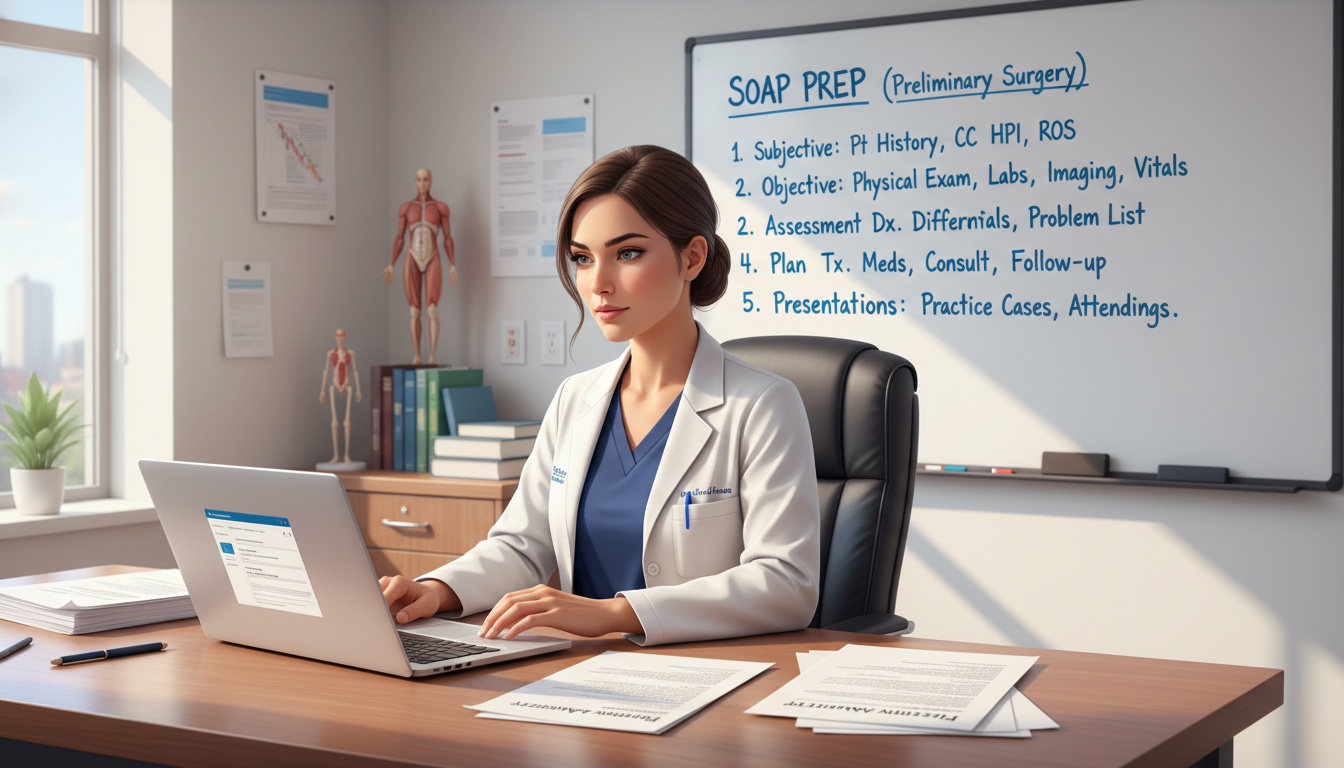
Preparing for the Supplemental Offer and Acceptance Program (SOAP) can feel especially high‑stakes for an MD graduate aiming for plastic surgery residency. Plastic surgery is one of the most competitive specialties, and many applicants fear that entering SOAP means the end of their integrated plastics dreams. In reality, thoughtful SOAP preparation can preserve your long‑term trajectory in plastic surgery—even if your immediate outcome is a preliminary year or a different categorical spot.
This guide is designed specifically for MD graduates from allopathic medical schools who are interested in plastic surgery and want to be fully prepared if SOAP becomes part of their residency journey.
Understanding SOAP in the Context of Plastic Surgery
Before you can prepare effectively, you must understand what SOAP is, how it functions within the allopathic medical school match, and how it interacts with long‑term goals like the integrated plastics match.
What is SOAP?
The Supplemental Offer and Acceptance Program (SOAP) is the structured process the NRMP uses to fill unfilled residency positions during Match Week. It is not a free‑for‑all scramble; it has strict rules, timelines, and communication restrictions.
Key features:
- Eligibility: You’re eligible if:
- You are partially matched (did not match to all ranked programs in a multi-track rank list) or unmatched in the main NRMP Match, and
- You are eligible to start training on July 1 (i.e., graduated MD/DO or expected to graduate), and
- You have registered for the Match and are not withdrawn for issues like incomplete credentials or violations.
- Timing: SOAP occurs over Match Week:
- Monday: You learn whether you matched.
- Monday afternoon: Unmatched/partially matched applicants gain access to the List of Unfilled Programs.
- Monday–Thursday: Several SOAP rounds where programs send offers and applicants accept/decline in ERAS.
- Communication Rules: You may not initiate or respond to non‑ERAS communications from programs outside of NRMP/ERAS-approved channels during SOAP (email, calls, LinkedIn, etc.), unless specifically allowed (e.g., responding to a program‑initiated phone call).
How SOAP Relates to Plastic Surgery
Most years, integrated plastic surgery residency positions are fully filled in the main Match. Unfilled integrated plastics positions are extremely rare. Therefore:
- Direct plastic surgery positions in SOAP are unlikely.
- Your SOAP focus will often be on:
- Preliminary surgical internships (prelim gen surg)
- Transitional year (TY) programs
- Occasionally categorical general surgery or related fields that keep you close to plastics.
This means SOAP is primarily a strategic bridge year for aspiring plastic surgeons, not the endpoint:
- It can:
- Preserve your operative exposure and surgical skill development.
- Maintain your mentorship and research in plastic surgery.
- Set up a stronger application for a future integrated plastics match or independent pathway.
Strategic Mindset: Reframing SOAP as a Long‑Term Plastics Strategy
As an MD graduate eyeing plastic surgery, it’s crucial to approach SOAP with a strategic, not reactive, mindset.
Accept the Reality Without Abandoning the Goal
Plastic surgery is consistently among the most competitive specialties. Many highly qualified MD graduate residency candidates—especially those applying directly to plastic surgery residency—may go unmatched due to pure numbers.
SOAP is not a reflection of your worth or your future potential. It’s an opportunity to:
- Avoid a gap year with no clinical activity, if that’s not your preference.
- Position yourself in a program and environment where:
- You can work closely with plastic surgeons.
- You can generate research output.
- You can strengthen your letters of recommendation and clinical portfolio.
Clarify Your Priorities Before SOAP Starts
Before Match Week, you should know:
Is my absolute priority clinical training or plastic surgery research?
- Some applicants prefer a research year (or multiple years) in plastic surgery rather than a non‑plastics clinical role.
- Others strongly prefer staying in clinical training (e.g., a prelim year) and doing research alongside that.
Am I open to other surgical or non‑surgical specialties long‑term?
- Some applicants decide that if they don’t match integrated plastics, they’re open to:
- General surgery
- ENT/orthopedics (later plastic subspecialization paths)
- Another specialty altogether
- Others remain plastics‑or‑bust, using SOAP as a short‑term bridge.
- Some applicants decide that if they don’t match integrated plastics, they’re open to:
How flexible am I geographically and program‑type wise?
- Will you go anywhere in the country for a prelim surgery spot?
- Are you okay with community programs without a home plastics department?
- Or do you prioritize being at an academic center with active plastic surgery faculty?
Answering these questions before SOAP prevents panicked, inconsistent choices once the List of Unfilled Programs appears.
Pre‑Match Week SOAP Preparation: What You Should Do Now
You cannot fully control whether you will need SOAP, but you can absolutely control how ready you are if it happens. Effective SOAP preparation for an MD graduate with a plastic surgery focus involves documents, strategy, and support systems.

1. Build an Application Strategy for SOAP Scenarios
Plan three possible paths ahead of time:
Path A: Plastics‑Focused Bridge Year (Most Common)
- Main SOAP targets:
- Preliminary general surgery positions (1‑year).
- Transitional year programs at institutions with plastic surgery departments.
- Ideal characteristics:
- Programs with active plastic surgery services or divisions.
- Opportunities for electives/rotations in plastics.
- Faculty known for being supportive of residents pursuing competitive specialties.
This is often the best path if you want to re‑apply to the integrated plastics match after your intern year.
Path B: Long‑Term Surgical Path with Plastics Option
- Main SOAP targets:
- Categorical general surgery residencies that are unfilled.
- Rationale:
- If you’re receptive to a career in general surgery or an independent plastic surgery path later, a categorical gen surg spot may be ideal.
- This can allow:
- Independent plastics training after gen surg.
- Switching tracks (rare, but occasionally occurs) if an integrated slot opens later.
Path C: Non‑Surgical Transitional or Categorical Year
- Main SOAP targets:
- Transitional year positions.
- Preliminary internal medicine or other fields.
- When this makes sense:
- If no surgical or TY options align with your needs.
- If you’re considering a research‑heavy year mixed with a lighter clinical load.
- If you’re open to an eventual shift away from surgery.
Create ranked preferences of path A/B/C based on what’s acceptable and realistic for you.
2. Prepare Multiple Versions of Your Personal Statement
You should not be rewriting personal statements from scratch during SOAP. Have pre‑polished variants:
Plastic‑focused with surgical bridge narrative
- Emphasizes:
- Your commitment to plastic surgery.
- How a prelim surgical year or TY will prepare you.
- Your goals: operative skill, perioperative care, research, mentorship.
- Emphasizes:
General Surgery–friendly version
- De‑emphasizes exclusive plastics focus while still acknowledging your interests.
- Emphasizes:
- Broad interest in surgery.
- Teamwork, resilience, and willingness to contribute fully to any service.
- Appropriate for categorical general surgery or prelim spots where programs want to know you’ll be invested.
Broad transitional/non‑specific version
- Focused on:
- Professionalism, adaptability.
- Commitment to patient care and lifelong learning.
- Use for transitional year or non‑surgical prelim spots.
- Focused on:
Have these clearly labeled (e.g., “PS_PlasticBridge.docx”, “PS_GenSurgSOAP.docx”) and ready to upload quickly.
3. Update and SOAP‑Optimize Your CV
Your CV is central to allopathic medical school match processes and remains so for SOAP. Tailor it to highlight surgical potential and plastic surgery relevance:
- Clinical rotations: List any:
- Plastic surgery electives/sub‑internships.
- General surgery rotations where you performed well (include honors or commendations).
- Research:
- Especially any plastic surgery, wound healing, microsurgery, reconstructive, hand, or craniofacial projects.
- Abstracts, posters, manuscripts, quality improvement.
- Skills & procedures:
- Suture skills, minor procedures, microsurgery lab experience (if any).
- OR assistance, ICU care, flap monitoring exposure (if appropriate).
Ensure all is current to the week before Match: don’t wait until Monday to add your most recent projects.
4. Line Up Mentors and Advisors for Rapid Input
Before Match Week:
- Identify 2–4 key mentors:
- A plastic surgery mentor (faculty or senior resident).
- A general surgery or core clerkship director.
- Your dean’s office career advisor.
- Tell them explicitly:
- You’re aiming for plastic surgery.
- You’d like their availability and guidance in case you don’t match and need to enter SOAP.
- Discuss:
- Realistic backup plans (prelim vs TY vs research year).
- How they can advocate (emails, calls) during SOAP when programs reach out or ask for references.
Having mentors ready makes SOAP far less chaotic.
5. Know the SOAP Rules and Timeline Cold
Print or save a SOAP timeline checklist:
- When you get your unmatched status notification.
- When you get access to unfilled positions in ERAS.
- When each application upload window closes.
- When offer rounds occur (typically three rounds on Wed/Thu).
Understand:
- You cannot contact programs about positions independently.
- You must accept/decline offers within the ERAS time window or they expire.
- You may accept only one position; once you accept, you are committed and withdrawn from subsequent rounds.
Executing SOAP: Step‑by‑Step for the Plastics‑Minded MD Graduate
When Monday of Match Week arrives and you discover you are unmatched or partially matched, clarity and speed become critical.

1. Processing the Result: Keep a Clear Head
Take 30–60 minutes to:
- Step away from the computer.
- Contact a trusted person (mentor, family, friend).
- Acknowledge the disappointment but re‑center on your long‑term goal: becoming a plastic surgeon (or a well‑trained surgeon if your path is evolving).
You will be making major career decisions within hours; emotional overload can impair judgment.
2. Reviewing the List of Unfilled Programs
Once you have access to the List of Unfilled Programs:
- Filter by:
- Program type: Prelim surgery, categorical surgery, transitional year, etc.
- Geography (if you have constraints).
- Create a quick tiered list:
- Tier 1: Programs at institutions with plastic surgery divisions/departments, especially academic centers.
- Tier 2: Surgery‑heavy prelim/TY programs in hospitals with robust surgical case volume.
- Tier 3: Other prelim/TY spots that are less ideal for plastics exposure but maintain clinical continuity.
Use online resources quickly:
- Program websites: Look for presence and strength of plastic surgery services.
- Resident rosters: See if any residents have gone into plastics or other competitive fields.
- Your network: Message (outside of program contacts) any alumni or peers who know specific programs (this is allowed, as long as they’re not part of the residency program staff contacting you about SOAP).
3. Tailoring Your Applications Quickly but Thoughtfully
Within ERAS, you can send updated:
- Personal statements.
- Program‑specific notes (if allowed).
- CV and experiences.
For each program type:
- Prelim General Surgery or TY at Institution with Plastics:
- Use your plastic‑bridge personal statement.
- Highlight:
- Your primary long‑term interest in plastic surgery.
- Your commitment to being an outstanding intern on all services.
- Past evidence of reliability, work ethic, and surgical interest.
- Categorical General Surgery:
- Use your Gen Surg–friendly statement.
- Clarify:
- You are interested in a long surgical career.
- You appreciate the breadth of general surgery.
- If asked directly, be honest about your plastics interest but emphasize genuine engagement in general surgery training.
- Non‑surgical prelim or non‑plastics‑rich TY:
- Use the broad, professional statement.
- Focus on:
- Commitment to clinical excellence and patient care.
- Openness to growing in any specialty environment.
Ensure every program sees an application that aligns with what they are trying to fill, not just your ideal narrative.
4. Handling SOAP Interviews and Contacts
Programs may reach out during SOAP via:
- ERAS messaging.
- Phone calls or short virtual interviews.
Key points for plastics‑focused applicants:
Be honest without sounding disinterested:
- If applying for a prelim gen surg spot, you can say:
- “My long‑term interest remains plastic surgery, but I am fully committed to excelling as a surgical intern and contributing to your team. I understand many interns change their interests over time, and regardless of where I end up, I will give 100% to this role.”
- Programs mainly fear:
- You will “check out” because it’s “just a prelim” or a “bridge year.”
- If applying for a prelim gen surg spot, you can say:
Highlight your strengths as an intern:
- Work ethic.
- Team player.
- Prior evidence of strong performance:
- Excellent clinical evaluations.
- Strong letters.
- Reliability in managing tasks and patient care.
Ask targeted questions (if time allows):
- “Do your prelim interns have exposure to plastic surgery services?”
- “Are there opportunities for research with surgical or plastic surgery faculty?”
- “How have past prelims or TY residents from your program fared in subsequent matches?”
These questions show that you’re serious and thinking ahead—but avoid sounding as if the only reason you want the spot is to leave for another program.
5. Evaluating SOAP Offers Strategically
Once offers come in during SOAP rounds, you’ll have limited time to accept or decline. Consider:
Does this program align with my long‑term plastics goals?
- Presence of plastics department or at least robust surgery.
- Past culture of supporting residents into competitive specialties.
Is this program environment workable for one year?
- Location, support, workload.
- Even a “temporary” year can be extremely demanding; choose somewhere you can realistically function and do well.
What is the opportunity cost of declining?
- You may not receive a more plastics‑friendly option later in the day.
- But don’t accept something completely misaligned just out of fear, if you have a strong alternative plan (e.g., a high‑quality research year lined up).
For many aspiring plastic surgeons, a prelim surgery or strong TY at an institution with plastics is an excellent SOAP outcome.
After SOAP: Maximizing Your Plastics Trajectory in Any Outcome
Whether you match through SOAP or not, your next steps are critical for your future integrated plastics match or alternative plastic surgery pathways.
If You SOAP into a Prelim Surgery or TY Program
Use the year to build a plastics‑oriented profile:
Clinical:
- Volunteer for cases or rotations with the plastic surgery team when possible.
- Become known as the intern who:
- Shows up early.
- Knows the patients well.
- Closes skin smoothly and efficiently.
Research:
- Seek out plastic surgery faculty doing:
- Clinical outcomes research.
- Quality improvement.
- Basic science in wound healing/regeneration.
- Aim for abstracts, posters, and manuscripts by the time you re‑apply.
- Seek out plastic surgery faculty doing:
Letters of recommendation:
- Secure strong letters from:
- A plastic surgery attending.
- A general surgery attending who can speak to your clinical performance and work ethic.
- Secure strong letters from:
Re‑applying strategy:
- Discuss with mentors when to re‑enter the integrated plastics match:
- During your intern year (common).
- After an added dedicated research year, if needed.
- Discuss with mentors when to re‑enter the integrated plastics match:
If You SOAP into a Categorical General Surgery Spot
Here, your options broaden:
- You can:
- Commit fully to a career in general surgery.
- Keep the door open to independent plastic surgery training later.
- Focus on:
- Excellence in core surgical training.
- Strategic selection of rotations and research to:
- Align with plastic surgery–relevant content (e.g., breast surgery, hand, microsurgery labs).
- Discuss with mentors:
- Feasibility and competitiveness of:
- Transitioning to plastics via the independent track.
- Remaining in general surgery with a plastics‑related niche (e.g., complex wound care, oncoplastic collaboration).
- Feasibility and competitiveness of:
If You Do Not Obtain a SOAP Position
No SOAP position is not the end of the road. Many plastic surgeons endured unmatched years and emerged stronger.
Consider:
Dedicated plastic surgery research year(s):
- At an academic center with:
- Large plastic surgery department.
- High publication output.
- Use this time to:
- Build a major research portfolio.
- Network with leaders in the field.
- Strengthen your CV for the next integrated plastics match.
- At an academic center with:
Locum or clinical jobs (where allowed) + research:
- Some MD graduates combine research fellowship + per diem clinical work (depending on licensure and institutional policies).
Re‑applying plan:
- Work closely with:
- A plastic surgery program director or senior mentor.
- Have them review:
- Your USMLE scores, MSPE, letters, and research.
- Identify:
- What exactly needs to improve for a realistic allopathic medical school match into plastics or an alternative surgical path.
- Work closely with:
Practical Tips and Pitfalls for MD Graduates Targeting Plastic Surgery
Practical Tips
Keep all documents in one “SOAP” folder:
- Multiple personal statements.
- Updated CV.
- List of mentors + contact info.
- Pre‑written email templates to your dean’s office/mentors for quick updates.
Clarify with your dean’s office:
- How they support SOAP residency applicants:
- Do they help triage options?
- Do they contact programs on your behalf when allowed?
- How they support SOAP residency applicants:
Practice short interview answers to:
- “Why are you interested in our program?”
- “Why did you go unmatched?”
- “What are your long‑term goals?”
For plastics‑oriented applicants, blend honesty with commitment to the position you’re applying for.
Common Pitfalls to Avoid
Presenting as “plastics‑only” to non‑plastics programs:
- Programs want reassurance you’ll be a hard‑working intern/resident regardless of your ultimate specialty.
Waiting until SOAP to figure out ‘what is SOAP’:
- Not understanding the process creates panic and poor decisions. Prepare now.
Underestimating prelim years:
- Prelim surgery or TY positions can be grueling. You must show up professionally, even if you plan to re‑apply.
Burning bridges:
- Be respectful in all interactions; the surgical world, including plastic surgery, is small and very networked.
FAQs: SOAP Preparation for MD Graduates Interested in Plastic Surgery
1. As an MD graduate who went unmatched in plastic surgery, should I prioritize a prelim surgery year or a research year?
It depends on your specific profile. If your clinical evaluations or letters are weak or incomplete, a prelim surgery year with strong performance and new letters may be most impactful. If your clinical record is solid but your research portfolio is thin, a dedicated research year in plastic surgery at a high‑output institution can significantly improve your competitiveness for the integrated plastics match. Many applicants combine both over two years (one research, one clinical), but you should decide with guidance from a plastic surgery mentor who has seen many match cycles.
2. How can a SOAP position help my integrated plastics match chances later?
A SOAP‑obtained prelim or TY position can:
- Demonstrate that you can thrive in residency‑level work.
- Provide new letters of recommendation from surgeons.
- Offer direct exposure to plastic surgery services and research. Programs value evidence that you function well under real‑world clinical pressure. If you use the year to excel clinically and academically, it can meaningfully strengthen your next application, even if the position itself is not in plastic surgery.
3. Will programs view my participation in SOAP negatively when I re‑apply for plastic surgery?
No. Many program directors recognize that SOAP is often a reflection of the extreme competitiveness of the integrated plastics match, not of an applicant’s deficit. They care more about how you respond: Did you use the SOAP year to grow, produce research, secure strong letters, and demonstrate resilience and professionalism? A well‑utilized SOAP year can become a positive part of your narrative rather than a liability.
4. If I accept a categorical general surgery position in SOAP, does that close the door to plastic surgery?
Not necessarily. A categorical general surgery position can:
- Keep you on track for a robust surgical career.
- Leave open the possibility of:
- Independent plastic surgery training later.
- Exploring other surgical subspecialties if your interests evolve. Some residents in categorical surgery have successfully moved into plastics, though this route is highly competitive and not guaranteed. If you choose this path, aim to train at a program with active plastic surgery faculty, and stay engaged in plastics‑related research and mentorship.
Thoughtful SOAP preparation does not guarantee you’ll avoid turbulence on the road to a plastic surgery residency, but it does maximize your options and control. As an MD graduate from an allopathic medical school, you are already well‑positioned; combining that foundation with a clear SOAP strategy can keep your long‑term plastics ambitions firmly within reach.