Understanding SOAP for the Non-US Citizen IMG Interested in Global Health
The Supplemental Offer and Acceptance Program (SOAP) is one of the most high‑pressure phases of the US residency application process, and it can be particularly complex if you are a non‑US citizen IMG aiming for a global health–oriented career. To prepare effectively, you need to understand both what SOAP is and the unique constraints that foreign national medical graduates face—especially regarding visas and institutional policies.
What is SOAP?
SOAP is the structured process the NRMP uses during Match Week to fill unfilled residency positions with unmatched or partially matched applicants. It replaces the old “scramble” and aims to make the process more orderly and fair.
Key features:
- Timing: SOAP occurs during Match Week, usually Monday–Thursday.
- Eligibility: You must be ERAS-registered and NRMP-registered, have no position at 11:00 a.m. ET on Monday of Match Week, and meet all exam and ECFMG certification requirements by NRMP deadlines.
- Application limits: You can apply to a limited number of programs per SOAP round (historically 45 in total, but check current NRMP rules each year).
- Offers in rounds: Programs interview and then extend offers in several short, timed rounds. You either accept or decline within a very short window.
For a non‑US citizen IMG, SOAP is not only about “finding any spot.” You must verify visa sponsorship, institution policies, and whether the program’s focus aligns with your international medicine or global health interests.
Why SOAP Is Especially Critical for Non-US Citizen IMGs
As a non-US citizen IMG or foreign national medical graduate, your SOAP experience is shaped by additional factors:
- Visa limitations: Not every program sponsors J‑1 or H‑1B visas; some sponsor only J‑1, and some don’t sponsor any visas.
- Institutional restrictions: Some hospitals are bound by state or university rules about hiring foreign nationals.
- Perceived risk: Programs may worry about timelines for visas or licensing if they are less experienced with IMGs.
- Global health pathways: Global health residency tracks often sit in competitive specialties or programs, limiting SOAP‑time options.
This means SOAP preparation is not optional for you—it is part of your primary strategy. You should plan as if SOAP will happen, even if you hope to match in the main round.
Pre‑SOAP Preparation: Laying the Groundwork Months in Advance
Effective SOAP preparation starts well before Match Week. Think of this as building a contingency strategy that preserves your global health goals while maximizing your chance to secure a US residency position.
1. Confirm Eligibility Early (With Extra Attention to Visa and ECFMG)
To be SOAP-eligible, you must:
- Be registered for NRMP Match
- Be registered with ERAS
- Be unmatched or partially matched as of Match Week Monday
- Have passed required exams and be ECFMG certified (or meet the specific year’s certification deadlines)
For non‑US citizen IMGs:
- Monitor ECFMG timelines carefully. Delayed Step 2 CK scores or documentation can make you ineligible.
- Verify that your medical school and graduation status are properly updated with ECFMG.
- Keep digital copies of all documentation easily accessible (passport, diplomas, translations, ECFMG status reports).
Action item: By October–November, confirm with ECFMG that all your credentials and exam results are final and that no missing documentation could risk your eligibility.
2. Build a SOAP-Focused Program List in Advance
You cannot see the list of unfilled programs before SOAP starts, but you can predict and pre‑research likely options:
- Identify specialties and programs historically participating in SOAP
- Pre‑identify global health–friendly programs even if they are not labeled as “global health residency track”
- Focus on programs that:
- Have prior history of accepting IMGs or foreign national medical graduates
- Clearly state visa sponsorship on their websites
- Provide exposure to international medicine, refugee health, immigrant health, or underserved populations
Using Data to Your Advantage
- Review NRMP’s Program Director Survey (by specialty) for attitudes toward IMGs and international graduates.
- Look up each program’s current residents on websites:
- Do you see IMGs?
- Are there non‑US names or bios referencing international medical schools?
- Check FREIDA and program websites for:
- “J‑1 Visa: Accepted / Sponsored?”
- “H‑1B Visa: Accepted / Sponsored?”
- Any description of global health electives, international rotations, or global health resident tracks.
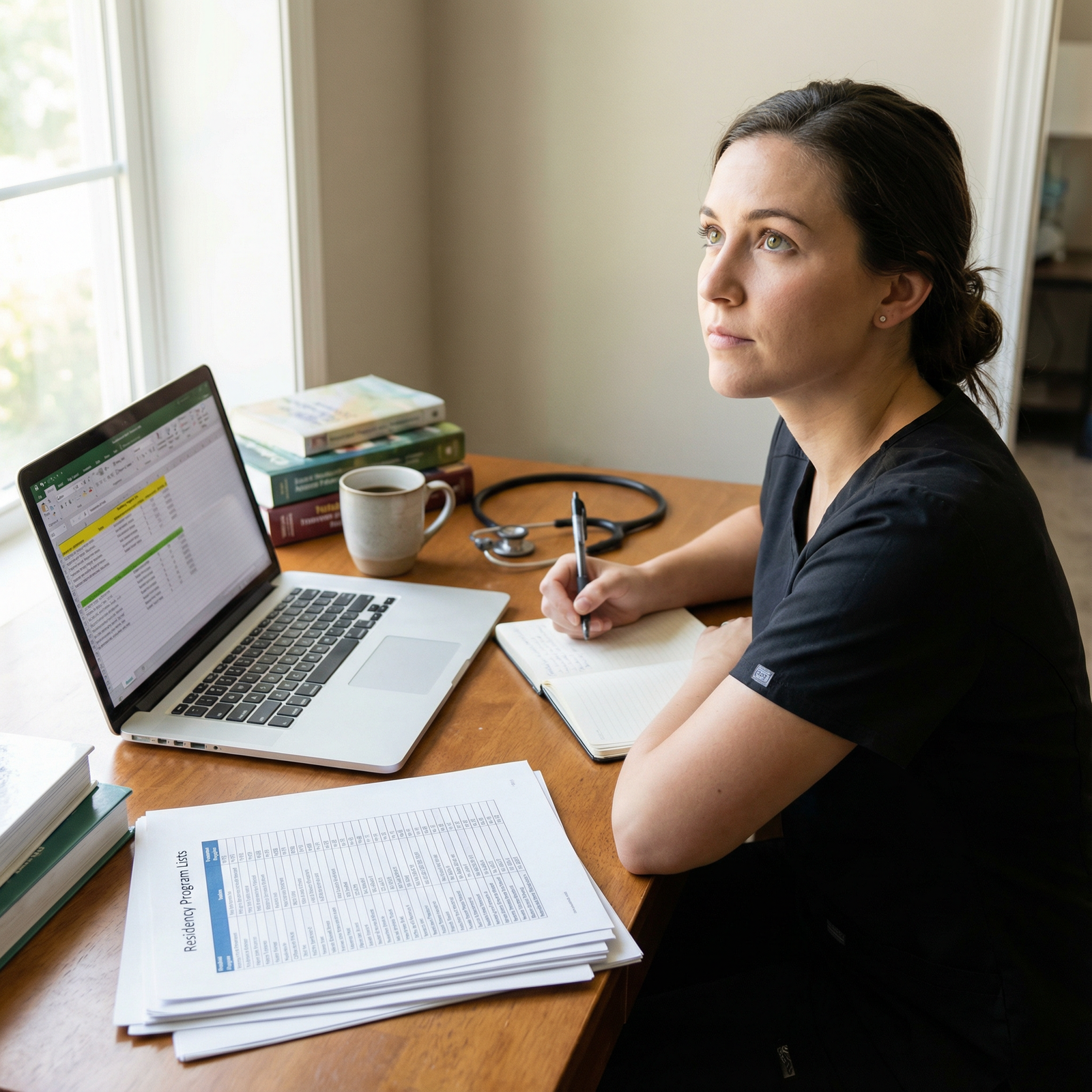
Action item: Create a spreadsheet (Excel/Google Sheets) with these columns:
- Program Name & ACGME Code
- Specialty
- Location
- J‑1? (Y/N)
- H‑1B? (Y/N)
- IMG-friendly? (Y/N/Unknown)
- Global health / international medicine exposure (Yes/No/Details)
- Priority ranking for SOAP (High/Medium/Low)
This becomes your rapid‑decision guide during SOAP.
3. Strategically Balance Global Health Goals with Blanket Matching Strategy
You might want a global health residency track, but during SOAP you must be pragmatic. Ask yourself:
- Do I want any US residency that I can leverage later toward global health?
- Or will I only consider programs that explicitly offer international medicine experiences?
In most cases, the wise strategy for a non‑US citizen IMG is:
- Prioritize visa-sponsoring, IMG‑friendly programs even if they don’t explicitly say “global health track.”
- Look for indirect global health pathways:
- Programs serving high proportions of immigrants and refugees
- Programs with strong public health ties, community medicine, or international NGO partnerships
- Locations with safety-net hospitals and multicultural patient populations
Example:
You may SOAP into a community internal medicine program in a large US city with a large refugee population. Even if there is no official global health residency track, you can:
- Lead QI projects for cross-cultural care
- Engage with local NGOs serving immigrants
- Build a research portfolio in infectious diseases, maternal health, or health equity
This mindset preserves your long‑term global health identity while maximizing the short‑term chance of a SOAP match.

Optimizing Your Application Materials Specifically for SOAP
During SOAP, you do not have time to re-write everything from scratch. You must enter Match Week with SOAP-ready documents, especially tailored as a non‑US citizen IMG interested in global health.
1. CV and ERAS Application: Highlight Practical, Transferable Strengths
Many SOAP positions will be in internal medicine, family medicine, pediatrics, psychiatry, or transitional/preliminary years. Your ERAS profile should therefore emphasize:
- Clinical readiness: US clinical experience (USCE), observerships, sub‑internships, telemedicine with US physicians
- Adaptability and cultural competence: Experience with diverse patients, language skills, work across borders
- Systems thinking: Any exposure to public health, health systems, community projects
For global health‑oriented candidates:
- Mention international rotations, mission trips, NGO work, research on global diseases, or health equity
- Link your global health background to concrete skills valued in residency:
- Resourcefulness
- Comfort in low-resource settings
- Team-based care in challenging environments
- Ability to function with limited diagnostics
Example bullet on ERAS CV:
Led community‑based hypertension screening initiative in rural [Country], coordinating a team of 12 volunteers and managing limited diagnostic supplies; improved screening coverage by 40% in 6 months.
This shows leadership and resource management, not just “global health interest.”
2. Personal Statement Strategy: Create SOAP‑Adaptable Versions
Before Match Week, prepare 2–3 targeted personal statements:
Primary Global Health–Focused Statement
- Emphasizes your motivation for global health and underserved care
- Best for programs with explicit global health or international medicine pathways
Broad Primary Care / Internal Medicine / Family Medicine Statement
- Emphasizes commitment to longitudinal care, chronic disease management, and team-based practice
- Integrates global health elements as an asset, not as the sole focus
(Optional) Backup Statement for Transitional or Preliminary Positions
- Focuses on clinical skill development, adaptability, and foundational training for future specialization
During SOAP, you can swap statements quickly depending on the type of program you’re applying to.
Key tip for non‑US citizen IMGs:
Address your global health background in a way that reassures programs you are committed to training and practicing in the US, not simply looking for a short US stop before leaving again.
Phrase it like:
My long‑term goal is to practice as an academic internist in the United States with a strong focus on partnerships with health systems in low‑ and middle‑income countries. I see US residency as my primary clinical base and academic home.
This reassures programs concerned about retention.
3. Letters of Recommendation: Aligning Them with SOAP Needs
By SOAP week, you cannot usually obtain new letters. However, you can:
- Ensure you already have at least one US-based letter (from USCE or US faculty).
- Include at least one letter that speaks to your global health or cross-cultural experiences, but framed in terms of clinical and interpersonal strengths.
- Prioritize letters that demonstrate:
- Reliability
- Communication in English
- Teamwork in a new health system
- Capacity to adapt to US clinical norms
In your email or message to programs during SOAP (if allowed by NRMP communication rules for that year), you can briefly reference a strong letter, such as:
My attending in US internal medicine, Dr. [Name], described me as functioning at the sub‑intern level during my rotation, particularly in managing complex patients with limited resources.
SOAP Week Execution: Tactics and Timeline for Non-US Citizen IMGs
When Monday of Match Week arrives and you learn that you are unmatched or partially matched, your approach must be structured and fast.
1. Monday: Interpreting Unmatched Status and Immediate First Steps
At 11:00 a.m. ET on Monday:
- NRMP notifies you of your Match status.
- If you’re unmatched or partially matched, and otherwise eligible, you are SOAP eligible.
- You then gain access to the List of Unfilled Programs via ERAS.
Your immediate tasks:
Stay calm and clear‑headed.
Emotional reaction is normal, but you must think like a strategist.Filter programs based on visa and IMG status:
- Check each program’s website: Do they clearly state “No visa sponsorship”? Then likely not worth an application.
- Use your pre‑made spreadsheet to mark:
- J‑1‑friendly
- H‑1B‑friendly
- IMG‑friendly
- Global health / international medicine exposure
Prioritize programs:
- Category A: Accepts visas, IMG‑friendly, and offers at least some global health or underserved care exposure.
- Category B: Accepts visas, IMG‑friendly, but no clear global health exposure—still apply if they fit your specialty.
- Category C: Visa policies unclear but potentially promising—call or email the coordinator (if permitted by that year’s rules) for clarification.
Important:
Your primary filter is visa eligibility. It is safest to focus on programs that explicitly state J‑1 sponsorship for foreign national medical graduates. H‑1B is more complex and may not be feasible for a SOAP‑time start due to timing.
2. Application Strategy: Distributing Limited SOAP Applications
You have a finite number of SOAP applications (e.g., 45). Use them wisely:
- Allocate at least:
- 50–70% to Category A and B programs (known visa + IMG‑friendly)
- 10–20% to Category C where information is ambiguous but there is potential
- The remainder to backup specialties (e.g., Family Medicine if you initially aimed for Internal Medicine)
For global health–oriented IMGs:
- Focus first on primary care and internal medicine programs with:
- Track records of IMGs
- Safety‑net or county hospital settings
- University-affiliated community programs
You may also consider:
- Pediatrics, if you have strong interest in child health and global child health research
- Psychiatry, especially in areas with large immigrant or refugee populations
Remember, your goal is to enter a US system that can support your long‑term international medicine ambitions, even if the residency is not branded as “global health.”
3. Preparing for SOAP Interviews: Messaging as a Non-US Citizen IMG
SOAP interviews are typically brief and high‑stakes, often by phone or video. Prepare concise, confident talking points in advance.
Key themes to convey:
Clinical readiness and rapid integration
- “I have already adapted to US clinical workflows through [USCE, observerships, telemedicine].”
- “I understand EPIC/EMR systems and multidisciplinary rounding structures.”
Long‑term commitment to the program and region
- “I am committed to training and building my career in [state/region]; I see your program as a place where I can grow for the full three years and beyond.”
Global health as complementary, not competing, with the program’s mission
- “My global health background has prepared me to work effectively with diverse and underserved populations—skills I know are central to your patient community.”
- “I am excited about the possibility of contributing to your clinic for refugees and immigrants, and to ongoing QI projects in culturally competent care.”
Reassuring them about visa logistics
- Be ready to state clearly:
- Your current visa status (if any)
- Your understanding of the J‑1 visa process with ECFMG
- That you’ve confirmed your eligibility to start by July 1 (assuming you have)
- Be ready to state clearly:
Practice a 60‑second “SOAP Elevator Pitch”:
“I am a non‑US citizen IMG from [Country], ECFMG certified, and I have completed [X] months of US clinical experience in internal medicine and primary care. I bring strong experience in managing complex patients in low‑resource settings, which has taught me to be efficient, thorough, and adaptable. Your program’s commitment to serving a diverse, underserved population aligns with my background in global health and my long‑term goal to become a general internist with a focus on immigrant and refugee health. I am ready to commit fully to your program and to the community you serve.”

Integrating Global Health Goals Into Your SOAP Choices
Even under SOAP pressure, you can protect your long-term vision in global health and international medicine.
1. Identifying Global Health–Friendly Programs in SOAP
Look for clues in program descriptions and websites:
- Resident bios mention:
- Global health rotations
- Research abroad
- Work with NGOs, WHO, CDC, MSF, etc.
- Curriculum pages show:
- Global health electives or tracks
- International partnerships or sister hospitals abroad
- Immigrant/refugee clinics, border health, migrant worker clinics
- Location factors:
- Major cities or border regions with large international communities
- Institutions affiliated with schools of public health
Even if the SOAP position is not in the designated “global health residency track,” being in such an institution makes it easier to:
- Collaborate on global health research
- Elect into global health electives later
- Build a network of global health mentors
2. Positioning Yourself as a “Global Health–Value Add”
In interviews and communications:
- Emphasize how your experiences help their specific patient population, not just “global populations.”
- Cite concrete case examples:
- Managing TB, HIV, malaria, or neglected tropical diseases
- Working with language barriers and limited diagnostics
- Highlight your ability to bridge cultures:
- “I speak [languages] and have experience counseling patients with limited health literacy.”
This positions you as an asset to programs dealing with health disparities, immigrants, and refugees—even if they don’t have a formal global health residency track.
3. Planning Post-SOAP: Keeping Global Health Alive in Any Program
If you SOAP into a program that has minimal explicit global health content:
- Seek out faculty members with international interests (even one supportive mentor can make a big difference).
- Join or start a global health or health equity interest group among residents.
- Get involved in:
- Community clinics for immigrant and refugee populations
- Quality improvement projects focused on translation, cultural competence, or infectious disease screening
- Research in global disease patterns, migrant health, or public health
Residency is only the foundation. Many physicians build their global health careers after residency through:
- Fellowships (e.g., global health fellowships, infectious diseases, maternal-child health)
- MPH degrees
- NGO partnerships
- Faculty positions with time protected for international work
Your immediate priority during SOAP is to enter a program that can sponsor you and train you well, while remaining intentional about your long-term global health direction.
Common Pitfalls and How to Avoid Them as a Non-US Citizen IMG
Applying to programs that do not sponsor visas
- Use your application allotment only on programs that are realistically able to take you as a foreign national medical graduate.
Over-focusing on prestige or only on global health labels
- In SOAP, it is often more strategic to secure a solid, IMG-friendly program than to hold out for a high‑prestige or explicitly global health–branded program.
Sending generic emails or giving vague answers in interviews
- Be specific about how your global health and IMG background will benefit their institution and their patients.
Not understanding what SOAP allows and forbids
- Every year, NRMP publishes SOAP communication rules. Violating them can harm your chances. Read the official guidelines carefully.
Neglecting backup plans in your home country or other regions
- It is wise to maintain at least a minimal backup in case US opportunities do not materialize (e.g., residency/transitional options in another country, research positions, or additional experience to strengthen your next US application cycle).
FAQs: SOAP Preparation for Non-US Citizen IMGs in Global Health
1. As a non-US citizen IMG, can I realistically match through SOAP into a global health residency track?
It is possible but uncommon. Many global health–branded tracks are highly competitive and often fill in the main Match. During SOAP, your best strategy is to target IMG‑friendly programs with strong underserved or international populations, even if they don’t formally label themselves as global health. Once in residency, you can often join or help build global health projects, electives, or scholarly work.
2. How should I prioritize visa type (J‑1 vs H‑1B) during SOAP?
In SOAP, J‑1 is usually the more practical route for non‑US citizen IMGs:
- Many more programs sponsor J‑1 than H‑1B.
- J‑1 visa processing via ECFMG is standardized and relatively predictable.
- H‑1B requires additional exams (e.g., Step 3) and has stricter institutional and timing constraints, which can be difficult to navigate within SOAP timelines.
Focus on programs that clearly sponsor J‑1. If you already meet all H‑1B conditions and a SOAP program offers it, that’s a bonus—but don’t let H‑1B preference limit your options.
3. What is SOAP really like compared to the regular Match, and how can I mentally prepare?
SOAP is faster, more compressed, and more stressful than the regular Match. Instead of months of interviews and slow decisions, you have days to:
- Identify viable programs
- Submit applications
- Interview
- Receive and respond to offers in timed rounds
Mental preparation involves:
- Accepting that this is a high-pressure but structured process
- Rehearsing your core talking points
- Having your support system ready (friends, family, mentors)
- Viewing SOAP not as a failure, but as an alternative pathway to the same goal: a US residency that can support your global health ambitions.
4. How can I improve my chances if I end up unmatched after SOAP?
If you remain unmatched:
- Debrief systematically:
- Review your application, exam scores, number of interviews, and feedback from mentors.
- Strengthen weak areas:
- Gain more US clinical experience (especially supervised, hands-on where possible).
- Improve USMLE Step scores (if any attempts remain).
- Engage in research or public health projects related to global health or underserved care.
- Clarify your strategy:
- Choose one or two specialties that are realistic and aligned with your interests.
- Update your personal statements and CV with new experiences.
- Stay connected with mentors:
- Ask for honest feedback and advocacy in the next cycle.
- Maintain your global health profile:
- Continue working in international medicine or related projects to demonstrate ongoing commitment without neglecting your US-readiness profile.
Reapplicants with a clear strategy, stronger experience, and targeted applications frequently succeed in later cycles.
By preparing months in advance, tailoring your materials, and understanding the specific constraints and opportunities that come with being a non‑US citizen IMG focused on global health, you can navigate SOAP strategically. Even under intense time pressure, you can protect your long‑term international medicine goals while maximizing your chance to secure a residency position in the United States.