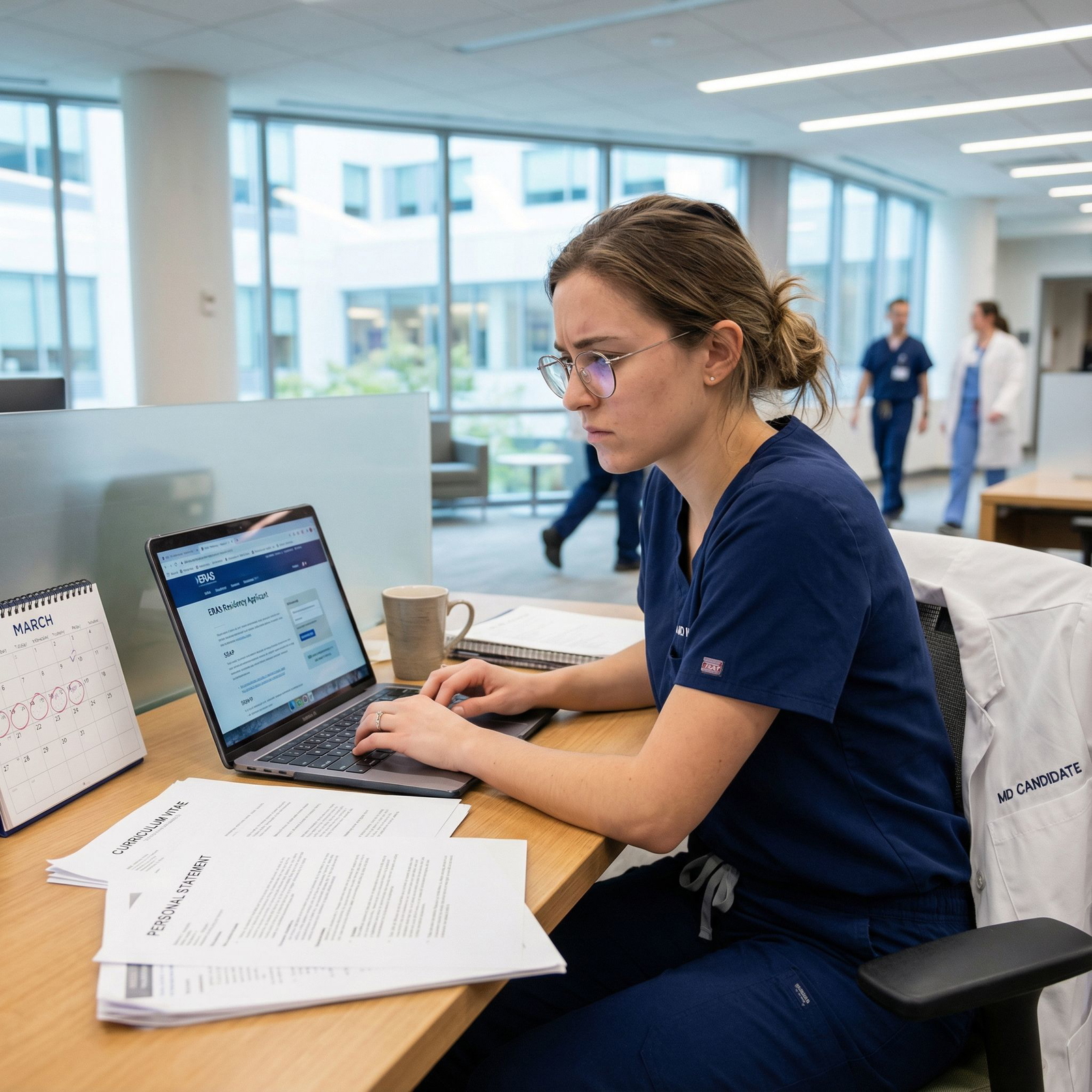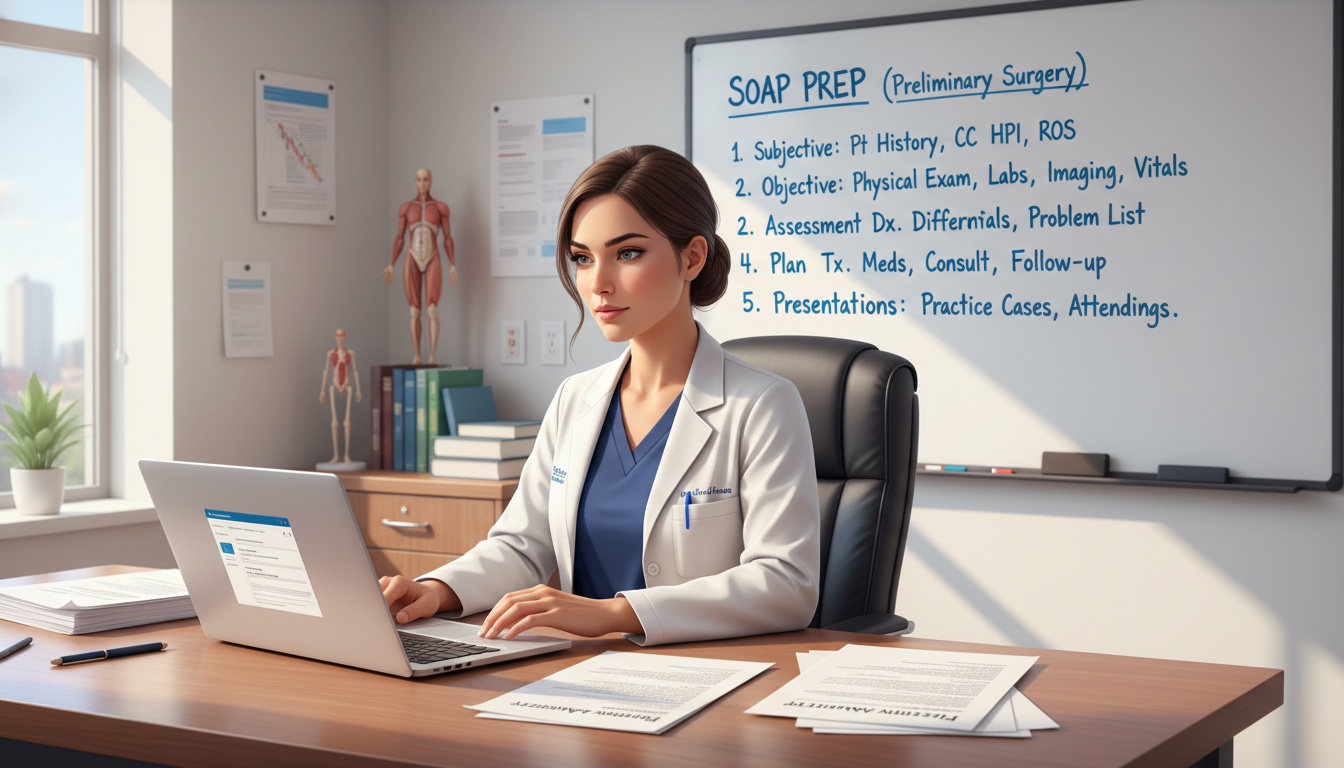
Understanding SOAP for Ophthalmology: What MD Graduates Need to Know
For an MD graduate who set their sights on an ophthalmology residency, discovering you didn’t match can feel devastating. Ophthalmology is highly competitive, and even strong applicants can end up entering the Supplemental Offer and Acceptance Program (SOAP). Knowing exactly what is SOAP, how it works, and how to prepare strategically can be the difference between salvaging your cycle with a solid position—or emerging from Match Week without any offer.
This guide is written specifically for MD graduate residency applicants in ophthalmology who might need to use SOAP. You’ll learn:
- How SOAP actually works and common misconceptions
- Strategic decisions unique to ophthalmology applicants
- A step-by-step SOAP preparation plan (before Match Week)
- How to adapt your application materials in under 24 hours
- Communication, mindset, and backup planning tips
Throughout, examples and checklists will help you translate advice into action.
1. SOAP Fundamentals for Ophthalmology Applicants
1.1 What Is SOAP?
The Supplemental Offer and Acceptance Program (SOAP) is an organized, time-limited process run by NRMP during Match Week to help unmatched or partially matched applicants obtain unfilled residency positions.
Key points:
- SOAP occurs only during Match Week (typically Monday–Thursday).
- SOAP is not a public scramble; communication is strictly regulated.
- SOAP is for applicants who are SOAP-eligible through NRMP (you’ll see this in your NRMP portal if you are eligible).
- You can only apply to programs that appear as unfilled and accepting SOAP applications in the NRMP/ERAS system.
For MD graduates aiming for an allopathic medical school match in ophthalmology, SOAP may come into play under two scenarios:
- You participated in the SF Match for ophthalmology and did not match, and you’re now seeking a PGY-1 (prelim or transitional year) via the NRMP Match/SOAP.
- You pursued advanced or categorical ophthalmology positions through NRMP and came out unmatched or partially matched, needing a PGY-1, PGY-2, or other backup specialty.
1.2 Eligibility and Basic Rules
To participate in SOAP, you must:
- Be unmatched or partially matched as determined by NRMP.
- Be registered for the Main Residency Match.
- Have certified a rank order list.
- Be eligible to start training on July 1 (e.g., USMLE requirements, graduation status).
Key restrictions during SOAP:
- You cannot initiate contact with programs outside of ERAS/NRMP-approved channels.
- Programs cannot offer you a position outside the formal SOAP offer rounds.
- All communication is monitored within defined windows; violations can have serious consequences.
1.3 Why Ophthalmology Applicants End Up in SOAP
Ophthalmology is one of the most competitive specialties. Strong MD graduates can find themselves in SOAP for reasons including:
- Applying to a small number of programs or a narrow geographic area.
- USMLE Step scores that are below the common cutoff for ophtho.
- Limited or late research, particularly if not ophthalmology-focused.
- Weak or generic letters of recommendation.
- Unanticipated late changes (failed exam, professionalism concern, visa issues).
SOAP does not typically rescue an ophtho match directly (ophthalmology positions rarely remain unfilled), but it can:
- Help you secure a strong preliminary or transitional year (PGY-1) that keeps your ophthalmology trajectory viable.
- Provide a backup categorical position in another specialty if you decide (or are compelled) to pivot.
2. Strategic Framework: How Ophthalmology Applicants Should Think About SOAP
Before you ever reach Match Week, you need clarity on your big-picture strategy. This prevents panic-driven decisions when SOAP opens.
2.1 Clarify Your Priorities
For an MD graduate focused on an ophthalmology residency, ask yourself:
- Is ophthalmology still your top priority—even if it takes an extra year?
- Are you open to reapplying after a research year or a strong prelim year?
- Would you seriously consider switching to a different specialty (e.g., internal medicine, neurology, radiology) if you didn’t match?
Your answers will shape:
- Which SOAP-eligible specialties you apply to.
- Whether you prioritize prelim/transitional PGY-1 vs categorical backup.
- How you frame your personal statement and communication.
2.2 Three Common SOAP Pathways for Ophthalmology-Focused MD Graduates
Pathway 1: Secure a Strong PGY-1 Year (Prelim or TY)
Most common for ophtho-focused MDs who remain committed to reapplying.
- Target: Preliminary internal medicine, preliminary surgery, transitional year, or prelim in another core specialty.
- Goal: Build clinical strength, earn new letters, and remain competitive for a future ophtho application.
- Personal statement emphasis:
- Explain your continued commitment to ophthalmology.
- Emphasize being an excellent, reliable intern who will strengthen any department.
This is often the best long-term approach if ophthalmology is non-negotiable for you.
Pathway 2: Explore a Closely Related Specialty
Some applicants recognize that, realistically, matching into ophthalmology may not happen.
- Target categorical programs in:
- Internal medicine (with eventual subspecialty plans)
- Neurology (neuro-ophthalmology interest)
- Radiology (diagnostic interest, imaging)
- Family medicine (rural eye care advocacy)
- Goal: Find a specialty you can be satisfied with if ophtho does not work out.
Personal statement:
- Acknowledge ophthalmology interest subtly without undermining genuine commitment to the new specialty.
- Articulate a coherent, sincere story for the new field.
Pathway 3: No Clinical Position This Year; Plan for Research or Other Gap Year
Less SOAP-related but important to plan.
- If you do not match and do not SOAP into a suitable spot, consider:
- Full-time ophthalmology research fellowship
- Additional degrees (MPH, MBA) only if strategically justified
- Global health ophthalmology work (within licensure limits)
You still use SOAP to explore opportunities, but you accept that this may become a dedicated reapplication year.

3. Pre–Match Week SOAP Preparation: Step-by-Step Plan
The best SOAP preparation happens weeks to months before Match Week, not on Monday at noon when results are released.
3.1 Know Your Risk Level for Going Unmatched
Assess your risk early:
- Academic metrics:
- USMLE Step 1 (if numerical) and Step 2 CK lower than typical ophtho match averages.
- Any USMLE fails or repeats.
- Application strength:
- Limited ophthalmology research or late publications.
- Few or no home or away ophtho rotations.
- Letters not from ophthalmologists or weakly worded (if you have insight).
- Application strategy:
- Applied to very few programs or only to top-tier institutions.
- Geographic rigidity (one city/region only).
If your risk is moderate to high, you should actively prepare for SOAP, even if you feel optimistic.
3.2 Prepare Alternate Specialty and Prelim Year Shortlists
Before Match Week:
- Identify specialties you can realistically and genuinely consider if needed.
- List programs in those specialties that:
- Historically have some unfilled spots (check NRMP’s “Results and Data” reports from prior years).
- Are in regions you are comfortable living in.
- Accept international or out-of-state graduates, if applicable.
Create a spreadsheet including:
- Program name and ACGME code
- Specialty (prelim IM, TY, categorical IM, etc.)
- Location
- Preferred features (teaching hospital, research, support for fellowship)
- Notes for future tailoring (e.g., ophthalmology department strength, potential mentors)
You won’t know which specific programs go unfilled until Monday of Match Week, but this preparation lets you act immediately.
3.3 Draft Multiple Personal Statement Templates
During SOAP, you won’t have time to write from scratch. Prepare 3–4 base templates:
Prelim/Transitional Year Statement (Ophthalmology-Focused)
Emphasize:- Commitment to ophthalmology.
- Desire for a rigorous PGY-1 year that prepares you as a future ophthalmologist.
- Teamwork, reliability, work ethic.
Internal Medicine Categorical Backup Statement
Emphasize:- Interest in long-term complex patient care and systemic disease.
- Potential connection to ophthalmology (diabetes, autoimmune disease affecting eyes) without sounding non-committal.
Neurology or Radiology Categorical Backup Statement (if relevant)
Emphasize:- Overlap with visual pathways, neuro-ophthalmology, or imaging.
General “Any Clinical PGY-1” Statement
- Focus on adaptability, eagerness to learn, and strong clinical foundation.
Make them modular, with 1–2 paragraphs you can rapidly tailor to a specific program during SOAP.
3.4 Update Your CV and ERAS Content
Even if you used ERAS already, SOAP is a chance to ensure everything is:
- Fully updated with recent:
- Presentations or posters
- Case reports
- Volunteer initiatives
- Ophthalmology-specific experiences
- Free of:
- Typos
- Inconsistencies in dates or locations
- Unclear descriptions of roles
Ensure your CV and ERAS experiences highlight:
- Clinical reliability (important for prelim and TY programs).
- Teamwork and communication skills.
- Any broader medical interests beyond just ophthalmology.
3.5 Prepare for SOAP Interviews
SOAP interviews are often:
- Short (10–20 minutes).
- Scheduled on very short notice (same day or next day).
- Conducted via phone or video.
Prepare for:
- Common behavioral questions (team conflict, error disclosure, stress management).
- “Why this specialty now?” especially if you’re pivoting from ophthalmology.
- “If you match with us, will you stay or reapply to ophtho?” – a tricky but common question.
Be honest without undermining your commitment:
Example answer (for a prelim IM spot):
“Ophthalmology remains my ultimate career goal, and I would likely reapply. But I know that to be a strong ophthalmologist, I must first be an excellent intern. If I join your program, I will give my full effort to your patients, your team, and your department. I take that responsibility seriously, regardless of my long-term goals.”
Have a professional SOAP interview outfit ready and test your internet connection, camera, and quiet space ahead of time.
4. Match Week: Executing Your SOAP Plan
4.1 Monday: Learning Your Status and Regrouping
On Monday (Match Week) at 11:00 a.m. ET, you learn whether you:
- Matched to a program
- Partially matched
- Went unmatched
If you are unmatched or partially matched and SOAP-eligible:
- Take 30–60 minutes to process your emotions.
- Notify key mentors or advisors; they can help with rapid decision-making.
- Log into NRMP/ERAS to see:
- List of unfilled programs participating in SOAP.
- Their specialties and positions (prelim, categorical, etc.).
4.2 Selecting Programs Strategically During SOAP
You are typically limited to 45 SOAP applications total (check current cycle rules). These must be used wisely.
Prioritization framework for an ophthalmology-focused MD graduate:
- Prelim IM/TY programs at strong academic centers
- Especially those with robust ophthalmology departments—this can help you network and do ophtho electives.
- Prelim Surgery at centers where ophthalmology is strong, if you can handle a more demanding surgical intern year and intend to reapply ophtho.
- Categorical IM/Neuro/Radiology programs you’d truly consider as a long-term alternative.
- Other prelim spots where you can get solid clinical training and letters.
Avoid:
- Applying broadly to positions you would never accept; they may take up interview bandwidth and risk mismatched expectations.
- Overloading one category (e.g., all categorical FM) if your real goal is ophtho and you’re not open to that long-term.
4.3 Tailoring Materials Rapidly
Once the unfilled list is released:
- Match your prepared spreadsheet with the actual unfilled programs.
- Quickly customize:
- Program-specific opening paragraph in your personal statement (why that location, patient population, or teaching environment).
- ERAS program signaling (if applicable and allowed) based on your genuine interest.
Because time is short, prioritize tailoring for:
- Top 10–15 programs that are best aligned with your long-term plan.
- The rest can use your generic but well-structured templates.
4.4 Interviewing and Communication Etiquette
Programs may contact you within hours of receiving your SOAP application.
Professional tips:
- Answer unfamiliar calls and check voicemail frequently.
- Respond to emails promptly and clearly.
- Be succinct and focused in interviews—programs are moving quickly.
Key talking points for an ophthalmology-focused MD:
- Respect for the specialty you’re applying into during SOAP (e.g., internal medicine, surgery, transitional year).
- Emphasis on:
- Work ethic
- Reliability
- Interest in learning and being a good intern
- Acknowledge your prior focus on ophthalmology without sounding distracted.
Example phrasing:
“My initial goal was ophthalmology, and I still see it as a part of my future. That said, I recognize that this year is about serving patients and being a high-functioning intern. I’m looking for a program where I can grow clinically, contribute meaningfully to the team, and earn strong recommendations through my work.”
4.5 Managing Multiple Offers Across SOAP Rounds
During SOAP, offers are made in several rounds. When you receive an offer, you usually have a short window (e.g., 2 hours) to accept or reject it.
If you receive an offer from:
- A solid prelim/TY program that fits your ophtho-reapplication plan → strongly consider accepting; waiting for a “better” offer can be risky.
- A categorical program in a specialty you’re not truly invested in → think carefully; accepting commits you to that path, and transferring later can be challenging.
Discuss quickly with mentors if possible. Have a clear hierarchy in your mind before the offers start.

5. Optimizing Your Future Ophthalmology Prospects After SOAP
Whether or not SOAP lands you a position, you can still protect your long-term goal of an ophthalmology residency.
5.1 If You Match to a Prelim or TY Through SOAP
Use this year strategically:
- Excel clinically: Be the intern everyone trusts. Ophthalmology PDs talk to medicine/surgery PDs; strong evaluations matter.
- Seek ophthalmology exposure:
- Elective rotations in ophthalmology if your institution has a department.
- Attend ophthalmology grand rounds.
- Ask to help with ophtho-related consults (within policy).
- Build new letters of recommendation:
- From IM/surgery faculty praising your work ethic and clinical judgment.
- From any ophthalmologists you work with during electives or research.
- Engage in research:
- Reach out to ophthalmology faculty (locally or remotely) for projects.
- Case reports, retrospective studies, or quality improvement projects related to eye care.
Document these experiences carefully for your next ophtho application cycle.
5.2 If You Match to a Categorical Backup Specialty
If you decide to commit fully to the new specialty:
- Pivot your CV and narrative to support depth in that field.
- Explore subspecialties connected to vision or imaging (e.g., neuro-ophthalmology, ocular manifestations of systemic disease).
- You may still be able to incorporate ophthalmology indirectly through consult relationships and cross-disciplinary work.
If you secretly intend to reapply ophthalmology:
- Be transparent with trusted mentors but cautious with program leadership.
- Understand that some PDs may view reapplication unfavorably; others may be supportive.
- Recognize the ethical and professional complexity of reapplying while in a categorical position.
5.3 If You Do Not Secure a Position Through SOAP
This outcome is difficult, but it is not the end of your career.
Options include:
- Full-time ophthalmology research fellowship at an academic center.
- Non-residency clinical roles where legal (e.g., pre-residency fellowships, clinical research coordinator).
- Additional degrees only if they clearly strengthen your ophtho candidacy and are financially feasible.
During this gap year:
- Strengthen your academic portfolio (publications, presentations).
- Secure new, strong letters from ophthalmology mentors.
- Reassess your specialty choice each year with honest mentor feedback.
6. Common Pitfalls and How to Avoid Them
6.1 Overemphasizing Ophthalmology in SOAP Materials
Programs you apply to during SOAP need to feel confident you are:
- Genuinely interested in their specialty and program.
- Able to give them a full year of commitment and effort.
Avoid:
- Personal statements that read like an ophthalmology essay with a token paragraph on prelim medicine.
- Telling interviewers you’re “just here to wait until I match ophtho.”
Instead, balance:
- Honest long-term aspiration.
- Genuine short-term dedication to the role you’re seeking.
6.2 Last-Minute, Unprepared SOAP Materials
Trying to write statements, revise your CV, and research programs all on Monday afternoon leads to:
- Typos, incoherent narratives.
- Poorly prioritized program lists.
- Missed deadlines and panic.
Advance SOAP preparation is your safety net—even if you end up matching outright and never need it.
6.3 Emotional Reactivity and Burned Bridges
Being unmatched is emotionally intense. But:
- Do not post angry comments about programs or the match process on social media.
- Do not send impulsive emails to PDs or advisors blaming others.
- Do not allow bitterness to seep into interviews or personal statements.
Residency is a small world, especially in ophthalmology. Professionalism now will serve you for years.
FAQs: SOAP Preparation for MD Graduates in Ophthalmology
1. If I’m an MD graduate who went unmatched in ophthalmology, should I always try for a prelim/TY spot in SOAP instead of a categorical backup?
Not always. If you are deeply committed to ophthalmology and willing to reapply, a strong prelim or transitional year is often best—it preserves flexibility and builds clinical strength. However, if your mentors feel that your chances of matching ophtho in future cycles are low, or if you’ve developed genuine interest in another specialty, a categorical backup may be wiser. The decision should be made with realistic feedback from ophthalmology faculty and your Dean’s office.
2. How can I explain my original ophthalmology focus without hurting my chances in SOAP interviews for other specialties?
Acknowledge your interest briefly, then pivot. For example:
“I was initially drawn to ophthalmology for its blend of microsurgery and longitudinal patient care. Through that process, I realized how deeply I enjoy systemic medicine and complex inpatient care, which is why I’m very interested in a strong internal medicine program like yours.”
The key is to articulate authentic reasons you would be happy and engaged in the specialty you are interviewing for.
3. What is the most important part of SOAP preparation for an MD graduate in ophthalmology?
Beyond understanding what is SOAP, the most critical piece is advance planning:
- Identifying realistic backup specialties and prelim options.
- Drafting multiple personal statement templates.
- Preparing mentally for more than one acceptable outcome.
This allows you to move deliberately during Match Week instead of reacting in panic.
4. Will matching to a prelim/TY year through SOAP hurt my chances in a future ophthalmology match?
Not inherently. In fact, many ophthalmology PDs value applicants who have completed a strong PGY-1 year, especially if they:
- Earned excellent clinical evaluations and letters.
- Demonstrated professionalism and resilience in the face of not matching initially.
- Continued to engage with ophthalmology through research or electives.
Approach your SOAP-acquired PGY-1 year as a major asset, not just a placeholder.
Preparing proactively for SOAP as an MD graduate targeting an ophthalmology residency is not pessimistic—it’s strategic. By understanding the allopathic medical school match, the mechanics of the ophtho match and SOAP, and how to position yourself intelligently if you go unmatched, you give yourself the best chance to emerge from Match Week with a trajectory you can be proud of—whether that’s a strong prelim year en route to ophthalmology or a well-chosen alternative path.