Understanding SOAP for the US Citizen IMG in Orthopedic Surgery
For an American studying abroad who dreams of an orthopedic surgery residency, the Supplemental Offer and Acceptance Program (SOAP) can feel like both a lifeline and a last-minute exam you never wanted to take. Knowing what is SOAP, how it works, and how to prepare strategically is critical—especially in a hypercompetitive field like orthopedics.
What Is SOAP?
SOAP (Supplemental Offer and Acceptance Program) is an NRMP-managed, structured process that allows unmatched or partially matched applicants to apply to programs with unfilled positions during Match Week.
Key points:
- It happens during Match Week, after you learn you are “Not Matched” or “Partially Matched” on Monday.
- The NRMP releases a list of unfilled positions.
- You apply to these programs through ERAS in rounds of offers.
- It is not a free-for-all scramble; communication and offers are tightly regulated.
For a US citizen IMG, SOAP is often the best structured backup route if an orthopedic surgery residency match does not initially materialize.
Why SOAP Matters for Ortho Applicants
Orthopedic surgery is one of the most competitive specialties. Even well-prepared applicants—especially US citizen IMGs—may end up in SOAP due to:
- Limited number of programs willing to consider IMGs
- High Step scores and research expectations
- Preference for home/US medical school applicants
SOAP can serve you in three main ways:
- Last-chance shot at an ortho MATCH if rare ortho positions appear.
- Entry into a related or preliminary pathway (e.g., prelim surgery, research year) that can keep you in the orthopedic pipeline.
- Securing any ACGME-accredited position (e.g., prelim internal medicine, transitional year) to stay clinically active and in the US system while you re-strategize.
The key is advance SOAP preparation so you are not improvising during the most stressful week of your application cycle.
Step 1: Pre-Match Self-Assessment and SOAP Readiness
You should begin SOAP preparation months before Match Week, even if you feel confident about matching into orthopedics. Think of it as risk management.
Honest Evaluation of Your Ortho Competitiveness
As a US citizen IMG, consider:
- USMLE scores (or Step 1 Pass + Step 2 CK numerical score):
- Are your scores at or above typical ortho ranges?
- Are there any failures or attempts?
- Clinical experience and letters:
- Do you have US orthopedic rotations and strong ortho letters (ideally from US academic faculty)?
- Orthopedic research:
- Any publications, abstracts, or posters in ortho-related fields?
- Red flags:
- Gaps in training, failed exams, professionalism issues.
If you are significantly below the usual orthopedics benchmarks, the chance that SOAP will bail you out into ortho itself is very low. But SOAP can still help you secure:
- Preliminary surgical positions
- Transitional year programs
- Research or “gap-year” friendly fields while you strengthen your application
Building a Pre-SOAP Plan A, B, and C
Have a layered strategy before results:
- Plan A: Direct orthopedic surgery match.
- Plan B: If no ortho match:
- Pursue prelim surgery or potentially categorical general surgery through SOAP to stay close to the surgical pathway.
- Consider ortho-adjacent paths (sports medicine research, PM&R with musculoskeletal focus, etc.) depending on career flexibility.
- Plan C: If surgical options are limited:
- Secure any reputable ACGME residency that keeps you clinically active (e.g., internal medicine, transitional year) and plan your long-term strategy.
Writing these plans out in advance prevents panic and rushed decisions during Match Week.
Step 2: Administrative and Technical SOAP Preparation
The logistics of SOAP residency participation are easy to underestimate. For US citizen IMG applicants, being administratively flawless helps offset the bias some programs may have.
Ensure You Are SOAP-Eligible
You must:
- Be registered for the NRMP Main Residency Match.
- Be eligible to start residency on July 1 (e.g., ECFMG certification by the program’s requirements if you graduate from a non-US school).
- Have not withdrawn from the Match.
- Not have accepted a pre-SOAP position outside NRMP rules.
Check:
- NRMP account: Confirm your status (US MD/DO vs IMG).
- ECFMG status: Make sure requirements will be met by the time programs need them.
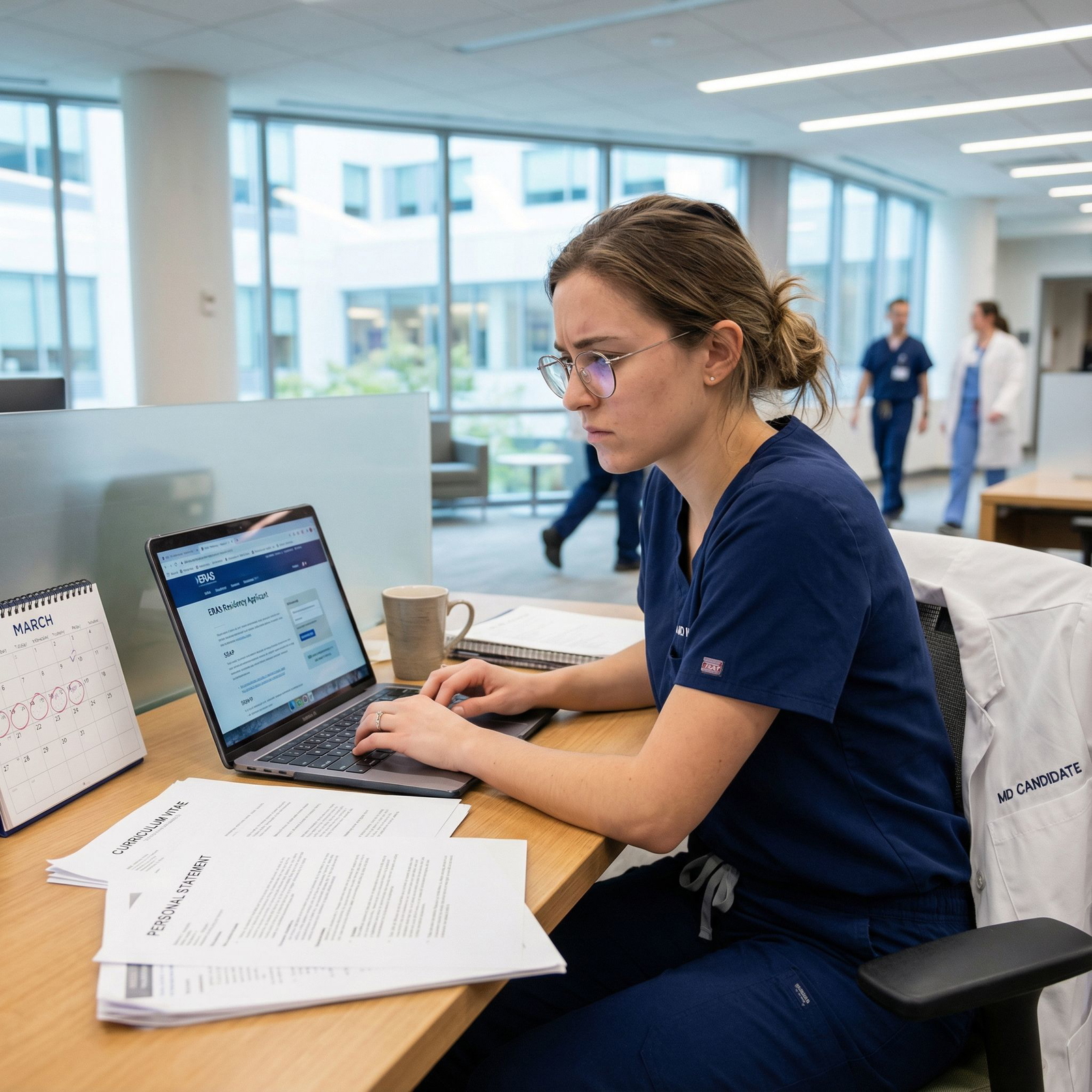
Keep Your ERAS Profile SOAP-Ready
Throughout the season, maintain:
- Updated CV: Include recent rotations, research, presentations, leadership roles.
- Refined personal statements:
- One ortho-focused statement (for any extremely rare ortho SOAP spots).
- One or more non-ortho statements (e.g., for prelim surgery, IM, or transitional year).
- Letters of recommendation (LoRs):
- Ortho LoRs are gold for surgery-related fields.
- Consider at least one letter highlighting your adaptability, work ethic, and teamwork, useful across specialties.
Do not wait until Match Week to start writing a new personal statement for prelim internal medicine. Draft and polish them well in advance.
Logistics: Documents, Technology, and Time Zones
As a US citizen IMG, you may be outside the US during Match Week.
Prepare:
- Reliable internet and backup access (e.g., another location, mobile hotspot).
- Updated phone number and email in ERAS and NRMP.
- A quiet, professional environment for potential virtual interviews during SOAP.
- Copies of:
- CV
- Personal statements
- Transcript and MSPE
- USMLE reports
- ECFMG certificate (if applicable)
Time zone tip: Know exactly what Eastern Time (ET) corresponds to in your location for all SOAP deadlines and offer rounds.

Step 3: Strategic Specialty Choices During SOAP
The most critical decision for an orthopedic surgery residency hopeful in SOAP is where to realistically direct your applications.
Will There Be Orthopedic Surgery Positions in SOAP?
Occasionally, a small number of unfilled orthopedic surgery positions do appear on the SOAP list, but:
- They are typically very few.
- They may be in programs with unusual circumstances (new program, special location, last-minute accreditation or sponsor changes).
- They may still strongly prefer US MD/DO grads with stellar profiles.
If ortho spots appear, you should apply only if:
- Your profile is at least reasonably competitive (strong Steps, solid US ortho rotations, good research).
- You are prepared for the extremely low probability of success.
Treat these applications as high-upside lottery tickets, but do not waste all of your limited application slots on unrealistic choices.
Building a Realistic SOAP Application List
During SOAP, you are limited in how many programs you can apply to (traditionally 45 total). You must prioritize.
For a US citizen IMG with an ortho focus, consider this rough framework:
- Orthopedic Surgery (if available):
- 2–6 applications (depending on how many exist and your competitiveness).
- Preliminary Surgery:
- 15–25 applications.
- Prioritize university or larger community programs with strong surgical case volume.
- Categorical General Surgery (if realistically attainable):
- 5–10 applications based on your portfolio.
- Other Backups (transitional year or internal medicine):
- 10–20 applications, depending on your willingness to pivot or plan a reapplication path.
Your exact mix depends on:
- Step scores and academic strength.
- Number of prior surgical rotations and LoRs.
- Willingness to try again for ortho versus interest in other fields.
Aligning Your Story Across Specialties
Programs read closely during SOAP because they are filling quickly and want reliable residents. Make sure:
- Your personal statement for prelim surgery clearly explains:
- Your interest in surgery.
- How your orthopedic experiences prepared you in operative skills, teamwork, and resilience.
- Your flexibility and openness to various surgical careers (without sounding like you are using them purely as a stepping-stone).
- Your internal medicine or transitional year statement avoids sounding like surgery is your sole interest.
- Focus on your interest in patient care, multidisciplinary collaboration, and long-term learning.
Programs strongly dislike feeling like a “backup” option. You can be honest about a background interest in musculoskeletal medicine but frame your commitment to being an excellent resident in whatever role you accept.
Step 4: Execution During Match Week and SOAP Rounds
Once Monday of Match Week arrives and you learn your status (“Not Matched” or “Partially Matched”), the pace accelerates quickly.
Monday: Status and Initial Response
- Process your result quickly but calmly.
- Log into NRMP and verify your eligibility for SOAP.
- Access the List of Unfilled Programs when it becomes available.
- Filter for:
- Orthopedic surgery
- Preliminary surgery
- General surgery
- Transitional year and internal medicine (depending on your Plan B/C)
Rapid Review of Programs
Within the early SOAP hours:
- Create a spreadsheet or list of target programs with:
- Program name, location, ACGME ID
- Position type (ortho, prelim, categorical, TY, IM)
- IMGs accepted? (check historical data if you can, even quickly via program websites or online forums)
- Notes (size, call schedule, research opportunities)
This quick analysis protects you from random, unfocused applications.
Tailoring and Submitting Applications in ERAS
Even during SOAP, you can:
- Assign different personal statements to different programs.
- Select your most relevant LoRs:
- Surgical letters for ortho/prelim/categorical surgery.
- More general/internal medicine letters for medical or transitional programs.
Prioritize:
- Submitting applications as early as possible on Monday.
- Avoiding minor errors (wrong statement attached, missing LoR).
Interview Strategy in SOAP
Programs may conduct rapid interviews:
- Could be as short as 10–20 minutes, often same day.
- Often via Zoom, phone, or other online platforms.
For an orthopedic-leaning applicant interviewing for prelim surgery or transitional year, expect:
- “You applied primarily to orthopedic surgery—how do we know you’ll be committed here?”
- “What would you hope to get out of a prelim year in our program?”
- “How would you handle the possibility of not matching ortho next year?”
Frame your answers around:
- Work ethic and reliability: “Regardless of specialty, I show up prepared and committed to my patients and my team.”
- Surgical interest: “I genuinely value the operative environment and acute care; this prelim year would let me contribute while continuing to develop my skills.”
- Professionalism: “I will give 100% to whichever program I match with through SOAP, and my record reflects that I’m a team player.”
Avoid statements like:
- “I’m only using this prelim year to get into ortho.”
- “If I don’t get ortho, I’m not sure what I’ll do.”
Programs want residents who are present and committed, not mentally half-abroad.

Step 5: Managing Offer Rounds and Long-Term Strategy
SOAP includes multiple offer rounds over a couple of days. Each round, you may receive:
- No offers
- One offer
- Multiple offers
You can accept only one offer throughout SOAP; once accepted, you are bound.
How to Evaluate Offers as an Ortho-Focused US Citizen IMG
If you receive:
A preliminary general surgery offer vs a transitional year offer
- Prelim general surgery:
- Pros: Closest clinically to orthopedics; heavy OR exposure; strong fit if reapplying ortho; surgical faculty who may support your future application.
- Cons: High workload, often no guaranteed PGY-2 spot.
- Transitional year:
- Pros: Balanced schedule, some elective time (you can pursue ortho rotations/research), often paired with advanced positions (less relevant if SOAP-only).
- Cons: Less consistently surgical; may or may not impress ortho PDs as strongly as a demanding prelim surgery year.
- Prelim general surgery:
Prelim surgery vs categorical internal medicine
- If your primary dream remains ortho, prelim surgery often gives a clearer narrative and stronger surgical exposure.
- If you are open to a non-surgical career, categorical internal medicine provides long-term stability and career security.
Multiple prelim surgery offers
- Compare:
- Program reputation and case volume.
- History of prelims successfully matching into categorical spots (either there or elsewhere).
- Openness to IMGs and prior prelims applying to ortho or other competitive fields.
- Location and support system (burnout is real).
- Compare:
When uncertain, reach out to:
- Mentors from your medical school.
- US orthopedic surgeons or residents you know.
- Prior US citizen IMGs who’ve been through SOAP.
If You Receive No Offers in Early Rounds
This is emotionally tough but not necessarily the end of your pathway.
Steps to take:
- Continue monitoring subsequent SOAP rounds; new positions may appear if other applicants decline offers.
- Stay professional; do not directly contact programs in ways that violate NRMP SOAP rules.
- Start a parallel post-SOAP plan:
- Research year in orthopedics or surgery.
- Non-NRMP positions that may open after Match Week (e.g., off-cycle prelim spots).
- Strengthening your CV for the next cycle: exams, research, observerships.
Long-Term Ortho Strategy After SOAP
If you end up:
In a prelim surgery year:
- Gather strong surgical LoRs.
- Seek orthopedic electives or research within your institution.
- Demonstrate reliability: perfect attendance, strong evaluations, case logs.
- Plan to reapply strategically, possibly broadening to general surgery or other surgical subspecialties if necessary.
In a transitional or internal medicine program:
- If still considering ortho, use electives for musculoskeletal, sports medicine, and rehab-related experiences.
- Consider whether shifting your long-term goals to sports medicine, PM&R, pain, or non-operative orthopedics fits your life and strengths.
Without a position:
- Prioritize US-based clinical research or observerships in orthopedics or surgery.
- Maintain exam readiness (if you need Step 3).
- Build relationships with program directors and research mentors to strengthen next year’s application.
Frequently Asked Questions (FAQ)
1. As a US citizen IMG, what are my realistic chances of matching orthopedic surgery through SOAP?
Realistically, very low. Orthopedic surgery rarely has many unfilled positions, and those that appear remain extremely competitive. Your better odds through SOAP are in preliminary surgery or other preliminary/categorical programs, which can still keep you on a path that intersects with orthopedics later. Treat ortho SOAP applications as opportunistic but plan primarily around prelim/general surgery or other specialties.
2. Should I prioritize prelim surgery or categorical internal medicine if I still want orthopedic surgery?
If your top priority is still a surgical career and you are willing to reapply or pivot to general surgery or other surgical fields, prelim surgery is typically more aligned with that path. If you are increasingly open to non-surgical careers and want a secure long-term trajectory, categorical internal medicine offers more stability. Your decision depends on your appetite for risk, tolerance for uncertainty, and dedication to a surgical identity.
3. Can I use the same personal statement for orthopedic surgery and prelim surgery programs in SOAP?
You can, but it is usually better to tailor your statement for prelim surgery:
- Keep your orthopedic background and interest, but emphasize:
- Commitment to surgery in general.
- Readiness to contribute as a team member, regardless of future subspecialty.
- Programs want to see that you will be fully engaged as a prelim and not disengaged because it is “not ortho.” A targeted prelim surgery statement can reassure them.
4. What is the biggest mistake US citizen IMGs make in SOAP preparation?
The most common major mistakes include:
- Not preparing in advance, assuming they will match and leaving no backup plan.
- Applying too narrowly in SOAP (e.g., only orthopedic surgery or only a handful of prelim surgery programs).
- Failing to adjust personal statements and LoRs to match the programs they are applying to.
- Communicating poorly in interviews—appearing as if they view backup programs as inferior or temporary, which makes programs hesitant to risk an offer.
A deliberate, early, and flexible SOAP preparation strategy is the best protection against these errors and maximizes your chance to secure a strong position—even if it is not orthopedic surgery on the first try.