Understanding SOAP and Where Clinical Informatics Fits
For a US citizen IMG (American studying abroad), the Supplemental Offer and Acceptance Program (SOAP) can be both a second chance and a strategic opportunity—especially if you’re ultimately interested in a clinical informatics fellowship or a career in health IT. To prepare effectively, you need to understand both what SOAP is and how to align your SOAP strategy with future goals in clinical informatics.
What Is SOAP?
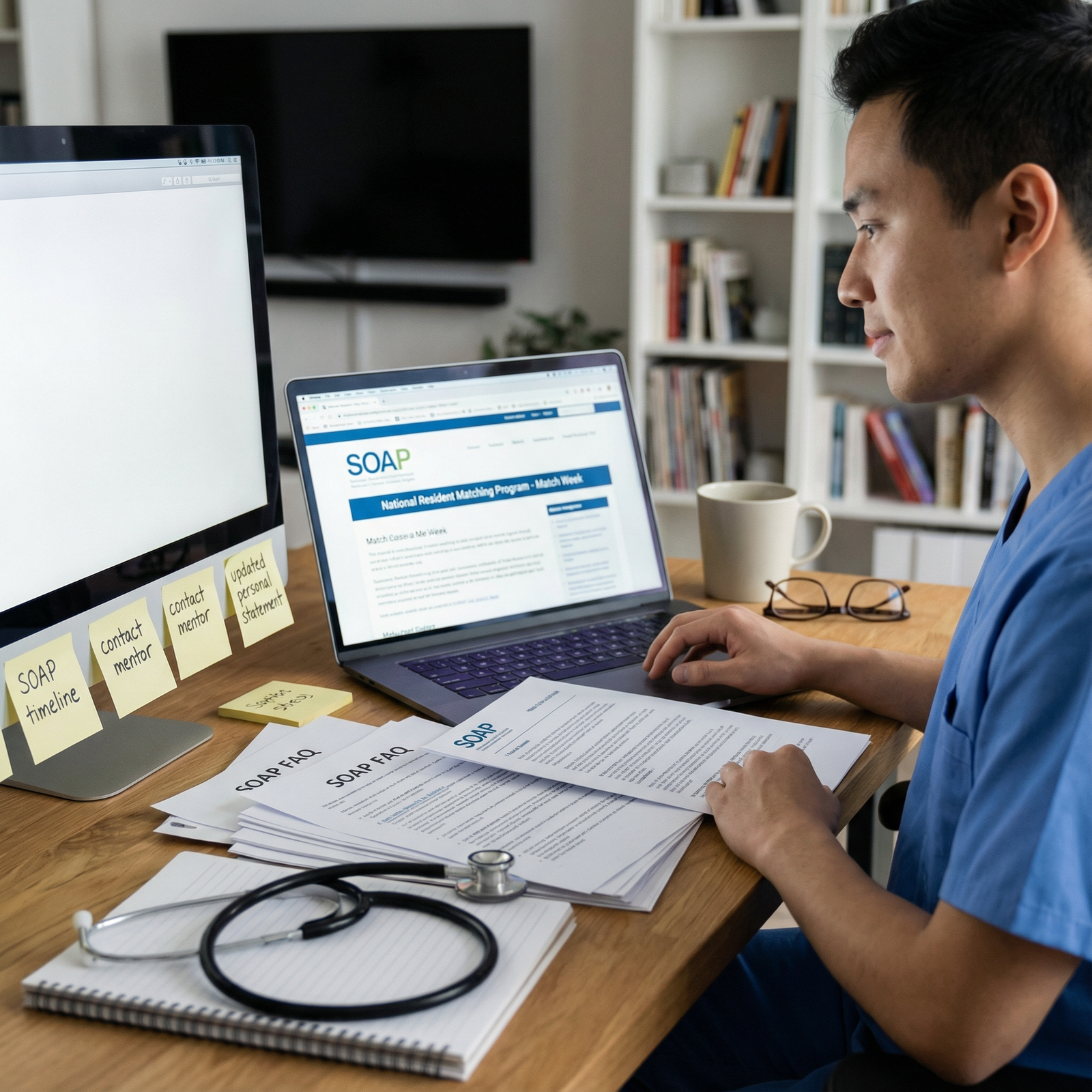
SOAP (Supplemental Offer and Acceptance Program) is the structured process that takes place during Match Week for applicants who are unmatched or partially matched after the main NRMP Match algorithm runs.
In practical terms, SOAP:
- Opens up unfilled residency positions to unmatched and partially matched applicants
- Occurs over several rounds of offers during Match Week (usually Wednesday–Thursday)
- Uses ERAS as the platform for application submission and program communication
- Has strict rules: no direct solicitation, no outside offers, no contacting programs outside ERAS-approved channels
Understanding what is SOAP and what it is not is critical:
- It is not another full match algorithm.
- It is not a free-form scramble like the old pre-SOAP days.
- It is a structured, time-compressed offer process with limited windows to respond.
Why SOAP Strategy Matters for Clinical Informatics
Clinical informatics is a subspecialty fellowship, not a categorical residency. You must first complete a primary clinical residency (often Internal Medicine, Family Medicine, Pediatrics, Emergency Medicine, Pathology, or similar). Therefore:
- SOAP is about securing a residency position that:
- Is open to IMGs (ideally US citizen IMG–friendly)
- Provides exposure to health IT, QI, data, and systems-based practice
- Sets you up for a future clinical informatics fellowship and strong letters of recommendation
Your SOAP preparation should focus on:
- Maximizing your odds of matching into any acceptable, training-rich residency this year.
- Prioritizing programs and specialties that can realistically lead to a clinical informatics pathway.
- Packaging your story so that your interest in informatics strengthens (not distracts from) your candidacy.
Building a SOAP-Ready Strategy as a US Citizen IMG
As an American studying abroad, you have some advantages relative to non-US IMGs (e.g., no visa constraints), but you also face many of the same screening barriers. Effective SOAP preparation means starting well before Match Week.
1. Know Your Profile and Risk Factors
Common risk factors for SOAP among US citizen IMGs:
- Step failures or low scores
- Graduation more than 1–3 years ago
- Limited or no US clinical experience (USCE)
- Sparse or generic letters of recommendation
- Overly narrow specialty list in the Main Match
Before SOAP, honestly assess:
- Exam performance: USMLE Step 1/Step 2 CK attempts and scores
- Timeline: Year of graduation, any significant gaps
- USCE: Rotations, observerships, externships, tele-rotations, research
- Red flags: Academic probation, professionalism issues, failed rotations
This self-audit helps you decide:
- Which specialties to target during SOAP
- Where your informatics narrative fits (and where it may not)
- How aggressively to broaden your options during Match Week
2. Connect Clinical Informatics Interest to Core Residency Specialties
Because there is no direct “Clinical Informatics Residency” pathway, you must treat your residency as the foundation for health IT training.
Common feeder residencies to clinical informatics:
- Internal Medicine
- Family Medicine
- Pediatrics
- Emergency Medicine
- Pathology
- Anesthesiology
- Occasionally Surgery, Psychiatry, OB/GYN, Radiology
During SOAP, you may not have the luxury of choosing only your top specialty, but you should:
- Prioritize programs where:
- The hospital uses a major EHR (Epic, Cerner, Meditech, etc.)
- There are active QI, data, or IT initiatives
- Faculty have experience in informatics, QI, or research
- Remain flexible on:
- Geographic location
- Community vs academic settings
- Night float vs traditional call
- Prestige/ranking of the program
If your ultimate goal is a clinical informatics fellowship, matching in any ACGME-accredited core residency where you can demonstrate competence and leadership in informatics-related domains is far better than reapplying from an unmatched position.
3. Plan for Multiple SOAP Scenarios
Create written contingency plans before Match Week:
Scenario A: Fully Unmatched
- Priority: Maximize number of realistic SOAP applications across several specialties that can lead to clinical informatics.
- Approach: Aggressively broaden your list while preserving some alignment with your skills and experiences.
Scenario B: Partially Matched (Prelim or TY)
- Priority: Secure an advanced position or a categorical spot in a field that maintains your future informatics options.
- Approach: Focus SOAP applications on categorical IM, FM, EM, or other suitable specialties.
Scenario C: TY or Transitional + No Advanced Spot
- Priority: Use SOAP to secure the advanced PGY-2 position, or another categorical pathway that still allows for board eligibility and eventual informatics fellowship.
- Approach: Be ready with a clear explanation of your path and how a new program fits.
Document these scenarios in a simple table (columns: scenario, targets, messaging emphasis, application priorities), so you are not improvising under pressure.

SOAP Preparation Timeline and Technical Logistics
SOAP Week moves fast. Thoughtful, early SOAP preparation is essential for US citizen IMGs who may need to compete for a limited number of IMG-friendly seats.
Pre–Match Week: 4–8 Weeks Before
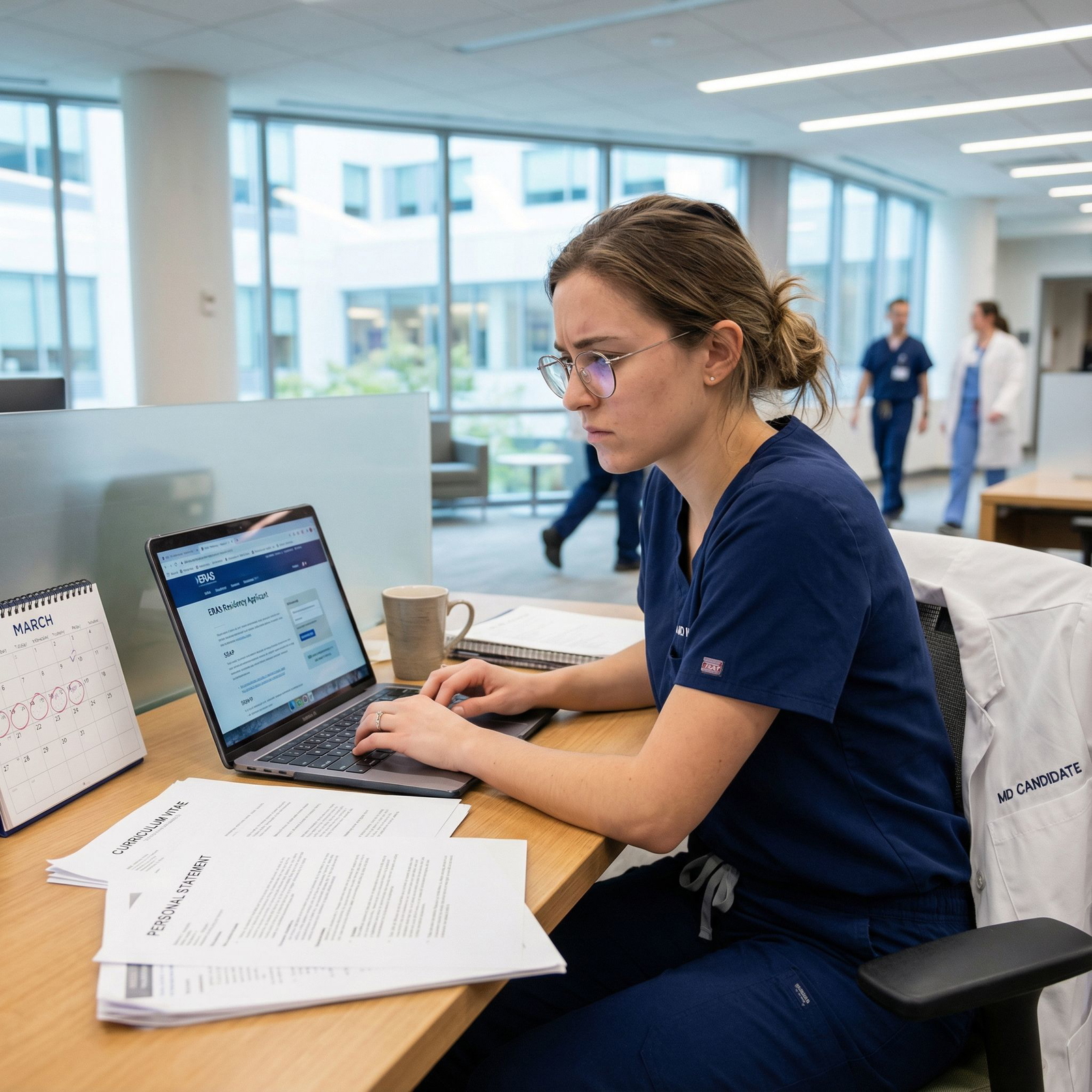
1. Optimize ERAS for SOAP
Review and refine:
Personal Statement(s):
- Prepare 2–3 versions:
- A core specialty statement (e.g., Internal Medicine or Family Medicine)
- A backup specialty statement (e.g., Psychiatry, Pediatrics, Pathology, etc.)
- An optional version that briefly and professionally references your long-term interest in clinical informatics, framed around systems improvement and patient care—not IT for its own sake.
- Avoid giving the impression you see residency as “just a stepping stone” to tech; emphasize being a strong clinician first.
- Prepare 2–3 versions:
CV / Experiences:
- Highlight:
- EHR projects (order set optimization, note templates)
- QI initiatives (reducing medication errors, streamlining workflows)
- Any coursework in data science, public health, or health informatics
- Programming or data skills (Python, R, SQL) if applicable
- Use language that programs recognize:
- “Improved documentation compliance from X% to Y%”
- “Participated in implementation of new EHR discharge checklist”
- Highlight:
Letters of Recommendation (LoRs):
- Make sure:
- At least 2–3 strong US letters are uploaded.
- If you have informatics-related letters, they should still emphasize your clinical judgment, teamwork, and reliability.
- Make sure:
2. Draft SOAP-Specific Communication Templates
You cannot “cold call” programs during SOAP, but when programs contact you via ERAS or email (where permitted), you need quick, polished responses. Prepare:
A short, flexible email template:
- 2–3 sentences about your fit for their specialty/setting
- One sentence linking your interest in systems improvement or informatics to being a better resident
- Closed with availability for rapid interview
Talking points for:
- “Why are you interested in our program?”
- “Why did you go unmatched?”
- “What are your long-term goals?” (Here you can briefly mention clinical informatics in a grounded way.)
3. Research SOAP-Eligible Program Types
You won’t know which programs will be in SOAP until the Unfilled List is released, but you can:
- Identify regions and hospital types with:
- Robust EHR systems
- Academic or community–academic hybrid centers
- History of accepting US citizen IMGs
- Make a priority matrix:
- Columns: specialty, region, type (community vs academic), IMG-friendliness, informatics potential (low/medium/high)
This matrix helps you sort the unfilled list quickly when it becomes available.
Match Week: Executing the SOAP Plan
Monday Morning: Match Status Email
You’ll find out if you are:
- Matched
- Partially matched
- Unmatched
If you are unmatched or partially matched, you become SOAP-eligible if registered with NRMP and not withdrawn.
Monday: Analyzing the Unfilled List
Once the List of Unfilled Programs becomes available (to eligible applicants and schools), move quickly:
Filter by Specialty
- Prioritize residencies that allow future board certification in fields that lead to clinical informatics fellowship.
Filter by IMG-Friendliness
- Look for:
- Programs historically listing IMGs in their rosters
- No visa requirement (as a US citizen IMG, that’s a plus)
- Community programs often more open to IMGs than ultra-competitive academic centers
- Look for:
Flag Informatics-Rich Environments
- Indications (even in brief program descriptions):
- Mention of QI, patient safety, or “systems-based practice”
- EHR optimization, data analytics, or “innovative learning environment”
- Affiliation with health systems known for strong IT infrastructure
- Indications (even in brief program descriptions):
Monday–Tuesday: Submitting SOAP Applications
SOAP places a hard cap on the number of programs you can initially apply to (commonly 45, though always check the current year’s rules).
Application Strategy for a US Citizen IMG with Clinical Informatics Goals:
- Tier 1 (Core Pathways to Informatics):
- Internal Medicine, Family Medicine, Pediatrics, EM, Pathology
- Prioritize these as they offer the most direct path to future clinical informatics fellowships.
- Tier 2 (Acceptable, Still Compatible with Informatics):
- Psychiatry, Anesthesiology, Obstetrics & Gynecology, Surgery
- Useful if Tier 1 spots are limited; you can still pursue informatics with a strong clinical base.
- Tier 3 (Safety Net, If Options Are Limited):
- Preliminary/TY positions if they are your only options, especially if in systems with robust IT and potential for internal transfer later.
As you select programs:
- Don’t be overly selective on geography.
- Avoid applying to specialties where you genuinely cannot see yourself practicing; programs want commitment.
- Balance aspiration with realism: as a SOAP applicant and US citizen IMG, top-tier academic centers may be tough, but not impossible if you have a strong portfolio.
Wednesday–Thursday: Offers, Interviews, and Communication
- Interviews may be very short and virtual (phone or video).
- Expect:
- Quick scheduling
- High-stakes 10–20 minute conversations
- Limited time to ask questions
Focus your messaging:
- Lead with:
- Clear interest in their primary specialty
- Evidence of reliability, work ethic, and teachability
- Then, if asked about long-term goals:
- “Long-term, I’m interested in clinical informatics—improving how we use EHR data to support patient care and quality. My immediate goal is to be an outstanding clinician, and I’m excited that your program emphasizes [QI/EHR/teaching] which aligns with that trajectory.”
Never make it sound like you prefer informatics to patient care; informatics fellowships want clinicians first, informaticians second.
When offers are extended:
- You have a limited time window to accept or reject.
- Accepting an offer is binding; you exit SOAP.
- Make your decision quickly, based on your pre-written priority list.
Positioning Your Informatics Interests During SOAP
As a US citizen IMG with an eye on clinical informatics, you need to articulate your long-term goals without undermining your immediate value to a residency program.
How to Talk About Clinical Informatics in SOAP
Anchor it in patient care:
- “I became interested in clinical informatics when I saw how EHR design affected medication safety on my rotation. I’d like to contribute to tools that make it easier for clinicians to deliver safe, efficient care.”
Show that you value clinical training:
- “My priority now is to develop strong clinical judgement and bedside skills. Informatics is a way I hope to eventually improve systems, but I know that starts with being a competent, reliable resident.”
Highlight relevant experiences briefly:
- EHR-based QI projects
- Data analysis of clinical outcomes
- Leading or contributing to workflow redesign
Avoid overemphasizing tech for tech’s sake:
- Don’t present yourself as someone who wants to “escape” clinical work into IT.
- Instead, frame yourself as someone who wants to enhance clinical work through better data and tools.
Integrating Health IT Training and Future Fellowship Goals
Once you secure a SOAP residency, you can build a pathway to clinical informatics through:
In-residency opportunities:
- Join QI committees, EHR optimization teams, and safety initiatives.
- Volunteer to pilot new documentation tools or clinical decision support features.
- Track small data projects (e.g., reducing ED boarding times, improving follow-up rates).
Formal Health IT Training:
- Online courses (Coursera, edX, AMIA programs) in:
- Healthcare data analytics
- Clinical decision support
- Health informatics fundamentals
- Certificates in health informatics or biomedical informatics (where schedules permit).
- Online courses (Coursera, edX, AMIA programs) in:
Networking:
- Connect with your institution’s CMIO, informatics leads, and IT project managers.
- Attend informatics grand rounds or health IT meetings when possible.
- Join professional organizations (AMIA, HIMSS) during residency.
A solid residency performance plus targeted health IT training and QI experience will make you a competitive applicant for a future clinical informatics fellowship, regardless of whether you entered residency via the main Match or SOAP.
Common Mistakes and How to Avoid Them in SOAP
US citizen IMGs often face specific pitfalls during SOAP that can derail both immediate and long-term goals.
1. Being Too Narrow in Specialty Choices
- Mistake: Only applying to one specialty (e.g., Internal Medicine) even when your profile is borderline.
- Fix: Have at least one backup specialty where you’re competitive and that still supports informatics goals (e.g., Family Medicine, Psychiatry, Pediatrics).
2. Overemphasizing Informatics and Underplaying Clinical Interest
- Mistake: Spending the interview talking about data, coding, and AI while barely mentioning patient care.
- Fix: Always bring discussion back to:
- Clinical learning
- Patient outcomes
- Teamwork on the wards
Programs need residents who are fully committed to clinical training.
3. Last-Minute SOAP Preparation
- Mistake: Waiting until Match Week to write personal statements, update ERAS, or think about backup specialties.
- Fix: Begin serious SOAP preparation at least 4–8 weeks before Match Day:
- Draft alternative personal statements
- Refine CV for multiple specialties
- Build your matrix of possible programs and specialties
4. Neglecting Professionalism and Communication Speed
SOAP moves fast. Programs may interpret delayed or sloppy responses as lack of interest.
- Respond promptly and professionally to all inquiries.
- Have stable internet, quiet space, and backup contact methods ready for virtual interviews.
Key Takeaways for US Citizen IMGs Targeting Clinical Informatics
- SOAP is both a safety net and a strategic opportunity. Understanding what is SOAP, its rules, and its timeline is essential.
- As a US citizen IMG and American studying abroad, you must plan for SOAP early, with multiple scenarios and specialties that can still lead to clinical informatics.
- During SOAP, your first mission is to secure a solid residency position; your informatics interest should support, not overshadow, your dedication to clinical medicine.
- Once matched (even through SOAP), you can build toward a clinical informatics fellowship via:
- Strong clinical performance
- QI and EHR-related projects
- Additional health IT training and networking
If you treat SOAP as a structured, high-intensity process rather than a last-minute scramble, you can convert an initially disappointing Match result into a stable and promising route toward a career in clinical informatics.
FAQ: SOAP and Clinical Informatics for US Citizen IMGs
1. As a US citizen IMG interested in clinical informatics, which specialties should I prioritize in SOAP?
Prioritize core specialties that commonly feed into clinical informatics fellowships: Internal Medicine, Family Medicine, Pediatrics, Emergency Medicine, and Pathology. These fields have abundant residency positions, many IMG-friendly programs, and strong alignment with later informatics work. If necessary, consider Psychiatry, Anesthesiology, or other fields where you can still build a clinical base and participate in data- or EHR-related projects.
2. Will matching through SOAP hurt my chances for a clinical informatics fellowship later?
Generally, no. Clinical informatics fellowship directors care far more about your clinical performance, professionalism, and informatics-related experiences than about whether you matched in the main Match or via SOAP. What matters is:
- Completing an ACGME-accredited residency
- Demonstrating excellence in patient care
- Building a portfolio of QI, data, or IT projects
- Securing strong letters of recommendation
3. How should I mention my interest in clinical informatics during SOAP interviews?
Mention clinical informatics briefly and only after you’ve clearly conveyed strong interest in clinical training. For example:
“I’m deeply committed to becoming an excellent internist and developing strong bedside skills. Long-term, I’m interested in clinical informatics because I’ve seen how EHR design influences safety and efficiency. I’d love to contribute to systems improvements in the future, but my immediate focus is being a reliable resident who takes great care of patients.”
This reassures programs that you’re not trying to avoid clinical work.
4. What can I do during residency to strengthen my application to a future clinical informatics fellowship?
During residency, focus on:
- Excelling in your clinical duties and evaluations
- Joining QI or patient safety committees
- Participating in or initiating EHR optimization or data projects
- Taking online health IT or informatics courses
- Seeking mentorship from informatics-minded faculty, CMIOs, or IT leaders
- Documenting your work (posters, abstracts, small publications)
These steps turn your early interest in informatics into a concrete, competitive portfolio for a clinical informatics fellowship.