Understanding SOAP for the US Citizen IMG in General Surgery
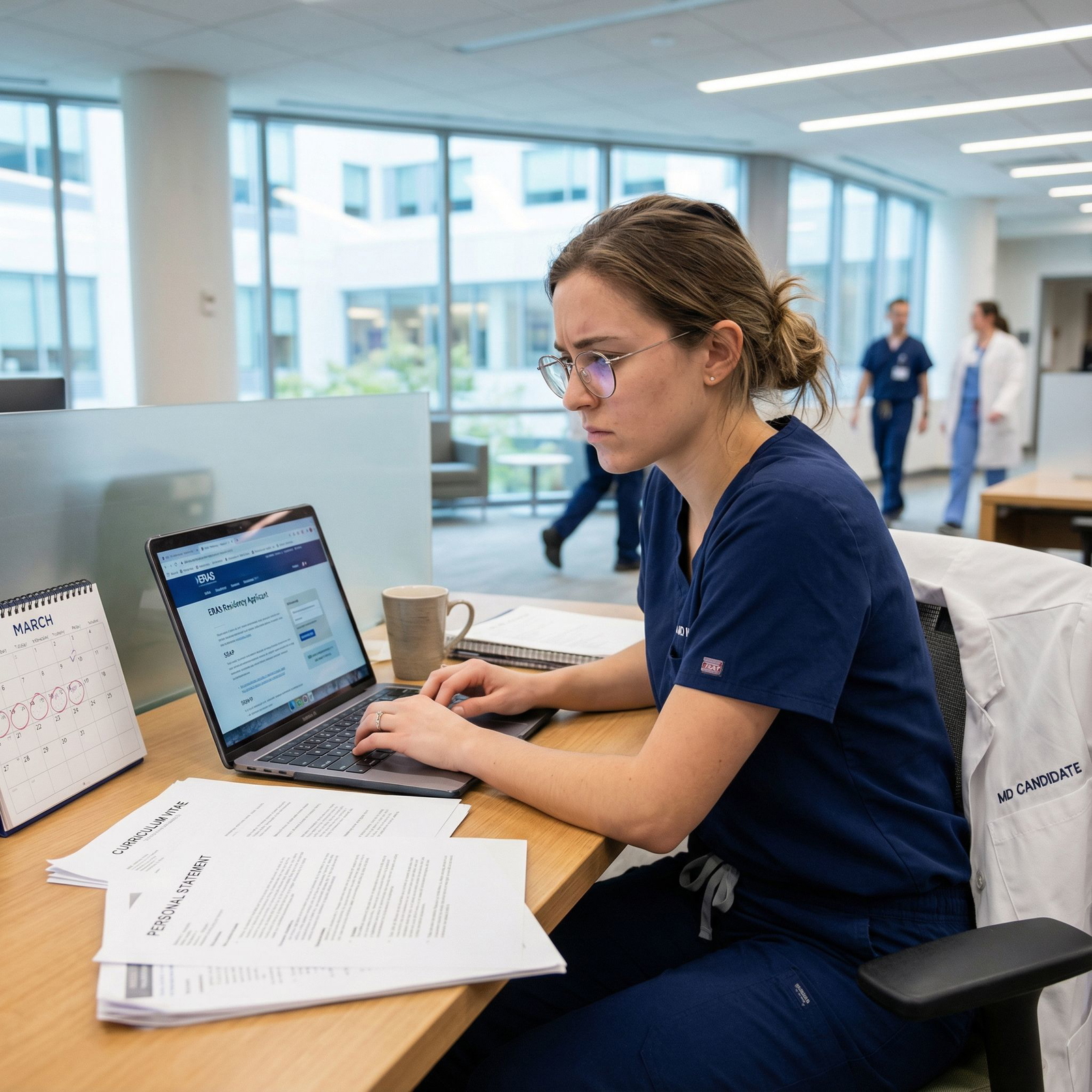
As a US citizen IMG and an American studying abroad, the Supplemental Offer and Acceptance Program (SOAP) can feel like both a safety net and a second, high‑pressure application process. To prepare effectively, you need to understand what SOAP is, how it works in the context of general surgery residency, and the unique challenges and opportunities you face.
What is SOAP?
The Supplemental Offer and Acceptance Program (SOAP) is the structured process the NRMP uses during Match Week to fill residency positions that remain unfilled after programs submit their initial rank lists. It replaces the old, unstructured “Scramble.”
Key points:
Who participates:
- Eligible unmatched or partially matched applicants
- Residency programs with unfilled positions after the main Match algorithm runs
When it happens:
- During Match Week, Monday–Thursday, before Match Day (Friday)
- Strict time windows for applications, interviews, and offers
What you can do:
- Apply to up to 45 programs total across all specialties
- Participate in up to four rounds of offers (if advanced PGY‑2 spots are in SOAP that year, there can be additional rounds)
- Accept only one offer at a time, but you may receive multiple offers in the same round and choose one
For a US citizen IMG seeking a general surgery residency, SOAP is most commonly a pathway into:
- Categorical general surgery positions (rare, but occasionally available)
- Preliminary general surgery positions (more common)
- Occasionally, related surgical fields with prelim spots (e.g., surgical prelim in a different program where you could later reapply categorical)
Understanding that prelim surgery is often the realistic SOAP target will shape how you plan and prepare.
Why SOAP Preparation Is Critical for US Citizen IMGs
Compared with US MD seniors, a US citizen IMG often has:
- More variable clinical exposure to US healthcare systems
- Less consistent access to US-based surgical mentors
- More reliance on a strong parallel plan if the initial general surgery residency match doesn’t work out
Because of this, you cannot treat SOAP as an afterthought. You must treat SOAP preparation as a core part of your general surgery residency match strategy from the moment you start applying.
Well-prepared American students studying abroad who go unmatched often succeed in SOAP because they:
- Have realistic expectations (especially about prelim vs categorical slots)
- Know in advance what programs they would target
- Have updated documents ready
- Are prepared for rapid-fire virtual interviews
- Understand the value of a prelim year for long-term surgical goals
Pre‑Match Strategy: Laying the Groundwork for SOAP
SOAP success starts months before Match Week. This pre‑Match preparation is your insurance policy.
Step 1: Know Your Risk of Reaching SOAP
Before the rank list deadline, assess your risk profile honestly:
Factors that increase SOAP risk for US citizen IMGs in general surgery:
- USMLE performance: Step 2 CK < 235 often makes categorical general surgery more difficult, especially at competitive university programs
- Limited US clinical experience or no US general surgery rotations
- Few or generic letters from US surgeons
- Research gaps if you’re targeting large academic centers
- Late application submission or incomplete ERAS at opening
If more than half your applications are to highly competitive academic general surgery programs and you have any of the above risk factors, you must expect that SOAP is a real possibility and prepare accordingly.
Step 2: Understand General Surgery Positions in SOAP
Historically, the SOAP pool for general surgery resembles:
- Categorical general surgery:
- Often very few positions, sometimes none
- Frequently community or smaller programs
- Preliminary general surgery:
- Much more common in SOAP
- Some linked to categorical tracks in the future, others not
- Related prelim spots:
- Prelim surgery at programs with multiple surgical tracks
- Transitional year positions with strong surgical exposure (though not surgery per se)
As a US citizen IMG, your most realistic SOAP outcome is a prelim general surgery residency that gives you:
- Hands-on exposure to US surgery
- Relationships with attending surgeons who can advocate for you
- A strong platform to reapply to categorical general surgery after your prelim year
Plan for prelim surgery as your primary SOAP target, even if you also apply to some categorical positions.
Step 3: Decide Your Backup Pathways in Advance
Before Match Day, define your Plan A, B, and C:
- Plan A: Categorical general surgery in the main Match
- Plan B: Prelim general surgery via SOAP, with a structured plan to reapply or transition to categorical
- Plan C: Other specialties or transitional year positions through SOAP if no prelim surgery spot is feasible (e.g., internal medicine prelim, transitional year with strong ICU/surgical rotations)
Write down clear decision rules before emotions kick in during Match Week. For example:
- “If there are at least 10 prelim general surgery positions that meet my geographic and program criteria, I will focus all 45 SOAP applications on general surgery (prelim and categorical).”
- “If there are fewer than 5 general surgery options, I will mix my 45 applications between prelim surgery and transitional/internal medicine programs that can still support a later surgery application.”
SOAP Preparation: Documents, Strategy, and Logistics
Once you reach rank list certification, you should assume you might be in SOAP and get your materials ready. This is your SOAP preparation checklist.
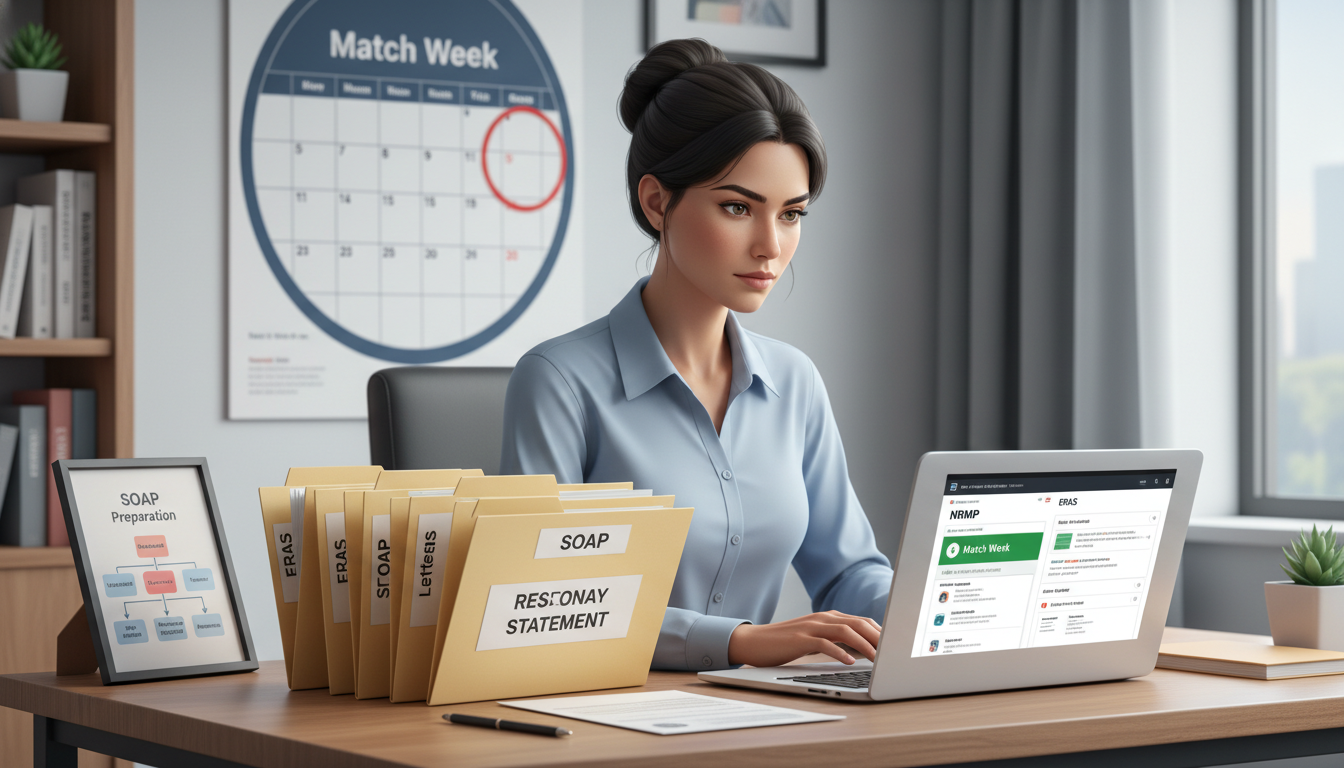
1. Optimize Your ERAS Application for SOAP
You do not create a new application for SOAP. You will use your existing ERAS application, but you can edit certain components at specific times. Check the current ERAS and NRMP guidelines for exact edit windows.
As part of your SOAP preparation:
Update your CV entries:
- Add any new surgical rotations, especially US-based
- Include any new research, QI projects, audits, or posters
- Highlight procedural experiences (within ERAS rules) and quality improvement initiatives
- Emphasize teamwork, call responsibilities, ICU exposure
Refine your experience descriptions for a surgery audience:
- Use concise, outcome-focused bullet points
- Highlight your role in acute care, OR, emergency, ICU, or trauma settings
- Show you can handle long hours, high‑acuity patients, and teamwork
2. Prepare a SOAP‑Specific Personal Statement Strategy
ERAS allows you to upload multiple personal statements and assign them to specific programs. For SOAP:
Create at least two versions:
General Surgery SOAP Personal Statement (Core Version)
- 1 page, focused and direct
- Emphasize:
- Your commitment to general surgery
- Mature understanding of the demands (hours, stress, technical skills)
- Examples of resilience and work ethic
- Long-term vision (e.g., academic surgeon, community surgeon, trauma, critical care)
Prelim‑Focused General Surgery Personal Statement
- Emphasize:
- Why you value a prelim year specifically
- Openness to both staying at that institution or reapplying
- Your dedication to making the most of every opportunity, regardless of title
- Willingness to do the hard work: floor work, consults, overnight calls
- Emphasize:
Pro tip for US citizen IMG applicants: Briefly address:
- Why you went abroad for medical school (concise, non‑defensive explanation)
- How that experience strengthened your adaptability, cultural competence, and resilience
- Any extended US rotations that align you with American training systems
You can mix and match these statements across programs in SOAP very quickly once the unfilled list is released, so have them finalized and proofread before Match Week.
3. Secure SOAP‑Ready Letters of Recommendation
You usually cannot add brand-new letters during SOAP, but you can decide which letters to assign to which programs. Months before Match Week:
- Aim for at least three strong letters from US surgeons
- Choose letter writers who:
- Oversaw you for several weeks on surgery or ICU rotations
- Can comment on your technical aptitude, team behaviors, and work ethic
- Have some academic title or leadership role (Program Director, Chair, or well-known faculty)
Ask your writers to mention:
- Your commitment to surgery specifically
- How you compare with other students they’ve worked with
- Your readiness for internship, not just “student potential”
During SOAP, you might choose to:
- Prioritize surgery-heavy letters for general surgery programs
- Use more general or medicine-based letters for non-surgical backup SOAP programs (Plan C)
4. Build a Target Program “Watchlist” Before SOAP Starts
You won’t know exactly which programs will be in SOAP until the list of unfilled programs becomes available at noon ET on Match Week Monday. But you can still pre‑prepare:
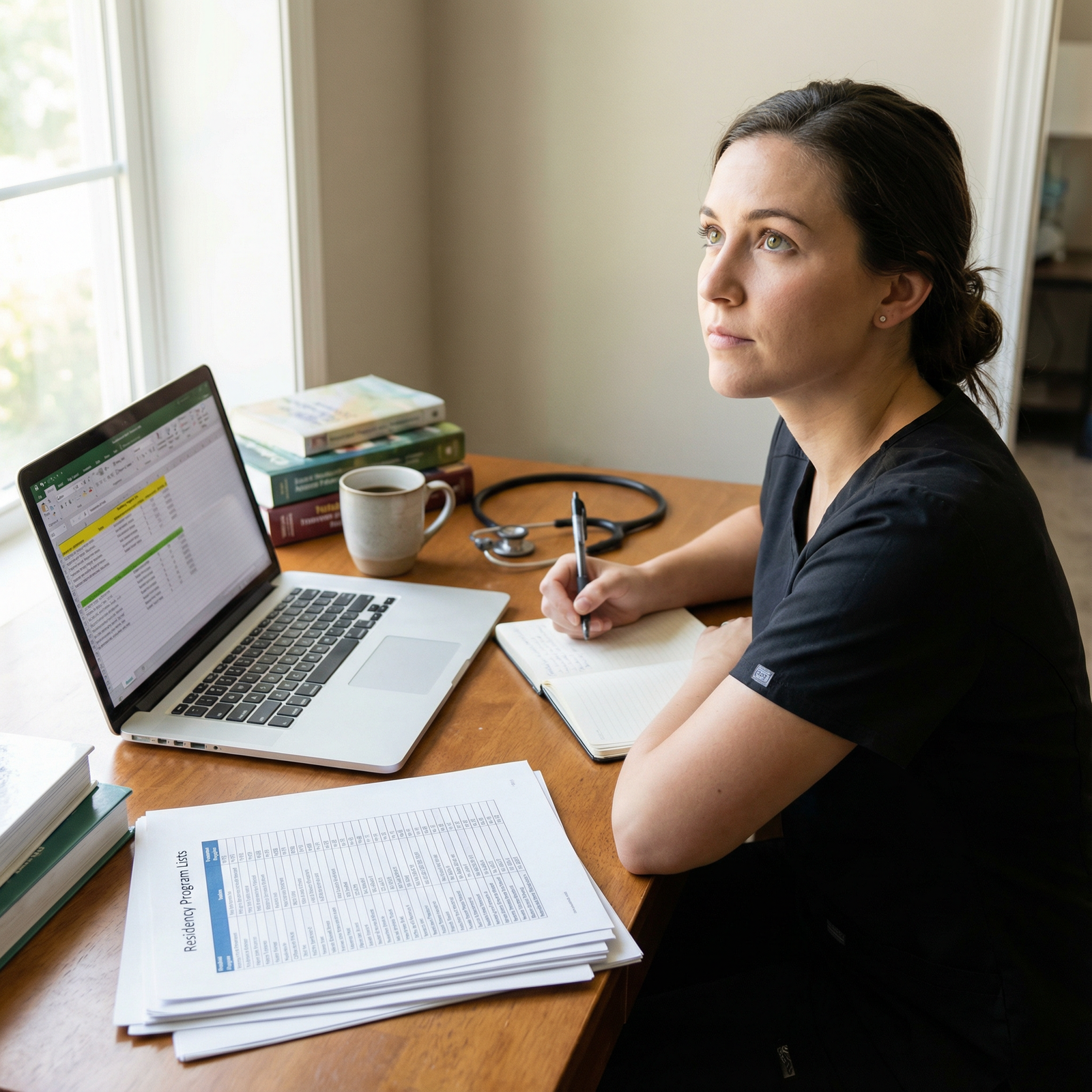
- A spreadsheet of general surgery programs where:
- You’d be willing to move and train
- You have some tie (geographic, clinical elective, family)
- You know they sometimes have prelim positions
- Columns to include:
- Program name and NRMP/ACGME ID
- Categorical vs prelim history
- Notes on program type: community vs academic
- Any current residents or alumni contacts you know there
- Whether they have taken US citizen IMGs before
Once the SOAP unfilled list is released, you can quickly match listed programs to your spreadsheet and prioritize.
5. Prepare for Rapid Virtual Interviews
SOAP interviews are:
- Short‑notice (often same day)
- Almost always virtual (Zoom, Teams, or phone)
- Often brief (10–20 minutes)
Set up in advance:
- A quiet, professional space with good lighting
- A neutral, clean background or virtual background if needed
- Stable internet and backup phone
- Professional attire (at least from waist up, but dress fully professional in case you need to stand)
Practice answering:
- “Why general surgery?”
- “Why prelim surgery at our program?”
- “What went wrong in your initial match attempt?”
- “If you don’t get a categorical spot next year, what will you do?”
- “Tell me about a time you handled a high‑pressure clinical situation.”
Your responses must be:
- Honest but not overly negative or self‑critical
- Reflective, showing insight into your application weaknesses and concrete improvement plans
- Centered on resilience, growth, and commitment to surgery
Match Week: Executing an Effective SOAP Strategy
When Monday of Match Week arrives, you’ll get the email: matched or unmatched/partially matched. If you are in SOAP, move quickly and systematically.
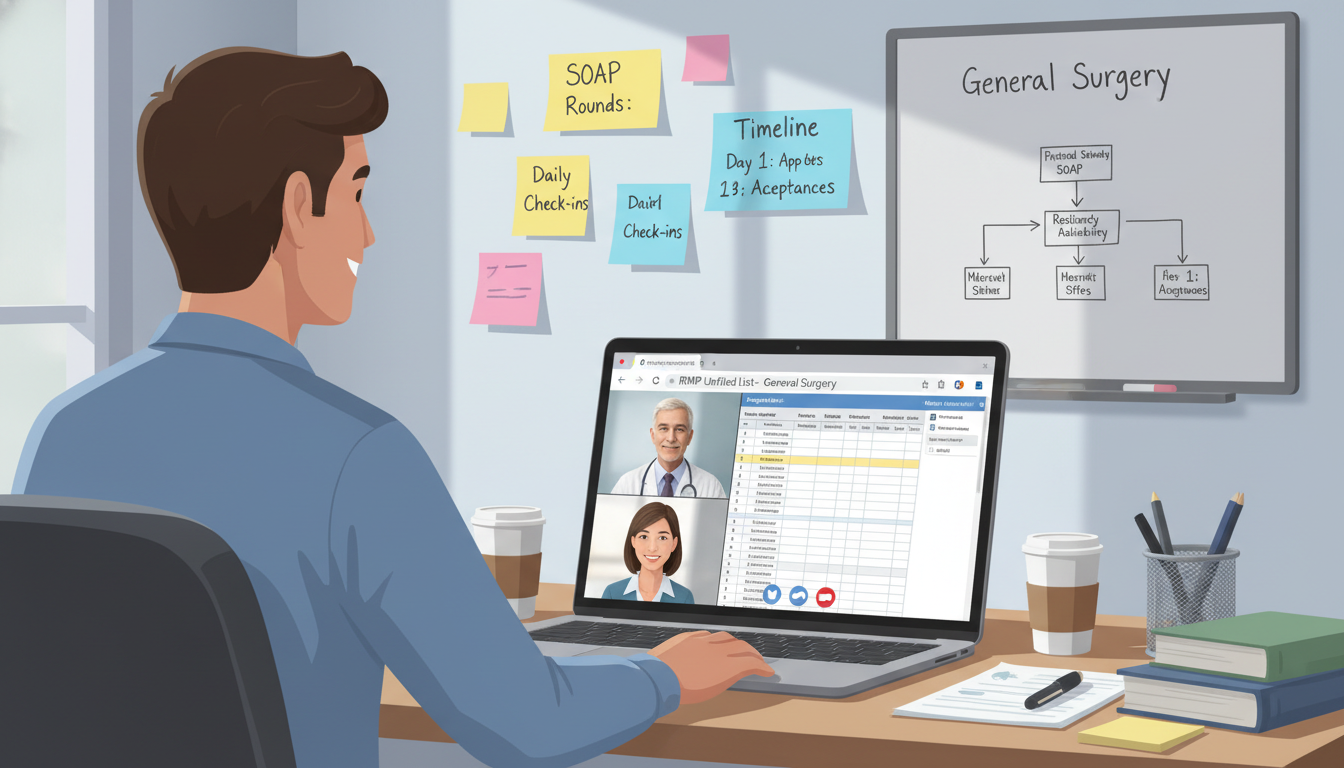
Monday: Confirming Eligibility and Analyzing Your Status
If you are unmatched or partially matched, confirm:
- You are SOAP-eligible (usually already known if certified by NRMP and unmatched)
- Whether you have an advanced (PGY‑2) spot that still requires a PGY‑1 position via SOAP
- Whether you need only a PGY‑1 spot or other combination
Immediately:
- Log into ERAS and NRMP
- Review the Unfilled Programs List when released
- Filter by General Surgery and Preliminary positions first
Take 1–2 hours to triage programs:
- Identify all general surgery categorical positions (even if few)
- Identify all general surgery prelim positions
- Note any transitional year or internal medicine prelim programs that are strong and have surgical/ICU exposure, for backup
Prioritizing Your 45 Applications
You are limited to 45 total applications in SOAP. For a US citizen IMG in general surgery, consider these patterns:
If there are ≥20 prelim general surgery positions:
- Focus heavily on prelim and categorical general surgery
- Example allocation:
- 5–10 categorical surgery
- 25–30 prelim surgery
- 5–10 transitional/Internal Medicine prelim backup
If there are <10 prelim surgery and few/no categorical:
- Mix more heavily with non-surgical backups that still build a strong base for future surgery applications (e.g., strong medicine program with ICU exposure)
Order your programs in terms of preference, but remember: the order doesn’t directly affect who interviews you; it affects how quickly you assign materials. You must apply to all 45 within the application window if you intend to use them.
Adjusting Personal Statements and Letters
Once you’ve selected your 45 programs:
- Assign your general surgery SOAP personal statement to categorical and prelim surgery programs
- Assign the prelim-focused statement to programs advertising only prelim spots
- Tailor letters if needed:
- Choose your most surgery-heavy letters for any general surgery program
- Use a mix for transitional/medicine programs, including at least one letter commenting on your overall clinical ability and teamwork
During SOAP Rounds: Offers, Communication, and Decisions
SOAP offers typically occur in multiple rounds on Wednesday and Thursday of Match Week. Between Monday and Wednesday:
- Programs may reach out to you by ERAS message, email, or phone
- You must never initiate unsolicited contact with programs; you may respond if they contact you (follow the current NRMP rules closely)
When an interview or informal call happens:
- Be prepared to explain concisely:
- Why you went unmatched initially (if asked):
- “I applied very heavily to high-academic general surgery programs with fewer community backups. In hindsight, I should have diversified more. I’ve reflected on this and I’m fully committed to maximizing the opportunity in a prelim year and reapplying more strategically if necessary.”
- Why you want their particular program:
- Reference size, case mix, teaching culture, geography, or known strengths
- Why you went unmatched initially (if asked):
During each SOAP offer round:
- You may receive:
- No offers
- One offer
- Multiple offers
- You can only accept one offer per round, but you can decline all if they do not fit your goals (though this is risky).
As a US citizen IMG focused on general surgery:
- If you receive a prelim general surgery offer from a solid program with decent operative and ICU exposure, it is often wise to accept, even if it isn’t your dream geography or tier.
- Carefully weigh declining an offer in hopes of a categorical general surgery offer that may never come.
Making the Most of a Prelim General Surgery Year
For many US citizen IMGs, a SOAP prelim year is the most realistic initial entry point into surgical training in the US. If you accept a prelim spot, you must treat that year as a high‑stakes audition.
Core Objectives of a Successful Prelim Year
Your goals in a prelim general surgery residency:
Maximize Clinical Performance
- Be reliable, early, and prepared for rounds, sign-outs, and OR cases
- Volunteer for difficult or less glamorous tasks (e.g., night float, ICU coverage)
- Show that you can function like a strong categorical intern
Earn Strong, Specific Letters of Recommendation
- Identify 2–3 surgeons (PD, APD, surgical intensivists, or key faculty) who see your performance closely
- Ask for letters later in the year (Dec–Jan) after you have proven yourself
- Request letters that speak explicitly to your categorical surgery potential
Network Wisely Within and Beyond Your Program
- Attend departmental conferences, M&M, and grand rounds
- Present at research day or case conferences if possible
- Connect with residents and faculty at nearby programs through joint conferences or rotations
Prepare Strategically for the Next Application Cycle
- Start drafting a new, stronger personal statement by fall
- Update your ERAS with prelim-year achievements, cases, and QI work
- Reapply more broadly and strategically, prioritizing programs that:
- Have a track record of taking prelims into categorical slots
- Value maturity and non-traditional paths
Evaluating Long-Term Paths If a Categorical Surgery Spot Remains Elusive
If, after a prelim year and reapplication, you still do not secure a categorical general surgery residency, consider:
- Transitioning to a related field that benefits from your surgical background (e.g., anesthesiology, radiology, emergency medicine, critical care pathways)
- Entering another competitive specialty via additional prelim or transitional training with strategic mentorship
- Leveraging your US citizen status and US experience for non-residency roles while you reassess (e.g., research fellow, clinical coordinator, quality improvement roles)
Your SOAP decision and prelim year are not the end of the story—they are chapters in a longer surgical career narrative.
FAQs: SOAP Preparation for US Citizen IMGs in General Surgery
1. As a US citizen IMG, what should I realistically expect from SOAP for general surgery?
Expect that:
- Categorical general surgery positions in SOAP are rare and highly competitive
- Prelim general surgery positions are your most accessible route into US surgical training
- Your realistic SOAP goal is usually a prelim spot at a solid training program, which you then leverage into a categorical position later
2. How should I explain being unmatched during SOAP interviews?
Be concise, honest, and focused on growth:
- Acknowledge contributing factors (overly competitive program list, timing, limited US experience)
- Avoid blaming others or sounding bitter
- Emphasize what you’ve learned and how you’ve improved your strategy
- Reinforce your ongoing commitment to general surgery and your readiness to contribute immediately as an intern
3. Should I prioritize any prelim surgery offer over waiting for potential categorical offers?
Not automatically. Consider:
- Program quality (case mix, teaching, culture, safety)
- Geographic constraints that matter for you (family, visa not relevant as US citizen, but support systems are)
- The historical record of that program promoting prelims into categorical roles
- How late in SOAP it is, and how many other surgery programs still appear open
In many cases, for a US citizen IMG, a strong prelim surgery offer is worth accepting, especially if the alternative is going unmatched.
4. Does being a US citizen IMG help me in SOAP compared with non‑US IMGs?
Yes, in some ways:
- Programs do not need to secure or sponsor visas for you, which removes a major barrier
- You can often start work more seamlessly without visa timing concerns
- Some community programs are particularly open to US citizen IMGs
However, you still compete with:
- US MD/DO seniors who went unmatched
- Strong IMGs with exceptional CVs
Your advantage is administrative simplicity and cultural familiarity with the US, which you should combine with strong preparation and clear commitment to general surgery.
By preparing early, understanding what SOAP is and how it works, and building a realistic, flexible plan centered on general surgery prelim opportunities, you dramatically improve your chances of using SOAP as a meaningful bridge into a surgical career. As a US citizen IMG and American studying abroad, you are well‑positioned to leverage this structured process—if you enter Match Week ready, organized, and clear‑eyed about your options.