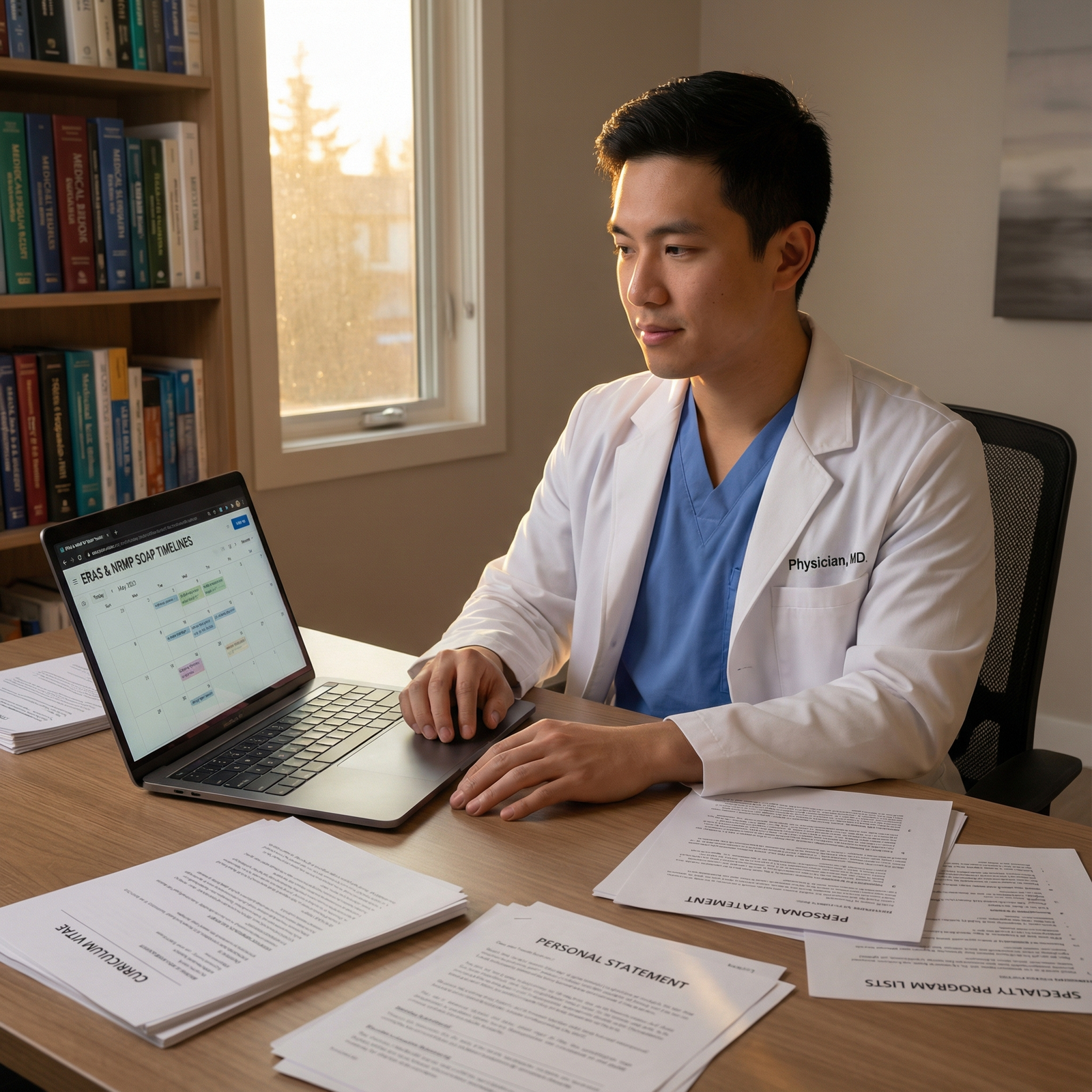
Understanding SOAP as a US Citizen IMG Interested in Global Health
The Supplemental Offer and Acceptance Program (SOAP) is one of the most misunderstood parts of the National Resident Matching Program (NRMP), especially for a US citizen IMG or an American studying abroad. Yet, for applicants passionate about global health and international medicine, SOAP can be a powerful second chance to enter residency and keep your long‑term goals alive.
What Is SOAP?
In practical terms, SOAP is a structured, time‑limited process during Match Week that allows eligible unmatched or partially matched applicants to apply to and accept positions that were unfilled after the main Match. It is not a scramble; it is organized, rule‑bound, and highly competitive.
Key features:
- Eligibility: You must be registered for the Match, unmatched or partially matched, and fully ECFMG certified (for IMGs) by the SOAP deadline.
- Timing: Occurs during Match Week (Monday–Thursday), with multiple offer “rounds.”
- Platform: Applications are submitted in ERAS, and positions are listed in NRMP’s R3 system.
- Communication rules: Tight rules govern who can contact whom, when, and how.
For you as a US citizen IMG, SOAP preparation is about more than just scrambling for any spot; it’s about strategically targeting programs that can still move you toward a global health residency track, international medicine exposure, and a viable long‑term career.
Mindset and Strategy: Aligning SOAP With a Global Health Pathway
SOAP is intense and fast, and it can be emotionally charged. To perform well, you need both the right mindset and a clear strategy linking short‑term survival (getting a position) with long‑term goals (global health career).
1. Reframing SOAP: A Pivot, Not a Failure
Many US citizen IMGs see SOAP as a sign that they “failed the Match.” That mindset makes it harder to perform.
Instead:
- View SOAP as a pivot point—your first test in navigating uncertainty, a reality of international medicine and global health work.
- Recognize that many successful global health physicians did not match on their first attempt or did not enter their ultimate specialty straight away.
- Remember: The reputation you build (work ethic, reliability, resilience) during your initial residency matters far more in the long run than the drama of Match Week.
2. Clarifying Non‑Negotiables vs. Flexibles
As an applicant focused on global health:
Non‑negotiables might include:
- Access to underserved or diverse patient populations (urban, immigrant, refugee, or rural).
- Reasonable likelihood of visa‑related flexibility if you plan future international work (harder to guarantee, but some programs are more internationally engaged).
- Solid training in a core specialty that is useful in low‑resource settings (e.g., Internal Medicine, Family Medicine, Pediatrics, Emergency Medicine).
Flexibles during SOAP:
- Geographic location (you may need to be open to under‑resourced or rural areas).
- Prestige of institution (community programs can be outstanding for procedural and hands‑on experience).
- Presence of a formal “global health residency track” (you can often build a global health niche informally through electives and mentorship).
SOAP is not about finding the “perfect global health program” in 48 hours; it’s about securing a strong clinical foundation in a specialty that supports your international goals.
3. Strategic Goal for SOAP
Your realistic SOAP goal as a US citizen IMG interested in global health should be:
“Obtain a categorical or prelim position in a core specialty that will:
(1) train me to competently care for medically complex and underserved patients, and
(2) leave open doors for global health fellowships, MPH programs, or international work later.”
That clarity will guide what you apply to and how you present yourself to programs during SOAP.

Pre‑SOAP Preparation: Building a SOAP‑Ready Application
The most effective SOAP preparation starts months before Match Week. As a US citizen IMG or American studying abroad, you already face competitiveness challenges; you cannot afford last‑minute scrambling.
1. Eligibility and Documentation: Non‑Negotiable Steps
Make sure the essentials are done before Rank Order List deadline, not during SOAP:
ECFMG Certification:
- Verify that all parts (USMLE Steps, OASIS verification, primary source verification, etc.) are complete and fully certified well before Match Week.
- Any delay can make you ineligible for SOAP, regardless of your exam scores.
USMLE Scores and Attempts:
- Ensure all scores are reported in ERAS.
- Be ready to address multiple attempts honestly in your Personal Statement or during interviews.
ERAS Application Up to Date:
- Education, experiences, publications, and volunteer work—especially global health‑relevant experiences—should be fully updated.
- Check for consistency: dates, locations, supervision, and responsibilities.
Documents Ready to Reuse for SOAP:
- At least 3–4 strong Letters of Recommendation (LORs), including:
- At least one from a US clinical experience (USCE) if possible.
- Ideally one from someone who can speak to your work with underserved or diverse populations, or your interest in international medicine.
- A global health‑relevant Personal Statement (PS) that can be slightly modified quickly for SOAP targets (e.g., more primary care vs. more inpatient, etc.).
- At least 3–4 strong Letters of Recommendation (LORs), including:
2. Creating a SOAP Toolkit
You should have a digital folder (cloud + local backup) labeled something like “SOAP Preparation” containing:
Multiple Personal Statement Variants:
- Internal Medicine‑focused PS (highlight complex adult medicine, continuity, chronic disease management, global health relevance).
- Family Medicine‑focused PS (emphasize primary care, breadth, community health, public health).
- Pediatrics‑focused PS (child health, preventive care, vaccines, global child health).
- Transitional Year/Preliminary year PS (emphasize flexibility, solid foundation for future specialty, willingness to work hard).
Each PS should:
- Clearly state your interest in global health and underserved care.
- Emphasize adaptability, cultural humility, and resourcefulness—traits valued both in SOAP and in global health.
Updated CV/Resume (in case a program requests it through legal channels once allowed).
Short Pitch for Phone/Virtual Conversations:
- A 60–90 second explanation of:
- Who you are (US citizen IMG, medical school, graduation year).
- Why you’re interested in their specialty/program.
- How your global health and IMG background add value to their patient population.
- Example:
“I’m a US citizen IMG who trained at [School], where I worked extensively with low‑resource clinical settings. I’m passionate about global health and caring for underserved communities, and I see your program’s diverse patient population and community outreach as an ideal environment to contribute and learn.”
- A 60–90 second explanation of:
A Program Research Spreadsheet:
- Columns: Program Name, Specialty, State, Type (University/Community), Underserved/Global Focus?, Notes, Number of SOAP Applications, Priority Level.
- Fill in as much as possible from prior research so you can move fast during SOAP.
3. Anticipating SOAP Scenarios
Plan for various outcomes:
Scenario A: Unmatched in your primary specialty
You may need to CROSS‑APPLY (e.g., from Internal Medicine to Family Medicine or Transitional Year).Scenario B: Partially Matched (Prelim but no categorical, or vice versa)
You might use SOAP to fill the missing piece (e.g., PGY‑2 advanced spot or categorical spot).Scenario C: Late Exam Result or ECFMG Certification
If there’s a risk of late certification, communicate early with ECFMG and track your status daily as Match Week approaches.
For each scenario, identify:
- Which PS version you’ll use.
- Which specialties and program types you’ll prioritize.
- How you’ll adjust your “pitch” to explain your trajectory without sounding unfocused.
Tactical SOAP Strategy: During Match Week
Once Match Week begins and you receive the Monday email indicating you are “unmatched” or “partially matched,” the clock starts. Your prior SOAP preparation now pays off.
1. Interpreting the Monday Outcome
- Unmatched: You are eligible for SOAP if you meet all other criteria. You’ll have up to 45 SOAP applications through ERAS.
- Partially Matched: You may still be SOAP‑eligible depending on your situation (e.g., prelim but no advanced spot). Confirm your status in the NRMP R3 system.
Do not panic or rush; take a short moment to process emotionally, then immediately move into your pre‑planned SOAP workflow.
2. Accessing and Analyzing the SOAP List
When the list of unfilled programs is released:
Filter by Specialty:
- Look for specialties that build strong foundations for global health:
- Internal Medicine
- Family Medicine
- Pediatrics
- Emergency Medicine
- Transitional Year (if it gives you a bridge to your target field)
- Look for specialties that build strong foundations for global health:
Filter by Environment:
- Programs serving:
- Urban safety‑net hospitals.
- Rural or frontier communities.
- Areas with high immigrant, refugee, or non‑English‑speaking populations.
- These often provide experiences relevant to international medicine even if they lack a formal global health residency track.
- Programs serving:
Rank Your Targets:
- Priority 1: Categorical positions in core specialties, in programs with clear underserved/community focus.
- Priority 2: Categorical positions with less obvious global health elements but solid training.
- Priority 3: Transitional or Preliminary positions that align with your medium‑term plan.
Remember: A strong categorical spot in a community program with vulnerable populations can be far more valuable for a global health career than a prestigious brand name with limited hands‑on experience.
3. Application Allocation Strategy (Up to 45 Applications)
As a US citizen IMG, you should generally use most or all 45 SOAP applications, because competition is intense.
A sample distribution plan:
- 20–25 programs in your closest‑fit specialty (e.g., IM or FM).
- 10–15 in closely related specialties that still align with global health (e.g., Pediatrics, EM).
- 5–10 Transitional/Prelim years (if they realistically lead toward your future target).
Tailor PS and filters:
- Use specialty‑specific PS wherever possible.
- If applying broadly to IM and FM, be prepared to adjust the “global health narrative” subtly:
- For IM: Emphasize chronic disease in low‑resource contexts, adult medicine, continuity in refugee or migrant populations.
- For FM: Emphasize breadth across age groups, community‑based care, preventive medicine, maternal‑child health.
4. Professionalism and Communication Rules in SOAP
SOAP has strict rules:
- Before offers, you cannot directly contact programs unless they contact you first, depending on NRMP guidelines for that year.
- Programs may:
- Request phone or virtual interviews.
- Ask for clarification on your application.
- You must:
- Be reachable at all times (phone on, email notifications active, stable internet).
- Respond promptly and professionally.
- Avoid pressuring programs or asking inappropriate questions about ranking or offers.
Prepare for brief, focused phone calls:
- Have a quiet space, professional attire (even for phone calls, it sets your mindset).
- Keep your CV and a brief “talking points” sheet in front of you.
- Be ready to link your global health interest to their local context:
- For example, “My experiences in low‑resource settings abroad have prepared me to care for complex patients in your safety‑net hospital.”
5. Offer Rounds and Decision‑Making
SOAP has multiple offer rounds. In each round, you may receive:
- No offers
- One offer
- Multiple offers
Rules vary slightly year to year, but in general:
- You cannot hold multiple offers across rounds; each offer has a short acceptance window.
- Declining an offer is final; you will not receive the same offer again in a later round.
Decision tips for a global health‑focused US citizen IMG:
- Prioritize categorical training over prelim/transitional if you can.
- Between two similar offers:
- Favor the program with:
- Stronger underserved patient demographics.
- Better hands‑on clinical exposure.
- A track record (even informal) of international electives, refugee clinics, or public health collaborations.
- Favor the program with:
- Accept that the “perfect fit” may not appear. Ask:
- “Will this program make me a competent, compassionate physician able to care for complex, underserved populations?”
If yes, it likely supports your long‑term global health aspirations.
- “Will this program make me a competent, compassionate physician able to care for complex, underserved populations?”
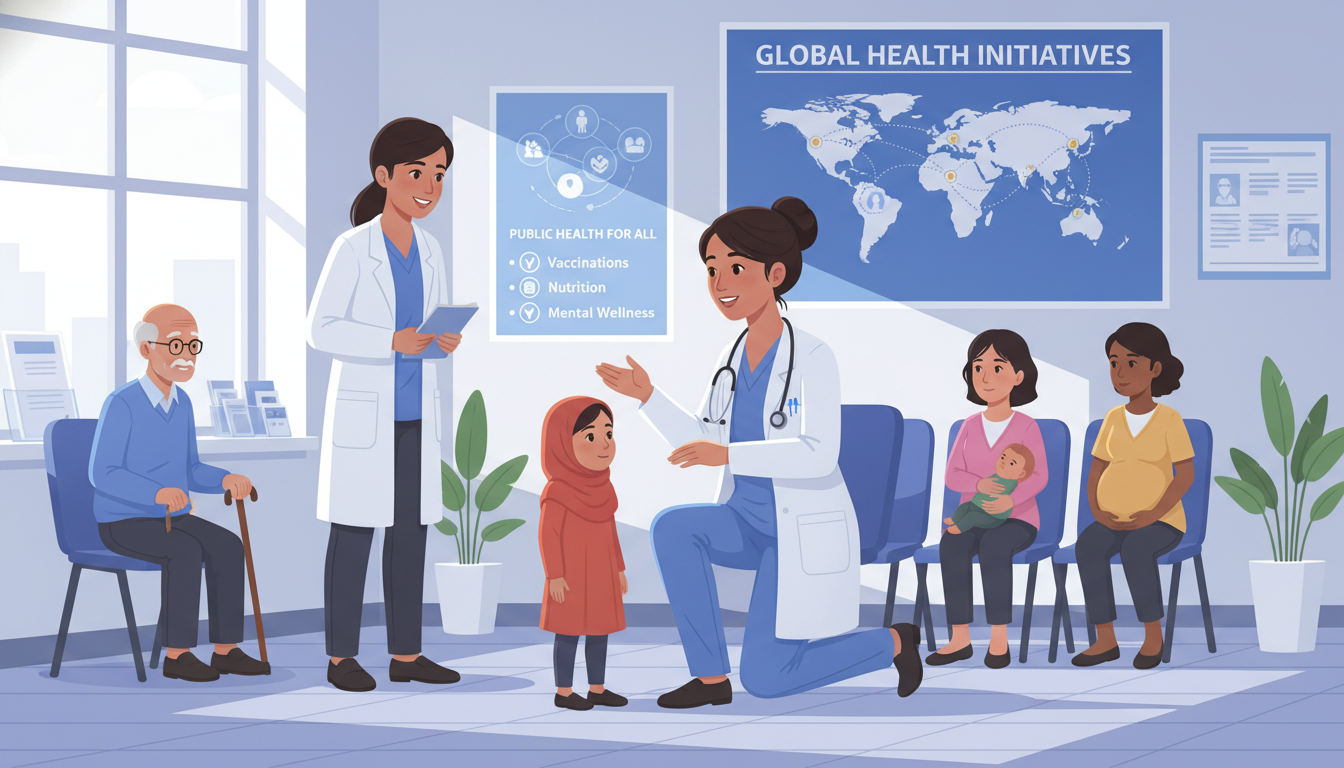
Positioning Yourself as a Global Health–Oriented US Citizen IMG
Your unique value in SOAP is the combination of US citizenship (eliminating visa barriers for programs) and IMG training (often with cross‑cultural and low‑resource clinical experiences).
1. Highlighting Global Health Without Sounding “Absent” From the US
Some programs are wary if an applicant appears more interested in working abroad than staying in the US. Frame your global health interest strategically:
- Emphasize transferable skills:
- Cultural humility.
- Adaptability to limited resources.
- Comfort with language barriers and interpreters.
- Understanding of social determinants of health.
- Connect these skills to local mission:
- “My global health experiences have prepared me to serve your community’s diverse and underserved patients here in [State].”
- Make clear you intend to:
- Complete full residency training in the US.
- Potentially incorporate academic, community, or public health work that benefits local patients as well as international partners.
2. Using SOAP to Build an International Medicine Trajectory
Even if your SOAP‑matched program has no formal global health residency track, you can:
- Seek out:
- Faculty with interest in global health, immigrant health, tropical medicine, or refugee health.
- Community partners working with migrant workers or asylum seekers.
- Build a “global health identity” during residency by:
- Leading QI projects on language access, vaccine uptake, or chronic disease in underserved populations.
- Joining or starting global health interest groups.
- Using electives for international or “glocal” (global‑in‑local) experiences.
In your SOAP conversations, subtly show you are thinking long‑term:
- “I hope to contribute to your clinic’s quality‑improvement work on access to care for non‑English‑speaking patients.”
- “I am particularly interested in refugee health, which aligns with the population your hospital serves.”
3. Addressing the “US Citizen IMG” Label Transparently
Programs will often wonder: Why did a US citizen study medicine abroad?
Be prepared with a concise, honest, non‑defensive explanation:
- Examples:
- “I chose to attend [School] abroad because it offered early clinical exposure and opportunities in low‑resource settings that fit my interest in global health.”
- “Due to financial and personal considerations at the time, studying abroad was the most viable path for me to pursue medicine. It also exposed me to diverse healthcare systems and resource‑limited settings that now shape my commitment to underserved patients.”
Then pivot quickly to:
- Your US clinical experience.
- Strong performance on USMLE.
- Your readiness to integrate into a US residency.
Long‑Term Perspective: After SOAP, Regardless of the Outcome
Even with perfect SOAP preparation, not everyone will obtain a position. How you respond if SOAP doesn’t work out is crucial for your long‑term global health career.
1. If You Match Through SOAP
- Celebrate briefly—but then immediately:
- Confirm all necessary onboarding steps.
- Seek out any global health, international, or community‑oriented mentors within your new program.
- Ask about:
- International electives.
- Work with immigrant/refugee populations.
- Public health or MPH opportunities.
Frame your story:
- You are an IMG with rich cross‑cultural experience.
- You used SOAP strategically to find a program where you can align local underserved care with global health values.
2. If You Do Not Match Even After SOAP
This is painful, but you still have options:
Request Feedback:
- Politely ask prior interview programs and your home mentors for candid feedback.
Remediation Plan:
- Address exam performance (consider Step 3 if appropriate).
- Strengthen US clinical experience, ideally in settings that reflect your interest in international medicine and underserved care.
- Enhance your application with:
- Research or QI projects in global health, immigrant health, or public health.
- Volunteer work with NGOs or community clinics serving vulnerable populations.
Reapply With Improved SOAP Preparation:
- The next cycle, enter with:
- Earlier applications.
- Broader specialty targeting where appropriate (e.g., FM as well as IM).
- A refined narrative about your global health focus and how a US residency will benefit from it.
- The next cycle, enter with:
FAQs: SOAP Preparation for US Citizen IMGs in Global Health
1. What is SOAP, and how is it different from the old “scramble”?
SOAP (Supplemental Offer and Acceptance Program) is an organized, rule‑based process that occurs during Match Week to fill unfilled residency positions. Unlike the old “scramble,” where applicants and programs frantically called each other in an unstructured manner, SOAP:
- Uses ERAS for applications.
- Has defined offer rounds.
- Limits communication until specific times.
- Caps applications (currently up to 45).
For a US citizen IMG, SOAP is a structured second chance, not an unregulated free‑for‑all.
2. As a US citizen IMG focused on global health, should I still prioritize global health residency tracks during SOAP?
During SOAP, your top priority is securing a solid clinical training position in a core specialty. If you happen to find a program that explicitly offers a global health residency track or strong international medicine opportunities, that’s a bonus. But do not limit yourself only to such programs. Many community and safety‑net programs offer rich global health‑relevant experience through their diverse and underserved patient populations, even without a formal track.
3. How can I talk about global health in my SOAP personal statement without sounding like I want to leave the US?
Emphasize that:
- Your global health experiences have prepared you to serve diverse and underserved patients within the US.
- You intend to complete full residency training and establish your primary professional base in the US.
- Any future international work will be conducted in partnership with US institutions, benefiting both international and local communities.
Use specific examples (work with refugees, migrants, homeless populations) to show that global health to you means addressing health inequities everywhere, including in the US.
4. Is it better to accept a preliminary or transitional year position through SOAP or remain unmatched and reapply for a categorical spot?
It depends on your overall profile and realistic prospects:
- A preliminary or transitional year may be appropriate if:
- You have a strong chance of securing an advanced or categorical position afterward.
- You want US clinical experience and strong evaluations to strengthen your candidacy.
- Remaining unmatched and reapplying may make sense if:
- Your application has significant weaknesses (e.g., incomplete ECFMG, weak USCE, major score issues) that a single prelim year will not adequately fix.
- You can spend a focused year addressing these weaknesses.
Discuss your specific situation with a trusted advisor or dean’s office, but in many cases for US citizen IMGs, a well‑chosen prelim or transitional year can be a useful stepping stone—especially if it aligns with your eventual global health‑relevant specialty.
By approaching SOAP with early preparation, clear priorities, and a long‑term global health lens, a US citizen IMG or American studying abroad can transform a stressful week into a strategic opportunity—one that lays the groundwork for a meaningful career in international medicine and service to underserved populations both abroad and at home.