Understanding SOAP for the US Citizen IMG in Neurosurgery
For a US citizen IMG with neurosurgery ambitions, ending up in the Supplemental Offer and Acceptance Program (SOAP) can feel devastating—especially after years as an American studying abroad and aiming for a brain surgery residency. But SOAP is not a dead end; it’s a structured, time‑compressed second chance. The key is realistic expectations, ruthless organization, and strategic flexibility.
At a high level, SOAP is:
- A tightly scheduled, NRMP‑run match process that occurs during Match Week for eligible unmatched or partially matched applicants.
- A way to apply to unfilled, SOAP‑participating programs only (you cannot apply outside ERAS during SOAP).
- A system with multiple offer rounds, where you can receive and accept or reject offers.
For a US citizen IMG targeting neurosurgery residency, you must go into the season with a SOAP plan—even if you are highly competitive. Neurosurgery is one of the most competitive specialties; many strong applicants, including US grads, go unmatched each year. Understanding SOAP, what SOAP is designed to do, and how you might pivot will protect your career trajectory.
What is SOAP?
SOAP (Supplemental Offer and Acceptance Program) is a process administered by NRMP that:
- Begins when Match results are released (Monday of Match Week, 11:00 AM ET).
- Allows eligible unmatched/partially matched applicants to:
- Gain access to the list of unfilled programs.
- Submit up to 45 applications to SOAP‑participating programs via ERAS.
- Receive offers in multiple rounds from Wednesday to Thursday.
- Concludes before Friday’s Match Day, when final results (including SOAP outcomes) are released.
Key constraints for SOAP:
- You cannot contact programs directly (outside of approved mechanisms).
- You cannot accept more than one position.
- You must respond to offers within a short window (usually 2 hours).
For neurosurgery aspirants, the crucial reality: Neurosurgery positions almost never appear in SOAP. A “brain surgery residency” spot in SOAP is extraordinarily rare. Therefore, your SOAP preparation is not just “how to SOAP into neurosurgery?” but more realistically:
- How to protect your long‑term neurosurgery goals while:
- Possibly SOAPing into a preliminary position (e.g., surgery prelim).
- Or pivoting to a related categorical specialty that keeps doors open.
Why US Citizen IMGs in Neurosurgery Are at High Risk for SOAP
As an US citizen IMG (American studying abroad), you start with both advantages and challenges.
Advantages:
- US citizenship/joint residency simplifies visa issues.
- Often stronger English language skills and familiarity with US culture.
- Potential network in the US (family, mentors, prior observerships).
Challenges:
- Neurosurgery has limited positions, heavy preference for:
- US MD seniors
- Strong US DO applicants
- IMGs with extensive US‑based research and connections
- Many programs have implicit or explicit filters against IMGs.
- Heavy emphasis on:
- USMLE Step scores
- High‑impact neurosurgery research
- US‑based neurosurgical letters of recommendation
- Home or “away” rotations at US academic neurosurgery departments
Because of these realities, even very strong US citizen IMGs targeting neurosurgery must:
- Assume SOAP is a real possibility.
- Plan ahead: both a primary neurosurgery strategy and a SOAP backup.
- Define red lines: Will you accept a prelim spot? Will you pivot to another specialty this year, or take a research year to reapply?
SOAP preparation is ultimately career‑risk management.
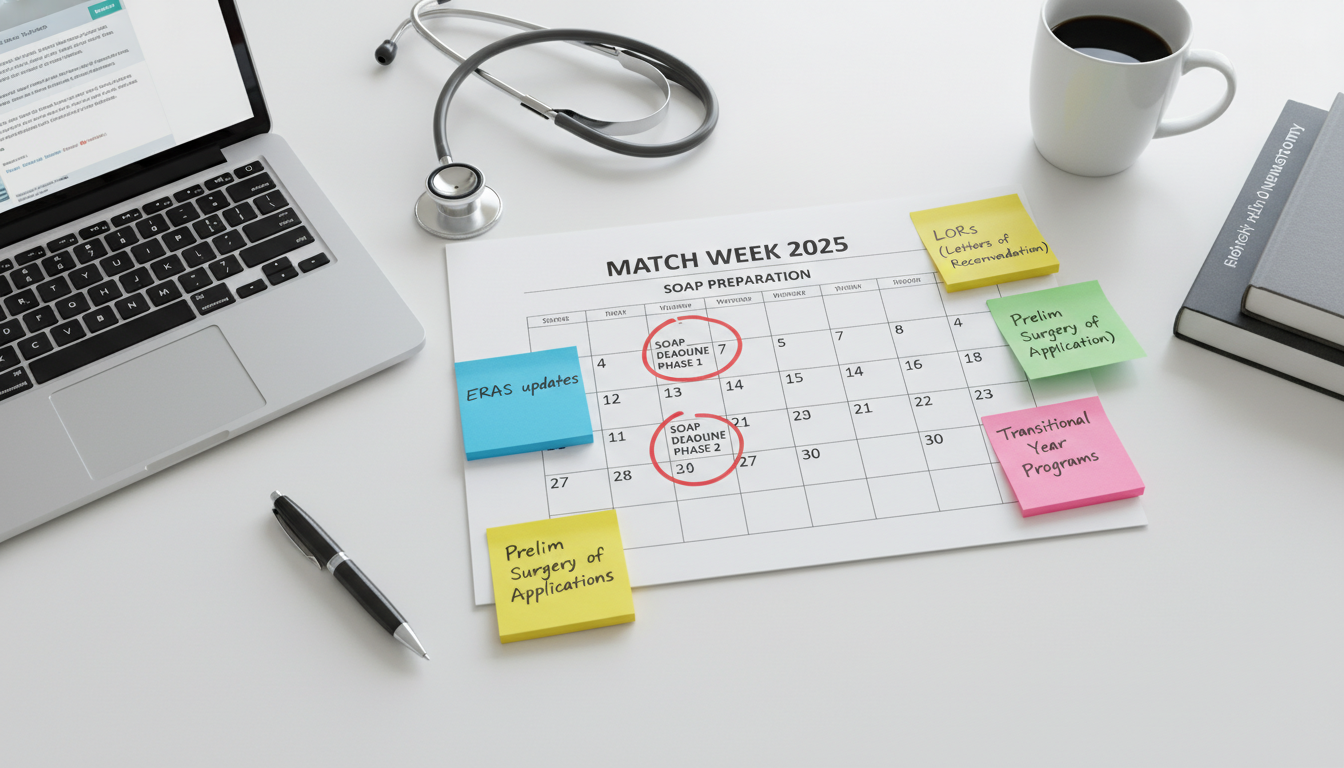
Timeline: SOAP Preparation Before, During, and After Match Week
Before Match Week: Build Your SOAP Readiness (Months in Advance)
Effective SOAP preparation starts well before you know your match status. For a neurosurgery‑bound US citizen IMG, do the following during the main application season:
1. Craft a Flexible Application Strategy
- Apply to neurosurgery as your primary specialty if that’s your true goal.
- Strongly consider a parallel plan:
- Preliminary surgery positions (ideal bridge toward neurosurgery).
- Other fields aligned with your interests and strengths, such as:
- Neurology
- Internal medicine (with a focus on neuro‑track opportunities)
- Transitional year (if available)
- Discuss with mentors whether to submit parallel applications upfront or reserve that move for SOAP.
2. Prepare SOAP‑Ready Application Components
You should have materials that can be quickly adapted for SOAP:
Core documents (ready and polished):
- ERAS CV and experiences updated and error‑free.
- USMLE transcripts and MSPE available.
- At least 3 solid letters of recommendation, ideally:
- 2 neurosurgery or surgery letters
- 1 from an internal medicine/neurology or research mentor (if considering backups)
Multiple personal statement versions:
- Neurosurgery personal statement (already used in main applications).
- Alternative versions:
- General surgery / preliminary surgery statement
- Internal medicine or neurology statement
- Transitional year statement
- Each should:
- Highlight your neurosurgery interest honestly but
- Emphasize how the backup specialty is a genuine fit and not a second‑class choice.
Actionable tip:
Store all PS versions in labeled documents (e.g., “PS_SurgeryPrelim_2025”) and keep them concise (3/4 to 1 page) with a clear, coherent narrative.
3. Map Out Realistic SOAP Targets
You won’t know which programs will be unfilled, but you can:
- Identify program types likely to offer SOAP positions:
- Community general surgery programs with prelim spots
- Internal medicine programs
- Transitional year programs
- Create a priority list by characteristics:
- Geographic preferences or restrictions
- Programs known to be IMG‑friendly
- Institutions with strong neurology/neurosurgery departments where you could later research or transfer
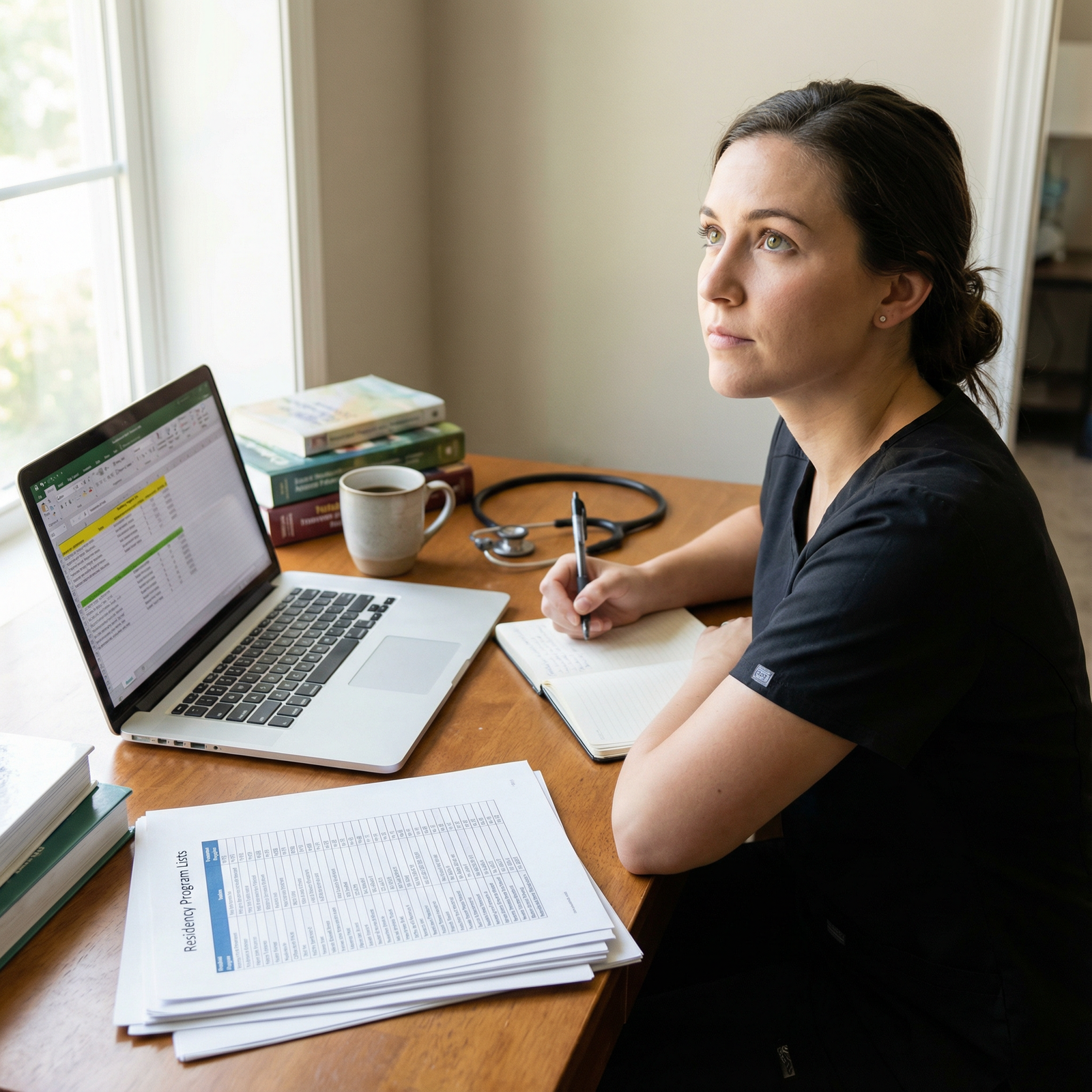
Keep a spreadsheet with columns like:
- Program name
- Specialty (prelim surgery, TY, IM, etc.)
- Historical IMG friendliness (if known)
- Location
- Notes (e.g., known neurosurgery department, potential for exposure to neuro ICU, etc.)
This structure will make SOAP decisions faster once you see the actual unfilled list.
Monday of Match Week: The “Did I Match?” Moment
At 11:00 AM ET Monday, NRMP tells you:
- Matched
- Partially matched (e.g., advanced position without a prelim year)
- Unmatched
For a US citizen IMG in neurosurgery, the main SOAP‑relevant scenarios are:
Scenario 1: Completely Unmatched
You were not matched to any neurosurgery or backup specialty. Emotional shock is common. Your steps:
Acknowledge your emotions—but timebox it.
Give yourself 1–2 hours to process, then pivot to action.Confirm SOAP eligibility (through NRMP/ERAS portal).
Download and review the List of Unfilled Programs as soon as it is released (typically noon Monday).
Categorize unfilled positions:
- Prelim surgery
- Transitional year
- Internal medicine
- Neurology
- Other specialties (e.g., family medicine, psychiatry) that you would be willing to consider if needed.
Revise your rank‑order list of SOAP targets focusing on:
- Prelim surgery positions (high priority if neurosurgery remains the long‑term goal).
- Transitional year programs with robust surgical/ICU exposure.
- Internal medicine or neurology at centers with strong neurosurgery/neurology, if surgical prelim isn’t available.
Scenario 2: Partially Matched (Advanced Position Only)
If somehow you matched an advanced position (e.g., PGY‑2) but lack a PGY‑1 year, SOAP is about finding:
- A prelim or transitional PGY‑1 that:
- Meets the requirements of your advanced program.
- Ideally keeps you close to neurosurgical or neuro‑intensive care exposure.
In both scenarios, the mechanics are the same: use your 45 SOAP applications strategically.
Strategy: How a Neurosurgery‑Bound US Citizen IMG Should Use SOAP
1. Clarify Your Long‑Term Neurosurgery Plan
Before submitting any SOAP applications, decide:
- Is neurosurgery non‑negotiable as a career goal?
- Or would you be equally content—or at least satisfied—in another field (e.g., neurology, radiology, internal medicine with neuro focus)?
Your answer affects how aggressively you:
- Pursue prelim surgery as a bridge year vs.
- Commit to a categorical backup specialty this cycle.
Example frameworks:
Neurosurgery at all costs (within reason):
Prioritize prelim surgery > transitional year > categorical IM/neurology in top academic centers (for research and future re‑application).Open to related fields if neurosurgery doesn’t work after a fair attempt:
Consider categorical neurology > strong internal medicine programs with neuro tracks > surgical prelim.
2. Prioritizing Your 45 Applications
You have 45 total SOAP applications. For a neurosurgery‑oriented US citizen IMG, a structured approach might look like:
Tier 1 (Top priority, 15–20 programs):
- Prelim surgery programs, especially:
- At academic centers with neurosurgery departments.
- Those known to be IMG‑friendly.
- Programs with a history of prelims transitioning into categorical spots in surgery/other specialties.
- Prelim surgery programs, especially:
Tier 2 (Next priority, 10–15 programs):
- Transitional year programs at institutions with:
- Strong neurosurgery/neurology/neuro‑ICU.
- Research infrastructure.
- Transitional year programs at institutions with:
Tier 3 (Remaining slots, 10–20 programs):
- Categorical internal medicine or neurology programs, particularly:
- At academic centers with neurology/neurosurgery residencies.
- Programs you could envision building a long‑term career in if neurosurgery ultimately doesn’t pan out.
- Categorical internal medicine or neurology programs, particularly:
Always adapt to the actual unfilled list—this is just a framework.
3. Tailoring Application Materials Quickly and Effectively
During SOAP, time is compressed. You must adjust with precision:
Personal Statements
Prepare distinct, honest but strategic PS versions:
For prelim surgery:
- Emphasize:
- Love for the OR and procedural work.
- Desire for a rigorous PGY‑1 foundation.
- Respect for general surgery training.
- Acknowledge neurosurgery interest, but frame it as:
- “I am seeking a strong surgical prelim year to build operative and critical‑care skills applicable to a future in neurosurgery or other surgical fields.”
- Emphasize:
For transitional year:
- Highlight flexibility and broad interests.
- Emphasize your goal to develop a solid foundation in:
- Acute care
- ICU
- Neurology/Neurosurgery exposure where available
For internal medicine/neurology:
- Focus on your fascination with complex neurologic disease.
- Show you value longitudinal care, diagnostic reasoning, and multidisciplinary neuro care.
Letters of Recommendation
You cannot change letters in SOAP, but you can:
- Choose which letters to assign to each application.
- For prelim surgery:
- Prioritize surgical and neurosurgical letters.
- For IM/neurology:
- Include at least one strong non‑surgical clinical letter if available.
Practical tip:
Create letter sets in ERAS (e.g., “Set A – Surgery Prelim,” “Set B – Internal Medicine”) before Match Week so assignment is fast during SOAP.
Inside SOAP Week: Execution, Communication, and Offers
Application Submission Window (Monday–Tuesday)
Once SOAP opens for applications:
- Move quickly but deliberately.
- Apply to your pre‑planned Tier 1 programs first.
- Double‑check PS and LOR assignment for each application.
- Ensure:
- Contact information is current.
- Availability for interviews (which may be same‑day or very short‑notice).
Programs may start reviewing applications as soon as they are submitted, and some will interview by phone or video very early.
Contact Rules and Professionalism
One core aspect of SOAP preparation is understanding what is SOAP‑compliant communication:
- You may:
- Respond to program outreach (calls, emails, interview invitations).
- Participate in virtual interviews.
- You may not:
- Cold‑call or email programs to solicit positions.
- Ask faculty or deans to directly contact programs on your behalf in ways that violate NRMP rules.
Always review the NRMP SOAP communication guidelines each year, as rules and interpretations can evolve.
Interviews During SOAP
SOAP interviews are often:
- Short (10–20 minutes).
- Focused on:
- Why this program and specialty?
- Why you are currently unmatched?
- How you handled setbacks and what you learned.
For a neurosurgery‑oriented US citizen IMG, common concerns programs may have:
- Will you leave after a year if offered a categorical prelim spot?
- Are you genuinely open to contributing fully, even if this is a backup?
Answer these concerns directly and honestly:
- Affirm your intention to:
- Work hard.
- Be a team player.
- Honor the commitment for the entire year.
- You can still be transparent about long‑term neurosurgery aspirations while:
- Emphasizing gratitude for any opportunity.
- Stating that robust preliminary or categorical training is valuable regardless of ultimate specialty.
Example response:
“I remain strongly interested in neurosurgery, but my immediate goal is to be the best PGY‑1 I can be. I’m committed to contributing fully to this program, developing my clinical and surgical skills, and supporting my co‑residents. Whether I remain in this field or ultimately pursue neurosurgery, this position represents an essential foundation in my training.”
Offer Rounds: Decision‑Making Under Pressure
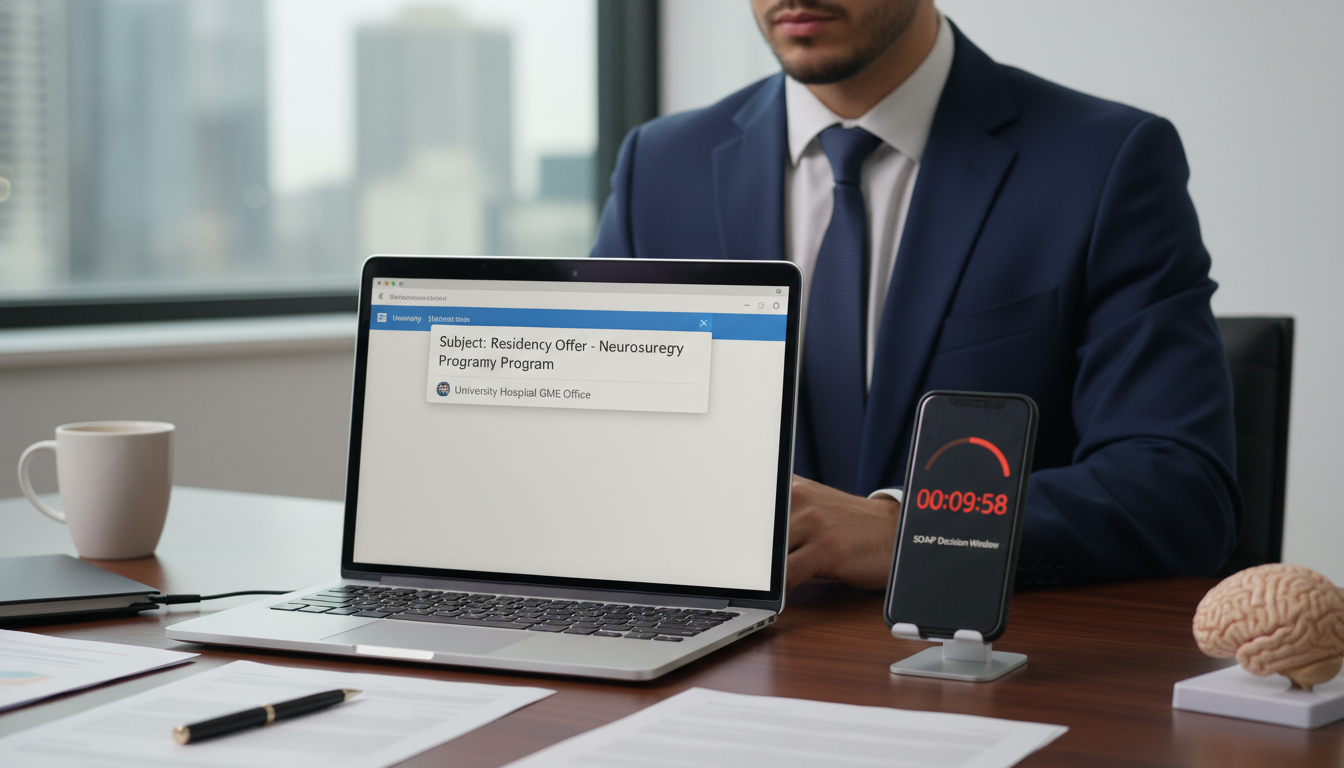
SOAP offers come in rounds (traditionally four rounds from Wednesday to Thursday). When you receive an offer:
- You have a short window (often 2 hours) to:
- Accept
- Reject
- Allow it to expire
If you accept:
- The process ends; you are contractually bound and will appear in Friday’s Match as having matched.
If you reject or let it expire:
- You may receive offers in later rounds (but nothing is guaranteed).
For a neurosurgery‑focused applicant, decisions hinge on:
Nature of the offer:
- Prelim surgery at a strong academic center? Usually attractive if neurosurgery is still the primary goal.
- Transitional year with good critical care/surgical exposure? Reasonable if no prelim surgery offers exist.
- Categorical IM or neurology at a strong or moderately strong program? Consider seriously if:
- Neurosurgery re‑application would be very low‑probability.
- You are open to long‑term practice in that field.
Your willingness to reapply or take research time:
- If you are ready to take a dedicated research year rather than accept an undesired categorical position, it may be reasonable to reject some offers.
- However, do not reject offers lightly. Being completely unmatched after SOAP is a serious setback.
After SOAP: Next Steps for the Neurosurgery‑Aspirant US Citizen IMG
If You Match Through SOAP
Celebrate briefly—but then analyze strategically.
Scenario A: You Matched to a Prelim Surgery Year
This is often the best SOAP outcome for someone determined to pursue neurosurgery:
- Treat the year as:
- A performance audition for surgical fields.
- An opportunity to:
- Excel clinically.
- Build relationships with neurosurgeons and surgical faculty.
- Engage in research if possible (neurosurgical or neuro‑ICU projects).
- Early in PGY‑1:
- Meet with neurosurgery faculty.
- Discuss goals and seek mentorship.
- Explore:
- The possibility of a future neurosurgery transfer (rare but not impossible).
- Strong neurosurgery or neurology research collaboration.
You may reapply to neurosurgery in the next cycle. Use your prelim year to:
- Bolster letters.
- Demonstrate clinical excellence.
- Clarify whether neurosurgery remains the right fit.
Scenario B: You Matched to a Transitional Year
A strong transitional year can still:
- Provide valuable broad‑based training.
- Allow time for:
- Research
- Networking
- Exploring PGY‑2 positions
However, you will need a follow‑on PGY‑2 spot (either via the Match or outside of it).
Scenario C: You Matched to a Categorical IM or Neurology Program
If you accept a categorical position:
- Treat it as your likely long‑term path, even if you keep neurosurgery in mind.
- You can still:
- Engage heavily with neurocritical care, stroke, or neuro‑oncology.
- Affiliate with neurosurgery through collaborative research.
- Some residents pivot from neurosurgery dreams to fulfilling careers in:
- Vascular neurology
- Neurocritical care
- Neuro‑oncology
- Interventional neuroradiology (via neurology or radiology pathways)
Be honest with yourself: transitioning out of neurosurgery ambition is not failure; it’s adapting to reality in a highly competitive space.
If You Do Not Match Through SOAP
This is emotionally very difficult. However, many successful neurosurgeons and neurologists encountered early setbacks. Your next steps:
Debrief thoroughly:
- Ask:
- Were scores a limiting factor?
- Was there insufficient US clinical experience?
- Were letters or research weak relative to neurosurgery norms?
- Ask:
Consider a dedicated research year in neurosurgery:
- At a US academic neurosurgery department.
- Aim for:
- High‑yield publications.
- Strong neurosurgical mentorship.
- Demonstrated persistence and resilience.
Reassess your risk tolerance:
- Will you apply to neurosurgery again as a reapplicant (with all the challenges that entails)?
- Or pivot earlier to neurology, radiology, or other fields where your neuro interest can still flourish?
Maintain clinical activity if possible:
- Observerships, externships, or structured clinical research roles.
- Avoid gaps in clinical engagement.
Frequently Asked Questions (FAQ)
1. As a US citizen IMG, what are my realistic chances of getting a neurosurgery residency through SOAP?
Practically speaking, extremely low. Neurosurgery spots almost never appear in SOAP. Even when they do, they are often filled by very strong applicants who already have deep ties to the program. Your SOAP goal should be to secure a position that:
- Keeps your neurosurgery dream alive (e.g., prelim surgery in a good center), or
- Sets you up for a fulfilling alternative path.
2. Should I use SOAP to chase only prelim surgery, or also apply to other specialties?
It depends on your risk tolerance and long‑term goals:
- If neurosurgery is non‑negotiable and you’re willing to risk going unmatched, you may focus primarily on prelim surgery and transitional year.
- If you are open to a backup career in another specialty, you should also apply to categorical programs (e.g., IM, neurology) where you could realistically see yourself practicing.
A balanced approach—prioritizing prelim surgery but including some categorical options—is often safest.
3. How do I explain being unmatched in neurosurgery during SOAP interviews for other specialties?
Be honest but constructive:
- Acknowledge the competitiveness of neurosurgery.
- Emphasize your strengths and what you’ve learned from the process.
- Avoid blaming or sounding bitter; focus on your growth and readiness to contribute to the specialty you’re applying to in SOAP.
Example:
“Neurosurgery is one of the most competitive specialties, and while I was not successful this year, the process sharpened my clinical and research skills and clarified my commitment to rigorous patient care. I’m now fully focused on bringing that same dedication to your program and specialty.”
4. What is SOAP preparation I should start as an M4 or early in the application year?
For an American studying abroad who aspires to neurosurgery, SOAP preparation should include:
- Maintaining updated ERAS documents.
- Crafting multiple personal statement templates (neurosurgery, surgery prelim, IM/neurology, TY).
- Building relationships with mentors who can guide quick decisions during Match Week.
- Researching IMG‑friendly prelim and transitional programs in advance.
- Understanding what is SOAP, the rules, and how offers work so you’re not learning under pressure.
Proactive SOAP preparation does not mean you expect to fail; it shows maturity, realism, and commitment to securing the best possible training path—even when plans change.
By approaching SOAP with clear eyes, structured planning, and flexible strategies, a US citizen IMG interested in neurosurgery can transform Match Week from a crisis into a carefully managed pivot—one that still honors long‑term goals while protecting your overall medical career.