Understanding SOAP for the US Citizen IMG in Ophthalmology
If you are an American studying abroad and aiming for ophthalmology residency, planning only for success in the regular ophtho match is not enough—you also need a robust SOAP preparation plan. Ophthalmology is highly competitive, and US citizen IMGs are at a relative disadvantage compared with US MD seniors. Even strong applicants may find themselves unmatched and needing to pivot quickly.
The Supplemental Offer and Acceptance Program (SOAP) is your structured, time‑compressed second chance to secure a residency position in the main NRMP Match week. For a US citizen IMG interested in ophthalmology, SOAP often means:
- Pivoting into a preliminary or transitional year (with plans to reapply to ophthalmology)
- Considering related fields (neurology, internal medicine, radiology, family medicine) as a strategic bridge
- Rarely, applying for an occasional PGY‑2 ophthalmology spot if one appears unfilled
This article walks you step‑by‑step through SOAP preparation tailored to the US citizen IMG with an ophthalmology focus, so you are not scrambling during Match Week.
What Is SOAP and Why It Matters for Ophthalmology‑Focused IMGs
SOAP (Supplemental Offer and Acceptance Program) is the NRMP‑run process that fills unfilled residency positions in an organized, time‑limited series of offer rounds. Understanding what is SOAP and how it works is the foundation of effective SOAP preparation.
Key Features of SOAP
- Eligibility: You must be:
- Registered for the NRMP Match
- Unmatched or partially matched at the start of Match Week
- Not withdrawn or ineligible
- Location of Process: SOAP occurs within the NRMP and ERAS ecosystems—no cold calling or unsolicited emails to programs during official SOAP hours.
- Application Limits: You can apply to a maximum of 45 programs via ERAS during SOAP.
- Offer Rounds: Positions are offered in several rounds over Wednesday–Thursday of Match Week. You can:
- Accept one offer (and automatically withdraw from others),
- Or reject/expire offers and hope for later rounds.
Why Ophthalmology Applicants Must Plan for SOAP
Ophthalmology positions (PGY‑2) are matched through SF Match, before the NRMP Match and SOAP. For a typical US citizen IMG interested in ophtho:
- If you match SF Match (ophthalmology) and also rank advanced positions in NRMP, you will usually be planning for a preliminary or transitional year via NRMP.
- If you do not match in SF Match, you may still be entering NRMP Match for a different specialty or a transitional/preliminary year.
- If you end up unmatched in NRMP, SOAP becomes your main short‑term safety net.
You must therefore plan SOAP strategy months in advance, even while you’re focused on the ophtho match.
Pre‑Match SOAP Preparation: Building a Dual‑Track Plan
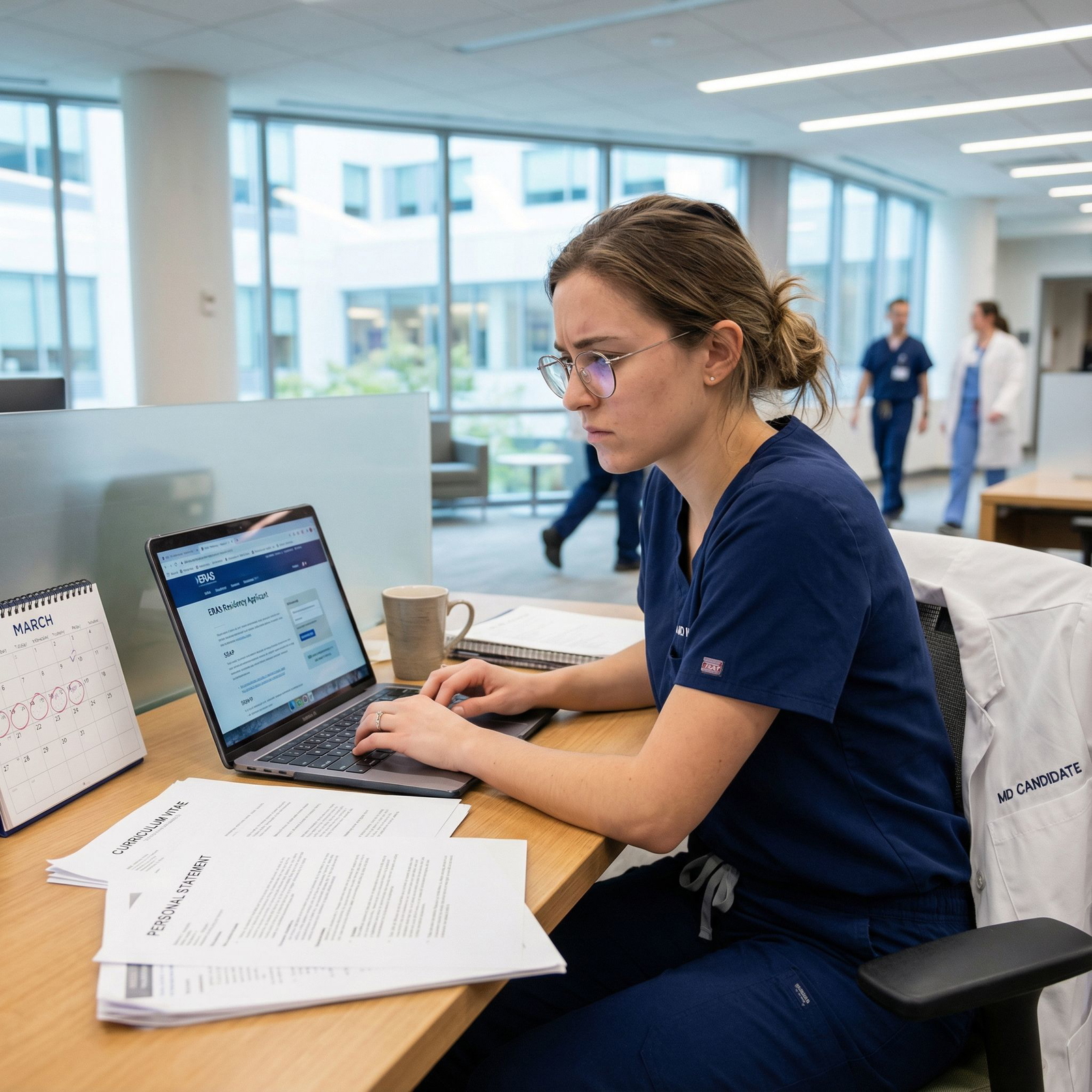
Preparation for SOAP should begin before you even submit your ERAS application, particularly as a US citizen IMG who is statistically at higher risk of going unmatched in ophthalmology.

1. Clarify Your Priorities and Boundaries
Before you can plan SOAP, know your personal red lines and flexibility:
- Geography: Are you willing to go anywhere in the US, or do you have constraints (family, visas, finances)?
- Specialty Flexibility:
- Would you consider a categorical spot in another specialty (e.g., internal medicine, family medicine, neurology, preliminary surgery)?
- Would you strongly prefer a transitional year or prelim medicine to stay close to your ophthalmology goal?
- Long‑Term Ophtho Plan:
- Are you committed to reapplying to ophthalmology after a prelim/transitional year?
- Are you open to discovering a new long‑term specialty if you find a good categorical SOAP spot?
Document these decisions clearly. During SOAP’s frenzied 48 hours, you will need to make rapid decisions without second‑guessing.
2. Understand Your Applicant Profile as a US Citizen IMG
US citizen IMGs (American studying abroad) occupy a unique position:
- Advantages:
- No visa sponsorship needed (usually a big plus in SOAP)
- Cultural familiarity with US training environments
- Challenges:
- Ophthalmology is one of the most competitive specialties; IMGs match at considerably lower rates than US MD seniors
- Many ophtho programs do not routinely interview IMGs
Perform a candid self‑assessment:
- USMLE scores (Step 1 and Step 2 CK)
- Ophthalmology‑specific experiences (research, electives, letters from ophtho faculty)
- Red flags (exam failures, leaves of absence, professionalism concerns)
- Geographical limitations
Then ask: If I were a program director, where would I be most competitive outside ophthalmology? Common SOAP landing spots for ophtho‑focused IMGs:
- Transitional Year (TY)
- Preliminary Internal Medicine
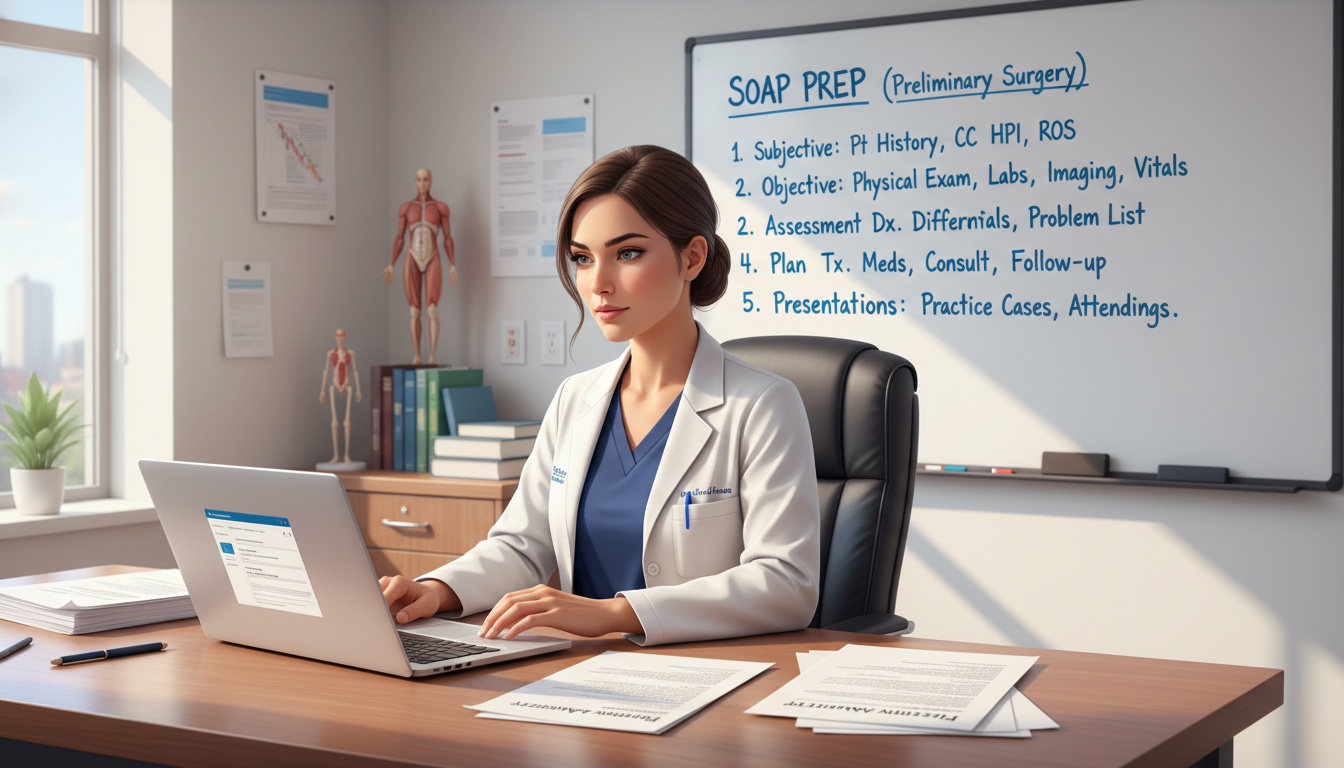
- Preliminary Surgery (especially for those with strong procedural interests)
- Categorical IM, Family Medicine, or Neurology
3. Build a Pre‑SOAP Document Strategy
SOAP moves rapidly. You need ERAS materials configured well before Match Week.
a. Personal Statements (Multiple Versions)
Prepare at least two, ideally three personal statement variants:
- Ophthalmology‑focused version
- For any rare ophtho‑adjacent opportunities (e.g., preliminary positions at ophtho‑heavy institutions)
- Medicine‑oriented version
- For preliminary/categorical internal medicine, transitional year with strong IM component
- General or broad‑clinical version
- Adaptable for family medicine, pediatrics, neurology, or prelim surgery
Key adaptation strategy:
- Maintain a consistent core narrative (your background, US citizen IMG story, commitment to patient care).
- Change:
- Specialty‑specific motivations
- Clinical examples and role models
- Long‑term career vision
b. Letters of Recommendation (LORs)
For an ophthalmology‑leaning applicant, typical LOR configuration pre‑SOAP:
- 2 letters from ophthalmologists (for SF Match and ophtho ERAS)
- 1 internal medicine or surgery letter
- Possibly 1 letter from a research mentor
For SOAP, you should:
- Ensure you have at least one strong non‑ophtho clinical letter (internal medicine, family medicine, or surgery)
- Confirm that letters do not mention “only interested in ophthalmology” in a way that undercuts your credibility when applying to other specialties.
If possible, ask a trusted non‑ophthalmology attending for a letter that emphasizes:
- Work ethic
- Clinical reasoning
- Adaptability
- Teamwork
c. CV and ERAS Application
Make your ERAS application SOAP‑ready by:
- Highlighting core clinical capabilities, not just ophthalmology:
- Rotations in IM, surgery, pediatrics, psychiatry, etc.
- Leadership roles and teaching
- Demonstrating:
- Reliability
- Communication
- Empathy
- Avoiding:
- Over‑specialization of every experience in ophthalmology terms only; show that you’re a well‑rounded physician.
4. Identify SOAP‑Appropriate Target Specialties and Programs
In late fall / early winter:
- Review historical SOAP data and unfilled positions by specialty.
- Note that programs that commonly go unfilled may be more open to US citizen IMGs in SOAP.
For an ophtho‑focused US IMG, likely SOAP priorities:
- Transitional Year programs (particularly with strong medicine exposure)
- Preliminary medicine programs at academic centers
- Preliminary surgery programs familiar with advanced match folks (ophtho, ENT, etc.)
- Selected categorical IM/FM/neurology programs that:
- Have a history of taking IMGs
- Train residents who later subspecialize in neuro‑ophthalmology, retina‑adjacent fields, etc.
Create a living spreadsheet (to be updated during SOAP):
- Program name, specialty, and location
- Visa policy (for your IMG peers; less relevant for you as a US citizen, but important context)
- Perceived competitiveness
- Website links and notes (mission fit, patient population, call schedule)
Week‑by‑Week Timeline Leading Into SOAP
To avoid last‑minute chaos, structure your SOAP preparation across the application season.
3–4 Months Before Rank List Certification
- Finalize multiple personal statement versions (ophtho, medicine‑oriented, general).
- Confirm at least one strong non‑ophthalmology LOR is uploaded.
- Clean up your ERAS application for clarity and completeness.
- Contact mentors and advisors (ophthalmology and non‑ophtho) and explicitly say:
- “If I need to go through SOAP, may I reach out to you for last‑minute advice?”
1–2 Months Before Rank List Deadline
- Begin SOAP education:
- Read NRMP SOAP policies carefully.
- Understand how offers and rounds work.
- Familiarize yourself with ERAS SOAP interface screenshots (from NRMP/ERAS guides).
- Draft:
- A SOAP‑specific CV summary (often used for quick reference by advisors)
- Email templates to request last‑minute help, references, or informal advocacy from faculty (if allowed by NRMP rules outside official SOAP hours).
2–3 Weeks Before Match Week
- Create a SOAP playbook:
- Your specialty ranking (e.g., 1. TY, 2. Prelim IM, 3. Categorical IM, 4. Prelim surgery)
- Geographic tiers (anywhere vs priority regions)
- A checklist of actions for Monday, Tuesday, Wednesday, Thursday of Match Week
- Clear your schedule for Match Week:
- Minimal other obligations; you must be fully available for calls, virtual interviews, and rapid decision‑making.
Inside Match Week: Executing a High‑Performance SOAP Strategy

Monday Morning: Learning Your Match Status
On Monday of Match Week:
- You will receive an email / NRMP notification: matched or unmatched / partially matched.
- If fully matched: SOAP does not apply to you.
- If unmatched or partially matched (e.g., you have an advanced spot but no prelim) and you are SOAP‑eligible:
- You gain access to the List of Unfilled Programs at a designated time.
For an ophtho‑focused US IMG, two common situations:
- You did not match into ophthalmology (SF Match) and did not match in NRMP either.
- Strategy: Use SOAP to obtain a categorical or prelim/TY position that keeps you clinically strong and re‑competitive for a future ophtho application.
- You matched into ophthalmology via SF Match but did not match a prelim/TY year in NRMP.
- Strategy: Use SOAP to secure a prelim medicine, prelim surgery, or TY that starts in time for your ophtho PGY‑2.
Monday Afternoon: Reviewing Unfilled Positions
Once the list is released:
- Filter by Specialty:
- Start with your highest priority: transitional year, preliminary medicine, prelim surgery, categorical IM/FM/neurology, etc.
- Filter by Location:
- If you have constraints, note them.
- If not, start from “anywhere” to maximize chances.
- Assess Practical Fit:
- Check program websites quickly:
- Do they have IMGs historically?
- Are they community vs university vs hybrid?
- Any evidence of strong teaching or supportive environment?
- Check program websites quickly:
Update your SOAP spreadsheet with the unfilled program list.
Monday–Tuesday: Submitting SOAP Applications (Up to 45 Programs)
You must use your 45 ERAS SOAP applications strategically. Common approach for an ophtho‑leaning US IMG:
- 15–20 applications: Transitional Year and prelim medicine (highest priority)
- 10–15 applications: Prelim surgery and other prelim programs open to advanced position applicants
- 10–15 applications: Categorical medicine, family medicine, or neurology that look IMG‑friendly
Key points:
- Use appropriate personal statement for each specialty (attach the correct version in ERAS).
- Tailor any short‑answer questions if present to:
- Highlight your adaptability and commitment to core clinical training
- Avoid over‑emphasizing ophthalmology as your “only interest” (which can scare off programs)
- Double‑check:
- LOR assignments for each program
- That no specialty‑specific red flags are present (e.g., a statement addressed “To the Ophthalmology Selection Committee” for an internal medicine program).
Tuesday–Thursday: Communication, Interviews, and Offer Rounds
During SOAP:
- Programs may:
- Call or email you for quick phone or virtual interviews
- Ask clarifying questions about your background and goals
Interview Tips for the Ophtho‑Focused US IMG in SOAP
Programs will often ask directly:
“Why are you applying here through SOAP? I see you have a lot of ophthalmology on your CV.”
Be prepared with honest but reassuring answers:
- Acknowledge your ophtho interest without sounding like you’ll be disengaged:
- “I’m very interested in ophthalmology, but I know I must first be an excellent general physician. That’s why I’m committed to making the most of a strong preliminary/transitional year.”
- Emphasize:
- Commitment to patient care regardless of specialty
- Appreciation of their program’s strengths (education, case mix, faculty accessibility)
- Your US citizen IMG background as an asset: adaptable, diverse perspectives, no visa issues
Avoid:
- Saying you will “definitely leave” after PGY‑1 for something else (even if you plan to reapply to ophtho—many residents stay in the same program or specialty).
- Sounding bitter about the ophtho match; focus on resilience and professionalism.
Handling SOAP Offers
During offer rounds:
- You may receive zero, one, or multiple offers.
- When an offer appears, you typically have a short time window (e.g., 2 hours) to accept or let it expire.
Decision framework:
- If it is a prelim/TY position that aligns with your ophtho plans:
- Strongly consider accepting immediately.
- If it is a categorical position in a decent program and specialty you could see yourself in:
- Consider your long‑term happiness vs your desire to reapply to ophthalmology.
- If the offer is from a program you had major concerns about (very poor reputation, major personal conflicts):
- It may be worth risking later rounds, but be realistic about your overall competitiveness.
Once you accept an offer, you are done with SOAP and locked into that position.
Long‑Term Strategy: Using a SOAP Outcome to Rebuild for the Ophtho Match
For a US citizen IMG whose passion remains ophthalmology, a SOAP‑secured position can be a powerful launchpad.
If You SOAP Into a Transitional Year or Prelim Medicine/Surgery
Use this year to:
- Excel clinically:
- Program directors talk; a strong reputation as a PGY‑1 can help you secure ophtho interviews later.
- Maintain ophtho ties:
- Attend ophtho clinics if allowed
- Participate in ophthalmology research projects on days off
- Network:
- Connect with ophthalmologists at your institution
- Seek mentorship on reapplying strategy
If You SOAP Into a Categorical Non‑Ophtho Specialty
You have two main paths:
- Discover and commit to that specialty if you find it satisfying.
- Reapply to ophthalmology after a year or two, understanding:
- You must maintain outstanding performance in your current specialty.
- You may need strong letters from both current specialty faculty and ophthalmologists.
- Program directors will ask: Why leave your current specialty, and why now?
In either path, your SOAP experience becomes part of your narrative of resilience, adaptability, and genuine patient‑centered motivation.
FAQs: SOAP Preparation for US Citizen IMG in Ophthalmology
1. As a US citizen IMG interested in ophthalmology, should I rank only ophtho‑adjacent prelim programs before Match and rely on SOAP if I don’t match?
No. Overly narrow ranking lists increase your risk of going unmatched and make SOAP more stressful. You should rank a reasonable breadth of preliminary and transitional programs, including some where you are more realistically competitive. Think of SOAP as a backup to a broad, thoughtful rank list, not as your primary plan.
2. Can I still get an ophthalmology position through SOAP?
Almost never. Ophthalmology is matched through SF Match, not NRMP, and unfilled ophtho positions are usually handled outside SOAP. Your realistic SOAP goal is to secure a transitional year, prelim year, or categorical spot that maintains or enhances your competitiveness for a future ophtho application.
3. How can I talk about ophthalmology during SOAP interviews without scaring programs away?
Frame ophtho as an interest, not an obsession. Emphasize that you understand all physicians must master core clinical skills first, and your priority is to be an excellent intern wherever you match. Show genuine interest in the specialty you’re interviewing for (medicine, surgery, family medicine, etc.), and avoid implying you are only there “temporarily,” even if you plan to reapply.
4. What is SOAP preparation I can do early in fourth year that makes the biggest difference?
The highest‑yield early steps are:
- Create multiple personal statement versions tailored to different specialties.
- Secure at least one strong non‑ophthalmology clinical LOR.
- Learn the mechanics of SOAP (deadlines, application limits, offer rounds).
- Build a target program list framework you can rapidly update when the unfilled positions list appears.
With deliberate SOAP preparation, US citizen IMGs pursuing ophthalmology can transform an initially disappointing Match Week into a structured, strategic step toward long‑term success.