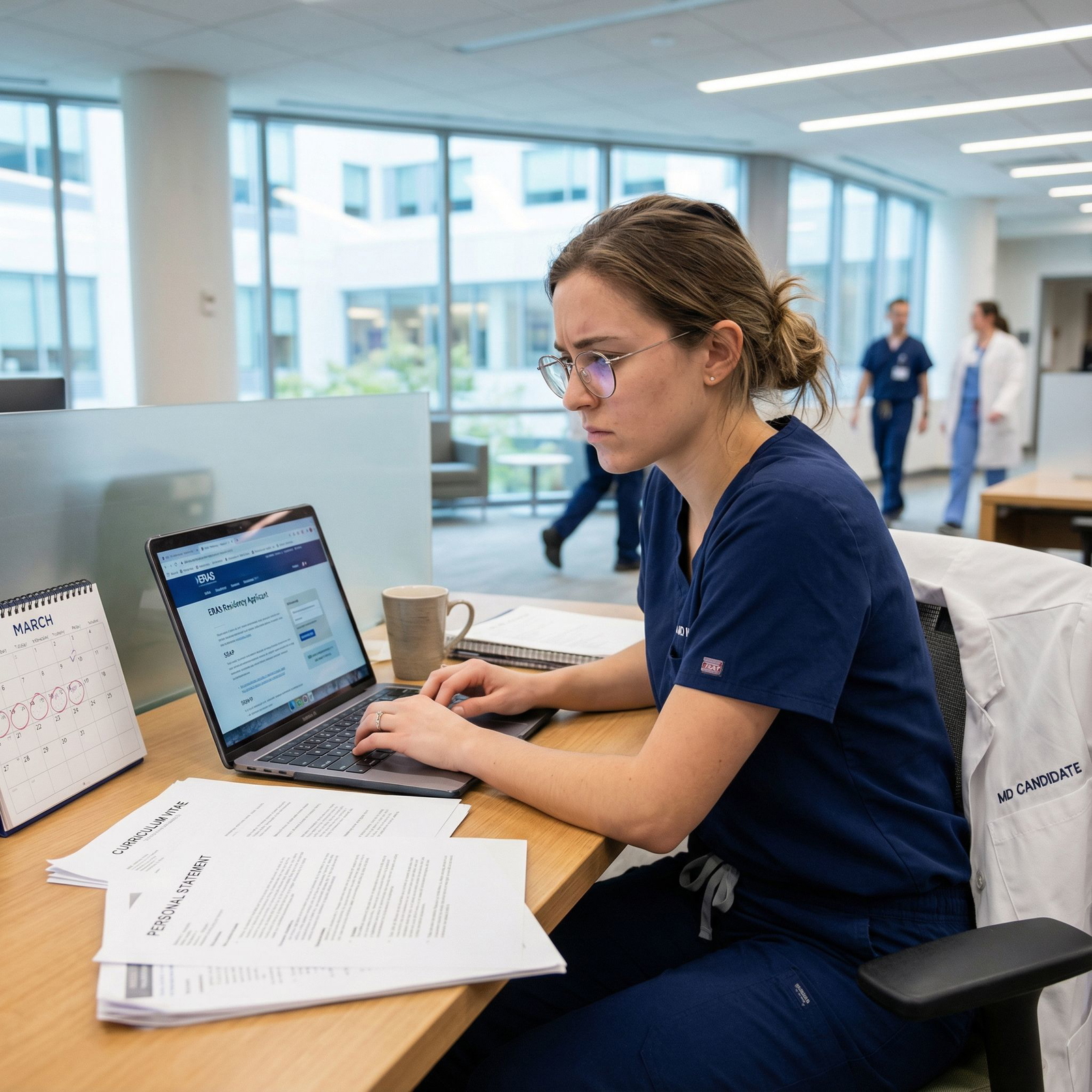
Understanding SOAP for the PM&R Applicant
If you are a US citizen IMG or an American studying abroad pursuing Physical Medicine & Rehabilitation (PM&R), planning for the SOAP is not pessimism—it is strategy. Even strong candidates can find themselves unmatched in the initial physiatry match cycle due to specialty competitiveness, limited categorical spots, or application misalignment.
The Supplemental Offer and Acceptance Program (SOAP) is your structured, time‑compressed second chance. Knowing exactly what is SOAP, how it works, and how PM&R fits into the bigger picture is essential if you want to pivot quickly and successfully.
What is SOAP?
In plain terms, SOAP is the National Resident Matching Program (NRMP)–run process that:
- Matches eligible unmatched or partially matched applicants
- To unfilled residency positions
- Across multiple rapid offer rounds during Match Week
You cannot “browse” like a job board; everything is structured, timed, and mediated through ERAS and NRMP.
Key elements:
Eligibility:
- Registered with NRMP for the Main Match
- Applied through ERAS
- Unmatched or partially matched as of Monday of Match Week
- Not withdrawn, not already placed in a position outside the Match
Information flow:
- Monday: You learn if you are matched, partially matched, or unmatched.
- Monday–Thursday: SOAP cycles run with applications, interviews, and offers.
For a US citizen IMG in PM&R, SOAP serves two main purposes:
- Backup entry into PM&R (if unfilled PM&R positions exist, which is less common but possible).
- Pathway into a preliminary, transitional year, or another specialty as a strategic route for reapplying to PM&R later.
Why PM&R Applicants Need SOAP Preparation
PM&R is increasingly competitive and attracts:
- US MD seniors
- DO graduates
- US citizen IMG and non-US IMG with strong US clinical experience
Even a solid US citizen IMG candidate can go unmatched because of:
- Limited PM&R spots relative to demand
- Over-concentration in a small number of “dream” programs
- Weak or late US clinical experience in physiatry
- Inadequate geographic flexibility or too-narrow rank list
Because SOAP moves extremely fast (hours, not weeks), all planning must be done before Match Week. Prepared candidates can respond strategically; unprepared candidates often panic and accept poorly aligned positions—or miss out completely.
Timeline: SOAP and the Physiatry Match
Understanding the timeline lets you plan deliberately.
Pre–Match Week (Months Before)
For a US citizen IMG/ American studying abroad targeting PM&R:
Before ERAS submission
- Build a realistic program list (PM&R + prelim/TY + backup specialties).
- Consider how competitive your PM&R profile is (scores, attempts, USCE, research, letters).
- Start discussing backup plans realistically with advisors and mentors.
After ERAS submission but before Rank List Deadline
- Honestly assess interview volume and quality:
- Fewer than ~8–10 PM&R interviews as a US citizen IMG can signal higher risk.
- Decide on:
- Whether to rank preliminary/TY programs as part of your primary strategy.
- Your ** SOAP preparation level**:
- Level 1: “Unlikely to need SOAP, but prepared just in case”
- Level 2: “High risk of needing SOAP, detailed backup strategy required”
- Honestly assess interview volume and quality:
Match Week Overview
Monday morning – NRMP Match Status Notification:
- Matched
- Partially Matched
- Unmatched
Monday midday – List of Unfilled Programs becomes available through NRMP (for SOAP-eligible candidates).
Monday–Thursday – SOAP phases:
- Application phase via ERAS (limited applications per round)
- Program review & interviews (often virtual, brief, and same-day)
- Offer rounds (multiple 2‑hour rounds where you may receive and respond to offers)
As a US citizen IMG in PM&R, you need to be ready to:
Quickly assess whether any PM&R positions are unfilled.
Decide how aggressively to apply to:
- PM&R prelim/PGY-2 spots (if any)
- Transitional year (TY) and preliminary medicine/surgery
- Other specialties (e.g., internal medicine, family medicine, neurology)
Execute on your SOAP preparation plan without hesitation.
Strategic Pre‑SOAP Preparation for US Citizen IMG in PM&R
Preparation for SOAP as a physiatry applicant should be structured and proactive. Think of it as building a contingency roadmap.
1. Self‑Assessment and Risk Stratification
Before the rank list deadline, honestly review:
USMLE / COMLEX performance
- Any failures or low scores?
- Step 2 taken or pending? (Programs often prioritize those with Step 2 completed.)
US Clinical Experience (USCE)
- PM&R electives or observerships in the US?
- Inpatient rehab, consult service, or pain clinic experiences?
- Any inpatient internal medicine or neurology rotations to broaden appeal?
Letters of Recommendation (LoRs)
- At least one strong PM&R letter from a US physiatrist is ideal.
- Additional letters from internal medicine, neurology, or surgery help versatility.
Research & extracurriculars
- PM&R case reports, QI projects, or rehab-related work?
- Leadership or volunteer work with disability or rehabilitation populations?
If your PM&R interview numbers are modest (e.g., fewer than 8–10) or your application has red flags (exam retakes, late graduation, visa confusion, etc.), you should plan for serious SOAP preparation.
2. Defining Your SOAP Targets
For an American studying abroad who wants a future in PM&R, SOAP strategy should answer:
If PM&R spots open, will you pursue them in SOAP?
- Almost always yes, but weigh:
- Geography
- Program reputation vs. your long‑term goals
- Whether you already have a back‑up categorical offer outside SOAP (rare)
- Almost always yes, but weigh:
If no PM&R positions are available, what are your priority backup pathways?
Common realistic tiering:
- Transitional Year (TY) programs with strong PM&R connections
- Preliminary internal medicine or preliminary surgery year in hospitals with a PM&R service
- Categorical internal medicine or neurology (if you are open to switching specialties or reapplying to PM&R from a different base)
- Other specialties that align with your strengths and long‑term goals
Document this in writing:
“If I am unmatched on Monday, and PM&R spots are available, I will:
- Apply to all PM&R unfilled positions that I’m eligible for
- Also apply to TY/prelim positions at hospitals with PM&R programs
If no PM&R spots are available, I will prioritize TY/prelim at academic centers, followed by categorical IM in regions X, Y, Z.”
3. Aligning Your Documents for SOAP
You cannot rewrite your entire application during SOAP, but you can and should pre‑prepare modifications:
Personal Statements
Have multiple versions ready before Match Week:
PM&R-focused personal statement
- Emphasizes rehabilitation motivations, exposure to physiatry, and long‑term physiatry goals.
- Can be used if PM&R spots appear in SOAP.
General TY/preliminary statement
- Focus on internal medicine / surgical fundamentals, teamwork, and your desire for a strong clinical foundation.
- Explicitly tie your long‑term interest in physiatry but show you will add value regardless.
Alternative specialty statement (if applicable)
- For example, internal medicine or neurology, if you are genuinely open to those fields as primary careers.
You can assign different statements to different programs in ERAS, which is crucial for SOAP.
Letters of Recommendation
You usually cannot obtain new letters during Match Week, so plan ahead:
- Ensure you have:
- At least one strong PM&R letter
- At least one strong internal medicine, neurology, or surgery letter
- During SOAP, you can reassign which letters go to which programs:
- PM&R programs: PM&R letters + relevant IM/Neuro letters
- TY/prelim: strong IM/Neuro letters with one PM&R letter to show your career interest
CV and Experiences
Ensure ERAS entries are:
- Free of errors, complete, and well explained
- Highlight:
- Rehabilitation, disability, or neuro-musculoskeletal experiences
- Quality improvement work or research
- Leadership and interdisciplinary collaboration
You won’t have time for major edits during SOAP, so polish before.
Tactics During Match Week: Executing Your SOAP Plan
When Monday arrives and you learn you are unmatched or partially matched, the priority is to move from emotion to action quickly.
1. Interpreting Your Status
Unmatched
- No position secured. Full SOAP engagement needed.
Partially Matched
- You matched into either:
- A PGY-1 but not a PGY-2, or
- A PGY-2 but not a PGY-1 (less common for PM&R)
- Determine:
- What position you already have
- Whether you need a PGY-1 (prelim/TY) or a PGY-2 spot
- SOAP can be used to fill the missing component.
- You matched into either:
2. Reviewing the List of Unfilled Positions
Once the list appears:
- Filter by:
- Specialty: PM&R, Internal Medicine, Surgery, TY, Neurology, Family Medicine
- State/Region: Prioritize areas where you have support, visas (if relevant), or familiarity.
For a PM&R‑focused US citizen IMG:
First, scan for Physical Medicine & Rehabilitation positions:
- Categorical PM&R (PGY-1 to PGY-4)
- Advanced PM&R (PGY-2) positions
Then, identify:
- Transitional Year programs, especially at institutions with PM&R departments
- Preliminary Internal Medicine or Surgery in hospitals with rehab services
Create a prioritized spreadsheet or list including:
- Program name
- City, state
- Program type (PM&R, TY, prelim, etc.)
- Your initial interest level (High/Medium/Low)
- Any known connection (faculty, alumni, prior observership, etc.)
3. Choosing Where to Apply: Application Caps
SOAP imposes a limit on the number of applications per round (historically up to 45 total, but always check the current year’s rules). You must use them strategically.
For a US citizen IMG targeting PM&R:
If there are PM&R unfilled positions:
- Apply to all realistic PM&R programs first (even if geographically less ideal).
- Use remainder on:
- TY programs with strong educational reputations
- Prelim IM programs at hospitals with PM&R departments
If there are no PM&R unfilled positions:
- Focus on:
- TY at academic centers
- Prelim IM/Surgery
- Categorical IM or Neurology if you are open to an alternate long‑term field or reapplication
- Focus on:
Spread your applications rather than placing all in one narrow category.
4. Tailoring Your Application Within SOAP
For each target program type:
PM&R spots
- Attach your PM&R personal statement
- Ensure ERAS assignments emphasize PM&R LoRs
- In the experiences section and ERAS-selected documents, highlight rehab, neuro, musculoskeletal, and multidisciplinary care.
Transitional Year & Prelim IM/Surgery
- Attach your TY/prelim personal statement
- Lead with strong IM/Neuro/Surgery letters
- Emphasize your desire for rigorous clinical training and ability to carry complex inpatient loads.
Categorical IM/Neurology
- Use a specialty-specific statement if you genuinely can commit.
- Explain your interest beyond PM&R; don’t present as someone “just passing through.”
5. Rapid-Fire Interview Preparation
SOAP interviews may be:
- Very short (10–20 minutes)
- Same‑day or next‑day after you apply
- Video or phone-based
- Conducted by program directors, APDs, or chief residents
Prepare SOAP-specific talking points in advance:
For PM&R programs:
- Clear, concise narrative of why PM&R
- 1–2 powerful patient stories highlighting rehab themes
- Understanding of PM&R scope: inpatient rehab, outpatient MSK, EMG, pain, spasticity management
- Awareness of the program’s patient population and unique features (even with limited time, you should check their website quickly)
For TY/prelim programs:
- Emphasize:
- Your professionalism and reliability
- Your work ethic and team skills
- Motivation to gain a strong foundation that will benefit future PM&R or any field
- Reassure them you will fully commit to being an excellent intern, not treating the year as a placeholder.
- Emphasize:
Common questions to rehearse:
- “Why did you go unmatched, and what have you learned from the process?”
- “If we offer you a position, will you commit to joining our program?”
- “Where do you see your career in 5–10 years?”
- “What specific strengths do you bring to our team?”
Prepare answers that:
- Take responsibility without self‑destructing
- Highlight growth and resilience
- Reiterate your genuine interest in rehabilitation and patient-centered care
Long‑Term Strategy: Using SOAP Outcomes to Reach PM&R
Whether SOAP leads you to PM&R directly or via an indirect path, a strategic view is crucial.
1. Best-Case SOAP Scenario: Direct PM&R Match
If you secure a PM&R spot during SOAP:
Clarify:
- Is it a categorical or advanced (PGY-2) position?
- If advanced only, do you already have or need a PGY-1?
Start preparing early to:
- Build relationships with faculty
- Get involved in rehab-related research or QI projects
- Strengthen key skills for PM&R: neuro exam, MSK exam, communication with interdisciplinary teams
Even if it’s not your “dream location,” PM&R training itself is the primary asset. You can later shape your niche via fellowship (SCI, TBI, Pain, Sports, etc.).
2. Transitional Year / Prelim Year as a Launchpad to PM&R
If you SOAP into a TY or prelim year:
- Treat it as:
- A chance to prove your clinical excellence, reliability, and teamwork
- An opportunity to secure strong US-based letters
- Time to build strategic PM&R connections
During that year:
- Rotate on or request time with:
- Inpatient rehab units
- Consult physiatry services
- Spine, pain, or sports medicine clinics
- Meet PM&R faculty, express interest professionally, and ask about:
- Shadowing opportunities
- Research or QI involvement
- Guidance on reapplying to PM&R
A US citizen IMG with a strong clinical year and solid PM&R letters can reapply to physiatr y with improved odds.
3. Categorical in Another Specialty: Parallel or Pivot Strategy
If you SOAP into a categorical program in another specialty (e.g., internal medicine, neurology):
You have two main choices:
- Commit to that specialty and build a fulfilling career, possibly collaborating with or overlapping PM&R interests (e.g., stroke neurology, hospital medicine with rehab focus).
- Consider reapplying to PM&R from your new specialty, understanding:
- This is logistically and politically complex.
- You must be transparent and professional with both programs.
- Funding and GME slot availability are limiting factors.
Only pursue route 2 with strong mentorship and a compelling, honest rationale.
4. If SOAP Does Not Result in a Position
If you remain unmatched post‑SOAP:
- Do not rush into low-quality, non-training “gap filler” roles.
- Construct a clear, 12‑month plan to strengthen your PM&R candidacy:
Possible components:
- Additional US clinical experience (ideally with PM&R exposure)
- Formal research or a rehab-related research fellowship
- Step score improvement if applicable (Step 3 if permissible and advisable)
- Structured English communication or clinical skills enhancement
- Building new or stronger PM&R mentorship relationships
Document reflections on:
- What might have limited your match chances?
- What concrete changes will be visible in next year’s application?
Future program directors will look for growth, insight, and perseverance, not just repetition.
SOAP Preparation Checklist for US Citizen IMG in PM&R
Use this as a pre–Match Week summary:
Before Rank List Deadline
- Honest competitiveness assessment for the physiatry match
- Backup specialties and program types selected
- Multiple personal statements drafted (PM&R, TY/prelim, alternative specialty)
- Letters of recommendation diversified (PM&R + IM/Neuro/Surgery)
- ERAS thoroughly proofread and optimized
- Mentor/advisor conversation about worst‑case and best‑case SOAP strategies
2–3 Weeks Before Match Week
- Update CV and summary of experiences for quick reference
- Rehearse answers to:
- “Why PM&R?”
- “Why do you think you went unmatched?”
- “What did you learn from this year’s process?”
- Prepare interview space and professional attire
- Identify PM&R departments and large academic centers where you’d accept TY/prelim positions
Match Week
- Monday: Confirm unmatched or partially matched status
- Monday: Download and rapidly analyze the unfilled positions list
- Monday: Prioritize PM&R, TY, and prelim programs; plan application usage
- Monday–Tuesday: Submit SOAP applications with correctly assigned personal statements and LoRs
- Tuesday–Thursday: Attend interviews, convey clear interest, and respond promptly to offers
FAQs: SOAP Preparation for US Citizen IMG in Physical Medicine & Rehabilitation
1. As a US citizen IMG, what are my realistic chances of getting PM&R through SOAP?
PM&R rarely has many unfilled positions; some years there may be only a few, sometimes none. For a US citizen IMG, direct PM&R placement via SOAP is possible but uncommon and heavily dependent on:
- Whether any PM&R programs are unfilled
- Your USMLE/COMLEX record and PM&R-specific experiences
- The relative strength of competition among SOAP-eligible applicants
You should absolutely apply to PM&R spots if they appear, but your SOAP preparation must also focus on transitional and preliminary positions as realistic stepping stones toward PM&R.
2. Should my SOAP personal statement still say I want PM&R if I’m applying to TY or prelim programs?
Yes, but with nuance. For TY or prelim programs:
- Emphasize:
- Your desire to become an excellent, reliable intern
- Your commitment to teamwork and patient care
- Clarify that:
- You value the foundational training they provide
- This training is essential whether you continue into PM&R or elsewhere
Avoid statements that suggest you see their program purely as a “temporary stop” or that you are not fully committed to doing your best during that year.
3. What is SOAP’s impact on my future PM&R applications if I don’t match this year?
Participating in SOAP itself does not harm your future applications. What matters is:
- How you use the time after SOAP:
- Do you gain meaningful US clinical experience?
- Do you strengthen PM&R exposure and letters?
- Do you improve any weak areas (exam performance, communication skills, etc.)?
When you reapply, you should be ready to explain:
- Why you were initially unmatched and what you did to improve
- How your experiences since then reaffirmed your commitment to PM&R
Programs respect applicants who demonstrate insight, resilience, and measurable growth.
4. How does SOAP differ from just emailing programs after going unmatched?
SOAP is the only official route to unfilled NRMP positions during Match Week. During SOAP:
- Programs cannot offer positions outside the NRMP SOAP process.
- Unsolicited direct emails to programs about SOAP positions are usually discouraged and may be ignored or seen as not understanding the rules.
Outside Match Week and SOAP:
- You can email programs that independently post vacancies later in the year, but that is separate from SOAP and follows different rules.
Focusing your energy on mastering the SOAP process—and preparing early—is far more effective than unstructured outreach during Match Week.
By approaching SOAP preparation as an integral part of your overall PM&R residency strategy, rather than an emergency fallback, you give yourself the best chance to land a position that moves you closer to a career in physiatry—whether immediately or through a well-chosen stepping stone year.