Understanding SOAP for the Urology-Bound IMG
As an international medical graduate (IMG) targeting urology residency, you occupy a competitive niche in an already intense process. While most urology positions are filled through the early urology match (via the AUA/SAU), a subset of IMGs each year end up participating in the NRMP Supplemental Offer and Acceptance Program (SOAP) for preliminary surgery, transition-year, or other categorical positions to strengthen their profile for a future urology match cycle.
To use SOAP effectively, you need to understand both the mechanics of SOAP and how each decision will shape your trajectory back toward urology.
What Is SOAP?
The Supplemental Offer and Acceptance Program (SOAP) is a structured, time-limited system run by the NRMP that allows unmatched or partially matched applicants to apply to and accept unfilled residency positions during Match Week.
In plain terms:
- SOAP is not “leftovers”; it is a formal mini-match with strict rules.
- You cannot contact programs directly or solicit offers outside the SOAP system.
- You apply through ERAS, but offers and acceptances are controlled by NRMP.
Eligibility basics (high-level):
- You must be ERAS-registered and NRMP-registered.
- You must be unmatched or partially matched after the main match algorithm runs.
- Your medical school must certify your credentials and graduation.
- The NRMP notifies you on Monday of Match Week whether you are SOAP-eligible.
For an international medical graduate, the critical prerequisites usually include:
- Valid ECFMG certification (or all steps required for certification completed in time).
- Passing USMLE (or equivalent) exams required by participating programs.
- Compliance with NRMP and ERAS policies.
Why SOAP Matters for Urology-Bound IMGs
Most urology residencies are filled via the urology match months before NRMP Match Week. That means:
- If you aimed for urology categorical and did not match, SOAP will almost never offer urology categorical seats.
- However, you can still:
- Obtain a preliminary surgery or transitional year spot to strengthen your urology application for the next cycle.
- Enter another specialty aligned with surgical skills (e.g., general surgery prelim, sometimes categorical surgery if available).
- Strategically avoid gaps and visa complications by securing some GME position.
Your SOAP goal as a urology-focused IMG:
Use SOAP to land the most urology-relevant position possible while protecting long-term visa status, financial stability, and future urology competitiveness.
That means SOAP preparation for you is not just “find any spot,” but find a step that moves you closer (not farther) from a urology career.

Pre–Match Week: Building a SOAP-Ready Portfolio
Effective SOAP preparation happens months before Match Week. For an IMG targeting urology, your pre-SOAP work has two simultaneous aims:
- Maximize your chances to match directly into urology.
- Build a robust backup plan through SOAP if you do not match.
1. Clarify Your Strategic Priorities
Before you reach Match Week, know your hierarchy of outcomes. For a typical urology-bound IMG, a realistic order might look like:
- Match into urology categorical (AUA/SAU match).
- If not:
- Preliminary general surgery or transitional year in a program that:
- Has a urology residency.
- Has a history of taking prelims into categorical positions or supporting urology applicants.
- Preliminary general surgery or transitional year in a program that:
- If those are not available:
- Other surgical prelim or strong internal medicine spots that:
- Have a large academic center.
- Offer research exposure, especially in urology or surgical subspecialties.
- Other surgical prelim or strong internal medicine spots that:
- If no clinically desirable options exist:
- Consider post-match research opportunities and reapply next cycle instead of taking a poor fit.
Write your own ranked priorities in advance so you are not deciding under pressure during SOAP rounds.
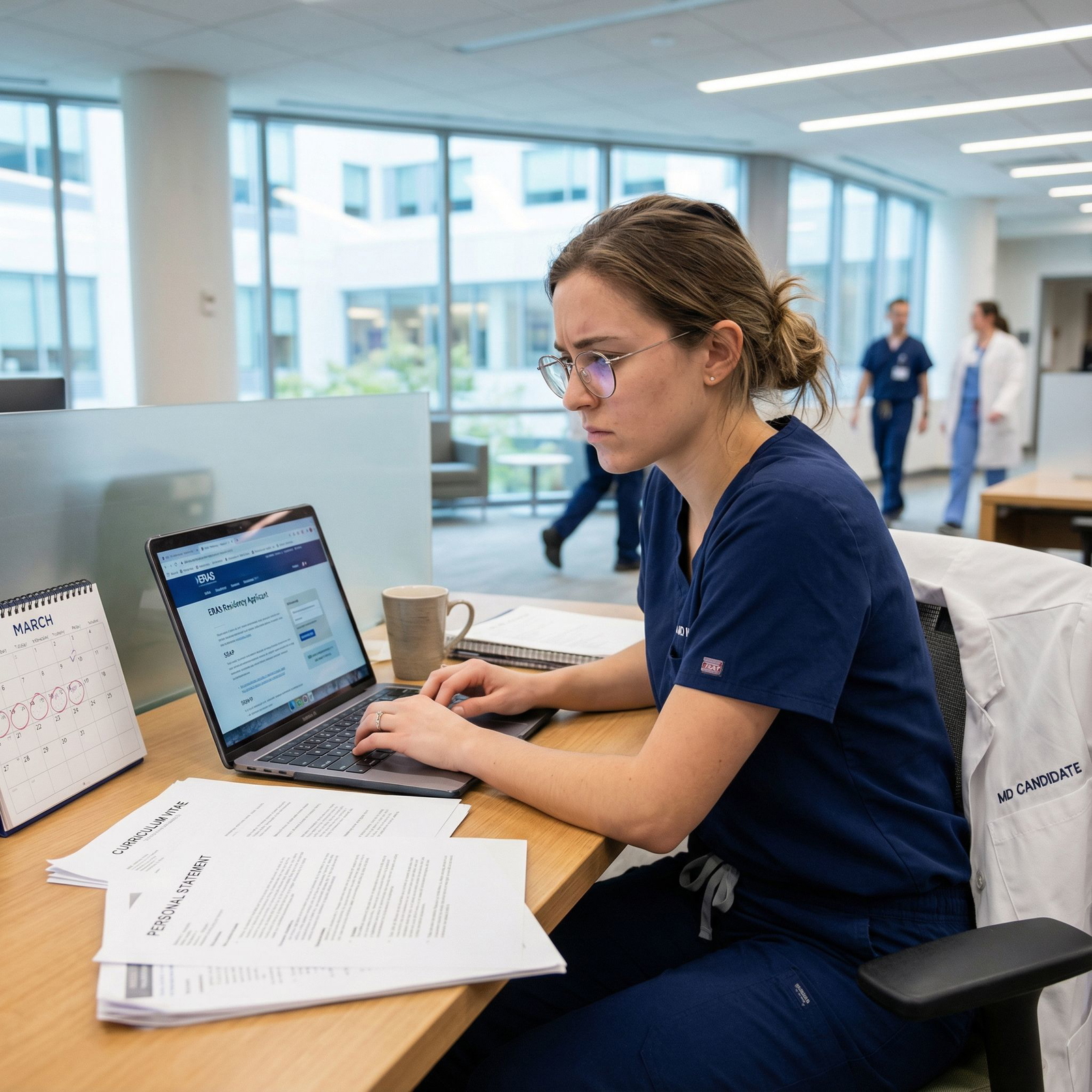
2. Optimize Your ERAS Content for SOAP
While your ERAS application was built for the main match and urology match, you can still tailor aspects for SOAP.
Key elements to pre-prepare:
A. SOAP-Specific Personal Statements
Create at least two additional personal statements before Match Week:
Surgical Preliminary / Transitional Year PS
- Emphasize:
- Commitment to surgical thinking and OR teamwork.
- Work ethic, resilience, and comfort with long hours.
- How a prelim or TY year will be used to enhance your surgical and urology readiness.
- Avoid: Explicitly telling a non-urology program you are only using them to get to urology; instead, frame it as aligned training that benefits both you and the program.
- Emphasize:
Internal Medicine / Other Backup PS (if you are truly willing to pursue this path)
- More suitable if you are open to evolving away from urology.
- Highlight your interest in long-term patient care, complex diagnostics, and interdisciplinary collaboration.
- If you are not genuinely interested, do not apply to these programs via SOAP; forced fit leads to burnout and potential contract issues.
Have these statements uploaded and labeled in ERAS so you can assign them quickly when SOAP opens.
B. Updated CV and Experiences
Before Match Week:
- Make sure work, research, and volunteer experiences are fully updated:
- Include urology-related observerships, electives, or hands-on experiences.
- Highlight any urology research, presentations, posters, or QI projects.
- Clarify procedural experience (catheter placements, cystoscopy observation, OR assistance, etc.) in your descriptions where relevant.
For SOAP programs outside urology, focus on:
- Demonstrable teamwork and clinical reliability.
- Pattern of adaptability in new systems – key for IMGs.
C. Letters of Recommendation and How They Read in SOAP
You cannot usually change letters during SOAP, but your letter content matters:
- Urology letters (from urologists) can still be powerful for surgical prelim or TY spots because:
- They emphasize OR performance, manual skills, and surgical temperament.
- General surgery or internal medicine letters (if you have them) are ideal to assign to those respective programs.
If you are still waiting to apply in a future cycle and reading this early:
- Plan ahead: Try to obtain at least one letter from a general surgeon during any surgery rotation, especially at institutions with urology programs. It broadens your options in SOAP.
3. Academic and Exam Preparation
IMGs often worry that SOAP is all about Step scores. Scores matter, but so does the overall signal of readiness.
Pre–Match Week:
- Ensure all required USMLE scores are reported and visible in ERAS.
- If you recently passed an exam (e.g., Step 3), make sure you update programs quickly pre-match.
- If you have a failure attempt:
- Prepare a brief, honest explanation (not an excuse) that you can discuss if asked during SOAP interviews.
4. Visa Planning Before SOAP
Visa issues for IMGs can become a rate-limiting factor in SOAP.
- Understand the difference between:
- J-1 vs H-1B sponsorship.
- Which one you are realistically able to obtain based on:
- USMLE Step 3 status.
- State and institutional policies.
Before Match Week, build a simple reference list:
- States or programs historically open to H-1B for IMGs (if relevant).
- Your flexibility on location and visa type.
This lets you sort SOAP opportunities more intelligently rather than applying blindly to programs that cannot sponsor you.
Match Week Timeline and SOAP Mechanics: What Actually Happens
During Match Week, timing is everything. Understanding the SOAP structure reduces panic and helps you respond deliberately.
Monday: Match Status and SOAP Eligibility
On the Monday of Match Week (11:00 AM ET):
- You learn whether you:
- Matched to a residency position.
- Partially matched.
- Did not match at all.
- If you did not match or are partially matched, NRMP tells you whether you’re SOAP-eligible.
If you are also a urology applicant:
- You may already know your urology match result earlier (via AUA/SAU).
- If you failed to match urology but are participating in the NRMP match for prelim or other programs, SOAP may still apply.
Monday Noon: List of Unfilled Programs
At 12:00 PM ET Monday:
- SOAP-eligible applicants get access to the List of Unfilled Programs.
- You will see:
- Program name.
- Specialty.
- Number of unfilled positions.
- (Often) visa and ECFMG requirements.
Important for urology-focused IMGs:
- Urology categorical positions rarely appear here.
- Focus your immediate analysis on:
- Preliminary surgery.
- Transitional year.
- Occasionally strong medicine or other categories that might still move you toward long-term urology or viable career stability.
Monday–Tuesday: Application Window
From Monday 3:00 PM ET until Tuesday morning (exact times vary slightly by year), you can:
- Submit up to 45 applications via ERAS to SOAP-participating programs.
- Assign specialty-appropriate personal statements and letters to each.
Key principles for allocating those 45 slots as a urology-minded IMG:
Prioritize prelim surgery in hospitals with urology programs:
- Academic centers > large community programs.
- Check if the institution has:
- Urology residency.
- History of taking prelims into categorical positions.
- Strong surgical case volume.
Next, targeted transitional year programs:
- Especially those linked with major teaching hospitals or urology services.
- TY years with robust ICU, surgical, and procedural exposure are better than primarily outpatient or low-acuity ones.
Internal medicine or other categorical spots:
- Only if:
- You genuinely may pivot away from urology.
- Or if your main goal is any stable residency in the US and you are ready to commit.
- Only if:
Geographic and visa flexibility:
- Cast a wide net geographically; SOAP is not the time to be overly location-restrictive.
- Sort programs by those that explicitly accept IMGs and state a willingness to sponsor your visa type.
Once you submit applications, you wait for programs to contact you through NRMP-approved channels (phone, video, or message systems) for interviews.

SOAP Interviews and Offers: Performing Under Pressure
SOAP moves very quickly. Programs often screen dozens of applicants in a few hours, especially for prelim and TY spots.
1. Interview Logistics and Readiness
During Match Week, you should:
- Clear your schedule as much as possible Monday–Thursday.
- Ensure:
- Reliable internet.
- Quiet, professional background.
- Updated CV and application materials at hand.
- Prepare a 30–60 second introduction tailored to each specialty:
- For prelim surgery/TY:
- “I’m an IMG with strong interest in urology. I’m looking for a rigorous surgical or transitional year where I can contribute immediately, grow my procedural skills, and integrate into the surgical team. I have prior exposure to urology and general surgery, and I’m particularly interested in programs that value teaching and teamwork.”
- For prelim surgery/TY:
2. Content Strategy for Interviews
While programs know you are in SOAP, they want reassurance that:
- You will show up, work hard, and complete the year.
- You are not purely using them as a disposable stepping stone.
As a urology-focused IMG, phrase your goals carefully:
Do say:
- “My long-term interest is in urology, but I understand that foundational surgical training is essential. I’m committed to giving my full effort to your program and to being an integral part of your team.”
- “I see this prelim year as an opportunity to grow as a surgical intern, improve my clinical decision-making, and contribute meaningfully to patient care.”
Avoid saying:
- “I only want a spot for one year and then I’m leaving.”
- “I’m not really interested in your program’s specialty.”
If asked directly whether you plan to reapply to urology:
- Answer honestly but constructively:
- “Yes, I intend to reapply, but I fully understand that my responsibility during this year is to your program and patients. I believe doing my best work with you will also make me a better candidate in the future.”
3. SOAP Offer Rounds
SOAP offers come in multiple rounds (e.g., four rounds from Wednesday to Thursday; exact structure can vary by year).
Key points:
- You will receive an electronic offer via NRMP, not directly from the program.
- You generally have a 2-hour window (varies by year) to accept, reject, or let an offer expire.
- Once you accept an offer, you are bound to that program and automatically removed from the SOAP process.
Strategic advice for a urology-focused IMG:
Know your thresholds in advance.
Example:- You decide beforehand that:
- Prelim surgery at any large academic center = auto-accept.
- Transitional year at strong teaching hospitals = usually accept.
- Small, low-volume programs without support, or in a specialty you cannot see yourself in = consider declining if earlier rounds remain.
- You decide beforehand that:
Do not overplay risk.
Most unmatched applicants would rather secure a reasonable prelim or TY than end SOAP empty-handed. Decline only if:- The position is clearly incompatible with your visa needs, life circumstances, or ethical comfort.
- You realistically see other options already interviewing you.
Consider the “soft value” of a program for future urology applications:
- Presence of a urology department.
- Willingness to support you with letters and research.
- Culture of helping prelims or TY residents advance.
Long-Term Strategy: Using SOAP Outcomes to Rebuild Toward Urology
Whether you match through SOAP or not, your path to urology continues beyond Match Week.
Scenario 1: You Secure a Preliminary Surgery or TY Position
This is often the ideal SOAP outcome for urology-focused IMGs.
Use this year to:
Excel Clinically
- Be reliable: show up early, know your patients thoroughly, volunteer for cases.
- Take ownership of basic tasks (notes, orders, follow-up).
- Seek feedback from seniors and attendings.
Connect With Urology
- Introduce yourself to urology faculty early in the year.
- Ask respectfully to attend urology morbidity and mortality (M&M) conferences or didactics when off-call.
- If allowed, rotate on urology services and seek meaningful responsibility.
Build Urology-Targeted Achievements
- Participate in urology research projects; case reports, QI projects, or retrospective chart reviews are often feasible.
- Present at urology conferences (local or national).
- Request letters of recommendation from urologists and general surgeons who see your work ethic daily.
Plan Your Next Urology Match Cycle
- Track AUA/SAU and ERAS timelines carefully.
- Update your CV with new US clinical experience and research.
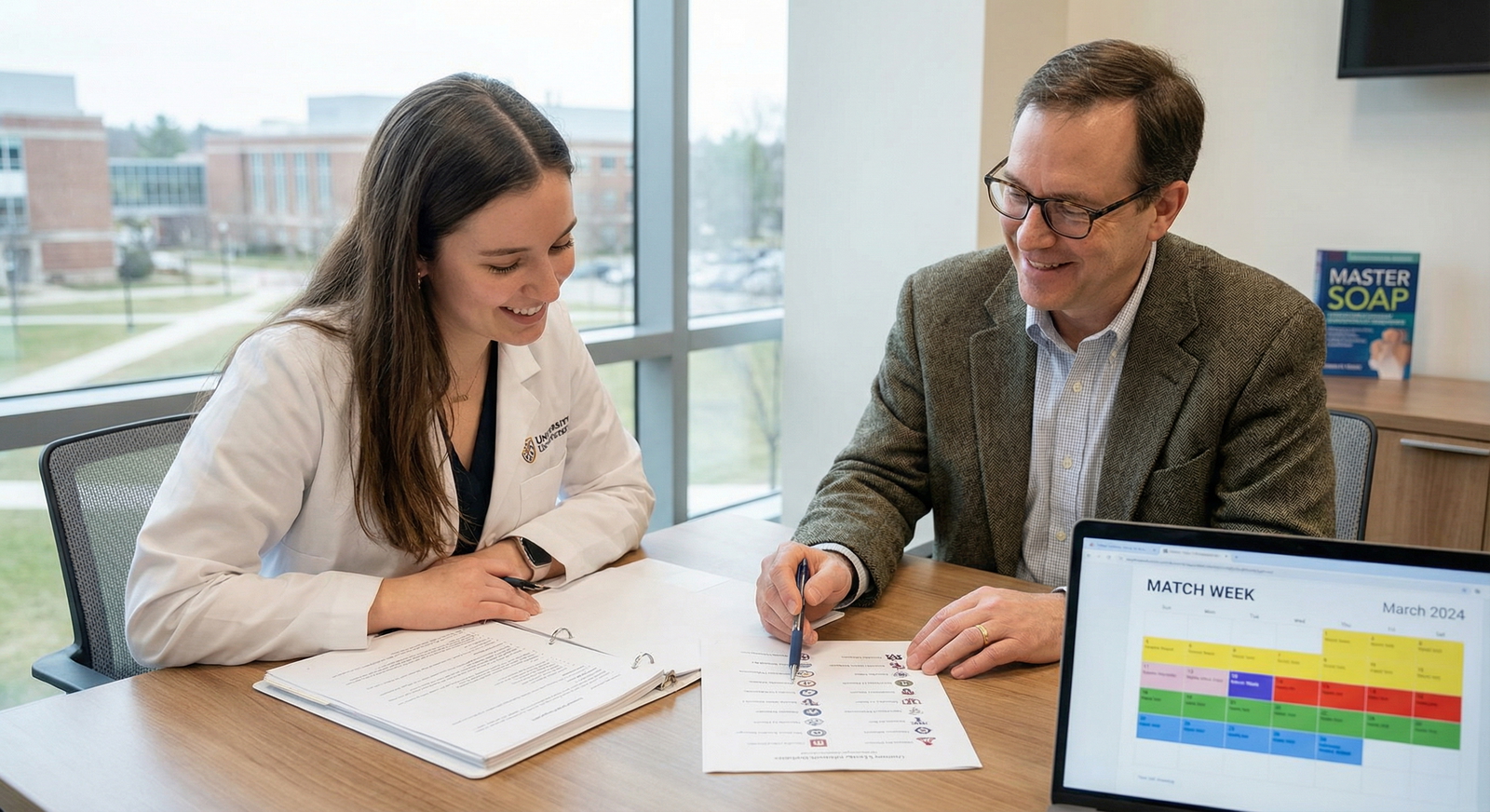
- Discuss strategy with mentors; they can help identify programs more welcoming to IMGs.
Scenario 2: You SOAP Into a Different Specialty
If you accept a categorical internal medicine or another field:
- Decide whether you’re open to a long-term career in that specialty.
- It is generally not practical to plan a multi-year pivot from, say, categorical pathology to urology without major risk.
If you are genuinely committed to urology and the position is poorly aligned, sometimes it is better to:
- Complete a strong research year in urology.
- Reapply with enhanced credentials.
But this is a major decision involving finances, visa status, and personal circumstances; seek advice from trusted mentors.
Scenario 3: You Do Not Match Through SOAP
If SOAP ends without a position:
Stay Calm and Objective
- This outcome is painful, but not final.
- Many IMGs have successfully matched into urology after an initial failure, often through a research-then-clinical pathway.
Pursue Post-Match Opportunities
- Urology research fellowships (paid or funded, if available).
- Non-accredited surgical or urology clinical fellowships (where legally allowed).
- Expanded observerships with urology departments.
Reassess Your Application
- Identify weaknesses: scores, lack of US clinical experience, weak letters, narrow geographic choices.
- Construct a 12–24 month remediation plan:
- More research.
- US clinical exposure.
- Publications or presentations.
- Consider Step 3 (if not yet done) to demonstrate academic readiness and expand visa options.
Maintain Communication and Documentation
- Keep your CV updated.
- Document all new experiences systematically.
- Build sustained relationships with mentors who can advocate for you in future cycles.
Frequently Asked Questions (FAQ)
1. Can I SOAP directly into a urology residency as an IMG?
In almost all years, urology categorical positions do not participate in SOAP, because urology uses a separate match (AUA/SAU) occurring before the NRMP main match. While a rare outlier may exist, you should not plan your urology strategy around SOAP giving you a direct urology PGY-1 spot.
Instead, use SOAP to secure the best available prelim surgery or transitional year position that aligns with future urology goals.
2. Is a preliminary surgery year really helpful for the urology match?
Yes—especially for IMGs. A strong preliminary surgery year:
- Gives you US-based surgical experience and a track record of reliability.
- Allows close mentorship and letters from surgeons, sometimes including urologists.
- Demonstrates that you can handle the demands of a surgical internship.
Programs value applicants who have already proven themselves in a US GME environment, particularly if they excel in the OR and on call.
3. What is SOAP preparation I should start as an IMG if I’m still early in medical school or internship?
Early SOAP preparation as an IMG includes:
- Achieving strong USMLE scores and avoiding failures when possible.
- Securing US clinical experience in surgery and urology (electives, sub-internships, observerships).
- Building urology-related research and academic productivity.
- Obtaining versatile letters that speak to your clinical and surgical skills.
- Understanding visa pathways (J-1 vs H-1B) and tailoring your plan accordingly.
- Drafting multiple personal statements (urology, prelim/TY, and possibly IM) well before Match Week.
That way, if you need SOAP, you simply adapt an already-strong portfolio rather than scrambling to create one under extreme time pressure.
4. If I’m committed to urology, should I avoid applying through SOAP to specialties I don’t really want?
In general, yes. Applying to a specialty through SOAP signals that you are willing to train and potentially build a career there. Matching into a specialty you genuinely do not want creates frustration for you and the program, and can lead to early resignation or contract violations—both harmful to your future applications.
As a urology-focused IMG:
- Prioritize SOAP applications that meaningfully support a future urology path (prelim surgery, TY, certain strong medicine programs at major academic centers).
- Only apply to other specialties via SOAP if you are honestly open to a long-term career in that field or need the stability for personal/visa reasons.
By approaching SOAP with a defined urology-centered strategy, thorough pre–Match Week preparation, and realistic flexibility, an international medical graduate can turn an initially disappointing match outcome into a structured, forward-moving step toward a urology residency.