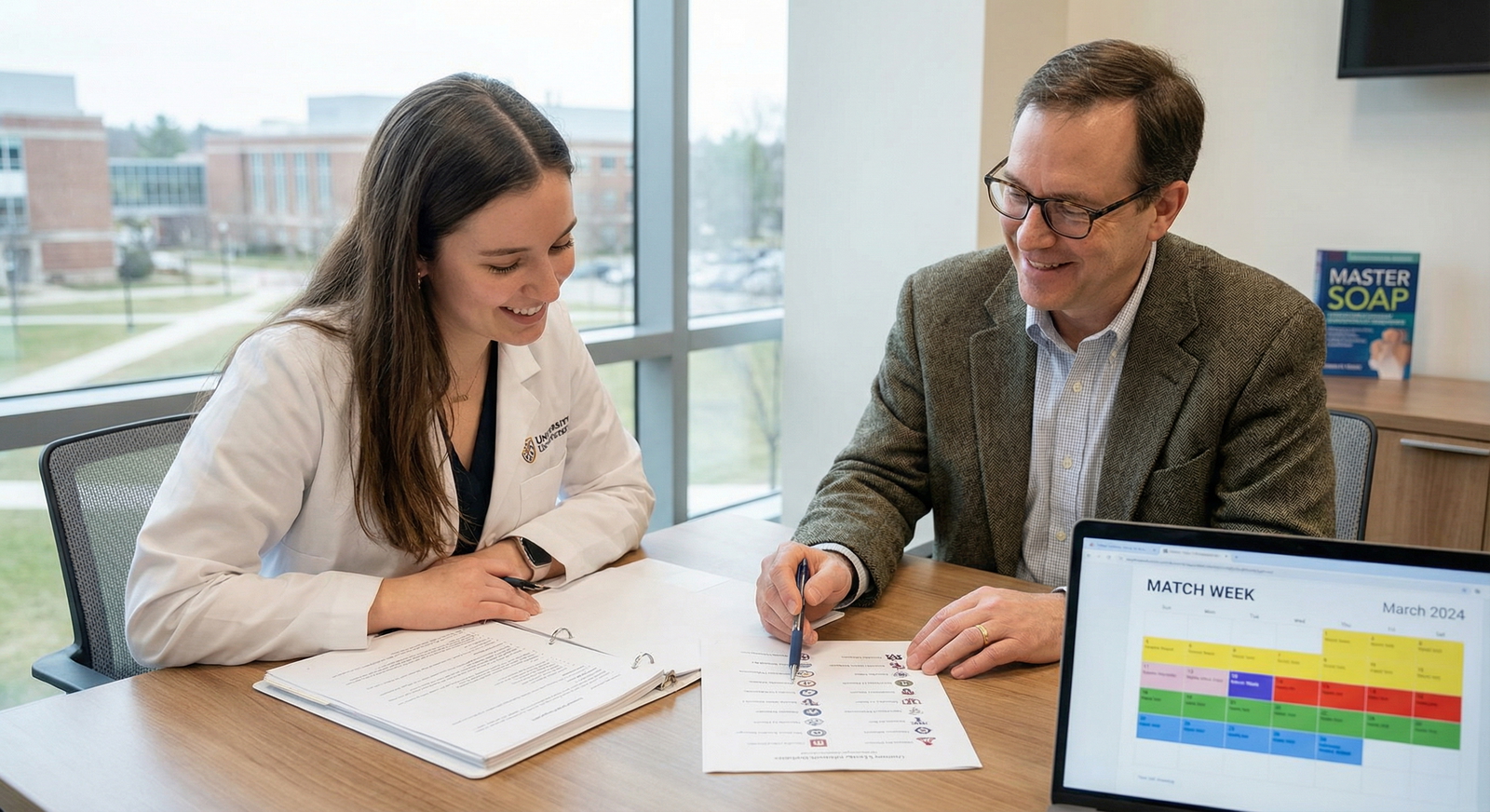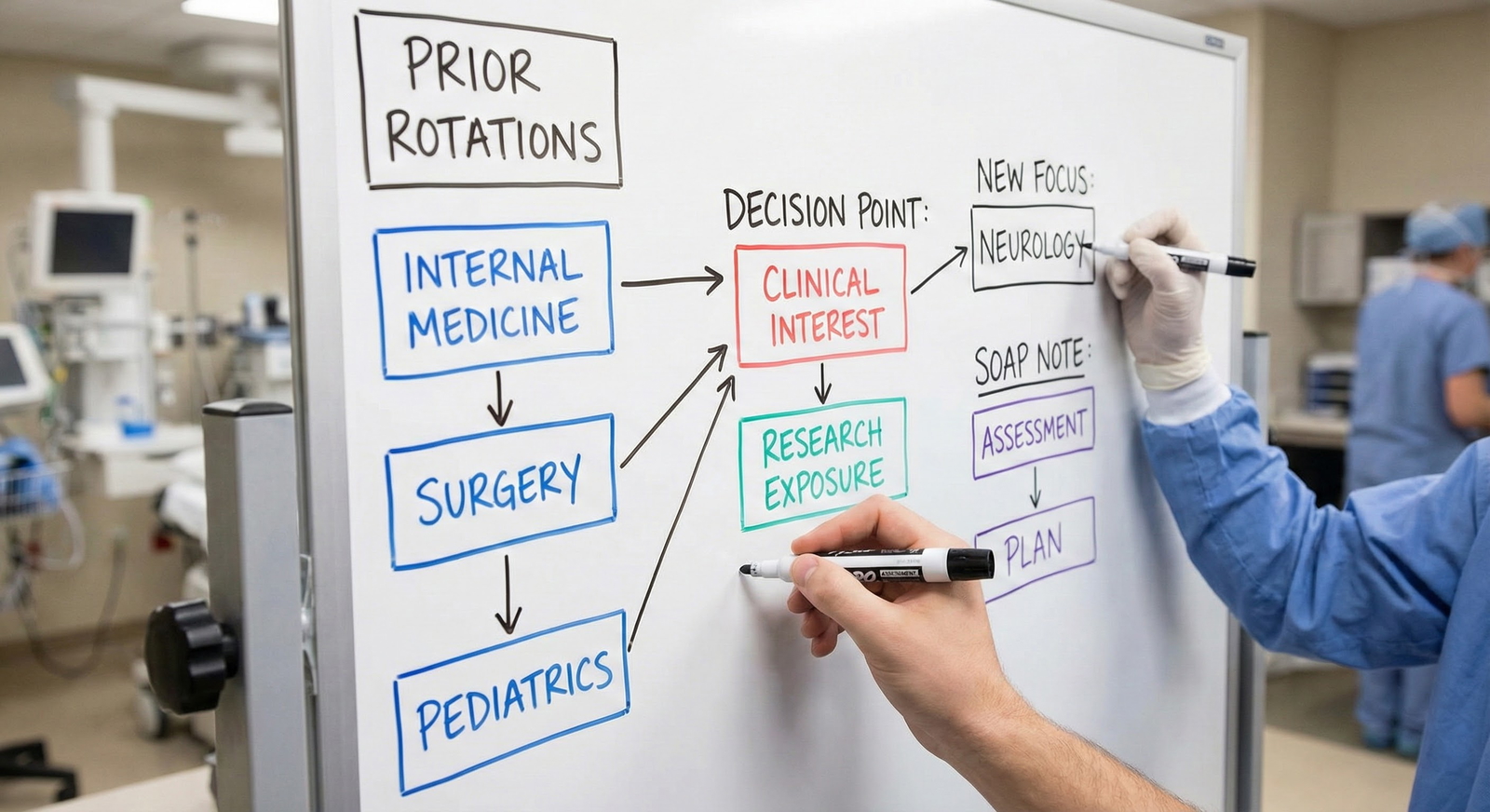
Understanding SOAP in the Context of Interventional Radiology
The Supplemental Offer and Acceptance Program (SOAP) is the structured, time‑compressed process that allows unmatched or partially matched applicants to obtain unfilled residency positions during Match Week. For anyone aiming at an interventional radiology residency (either Integrated IR/DR or Independent IR), understanding SOAP—and preparing for it in advance—is critical risk management.
Interventional radiology is one of the most competitive specialties. Each cycle, many strong applicants do not secure an IR position through the initial IR match. A subset of these applicants—and many others from different specialties—enter SOAP and consider related options (diagnostic radiology, preliminary surgery, internal medicine, transitional year, or a completely different field) as strategic stepping stones to IR.
To build a solid SOAP preparation plan, you must understand:
- What is SOAP?
- A regulated NRMP process during Match Week
- Allows only eligible, unmatched or partially matched applicants to apply to unfilled positions
- Prohibits “back‑channel” contact with programs outside official SOAP time windows
- Who participates?
- Unmatched Main Residency Match applicants
- Partially matched applicants (e.g., advanced position but no prelim year)
- Programs with unfilled positions after the initial Match algorithm runs
- Why SOAP matters especially for IR:
- Integrated interventional radiology residency spots are limited and high‑demand
- Most unfilled IR slots (if any) are filled quickly; many years have very few or none
- Your IR career path may depend on stepping‑stone programs (Diagnostic Radiology, surgery prelim, medicine prelim, TY) obtained through SOAP
Thinking about SOAP preparation does not mean you are expecting to fail. Instead, it signals that you understand how competitive IR is and you are being deliberate about contingency planning.
Strategic Mindset: How IR Applicants Should Approach SOAP
Interventional radiology–bound students must view SOAP preparation as phase two of a single integrated strategy:
- Phase 1: Primary IR match strategy (IR/DR, DR, and related applications)
- Phase 2: SOAP preparation and execution if you remain unmatched
Clarifying Your IR Pathways Before Match Week
You cannot build a serious SOAP plan without first mapping out your acceptable IR pathways. Common routes include:
- Direct Integrated IR/DR Residency
- Diagnostic Radiology (DR) → Independent IR Fellowship
- Preliminary Year (Surgery, Internal Medicine, or TY) + Reapplication
- Alternate Specialty with Future Transition to DR/IR (more difficult and uncertain)
Before Match Week, answer these questions:
- Am I strictly IR or bust, or am I open to:
- DR as a feasible and satisfying long‑term career?
- DR as a stepping stone to Independent IR?
- Would I be willing to:
- Train outside my preferred geographic region?
- Accept a community or smaller program rather than an academic flagship?
- If completely unable to enter DR/IR this cycle, am I:
- Open to a preliminary year with intent to reapply?
- Open to a different specialty entirely as a backup?
Document your answers. You will not have time to “figure this out” during SOAP; you must know your red lines and your acceptable compromises ahead of time.
Understand Historical Patterns for IR in SOAP
While year‑to‑year data change, in most recent cycles:
- Integrated IR/DR positions rarely go unfilled. Some years, there may be zero IR positions in SOAP.
- Diagnostic radiology occasionally has unfilled spots (highly variable).
- Many programs entering SOAP are other specialties or prelim/TY positions.
Implication: In many cycles, your realistic SOAP targets as an IR‑bound applicant will be:
- Diagnostic radiology positions (categorical or advanced)
- Transitional year (TY) / Preliminary surgery / Preliminary internal medicine positions, used to:
- Strengthen your application
- Provide U.S. clinical experience and letters
- Set up a stronger IR/DR or DR reapplication the next year
Plan under the assumption that true IR positions will be extremely limited or absent in SOAP, and anything IR‑related is a bonus.
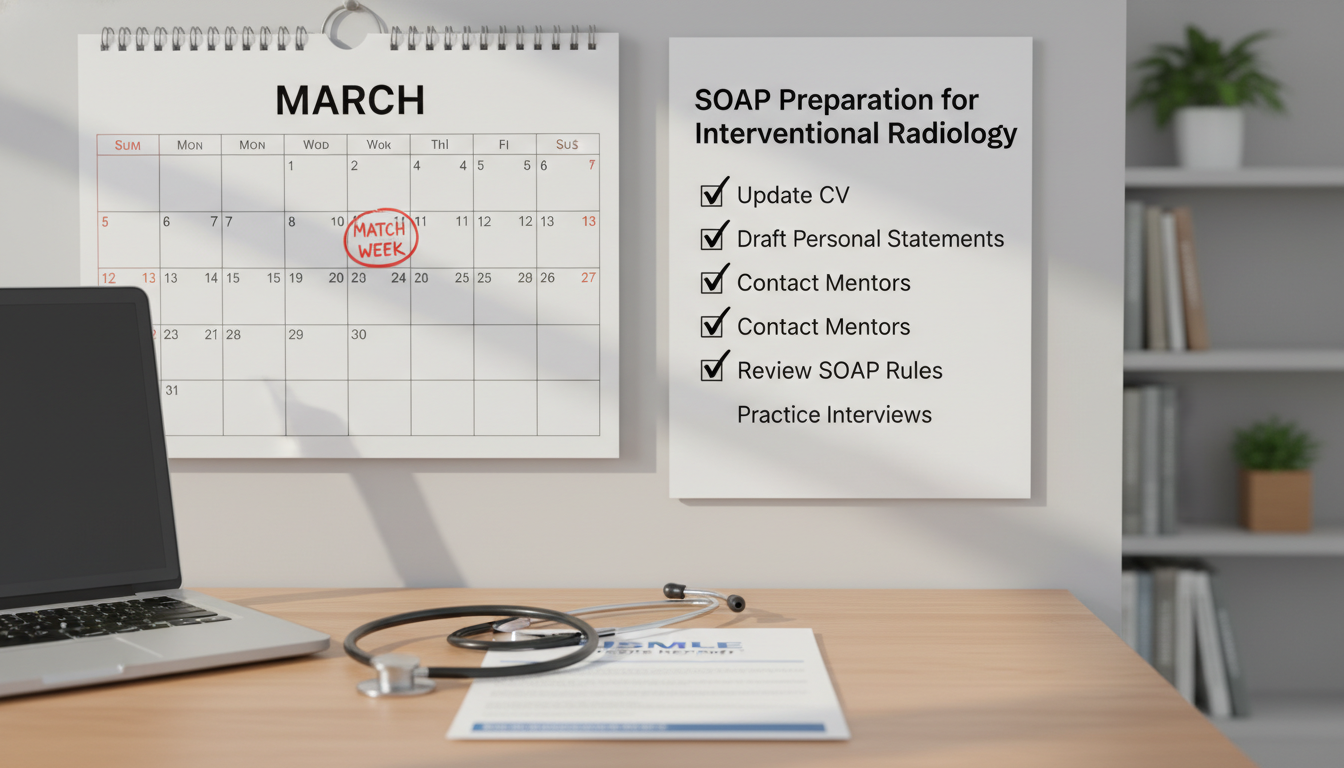
Pre–Match Week SOAP Preparation: What To Do Before You Need It
Effective SOAP preparation starts months before Match Week. Think of it as building a “break‑glass‑in‑case‑of‑emergency” kit you hope you never need—but will be grateful for if you do.
1. Learn the Rules and Timeline (Know Exactly What SOAP Is)
You must understand what is SOAP from the NRMP’s and ERAS’s perspective:
- Eligibility:
- You must be:
- Registered for the Main Residency Match
- Unmatched or partially matched when results are released
- Not holding a position outside the Match that would violate NRMP rules
- You must be:
- Communication restrictions:
- Outside designated windows, programs cannot initiate or respond to contact about SOAP positions.
- You cannot solicit offers or signal interest outside permitted channels.
- Application limits (subject to change):
- Historically, there is a cap on the number of programs you can apply to through SOAP (e.g., 45 programs total across all rounds). Check the current year’s NRMP rules.
- Rounds of offers:
- There are multiple SOAP offer rounds across Match Week.
- Offers must be accepted or rejected within a very short time window—typically hours.
- Once you accept a position, your SOAP participation ends.
Action step: At least 4–6 weeks before Match Week, read:
- The current NRMP SOAP guide
- The ERAS SOAP instructions
- Your school’s dean’s office or GME office guidance
Make a one‑page personal summary of rules that you can review rapidly during Match Week.
2. Build “SOAP‑Ready” Application Materials
You cannot modify your USMLE scores or clerkship grades during SOAP, but you can greatly improve how you present yourself.
Prepare the following before Match Week:
Updated CV (SOAP Version)
Have a clean, one‑to‑two page curriculum vitae:
- Emphasize:
- IR‑related rotations, electives, or observerships
- Radiology or procedure‑heavy experiences (interventional cardiology, surgery, ICU)
- Research, QI projects, and scholarly work
- Teaching and leadership roles
- Be ready to convert your ERAS entries into conversation points during SOAP interviews.
Personal Statements Tailored to Scenario Types
You may need multiple short personal statements, such as:
Diagnostic Radiology–focused
- Emphasize your enthusiasm for imaging, image‑guided procedures, and your interest in DR as a potential long‑term career and/or as a route to IR.
Preliminary Surgery or Transitional Year–focused
- Highlight your procedure orientation, work ethic, and desire to build a strong clinical foundation before pursuing IR/DR or DR.
Internal Medicine Preliminary–focused
- Emphasize critical thinking, complex patient management, longitudinal care, and how this foundation supports your future in IR or DR.
“Any Specialty” back‑up statement (optional)
- For applicants with strong geographic/family constraints who may consider a wider range of fields through SOAP.
Keep each statement concise (e.g., 400–600 words), honest, and consistent with your IR interest without sounding like you are only using the specialty as a stepping stone.
Letter of Recommendation Strategy
Letters cannot usually be changed during SOAP, but you can plan ahead:
- Try to include at least:
- One strong IR letter if available (from an interventional radiologist who knows you well)
- One DR or radiology department letter
- One core clinical letter (e.g., internal medicine, surgery, ICU)
- If your letter set is very IR‑heavy and you foresee needing prelim or TY positions, consider:
- Obtaining at least one letter from a non‑IR attending (e.g., surgery or medicine) during the year, even if you primarily want IR.
Confirm with your dean’s office how letters can be reassigned or designated for different specialties during SOAP.
3. Practice SOAP‑Style Interviews
SOAP interviews are often:
- Short (sometimes 10–20 minutes)
- Virtual (phone or video)
- High‑stakes and fast‑moving
Common question themes for an IR‑leaning SOAP applicant:
- “Why did you initially apply to interventional radiology?”
- “Why are you now interested in diagnostic radiology / prelim surgery / TY / IM?”
- “If you match here in diagnostic radiology, how do you see your career unfolding?”
- “How would you handle not matching IR in the future?”
- “Why were you not successful in the initial IR match, and what have you learned from that experience?”
Prepare honest, reflective answers that:
- Show insight and maturity
- Avoid blaming others or complaining about competitiveness
- Demonstrate a positive vision whether you ultimately work as an IR or as a DR, hospitalist, or other specialist
Have at least one mock SOAP interview with:
- An IR mentor
- A DR faculty member or program director
- Your dean or career advisor
4. Scenario Planning: What If You Don’t Match IR?
Develop several concrete paths before Match Week:
Match DR through SOAP (Best IR‑adjacent SOAP Outcome)
- Long‑term plan: aim for Independent IR fellowship or IR‑heavy DR practice.
- Short‑term: commit to being an excellent DR resident, not someone who is visibly “IR‑only.”
Match Prelim (Surgery/IM/TY) through SOAP
- Use the preliminary year to:
- Excel clinically
- Gain new letters
- Build additional IR/DR research projects
- Reapply more strongly next cycle (to IR/DR, DR, or both)
- Use the preliminary year to:
Match a Non‑Radiology Categorical Spot
- Decide in advance which specialties you would view as acceptable long‑term if you end up staying.
Document what you would do in each case. During Match Week, you will have little emotional bandwidth to design a plan from scratch.
Match Week Execution: Navigating SOAP Day‑by‑Day as an IR Applicant
When Monday of Match Week arrives, be ready with a structured action plan.
Monday Morning: Learning You Are Unmatched or Partially Matched
If you receive an email indicating you are unmatched or only partially matched:
Control the first 30 minutes
- Step away from social media.
- Give yourself a brief period to process the disappointment.
- Reach out to a trusted person (mentor, partner, friend) for support.
Immediate next steps
- Notify your dean’s office or student affairs; most schools have a SOAP support process.
- Confirm your SOAP eligibility in NRMP.
- Ensure your ERAS access and documents are functioning correctly.
Monday Afternoon: Reviewing Unfilled Positions List
When the list of unfilled programs is released (to eligible applicants and advisors):
- Filter for:
- Diagnostic radiology positions (categorical or advanced)
- Transitional year / Preliminary internal medicine / Preliminary surgery
- Note any extremely rare IR/DR spots, if present.
Questions to consider with your advisor:
- Which DR programs on the list are realistic targets for you?
- How competitive are your scores and experiences for those specific programs?
- Among prelim and TY programs, which:
- Are in reasonable locations for you?
- Have a track record of residents successfully reapplying to DR/IR or IR/DR?
Create a prioritized list of target programs for each category.

Application and Interview Strategies: Maximizing Your IR‑Aligned Outcomes
Crafting SOAP Applications: Tailoring Without Rewriting Yourself
When you submit applications through SOAP:
Personal statements:
- Use the DR‑focused statement for DR programs.
- Use the relevant prelim/TY statement for those programs.
- Stay honest about your IR interest but avoid implying that the program is simply a stepping stone or “backup.”
Program signals within your application:
- In your ERAS experiences and “Most Meaningful” sections, highlight:
- Clinical excellence
- Teamwork and resilience
- Experiences that support both IR and DR (e.g., imaging, procedures, acute care)
- In your ERAS experiences and “Most Meaningful” sections, highlight:
Geographic and program type flexibility:
- In SOAP, it is rarely wise to be extremely selective.
- Consider:
- Accepting community DR positions with solid procedural exposure
- Accepting strong prelim/TY positions even outside desired regions if they position you well for reapplication
Communicating Your IR Interest Appropriately
Programs know that many DR and prelim/TY SOAP applicants are IR‑interested. Frame it in a way that reassures them you will be an engaged, committed resident:
For DR programs:
- “I initially applied IR because I love image‑guided procedures and longitudinal patient care. Over the last year I’ve come to appreciate that diagnostic radiology itself is highly fulfilling. I would be very happy building a career as a DR, and if I have the opportunity to pursue Independent IR fellowship later, that would be an added bonus.”
For prelim/TY programs:
- “I plan to reapply to IR/DR or DR, and I’m committed to using this year to become the strongest possible clinician. Regardless of where I end up, I want this prelim year to be a time when I contribute fully to your service, support my co‑residents, and deliver excellent care to patients.”
Avoid:
- Stating or implying that you will definitely leave after one year if you match a categorical spot.
- Presenting IR as the only acceptable future; programs want residents who can adapt, thrive, and remain professional even if plans change.
Interview Tips Specific to IR‑Bound SOAP Applicants
When programs ask, “Why do you think you didn’t match?” use a balanced response:
- Reflective but not self‑destructive example:
- “I applied to a very competitive specialty with limited positions. In hindsight, my application strategy was too narrow geographically, and I likely underestimated how important strong Step 2 scores and multiple home‑program rotations were. I’ve reflected with my mentors, and I’m committed to broadening my options and continuing to strengthen my clinical and academic profile.”
Other practical points:
Have two or three concise stories illustrating:
- Resilience under pressure
- Ownership of patient care
- Professionalism after setbacks
Ask programs thoughtful, brief questions:
- For DR:
- “How do your residents pursuing IR fellowship integrate into interventional rotations?”
- “What opportunities exist for residents to engage in procedural radiology or IR‑adjacent work?”
- For prelim/TY:
- “How has your program supported past residents who were reapplying to competitive specialties?”
- For DR:
Offer Rounds: Deciding When to Accept
When you receive SOAP offers:
If you receive a DR offer:
- For an IR‑bound applicant, this is usually an excellent outcome.
- If the program is generally acceptable (geography, culture, training quality), it is usually wise to accept rather than gamble for a “better” DR or rare IR spot later.
If you receive a prelim/TY offer but no DR:
- Evaluate:
- Program’s reputation and support
- Geographic fit and personal constraints
- Your realistic chances of reapplying successfully to IR/DR or DR next year
- For many IR‑aspiring students, a solid prelim/TY in a decent setting is better than going unmatched entirely.
- Evaluate:
If you receive a categorical non‑DR offer:
- Think carefully:
- Could you see yourself satisfied in that specialty if you stay?
- Do you understand the difficulty of later transitioning to DR/IR from that field?
- Think carefully:
Discuss with your dean or mentor rapidly; remember that SOAP offer windows are short, and once accepted, the process ends.
After SOAP: Rebuilding, Reframing, and Moving Forward Toward IR
Whether you match into DR, a prelim year, or a different specialty through SOAP, your IR aspirations may still be alive—just on a revised timeline.
If You Matched Diagnostic Radiology
You are now in an excellent position:
Early in residency:
- Learn the fundamentals of imaging thoroughly.
- Build relationships with both DR and IR faculty.
- Seek research or QI projects that bridge DR and IR.
By PGY‑3:
- Decide if you will apply to Independent IR fellowship.
- Work with mentors to build a competitive application:
- Strong clinical reviews
- IR case logs and letters
- Solid performance on any in‑training exams
Even if you ultimately remain in DR rather than IR, your training and day‑to‑day work can still be highly procedural and patient‑centered (biopsy, drainage, image‑guided interventions).
If You Matched a Prelim/TY Position
This is your rebuilding year:
Clinical excellence:
- Be a reliable, hardworking intern.
- Earn strong evaluations and at least one outstanding letter.
IR/DR engagement:
- Stay connected to IR and DR faculty (at your current or prior institution).
- Participate in research, conferences, or remote projects.
Application strengthening:
- Address any weaknesses from your prior IR match attempt:
- Missing Step 2 score
- Limited research
- Weak letters
- Narrow geographic or program list
- Address any weaknesses from your prior IR match attempt:
Plan your reapplication early with your mentors; IR and DR applications open quickly, and your intern schedule may be demanding.
If You Matched a Non‑Radiology Categorical Position
Be honest with yourself about:
- Whether you want to:
- Fully commit to that specialty and build a satisfying career, or
- Attempt a later transition to DR/IR (which is possible but often challenging and uncertain)
Whichever path you choose:
- Maintain professionalism and full engagement with your current program.
- Seek advising from both:
- Your specialty’s program leadership
- Radiology/IR mentors (if considering a switch)
Frequently Asked Questions (FAQ)
1. How likely is it to get an interventional radiology residency position through SOAP?
Historically, the number of unfilled integrated IR/DR positions after the main IR match is extremely small, and some years there are none at all. Therefore, planning to obtain IR directly through SOAP is unrealistic for most applicants. Instead, focus your SOAP preparation on diagnostic radiology positions and, if necessary, preliminary/TY roles that keep you in the pipeline for future IR or DR opportunities.
2. If I’m IR‑focused, should I still apply to diagnostic radiology during the main Match, or save it for SOAP?
If you are strongly IR‑oriented, it is generally better to include diagnostic radiology in your initial application strategy, not rely on DR only as a SOAP fallback. DR is competitive in its own right, and waiting for SOAP significantly narrows your options. Many IR physicians follow the DR → Independent IR fellowship path successfully and are satisfied with their careers.
3. What is SOAP preparation I can do if I’m confident I’ll match IR?
Even if your IR application is strong:
- Learn what SOAP is and how it works, in case you end up unmatched for unexpected reasons.
- Prepare:
- An updated CV
- A DR‑focused personal statement
- A prelim/TY‑focused personal statement
- Discuss with mentors your backup preferences (DR vs prelim vs other specialties).
SOAP preparation is essentially risk management—it does not signal lack of confidence; it signals professionalism and maturity.
4. If I don’t match IR or DR even after SOAP, should I reapply next year or choose a different specialty?
The answer is highly individual and depends on:
- The specific weaknesses in your application (scores, grades, letters, limited IR exposure)
- Your flexibility regarding location and program type
- Your willingness to do a prelim or TY and reapply
- Your financial and personal circumstances
You should have a frank discussion with IR and DR mentors, as well as your dean’s office, to assess whether your application can realistically be improved to a competitive level. Some applicants successfully reapply and match IR or DR; others pivot to excellent careers in different specialties. The best decision balances your passion for IR with practical considerations about long‑term career satisfaction and training opportunities.
Thoughtful SOAP preparation is one of the most powerful tools an interventional radiology applicant has. By understanding the IR match landscape, clarifying your backup pathways, and building SOAP‑ready materials in advance, you protect your long‑term career goals—even if Match Week doesn’t initially go as planned.