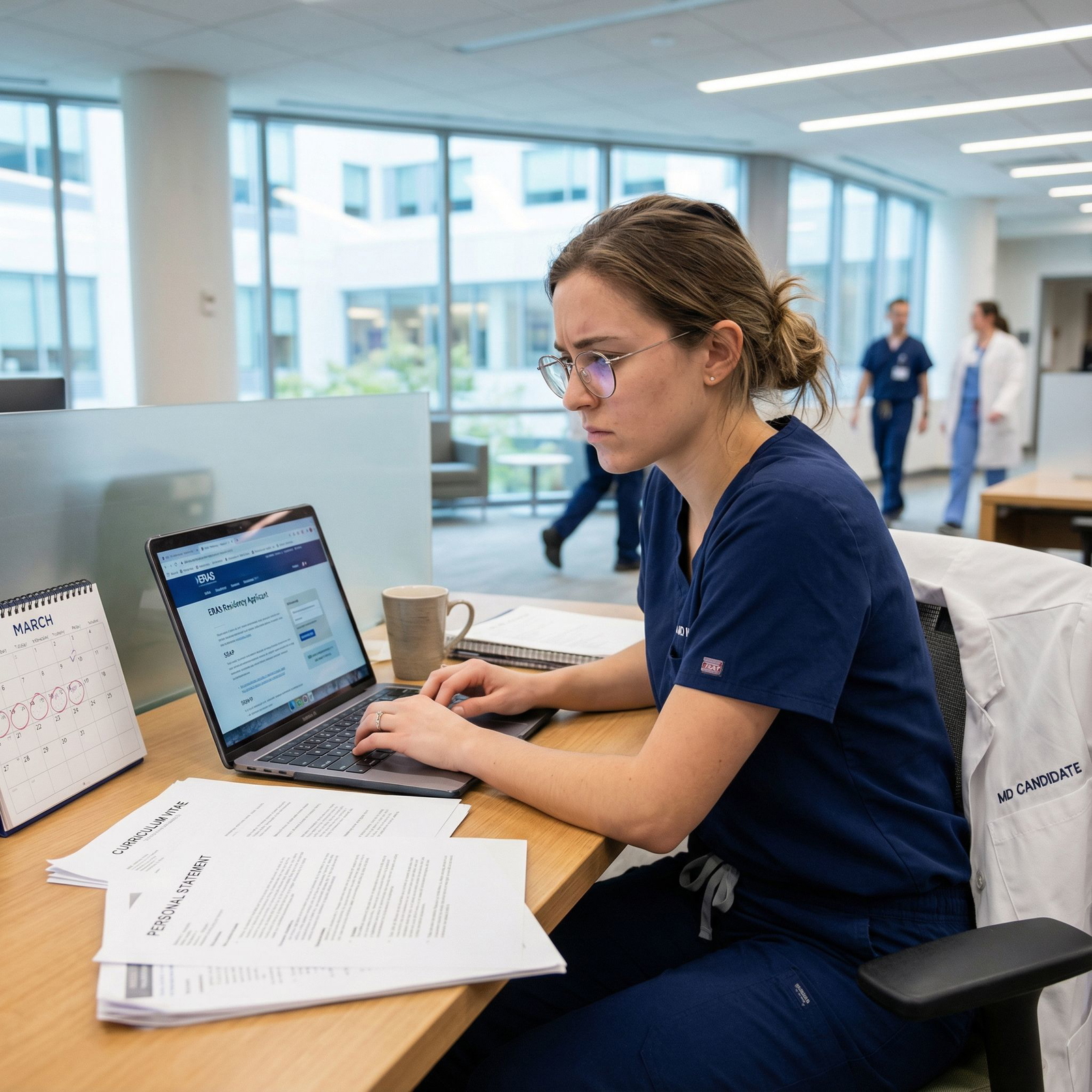
Preparing for SOAP (Supplemental Offer and Acceptance Program) as an MD graduate in pathology is about strategy, speed, and emotional resilience. The process is intense, but with preparation, you can dramatically improve your chances of securing a pathology residency position—even if your initial Match result doesn’t go as planned.
This guide walks you step-by-step through SOAP preparation specifically for MD graduates targeting pathology residency programs, with practical tasks, examples, and timelines you can start using now.
Understanding SOAP for Pathology: Context and Reality
SOAP is the formal, structured process the NRMP uses to fill unfilled residency positions after the main Match. For an MD graduate who trained in an allopathic medical school and is aiming for a pathology residency, SOAP can serve as a critical second chance.
What is SOAP?
SOAP (Supplemental Offer and Acceptance Program) is:
- A time-limited, highly structured system during Match Week
- Intended for eligible unmatched or partially matched applicants
- A way to apply to, interview with, and receive multiple sequential rounds of offers from programs with unfilled positions
SOAP is not:
- An informal scramble (the old system was replaced by SOAP)
- A process where you can freely call or email programs outside ERAS during the active SOAP window
- A guarantee that simply submitting applications will yield offers
Why SOAP Matters for Pathology Applicants
Pathology has traditionally had a moderate level of unfilled positions, which often appear on the SOAP list. While competitiveness fluctuates yearly, the specialty offers a relatively favorable landscape for SOAP applicants compared with highly competitive fields.
For an MD graduate seeking pathology residency:
- Your allopathic medical school background generally helps with program directors who are used to LCME-accredited training pathways.
- Pathology may have SOAP-eligible unfilled spots in both university and community-based programs.
- Having a clear pathology focus on your application (experiences, letters, personal statement) is a significant advantage during SOAP.
Who Is Eligible for SOAP?
To participate in SOAP, you must:
- Be registered for the Main Match and certify a rank order list
- Be unmatched or partially matched as confirmed by NRMP on Monday of Match Week
- Have a verified ERAS application and valid ECFMG certification by NRMP deadlines if you’re an international graduate (for you as an MD graduate of an allopathic medical school, ECFMG may not apply, but check if you have any unique training pathway)
- Not have accepted a binding commitment to another residency position outside NRMP rules
Pre–Match Week SOAP Preparation: What to Do Now
You cannot control the exact number of pathology match openings that will appear in SOAP each year, but you can control how ready you are to move as soon as those openings are posted.
1. Mentally Plan for Multiple Pathways
You should approach Match season with a dual-plan mindset:
- Plan A: Match into your preferred pathology programs in the main allopathic medical school match.
- Plan B: If unmatched/partially matched, execute your SOAP plan instantly and efficiently.
This mindset prevents paralysis on Monday of Match Week. You won’t be starting from zero; you’ll just be executing a plan you built in advance.
2. Optimize Your ERAS Profile for Pathology Now
Your ERAS application is the one vehicle you have in SOAP; you cannot build a separate SOAP application. Before Rank List Certification and certainly before Match Week:
Update your experiences
- Emphasize any pathology-related experience: autopsy, surgical pathology, research projects, electives, shadowing at pathology sign-out, quality improvement in lab medicine.
- Clarify roles and outcomes: Did you present a poster in a pathology conference? Did you help with a database of cases?
Refine your CV structure
- Make it obvious that you are a pathology-focused MD graduate:
- Clinical experiences related to lab medicine
- Research in histology, molecular diagnostics, cancer biology, etc.
- Teaching experiences (tutoring histology, pathology small groups)
- Make it obvious that you are a pathology-focused MD graduate:
Clean up red flags
- If you have leaves of absence, exam failures, or transfers, ensure they are explained succinctly and professionally in ERAS and, if appropriate, your personal statement.
Action item: Schedule a 30–45 minute review of your ERAS application with a faculty advisor in pathology or your dean’s office to specifically assess SOAP readiness.
3. Prepare a SOAP-Focused Pathology Personal Statement
In SOAP, you must be able to rapidly tailor your narrative. You can only upload one personal statement per program, but you can have multiple versions ready in ERAS.
Create at least two versions:
Core Pathology Personal Statement (Primary)
- Emphasizes your authentic interest in pathology
- Highlights pathology-relevant skills: pattern recognition, analytic thinking, attention to detail, comfort with complex data
- References concrete experiences (e.g., autopsy rotation, tumor board participation, slide review with attendings)
Adapted Pathology Statement for Broader or Community Programs
- More emphasis on adaptability, teamwork, and commitment to learning
- May highlight interest in community practice settings, patient safety, and quality assurance
- Less heavily academic/research-focused if you anticipate applying to more clinically oriented programs
Make sure these are uploaded and linked in ERAS before Match Week. During SOAP, you will not have time to write from scratch; only to assign existing statements to programs.

Strengthening Your Pathology Profile Before SOAP
If you’re reading this weeks to months before Match Week, you have valuable time to refine your profile for a pathology residency and increase your odds in both the main match and SOAP.
1. Ensure Pathology Exposure Is Clear and Recent
Program directors in pathology want to see that you:
- Understand what pathologists do day-to-day
- Aren’t choosing the specialty as a last-minute backup
- Have recent, verifiable exposure to the discipline
Actions you can take:
- Electives/Sub-internships in pathology
- Surgical pathology rotation
- Autopsy service
- Cytopathology or hematopathology exposure
- Shadowing or observerships
- Especially if you lack formal elective time, arrange at least a 1–2 week experience with a local pathology department.
- Document experiences clearly in ERAS
- Include supervising attendings
- Quantify time (e.g., “4-week elective,” “3-week focused observership”)
- Mention tangible outcomes: cases reviewed, presentations, participation in tumor boards
2. Obtain Strong Pathology-Focused Letters of Recommendation
For SOAP, you will not have time to chase new letters. Letters must be ready in ERAS before Match Week.
Aim for:
- At least one letter from a pathologist who directly supervised you
- Additional letters from:
- Internal medicine, surgery, or other attendings who can speak to your clinical reasoning and professionalism
- Research mentors (especially if in pathology, oncology, or basic science relevant to pathology)
When requesting letters:
- Explicitly tell them that pathology is your target field.
- Ask them to highlight:
- Your analytical thinking and pattern recognition
- Your attention to detail and work ethic
- Your reliability, response to feedback, and capacity for independent learning
- Provide them with:
- Your CV
- A draft of your personal statement
- A brief summary of what you did with them and which traits you’d value them emphasizing
3. Clarify and Address Red Flags Proactively
Common red flags affecting the pathology match and SOAP outcomes include:
- Failing USMLE Step 1 or Step 2 CK
- Limited or no U.S. clinical experience (for IMGs; less common issue for MD graduates of U.S. allopathic medical schools)
- Long gap since graduation
- Limited professional references
For each red flag:
- Define the narrative: What happened, what changed, what’s different now?
- Back your narrative with evidence:
- Higher score on retake
- Strong recent performance on pathology rotations
- New research, presentations, or QI work
- Keep explanations concise and constructive in your personal statement or interview answers.
Logistics and Strategy During Match Week SOAP
Match Week is when SOAP preparation becomes SOAP execution. You will have only a few hours between learning you are unmatched and the start of SOAP applications.
1. Know the SOAP Timeline and Rules
NRMP and ERAS publish a detailed calendar. In broad strokes:
- Monday (11 a.m. ET): You learn if you are matched, partially matched, or unmatched.
- Monday (after 12 p.m. ET): List of unfilled programs is released to SOAP-eligible applicants and schools.
- Monday–Thursday: SOAP occurs in rounds of application review and offers.
- Friday: Main Match results released; SOAP offers must be finalized.
Key rules:
- You can apply to a maximum of 45 programs via ERAS during SOAP.
- You may not initiate contact with programs outside ERAS; communication must follow SOAP rules.
- Programs will review applications and may interview via phone, video, or brief virtual meetings.
- Offers come in rounds, and each offer has a short response window (e.g., 2 hours).
2. Interpreting the List of Unfilled Pathology Positions
When the unfilled list appears:
- Filter for Pathology – AP/CP (or AP-only/CP-only as relevant).
- Look at:
- Program type: university, community, hybrid
- Geographic location
- Accreditation status
- Historical fill patterns if you have access from previous years
As an MD graduate of an allopathic medical school, you may be competitive for:
- University programs that had late expansion in positions
- Community or hybrid programs with chronic unfilled spots
- Programs with a strong need for service coverage and teaching-focused training
3. Choosing Which Programs to Apply To (Strategy for Your 45 Slots)
You have a limited number of applications; be strategic:
Prioritize fit > prestige
- Look for programs:
- That accept or have accepted applicants with similar backgrounds and scores
- With clear educational structures (rotations, conferences, faculty profiles)
- Consider programs that historically host MD graduates from allopathic medical schools like yours.
- Look for programs:
Balance geography and flexibility
- Identify regions where you have family or support, but remain flexible:
- If you limit yourself too much geographically, you may not use your full SOAP potential.
- For pathology, many graduates successfully train away from home regions.
- Identify regions where you have family or support, but remain flexible:
Include a mix of program types
- Large academic centers
- Mid-sized hybrid programs
- Community-based programs with strong lab affiliations
Practical approach:
- Tier 1 (High Priority): 10–15 programs you would be excited to join.
- Tier 2 (Moderate Priority): 15–20 solid, realistic options.
- Tier 3 (Safety/Backup): Remaining slots used for all reasonably acceptable programs with any open pathology residency positions.
Interviewing and Communicating Effectively During SOAP
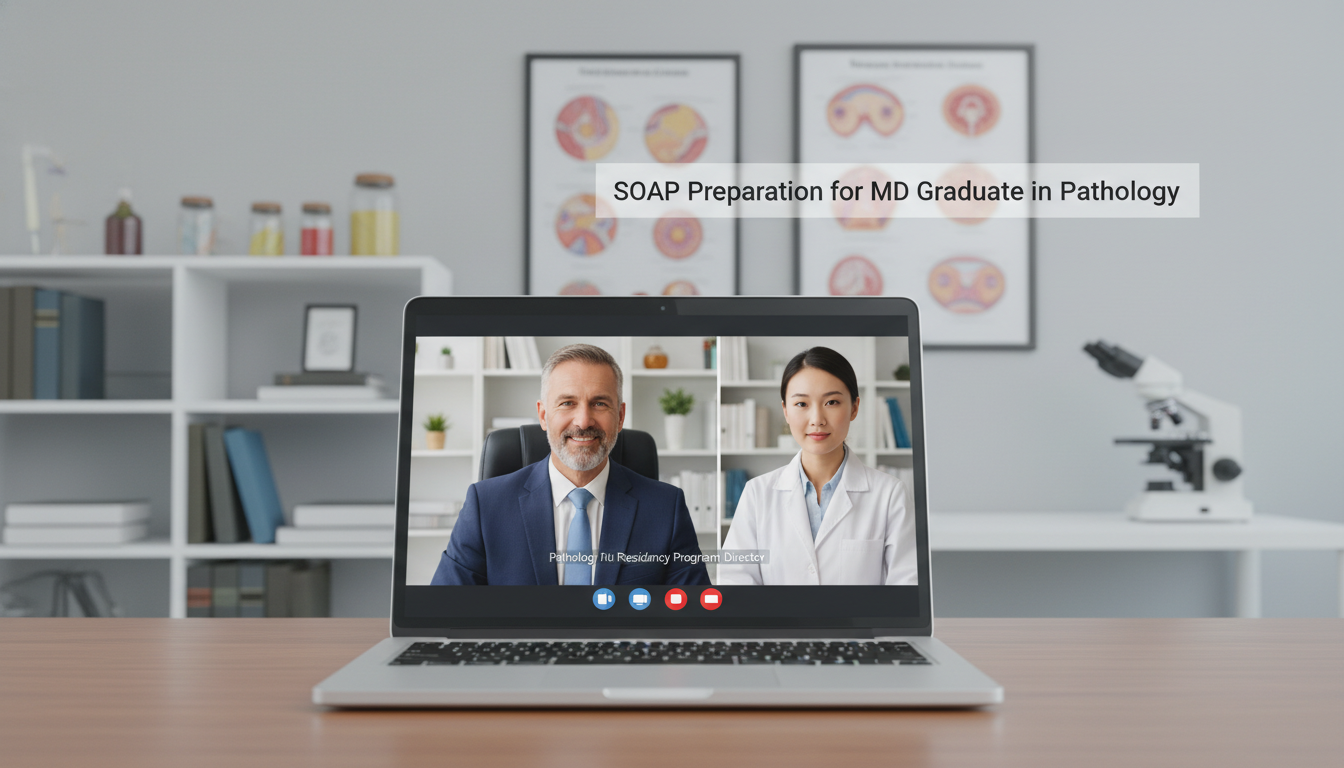
SOAP interviews are usually short, focused, and often virtual. You must be ready to present a consistent and compelling narrative at a moment’s notice.
1. Core Pathology SOAP Talking Points
You should be able to answer, quickly and confidently:
“Why pathology?”
- Be specific:
- “I enjoy integrating clinical data with morphologic findings.”
- “I value being the physician who ensures accurate diagnosis for complex cases.”
- “My pathology electives confirmed that I thrive in microscope-based, detail-oriented work.”
- Be specific:
“Why now?”
- Emphasize that your interest is not sudden or reactive:
- “My interest developed through repeated exposures—in second-year pathology, autopsy experiences, and tumor boards in my sub-internship.”
- Emphasize that your interest is not sudden or reactive:
“Why this program?”
- Learn one to three specific features of each program:
- A subspecialty service (heme path, GI, cytopathology)
- Case volume and diversity
- Track record of fellowships or job placement
- Education structure (daily unknowns, sign-out style, mentoring)
- Learn one to three specific features of each program:
2. Addressing the Fact That You Are in SOAP
You will likely be asked, explicitly or implicitly, why you are participating in SOAP.
Recommended approach:
- Be honest but brief:
- “I applied broadly to pathology but was likely too top-heavy in program selection. I remain fully committed to a career in pathology and see SOAP as an important opportunity to match with a program where I can thrive.”
- If you originally applied to another specialty:
- Be prepared with a coherent pivot story:
- “During my fourth year, additional time in pathology reinforced that my skills and interests align more with laboratory diagnosis than direct patient management. In retrospect, I should have applied to pathology primarily; now I am fully committed to pathology.”
- Be prepared with a coherent pivot story:
Avoid:
- Blaming others (advisors, school, prior programs)
- Appearing tentative or undecided about the specialty
3. Technical Interview Preparation for Pathology SOAP
Although SOAP interviews are brief, you may still encounter:
- Questions regarding:
- Your USMLE performance and how you’ve grown since
- Research experiences and your role in them
- Ethical or teamwork scenarios
- High-level pathology concepts:
- You won’t be asked to diagnose slides, but you may be asked about:
- “What did you enjoy most on your pathology rotations?”
- “Describe a case or learning moment that stood out.”
- You won’t be asked to diagnose slides, but you may be asked about:
Prepare by:
- Reviewing your own CV for every experience you listed.
- Having 2–3 specific cases or learning experiences ready to describe:
- Example: “An autopsy case that changed your understanding of pathology’s role in patient care”
- Example: “A complex tumor board case where pathology changed management”
4. Handling Offers and Acceptance
SOAP offers come in rounds. Strategy:
- Clarify your ranking internally before offers start:
- Know your absolute top choices, your acceptable mid-tier options, and programs you’d only accept if no other offers come.
- When you receive an offer:
- You have a short window to accept/decline.
- Accepting is binding; you will be removed from further SOAP rounds.
- Avoid “paralysis by analysis”:
- If you receive an offer from a program that is within your acceptable range—geographically and professionally—strongly consider accepting.
- The risk of declining and not receiving a better offer in later rounds is real, especially as the pool of open positions shrinks.
Emotional and Practical Resilience Through SOAP
SOAP week is stressful, even for the most prepared MD graduate. Protecting your mental health and decision-making capacity is part of SOAP preparation.
1. Build a Support Team Before Match Week
Identify:
- A primary faculty advisor (ideally in pathology)
- A dean’s office or career advising contact
- One or two trusted peers or mentors who can help you think clearly, not just sympathize
Share with them:
- Your realistic expectations
- Your SOAP strategy and preferences
- Boundaries (e.g., you may want to avoid social media during Match Week)
2. Anticipate and Manage Emotional Reactions
Learning that you are unmatched in the main allopathic medical school match can trigger:
- Shock
- Shame or embarrassment
- Anxiety and catastrophic thinking
These feelings are normal, but your goal is to shift quickly into action mode for SOAP:
- Give yourself a short, defined period (e.g., 60–90 minutes) to process emotions after Monday’s notification.
- After that, focus on concrete tasks:
- Confirm SOAP eligibility
- Meet with your advisor
- Start your program selection and management plan
3. Plan for Practicalities If You Relocate
SOAP outcomes may place you in a different city or region than you expected.
Thought exercise during preparation:
- List non-negotiables for relocation (partner’s job, dependents, visas if applicable).
- Consider how quickly you can:
- Move housing
- Arrange licensing requirements
- Manage finances for initial months of residency
Being mentally prepared to move quickly can reduce stress when you receive an offer.
Putting It All Together: A SOAP Preparation Checklist for Pathology MD Graduates
Use this as a pre–Match Week roadmap:
2–3 Months Before Match
- Confirm ERAS is complete and pathology-focused
- Ensure at least one strong pathology letter is in ERAS
- Secure or complete pathology rotations or observerships
- Draft and upload two pathology personal statements (core + community-focused)
- Meet with a pathology faculty advisor to review your overall application and discuss realistic SOAP scenarios
4–6 Weeks Before Match
- Review NRMP and ERAS SOAP rules and timeline
- Review recent pathology match and SOAP trends (via NRMP data, school advising office)
- Make a preliminary list of pathology programs (categorized by tier) you might target if they appear on the unfilled list
- Prepare SOAP interview answers for:
- “Why pathology?”
- “Why SOAP?”
- “Why this program?”
- Explanation of any red flags
1–2 Weeks Before Match
- Rehearse brief virtual interviews (10–15 minutes) with a mentor
- Update your CV and ensure consistency with ERAS entries
- Final check: All letters uploaded, statements assigned logically
- Set up a quiet, well-lit space with reliable internet for potential rapid virtual interviews
- Coordinate with your school’s Match/SOAP advisor for real-time support during Match Week
During Match Week
- Confirm SOAP eligibility status on NRMP portal
- Retrieve and review the list of unfilled pathology residency positions
- Apply strategically to up to 45 programs, prioritizing fit and realistic options
- Participate in SOAP interviews, keeping a clear ranking in mind
- Respond decisively to offers, balancing desire for an “ideal” program with the reality of limited rounds
FAQs About SOAP Preparation for MD Graduates in Pathology
1. As an MD graduate from an allopathic medical school, do I have an advantage in SOAP for pathology?
In many cases, yes. Programs are familiar with the training structure, curriculum standards, and clinical exposure of LCME-accredited allopathic medical schools. In the pathology match and SOAP, MD graduates may be viewed as lower risk due to known educational backgrounds. That said, your individual performance, letters, and demonstrated commitment to pathology still carry the most weight.
2. Should I consider SOAPing into a different specialty if I originally applied to pathology?
If pathology is your true long-term interest, it is usually better to stay consistent and use SOAP to secure a pathology residency spot rather than pivoting out of fear. Pivoting to a completely different specialty during SOAP—without prior exposure, letters, or a coherent narrative—often results in poor fit and lower chances of success. Exceptions exist (e.g., documented dual interest and preparation), but in general, focus SOAP efforts where your application is strongest.
3. How can I explain a Step 1 or Step 2 CK failure during SOAP interviews?
Be honest, concise, and forward-looking:
- Acknowledge what happened without making excuses.
- Identify what changed: new study strategies, addressing health or personal issues, improved time management.
- Point to evidence of improvement: higher retake scores, strong clinical evaluations, successful performance on other standardized assessments.
- Emphasize that the setback taught you resilience and self-awareness—key traits for pathology training.
Program directors want to see insight and growth more than a perfect record.
4. What if I don’t receive any offers in SOAP?
If SOAP does not result in a residency position, you still have options:
- Seek research positions in pathology or related fields to strengthen your CV.
- Arrange additional observerships or rotations in pathology.
- Reassess your application with advisors, focusing on:
- Exam scores and potential retakes (if applicable)
- Application timing and program list strategy
- Quality and specificity of letters and personal statement
- Plan a more strategic re-application in the next cycle, potentially widening your geographic reach and program list.
Failure to match or SOAP once does not end your path to pathology. Many successful pathologists took nontraditional or delayed routes.
Proactive, structured SOAP preparation transforms Match Week from a crisis into a second chance. As an MD graduate targeting pathology, your allopathic medical school training, coupled with a clearly pathology-focused application and a deliberate SOAP plan, can position you strongly to secure a pathology residency and move forward in your career.