Understanding SOAP for MD Graduates Targeting Preliminary Surgery
The Supplemental Offer and Acceptance Program (SOAP) can feel overwhelming, especially when you’re an MD graduate aiming for a preliminary surgery year. Yet, with deliberate SOAP preparation, you can turn a stressful week into a structured, strategic second chance at the Match.
This guide is written specifically for allopathic MD graduates interested in prelim surgery residency positions. It will walk you through:
- What SOAP is and how it works
- How to prepare before Match Week
- How to target preliminary surgery programs intelligently
- How to execute during SOAP (hour-by-hour strategy)
- How to strengthen your candidacy quickly, even under time pressure
Throughout, we’ll integrate key concepts like MD graduate residency, allopathic medical school match, preliminary surgery year, SOAP residency, and what is SOAP in a practical, usable way.
1. What Is SOAP and Why It Matters for Preliminary Surgery
Before you plan, you need a precise understanding of what is SOAP and how it affects your pathway into a surgical career.
1.1 Definition and Purpose of SOAP
The Supplemental Offer and Acceptance Program (SOAP) is an NRMP-managed process during Match Week that allows:
- Eligible unmatched or partially matched applicants to apply to unfilled residency positions
- Programs with unfilled spots to review candidates and extend offers via controlled rounds
SOAP is not the same as the “old scramble.” It’s structured, time-limited, and heavily rules-based.
For an MD graduate residency applicant who didn’t match, SOAP is often the best immediate path to starting clinical training on time.
1.2 Why SOAP Is Critical for Prelim Surgery Applicants
If you are targeting a prelim surgery residency, SOAP is particularly important because:
Prelim surgery positions often go unfilled in the main Match for various reasons:
- Programs add new positions late
- Categorical applicants fill other options first
- Some programs under-rank prelim applicants intentionally, expecting to fill those positions via SOAP
A preliminary surgery year:
- Keeps you clinically active and building experience
- Strengthens your application for categorical general surgery or other specialties (e.g., anesthesiology, radiology, urology, interventional specialties)
- May lead to internal advancement to categorical spots if they open
For an allopathic medical school match candidate, landing a prelim surgery spot through SOAP can salvage a difficult Match outcome and preserve long-term surgical goals.
1.3 Eligibility Basics for SOAP
To participate, you must:
- Be registered for the NRMP Main Residency Match
- Be unmatched or partially matched after the Monday algorithm run
- Have an active, verified ERAS application
- Be eligible for U.S. residency training (e.g., meet USMLE/COMLEX, educational, and visa criteria as applicable)
NRMP will notify you and flag you as SOAP-eligible in your NRMP and ERAS dashboards.

2. Pre–Match Week SOAP Preparation for MD Graduates
Effective SOAP preparation starts weeks before Match Week. This is especially true for MD graduates targeting prelim surgery positions, because these programs can move quickly and selectively.
2.1 Mindset and Reality Check
Before you plan, be honest with yourself about your profile:
- USMLE Step scores and attempts
- Clerkship grades, especially surgery and medicine
- Class rank, AOA, and honors
- Red flags (leaves, failures, professionalism issues, late graduation)
- Research, presentations, and leadership
- Letters of recommendation (LORs), especially from surgeons
This isn’t about self-criticism; it’s about targeted strategy. A realistic assessment lets you:
- Identify where you are competitive (community vs university, academic vs community-based, geographic flexibility).
- Prepare explanations for any weaknesses.
- Decide whether to focus on prelim surgery as the primary SOAP target or to broaden to other fields (e.g., prelim medicine, transitional year) if needed.
2.2 Preparing Your Application Materials
Your ERAS application is the central tool for SOAP. Before Match Week:
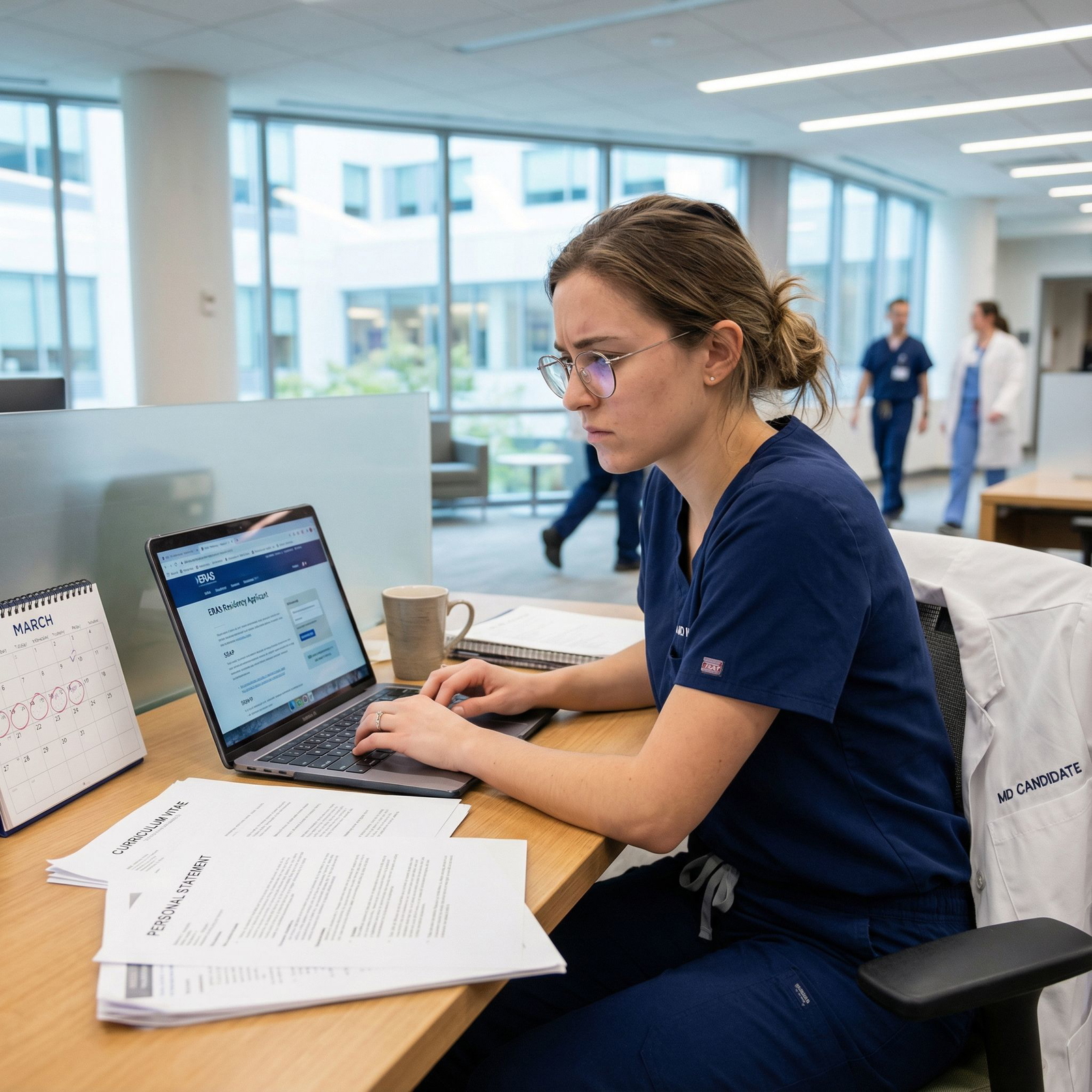
Update Your Personal Statement
- Create two versions:
- A Preliminary Surgery–focused personal statement
- A more general or alternative specialty version if you might apply to other prelim or categorical fields
- In your prelim surgery statement:
- Clearly describe your interest in surgery and how a preliminary surgery year fits into your long-term goals.
- Emphasize surgical clerkship experiences, sub-internships, research, and technical skills.
- Show that you understand the realities of a prelim year: high workload, limited guarantee of continuation, but excellent training and exposure.
- Create two versions:
Update Experiences and Duties
- Revise your ERAS experiences to highlight:
- Surgical rotations, acting internships, and call responsibilities
- Teamwork in high-acuity environments (ICU, ED, trauma)
- Professionalism, reliability, and communication with nursing, residents, and attendings
- Add any new research, QI projects, or presentations—especially if surgery-related.
- Revise your ERAS experiences to highlight:
Align Your CV and ERAS
- Keep a well-organized, updated CV that mirrors your ERAS application.
- You may need this for:
- Direct program emails
- Department chairs or deans advocating on your behalf
- Quick supplemental uploads, if requested
Check Letters of Recommendation
- Ensure you have at least:
- Two or more letters from surgeons, ideally from a sub-I or significant surgical rotation
- One strong general medicine or ICU letter can also help demonstrate you handle complex patients.
- Make sure all relevant letters are assigned to Surgery and Preliminary Surgery programs in ERAS.
- Ensure you have at least:
2.3 Creating a SOAP Game Plan
You will not know the exact unfilled list until Match Week Monday, but you can build a flexible plan:
Define Your Priorities
- Rank what matters most:
- Securing any ACGME-accredited MD graduate residency this year
- Specifically obtaining a prelim surgery residency
- Geography and personal factors (family, visas, support systems)
- Decide in advance:
- Would you accept a prelim medicine or transitional year if no prelim surgery offer arrives?
- Are you willing to move anywhere for a prelim surgery position?
- Rank what matters most:
Create Target Profiles
- Based on your academic record, determine your likely best fit:
- Highly research-focused university programs: More selective, better for research-heavy CVs
- Mid-tier university affiliates: Good balance of teaching and opportunity
- Community-based hospitals: Often more clinically focused, may be more accessible for lower scores or non-traditional paths
- Based on your academic record, determine your likely best fit:
Draft Contact Templates (If Allowed by Rules)
- While SOAP rules restrict some direct contact, you can still prepare:
- A brief email template expressing interest in prelim surgery at a given program
- A 60–90 second phone pitch script (for post-offer conversations or chair contacts, not cold calls during NO-CONTACT periods)
- While SOAP rules restrict some direct contact, you can still prepare:
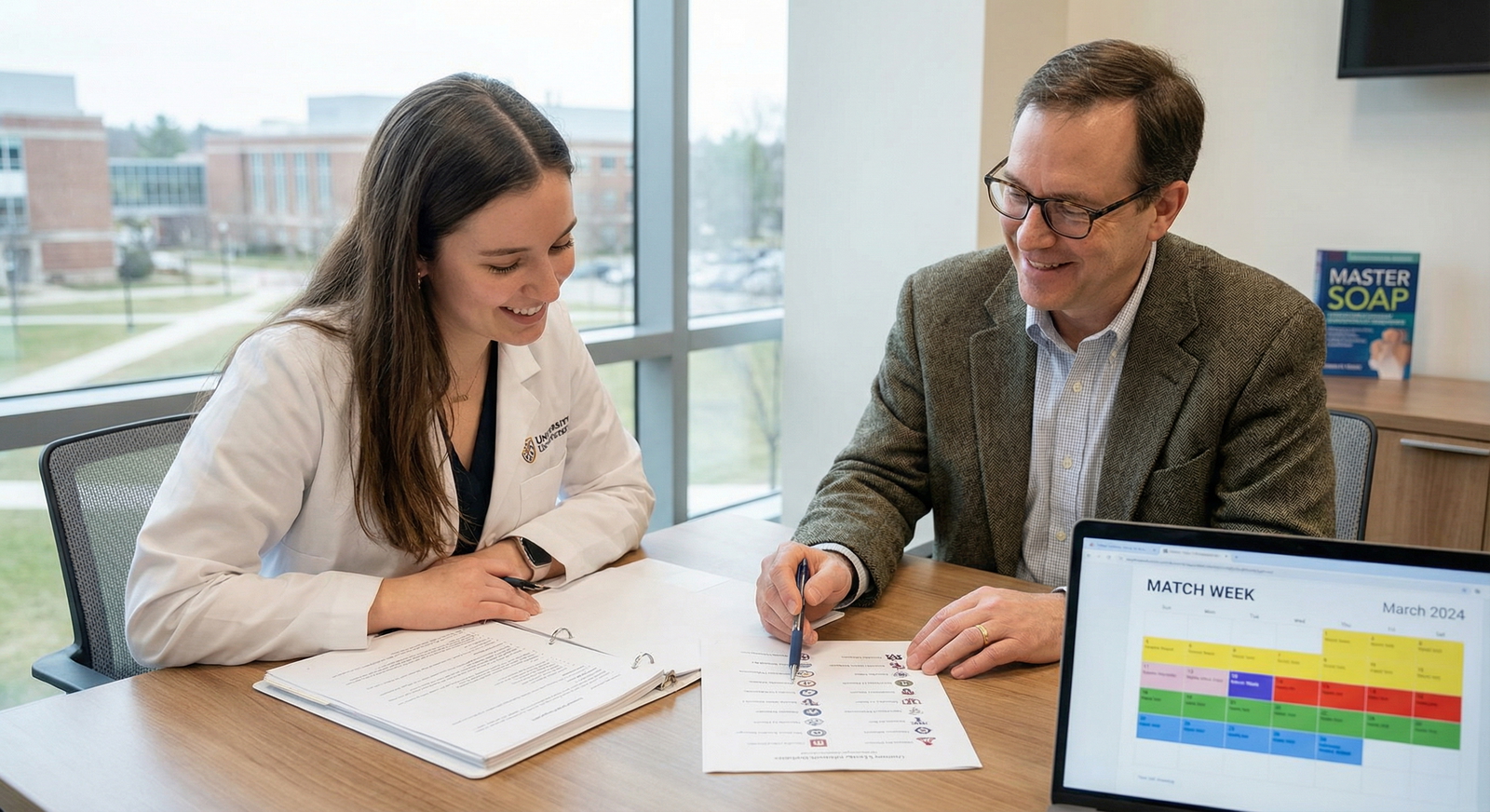
Coordinate With Your Dean’s Office
- Most allopathic medical schools have a SOAP support system:
- Faculty advisors
- Deans who may call program directors on your behalf
- Career services to review your application materials
- Meet them before Match Week:
- Share your prelim surgery interest
- Ask how they can help advocate for you during SOAP
- Most allopathic medical schools have a SOAP support system:
3. Match Week: Executing a Strong SOAP Strategy in Prelim Surgery
SOAP Week moves quickly and can be emotionally intense. Knowing the structure lets you use each hour wisely.
3.1 Monday Morning: Results and Unfilled List
Monday 11:00 AM ET (time may vary slightly year to year):
- You learn whether you are:
- Matched (no SOAP participation)
- Partially matched (e.g., secured an advanced position but no preliminary year)
- Unmatched
If you are unmatched or partially matched and SOAP-eligible:
Pause and Regroup
- Take 15–30 minutes to process your emotions privately.
- Speak with a trusted mentor or advisor.
Access the Unfilled Programs List
- NRMP provides a list of unfilled positions, including:
- Specialty (e.g., Surgery–Preliminary, Surgery–Categorical)
- Program codes, locations, and sometimes track variations
- NRMP provides a list of unfilled positions, including:
Identify Prelim Surgery Opportunities
- Filter for Surgery–Preliminary:
- Note total spots available
- Note if they are PGY-1 only or multi-year prelim tracks
- Also consider:
- Prelim Medicine or Transitional Year spots as backup options if you have an advanced position or if your ultimate goal is another specialty.
- Filter for Surgery–Preliminary:
3.2 Monday Afternoon: Application Prioritization in ERAS
You have a limited number of applications you can submit during SOAP (commonly 45; check current rules each cycle).
For a MD graduate targeting prelim surgery, a common strategy:
Core Focus (20–30 programs):
- Prelim surgery programs where your profile is reasonably competitive
- Mix of academic and community-based positions
Secondary Focus (10–15 programs):
- Prelim medicine and/or transitional year positions
- Especially if:
- You already matched into an advanced specialty needing a clinical base year, OR
- You want to remain clinically active and re-apply in surgery or another specialty later
How to Prioritize Prelim Surgery Programs
Consider:
Competitiveness vs Your Profile
- Programs with a history of taking MD graduates with:
- Modest Step scores but strong clinical evaluations
- Non-linear paths (research years, prior degrees)
- Programs with a history of taking MD graduates with:
Geographic Flexibility
- Broaden your search beyond your home region.
- Prelim spots in less popular locations may have fewer applicants.
Program Stability and Training Quality
- Look for:
- ACGME accreditation in good standing
- Adequate case volume and operative exposure
- Reasonable resident support (call schedule, wellness, career mentoring)
- Look for:
Internal Advancement Potential
- If available online or from advisors, check:
- Does the program historically move strong prelims into categorical surgery?
- Do they help prelims match into other specialties later?
- If available online or from advisors, check:

4. Presenting Yourself as a Strong Prelim Surgery Candidate During SOAP
Once applications are submitted, programs may begin reviewing and inviting applicants to virtual or phone interviews within the SOAP timeframes.
4.1 Core Attributes Prelim Surgery Programs Seek
Program directors know a preliminary surgery year is intense. They want residents who are:
- Hardworking and resilient – able to handle long hours, complex patients, and steep learning curves.
- Team players – work effectively with other residents, nursing, APPs, and consultants.
- Reliable and professional – show up on time, follow through, communicate clearly.
- Coachable – accept feedback, improve quickly, and maintain a growth mindset.
- Motivated by patient care and surgical practice – genuine interest in the OR, perioperative medicine, and acute care.
In interviews and communications, your goal is to demonstrate these traits concretely.
4.2 Crafting Your Narrative as an MD Graduate
Your story should answer three questions clearly:
Why Surgery?
- Share specific experiences:
- A sub-I where you stayed late for cases, followed patients from ED to OR to floor.
- A mentor in surgery who shaped your career goals.
- Emphasize both the technical and relational aspects that attract you to surgery.
- Share specific experiences:
Why a Preliminary Surgery Year?
- Be honest but strategic:
- “My ultimate goal is to train in general surgery. A prelim year gives me the opportunity to develop my surgical judgment, strengthen my clinical skills, and prove that I can excel in a rigorous environment.”
- If you are also considering other specialties, frame prelim surgery as a valuable foundation whether you continue in surgery or pivot later.
- Be honest but strategic:
Why This Program?
- Quickly demonstrate you did your homework:
- Reference their trauma designation, case mix, or educational structure.
- Mention any known alumni or faculty connections (if appropriate).
- Show willingness to commit fully to their environment and community.
- Quickly demonstrate you did your homework:
4.3 Handling Common SOAP Interview Questions for Prelim Surgery
You’ll have limited time in SOAP interviews, often 10–20 minutes. Prepare concise, high-yield responses.
Sample Questions and Strategies:
“Tell me about yourself.”
- 1–2 minutes, structured:
- Background and medical school
- Key clinical/surgical experiences
- Clear statement: “I am seeking a preliminary surgery residency position to build a career in surgery.”
- 1–2 minutes, structured:
“Why didn’t you match this year?”
- Be honest, accountable, and non-defensive:
- Briefly mention key factors (e.g., late decision on specialty, limited number of surgery applications, Step score below average, or too few interview invites).
- Emphasize what you’ve learned and done to address those issues (more clinical exposure, mentorship, improved study strategies).
- Be honest, accountable, and non-defensive:
“What makes you a good prelim surgery resident?”
- Provide specific examples:
- Times you handled a heavy intern-level workload or overnight calls.
- Positive feedback from residents/attendings about your work ethic and reliability.
- Provide specific examples:
“Where do you see yourself in 5–10 years?”
- Express a clear, realistic goal:
- E.g., general surgery, trauma/critical care, vascular surgery, or a procedure-heavy specialty.
- It’s acceptable to say you’re open to related fields, but show that a surgical mindset guides your thinking.
- Express a clear, realistic goal:
“Tell me about a time you made a mistake in clinical care.”
- Briefly describe the situation, your role, the mistake, and:
- How you took responsibility
- What you learned
- How you changed your behavior or systems to prevent recurrence
- Briefly describe the situation, your role, the mistake, and:
4.4 Communication and Professionalism Rules During SOAP
The NRMP has strict rules about communication during SOAP:
- Programs can initiate contact with you once they receive your application and the SOAP communication period begins.
- You must not persuade or pressure programs for an offer outside of established SOAP offer rounds.
- Your medical school or dean’s office may advocate on your behalf within permitted guidelines.
Always verify the current year’s NRMP SOAP communication policies. When unsure, ask your dean’s office before contacting programs privately.
5. Making the Most of a Preliminary Surgery Year if You Match Through SOAP
If your SOAP residency results in a prelim surgery position, your next task is to maximize that year.
5.1 Clarify Expectations Early
Once you arrive:
Meet with your program director and/or associate program director:
- Ask about:
- Typical prelim resident responsibilities
- How performance is evaluated
- Opportunities to get into the OR, clinics, and conferences
- Any paths to categorical advancement internally
- Ask about:
Ask how best to position yourself for:
- Categorical surgery spots that may open
- Future applications (strong letters, research, networking)
5.2 Build a Reputation Within the Program
As a prelim, your professional brand matters:
Be the intern people trust:
- Answer pages promptly
- Follow through on tasks
- Be on time—early for rounds, sign-out, and OR starts
Learn actively:
- Read about your patients each night.
- Prepare for upcoming operations (anatomy, steps, complications).
- Ask focused questions at appropriate times.
Document your accomplishments:
- Case log entries
- Notes about complex cases you managed
- Resident and attending feedback you receive
These become evidence later when you pursue categorical surgery or another competitive specialty.
5.3 Positioning for the Future
There are three common paths after a preliminary surgery year:
- Transition to Categorical General Surgery (internally or elsewhere)
- Enter Another Specialty (e.g., anesthesiology, radiology, critical care, EM, etc.)
- Pursue Further Training or Research while reapplying
Whatever your ultimate path:
- Keep your ERAS CV updated during the year.
- Cultivate strong letters of recommendation from surgeons who see you perform consistently.
- Seek scholarly output if available (QIs, case reports, clinical research).
6. If You Do Not Match in SOAP: Next Steps for MD Graduates
Despite excellent SOAP preparation, not every applicant will receive an offer. This outcome is challenging but not career-ending.
6.1 Immediate Post–SOAP Actions
If SOAP ends without a position:
Meet With Advisors Quickly
- Discuss:
- Whether to pursue off-cycle positions (rare but possible)
- Whether to take a research year in surgery
- Whether to re-strategize toward a different specialty
- Discuss:
Consider Strengthening Your Profile
- Surgery-related research (clinical, outcomes, QI)
- Additional clinical exposure (externships, observerships, locum-like roles if licensed)
- Exam score improvement if re-takes are possible (e.g., Step 3 where applicable)
Develop a Plan for the Next Application Cycle
- Broaden specialty list if appropriate.
- Adjust geographic preferences.
- Address application weaknesses with concrete changes.
6.2 Protecting Your Long-Term Goals
As an allopathic medical school match graduate, you have strong baseline credentials. The lack of a Match or SOAP result in a single year is a setback, not the end of your career:
- Stay connected with mentors in surgery.
- Continue demonstrating commitment to patient care and surgical thinking.
- Use each year purposefully—avoid large unexplained gaps.
FAQ: SOAP Preparation for MD Graduate in Preliminary Surgery
1. As an MD graduate, how competitive am I for a prelim surgery residency through SOAP?
Your competitiveness depends on several factors: USMLE scores, clinical performance, letters, and how saturated the unfilled list is in a given year. As an allopathic MD, you often have an advantage compared with many non-U.S. grads, particularly for community-based prelim surgery spots. Strong surgical letters, solid clerkship evaluations, and clear commitment to surgery significantly improve your chances.
2. Should I apply only to preliminary surgery programs during SOAP, or also to other prelim/transitional year positions?
It depends on your goals and risk tolerance. If you are absolutely committed to surgery and there are enough prelim surgery spots that match your profile, you might prioritize them heavily. However, many applicants also include prelim medicine or transitional year positions as a safety net—especially if they have an advanced position already or would rather maintain clinical continuity while reapplying.
3. How can I quickly tailor my personal statement for SOAP residency applications in prelim surgery?
Create a focused one-page statement that:
- Clearly explains why you are drawn to surgery (with 1–2 specific clinical examples).
- Articulates how a preliminary surgery year will help you grow and contribute meaningfully to a team.
- Addresses your maturity, resilience, and ability to thrive in demanding environments.
You don’t need to rewrite your entire story—refine and sharpen what you already have, emphasizing surgical exposure and teamwork.
4. If I take a preliminary surgery year, will it hurt my chances of matching into categorical surgery later?
Not inherently. Many categorical positions are filled by applicants who completed a preliminary surgery year. In fact, a strong prelim performance—excellent evaluations, operative experience, and strong letters—can significantly enhance your future applications. The key is to approach the year strategically: clarify expectations early, work hard, seek mentorship, and keep your long-term goals clearly in focus.
By understanding SOAP, preparing early, and presenting a clear and compelling case for yourself as a prelim surgery resident, you can navigate Match Week with purpose and maximize your chances of securing the MD graduate residency position that keeps your surgical aspirations alive.