Understanding SOAP in the Context of Radiation Oncology
For an MD graduate in radiation oncology, the Supplemental Offer and Acceptance Program (SOAP) can feel like a high-stakes, compressed second chance at the allopathic medical school match. It is stressful, fast, and often confusing—but with deliberate SOAP preparation, you can navigate it strategically and preserve or redirect your career trajectory.
Radiation oncology residency positions are limited, and the specialty has unique dynamics: a relatively small number of programs, a research-oriented culture, and evolving workforce concerns. When the initial rad onc match does not go as planned, MD graduates often face difficult decisions: Should you SOAP into another specialty? Pursue a transitional or preliminary year? Consider research or a master’s program and reapply?
Preparing thoughtfully for SOAP before Match Week allows you to act decisively instead of reactively.
What Is SOAP?
SOAP (Supplemental Offer and Acceptance Program) is the NRMP-managed process that matches eligible unmatched or partially matched applicants to unfilled residency positions during Match Week. It replaces the old “Scramble” and imposes structure and rules.
Key features:
Eligibility:
- Registered for the Main Residency Match
- Eligible to start training by July 1 (passed required exams, graduation status, etc.)
- Unmatched or partially matched (no full categorical position)
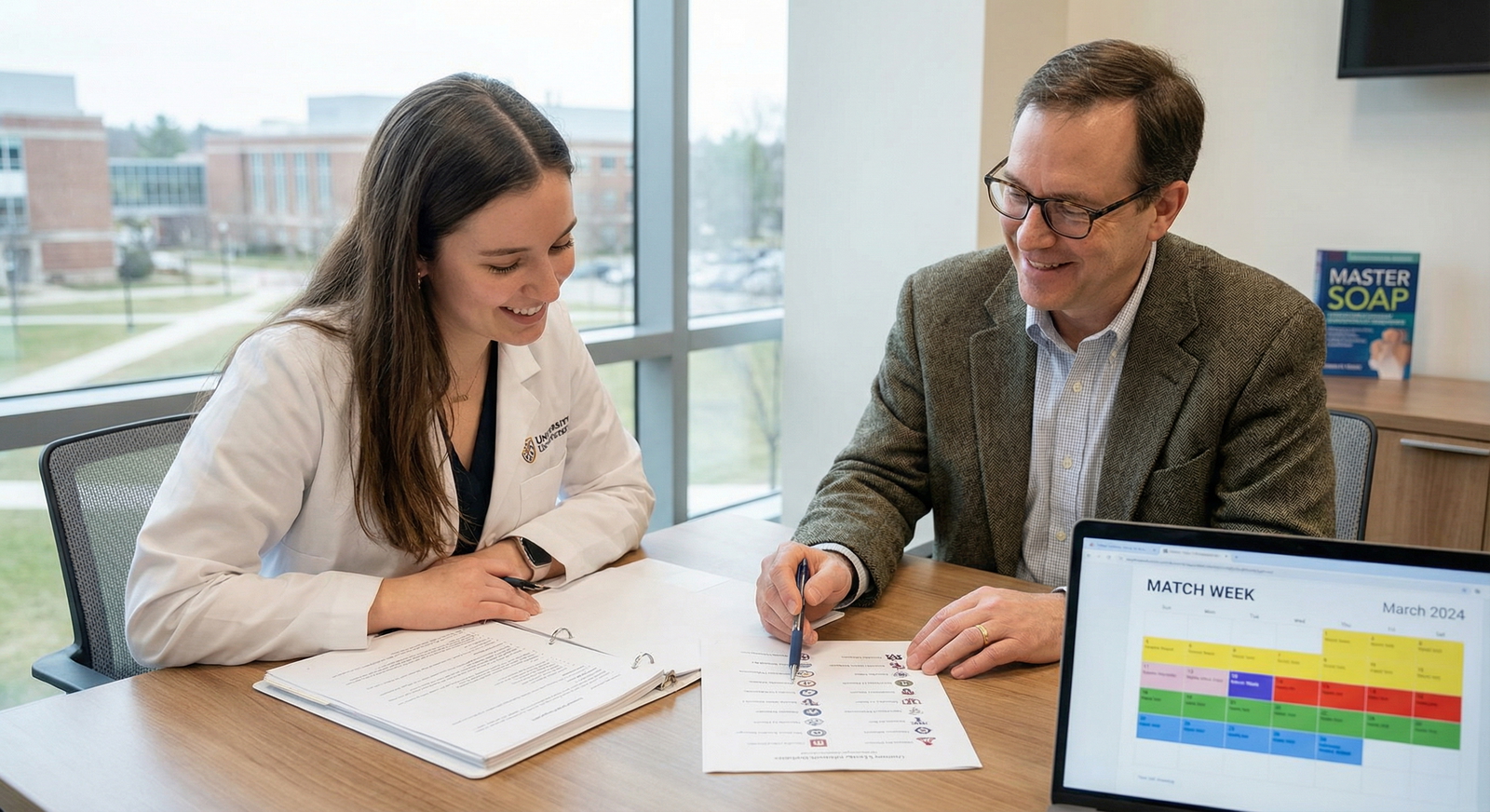
Timeline (approximate; check NRMP for specific dates):
- Monday of Match Week:
- You learn if you’re matched, partially matched, or unmatched
- SOAP-eligible candidates gain access to the list of unfilled programs via ERAS
- Monday–Thursday:
- Multiple application and offer rounds
- Strict communication rules apply
- Thursday:
- SOAP concludes; remaining unfilled positions open to free communication
- Monday of Match Week:
In SOAP, there is often limited or no access to radiation oncology residency positions, so your preparation must address both:
- What to do if a rare rad onc SOAP position appears
- What to do if you need an alternative path toward (or beyond) radiation oncology
Pre-Match SOAP Preparation: Laying the Groundwork
Most of SOAP success is determined before Match Week. MD graduates in a competitive niche like radiation oncology need a deliberate pre-plan.
1. Honest Assessment of Your Application
Before SOAP, perform a clear-eyed assessment of your profile:
Academic Metrics
- USMLE/COMLEX performance (Step 1 pass/fail, Step 2 CK score)
- Class rank, honors, AOA, clerkship performance
Specialty-Specific Elements
- Number and quality of radiation oncology rotations
- Home vs away/audition rotations
- Rad onc research (publications, abstracts, posters)
- Radiation oncology–specific letters of recommendation
Professionalism / Red Flags
- Exam failures or gaps in training
- Disciplinary actions
- Significant unexplained timeline gaps
This self-assessment helps answer critical questions:
- If I go unmatched, am I still a viable future rad onc applicant, or should I strongly consider another specialty?
- Are there particular strengths (e.g., strong medicine letters, robust research background) that would support SOAP into other fields like internal medicine, transitional year, or prelim medicine/surgery?
2. Define Your SOAP Strategy Tiers
SOAP moves quickly. You need predefined tiers of acceptable outcomes instead of making choices in panic.
For an MD graduate focused on radiation oncology, a common tiered strategy might look like:
Tier 1: Rad Onc Positions (If Any Appear in SOAP)
- Apply to any radiation oncology residency spots for which you are even remotely competitive.
- Geographic preference is secondary to obtaining a position in your desired specialty.
Tier 2: Transitional Year (TY) or Preliminary Medicine/Surgery
- Aim for a strong clinical foundation and future competitiveness:
- Transitional year with strong academic environment and rad onc connections
- Prelim internal medicine at institutions with rad onc departments
- Prelim surgery only if strongly aligned with your long-term plan (e.g., interest in rad onc research involving surgical oncology, or radiation-related surgical collaborations)
Tier 3: Categorical in Another Specialty
- Consider fields you realistically could see yourself practicing if rad onc is no longer feasible (e.g., internal medicine, family medicine, neurology, etc.).
- This is a deeply personal decision: if you SOAP into a categorical program in another specialty, it may become your permanent trajectory.
Tier 4: Non-Clinical / Reapplication Pathways
If SOAP does not produce a viable position, you should already have conceptual plans for:
- Research fellowships in radiation oncology or oncology-related fields
- MPH, MS, or PhD programs with oncology or outcomes research focus
- Clinical jobs (e.g., hospitalist extender roles, scribe, clinical research coordinator) that maintain clinical proximity
Formalizing these tiers ahead of time prevents last-minute, emotionally driven decisions that may not align with your long-term goals.
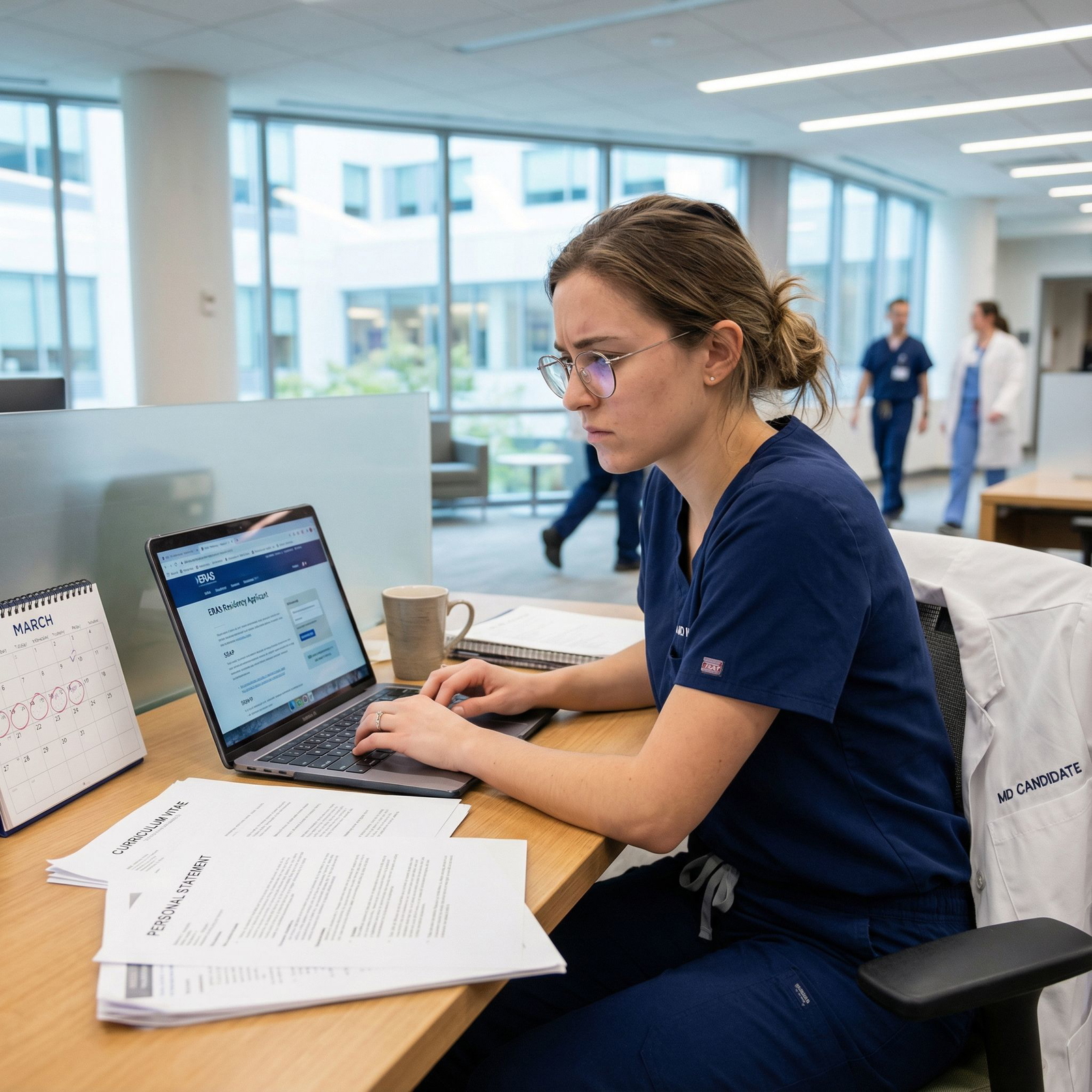
3. Gather and Organize Application Materials
SOAP requires rapid, targeted applications. Your SOAP preparation should include:
Multiple Tailored Personal Statements
- Radiation oncology–focused statement (for any rad onc positions)
- Medicine-focused statement (for prelim IM, TY, categorical IM)
- Surgery/anesthesia or other specialty statements as relevant
- A generic prelim/TY statement emphasizing adaptability, work ethic, and broad learning goals
Updated CV
- Include all recent experiences and publications
- Highlight oncology, clinical excellence, and teamwork
Letters of Recommendation (LoRs)
- At least 3 strong letters:
- 1–2 from radiation oncology attendings (if already available)
- 1–2 from core clinical specialties (IM, surgery, etc.)
- Anticipate:
- If SOAP opportunities are mostly non–rad onc, strong medicine or surgery letters may be more influential than rad onc letters.
- At least 3 strong letters:
Exam Documentation
- Have PDFs of score reports readily accessible
- Be sure USMLE/COMLEX statuses are updated in ERAS
Transcript and MSPE (Dean’s Letter)
- Confirm they are uploaded and accurate well before Match Week
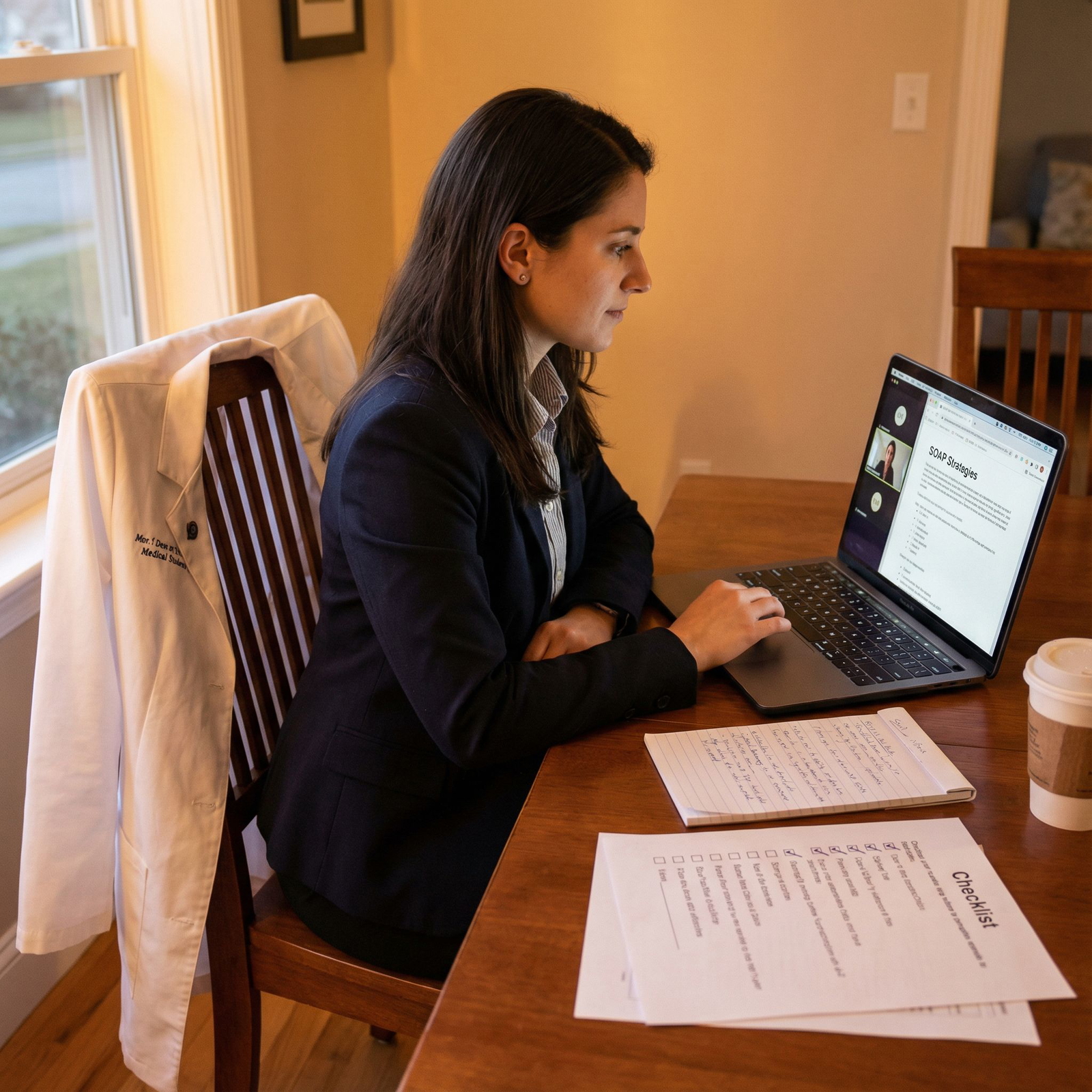
4. Mental and Logistical Preparation
SOAP week is emotionally draining. Prepare:
Time and Space
- Clear your schedule for Match Week, especially Monday–Thursday
- Arrange a quiet and private workspace with reliable internet and phone access
Support System
- Identify a small circle: mentor, program director, advisor, trusted friend/family
- Decide who you will update and how frequently
Emotional Resilience
- Acknowledge disappointment is likely if you’re participating in SOAP
- Pre-plan coping strategies so emotions don’t dictate critical decisions

Match Week: Executing a High-Yield SOAP Strategy
Once you receive notification that you are unmatched or partially matched, the SOAP clock starts. You must quickly operationalize your pre-planned strategy.
1. Monday Morning: Reality Check and Information Gathering
On Monday of Match Week:
Clarify Your Status
- Completely unmatched (no PGY-1 or PGY-2 position)?
- Partially matched (e.g., matched to a prelim but no advanced rad onc position)?
Your status will shape your SOAP priorities.
Access the List of Unfilled Programs
- Through ERAS/NRMP, you’ll see:
- Unfilled categorical positions
- Unfilled preliminary and transitional year positions
- Any PGY-2 (advanced) positions, including rare radiation oncology residency spots
- Through ERAS/NRMP, you’ll see:
Filter for Relevant Opportunities
- Search first for:
- “Radiation Oncology” or “Radiology – Radiation Oncology” (depending on system categorization)
- Then search for:
- Transitional year
- Preliminary internal medicine
- Preliminary surgery
- Categorical specialties aligned with your Tier 3 strategy
- Search first for:
2. Prioritizing Applications: Radiation Oncology vs. Bridge Options
If radiation oncology residency positions appear:
- Apply to all rad onc programs that:
- You meet the minimum prerequisites for
- You can reasonably see yourself training at (though in SOAP, threshold for “acceptable” may be broad)
- Tailor your personal statement immediately:
- Emphasize your sustained commitment to radiation oncology
- Highlight relevant research, rotations, and mentors
- Acknowledge, if needed, that you are eager to prove yourself and ready to work hard in a demanding specialty
Simultaneously:
- Apply to prelim/TY programs that:
- Are in institutions with rad onc departments or NCI-designated cancer centers
- Have a record of supporting residents who pursue competitive subspecialties
This dual approach protects you from SOAP ending with no match and preserves pathways back to rad onc.
If no rad onc SOAP positions exist:
- Focus on bridge options:
- Transitional year positions with academic or oncology affiliations
- Prelim IM at large teaching hospitals
- And possibly categorical programs in fields where you could envision building an oncology-adjacent career:
- Internal medicine → medical oncology, heme/onc
- Neurology → neuro-oncology, palliative neuro-oncology
- Palliative care–oriented tracks
- Rank your applications by:
- Institutional quality and support
- Exposure to oncology / cancer patients
- Research opportunities
3. Application Mechanics and Communication Rules
During SOAP:
Number of Programs
- There is a limit to the total number of programs you can apply to in SOAP rounds (check the current ERAS rules; often around 45 programs total).
- Be strategic—do not waste applications on programs you would never attend.
Program Communication Rules
- You may not initiate contact with programs during SOAP.
- Programs can initiate phone or video calls. When they do:
- Be ready to discuss your interest clearly and concisely.
- Keep notes on each call: program, interviewer, key points.
Interview Preparation
- Expect short, targeted interviews:
- “Why did you go unmatched?”
- “Why our program?”
- “How will you handle a heavy workload?”
- “Why are you interested in internal medicine (or TY, etc.) if your background is radiation oncology?”
- Prepare honest but positive responses:
- Focus on growth, reflection, and renewed commitment.
- Avoid blaming others; own your process.
- Expect short, targeted interviews:
4. Handling Offers During SOAP Rounds
SOAP includes multiple offer rounds (e.g., Rounds 1–4). Between rounds:
- You may receive 0, 1, or multiple offers in a given round.
- You must either accept one offer or reject all; you cannot hold offers while waiting for others.
Key tips:
- Know your hierarchy in advance:
- Example:
- Any radiation oncology categorical slot
- Transitional year at an NCI-designated center
- Prelim IM at large academic center with rad onc department
- Categorical IM at oncology-heavy program
- Non-oncology categorical program
- Example:
- If you receive an offer that fits Tier 1 or Tier 2 and you’re otherwise offer-less, accepting is usually wise.
- If you receive an offer well outside your pre-matched priorities, consult your advisor quickly before deciding; remember the long-term implications.
Specialty-Specific Strategy: Keeping Radiation Oncology in Play
Your SOAP decisions can either keep the radiation oncology door open or shift you toward a new long-term path. For MD graduates intent on rad onc, strategic positioning is key.
1. Using TY or Prelim Positions as a Launchpad
If you SOAP into:
Transitional Year at an Academic Center
- Seek rotations in:
- Radiation oncology
- Medical oncology
- Palliative care
- Radiology and neurosurgery (for radiation-related disease sites)
- Get involved with rad onc research early—ask attendings about ongoing trials or retrospective projects.
- Attend tumor boards and rad onc conferences; become a familiar, reliable presence.
- Seek rotations in:
Prelim Internal Medicine
- Choose electives that bring you in contact with:
- Hematology/oncology
- Radiation oncology services
- Develop excellent IM evaluations to show you can handle complex oncology patients.
- Work on a research project that involves outcomes, toxicity management, or immuno-oncology.
- Choose electives that bring you in contact with:
Strong performance in these roles can lead to new letters of recommendation, improved clinical reputation, and more robust stories for future rad onc applications.
2. If You SOAP into a Categorical Non–Rad Onc Program
If your SOAP outcome is a categorical position in a different specialty (e.g., internal medicine):
- Decide whether you might:
- Complete this residency and pivot into medical oncology or palliative oncology, or
- Attempt to transfer into radiation oncology later (rare and difficult but not impossible)
If your commitment to radiation oncology remains primary:
- Be transparent—but careful:
- Do not undermine your new program by openly planning an immediate exit.
- Instead, focus on excelling clinically and quietly exploring whether transfer opportunities or future reapplication are feasible.
- Cultivate oncology mentors within your new specialty:
- Hem/onc for IM residents
- Neuro-onc for neurology residents
- Palliative care for FM or IM residents
This approach keeps you in the broader oncology ecosystem, even if you do not directly practice radiation oncology.
3. If SOAP Does Not Result in Any Position
If, despite strong SOAP preparation, you remain unmatched:
Debrief Thoroughly
- Meet with your dean’s office, advisors, and rad onc mentors.
- Identify:
- Objective deficits: scores, limited rotations, low volume of interviews
- Subjective feedback: professionalism concerns, interview performance
Consider a Dedicated Research Year
- Ideally in radiation oncology or oncology outcomes research.
- Choose institutions with strong rad onc programs and proven track records of supporting residents entering the field.
- Deliver measurable output:
- Abstracts, posters, manuscripts
- Concrete contributions to institutional projects
Enhance Clinical Exposure
- Work in roles that maintain patient contact:
- Clinical research coordinator on oncology trials
- Radiation oncology clinic assistant roles (where allowed)
- Shadow rad onc attendings and maintain visibility.
- Work in roles that maintain patient contact:
Plan for the Next Allopathic Medical School Match
- Reassess whether rad onc remains realistic.
- Potentially broaden to multiple specialties while emphasizing your oncology strengths.
- Ensure your personal statement and application narrative explain:
- The initial unmatched outcome
- Your growth, resilience, and new competencies

Practical Tips and Common Pitfalls for MD Graduates in Rad Onc SOAP
1. Optimize Your Documents for SOAP
Personal Statements
- For SOAP, brevity and clarity matter:
- 3–4 strong paragraphs
- Explicit alignment with program type (TY vs categorical vs prelim)
- Example for IM prelim aimed at future rad onc:
- Emphasize your interest in oncology and the care of complex, high-acuity patients.
- Clarify your goals to become a strong intern providing excellent foundational care.
- For SOAP, brevity and clarity matter:
CV and ERAS Experiences
- Explicitly label oncology-related research and leadership roles.
- Use concise, outcome-oriented bullet points.
2. Communicate a Coherent Narrative
Programs will notice that you previously applied to radiation oncology. Be ready to answer:
- “You applied to radiation oncology. Why are you now interested in internal medicine / TY here?”
- “How do you see this position fitting into your long-term goals?”
Construct a narrative that is both honest and program-focused:
- Emphasize:
- Love of oncology patients and complex interdisciplinary care
- Value placed on a strong internal medicine foundation
- Desire to be a reliable, hardworking team member regardless of ultimate subspecialty
Avoid:
- Suggesting the program is just a “backup” or “stepping stone”
- Expressing disdain or lack of interest in the specialty you’re applying to
3. Avoid These SOAP Pitfalls
Last-Minute Panic Applications
- Applying to programs you would never truly attend wastes limited slots and mental bandwidth.
Rigid Specialty Attachment
- Insisting on radiation oncology only, with no openness to any alternative paths, can leave you completely unmatched when a transitional or prelim path could have preserved options.
Poor Emotional Control
- Emotional calls or emails to programs (against SOAP rules) or unprofessional communication with advisors can damage your reputation.
Ignoring the Financial and Personal Realities
- Consider relocations, cost of living, and support systems before hastily accepting an offer in a location where you are unlikely to thrive.
FAQs: SOAP Preparation for MD Graduates in Radiation Oncology
1. What is SOAP, and how is it different from the main allopathic medical school match?
SOAP (Supplemental Offer and Acceptance Program) is a structured process during Match Week for unmatched or partially matched applicants to apply to unfilled residency positions. Unlike the main allopathic medical school match, where rank lists and an algorithm determine the outcome in one event, SOAP includes several application and offer rounds over a few days. Communication rules are stricter—applicants cannot initiate contact with programs, and offers must be accepted or declined within short time windows.
2. Are radiation oncology residency positions commonly available in SOAP?
No. Radiation oncology residency positions rarely appear in SOAP because the specialty has relatively few total positions and most fill in the initial rad onc match. Occasionally, a program might have an unexpected vacancy (e.g., a last-minute withdrawal). As part of your SOAP preparation, assume there may be no rad onc slots and plan bridge options such as a strong transitional year or prelim internal medicine with oncology exposure.
3. Should I SOAP into a categorical non–radiation oncology residency if my goal is still rad onc?
It depends on your long-term flexibility and realistic chances of re-entering the rad onc match. SOAPing into a categorical program in another specialty (e.g., internal medicine) may mean you ultimately practice that specialty, even if you keep an oncology focus (like hematology/oncology). Transfers into rad onc are rare and highly competitive. If radiation oncology is your absolute priority and mentors believe you remain viable, a preliminary or transitional year plus dedicated research might better preserve rad onc options than committing to an unrelated categorical spot.
4. How can I best prepare for SOAP interviews and calls?
Prepare succinct messages tailored to different program types:
- For TY or prelim IM:
- Emphasize your desire for a rigorous clinical foundation, strong work ethic, and interest in caring for complex oncology patients.
- For categorical IM or others:
- Express genuine interest in the specialty, highlight relevant skills and experiences, and show openness to building a career in that field, even if still oncology-centered.
- For any radiation oncology residency calls:
- Reiterate your long-standing commitment to rad onc, your understanding of the field’s challenges, your research and clinical experiences, and how you’ve grown through the unmatched experience.
Practice with mentors or peers, keep answers honest and concise, and maintain a professional, composed demeanor despite the stress of SOAP.
Thoughtful SOAP preparation can transform Match Week from a crisis into a structured decision point. For MD graduates in radiation oncology, the key is to combine realism about the rad onc match with strategic pursuit of bridge pathways that keep you close to oncology and set you up for a meaningful career—whether or not you ultimately practice as a radiation oncologist.