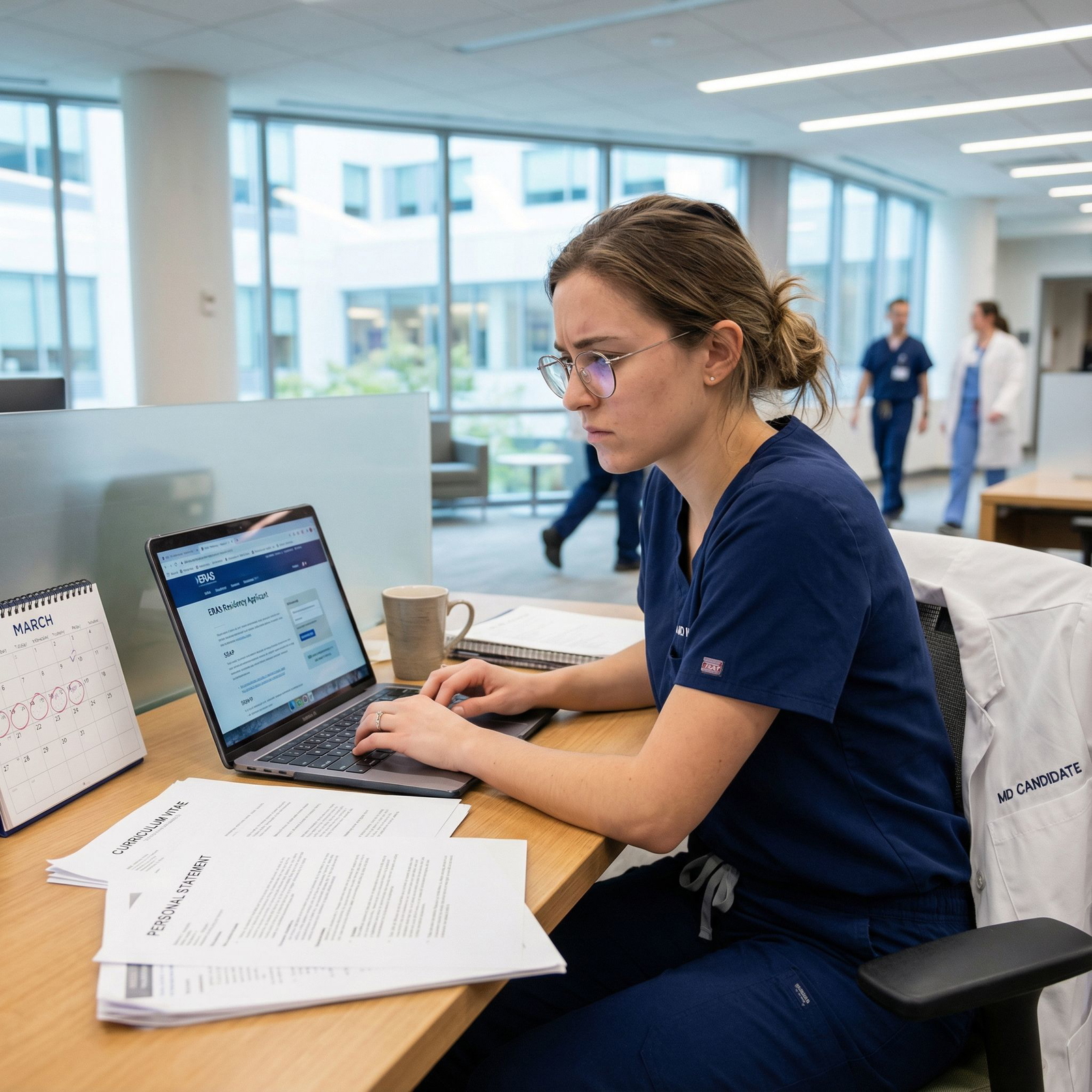
Understanding SOAP for MD Graduates in Preliminary Medicine
For an MD graduate targeting a Preliminary Medicine (prelim IM) position, the Supplemental Offer and Acceptance Program (SOAP) can be both a second chance and a high‑pressure scramble. Knowing what SOAP is, how it works, and how to prepare strategically can turn a stressful week into an opportunity to secure a preliminary medicine year that keeps you on track for your long‑term goals.
What Is SOAP?
SOAP is the NRMP‑run, structured process that allows unmatched or partially matched applicants to apply to unfilled residency positions between Match Week Monday and Thursday. It replaces the old, unregulated “scramble.”
Key features:
Eligibility‑restricted: Only applicants who:
- Registered for the main NRMP Match,
- Are eligible to start training by July 1, and
- Are unmatched or partially matched after the initial algorithm
can participate.
Centralized and controlled:
- All communication goes through ERAS and program‑initiated contact.
- Applicants cannot cold call or directly email programs about SOAP positions during the active SOAP period.
Multiple offer rounds:
- SOAP has several offer rounds (usually four) over 2–3 days.
- Programs make offers; applicants either accept or reject/allow to expire each offer in real time.
For an MD graduate from an allopathic medical school, understanding the structure of SOAP is key to staying organized and professional under time pressure.
The Role of a Preliminary Medicine Year in Your Career
Before going deep into SOAP preparation, clarify why a prelim IM year matters and how it fits into your trajectory as an MD graduate.
What is a Preliminary Medicine Year?
A Preliminary Medicine (prelim IM) position is:
- A 1‑year (PGY‑1 only) internal medicine position
- Designed not to lead to categorical internal medicine board eligibility on its own
- Intended to provide a clinical base year for:
- Neurology
- Anesthesiology
- Dermatology
- Ophthalmology
- Radiation oncology
- PM&R
- Radiology and interventional specialties
- Some competitive surgical subspecialties
You might pursue a prelim year because:
- You matched a categorical advanced specialty that requires a prelim year, but:
- You did not match the prelim portion, or
- You matched a categorical track without a built‑in intern year (less common), or
- You went fully unmatched and want to stay clinically active while reapplying.
Prelim IM vs Transitional Year
Programs often list both preliminary medicine and transitional year (TY) in SOAP. Understanding the difference helps you rank your priorities:
Prelim IM:
- More medicine‑heavy inpatient rotations (wards, ICU, night float).
- Strong preparation for internal medicine, critical care, and subspecialties.
- Attractive if you are considering future IM or hospital‑based fields.
Transitional Year (TY):
- More elective time, often perceived as a “lighter” intern year.
- Can be helpful for high‑study‑demand specialties.
- May be less available in SOAP compared with prelim IM in some cycles.
For MD graduates seeking Preliminary Medicine specifically, SOAP is often where additional prelim positions open, particularly at community and university‑affiliated hospitals needing last‑minute coverage.
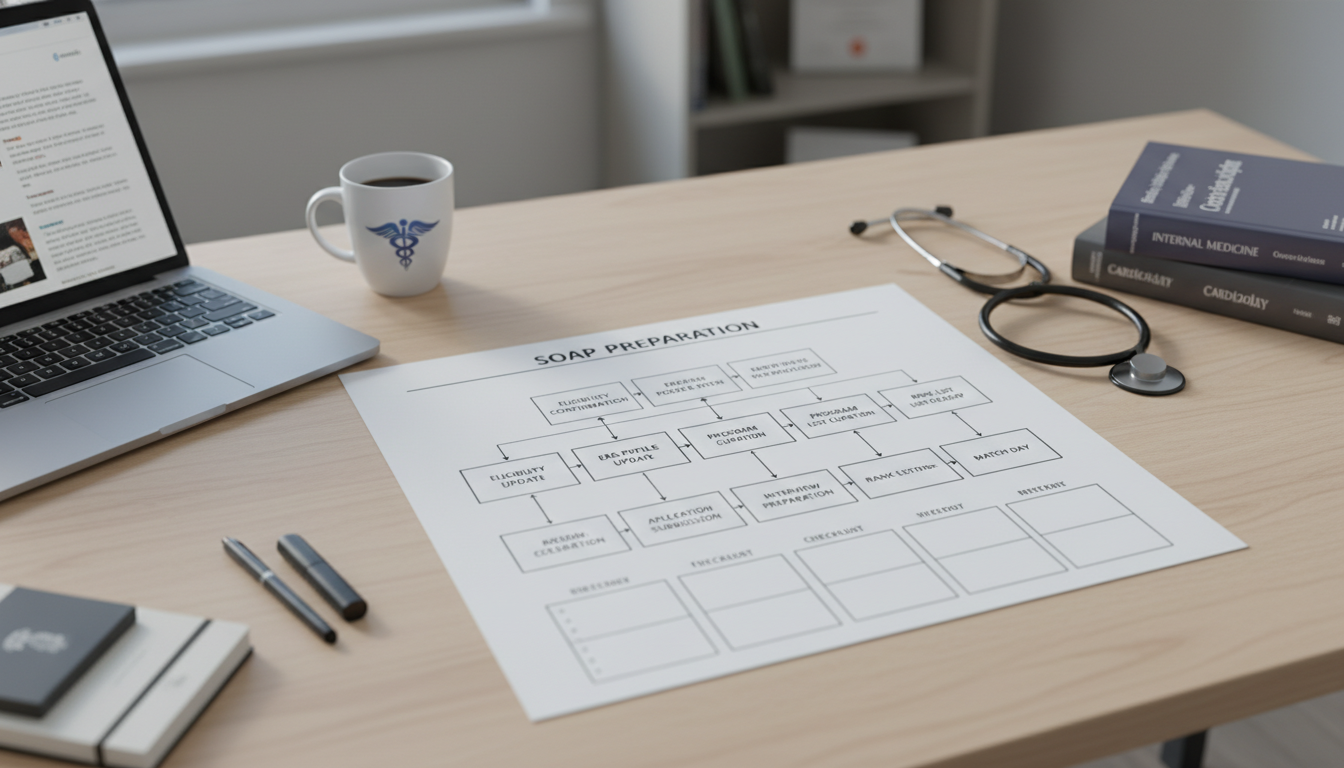
Pre‑SOAP Preparation: What to Do Before Match Week
The strongest SOAP outcomes come from work done weeks to months before Match Week. You can’t control whether you’ll need SOAP, but you can control how ready you are if you do. Think of this as insurance for your residency plans.
1. Understand Your Risk of Needing SOAP
As an MD graduate, particularly from a U.S. allopathic medical school, your odds of matching are generally higher than DO or IMG counterparts—but not guaranteed. You should consider serious SOAP preparation if:
- You applied late or narrowly to your specialty.
- You have:
- Fewer than average interviews for your specialty,
- Significant exam or academic issues (USMLE failures, LOA, remediation),
- Major gaps or red flags on your application.
- You are applying to highly competitive advanced specialties (e.g., derm, rad onc, integrated IR) and are dependent on SOAP if those plans fall through.
If your interview season felt fragile, start your SOAP preparation no later than February.
2. Keep ERAS SOAP‑Ready
Programs will review your existing ERAS application during SOAP. You will not have time for extensive rewrites. Before Match Week:
Update your experiences section:
- Add ongoing rotations, projects, or leadership.
- Clarify any gaps (e.g., research year, leave of absence).
Refine your personal statement strategy:
- Have:
- One primary PS for your initial specialty (already uploaded).
- One generic internal medicine/preliminary year PS ready to go.
- Tailor the prelim PS to:
- Emphasize clinical maturity, reliability, and teamwork.
- Show comfort with heavy inpatient workloads.
- Highlight any medicine‑relevant rotations (sub‑I, ICU, cards, heme/onc).
- Have:
Letters of recommendation (LoRs):
- Even if you didn’t initially apply to prelim IM, secure at least:
- Two strong clinical IM or inpatient letters if possible.
- Ask faculty early:
- “If things don’t go as planned on Match Day, could I use your letter to support a preliminary medicine or transitional year application via SOAP?”
- Even if you didn’t initially apply to prelim IM, secure at least:
3. Clarify Your SOAP Goals and Limits
Before you are under time pressure, decide:
Will I SOAP into any prelim IM?
Or are there geographic, program‑type, or institutional factors that are dealbreakers?Would I accept a SOAP residency in a different field?
- Example: SOAPing into categorical IM instead of prelim IM if available.
- Example: SOAPing into a categorical field you are open to long‑term (e.g., FM, psychiatry, pediatrics) if you go fully unmatched.
What are my absolute no‑go scenarios?
- Settings where you or your support system could not realistically function (e.g., visa, severe family constraints, unsafe environment).
Writing these down before Match Week will keep you from making decisions based on panic.
4. Build a Preliminary Medicine Program “Long List”
You won’t know which programs will be unfilled until Monday of Match Week, but you can still:
Compile a long list of:
- Prelim IM programs in regions you’d accept.
- Transitional Year programs as backups.
- Categorical IM programs you’d be open to if you go fully unmatched.
Use FREIDA, Residency Explorer, and program websites to note:
- Program size (number of prelim spots).
- Academic vs community vs hybrid setting.
- Night float, ICU exposure, teaching structure.
- Visa sponsorship if relevant.
- Any prior information about workload and culture.
Keep this long list in a spreadsheet so that, on SOAP day, you can quickly filter to programs that show up on the NRMP’s List of Unfilled Programs.
5. Logistics and Emotional Preparedness
SOAP week is intense. Prepare the environment:
Schedule flexibility:
- Keep Monday–Thursday of Match Week as open as possible.
- Inform any supervisors or attendings discretely that you may need time for quick virtual interviews.
Technology readiness:
- Reliable internet, quiet space, functional webcam/headset.
- A backup device (tablet, phone) with Zoom/Teams/Webex installed.
Support system:
- Identify a trusted friend, family member, dean, or advisor who:
- Knows what SOAP is,
- Can help you think clearly,
- Will be available for quick check‑ins.
- Identify a trusted friend, family member, dean, or advisor who:
Mental framework:
- SOAP is not a reflection of your worth as a physician.
- Your job is to optimize opportunities, not ruminate about “what went wrong” until after Match Week.

Match Week: Step‑by‑Step SOAP Execution for Prelim IM
Once Match Week begins, you must switch from preparation to execution mode. The timeline is tight and structured.
Monday Morning: “Did I Match?” Notification
At 10:00 AM ET (time may vary slightly by year), you receive one of four NRMP statuses:
- Matched to primary (advanced) and prelim position – No SOAP needed.
- Matched to advanced specialty but not to a prelim year – Need SOAP for prelim IM/TY.
- Partially matched (e.g., matched to prelim but not advanced) – May or may not need SOAP.
- Unmatched – Eligible (and usually strongly encouraged) to participate in SOAP.
If you fall into 2–4 and are eligible, you are SOAP‑eligible.
Monday Midday: List of Unfilled Programs
By midday Monday, NRMP releases the List of Unfilled Programs to SOAP‑eligible applicants via the NRMP’s Registration, Ranking, and Results (R3) system.
Actions for an MD graduate seeking a preliminary medicine year:
Filter by Program Type:
- Show “Preliminary Internal Medicine” and “Transitional Year” first.
- Then consider “Categorical Internal Medicine” or others if fully unmatched and open to alternative paths.
Cross‑reference your pre‑built spreadsheet:
- Highlight programs on your long list that are now unfilled.
- Add new programs if they appear appealing despite not being on your original list.
Segment programs into tiers (for your own internal guidance):
- Tier 1: High compatibility (location, culture, training style).
- Tier 2: Acceptable, but with some reservations.
- Tier 3: Last‑ditch options you’d only consider if nothing else works.
Monday–Tuesday: Submitting SOAP Applications (Up to 45)
In SOAP, you are limited to a maximum of 45 applications total across all unfilled programs. This cap includes all specialties and tracks.
Prioritizing Preliminary Medicine vs Other Specialties
If you matched your advanced specialty but need only a prelim medicine year:
- Prioritize prelim IM and TY:
- You must secure any acceptable prelim year to avoid delaying your advanced training.
- Apply broadly: community programs, university-affiliated, smaller hospitals—cast a wide but rational net.
If you went fully unmatched:
- Consider a dual strategy:
- Apply to:
- Categorical IM programs that might become your long‑term home, and/or
- Prelim IM/TY programs as shorter‑term bridges while you regroup.
- Apply to:
Tailoring Application Materials Rapidly
Within ERAS during SOAP, you can:
Assign a specific personal statement to each program:
- Use your prelim IM statement for internal medicine prelim programs.
- For TYs, a slightly more generalized intern‑year‑focused statement works.
Select the most relevant LoRs:
- At least one strong IM attending letter for prelim IM.
- For TYs, broad clinical letters are acceptable.
You won’t have time for deep customization, but you can:
- Insert 1–2 program‑specific sentences into your PS for your top‑tier choices.
- Ensure your CV is free of errors and clearly describes your clinical strengths.
Tuesday–Thursday: Interviews and Offer Rounds
Once applications are submitted, programs review them, and some will:
- Schedule brief virtual interviews (often 10–20 minutes).
- Or offer informal phone calls to clarify your interest and fit.
Crucial rule: During active SOAP, applicants are not allowed to contact programs first about SOAP positions by phone or email. Programs must initiate contact through ERAS.
SOAP Interview Strategy for Prelim IM
When programs call or email:
- Respond quickly and professionally.
- Have your SOAP pitch ready, tailored for Preliminary Medicine:
Core talking points:
Who you are:
- “I’m an MD graduate from [School], currently finishing [rotation].”
Why preliminary medicine:
- Emphasize your comfort with:
- High volume inpatient care,
- Team‑based work,
- Long hours and cross‑cover responsibilities.
- If you have a matched advanced position:
- Clearly state how this prelim year fits with your career in [advanced specialty] and why IM is the ideal foundation.
- Emphasize your comfort with:
Why their program:
- Reference any known strengths:
- Teaching culture, ICU exposure, diverse pathology, supportive leadership.
- Reference any known strengths:
Red flags, if any:
- Prepare a concise, non‑defensive explanation for any USMLE failures, LOAs, or gaps.
- End on what you’ve done to improve and why you’re ready now.
Sample SOAP interview question themes for prelim IM:
- “Why are you interested in a preliminary medicine year at our hospital?”
- “How do you handle high‑stress inpatient settings?”
- “Tell me about a time you managed a very sick patient or a busy call night.”
- “How will you adapt if your long‑term specialty plans change?”
Keep answers focused, concrete, and time‑efficient—SOAP interviews move quickly.
Offer Rounds and Decisions
SOAP offers are released in timed rounds (e.g., midday and afternoon on Wednesday and Thursday). During each round:
- Programs make offers via NRMP.
- You can:
- Accept an offer (binding; you exit SOAP),
- Reject an offer, or
- Let it expire (equivalent to rejection).
Key decision principles for a prelim IM‑seeking MD graduate:
If you matched an advanced spot and only need a prelim year:
- Generally, accept the first solid, professionally acceptable prelim IM or TY offer that meets your minimum criteria.
- It is risky to decline offers hoping for a “better” one in later rounds; you may end up with nothing.
If fully unmatched:
- Decide in advance if:
- Any categorical IM or other categorical SOAP residency is preferable to a prelim/TY.
- If a strong categorical offer appears and you’d be happy long‑term, consider accepting it even if it means altering your initial specialty plans.
- Decide in advance if:
All accepted offers are binding commitments under NRMP rules and professional ethics.
After SOAP: Consolidating Your Path and Planning Ahead
Once you accept a prelim IM position through SOAP, your focus shifts to:
1. Transition to Your New Program
- Promptly complete onboarding:
- Credentialing, background checks, health forms, visa paperwork if applicable.
- Reach out to chief residents or program coordinator:
- Introduce yourself.
- Ask for recommended reading or orientation details.
Make a strong first impression; SOAP entry does not define your status once you start. You are a full member of the intern class.
2. Maximizing Your Preliminary Medicine Year
Use your prelim year to:
Build strong clinical skills:
- Embrace high‑acuity rotations (ICU, night float, admission shifts).
- Ask for feedback; show initiative.
Develop relationships:
- Attendings and chiefs can later provide powerful letters.
- Your reputation as reliable, hardworking, and teachable will follow you.
Keep your options open:
- If you have a secured advanced position, maintain communication with that program.
- If you are reapplying (e.g., to a more competitive specialty):
- Use your prelim IM performance and new letters to strengthen your profile.
3. Reflecting on Your Allopathic Medical School Match and SOAP Experience
After the dust settles:
Debrief with faculty advisors or dean’s office:
- Review:
- Application strengths and weaknesses,
- Choice of programs,
- Interview performance,
- Personal circumstances.
- Review:
Document lessons learned:
- If you reapply for a new specialty or for categorical IM later, you will have concrete experience and reflection to draw from.
The path may not have looked exactly like your original allopathic medical school match vision, but a well‑used prelim IM year can be a powerful launch pad.
Frequently Asked Questions (FAQ)
1. As an MD graduate, how likely am I to find a preliminary medicine year through SOAP?
Likelihood varies by year, but Preliminary Medicine positions are among the more commonly unfilled slots listed in SOAP—especially at community and university‑affiliated hospitals. As an MD graduate from an allopathic medical school, you are generally competitive for many prelim IM programs if you:
- Apply broadly and strategically (using your full 45 applications if needed),
- Have decent clinical evaluations and at least one strong IM letter,
- Present yourself well in SOAP interviews.
However, nothing is guaranteed, so early SOAP preparation and an open but thoughtful geographic range are critical.
2. Should I apply to both prelim IM and transitional year programs in SOAP?
For most MD graduates needing a base year, the answer is yes:
Apply to prelim IM programs as your core target:
- Especially if your long‑term interests are medicine‑heavy subspecialties, critical care, cardiology, or hospital‑based fields.
Also apply to Transitional Year programs:
- As additional options that may fit certain advanced specialties well (e.g., radiology, derm, anesthesia).
The key is to balance your 45‑application limit across programs where you would truly be willing to train, rather than applying blindly.
3. What is SOAP’s rule about contacting programs—can I email prelim IM programs directly?
During active SOAP, you may not initiate contact with programs about SOAP positions. This is a firm NRMP rule designed to keep the process fair and organized.
- Programs must make the first contact if they wish to interview or obtain more information.
- You may respond to program emails, calls, or interview invitations.
- Outside of the active SOAP window (before and after Match Week), normal professional communication rules apply.
Violating this rule can be considered an NRMP violation, which can jeopardize your current and future match participation.
4. If I SOAP into a prelim IM spot, can I reapply to a different specialty later?
Yes. Many physicians have successfully:
- Completed a prelim IM year, and then
- Reapplied to:
- Internal medicine categorical programs,
- Their original competitive specialty,
- Or a newly chosen specialty that better aligns with their strengths and interests.
For the reapplication cycle:
- Use strong prelim IM evaluations and new LoRs.
- Highlight your growth, resilience, and clinical maturity.
- Explain your trajectory clearly in your personal statement and interviews.
Your prelim year, even if obtained via SOAP residency placement, can significantly strengthen your candidacy when leveraged thoughtfully.
Effective SOAP preparation for an MD graduate interested in Preliminary Medicine means planning for contingencies, understanding the rules and timeline, and having materials and strategies ready long before Match Week. With that groundwork laid, you can navigate SOAP calmly and maximize your chances of securing the prelim IM year that keeps your professional journey moving forward.