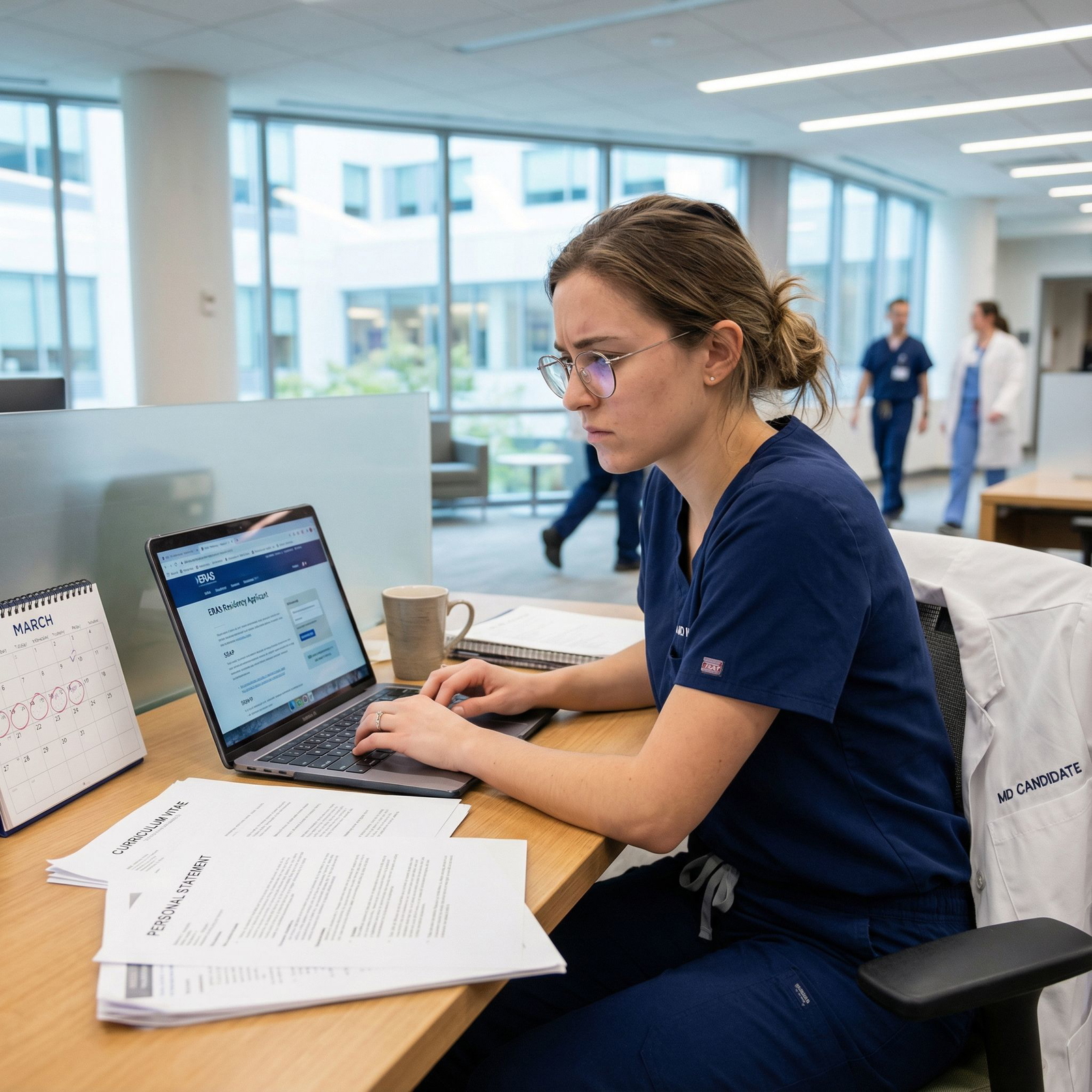
Understanding SOAP in the Context of Neurology Residency
The Supplemental Offer and Acceptance Program (SOAP) is a structured process that gives unmatched or partially matched applicants a pathway to secure unfilled residency positions. For neurology residency applicants, SOAP can be both an unexpected detour and a valuable second chance in the neuro match process.
What Is SOAP?
SOAP is an NRMP-managed process that occurs during Match Week. It allows eligible unmatched or partially matched applicants to apply to programs with unfilled positions before the main Match results are finalized for everyone else.
Key features:
- Eligibility: You must be:
- Registered for the NRMP Match
- Unmatched or partially matched (e.g., advanced position without a prelim)
- Not withdrawn or barred from the Match
- Structure:
- A set number of application rounds
- Programs review ERAS applications and extend offers at specific times
- Applicants accept or reject offers in real time
- Purpose: Efficiently fill unfilled positions while providing a fair, organized system for unmatched candidates.
Why SOAP Is Especially Important in Neurology
Neurology has become increasingly competitive, and more applicants are listing it as a preferred specialty. Factors that make SOAP particularly relevant to neurology:
- Rising interest and limited spots in certain regions or prestige tiers
- Advanced programs (PGY-2) that require separate preliminary year matching
- Applicants who may be:
- Strong academically but with limited neurology exposure
- International medical graduates (IMGs) with visa constraints
- Transitioning from another field (e.g., internal medicine, psychiatry) to neurology
For neurology applicants, entering SOAP well-prepared can mean the difference between:
- Securing a categorical or advanced neurology residency position, or
- Delaying training by a full year or changing specialties entirely.
Understanding what SOAP is and how it works is the essential foundation, but real success comes from targeted SOAP preparation tailored to neurology.
Pre–Match Week: Strategic SOAP Preparation for Neurology
Effective SOAP preparation starts long before you find out your Match result. Think of this as an insurance policy: you hope you won’t need it, but if you do, you’ll be grateful you invested the time.
1. Honest Risk Assessment Before Rank List Submission
Well before the neuro match deadline, assess your risk realistically:
- Board scores/COMLEX:
- Are they below the mean for neurology residency programs?
- Do you have any fails or attempts that may raise concern?
- Neurology exposure:
- Core neurology rotation completed?
- Any neurology electives, sub-I, or away rotations?
- Letters of recommendation from neurologists?
- Application red flags:
- Gaps in training, leaves of absence
- Academic probation or professionalism issues
- Limited US clinical experience (for IMGs)
- Interview performance and volume:
- Fewer than ~8–10 neurology interviews often suggests a higher risk of going unmatched
- Negative feedback from advisors or mentors?
If your risk is moderate-to-high, you should adopt a proactive SOAP preparation mindset before ranking programs.
2. Building a SOAP-Flexible Application
Even if you are confident about the neuro match, design your application to be adaptable to SOAP residency opportunities.
Key elements:
- Versatile personal statement:
- Primary neurology personal statement for your main ERAS cycle
- A shorter general “medicine + neurology” version that can be quickly customized for SOAP (e.g., for prelim medicine or transitional year programs)
- Letters of recommendation:
- At least two neurology LORs (if possible)
- One internal medicine or generalist letter (helpful if you SOAP into prelim medicine, or less traditional neurology pathways)
- Updated CV and experiences:
- Clearly document:
- Neurology electives, sub-I’s, away rotations
- Neuro-related research (stroke, epilepsy, neuroimmunology, neuro ICU, etc.)
- Presentations or posters at neurology conferences
- Ensure everything is current and error-free by late January/early February.
- Clearly document:
3. Drafting SOAP-Ready Documents in Advance
During Match Week, you’ll have very little time to create new materials. Prepare the following beforehand:
SOAP-tailored neurology personal statement template
- Emphasize:
- Why neurology specifically
- Commitment to longitudinal patient care
- Experiences that demonstrate neuro interest (EEG exposure, stroke codes, neuro exam skills, etc.)
- Keep it ~600–750 words so you can easily adjust for individual programs.
- Emphasize:
General medicine/prelim personal statement
- Highlight:
- Breadth of clinical interest
- Commitment to strong foundational training
- Capacity for hard work and teamwork on inpatient services
- Mention neurology interest if applying to prelim positions with a plan to reapply for neuro advanced positions.
- Highlight:
SOAP-focused CV bullet updates
- Pre-write bullet points summarizing:
- Recent rotations, call experiences
- New research activities or abstracts
- Clinical skills (procedures, neuro exam, EEG exposure, lumbar puncture if applicable)
- Pre-write bullet points summarizing:
You can then quickly tailor these bullets to program-specific communications or emails to PDs (when appropriate and within rules).

Match Week Logistics: What to Do Once You Learn You’re Unmatched
On Monday of Match Week, you’ll learn whether you Matched, Partially Matched, or Did Not Match. If you learn you did not match into a neurology residency (or you matched an advanced spot without a prelim), time management and emotional control become critical.
1. First 24 Hours: Emotional Regulation and Tactical Planning
Your initial reaction may be shock, disappointment, or even panic. All are normal. However, decisions you make in the next 48–72 hours can reshape your career.
Immediate steps:
- Acknowledge your feelings—but set a time limit.
Give yourself a few hours to process, then pivot to action. - Notify key supporters:
- Dean’s office or student affairs
- Career advisor or neurology mentor
- Family or trusted support person (for emotional grounding)
- Schedule urgent advising:
- Request a same-day or next-day appointment to develop a SOAP strategy:
- Clarify eligibility
- Discuss specialty and program tier flexibility
- Review your ERAS content and red flags
- Request a same-day or next-day appointment to develop a SOAP strategy:
2. Accessing the SOAP List and Assessing Neurology Opportunities
Once SOAP begins, you’ll get access to the list of programs with unfilled spots (via NRMP/ERAS). For neurology:
- Look for:
- Categorical neurology programs (PGY-1 to PGY-4)
- Advanced neurology programs (PGY-2+)
- Preliminary internal medicine or transitional year positions that could complement an advanced neuro slot
Analyze each neurology residency opportunity:
- Program type and structure (university vs. community, size, subspecialties)
- Geography (are you flexible about location?)
- IMG-friendliness (if applicable)
- Visa sponsorship rules
- Your competitiveness relative to their typical applicant profile
Your goal: create a prioritized list of neurology and related positions to target in the first SOAP rounds.
3. SOAP Strategy for Different Applicant Scenarios
How you approach SOAP will vary depending on your situation:
Scenario A: Unmatched, Strong Neurology Profile
Characteristics:
- Solid USMLE/COMLEX scores (no fails, near or above average)
- Strong neurology LORs and electives
- Limited red flags
Strategy:
- Primary focus: Unfilled neurology residency positions (categorical/advanced)
- Secondary focus: Prelim internal medicine or transitional year spots that allow:
- Continued neurology exposure
- A platform to reapply for neurology advanced positions later
- Tailor your neurology personal statement for each program category or region.
Scenario B: Unmatched, Moderate/Weak Neurology Profile
Characteristics:
- Below-average scores, attempts, or limited neurology exposure
- Fewer interviews or concerning feedback
- Potential red flags
Strategy:
- Balanced approach:
- Apply broadly to all available neurology opportunities where you may be a realistic fit
- Include a larger number of prelim medicine or transitional year positions
- Emphasize:
- Growth mindset
- Evidence of improvement (step scores over time, clinical evaluations)
- Strong work ethic and team-based care
Be open to the possibility that your path to neurology may be indirect, possibly via an internal medicine year and future reapplication.
Scenario C: Partially Matched (e.g., Advanced Neurology Position, No Prelim)
Characteristics:
- Secured a PGY-2 neurology spot but no PGY-1
- Need a prelim year to bridge the gap
Strategy:
- Focus your SOAP preparation on:
- Prelim internal medicine programs
- Transitional year programs (if recognized by your advanced program)
- Communicate clearly in your personal statement and, when allowed, in emails:
- You already have an advanced neurology position
- You are seeking a strong foundational year in medicine
- You understand and value the role of prelim training for neurology
This scenario is stressful but often more straightforward; programs know they’re helping you complete an already-secured neurology trajectory.
Optimizing Your SOAP Application for Neurology Programs
Once you know which programs have openings, your focus shifts to rapid customization and clear communication. Unlike the main neuro match, SOAP works on compressed timelines and high-volume decision-making.
1. Tailoring Your ERAS Materials Under Time Pressure
You usually cannot change core ERAS information broadly during SOAP, but you can:
- Select which documents to send to each program:
- Neurology-specific personal statement vs. general medicine PS
- Most relevant neurology and medicine LORs
- Upload a SOAP-specific personal statement if needed
- Some applicants maintain:
- 1 neurology SOAP PS
- 1 general SOAP PS (for prelim/transitional year programs)
- Some applicants maintain:
When tailoring your neurology personal statement quickly:
- Highlight:
- Strongest neurology experiences (e.g., stroke rotation, neuro ICU, MS clinic)
- Key mentors and what they modeled for you
- A brief narrative showing why neurology, and why now
- Avoid:
- Rehashing your entire CV
- Overemphasizing personal hardship at the expense of clinical content
- Negative comments about previous applications or programs
2. Messaging for Neurology Program Directors During SOAP
Within NRMP rules, you may sometimes have opportunities to email PDs or coordinators (school policies vary; always check). If permitted:
- Keep messages short, respectful, and specific:
- State your current status (unmatched or partially matched)
- Affirm your interest in neurology and in their program specifically
- Briefly reference:
- A key strength (e.g., prior research or elective relevant to their emphasis)
- Geographic ties or personal connection to the area (if genuine)
- Attach an updated CV (if allowed) and mention that your full ERAS application is available
Example structure (adapted to your voice):
Dear Dr. [Name],
I am a fourth-year medical student at [School] currently participating in SOAP. I am very interested in the unfilled neurology residency positions at [Program] because of your strong [stroke/epilepsy/neuromuscular] program and commitment to resident education.
During my neurology electives, I developed a strong foundation in the neuro exam and inpatient stroke care, and my LOR from Dr. [Neurologist] reflects my dedication to this field. I have a particular interest in [subspecialty/area] and would be honored to train at your institution.
Thank you for your consideration.
Sincerely,
[Your Name], AAMC ID [#]
Do not send mass generic emails; targeted messages aligned with each neurology residency’s strengths are more effective.
3. Interview Readiness During SOAP
SOAP interviews are often shorter, more focused, and sometimes virtual. You may receive invitations with little notice.
Prepare for the following:
- Core neurology questions:
- Why neurology?
- What experiences confirmed your decision?
- How do you envision your career (generalist vs. subspecialist)?
- SOAP-specific questions:
- Why do you think you went unmatched?
- What have you learned from the experience?
- Why are you interested in this program now?
- If you do not match this year, what is your backup plan?
Use a growth and reflection framework:
- Avoid blaming systems or people
- Acknowledge any weaknesses honestly
- Describe concrete steps you’ve taken (or will take) to improve
Example response to “Why do you think you went unmatched?”:
I believe a combination of factors contributed. I applied mostly to very competitive academic neurology programs in a limited region and did not diversify sufficiently. While my clinical evaluations were strong, my USMLE Step 1 score was slightly below the mean for the programs I targeted.
Over the past few months, I’ve worked closely with my neurology mentor to refine my application, strengthen my personal statement, and focus on programs where my profile is a clearer fit. This experience has reinforced my commitment to neurology and taught me to be more strategic and realistic in planning my career.

Decision-Making During Offers: Maximizing Your Neurology Future
During SOAP, you’ll encounter time-sensitive offers. Your decisions must balance your desire for neurology residency with long-term career pragmatism.
1. Understanding SOAP Offers and Acceptance Rules
General principles (always confirm current NRMP guidelines):
- When a program offers you a position, you have a short, defined window to:
- Accept
- Reject
- Let the offer expire (not recommended)
- Accepting an offer is binding—you cannot later accept another SOAP offer or participate in the main Match.
- You may receive offers in multiple rounds, but once you accept, you are done.
Therefore, SOAP preparation includes predefining your priorities and deal-breakers.
2. Ranking Your Options: Neurology vs. Other Opportunities
Before offers start, categorize possible outcomes:
Top Tier: Direct Neurology Residency (Categorical/Advanced)
- Highest priority if neurology is clearly your long-term goal
- Geography, prestige, and subspecialty options may be secondary at this stage
Second Tier: Strong Prelim/Transitional Year with Clear Neuro Pathway
- Internal medicine prelim year at an institution with:
- A neurology department open to rotators
- Opportunities to build new neurology connections
- Transitional year with frequent neurology or ICU rotations
- Internal medicine prelim year at an institution with:
Third Tier: Non-Ideal Programs or Non-Neurology Specialties
- Programs where you might:
- Lack substantial neurology exposure
- Be in a specialty you are not genuinely interested in long term
- These merit careful reflection; training in a field you don’t want long term can be problematic, but a year of strong clinical training may still be valuable.
- Programs where you might:
When an offer appears, quickly identify which category it falls into based on your pre-defined structure.
3. Example Decision Framework
You might adapt a simple rule system, such as:
- Always accept:
- Any categorical neurology residency where you can envision yourself reasonably happy and well-trained.
- Likely accept:
- Prelim medicine or transitional year in a setting supportive of neurology reapplication (especially if you already have or plan to secure an advanced neurology position).
- Case-by-case:
- Non-neurology categorical spots (e.g., internal medicine, psychiatry) you might enjoy but that complicate a future neurology transition.
- Avoid:
- Positions in specialties you are strongly certain you do not want, solely out of fear. A misaligned categorical commitment is emotionally and professionally difficult.
Discuss this framework with a trusted advisor before SOAP begins; having an external perspective helps you avoid fear-driven decisions.
After SOAP: Planning Your Path Forward in Neurology
Whether you secure a neurology residency during SOAP or not, your long-term neurology trajectory can remain intact with thoughtful planning.
1. If You Matched Neurology via SOAP
Actions to take:
- Express gratitude to the program:
- A brief, professional thank-you email to the PD and coordinator
- Start relationship-building early:
- Ask for reading lists or suggested pre-residency resources (neuroanatomy texts, stroke guidelines, epilepsy basics)
- Plan for logistics:
- Housing, licensing, visas (if applicable), and onboarding requirements
Mentally, allow yourself to reframe SOAP not as a failure, but as an unconventional route to the same destination: becoming a neurologist.
2. If You Matched a Non-Neurology or Prelim Year
You can still build a neuro-focused profile:
- Seek rotations with:
- Neurology consult services
- Neuro ICU or stroke teams
- Get involved in:
- Neuro-related quality improvement projects
- Case reports (e.g., unusual neurology presentations)
- Request mentorship from:
- A neurology faculty member in your institution
- Plan your reapplication to neurology:
- Update ERAS with:
- Strong intern year evaluations
- New neurology experiences and LORs
- Refine your personal statement to highlight:
- Additional clinical maturity
- Specific neuro-focused experiences from your prelim year
- Update ERAS with:
Many neurologists reached the field after a circuitous pathway; residency selection committees recognize and often respect resilience and persistence.
3. If You Remain Unmatched After SOAP
This is deeply challenging, but not the end of your neurology aspirations. Consider:
- Short-term options:
- Research positions (particularly in neurology or neuroscience)
- Postgraduate fellowships (e.g., clinical research, stroke trials coordination)
- Teaching roles (e.g., anatomy, physiology, neurology tutorials)
- Strategic gap year:
- Build a more competitive neurology profile:
- Publications or abstracts
- Hands-on clinical experience, if possible
- Strengthened Step 2/3 (if still pending) or COMLEX scores
- Build a more competitive neurology profile:
- Detailed application autopsy:
- Meet with advisors and, if available, program directors for feedback
- Identify clear, concrete areas for improvement:
- Exam performance
- Communication skills
- Red flags or professionalism concerns
- Limited neurology exposure
Each reapplication should show measurable growth, not just persistence.
FAQs: Neurology Residency SOAP Preparation
1. Should I only apply to neurology programs during SOAP?
For most applicants, no. While your priority may be neurology, limiting yourself exclusively to neurology during SOAP can be risky, especially if:
- There are very few unfilled neurology positions
- Your neurology application has significant weaknesses
- You have geographic or visa constraints
A balanced SOAP strategy often includes:
- All realistic neurology opportunities
- Prelim/internal medicine or transitional year positions that can support a future neurology application.
2. How can I explain being unmatched to neurology programs without sounding defensive?
Focus on a reflective, growth-oriented narrative:
- Briefly acknowledge contributing factors (scores, region, limited applications)
- Avoid blaming others or the system
- Emphasize:
- What you learned
- Concrete steps you’ve taken (seeking feedback, strengthening skills, broadening your application)
- Your continued commitment to neurology and patient care
Programs are often more interested in your insight and maturity than in the exact numbers.
3. As an IMG, is it realistic to match neurology through SOAP?
It can be more challenging but not impossible. For IMGs:
- Prioritize neurology programs and prelim/transitional year programs that:
- Historically accept IMGs
- Offer the visa sponsorship you need
- Ensure your documentation is impeccable:
- ECFMG certification
- Strong US clinical experience (ideally neurology-focused)
- Leverage mentorship from:
- Neurology faculty who know you well
- Former IMGs who navigated a similar pathway
Even if you do not secure neurology via SOAP, a strong prelim year and neuro-focused gap year can position you better for a future neuro match.
4. What is the single most important element of SOAP preparation for neurology?
The most important element is early, honest, and structured planning:
- Assess your match risk well before rank lists
- Prepare SOAP-ready personal statements and CV materials in advance
- Develop a clear decision hierarchy (neurology vs. prelim vs. other paths)
- Engage mentors who understand neurology’s landscape
SOAP favors applicants who can respond calmly, quickly, and strategically under pressure. Preparation turns a crisis week into a manageable, if intense, problem-solving exercise—and for many neurology residents, it becomes a pivotal part of their eventual success story.