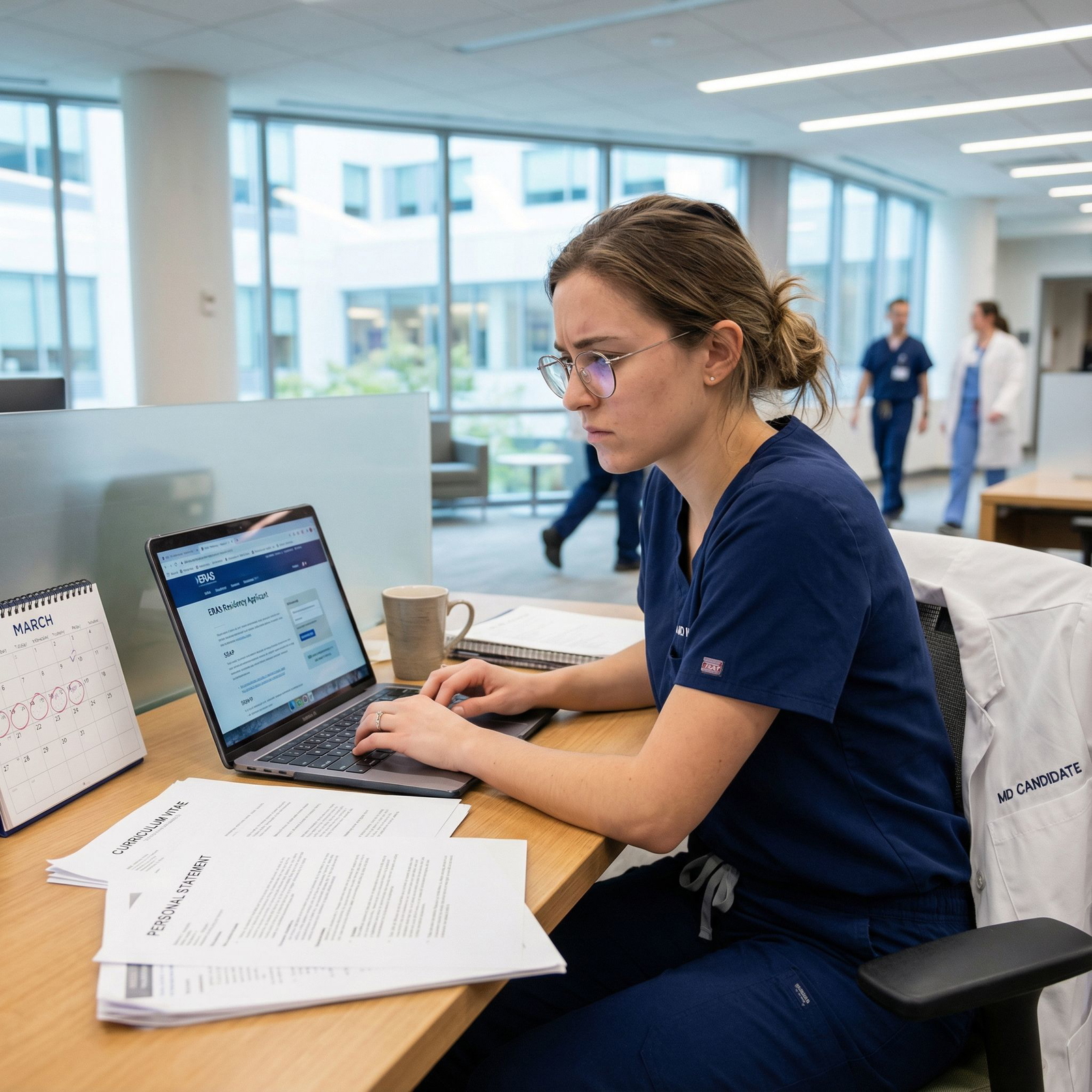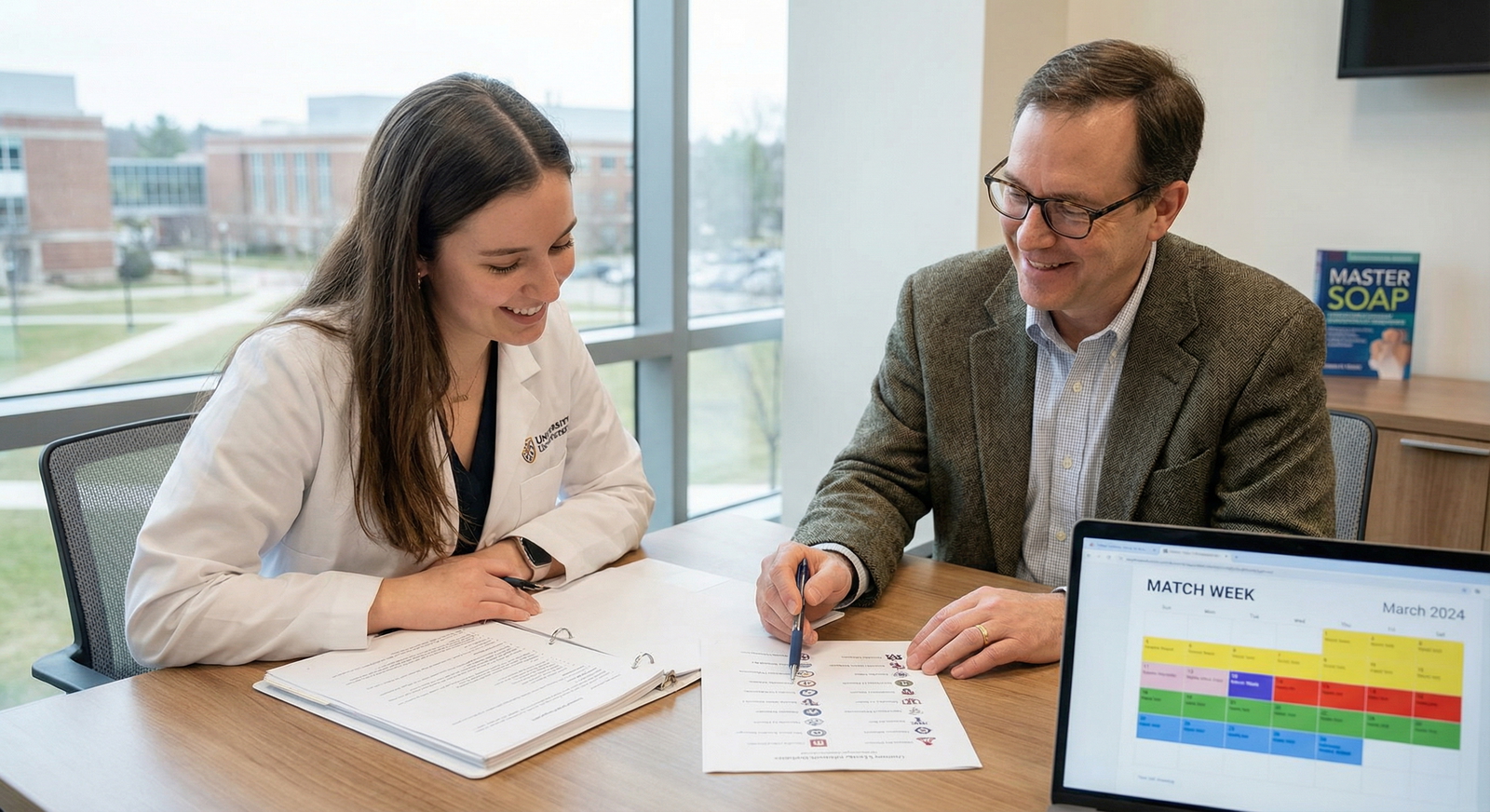
For a non-US citizen IMG, the Supplemental Offer and Acceptance Program (SOAP) can feel like the most intense 72 hours of your residency journey—especially when you are targeting a preliminary medicine year. With visa concerns, limited prelim IM spots, and time pressure, your SOAP preparation must be strategic, disciplined, and early.
Below is a detailed, step-by-step guide designed specifically for the foreign national medical graduate seeking a prelim IM position through SOAP. The goal is to help you move from panic to a structured, executable plan.
Understanding SOAP as a Non-US Citizen IMG in Preliminary Medicine
Before you can prepare effectively, you must be crystal clear on what is SOAP, how it works, and what is different for you as a non-US citizen IMG going after a preliminary medicine year.
What is SOAP?
The Supplemental Offer and Acceptance Program (SOAP) is NRMP’s formal process that allows unmatched or partially matched applicants to apply to unfilled residency positions during Match Week. It is not a second ERAS cycle; it is a tightly controlled, time-limited application and offer system.
Key features:
- You can apply only to programs with unfilled positions listed by NRMP.
- Applications are submitted through ERAS, but communication and offers occur via the NRMP system.
- There are multiple offer rounds over a few days.
- Once you accept an offer, you are legally bound to that program and cannot receive or accept other offers.
Why SOAP Is Different for Non-US Citizen IMGs
As a non-US citizen IMG or foreign national medical graduate, your SOAP experience is shaped by:
Visa requirements (J-1 vs H-1B)
- Many preliminary medicine programs are J-1 only.
- Fewer prelim programs sponsor H-1B, and they may have stricter USMLE score and timing requirements.
- Some programs do not sponsor any visas, even if they have unfilled spots.
Limited flexibility
- You must filter carefully for visa sponsorship AND prelim IM.
- Time is short; every wasted application is costly when you have a limited number of SOAP applications.
Competitive pressure
- Prelim IM positions are often sought by US grads who plan to continue into advanced specialties (e.g., neurology, radiology, anesthesiology).
- As a non-US citizen IMG, you must highlight your reliability, work ethic, and US healthcare readiness.
Licensing and documentation complexity
- ECFMG certification timing matters.
- Additional documents (e.g., passport, prior US visa history) can matter later for onboarding, but you must be ready early.
Understanding these differences frames how you plan your SOAP preparation.
Pre-Match Week Preparation: Laying the Groundwork Early
SOAP is chaotic if you start preparing only after you learn that you did not match. Most successful candidates begin months in advance, anticipating all possible outcomes.
1. Clarify Your Prelim Medicine Strategy
Ask yourself:
- Is a preliminary medicine year my top priority, or am I also open to:
- Transitional year?
- Prelim surgery?
- Categorical internal medicine in lesser-known programs?
- Is my primary goal for prelim IM:
- To meet a prerequisite for an advanced specialty (e.g., neurology, PM&R, anesthesiology)?
- To enter the US system, gain experience, and attempt to convert to categorical later?
The more flexible you are (within reason), the higher your chances during SOAP. However, you must remain honest about your long-term goals so you don’t accept an offer that blocks your future plans.
2. Get Your Credentials and Documents in Perfect Order
You cannot be competitive in SOAP if programs doubt your readiness.
Essential items:
ECFMG Certification
- Must be complete or guaranteed to be complete before residency start.
- If you are awaiting Step 2 CS-equivalent or OET results (for older cohorts), know the dates and communicate clearly.
USMLE Scores & Attempt History
- Ensure they are correctly uploaded in ERAS.
- Be prepared to explain any gaps, delays, or multiple attempts concisely and confidently.
Updated CV / ERAS Application
- Ensure every date is correct.
- Highlight recent US clinical experience, research, or observerships, especially in internal medicine.
Visa Status & History
- Understand your current status:
- Outside US, F-1, B1/B2, J-1 research, etc.
- Be ready to state clearly:
“I am eligible for J-1 sponsorship via ECFMG” or
“I am eligible for H-1B and have Step 3 completed.”
- Understand your current status:
3. Preparing a Prelim IM-Focused Personal Statement
Most people ignore personal statements in SOAP, but for a prelim IM position, a clear, targeted statement can set you apart.
Tips:
- Write 1 primary SOAP personal statement tailored to Preliminary Internal Medicine.
- Emphasize:
- Your clinical reliability: punctuality, work ethic, teamwork.
- Comfort with high workload, admissions, cross-cover.
- Specific reasons you value a strong medicine foundation, even if your future goal is an advanced specialty.
- Include 1–2 short examples of:
- Managing acutely ill patients.
- Handling night call or heavy patient loads (even from home country clinical experience).
- Avoid:
- Over-emphasis on research unless the program is very academic.
- Long explanations of personal hardship that distract from your readiness to work.
You can also prepare small variations of this statement (e.g., more research-oriented, more community medicine oriented) to upload selectively during SOAP if time allows.

Building a Targeted Prelim IM SOAP List as a Foreign National
The strongest predictor of SOAP success is not your score alone; it’s the quality of your program list strategy—especially for a non-US citizen IMG.
1. Learn From Historical Data (Before Match Week)
Before results day:
- Review:
- NRMP’s “Results and Data” PDFs from previous years.
- Specialty-specific data for preliminary medicine.
- Look at:
- Programs that historically have unfilled prelim IM positions.
- Regions that tend to be less competitive (often more rural or community-based).
Create a master spreadsheet with columns such as:
- Program name, NRMP code
- State, city, setting (university, community)
- Prelim IM or categorical IM or transitional
- Visa sponsorship (J-1, H-1B, none)
- Historical unfilled status (Yes/No/Unknown)
- Notes (IMG-friendliness, requirement for Step 3 for H-1B, etc.)
2. Identifying Visa-Friendly Prelim Medicine Programs
As a non-US citizen IMG, this is critical.
Sources:
- Program websites (often have a “Frequently Asked Questions” or “Eligibility” section).
- FREIDA and other program directories.
- Alumni of your medical school or fellow IMGs in your network.
- Social media forums and credible residency advice communities (double-check data).
Group programs into tiers for fast SOAP filtering:
- Tier A: Visa-Sponsoring, IMG-Friendly Prelim IM
- Explicitly state J-1 sponsorship.
- Mention international medical graduates on the current resident roster.
- Tier B: Visa-Sponsoring but Less Clear on IMG-Friendliness
- State J-1 policy, but unclear on IMGs.
- Tier C: Probably No Visa or Very Unlikely for IMG
- Explicit statement “US citizens or permanent residents only”.
- No international graduates in recent years.
During SOAP, you will prioritize Tier A and B.
3. Understand the Role of Prelim IM in Different Program Types
Not all prelim medicine years are the same:
- University Academic Centers
- Heavy workload, strong teaching.
- Often have many advanced specialty residents rotating through.
- More structured didactics; may be more competitive.
- Large Community Hospitals
- Often good mix of autonomy and supervision.
- Good options for IMGs; may be more open to foreign nationals.
- Smaller Community or Rural Programs
- May offer more hands-on exposure and less competition for procedures.
- Sometimes struggle to fill prelim spots—an opportunity during SOAP.
When ranking your targets for SOAP, balance:
- Your long-term goals (e.g., do you need strong letters for a future categorical IM application?).
- Your immediate needs (visa sponsorship, entering the system, any prelim medicine position).
Executing Your SOAP Preparation Timeline
SOAP is not just those 72 hours; your preparation starts well before Match Week and continues up to the first offer round.
1. Three to Six Months Before Match Week
- Finalize:
- ERAS content for all sections.
- At least one polished personal statement specifically for prelim IM.
- Begin:
- Compiling your target prelim program spreadsheet.
- Identifying visa-sponsoring programs.
- Network:
- Reach out to contacts in US internal medicine (mentors, attendings, prior IMGs).
- Let them know you are applying to prelim IM; ask if they can provide advice or advocate later if needed.
2. One Month Before Match Week
- Refine your spreadsheet:
- Add any updated program info (visas, contact details).
- Mark your priority programs.
- Decide in advance:
- Whether you are willing to consider transitional year or other prelim specialties in SOAP if prelim IM options are limited.
- Practice:
- SOAP-style interviews: short, direct, high-yield.
- 3–5 minute self-introduction focused on:
- Internal medicine interest.
- Reliability and work ethic.
- Adaptation to US system.
3. Week Before Match Week
- Confirm:
- All required documents are uploaded in ERAS.
- LoRs are properly assigned and there are no missing items.
- Prepare:
- Short bullet-point answers for common SOAP phone interview questions:
- Why preliminary medicine here?
- What are your long-term goals?
- Why did you go unmatched or partially matched?
- How will you manage the workload?
- Short bullet-point answers for common SOAP phone interview questions:
- Logistics:
- Make sure you have:
- Stable internet.
- Quiet room for phone/virtual interviews.
- Time blocked off during Match Week.
- Make sure you have:

Match Week: Real-Time SOAP Execution for Prelim Medicine
When the Monday of Match Week arrives and you learn that you are unmatched or partially matched in your advanced position, your SOAP plan must go into high gear.
1. Monday: Confirm Eligibility and Mindset
If NRMP/ERAS show that you are SOAP-eligible:
- Take 30–60 minutes to process emotions.
- Quickly shift into action mode—you have limited time to organize applications.
Re-check:
- Your ERAS profile for accuracy.
- Your visa status summary (you will need to present it clearly).
- Your prelim IM personal statement is ready to assign.
2. Reviewing the List of Unfilled Positions
NRMP will release the list of unfilled positions to SOAP-eligible applicants.
Immediate steps:
- Filter the list:
- Specialty: Internal Medicine – Preliminary
- Also consider Transitional Year if you’ve already decided you’re open to it.
- Cross-reference:
- Your spreadsheet (visa policy, IMG-friendliness).
- Categorize:
- High-priority prelim IM programs with confirmed J-1 (and possibly H-1B).
- Secondary options you might apply to if you have remaining slots.
3. Allocating Limited SOAP Applications
NRMP typically allows a limited number of applications during SOAP (often 45 total, but check the current year’s rules).
For a non-US citizen IMG focusing on prelim IM:
- Allocate the majority (e.g., 60–80%) to prelim internal medicine.
- Use remaining slots for:
- Transitional year programs that sponsor visas and are IMG-friendly.
- Other closely related prelim programs if they truly advance your long-term goals.
Prioritization criteria:
- Visa sponsorship that matches your situation.
- Clear history of IMGs in the program.
- Reasonable USMLE cutoffs relative to your scores.
- Geographic regions where you are willing to live and train.
4. Rapid Customization of Applications
Even in SOAP, avoid sending identical generic applications to every program.
Possible quick customizations:
- Use your prelim IM personal statement universally for prelim IM applications.
- For a few top-priority programs:
- Add 1–2 sentences in the opening or closing paragraph tailored to:
- Program’s mission (community care, underserved populations, academic research).
- Your specific interest in that region or patient population.
- Add 1–2 sentences in the opening or closing paragraph tailored to:
Keep this efficient; you will not have time for full rewrites.
5. Handling SOAP Interviews Effectively
Programs may:
- Call you directly.
- Email to schedule a quick video or phone meeting.
- Ask for rapid responses to additional questions.
During prelim IM SOAP interviews, focus on:
Clarity of your goals
- Example:
“My long-term goal is to pursue neurology, and I need a strong, hands-on preliminary medicine year to build my clinical foundation, especially in managing complex inpatients and acute conditions.”
- Example:
Reliability and work ethic
- Provide one concrete example of:
- Long hours.
- Managing heavy patient lists.
- Taking responsibility and communicating clearly with seniors.
- Provide one concrete example of:
Visa and logistics
- Be straightforward:
- “I will require J-1 visa sponsorship through ECFMG. My ECFMG certification is complete, and I can start on July 1.”
- If you are H-1B eligible and have Step 3: mention it clearly.
- Be straightforward:
Adaptability as a foreign national graduate
- Highlight:
- Successful adaptation to new systems (US observership, prior research in the US).
- Communication skills with multidisciplinary teams.
- Highlight:
Practice brief, structured answers using the STAR framework (Situation, Task, Action, Result) but keep them under 60–90 seconds per response.
6. Accepting or Declining SOAP Offers
When offers start:
- You may receive multiple offers in different rounds, but you can only hold one at a time.
- Each offer has a time limit for response.
Decision-making tips:
- Never accept a position you are certain you cannot attend (e.g., no visa sponsorship).
- Factor:
- Prelim IM vs transitional vs other.
- Program stability and accreditation.
- Your long-term goals and potential for strong letters.
Once you accept a preliminary medicine year via SOAP:
- You are contractually committed.
- You must withdraw from consideration for all other positions.
Post-SOAP Planning: Using Your Prelim IM Year Strategically
If you secure a prelim IM spot through SOAP, your story is not over; it’s just entering a new phase.
1. Clarify Expectations Early
Upon arrival:
- Meet with your Program Director or Chief Residents.
- Clarify:
- Your schedule.
- Opportunities for electives.
- Evaluation and feedback process.
2. Position Yourself for Future Applications
During your prelim year:
- Aim to secure strong letters of recommendation from:
- Internal medicine faculty.
- Program leadership.
- Demonstrate:
- Reliability: show up early, own your tasks.
- Professionalism: manage conflict, communicate respectfully.
- Clinical growth: seek feedback and act on it.
These will be essential if you later apply for:
- Categorical internal medicine.
- Another specialty requiring or valuing a prelim IM year.
3. Manage Visa and Licensing Timelines
Work closely with:
- Your program’s GME office.
- ECFMG for J-1 or institutional legal team for H-1B.
Ensure:
- No gap or violation in your visa status.
- You understand the implications for:
- Future J-1 waivers.
- Potential transitions to other programs.
FAQs: SOAP Preparation for Non-US Citizen IMGs in Preliminary Medicine
1. As a non-US citizen IMG, should I focus only on preliminary medicine during SOAP, or also apply to other specialties?
If your primary goal is to fulfill a prerequisite for a specific advanced specialty (e.g., neurology, radiology), then preliminary medicine and transitional year are usually the most relevant. However, given the competitiveness and your limited number of SOAP applications, you may also include a small number of other prelim or categorical positions that support your long-term path and sponsor visas. The key is to avoid scattering applications too widely without a clear strategy.
2. How important is it to have Step 3 completed before SOAP as a foreign national?
For J-1 visa sponsorship, Step 3 is not required before residency. But for H-1B, many programs require Step 3 completion. If you are a foreign national medical graduate hoping for H-1B sponsorship, having Step 3 done significantly improves your options—especially in prelim positions at academic centers. If you do not have Step 3, focus primarily on J-1–sponsoring prelim IM programs.
3. Will programs look negatively at my unmatched status during SOAP?
Programs understand that many qualified applicants go unmatched due to numbers, specialty choice, or interview distribution. As a non-US citizen IMG, you should be prepared to offer a brief, honest, non-defensive explanation (e.g., few interviews, competitive specialty). Emphasize what you have learned, how you have improved your application, and how motivated you are to contribute as a prelim IM resident. Your attitude and readiness often matter more than the fact that you are in SOAP.
4. Can I switch from a preliminary to a categorical internal medicine position later?
Yes, it is possible but not guaranteed. Many non-US citizen IMGs use a strong preliminary medicine year to later secure a categorical IM position at the same or another institution. This typically depends on:
- Your performance and reputation during the prelim year.
- Availability of categorical openings.
- Support from your program leadership.
If converting to categorical is a key long-term goal, discuss it carefully (and diplomatically) with mentors and, later, with your program leadership—after you have proven yourself clinically.
With deliberate SOAP preparation, a strong prelim IM–focused strategy, and a clear understanding of your visa and career goals, you can navigate Match Week with purpose rather than panic. As a non-US citizen IMG, you face additional barriers, but you also bring unique resilience and global perspective—qualities that many internal medicine programs deeply value when building their teams.