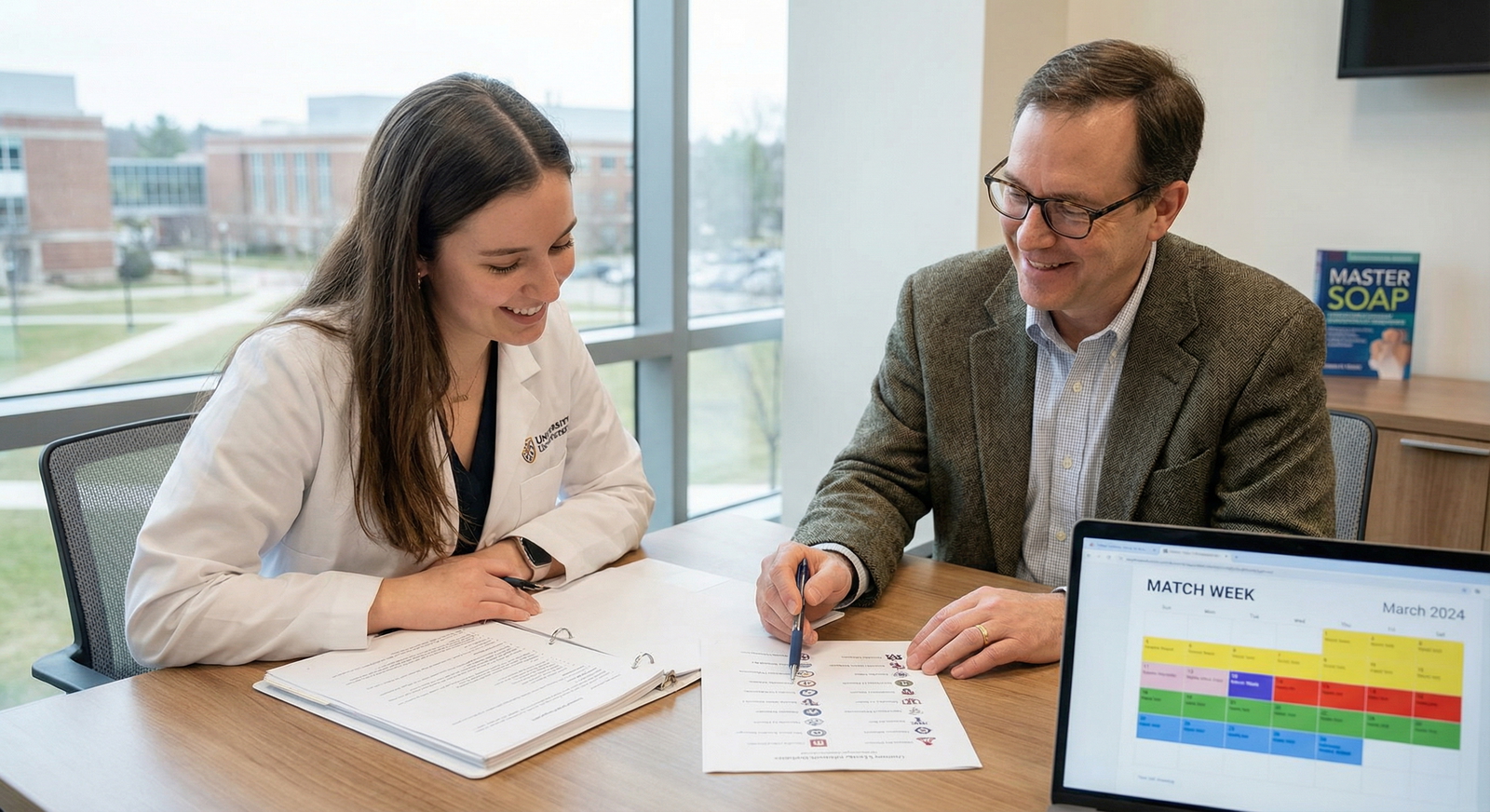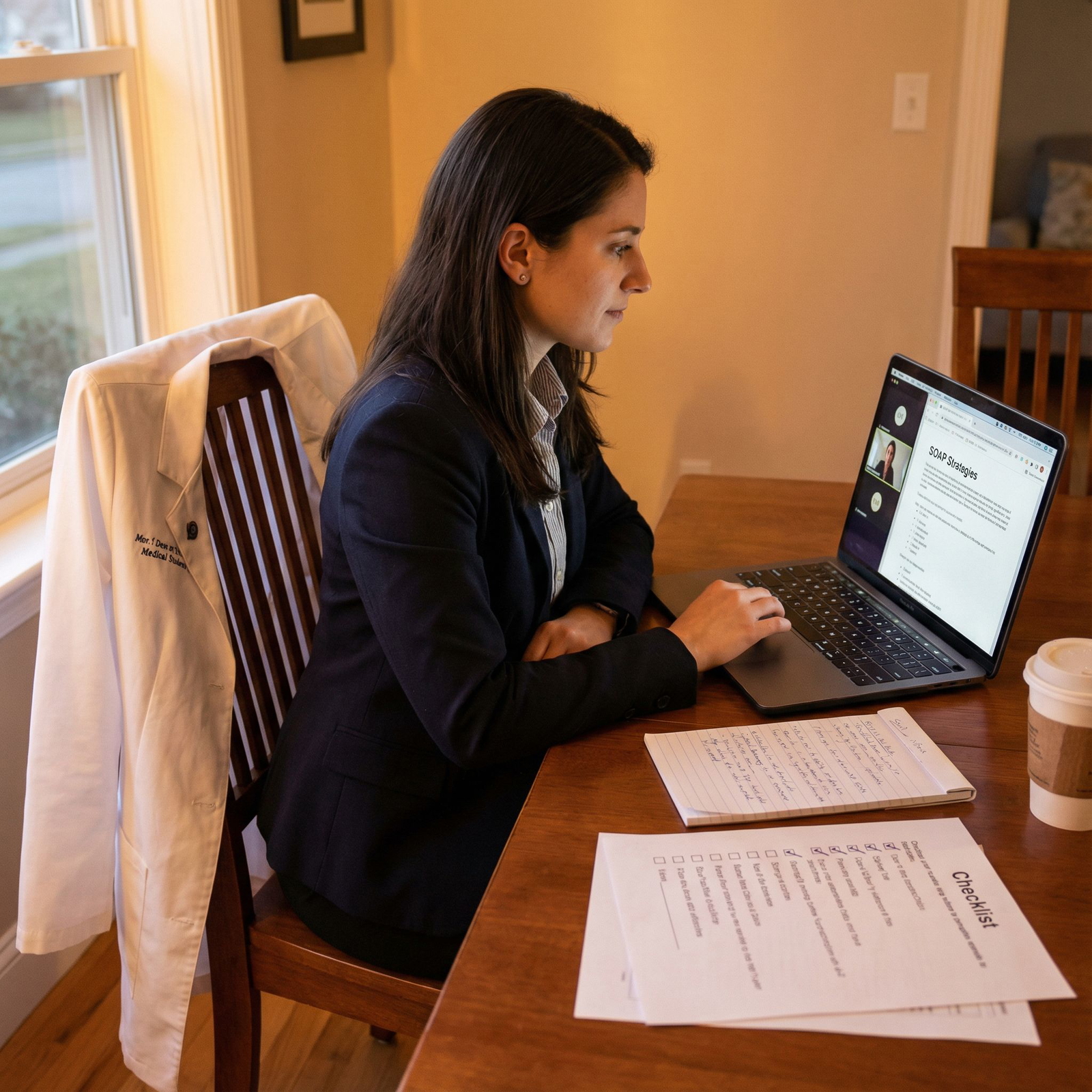
Preparing for the Supplemental Offer and Acceptance Program (SOAP) as a non-US citizen IMG aiming for Medicine-Psychiatry is fundamentally different from a standard Match cycle. It is faster, more stressful, and far less forgiving of disorganization—yet, with the right preparation, it can also be a second chance that meaningfully changes your trajectory.
This guide focuses specifically on SOAP preparation for non-US citizen IMGs interested in med psych residency (medicine psychiatry combined programs). It assumes you may be a foreign national medical graduate navigating visas, ECFMG certification, and the additional barriers that come with being a non-US citizen IMG.
Understanding SOAP: What It Is and Why It Matters for Non-US Citizen IMGs
Before you prepare, you must clearly understand what is SOAP and how it functions in the context of the Match.
What Is SOAP?
SOAP (Supplemental Offer and Acceptance Program) is a structured process that occurs during Match Week for applicants who:
- Are unmatched or partially matched (matched to a preliminary position only), and
- Are SOAP-eligible according to NRMP.
During SOAP:
- Unfilled programs list their open positions.
- Eligible applicants can apply only through ERAS to these positions.
- Programs may contact applicants (phone/video/email) to interview or screen.
- Offers are extended in four rounds; applicants can accept or reject offers within a limited window.
- Once you accept an offer, you are bound to that position.
For a non-US citizen IMG, SOAP adds layers of complexity:
- Visa sponsorship becomes critical (J-1 vs H-1B).
- Your pool of realistic programs may be smaller than for US grads.
- Many programs will move very quickly—and often prefer applicants they can onboard administratively without visa concerns.
Where Does Medicine-Psychiatry Fit into SOAP?
Medicine psychiatry combined programs are relatively small and highly specialized. Historically:
- Few (if any) med psych residency positions go unfilled, compared to categorical Internal Medicine or Psychiatry.
- If a medicine-psychiatry combined spot appears in SOAP, it is an exception, not the norm.
- You must therefore be realistic: your SOAP strategy cannot be only med psych; it must include related categorical and possibly preliminary options.
For most non-US citizen IMGs with a strong interest in med psych:
- Use SOAP to secure Internal Medicine, Psychiatry, or Transitional Year positions.
- Plan a long-term pathway: you may still build a career with dual interests in medicine and psychiatry even without a formal combined residency (e.g., fellowship, additional training, niche practice).
Step 1: Pre-SOAP Reality Check and Strategic Positioning
Effective SOAP preparation starts months before Match Week. Ideally, you should begin planning your SOAP strategy at the same time you submit your ERAS applications.
Assess Your Candidacy Honestly
Key factors to review as a foreign national medical graduate:
- USMLE scores: Are they competitive for Internal Medicine and Psychiatry in general?
- Attempts: Any failed Step attempts that may limit program interest?
- ECFMG certification status: Are you fully certified before Rank Order List certification? Without this, you may be SOAP-ineligible.
- Clinical experience:
- US clinical experience (USCE) in Internal Medicine, Psychiatry, or both
- Strong letters of recommendation from US attendings
- Visa status:
- Do you require a visa? (Most non-US citizen IMG do.)
- Are you flexible with J-1, or limited to H-1B only?
- Do your documents (passport, licensing, etc.) allow quick processing?
This reality check will guide:
- How broad your SOAP targets should be
- Whether you can realistically pursue H-1B sponsoring institutions
- Whether you should heavily prioritize J-1-friendly programs
Define Your Priorities Before SOAP Starts
Non-US citizen IMGs often struggle in SOAP due to last-minute indecision. Before Match Week:
Clarify your priority hierarchy, for example:
- Securing any ACGME-accredited residency position vs
- Only accepting certain specialties (e.g., IM, psych, transitional year) vs
- Only accepting programs that sponsor your preferred visa type
For an aspiring med psych residency candidate, a practical order might be:
- Categorical Internal Medicine (especially at academic or safety-net hospitals with strong psych services)
- Categorical Psychiatry
- Preliminary Medicine or Transitional Year (with plan to re-apply)
- Med psych residency spots if they appear (rare, but opportunistic)
Write this down as your SOAP decision framework so you are not improvising under pressure.

Step 2: Academic and Document Preparation Before Match Week
SOAP moves quickly. By the time the List of Unfilled Programs becomes available, you should not be assembling documents—you should be selecting and sending.
Optimize Your ERAS Application for SOAP
Your ERAS application during SOAP is the same primary application you used for the main Match, but you can:
- Edit your Personal Statements
- Update certain sections (if ERAS policy allows that season)
- Reassign documents strategically to different program types
For a medicine psychiatry combined–oriented applicant, consider preparing at least:
Medicine-focused personal statement
- Emphasize:
- Internal medicine clinical reasoning
- Managing complex chronic diseases
- Interest in medically ill patients with psychiatric comorbidities
- Subtly highlight your psych interests, without overshadowing IM.
- Emphasize:
Psychiatry-focused personal statement
- Emphasize:
- Insight into mental health systems and cultural psychiatry
- Communication and empathy
- Any work with underserved or high-need psychiatric populations
- Briefly connect to your broader interest in the interface with medicine.
- Emphasize:
Combined Medicine-Psychiatry personal statement (optional but valuable)
- If any med psych residency or similar combined programs appear in SOAP, this is ready.
- Focus themes:
- Integrated care
- Managing medically and psychiatrically complex patients
- Long-term goals in consultation-liaison, integrated primary care psychiatry, or academic med-psych.
Letters of Recommendation (LoRs)
You cannot usually add new LoRs during SOAP, so before ERAS opens:
- Obtain at least 1 strong Internal Medicine LoR
- Obtain at least 1 strong Psychiatry LoR
- Additional LoRs can be:
- From sub-specialty medicine rotations
- From research mentors in relevant fields (psychosomatic medicine, CL psychiatry, addiction, etc.)
In SOAP, you can re-assign which LoRs go to which programs:
- For IM programs: prioritize IM and any CL/med-psych letters.
- For Psych programs: prioritize Psychiatry letters and CL/consult letters.
- For Transitional Year: a mix of IM and any strong generalist letters.
Ensure SOAP and Visa Eligibility
A crucial step for non-US citizen IMG is ensuring no administrative barrier prevents SOAP participation.
Checklist:
- ECFMG certification:
- All exams passed and verified
- ECFMG certificate issued or guaranteed before Match Week
- NRMP registration complete and active
- ERAS account active and updated
- Contact information current and reliable:
- US phone number (VoIP if necessary)
- Professional email checked frequently
- Passport valid for the duration of your expected training
Understand the visa environment:
- J-1 visa: Most common for foreign national medical graduates.
- Sponsored by ECFMG
- Widely accepted among teaching hospitals
- H-1B visa:
- Requires USMLE Step 3 passed
- Not all programs sponsor H-1B
- Longer processing times
If you do not yet have Step 3, your realistic SOAP options lean heavily toward J-1–sponsoring programs.
Step 3: Building a SOAP Strategy Specifically for Medicine-Psychiatry–Oriented IMGs
Even though few official medicine psychiatry combined programs go into SOAP, you can still structure a plan that respects your long-term med psych goals.
Tier Your Target Programs in Advance
Before Match Week, build a spreadsheet with potential program types:
Categorical Internal Medicine Programs
- Priority to:
- Programs with strong Psychiatry or CL services
- Academic centers or safety-net hospitals
- Programs with explicit J-1 support
- Research:
- Faculty with psych/med-psych interests
- IM rotations through psych or CL
- Priority to:
Categorical Psychiatry Programs
- Priority to:
- Programs with strong medical-psychiatry or CL rotations
- Institutions with med psych or psychosomatic research
- Research:
- Tracks in integrated or collaborative care
- High exposure to medically complex psychiatric patients
- Priority to:
Transitional Year & Preliminary Internal Medicine
- Useful as:
- A clinical foothold in the US system
- A year to improve CV and reapply
- Focus:
- Programs within institutions that also have Psychiatry or IM residencies you may later apply to.
- Useful as:
Any Medicine-Psychiatry Combined or Related Programs
- Integrated FM-Psych, Internal Medicine with strong CL
- Dual training or “tracks” within institutions, even if not ACGME dual-boarded.
During SOAP preparation, you will not know which specific programs are unfilled, but:
- You can prepare lists of institutions where you’d be happy to train in any of the above categories.
- Once the SOAP unfilled list appears, you can rapidly identify overlapping institutions.
Align Your Long-Term Med-Psych Goals with Flexible Short-Term Choices
You do not need to abandon your med psych identity just because you SOAP into a categorical IM or Psych program.
Examples of med-psych–aligned long-term paths:
- Internal Medicine now, Psych later:
- Do a categorical IM residency.
- Pursue consultation-liaison psychiatry fellowship, addiction medicine, or behavioral health–focused primary care.
- Psychiatry now, Med integration later:
- Do a categorical Psychiatry residency.
- Seek CL psychiatry, integrated care roles, or dual appointments with medicine departments.
- Transitional Year:
- Gain US experience, US LoRs, and improved application profile.
- Re-apply more competitively to medicine psychiatry combined or categorical programs.
The key is to see SOAP as securing any strong internal medicine or psychiatry platform, not a failure to match med psych.

Step 4: Tactical SOAP Preparation – Before and During Match Week
Before Match Week: Practice and Logistics
- Interview Preparation Focused on SOAP Dynamics
SOAP interviews are often:
- Short (10–20 minutes)
- Rapidly scheduled
- Focused on “fit” and readiness rather than long CV deep-dives
Prepare concise answers to:
- “Why did you go unmatched, and what have you learned from it?”
- “Why are you interested in our Internal Medicine/Psychiatry program specifically?”
- “How do your long-term goals in medicine-psychiatry combined align with this program?”
- “What is your visa status, and are you able to start on time?”
As a non-US citizen IMG, be ready to explain your visa needs clearly and confidently, without sounding like an administrative burden.
- Document and Technology Setup
- Keep:
- Updated CV (even though ERAS is primary)
- Digital copies of:
- USMLE score reports
- ECFMG certificate
- Medical diploma and transcript
- Time-zone calendar aligned to Eastern Time (NRMP standard)
- Ensure:
- Stable internet
- Quiet background for video calls
- Professional attire ready
- Time-Block Your SOAP Week
SOAP moves in blocks:
- Monday: Unmatched notification and SOAP-eligibility determination
- Tuesday morning: Unfilled list (for SOAP-eligible applicants) and application submissions begin
- Wednesday–Thursday: Interviews and communication
- Offer rounds: Throughout midweek (exact days/times change by year)
Clear your schedule as much as possible; treat it as full-time work.
During SOAP: Execution and Decision-Making
- Analyzing the Unfilled List
Once you access the unfilled list:
- Filter by:
- Specialty (Internal Medicine, Psychiatry, Transitional Year, Preliminary IM)
- State/region preferences (if applicable)
- Visa sponsorship (using program websites and databases like FREIDA or institutional GME pages)
- Mark:
- High-priority programs (aligned with med psych, strong academic environments)
- Mid-priority programs (viable IM or psych positions with acceptable visa policies)
- Safety options (any J-1-sponsoring program you’re willing to join).
Remember: You usually have a limited number of programs you can apply to during SOAP. Prioritize carefully.
- Customizing Applications Per Program Type
For each program type:
- Assign the most relevant personal statement.
- Assign letters of recommendation best matching the specialty.
- If possible, slightly adjust experiences in ERAS to highlight relevant rotations.
For example:
- For a safety-net hospital IM program:
- Emphasize your experience with underserved populations and interest in complex medical-psychosocial cases.
- For a psych program with a strong CL service:
- Highlight your interest in medically ill psychiatric patients and liaison work, clearly linking to med psych.
- Managing Communication from Programs
Programs may contact you by:
- Phone calls
- ERAS messaging
Best practices:
- Answer unknown US numbers during SOAP week.
- Check email frequently, including spam/junk folders.
- Reply promptly and professionally.
If asked about being a non-US citizen IMG:
- Clearly state your visa needs (e.g., “I am eligible for a J-1 visa and do not require H-1B sponsorship,” or “I have passed Step 3 and am eligible for H-1B if your institution sponsors it.”)
- Reassure them of your readiness to start on time.
- Handling Offer Rounds
During each SOAP offer round:
- You may receive zero, one, or multiple offers.
- You can:
- Accept one offer (and then you are done), or
- Let offers expire if they are not acceptable, hoping for better offers in later rounds.
As a non-US citizen IMG, balance:
- The risk of no further offers vs
- Your desire for your preferred specialty/location.
Use your pre-written SOAP decision framework:
- Example decision rule: “I will accept any categorical Internal Medicine position that sponsors a J-1 visa by the second offer round, even if not in my ideal location.”
Step 5: After SOAP – Securing Your Future Med-Psych Path
Whether you match through SOAP or not, you must immediately start planning the next phase.
If You Match in SOAP
- Confirm and Document Everything
- Save emails and NRMP notifications confirming your SOAP residency.
- Contact program coordinator to:
- Clarify next steps
- Start visa documentation promptly
- Confirm start date and orientation schedule
- Position Yourself for a Med-Psych–Aligned Career
Within your new program:
- Seek out rotations that bridge medicine and psychiatry:
- CL psychiatry
- Addiction medicine
- Behavioral health consults in medical wards
- Find mentors with:
- Interest in integrated care
- Joint appointments in IM and Psychiatry
- Engage in:
- Quality improvement projects at the interface of medical and psychiatric care
- Research in psychosomatic medicine, collaborative care, or population mental health within primary care.
- Stay Connected to Combined Training Opportunities
- Track med psych residency programs and CL fellowships.
- Attend conferences (e.g., Academy of Consultation-Liaison Psychiatry, APA) once you are in training.
- Consider long-term options:
- Fellowship
- Academic career in integrated care
- Hospitalist roles with psychiatric expertise
If You Do Not Match in SOAP
While extremely disappointing, this is not the end of your path as a foreign national medical graduate.
Immediate steps:
- Request Feedback From Programs and Mentors
- Ask your advisors or prior interviewers (from the regular Match) if appropriate.
- Identify the biggest barriers:
- Scores?
- Clinical experience?
- Visa issues?
- Communication or interviewing skills?
- Create a 12-Month Plan
Focus on:
- Strengthening your CV:
- US clinical experience (observerships, externships)
- Research or QI projects related to internal medicine, psychiatry, or med-psych
- Improving your profile:
- Take and pass Step 3 (especially if you aim for H-1B–sponsoring programs)
- Achieve new publications, poster presentations, or meaningful community work
- Building US-based professional relationships:
- Mentors who could write strong letters
- Networking through conferences or academic centers
- Reassess Specialty and Geographic Flexibility
If med psych residency slots remain extremely limited, consider:
- Targeting either Internal Medicine or Psychiatry more strongly in your next cycle.
- Expanding geographic preferences to include community programs and less competitive regions that sponsor visas.
Frequently Asked Questions (FAQ)
1. As a non-US citizen IMG, am I at a disadvantage in SOAP compared to US graduates?
Yes, in several ways:
- Visa sponsorship requirements reduce the number of programs that can consider you quickly.
- Some programs may avoid complex visa paperwork under tight SOAP timelines.
- Limited US clinical experience can also be a barrier.
However, you can mitigate this by:
- Focusing on J-1–friendly institutions
- Being extremely responsive and prepared
- Having clear, concise communication about your visa status and readiness to start
2. Is it realistic to aim for a Medicine-Psychiatry combined residency through SOAP?
Usually, no. Medicine psychiatry combined programs are small and typically fill in the main Match. Occasionally, a spot may appear, but you cannot plan your SOAP strategy around this. Instead:
- Use SOAP to secure a strong categorical IM or Psychiatry position.
- Aim to build a med-psych–oriented career through rotations, fellowships, and academic work.
3. How many programs should I apply to during SOAP, and how specialized should I be?
You are limited by NRMP rules to a certain number of applications during SOAP (check the current cycle’s limit). For a foreign national medical graduate:
- Apply broadly within Internal Medicine, Psychiatry, Transitional Year, and Preliminary IM, prioritizing visa-friendly programs.
- Do not apply only to highly competitive academic centers.
- Use most applications on realistic targets where your scores, experiences, and visa status align.
4. If I only want H-1B sponsorship, should I still participate in SOAP?
You can, but you are at higher risk of remaining unmatched. In SOAP:
- Many programs either do not sponsor H-1B or cannot process it quickly.
- If you do not have Step 3, H-1B is not an option.
For most non-US citizen IMGs, especially those urgently needing a position, flexibility with J-1 visa greatly increases SOAP success. If you are H-1B-only by choice rather than necessity, reconsider that stance in the SOAP context.
By preparing deliberately and early—academically, logistically, and emotionally—you give yourself the best chance to use SOAP not merely as a last resort, but as a structured second opportunity to enter training and continue your long-term journey toward a medicine-psychiatry–integrated career.