Understanding SOAP for the Non-US Citizen IMG in Radiation Oncology
For a non-US citizen IMG interested in radiation oncology residency, the Supplemental Offer and Acceptance Program (SOAP) can feel both confusing and high‑stakes. Radiation oncology is a small, competitive specialty, and few positions are typically available during SOAP. Yet, with smart SOAP preparation, you can still use this phase to strengthen your overall path toward a future rad onc match—even if you ultimately match into a different preliminary or transitional year first.
This guide is tailored specifically to the foreign national medical graduate who:
- Requires a visa (J-1 or H‑1B)
- Is targeting radiation oncology long-term
- May be going through SOAP (or wants to be fully prepared if they become SOAP-eligible)
We’ll walk through what SOAP is, how it intersects with radiation oncology, how to prepare your materials, and how to use SOAP strategically as a non-US citizen IMG.
1. What Is SOAP, and Why It Matters for Radiation Oncology?
SOAP (the Supplemental Offer and Acceptance Program) is NRMP’s structured process that allows unmatched or partially matched applicants to obtain unfilled residency positions during Match Week.
1.1. Key SOAP Concepts
For context:
- Who is SOAP-eligible?
Applicants who:- Registered for the Main Residency Match
- Are unmatched or partially matched after the algorithm
- Are not withdrawn or ineligible
- When does SOAP occur?
- Match Week (usually March), after you receive your “Did I Match?” status.
- Multiple offer rounds over several days.
- How many applications can you send?
- Up to 45 total programs during SOAP.
If you’re a non-US citizen IMG, SOAP matters because:
- It may be your last realistic pathway to securing US clinical training this year.
- Visa-sponsoring programs are more limited during SOAP.
- Radiation oncology has very few SOAP openings, but those that appear are often highly competitive and may preferentially consider US graduates or IMGs with strong US ties.
So, part of SOAP preparation is being realistic about whether you’ll focus on rad onc openings (if any) or use SOAP to secure a prelim/transitional or alternative specialty spot that keeps you clinically active in the US while you continue to build toward a radiation oncology residency in a future cycle.
2. Realities of SOAP for Radiation Oncology and Non-US Citizen IMGs
Radiation oncology is a relatively small specialty in the NRMP. The number of positions is low, and historically:
- Most positions fill during the main rad onc match.
- SOAP openings in radiation oncology, if they exist at all in a given year, are very limited.
- Programs with unfilled rad onc spots may:
- Prioritize US grads with robust academic or research backgrounds.
- Have limited flexibility or time to handle complex visa issues during SOAP.
2.1. Visa Considerations During SOAP
For the foreign national medical graduate requiring a visa:
- J-1 visa (ECFMG-sponsored) is the most common and generally easier for programs to manage quickly.
- H-1B visa is more complex, costly, and time-sensitive; many programs will not initiate H-1B during SOAP.
- Some programs explicitly list “No visa sponsorship” in ERAS or in their institutional GME policies.
During SOAP, program staff are working under intense time pressure. Any additional administrative burden—such as complex visa arrangements—can be a disadvantage unless:
- They have prior experience sponsoring visas.
- They have a clear institutional policy that supports international recruitment.
2.2. Strategic Reality Check
Given the combination of:
- Few rad onc SOAP positions
- Intense competition
- Visa constraints
Your SOAP strategy should usually prioritize:
- Primary goal: Secure any ACGME-accredited residency position that is compatible with your long-term rad onc ambitions (e.g., internal medicine prelim, transitional year, sometimes preliminary surgery or prelim medicine if you have flexibility).
- Secondary goal: Apply to any radiation oncology SOAP positions if:
- They are available.
- The program accepts IMGs and sponsors visas.
- Your profile is reasonably competitive.
This doesn’t mean abandoning radiation oncology. It means thinking long-term: building clinical experience, a US record of performance, and possibly research credentials that strengthen your application for a future rad onc match.
3. Pre-SOAP Preparation: What You Must Have Ready Before Match Week
The most effective SOAP preparation happens months before Match Week. As a non-US citizen IMG targeting radiation oncology, you need a plan that addresses clinical, academic, and visa-related aspects.

3.1. Know Your Eligibility and Documents
Ensure well ahead of time:
- ECFMG Certification is complete and current.
- USMLE scores (Step 1, Step 2 CK, and if applicable Step 3) are reported in ERAS.
- Medical school diploma and transcript are verified.
- Visa status clarity:
- If you’re on a visa already (e.g., F-1 with OPT, J-1 research), understand your timelines.
- If you’re abroad, know which visas you can obtain and typical processing times.
Keep copies (scanned and accessible) of:
- Passport
- Previous visa documentation
- ECFMG certificate
- USMLE score reports
You usually won’t upload these to ERAS, but being able to quickly answer visa questions from programs is essential during SOAP calls or emails.
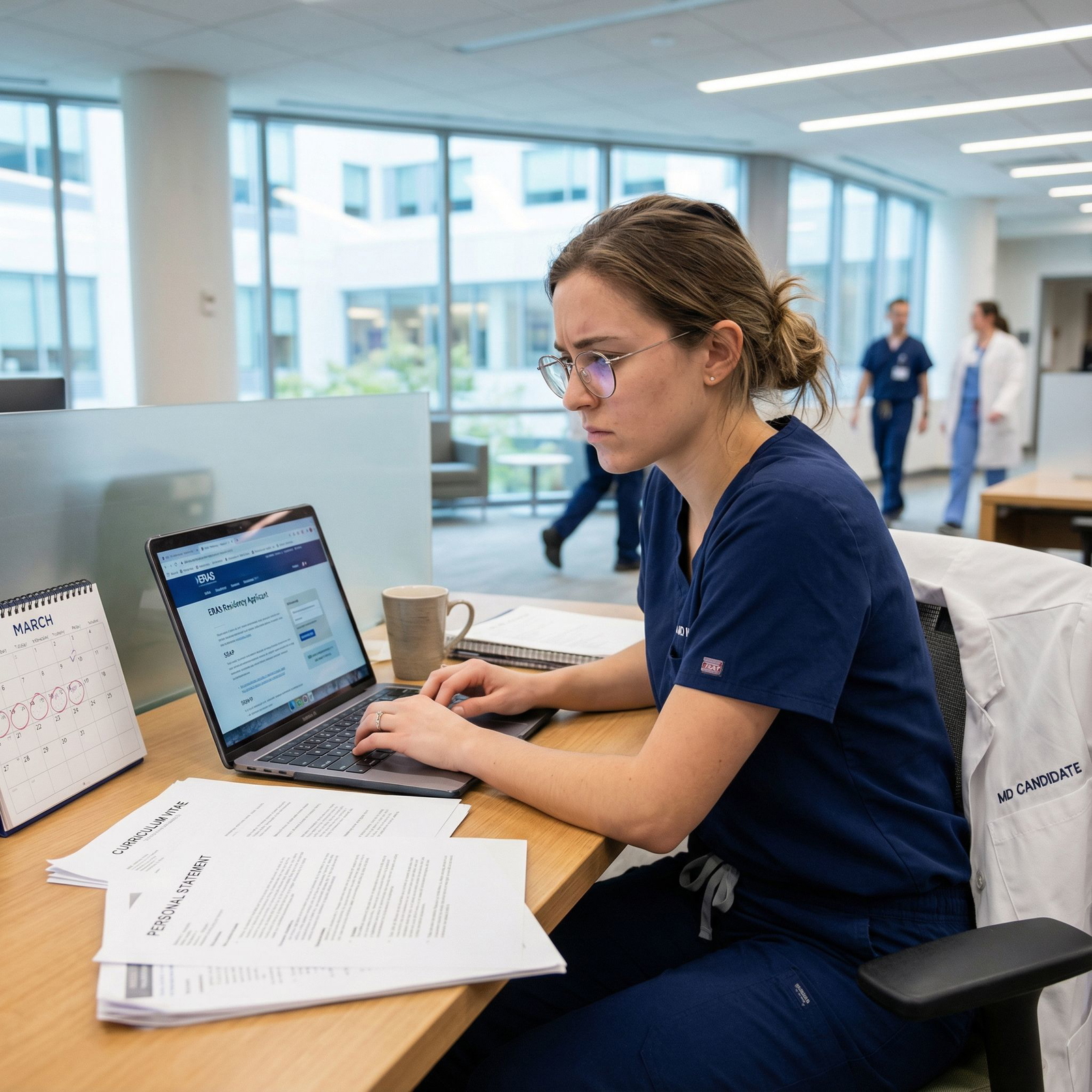
3.2. Update and Adapt Your ERAS Application
Your ERAS application is your primary tool during SOAP. Before Match Week:
Review and refresh your CV and experiences section:
- Highlight any radiation oncology research, electives, observerships.
- Emphasize oncology-related activities (palliative care, internal medicine oncology rotations, tumor boards).
- Showcase any US clinical experience and strong continuity of activity.
USMLE/COMLEX and academic profile:
- You can’t change your scores, but you can:
- Emphasize upward trends.
- Clarify interruptions (e.g., family, health, immigration) in a brief way if necessary in your personal statement.
- You can’t change your scores, but you can:
3.3. Prepare Multiple Personal Statements
In SOAP, you may apply to different specialties and program types. For a non-US citizen IMG with a rad onc goal, prepare at least:
Radiation Oncology Personal Statement
- Focus on:
- Your motivation for oncology and radiation specifically.
- Any rad onc research, electives, or mentorship.
- Long-term career vision (academia, global oncology, etc.).
- Keep it concise; programs have limited time to review.
- Focus on:
Internal Medicine / Preliminary / Transitional Year Personal Statement
- Emphasize:
- Core clinical interest and aptitude in internal medicine.
- How a strong intern year will prepare you for a future subspecialty such as oncology.
- You can subtly mention your long-term interest in oncology/rad onc, but the statement must still fully respect the immediate specialty.
- Emphasize:
Backup Specialty Statement (Optional)
- If you are open to another field (e.g., family medicine) as a path to oncology-adjacent roles or long-term practice, create a tailored statement.
You cannot rewrite these during the short SOAP window efficiently; they must be ready in ERAS for quick assignment to specific programs.
3.4. Letters of Recommendation Strategy
By SOAP, your letters are usually already in place. However, plan ahead:
- Try to secure 1–2 oncology‑relevant letters:
- Radiation oncology attendings (ideal)
- Medical oncologists
- Hematologists/oncologists
- Also secure 1–2 strong general clinical letters:
- Internal medicine, surgery, or primary care attendings who can testify to your clinical abilities, teamwork, and work ethic.
For SOAP flexibility:
- A balanced set of letters (oncology + general IM/surgery) helps you credibly apply to both:
- Radiation oncology positions (if any open)
- Preliminary or categorical IM/TY positions
4. Building a SOAP Strategy as a Foreign National Targeting Rad Onc
SOAP is as much about strategy as it is about documentation. As a non-US citizen IMG, you must align your SOAP preparation with realistic opportunities.
4.1. Before Match Week: Scenario Planning
Plan for different outcomes:
Scenario A: You fully match in radiation oncology
- SOAP does not apply; you’re done. But the planning helps you stay calm if the outcome is different.
Scenario B: You match prelim year but not advanced radiation oncology (partially matched)
- You might use SOAP to search for:
- Unfilled advanced rad onc positions (rare).
- Other advanced specialties (very uncommon as a strategy).
- Often, the main rad onc opportunity is in future application cycles after finishing prelim/internal medicine work and possibly rad onc research.
- You might use SOAP to search for:
Scenario C: You are completely unmatched
- SOAP becomes critical. Focus on:
- Securing a prelim/TY/categorical IM spot.
- Applying to any rad onc SOAP positions if they exist and match your visa and IMG profile.
- SOAP becomes critical. Focus on:
4.2. Program Targeting During SOAP
On Monday of Match Week, after learning you are SOAP-eligible, you can see the list of unfilled programs.
As a foreign national medical graduate:
Filter programs by:
- Specialty/type: Internal Medicine (categorical, preliminary), Transitional Year, Family Medicine, rarely rad onc.
- Institutional visa policy:
- Many programs list “J-1” or “J-1 and H-1B” on their websites.
- Some will explicitly state “No visa sponsorship.” Avoid these; you have limited applications.
- IMG-friendliness:
- Check past match data (if available online).
- Look for current residents’ profiles: do they include IMGs? Non-US citizens?
Prioritize:
- Programs with a history of welcoming IMGs.
- Large academic centers or community programs affiliated with academic centers, especially those with robust oncology departments.
- Institutions that have a radiation oncology department even if you’re applying to internal medicine. This increases opportunities to:
- Attend tumor boards.
- Collaborate on oncology research.
- Network with rad onc faculty later.
4.3. Balancing Ambition with Realism
You have 45 total SOAP applications. A possible distribution strategy could be:
- 0–5 applications to radiation oncology (if any SOAP positions exist and are visa- and IMG-friendly).
- 20–30 applications to Internal Medicine (categorical and prelim) at IMG-friendly, visa-sponsoring programs.
- 10–20 applications to Transitional Year or Family Medicine programs that are:
- In institutions with oncology services.
- Open to foreign national applicants.
This is just an example. The exact split depends on:
- The actual unfilled list that year.
- Your step scores and academic record.
- Where you may already have connections or prior rotations.
5. Executing During Match Week: Step-by-Step SOAP Preparation in Action
Once Match Week begins, everything moves quickly. Your preparation allows you to navigate this chaos methodically.

5.1. Monday: “Did I Match?” and Emotional Management
When you receive news that you are unmatched or partially matched:
- Allow yourself a brief emotional reaction, but set a time limit (e.g., 1–2 hours).
- Quickly pivot to implementation mode:
- Confirm SOAP-eligibility in NRMP.
- Log in to ERAS and NRMP to review instructions and timelines.
As a non-US citizen IMG, every hour counts because you may need to:
- Recheck institutional policies on visas.
- Coordinate across time zones (if you’re abroad).
5.2. Reviewing the Unfilled List
When the list of unfilled programs is released:
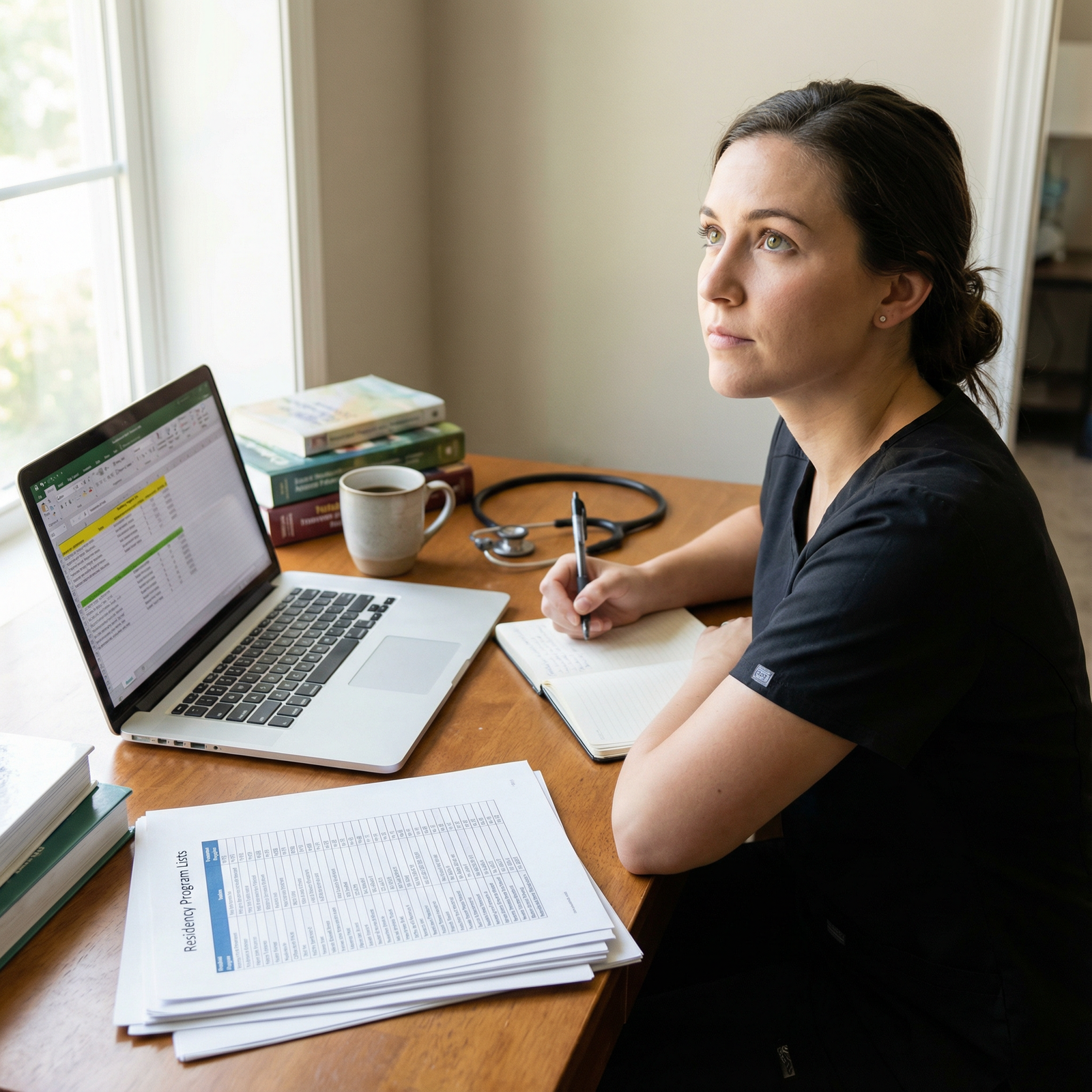
Export or copy the list into a spreadsheet.
Add columns:
- Visa sponsorship (J-1 / H-1B / None / Unknown)
- IMG-friendly status (Yes / No / Unclear)
- Specialty type (Rad Onc / IM Categorical / IM Prelim / TY / Other)
- Priority (High / Medium / Low)
Research quickly:
- Institution’s GME website for visa info.
- Program’s website for resident profiles.
- Any acquaintances or mentors who might know about the program.
Rank programs:
- High priority: Accepts J-1; known IMG presence; oncology infrastructure.
- Medium: Visa-unclear but otherwise attractive; will require you to ask early in contact.
- Low: No clear visa policy and limited IMG history; only consider if you still have remaining application capacity after prioritizing better fits.
5.3. Assigning Personal Statements and Documents in ERAS
For each program:
Assign:
- The correct personal statement (rad onc vs internal medicine vs TY).
- Appropriate letters of recommendation:
- For rad onc: prioritize oncology-related letters + one strong general clinical letter.
- For internal medicine/TY: prioritize strong general clinical letters and optionally one rad onc letter if it emphasizes your clinical skills.
Ensure your ERAS application is error-free:
- Double-check dates.
- Make sure there are no unexplained gaps.
- Confirm contact info is up to date; programs may call or email quickly.
5.4. Communication and Interviews During SOAP
During SOAP, you cannot cold-contact programs about unfilled positions until they contact you first (per NRMP rules). However, once programs reach out:
Respond promptly and professionally:
- Keep your phone near you and check email frequently.
- Use a professional voicemail greeting.
- If abroad, manage time zones carefully.
Prepare a brief self-introduction:
- 60–90 seconds summarizing:
- Who you are (non-US citizen IMG, ECFMG-certified).
- Your main clinical interest (oncology and patient-centered care).
- Your USMLE performance and any US clinical experience.
- Your visa needs (e.g., “I would require J-1 visa sponsorship, and I’m fully eligible through ECFMG.”)
- 60–90 seconds summarizing:
SOAP interviews (usually virtual, brief):
- Be ready to explain:
- Why you’re interested in the program.
- How you handle high workloads and adapt quickly.
- Your commitment to learning and teamwork.
- Your long-term goals in oncology while still fully investing in the program’s specialty and community.
- Be ready to explain:
5.5. Being Transparent but Strategic About Radiation Oncology Goals
If you are interviewing for:
- Internal medicine or transitional year:
You can say:- You’re passionate about oncology and see internal medicine as a strong foundation.
- You would value exposure to hematology/oncology and radiation oncology clinics if available.
- But you must also clearly state that you will fully commit to being an excellent resident in their program, no matter what your long-term subspecialty plans are.
Avoid sounding like you will treat their program as a “stepping stone” only. Emphasize:
- Commitment to patient care.
- Willingness to engage in teaching, QI projects, and hospital service.
- Desire to integrate into their team and community.
6. Post-SOAP Outcomes: Aligning Your Next Steps With a Future Rad Onc Match
SOAP ends with either:
- You accept an offer and are matched to a program.
- You remain unmatched after SOAP.
Both scenarios can still be aligned with your long-term goal of entering radiation oncology.
6.1. If You Match Through SOAP
If you secure a position (even outside rad onc):
Understand your program’s oncology landscape:
- Is there a cancer center?
- Are there tumor boards you can attend?
- Are there rad onc or med onc faculty doing research?
Plan your first year strategically:
- Be an outstanding resident first: your reputation will matter.
- Look for onco-related electives or rotations.
- Volunteer for oncology QI projects or research when time permits.
Build relationships:
- Attend tumor boards.
- Introduce yourself to radiation oncology faculty.
- Seek a mentor who can advise you on the rad onc match process in the US.
Consider a dedicated research year later:
- If your program or institution has rad onc labs or clinical trials groups, a research year between PGY-1 and PGY-2/3 may dramatically strengthen your rad onc application.
6.2. If You Do Not Match After SOAP
This is difficult emotionally, but many IMGs ultimately succeed by regrouping strategically.
For a non-US citizen IMG aspiring to rad onc:
Clarify your immigration and visa options:
- If you’re in the US on another status (e.g., research J-1), see if you can extend or pivot to a research-focused role.
- If abroad, explore remote or hybrid research opportunities with US labs.
Pursue radiation oncology or oncology-related research:
- Look for:
- Postdoctoral positions
- Research fellow roles in radiation oncology or medical oncology
- Aim for:
- Publications, abstracts, and conference presentations.
- Tangible contributions that demonstrate commitment and potential.
- Look for:
Gain US clinical exposure if feasible:
- Observerships in radiation oncology or hematology/oncology.
- Shadowing opportunities at cancer centers.
Reassess application weaknesses:
- Low USMLE scores? Consider:
- Strong research profile.
- Step 3 if acceptable for your visa and profile.
- Limited US clinical exposure? Emphasize any new US activities in your next application.
- Low USMLE scores? Consider:
Plan for the next rad onc cycle and backup specialties:
- Most successful non-US citizen IMGs in radiation oncology have multi-year plans.
- Use this year to become a substantially stronger candidate, not just “reapply with the same profile.”
FAQs: SOAP Preparation for Non-US Citizen IMGs in Radiation Oncology
1. As a non-US citizen IMG, is it realistic to match directly into radiation oncology through SOAP?
It is rare but not impossible. Radiation oncology programs seldom have multiple unfilled positions, and competition is strong. For a non-US citizen IMG, the added complexity of visa sponsorship makes direct rad onc SOAP matches uncommon. You should generally treat SOAP as a way to secure a preliminary or categorical position that maintains your clinical trajectory while you build toward a future rad onc match.
2. Should I still apply to radiation oncology positions during SOAP if I see them listed?
Yes—if the positions:
- Accept IMGs and sponsor J-1 visas (or H-1B if clearly supported).
- Are a reasonable fit for your academic profile.
However, limit the number of applications you “spend” on rad onc during the rad onc match/SOAP period. You only have 45 total applications, and it’s typically wiser to focus the majority on internal medicine, transitional year, or other realistic positions that can support your long-term oncology goals.
3. What is the best SOAP preparation step for a foreign national medical graduate targeting rad onc?
The single most important SOAP preparation step is to have a clear, flexible plan and fully prepared application materials well before Match Week. Concretely:
- Multiple tailored personal statements (rad onc, IM, TY).
- Balanced letters of recommendation (oncology + general clinical).
- A pre-constructed strategy for identifying and prioritizing visa-sponsoring, IMG-friendly programs in backup specialties.
This preparation allows you to respond quickly during SOAP and maximize your chances of securing a residency position that keeps you on track for a future radiation oncology career.
4. If I SOAP into internal medicine or a transitional year, will that hurt my long-term chances in the rad onc match?
Not at all—in many cases, it can help. Program directors in radiation oncology often value:
- Strong performance in a US-based intern year.
- Evidence of clinical maturity, professionalism, and teamwork.
- Oncology research and meaningful mentorship.
If you excel in your SOAP-placed residency, engage in oncology or rad onc projects, and maintain a clear, well-documented interest in radiation oncology, you can become more competitive for the rad onc match in a future cycle.
By preparing early, understanding what SOAP is and how it works, and building a realistic, structured strategy around your unique status as a non-US citizen IMG, you can use SOAP not just as an emergency backup, but as a deliberate step in a multi-year journey toward a successful career in radiation oncology.