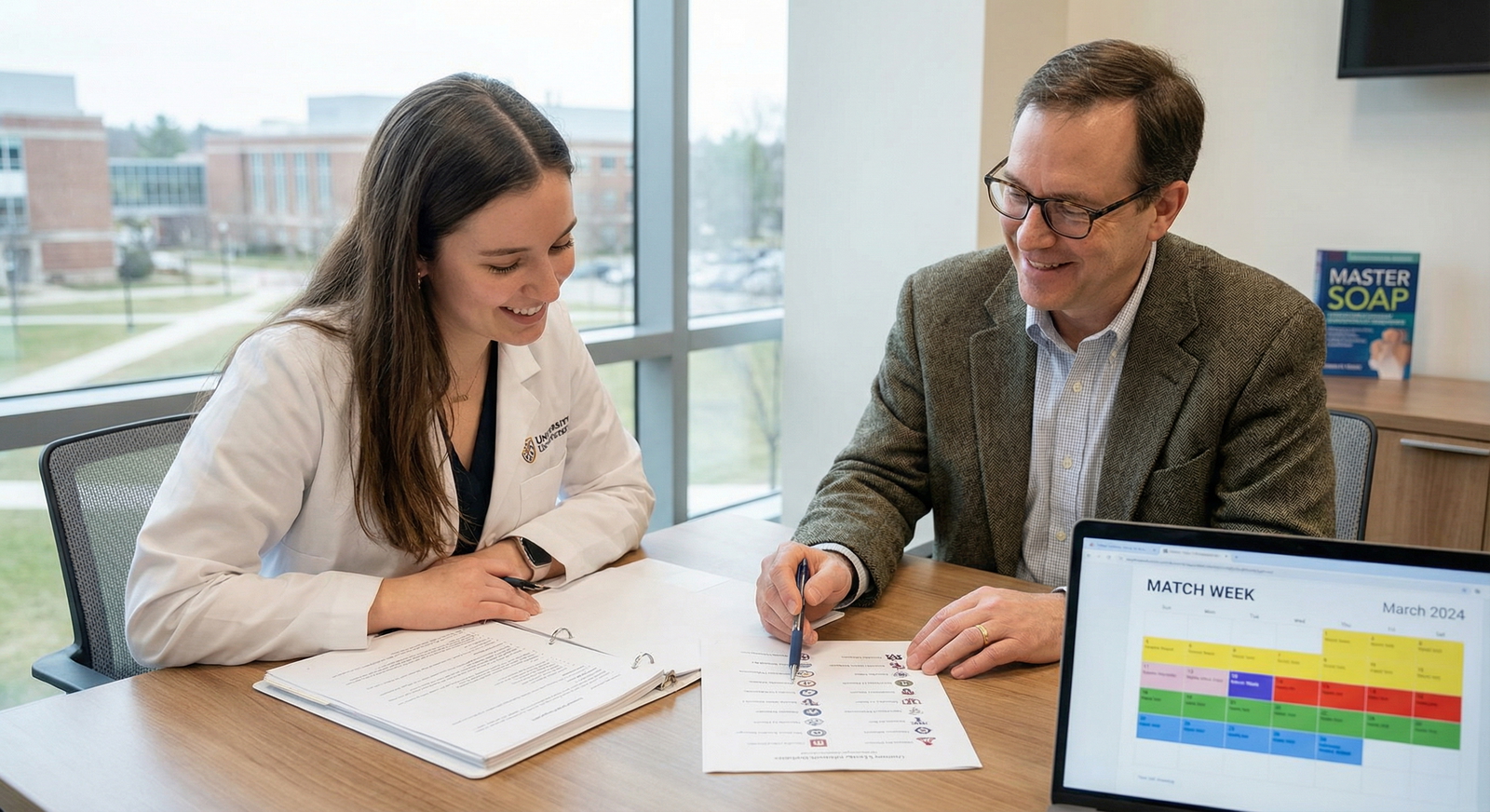
Understanding SOAP in the Context of Cardiothoracic Surgery
The Supplemental Offer and Acceptance Program (SOAP) can feel intimidating—especially for a non-US citizen IMG aspiring to such a competitive field as cardiothoracic surgery. Yet, with deliberate SOAP preparation, you can turn an initially disappointing Match Week into a strategic second chance.
SOAP is a structured, time-limited process that allows unmatched or partially matched applicants to apply to unfilled residency positions. For a foreign national medical graduate aiming for cardiothoracic surgery, it is crucial to understand:
What is SOAP?
SOAP is an NRMP-managed process during Match Week that:- Identifies unfilled residency positions.
- Allows eligible unmatched applicants to apply.
- Coordinates multiple application “rounds” in which programs extend offers and applicants accept/reject in real-time.
Why it matters for cardiothoracic surgery applicants
Cardiothoracic surgery residency (whether integrated I-6 programs, traditional general surgery followed by CT fellowship, or independent pathways) is extremely competitive. True integrated cardiothoracic surgery PGY-1 positions almost never appear in SOAP. However, general surgery, preliminary surgery, and sometimes transitional year positions do. For non-US citizen IMGs, these can serve as:- Entry points into US surgical training.
- Foundations for later applying to cardiothoracic surgery fellowships or integrated programs (if you are early in your training trajectory).
- Opportunities to build US-based research, letters, and clinical experience.
Key constraints in SOAP
- You cannot newly register for NRMP during SOAP week; you must already be registered.
- You must meet all eligibility criteria (including certification by ECFMG for IMGs).
- Applications are limited: historically you can apply to a fixed maximum number of programs (e.g., 45) across all specialties during SOAP.
Because cardiothoracic surgery is an advanced, highly selective field, your SOAP strategy should be pragmatic and flexible, focusing on positions that realistically move you closer to your heart surgery training goals, rather than only “cardiothoracic” in name.
Eligibility, Visa, and Documentation: Foundations for Non-US Citizen IMGs
For a non-US citizen IMG, SOAP preparation begins months before Match Week. Your status as a foreign national medical graduate adds extra layers: ECFMG certification, visa policies, and institutional sponsorship limitations.
1. Confirming SOAP Eligibility
By January–February (well before rank order list deadline), ensure:
- ECFMG Certification
- USMLE Step 1: Passed (score no longer numeric but must be a pass).
- USMLE Step 2 CK: Passed with competitive performance.
- Primary medical degree verified and certified by ECFMG.
- All documentation received and accepted.
Without ECFMG certification by the NRMP deadline, you cannot participate in SOAP.
- NRMP & ERAS Requirements
- Registered for the Match through NRMP.
- Applied at least to one residency program via ERAS in the same cycle.
- Not fully matched into all positions on your rank list.
Keep digital and printed copies of:
- ECFMG certificate
- USMLE score reports
- Medical school diploma and transcripts
- Dean’s letter / MSPE
- Current CV
- Passport, visas, and immigration documents
2. Visa Considerations in SOAP
Visa status is a critical barrier for many non-US citizen IMGs:
- Common visa types
- J-1 (ECFMG-sponsored): Most common for residency; more widely accepted.
- H-1B (employment-based): Requires Step 3 passed, more complex and costly; fewer programs sponsor this, especially in SOAP.
During SOAP, you will have almost no time to clarify visa questions individually with every program. Planning ahead is essential.
Action steps (pre-Match):
- Use FREIDA, program websites, or email coordinators (before Match Week) to clarify:
- Do they accept non-US citizen IMGs?
- Do they sponsor J-1? H-1B? Both?
- Maintain a spreadsheet with:
- Program name
- Specialty (e.g., gen surg categorical, gen surg prelim, TY, IM)
- Visa types accepted
- Historical IMG friendliness
- Notes on cardiothoracic surgery faculty or heart center presence
During SOAP, you will prioritize programs where your visa status is clearly compatible.
3. Credential and Document Readiness
As SOAP is extremely time-compressed, your documents must be ready before Match Week:
- ERAS Application
- Complete all sections thoroughly.
- Tailor experiences and descriptions toward surgery, critical care, and cardiothoracic exposure where relevant.
- Personal Statements
- At least 2–3 versions:
- Surgical-focused (for general surgery, preliminary surgery).
- Medicine/critical care-focused (if you’re open to internal medicine pathways with a CT or cardiac focus).
- Transitional year or broad statement (if necessary).
- At least 2–3 versions:
- Letters of Recommendation (LoRs)
- Secure at least 3–4 strong letters, ideally including:
- One or more US surgeons, especially in cardiac, thoracic, or vascular surgery.
- Any cardiothoracic surgery mentor, even from abroad.
- A US-based internal medicine or ICU attending if you are considering broader critical care or IM options.
- Assign letters in ERAS strategically to each specialty.
- Secure at least 3–4 strong letters, ideally including:

Designing a SOAP Strategy for Aspiring Cardiothoracic Surgeons
SOAP is not about random applications; it is about a targeted, realistic pathway toward your end goal: heart surgery training.
1. Clarify Your Long-Term Cardiothoracic Pathway
Not all applicants are at the same stage. Consider which pathway fits your profile:
Pathway A: Early-career IMG fresh from medical school
- Goal: Get into any strong surgical or critical care-based residency program that can provide:
- Robust operative exposure.
- Opportunities to build a CV aligned with cardiothoracic surgery.
- Research projects in cardiac or thoracic surgery.
- Likely SOAP focus:
- Categorical general surgery (if any appear, rare but possible).
- Preliminary general surgery (bridge to categorical surgery or exposure + research).
- Transitional year with strong cardiology/ICU exposure.
- Goal: Get into any strong surgical or critical care-based residency program that can provide:
Pathway B: IMG with prior surgical training abroad
- Goal: Transition into US system, then pursue CT fellowship or integrated CT pathway later.
- Likely SOAP focus:
- General surgery (categorical or prelim).
- Possibly internal medicine if aiming for cardiology → advanced heart failure or cardiac critical care track, then structural pathways.
Pathway C: Research-oriented IMG with strong CT research background
- Goal: Use residency to complement ongoing or prior cardiothoracic research.
- Likely SOAP focus:
- Academic centers with high-volume CT programs, even in non-surgical specialties (e.g., IM with cardiology pipeline, anesthesia with cardiac focus, etc.).
- Programs where you can realistically transition to a surgical track later or maintain strong CT research collaborations.
2. Realistic Target Specialties in SOAP
As a non-US citizen IMG, focusing only on cardiothoracic surgery I-6 positions during SOAP is usually not viable. Instead, think in “tiers”:
Tier 1: Directly supportive of CT goals
- Categorical general surgery positions.
- Categorical thoracic surgery (if any appear, exceptionally rare).
- Preliminary general surgery in institutions with strong CT departments.
Tier 2: Indirect but strategically aligned
- Transitional year programs with:
- Strong ICU, cardiology, or OR exposure.
- Affiliations with major cardiac centers.
- Internal medicine in institutions with highly reputed cardiology or cardiac ICU programs.
Tier 3: Broader clinical entry opportunities
- Categorical internal medicine or anesthesia in centers where:
- CT surgeons are active in teaching.
- Research in cardiothoracic surgery is accessible.
During SOAP, you may need to apply across multiple tiers, with a clear internal ranking of what you will accept versus what you will decline.
3. Mapping Programs Before SOAP
To give yourself a competitive edge:
Build a “SOAP-ready” list months in advance:
- Identify programs that:
- Historically go unfilled in general surgery, prelim surgery, or TY.
- Accept non-US citizen IMGs with J-1.
- Have cardiothoracic surgeons or a heart center on-site.
- Tools:
- NRMP’s “Results and Data” from prior years.
- FREIDA’s filters (visa, IMGs).
- Program websites and case volume descriptions.
- Identify programs that:
Create a priority ranking:
- Group A: Strong CT exposure + visa-friendly + IMG-friendly.
- Group B: Some CT exposure or strong surgery but uncertain visa/IMG track record.
- Group C: Less CT exposure but still a viable US entry point.
This prework allows rapid decision-making when the list of unfilled programs is released on Monday of Match Week.
Step-By-Step SOAP Preparation Timeline
1. Two to Three Months Before Match Week
A. Optimize Your Application
- Update CV with:
- Any new abstracts, presentations, or publications in cardiology or cardiothoracic fields.
- Additional US observerships or externships, especially in surgery or ICU.
- Refine Personal Statements:
- For surgery-focused statement:
- Emphasize manual dexterity, operative interest, previous surgical exposure, and long-term ambition in cardiothoracic surgery.
- Show you understand that the path may involve general surgery or other stepping stones.
- For other specialties:
- Still connect to your overarching interest in heart surgery training through ICU, cardiology collaboration, perioperative care, or structural heart disease.
- For surgery-focused statement:
B. Strengthen Your Narrative as a Non-US Citizen IMG
Programs will ask implicitly: Why should we sponsor and invest in this candidate?
Show through your ERAS:
- Commitment to the US healthcare system (prior US experience, clear long-term plans).
- Evidence of resilience and adaptation (language, culture, systems).
- Consistent focus on cardiovascular or thoracic interests:
- CT surgery electives.
- Research in valve surgery, coronary bypass, lung surgery, ECMO, VADs, or heart failure.
- ICU or OR roles.
2. One Month Before Match Week
A. Prepare Communication Templates
During SOAP, time is critical. Prepare ahead:
- Email templates:
- Brief introduction + interest in surgery.
- Mention of CT-focused background.
- One or two personalized sentences you can quickly modify to highlight a specific program feature.
Example (for a generic general surgery program):
Dear Dr. [Program Director],
My name is [Name], a non-US citizen IMG and current applicant in the NRMP Match. I am strongly interested in a surgical career with a particular focus on cardiothoracic surgery. I am reaching out to express my sincere interest in any available [categorical/preliminary] general surgery positions at [Program Name].My background includes [brief highlight: CT research/foreign surgical training/ICU experience]. I am ECFMG-certified, J-1 visa eligible, and highly motivated to contribute to your surgical team. I would be grateful for the opportunity to be considered during SOAP.
Sincerely,
[Name, AAMC ID, NRMP ID]
- Talking points for phone/virtual interviews:
- 1–2 minute introduction.
- Clear explanation of why you are unmatched (if asked) without blaming others.
- Emphasis on readiness to start immediately, strong work ethic, and long-term goals.
B. Mock Interviews
- Practice short, high-pressure interviews (5–10 minutes) with:
- US mentors.
- Senior residents.
- Fellow IMGs who have gone through SOAP.
- Focus on:
- Explaining your interest in surgery and cardiothoracic fields.
- Justifying why you are reapplying or entering via a prelim.
- Addressing potential red flags (gaps, attempts, CS/CK failures if any).
3. Match Week: Executing the SOAP Plan
Monday Morning: Unmatched Notification & List of Unfilled Programs
- Confirm your SOAP eligibility on NRMP.
- Download the unfilled list as soon as it is released.
- Filter by:
- Specialty (Gen Surg, Prelim Surg, TY, IM).
- Programs known to accept J-1 and IMGs (from your spreadsheet).
Create three priority groups:
- Group 1: High-yield for CT pathway + visa-friendly.
- Group 2: Still acceptable, with decent training quality.
- Group 3: Backup programs you would accept if nothing else works.
Application Phase (Rounds of SOAP):
- Use your limited application slots wisely:
- Do not waste them on programs that clearly do not sponsor your visa.
- Do not apply to programs you would not genuinely consider if offered.
- Assign appropriate personal statement and LoRs for each specialty and program.
Program Communication During SOAP:
- Some programs prefer no direct contact; others expect concise emails.
- Follow instructions in ERAS or on program pages.
- When appropriate, send brief, targeted emails to PDs and coordinators, especially where your CT background strongly fits.
Interview Rounds & Offers:
- Be immediately reachable: phone charged, email notifications on, quiet space available.
- For each interview:
- Reinforce:
- Your commitment to surgery.
- Your understanding of the program.
- Your gratitude and readiness to contribute.
- Be honest about your CT interests but respectful:
- Emphasize that you are fully committed to becoming an excellent general surgery or IM resident first; cardiothoracic is a long-term direction, not a distraction.
- Reinforce:

Crafting Your Narrative: From Unmatched Status to Future Cardiothoracic Surgeon
As a non-US citizen IMG, programs may have doubts: Why were you unmatched? Will you stay for the full training? Are you flexible if cardiothoracic surgery takes longer than expected?
1. Addressing Being Unmatched or Partially Matched
Prepare short, honest, non-defensive explanations, such as:
- Overly ambitious specialty list (e.g., only aiming at integrated CT without backup).
- Late application or fewer interviews.
- Step scores or attempts that made some programs hesitant.
Avoid blaming systems or individuals. Instead, emphasize:
- Lessons learned (e.g., understanding US competitiveness better).
- Steps you’ve already taken to improve (additional research, US experience, language skills).
2. Emphasizing Commitment Without Narrowness
Your goal is to show that:
- You have a clear long-term interest in heart surgery training.
- But you are not so narrow that you ignore the core responsibility of your chosen residency (whether surgery, IM, or TY).
You might say:
- “My long-term goal is to work in cardiothoracic surgery. I understand that this begins with becoming the strongest possible [general surgery/internal medicine] resident. I am fully committed to your program and to serving the needs of your department and patients.”
3. Highlighting the Strengths of a Foreign National Medical Graduate
As a non-US citizen IMG, turn your background into an asset:
- Experience with:
- High-acuity cardiac or thoracic disease in resource-limited settings.
- Working long hours with resilience.
- Multilingual communication, beneficial for diverse patient populations.
- Emphasize adaptability:
- You have relocated, navigated complex certification systems, and learned new medical cultures.
Programs often value residents who demonstrate maturity, persistence, and global perspective—all common in foreign national medical graduates.
After SOAP: Planning for the Next Cardiac Step
Whether you match through SOAP or not, maintain a long-term vision toward cardiothoracic surgery.
1. If You Match in a Non-Cardiac Specialty or as a Prelim
Use your position strategically:
- Seek rotations in:
- Thoracic surgery.
- Cardiac surgery.
- Cardiac ICU.
- Engage in:
- Research on valve surgery, ECMO, heart transplantation, LVADs, or thoracic oncology.
- Case reports or small clinical projects with CT faculty.
- Build relationships and letters with cardiothoracic surgeons.
A strong performance in general surgery or critical care is often the most important factor later when applying to CT fellowships or advanced training.
2. If You Do Not Match in SOAP
This is emotionally painful, but not the end:
- Consider full-time research positions in cardiothoracic surgery or cardiac anesthesia/critical care.
- Gain hands-on US clinical exposure through:
- Observerships in CT surgery.
- ICU or step-down units if allowed in your institution.
- Improve your profile:
- Strengthen US letters of recommendation.
- Add more cardiothoracic-specific research.
- Consider taking Step 3 if visa strategy (H-1B) is relevant.
Use the experience of one SOAP cycle to refine your strategy for the next match, including applying more broadly to surgery and related specialties from the start.
Frequently Asked Questions (FAQ)
1. As a non-US citizen IMG interested in cardiothoracic surgery, should I only apply to CT programs during SOAP?
No. True cardiothoracic surgery residency (I-6) positions almost never appear in SOAP. You should focus primarily on general surgery (categorical or prelim) and other pathways that realistically move you closer to heart surgery training (e.g., TY or IM with strong cardiac exposure). SOAP is about securing a viable entry point into the US system that supports your long-term goal, not about perfection in year one.
2. How does my visa status affect my SOAP options?
Visa sponsorship is a major limiting factor. Many unfilled positions in SOAP do not sponsor visas or accept only J-1. Before Match Week, research which programs are visa-friendly and IMGs-friendly. During SOAP, prioritize these. If you need H-1B and do not have Step 3, your options will be very limited; J-1 eligibility usually offers more opportunities.
3. What is SOAP “preparation,” and when should I start it?
SOAP preparation includes:
- Ensuring eligibility (ECFMG, NRMP).
- Completing and polishing your ERAS application.
- Preparing multiple personal statements.
- Securing strong LoRs.
- Mapping visa-friendly, IMG-friendly programs with CT exposure.
You should start this at least 2–3 months before Match Week so that when unfilled positions are released, you can act quickly and strategically.
4. If I accept a preliminary surgery position through SOAP, how can I still pursue cardiothoracic surgery later?
A preliminary year can be an effective bridge if you:
- Perform exceptionally well clinically.
- Build strong relationships with general and cardiothoracic surgeons.
- Seek research opportunities in CT or related fields.
- Apply aggressively for categorical positions in the next cycle.
Many cardiothoracic surgeons began with strong general surgery training or even with prelim years; your performance, not your initial label, often matters most.
With thoughtful SOAP preparation, a non-US citizen IMG can transform Match Week from a crisis into a calculated pivot. Your path to cardiothoracic surgery may be longer and less linear than you imagined, but each step—SOAP included—can be strategically aligned with your ultimate goal: caring for patients with the most complex heart and thoracic diseases at the highest level.