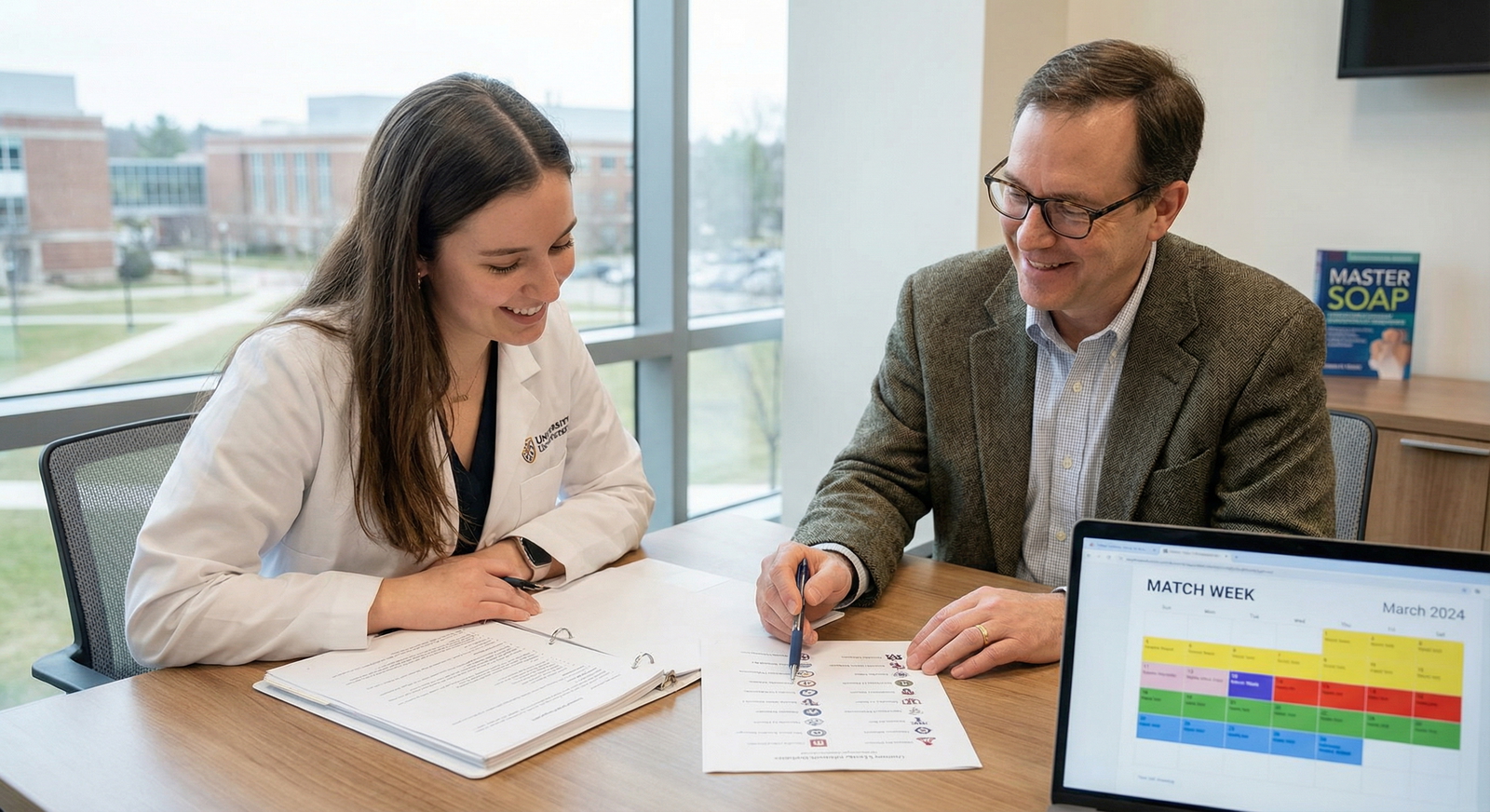
Navigating the Supplemental Offer and Acceptance Program (SOAP) is stressful for any residency applicant, but for a non-US citizen IMG interested in nuclear medicine, it can feel especially complex. Visa concerns, limited nuclear medicine residency positions, and program unfamiliarity with foreign national medical graduates all add layers of challenge.
This guide is written specifically for you—a non-US citizen IMG targeting nuclear medicine—so you can approach SOAP with structure, realism, and a competitive strategy.
Understanding SOAP in the Context of Nuclear Medicine
Before detailed planning, you need to clearly understand what SOAP is, how it works, and what it means for a foreign national medical graduate aiming for nuclear medicine.
What Is SOAP?
The Supplemental Offer and Acceptance Program (SOAP) is the formal, time-limited process run by NRMP during Match Week to fill unfilled residency positions with unmatched or partially matched applicants.
Key features:
- Eligibility:
- You must be unmatched or partially matched after the Main Residency Match.
- You must be registered for the NRMP Match and certified by ECFMG (for IMGs).
- Timing:
- Starts on Monday of Match Week when you learn your Match status.
- Ends by Thursday after several offer rounds.
- Application limits:
- You can apply to a maximum of 45 unfilled programs total across all specialties.
- Offers:
- Programs review your applications and submit preference lists.
- NRMP sends offers in rounds (typically 3–4 rounds on Wednesday and Thursday).
- Offers are time-limited; you must accept or reject quickly.
- Once you accept, you are bound to that position.
SOAP and Nuclear Medicine: Why Strategy Is Different
Nuclear medicine is relatively niche compared to internal medicine or family medicine. That creates both challenges and opportunities:
- Small program pool:
- Fewer stand-alone nuclear medicine residency programs.
- Many nuclear medicine spots are filled by those who have already completed another residency (radiology, internal medicine, etc.).
- Variable eligibility:
- Some nuclear medicine residency programs require prior clinical training (e.g., one or more prelim years).
- Others may be more open to IMGs but still may not sponsor visas.
- Visa complexity:
- As a non-US citizen IMG, you need programs that sponsor visas (J-1 or sometimes H-1B).
- During SOAP, programs may have less flexibility or time to navigate complex visa issues.
Because nuclear medicine slots can be few, you must be prepared for a dual strategy:
- Target nuclear medicine whenever possible.
- Simultaneously apply to complementary specialties (e.g., preliminary internal medicine, transitional year, or diagnostic radiology prelim) that can keep you on a path toward nuclear medicine in the future.
Pre-SOAP Preparation: What You Should Have Ready Before Match Week
SOAP preparation should start months before Match Week. Your success will largely depend on how much you’ve prepared in advance rather than what you do in those few intense days.
1. Understand Nuclear Medicine Pathways for a Non-US Citizen IMG
As a foreign national medical graduate, your path to nuclear medicine might be:
- Direct nuclear medicine residency (where available and IMG-friendly).
- Diagnostic radiology residency with a later nuclear medicine fellowship.
- Clinical base year (e.g., prelim internal medicine, surgery, transitional year) followed by nuclear medicine training depending on program structures and ABNM requirements.
Action steps:
- Research:
- ABNM (American Board of Nuclear Medicine) training pathways and eligibility rules.
- The ACGME list of accredited nuclear medicine programs.
- Historical data on which programs have previously matched IMGs or sponsored visas.
This helps you identify:
- Programs that are realistic nuclear medicine targets during SOAP.
- Feeder specialties that align with your long-term nuclear medicine goal.
2. Clarify Your Visa Strategy
As a non-US citizen IMG, your SOAP preparation must integrate visa planning.
Key questions:
- Are you ECFMG certified and eligible for a J-1 visa?
- Do you require an H-1B and have USMLE Step 3 passed (usually required for H-1B sponsorship)?
- Are there constraints from your home country or funding source?
Action steps:
- Keep all visa-related documents ready (passport, ECFMG certificate, test scores).
- Create a short list of specialties and programs known to:
- Sponsor J-1 visas.
- Possibly consider H-1B (less common in SOAP, especially for small/niche fields).
During SOAP, you’ll need to filter unfilled programs very quickly using this information.
3. Design Your SOAP Specialties Strategy
Because nuclear medicine positions are limited, your SOAP plan should not rely on nuclear medicine alone.
For most non-US citizen IMGs, a realistic SOAP portfolio might include:
- Tier 1: Nuclear Medicine
- Any unfilled nuclear medicine residency positions that:
- Accept IMGs.
- Sponsor your visa type.
- Any unfilled nuclear medicine residency positions that:
- Tier 2: Radiology-Related or Feeder Positions
- Preliminary internal medicine or surgery.
- Transitional year programs.
- Occasionally diagnostic radiology prelim if available to IMGs.
- Tier 3: Broad Clinical Specialties
- Internal medicine categorical (if available).
- Family medicine or pediatrics (as a backup career track if nuclear medicine spots are not available).
Be very clear with yourself about:
- Your ideal outcome (nuclear medicine now).
- Your acceptable outcome (pathway that keeps nuclear medicine open for later).
- Your minimum acceptable backup (clinical specialty where you’d still be content building a career).

4. Prepare SOAP-Ready Application Materials
You do not have time during SOAP to rebuild your application. Everything must be ready to adapt quickly.
a. Personal Statements Tailored to SOAP
For a non-US citizen IMG interested in nuclear medicine, prepare:
Primary Personal Statement – Nuclear Medicine Focus
- Emphasize:
- Your genuine interest in nuclear medicine (clinical, research, or both).
- Exposure to nuclear medicine: electives, observerships, courses, research projects.
- Understanding of the specialty’s future (theranostics, PET-CT, molecular imaging).
- Your long-term goals and how training in the US aligns with them.
- Highlight:
- Any US clinical experience, especially radiology or oncology.
- Your adaptability as a foreign national medical graduate.
- Emphasize:
Secondary Personal Statement – Internal Medicine/Transitional Year
- Emphasize:
- Broad clinical skills.
- Strong foundation in patient care.
- How this base year supports your future nuclear medicine ambitions (without sounding like you’re not committed to clinical care).
- Show:
- Teamwork.
- Communication.
- Willingness to take on high workload.
- Emphasize:
Generic PS – For Other Backups
- A neutral PS emphasizing:
- Commitment to patient care.
- Flexibility and resilience as an IMG.
- Interest in long-term practice in the US.
- A neutral PS emphasizing:
Have these in ERAS and clearly labeled so you can assign them to programs quickly.
b. CV and ERAS Common Application
Ensure your ERAS data is clean, accurate, and updated:
- USMLE and OET/IELTS (if relevant) scores correctly entered and verified.
- All education and training listed chronologically.
- Clinical experience:
- Highlight any US clinical experience (electives, externships, observerships).
- Clarify any exposure to radiology, oncology, or nuclear medicine departments.
- Research:
- Emphasize imaging, oncology, or physics-related work.
- Gaps:
- Briefly explain gaps in training with neutral, professional language.
c. Letters of Recommendation (LoRs)
SOAP does not allow new LoRs to be uploaded during Match Week, so you must rely on what is already in ERAS.
Prioritize:
- At least one letter from:
- A radiologist or nuclear medicine physician (ideal), or
- An internist or oncologist who knows your work well.
- Letters from the US (if available) carry more weight, especially for IMGs.
Make sure all LoRs are assigned to appropriate programs in advance where possible, or at least easily assignable during SOAP.
Executing a Nuclear Medicine-Oriented SOAP Strategy
Once Match Week begins and you find out you are unmatched (or partially matched), the SOAP clock starts ticking.
Step 1: Confirm Your SOAP Eligibility and Status (Monday Morning)
- NRMP will tell you whether you are:
- Fully matched.
- Partially matched.
- Unmatched.
- If unmatched or partially matched and you meet NRMP criteria, you are SOAP-eligible.
Log into ERAS and NRMP as soon as possible and keep your email and phone accessible.
Step 2: Review the List of Unfilled Positions
On Monday, NRMP releases the List of Unfilled Programs to SOAP-eligible applicants.
As a non-US citizen IMG aiming for nuclear medicine:
Filter by Specialty:
- Nuclear Medicine (and any variants like Nuclear Radiology if listed).
- Diagnostic Radiology (if you’re prepared for that path).
- Internal Medicine (prelim and categorical).
- Transitional Year.
- General Surgery (prelim positions, depending on your career openness).
Filter by Visa Sponsorship (as best as possible):
- Many programs don’t explicitly list visa details on the SOAP list.
- Use:
- Prior research.
- Program websites.
- NRMP/ERAS historical data.
- If unclear, assume J-1 is more likely than H-1B during SOAP.
Flag Nuclear Medicine Immediately:
- Identify every unfilled nuclear medicine residency program.
- Cross-check:
- Are you eligible for their requirements?
- Have they previously taken IMGs?
- Have they sponsored visas?
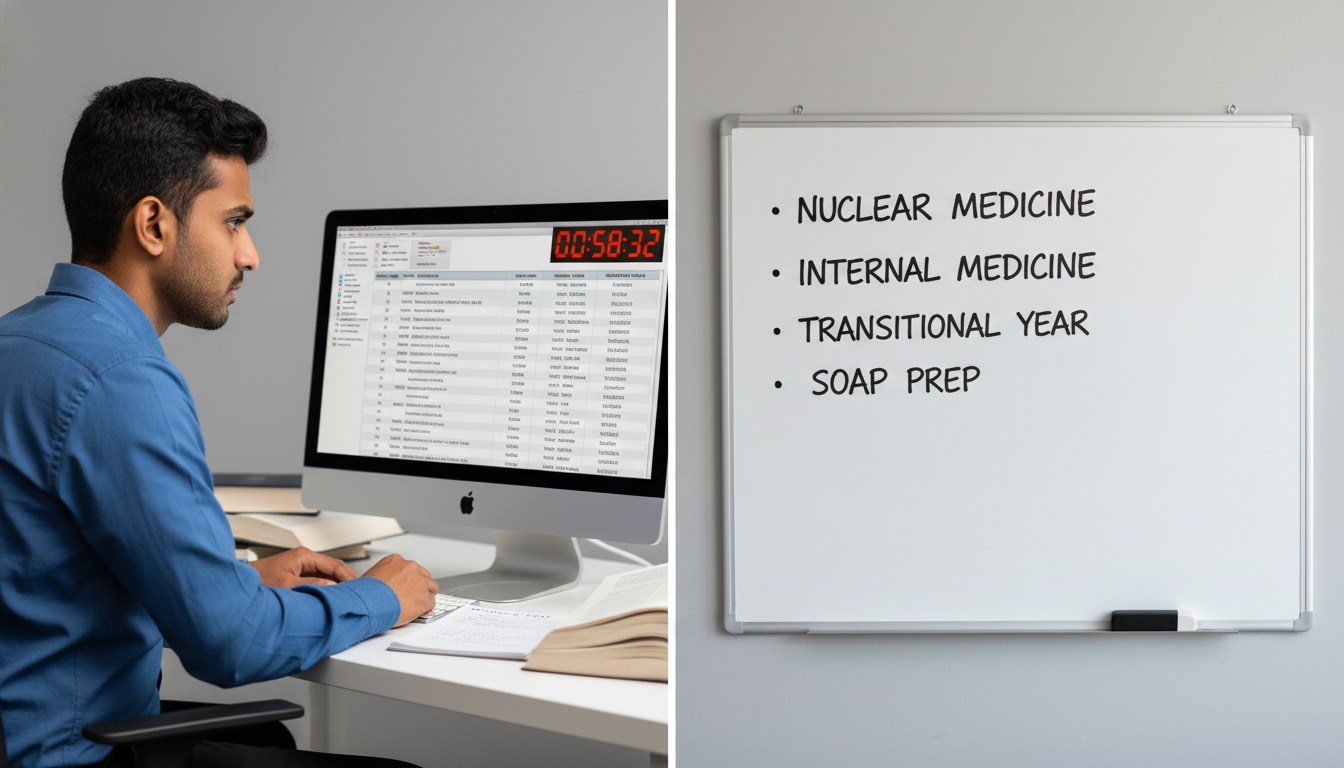
Step 3: Decide How to Use Your 45 Applications
You can send up to 45 total applications through SOAP.
For a non-US citizen IMG focused on nuclear medicine, a sample allocation might look like:
- 5–15 applications:
- Nuclear medicine and any radiology-related programs that accept IMGs and sponsor visas.
- 15–25 applications:
- Preliminary internal medicine / transitional year positions in hospitals with:
- Strong imaging departments.
- Cancer centers.
- Academic environments.
- Preliminary internal medicine / transitional year positions in hospitals with:
- 5–15 applications:
- Categorical internal medicine or family medicine as deeper backup (if consistent with your long-term goals).
You’ll need to adjust based on:
- The actual number of unfilled nuclear medicine positions.
- Visa sponsorship patterns.
- Your competitiveness (scores, attempts, US experience).
For example, if there are only 2–3 nuclear medicine programs available, you cannot spend all 45 applications there; you must diversify.
Step 4: Tailor and Assign PS and LoRs Quickly
For each program group:
Nuclear Medicine Programs:
- Assign your nuclear medicine–focused personal statement.
- Include LoRs from imaging, oncology, or internal medicine that highlight analytical skills and academic potential.
Preliminary/Transitional Programs:
- Assign your internal medicine/transitional year PS.
- Emphasize reliability, clinical effort, and teamwork in both the PS and LoRs.
Categorical Programs:
- Use either your broader or specialty-appropriate PS, depending on your real willingness to commit long-term.
Be careful not to overemphasize that you see a prelim year as “just a stepping stone” in documents sent to those programs; they want residents who will fully commit to that year.
Step 5: Proactive Communication (Where Allowed)
SOAP rules prohibit certain types of contact initiated by programs, but applicants are generally allowed to reach out to programs unless restricted by NRMP guidelines.
Useful forms of communication:
- Emails to Program Coordinators/Directors:
- Very brief, professional, and specific:
- Express interest.
- Highlight nuclear medicine motivation (if relevant).
- Mention visa status clearly.
- Very brief, professional, and specific:
- Phone calls:
- Usually not necessary, but can be appropriate if:
- Clarifying visa policies.
- Confirming if your application was received.
- Usually not necessary, but can be appropriate if:
Example email for nuclear medicine:
Subject: SOAP Applicant – Non-US IMG Interested in Nuclear Medicine
Dear Dr. [Program Director],
My name is [Name], a non-US citizen IMG (ECFMG certified) participating in SOAP. I have applied to your Nuclear Medicine residency program. I have US clinical observership experience in radiology and oncology and a strong research interest in PET-CT and theranostics.
I am eligible for a J-1 visa and highly motivated to pursue a career in nuclear medicine in the US. I would be very grateful for your consideration of my application.
Sincerely,
[Name, AAMC ID, Contact Information]
Keep this communication short and focused; program staff are extremely busy during SOAP.
Step 6: Prepare for Rapid-Fire Interviews
Some programs conduct quick interviews during SOAP via:
- Phone calls.
- Zoom/Teams.
- Short video meetings.
Preparation tips:
- Have a stable internet connection, quiet space, and professional attire ready.
- Prepare 30–60 second answers to:
- “Tell me about yourself.”
- “Why nuclear medicine?”
- “Why our program?”
- “How does your background as a non-US citizen IMG contribute to our team?”
- “What are your long-term goals?”
- Be ready to discuss:
- USMLE performance honestly, including any attempts.
- Visa needs clearly: “I am ECFMG certified and eligible for a J-1 visa.”
- Your commitment: “If I match here through SOAP, I will fully honor my commitment.”
For prelim/transitional year interviews, emphasize:
- Work ethic.
- Clinical readiness.
- Willingness to handle a heavy workload.
- Desire to learn as much as possible in one year.
Accepting Offers and Making Real-Time Decisions
SOAP offers come in rounds, and each offer has a short response window (often 2 hours). Once you accept an offer, you are out of SOAP and the Match process.
Principles for Decision-Making
- Know Your Hierarchy Before Offers Start
Write down (honestly):
- Direct nuclear medicine residency.
- Prelim/transitional year in a strong academic center with imaging.
- Categorical internal medicine (if acceptable).
- Other options.
Decide in advance which of the following you would do:
- Accept a prelim IM in a strong cancer/imaging center over categorical family medicine?
- Accept any US residency (even if not related to nuclear medicine) versus staying unmatched?
- Balance Long-Term Goals vs. Short-Term Security
If nuclear medicine is your passion, consider:
- A strong prelim year can increase your chances:
- Better US references.
- On-site exposure to imaging physicians.
- Opportunity to rotate in nuclear medicine.
But, if you receive a categorical IM offer at a solid program, compare:
- Probability of transitioning into nuclear medicine vs. building a fulfilling IM career.
- Your tolerance for risk (staying unmatched vs. entering a not-perfect-but-good pathway).
- Visa Reality Check
Some “dream” programs may not be realistic if:
- They do not sponsor your visa type.
- Their timeline cannot accommodate complex visa processing.
During SOAP:
- Programs may prefer J-1 over H-1B due to time constraints.
- Be transparent about your status to avoid late-stage complications.
Handling Multiple Offers Across Rounds
- If you get an offer from your top-tier nuclear medicine program: accept immediately.
- If you get a mid-tier offer in Round 1:
- Ask: “Is there a realistic chance I’ll get a better offer later?”
- For most non-US citizen IMGs, a definite solid offer now is usually safer than hoping for something uncertain in later rounds.
Make each decision according to:
- Your pre-written ranking.
- Honest assessment of your competitiveness.
- Your willingness to reapply next year if unmatched.
Post-SOAP: Next Steps Whether You Match or Not
If You Match Through SOAP
Once you accept an offer:
- Stop all other SOAP activities; you are now matched.
- Confirm details with program:
- Start date.
- Orientation.
- Visa documents (DS-2019 for J-1, or H-1B steps).
- If you matched into a non-nuclear medicine position:
- Strategically plan rotations:
- Seek electives in radiology/nuclear medicine.
- Network with imaging faculty.
- Continue building your profile:
- Research in nuclear medicine or imaging.
- Attend imaging or nuclear medicine conferences (SNMMI, RSNA).
- Strategically plan rotations:
If You Do Not Match Through SOAP
For a non-US citizen IMG focused on nuclear medicine, not matching is disappointing, but not the end.
Action plan:
Immediate Debrief
- Analyze:
- Scores and attempts.
- US clinical experience.
- Visa limitations.
- LoRs and PS quality.
- Analyze:
Strengthening Year
- Options:
- Observerships in nuclear medicine or radiology.
- Research positions in nuclear medicine, molecular imaging, or oncology.
- US-based master’s or postdoctoral fellowships (if feasible).
- Options:
Re-Evaluating Strategy
- Consider:
- Applying more broadly to internal medicine or family medicine.
- Applying to more IMG-friendly states and community programs.
- Focusing on visas that programs more commonly support (J-1).
- Consider:
Maintain Contact with Nuclear Medicine Departments
- Email nuclear medicine program directors about:
- Research opportunities.
- Non-ACGME fellowships (if any).
- Build long-term relationships that might later open doors.
- Email nuclear medicine program directors about:
FAQs: SOAP Preparation for Non-US Citizen IMGs in Nuclear Medicine
1. As a non-US citizen IMG, how realistic is it to match into nuclear medicine through SOAP?
Direct nuclear medicine residency spots through SOAP are limited and often competitive, especially for a non-US citizen IMG. However, it is not impossible, particularly if:
- You have good USMLE scores (especially Step 2 CK).
- You are ECFMG certified and clearly eligible for a J-1 visa.
- You have relevant exposure (research, electives, observerships) in imaging or oncology.
- You apply strategically and broadly within your 45 SOAP applications.
You should still prepare a strong parallel plan involving prelim or transitional year positions that can support a future nuclear medicine application.
2. How should I balance nuclear medicine residency applications with other specialties during SOAP?
Use a tiered strategy:
- Prioritize all realistic nuclear medicine programs first.
- Then allocate a substantial number of applications to:
- Prelim internal medicine/surgery and transitional year programs in hospitals with strong imaging programs.
- Finally, use remaining applications for categorical internal medicine or other acceptable specialties.
Your 45 applications should reflect your risk tolerance and career flexibility. For most non-US citizen IMGs, it’s unwise to use the majority of SOAP applications on nuclear medicine alone due to its limited number of positions.
3. Will visa needs (J-1 or H-1B) significantly hurt my chances in SOAP?
Visa issues can be a challenge, but not an absolute barrier.
J-1 visa:
- More commonly sponsored.
- Generally more feasible during SOAP’s short timeline.
- As long as you are ECFMG certified and documents are ready, many programs are comfortable sponsoring J-1s.
H-1B visa:
- Less common in SOAP, particularly in small or niche specialties.
- Requires USMLE Step 3 and often more internal institutional processing time.
- As a SOAP applicant, you’ll usually be more competitive with a J-1-eligible profile.
Many programs during SOAP prefer applicants whose visa situation is simple and predictable. Make your status clear and highlight that your paperwork is in order.
4. What specific SOAP preparation steps should I focus on in the months before Match Week?
For a non-US citizen IMG targeting nuclear medicine, the most important SOAP preparation steps are:
- Clarify your pathways:
- Understand nuclear medicine vs. radiology vs. internal medicine routes.
- Research programs:
- Identify nuclear medicine and prelim/transitional programs historically open to IMGs and visa sponsorship.
- Prepare multiple tailored personal statements:
- Nuclear medicine-focused.
- Internal medicine/transitional year-focused.
- General backup.
- Secure strong LoRs:
- At least one letter connected to imaging, oncology, or internal medicine.
- Organize documents and communication templates:
- Visa documents, ECFMG, CV, and short email templates for program outreach.
- Plan your decision hierarchy:
- Know in advance how you will rank nuclear medicine versus prelim versus categorical options.
Thorough preparation before Match Week is your most powerful tool for making SOAP work in your favor—whether that leads directly to nuclear medicine or builds a viable pathway toward it.