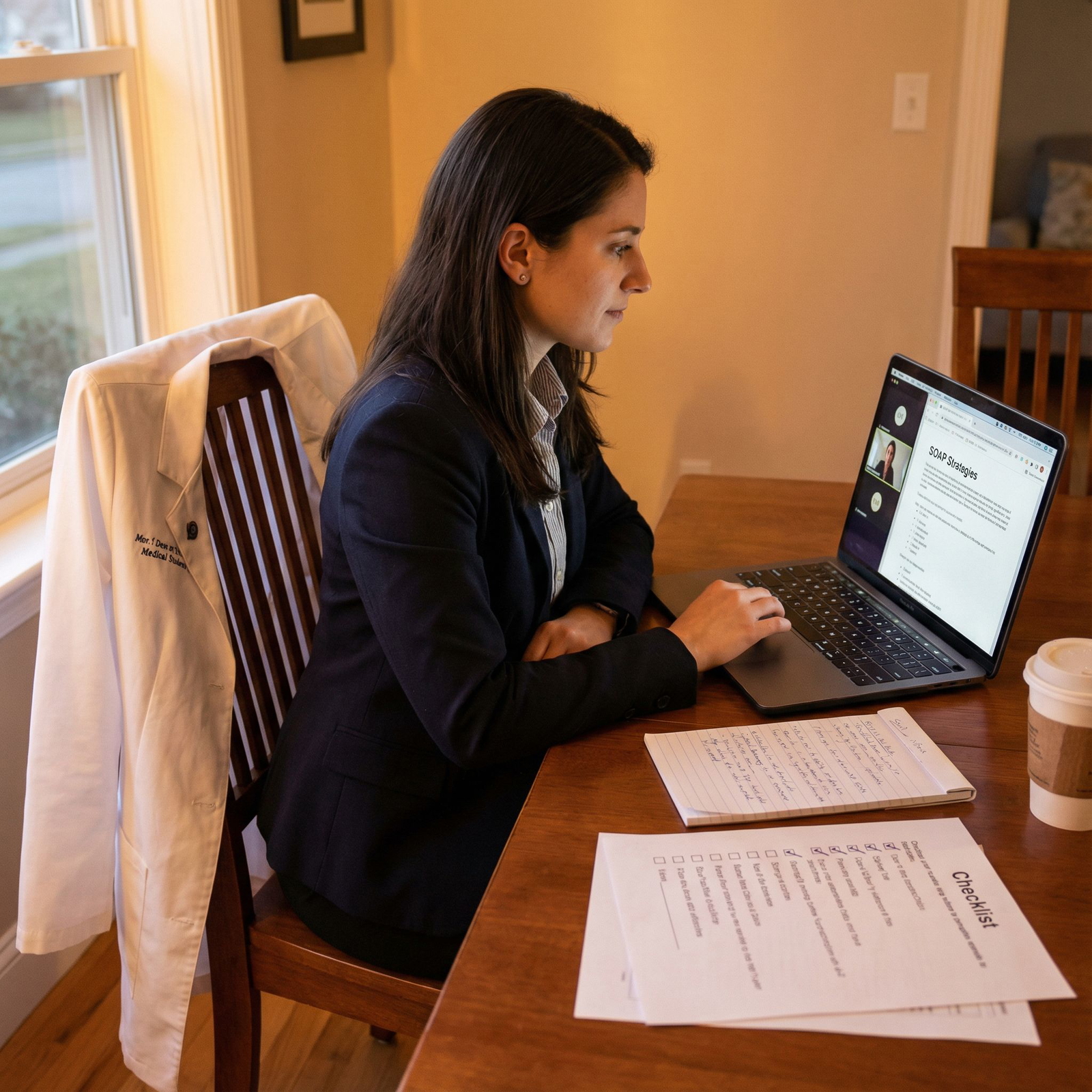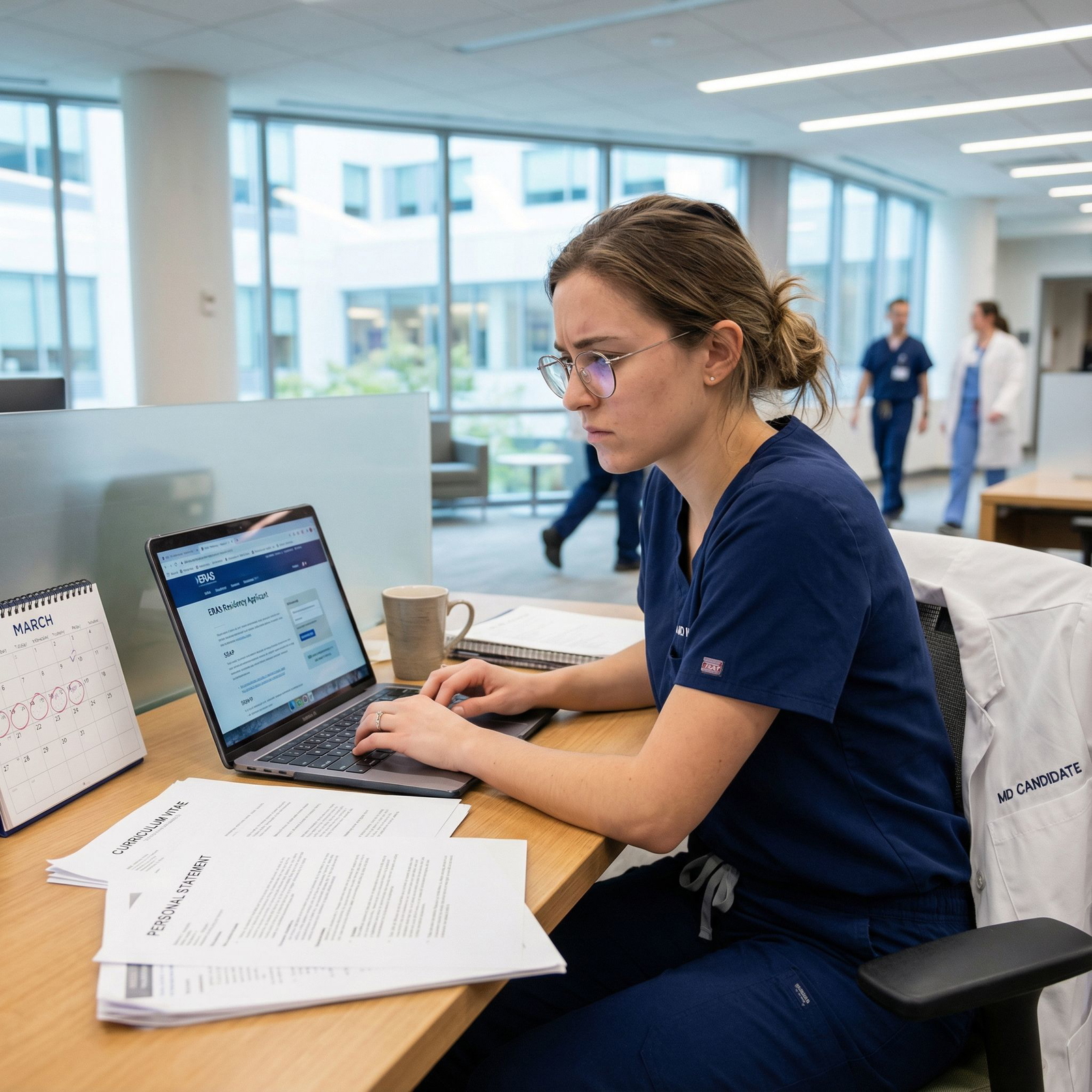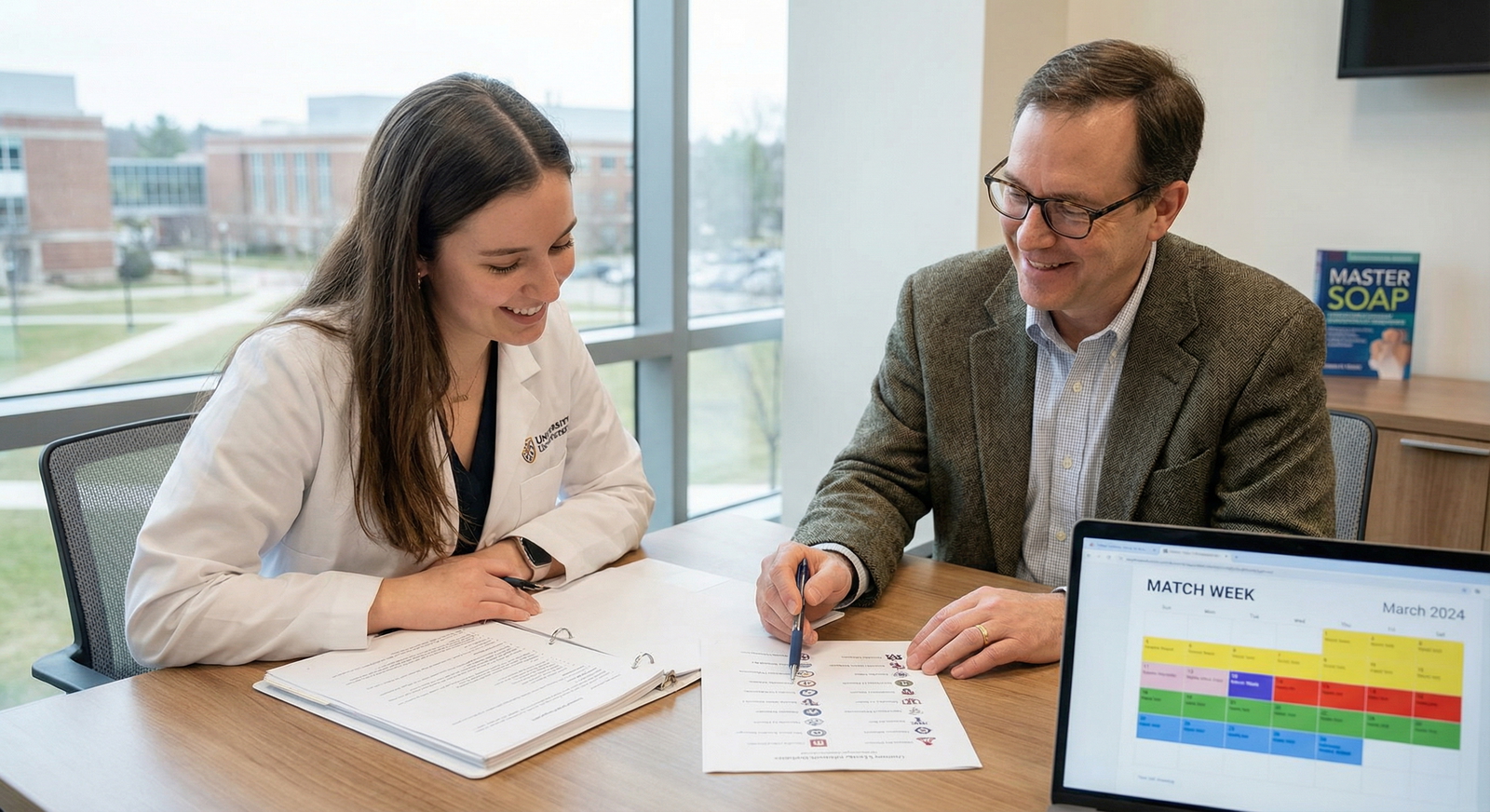
The Supplemental Offer and Acceptance Program (SOAP) can feel overwhelming—especially in a competitive and community-oriented field like pediatrics. Yet every year, many unmatched or partially matched applicants successfully secure strong pediatrics residency positions through the SOAP residency process and go on to have fulfilling careers.
This guide focuses on SOAP preparation for pediatrics residency—what to do now (even if you expect to match), how to react if you don’t match, and how to strategically navigate the peds match landscape under intense time pressure.
Understanding SOAP in the Context of Pediatrics
Before you can prepare effectively, you need to be clear on what is SOAP and how it works in the pediatrics residency environment.
What Is SOAP?
The Supplemental Offer and Acceptance Program (SOAP) is an NRMP-managed, time-limited process that allows eligible unmatched or partially matched applicants to obtain positions that remain unfilled after the main Match initial results are released.
Key points:
- Timing: SOAP takes place during Match Week (usually Monday–Thursday).
- Eligibility: You must be unmatched or partially matched, registered for the Match, and eligible for U.S. graduate medical education (i.e., have passed or met exam requirements, no unmatched participation bars from prior cycles, etc.).
- ERAS-based: Applications are submitted via ERAS to programs that have unfilled positions.
- Offer Rounds: Programs extend offers in several timed rounds; you can accept only one offer and must respond within minutes.
In pediatrics, SOAP has become an important back-up mechanism both for categorical and preliminary or transitional year opportunities.
Unique Features of SOAP in Pediatrics
Pediatrics residency has some SOAP-specific dynamics worth knowing:
Relatively applicant-rich specialty: Peds usually fills the majority of positions in the main Match, but:
- Some programs (often community-based, newer, or in less popular locations) may have unfilled positions.
- Combined or specialized tracks (e.g., Pediatrics/Medical Genetics, Pediatrics/Child Neurology) may have occasional openings.
Program priorities: During SOAP, pediatric PDs often prioritize:
- True interest in primary care and child health
- Evidence of reliability, teamwork, and communication
- Applicants who can start without major visa or licensing barriers
- Applicants who can handle the emotional demands of pediatric care
Variety of positions:
- Categorical pediatrics (PGY-1)
- Preliminary pediatric positions (less common)
- Transitional year or medicine prelim positions that could still support a future peds pathway
Understanding how pediatrics programs think during SOAP helps you tailor your approach for maximum impact.
Pre–Match Week SOAP Preparation: What to Do Before You Need It
Even if you’re confident about matching, SOAP preparation should be part of every applicant’s strategy. You can’t predict the Match with certainty, and preparing early lowers stress and improves your options if you end up in the SOAP residency process.
1. Honest Risk Assessment for the Peds Match
Take a realistic look at your pediatrics residency application before rank lists are due:
- Academic indicators:
- USMLE/COMLEX scores, especially any failures
- Course grades, especially in pediatrics, medicine, and core clerkships
- Application profile:
- Late exam results
- Gaps in training or red flags (failures, professionalism concerns)
- Limited or weak pediatrics letters
- Application strategy:
- Number and variety of programs applied to
- Geographic constraints
- Too many “reach” programs vs. a balanced list
If you:
- Applied to very few programs
- Limited yourself to one region or one type of program
- Have exam failures or significant academic concerns
- Have very few interview invites
…then SOAP preparation should be a priority.
2. Create SOAP-Ready Documents in Advance
Don’t wait until Match Week to scramble; set up materials early that can be quickly tailored for pediatrics SOAP applications.
a. SOAP-focused Personal Statement Template
Write a base personal statement that:
- Emphasizes:
- Your authentic commitment to child and adolescent health
- Core pediatrics qualities: empathy, patience, communication with families, team orientation
- Relevant experiences: pediatric rotations, sub-internships, advocacy, quality improvement
- Minimizes:
- Overly program-specific statements that can’t be generalized
- Overly niche subspecialty focus that might make you look disinterested in general pediatrics
Structure:
- Opening: A brief clinical vignette from your pediatric or adolescent medicine experience that illustrates your motivation.
- Body paragraph 1: Your path to pediatrics—key rotations, mentors, and what you learned.
- Body paragraph 2: Evidence of reliability and growth—teamwork, resilience, and specific contributions.
- Body paragraph 3: Fit for pediatrics residency—communication skills, advocacy interest, diversity and inclusion involvement.
- Closing: Future goals (general pediatrics, hospital medicine, or open-minded about subspecialties), with an emphasis on being ready to contribute as an intern.
You can then rapidly customize 2–3 sentences per program during SOAP (or leave generic if time is tight).
b. Updated CV and ERAS Content
Make sure your ERAS entries:
- Are error-free and consistent (no date mismatches or typos)
- Highlight pediatrics-related experiences prominently:
- Peds rotations and sub-Is
- Pediatric research or QI projects
- Volunteer work with children, schools, camps, or community health
- Include brief but specific bullet points that show impact, not just participation
c. Letters of Recommendation (LORs)
You cannot obtain new letters during SOAP, but you can decide which letters to activate for each program.
Before Match Week:
- Ensure you have at least:
- 2 strong pediatrics letters (faculty or clerkship director)
- 1 additional clinical letter (medicine, family medicine, etc.) that speaks to your clinical performance and reliability
- Talk to your dean’s office:
- Confirm that your MSPE is accurate and that any concerns are clearly explained.
- Discuss how your school supports students during SOAP residency.
3. Build Your Support Team
SOAP is exhausting and fast-paced. Plan now:
- Identify a SOAP advisor:
- This could be your pediatric clerkship director, a faculty mentor, or your dean of students.
- Clarify communication channels:
- Know who will be available on Monday of Match Week when you get your “Matched/Unmatched” status.
- Have updated contact information readily accessible.

Match Week Timeline and Strategy for Pediatrics SOAP
Understanding the structure of Match Week is central to smart SOAP preparation.
Monday Morning: The Unmatched or Partially Matched Result
On Monday at 11:00 AM ET, you receive one of the following:
- Matched (fully filled):
- You are not eligible for SOAP residency.
- Partially matched (e.g., you matched to an advanced position but not a prerequisite year):
- You may be eligible for SOAP for certain types of positions.
- Unmatched:
- You become SOAP-eligible, provided you meet other NRMP criteria.
If you are unmatched or partially matched:
- Contact your school or advisor immediately.
- Avoid impulsive decisions:
- Don’t start calling programs yet (direct unsolicited calls are generally discouraged during SOAP).
- Don’t resign yourself to “no options”; pediatrics often has SOAP opportunities.
Monday Midday: Access to the Unfilled List
Shortly after eligibility is confirmed, you will see the list of unfilled programs in the NRMP R3 system (through your school, if you’re a student).
For pediatrics, look for:
- Categorical Pediatrics (Pediatrics [1510] usually)
- Prelim/Transitional positions that might be aligned with future pediatrics goals if categorical spots are scarce (though categorical pediatrics should remain your priority if that’s your clear career path)
With your advisor:
- Categorize programs:
- Tier 1: Strong fit + realistic chances
- Tier 2: Somewhat less ideal (location, size, or type) but still acceptable
- Tier 3: Backup options only if few interviews materialize
Monday–Tuesday: Submitting SOAP Applications for Pediatrics
You have a limited number of SOAP applications (currently 45, but always check the latest rules). Use them deliberately.
Prioritizing Pediatrics SOAP Applications
Your primary goal: categorical pediatrics residency, unless you have a unique situation (e.g., you already matched to a pediatrics-eligible advanced position).
Consider:
- Personal non-negotiables:
- Visa sponsorship needs
- Absolute geographic constraints (family, health reasons)
- Program factors:
- Accreditation status and history
- Size of program and level of support (especially important if you anticipate needing mentoring)
- Hospital type (children’s hospital vs. general community hospital; both can be excellent)
Most applicants should:
- Use the majority of their SOAP applications on categorical pediatrics programs.
- Reserve a smaller number for:
- Preliminary medicine or transitional year positions that could lead to re-application in pediatrics.
- Special programs aligned with your long-term pediatrics pathway (like Peds/Child Neurology, though these are less common in SOAP).
Tailoring Your Applications Under Time Pressure
In SOAP, programs understand you have limited time, but thoughtful customization still helps:
- Personal Statement:
- If possible, tweak 2–3 sentences per program to reference:
- Region or community (urban underserved, rural, specific population)
- Program features that match your background (advocacy, primary care focus, global health, etc.)
- If possible, tweak 2–3 sentences per program to reference:
- Program Signaling (informal):
- Some schools may allow a short message through a dean or an official channel to a few top programs.
- Direct emails from applicants are sometimes allowed; check your dean’s and NRMP’s guidance each year.
Tuesday–Thursday: Interviews and Offer Rounds
After you submit applications:
- Programs review applications and start inviting candidates to brief virtual interviews (often via Zoom, Microsoft Teams, or phone).
- Interviews are usually short—from 15 to 30 minutes—focused and conversational.
Pediatrics SOAP Interview Priorities
Program directors are trying to quickly answer:
- Will this person show up reliably and work hard?
- Can they communicate well with children, parents, nurses, and colleagues?
- Are they truly interested in pediatrics and our program, not just any spot?
- If there are red flags (exam failures, gaps), have they learned from them and improved?
Be prepared to discuss:
- Why pediatrics? (Be honest and child-focused.)
- Why you went unmatched or partially matched, succinctly and without defensiveness.
- How you’ve addressed any academic or exam issues.
- Examples of:
- Working on a team
- Handling emotionally challenging cases (e.g., child abuse concerns, end-of-life issues, chronic illness)
- Advocating for vulnerable patients
Responding to SOAP Offers
SOAP offers are released in several timed rounds. The rules change slightly over time, but the essentials are:
- You may receive multiple offers across rounds, or none.
- When you receive an offer, you have a short window (minutes) to accept or reject.
- Once you accept an offer, you are bound to that position and withdraw from further SOAP activity.
Key strategies:
- With your advisor, decide in advance:
- Which programs would you accept immediately if offered.
- Which programs are “acceptable but not ideal” where you might want to wait for earlier rounds (if that is allowed in the current rules and your risk tolerance is appropriate).
- In pediatrics, having a categorical position—even at a program that wasn’t originally on your radar—typically outweighs the risk of going unmatched and reapplying next year.

Presenting Your Best Self as a Pediatrics SOAP Candidate
Your SOAP preparation is not only logistical. It’s also about how you frame your story as a pediatrics applicant.
1. Addressing Why You Went Unmatched
Most pediatric program directors understand that excellent applicants sometimes don’t match. They’ve all seen:
- Applicants who over-limited geography
- Those who ranked only highly competitive programs
- Applicants with late USMLE Step 2 scores or a single exam failure
- Strong candidates affected by application volume and shifting priorities
When asked, use a 3-step structure:
Brief explanation (no more than 1–2 sentences):
- “I limited my applications too geographically, focusing mostly on [region], and as a result I didn’t interview as broadly as I should have.”
- “I had a Step 1 failure early in medical school, which limited my interview invitations despite improvements.”
Evidence of growth or correction:
- Improved Step 2 scores, strong clinical grades, leadership, consistent performance.
- Proactive work on exam strategies, time management, or personal challenges.
Shift to present and future:
- Emphasize what you are ready to bring to a pediatrics residency now: reliability, compassion, strong communication, eagerness to learn.
Avoid:
- Blaming others (school, prior advisors, testing agencies) without taking responsibility.
- Long, detailed justifications that overshadow the rest of your interview.
2. Showcasing Your Fit for Pediatrics Specifically
Program directors are looking for signs that you belong in pediatrics, not that you’re just trying to fill any residency position.
Highlight:
- Clerkship feedback: Narrative comments praising your empathy with children, patience, or rapport with families.
- Specific pediatric experiences:
- Sub-I in pediatrics
- NICU or PICU exposure
- Community pediatrics clinics, school-based programs
- Advocacy and service: Work with:
- Children with chronic diseases
- Foster care systems
- School health, immunization campaigns
- Communication skills:
- Examples of explaining complex issues to anxious parents in clear, non-technical language.
- How you adapt your approach to different ages and developmental stages.
3. Managing Emotional Stress and Maintaining Professionalism
SOAP is emotionally intense. In pediatrics, where emotional resilience is already critical, how you behave this week can leave a lasting impression.
Practical steps:
- Create structure: Even during SOAP, maintain a regular sleep–wake pattern as much as possible.
- Designate a support person: A friend, partner, or classmate who can help with logistics (time zones, reminders, tech setups).
- Practice a calm introduction: A 30-second self-summary that you can use at the start of interviews:
- Who you are
- Why pediatrics
- One or two strengths relevant to pediatrics
Program directors often notice:
- Applicants who handle the pressure calmly and respectfully
- Those who are organized, punctual, and professional in virtual settings
After SOAP: Planning Your Path in Pediatrics
Whether you match through SOAP or not, you still have a pediatrics career to build.
If You Successfully SOAP into Pediatrics
Congratulations—you have matched into a pediatrics residency through SOAP. Next steps:
- Express appreciation:
- A short, professional thank-you email to the program director and coordinator is appropriate.
- Leverage your “underdog” story:
- Your journey through SOAP often builds resilience and humility; these are powerful assets in pediatrics.
- Prepare academically:
- Review core pediatrics topics (e.g., newborn care, developmental milestones, common pediatric emergencies).
- Address any known gaps (e.g., if you struggled in pharmacology, brush up on pediatric dosing fundamentals).
Importantly, once the Match is complete, you are just as much a pediatrics resident as anyone who matched on Monday. Most colleagues never distinguish how or when you matched.
If You Do Not Match Through SOAP
Not matching in SOAP is painful but not the end of your pediatrics career. Many pediatricians reach their goals via non-linear paths.
With your advisor, develop a concrete plan:
Post-SOAP debrief:
- Review which programs you applied to and any feedback you received.
- Identify whether the barrier was:
- Exam failures or low scores
- Limited U.S. clinical experience
- Insufficient pediatrics exposure
- Geographic constraints
- Interview skills
Constructive gap year (or more):
- Consider positions that build your pediatrics profile:
- Pediatrics research fellowships or QI projects
- Pediatrics clinical assistant roles (e.g., clinical research coordinator in a children’s hospital, medical scribe in pediatric clinics)
- Non-residency clinical work (for eligible graduates), such as general practice or urgent care involving children (varies by country/regulation)
- Strengthen future applications:
- New, strong pediatrics letters of recommendation
- Additional U.S. clinical experience if you are an IMG
- Retake or complete licensing exams with better preparation
- Consider positions that build your pediatrics profile:
Reassessing specialty choice (if needed):
- For some, peds remains the clear goal and re-application is appropriate.
- For others, honest reflection may suggest another specialty (e.g., family medicine with a strong pediatrics focus) is a better fit, personally or competitively.
Whatever your path, approach it deliberately, not reactively.
Practical SOAP Preparation Checklist for Pediatrics
Use this condensed checklist as you approach Match Week:
1–2 Months Before Rank List Deadline
- Conduct a risk assessment of your pediatrics residency chances with an advisor.
- Draft a SOAP-ready pediatrics personal statement (generic but strong).
- Confirm you have at least 2 strong peds letters and 1 strong clinical letter.
- Update your ERAS entries—highlight pediatrics experiences and leadership.
2–3 Weeks Before Match Week
- Identify a SOAP advisor and confirm how to reach them during Match Week.
- Review what is SOAP and the NRMP SOAP rules for this year.
- Practice short-form interviews:
- Why pediatrics?
- Why do you think you didn’t match (if it happens), and what have you learned?
- Prepare professional attire and a quiet, well-lit space for virtual interviews.
Match Week: If Unmatched or Partially Matched
- Contact your advisor immediately on Monday.
- Review the unfilled pediatrics programs list with them.
- Strategically allocate your SOAP residency applications, focusing on categorical pediatrics.
- Tailor your personal statement minimally but meaningfully where time allows.
- Keep your phone and email accessible at all times for interview invitations.
- Conduct brief interviews with calm, child-centered, and honest answers.
- Pre-decide which offers you would accept immediately vs. consider waiting on, within NRMP guidelines.
FAQs: SOAP Preparation in Pediatrics
1. How common is it to get a pediatrics residency through SOAP?
Each year, a variable but consistent number of pediatrics residency positions remain unfilled after the main Match. Many are filled through SOAP. While pediatrics is not as competitive as some subspecialties, it is still quite popular, so you should not rely on SOAP as your primary strategy. However, if you enter SOAP prepared, your chances of securing a categorical peds spot are reasonable—especially if you have a solid application and geographic flexibility.
2. Should I apply to non-pediatrics programs during SOAP?
For most applicants whose clear goal is pediatrics, you should prioritize categorical pediatrics programs. Consider non-pediatrics programs (e.g., transitional year, prelim medicine) only if:
- Pediatrics opportunities appear extremely limited in SOAP,
- You already have an advanced position requiring a prelim year, or
- You and your advisor believe a flexible intern year will strengthen your future pediatrics prospects.
Even then, be sure you would genuinely be willing to train in that non-peds setting for a year; you are committing to that position if you accept it.
3. How honest should I be about why I went unmatched?
You should be brief, honest, and constructive. Program directors can usually see your exam history and MSPE details; attempts to hide or distort the truth damage trust. Acknowledge the main factor(s) succinctly, point to specific growth or improvements, and then focus on how you will be a strong pediatrics intern now. Avoid excessive detail, blaming, or emotional oversharing.
4. As an IMG, how can I strengthen my chances for pediatrics SOAP?
For international medical graduates, strong SOAP preparation is critical:
- Ensure visa status/needs are clear and realistic for programs likely to appear in SOAP.
- Maximize U.S. clinical experience in pediatrics, with at least one U.S.-based pediatric letter if possible.
- Be flexible on location and program type; community-based pediatrics residencies are often very supportive and can be excellent training environments.
- Work with advisors or mentors who have specific experience guiding IMGs through the peds match and SOAP residency pipeline.
With early planning, authenticity, and strategic decision-making, you can navigate pediatrics SOAP with confidence and significantly improve your chances of launching the pediatrics career you’ve worked so hard to build.