Understanding SOAP and Its Role in Pediatrics-Psychiatry
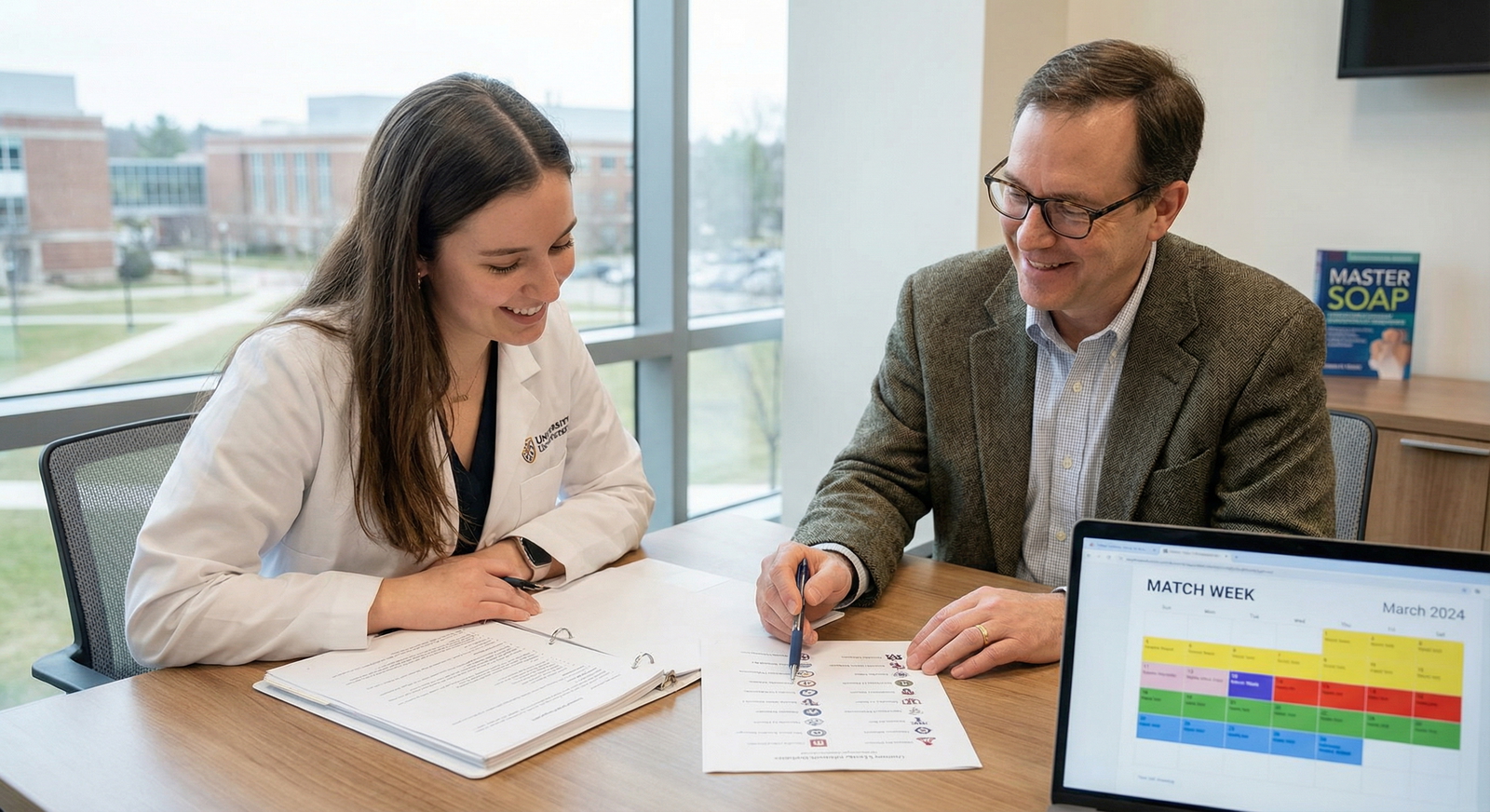
SOAP Preparation in pediatrics-psychiatry is about much more than surviving Match Week—it’s about having a deliberate, data-informed contingency plan for a highly specialized pathway. Whether you’re targeting a dedicated peds psych residency, a triple board program (Pediatrics–Psychiatry–Child & Adolescent Psychiatry), or are broadly interested in child mental health, knowing how to navigate the Supplemental Offer and Acceptance Program (SOAP) can protect your career trajectory.
What Is SOAP?
In the residency context, SOAP (Supplemental Offer and Acceptance Program) is a structured process that occurs during Match Week for applicants who:
- Are unmatched or partially matched and
- Are eligible to enter residency training on July 1 of that year.
It’s not the same as “scrambling” from years past. SOAP has strict rules:
- A controlled list of unfilled programs becomes available.
- Applicants can submit up to 45 applications to unfilled programs.
- There are multiple offer rounds where programs extend electronic offers to applicants.
- Communication rules are tightly regulated by the NRMP.
Knowing what is SOAP, how it works, and how it applies to your specialty interests is a critical part of SOAP preparation.
Why SOAP Preparation Matters for Pediatrics-Psychiatry
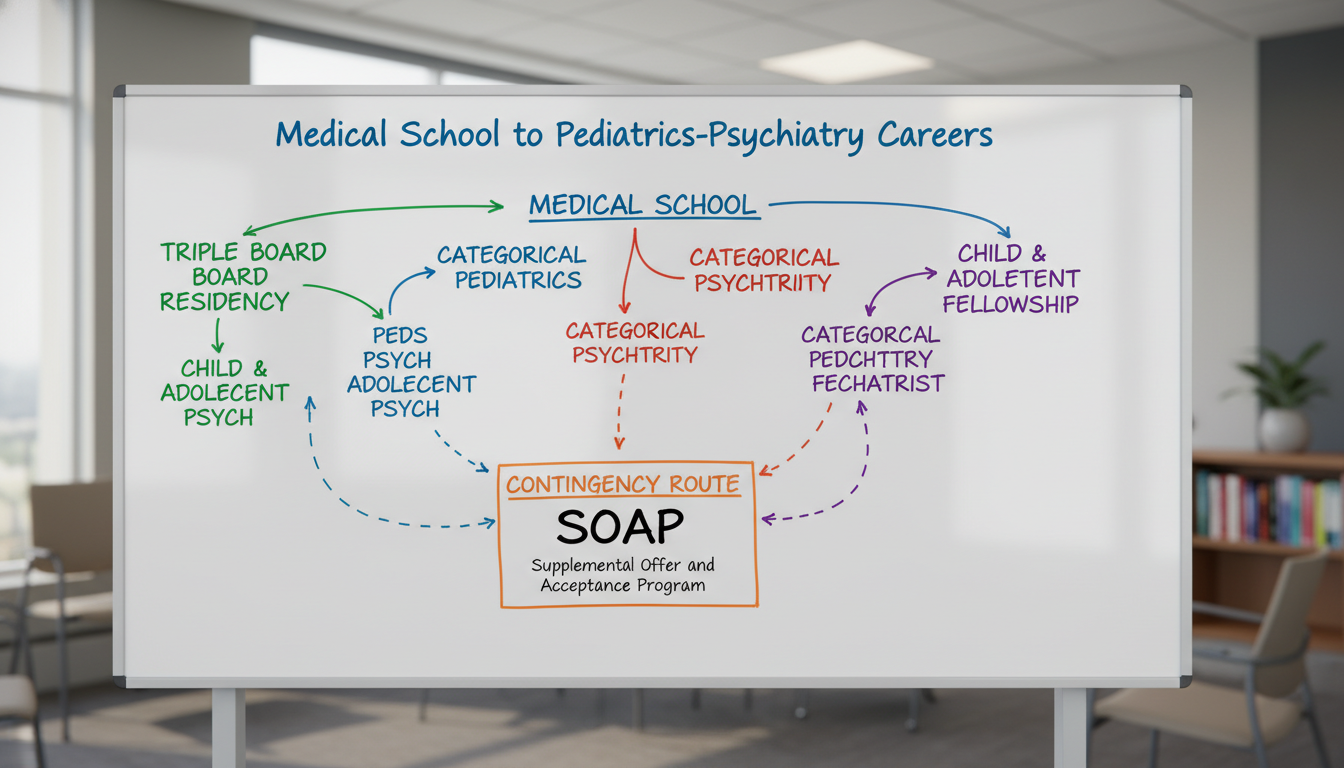
Pediatrics-psychiatry–related pathways are small, competitive, and niche. The main structures include:
- Triple Board (Pediatrics–Psychiatry–Child & Adolescent Psychiatry, 5-year integrated programs)
- A limited number of peds psych residency-style combined tracks (where available)
- Categorical Pediatrics with a strong child mental health focus
- Categorical Psychiatry with intent to pursue Child & Adolescent Psychiatry fellowship
Because the number of dedicated triple board and similar programs is small, the chance of going completely unmatched if you apply narrowly is real. SOAP preparation in this context means:
- Understanding alternative but aligned pathways.
- Planning application diversification long before Match Week.
- Being ready to respond quickly and strategically if you appear on the SOAP-eligible list.
How SOAP Works: Timeline, Rules, and Strategy
Key Milestones in SOAP
The SOAP process typically follows this broad structure (exact times vary year to year):
Monday of Match Week
- 11:00 AM ET: Applicants learn if they are matched, partially matched, or unmatched.
- Unmatched/partially matched applicants receive access to:
- The List of Unfilled Programs.
- The ERAS portal for SOAP applications.
Monday–Tuesday: Application Window
- Applicants may submit up to 45 ERAS applications to unfilled programs participating in SOAP.
- No direct, unsolicited contact with programs is allowed unless they initiate.
Wednesday–Thursday: Offer Rounds
- Multiple SOAP rounds occur (e.g., morning and afternoon).
- Programs submit their preference lists in the system.
- Applicants receive offers electronically and must accept/decline within a strict time window.
Friday and Beyond
- SOAP concludes.
- Any remaining unfilled positions transition to post-SOAP status, and conventional communication can resume.
Understanding this structure is central to effective SOAP preparation—especially because you’ll have to make high-stakes decisions on short timelines.
Program Communication Rules During SOAP
During SOAP:
- You may respond to program-initiated contact (phone, email, video interview).
- You may not initiate communication with programs regarding positions.
- Programs can request:
- Brief, targeted interviews.
- Clarification of your application content.
- Confirmation of your interest and availability.
Violating SOAP communication rules can jeopardize your candidacy, so prepare scripts and documents before Match Week to avoid impulsive missteps.
Specialty Context: SOAP in Pediatrics-Psychiatry and Triple Board
The Reality of Triple Board and Peds Psych in SOAP
True triple board positions are scarce, and most of them fill through the main Match. They rarely appear on the SOAP list. When they do, competition is extremely high.
The same is largely true of any formal peds psych residency structure. Therefore, SOAP preparation for pediatrics-psychiatry applicants must assume:
- You may not find a dedicated triple board position in SOAP.
- You can, however, identify strategic alternative matches that preserve your long-term goal of caring for children with mental health needs.
Parallel and Alternative Pathways
If you’re aiming for a pediatrics-psychiatry career, think in terms of pathways, not just single program types:
Categorical Pediatrics → Child Mental Health Focus
- Match into Pediatrics in SOAP (or main Match).
- Seek rotations, electives, and mentorship in:
- Developmental-behavioral pediatrics
- Child psychiatry consult services
- Integrated behavioral health clinics
- Consider child psychiatry fellowship via non-traditional pathways where possible (e.g., combined training, research collaboration).
Categorical Psychiatry → Child & Adolescent Psychiatry Fellowship
- Match into Psychiatry (adult) in SOAP.
- Focus training on:
- Child & adolescent psychiatry rotations
- Pediatric consult-liaison services
- Outpatient youth-focused clinics
- Apply for Child & Adolescent Psychiatry (CAP) fellowship in PGY-3 or PGY-4.
Pediatrics + Later Transfer or Combined Track
- Begin in Pediatrics.
- Explore the possibility of later transfer into Psychiatry or combined tracks (rare but occasionally possible with strong advocacy and available slots).
- Build a portfolio that shows a sustained trajectory toward pediatric mental health.
SOAP preparation means mapping out these backup pathways in advance and deciding which you would pursue if triple board is not available.
Pre-SOAP Preparation: What to Do Months Before Match Week
The best SOAP preparation starts before you know whether you’ll need it. For pediatrics-psychiatry applicants, this is particularly important given the small number of target programs.
1. Build a Versatile Application From the Start
Even as you emphasize your passion for combined pediatrics-psychiatry training, create an application that would also appeal to pure Pediatrics and pure Psychiatry programs:
- Letters of recommendation:
- At least one strong pediatrics letter.
- At least one strong psychiatry letter.
- A third letter that highlights your integrative perspective or leadership.
- Personal statement strategy:
- Primary statement centered on combined peds-psych interests.
- Pre-drafted, alternate statements:
- One tailored for Pediatrics.
- One tailored for Psychiatry.
- Experiences:
- Mix of pediatric clinical work and mental health/behavioral experiences (e.g., child psych clinics, developmental services, school-based programs).
- Research or quality improvement that touches either child health outcomes or child mental health.
A well-rounded portfolio means you can pivot during SOAP without needing to reinvent your story.
2. Research Programs That Align With Your Backup Plans
Long before Match Week, create a master list of potential programs that would still support your long-term pediatrics-psychiatry goals:
Categories to consider:
Child-friendly Psychiatry programs
- Strong child & adolescent psychiatry departments.
- Multiple CAP faculty and electives.
- Established CAP fellowship.
Mental-health-conscious Pediatrics programs
- Integrated behavioral health clinics.
- Developmental-behavioral pediatrics fellows and faculty.
- Pediatric residency curricula including child mental health.
Geographic Flexibility
- Be realistic: SOAP drastically rewards flexibility about location, setting (community vs academic), and prestige.
- Flag programs where you’d be willing to train even if they’re not your original top choices.
Document for each program:
- Strengths relevant to your pediatrics-psychiatry interests.
- Contact info of key faculty (for post-SOAP networking).
- Any known track record of supporting residents interested in child mental health.
3. Prepare SOAP-Specific Materials in Advance
You may not need them—but if you do, time will be scarce. Before Rank List submission:
- Update your CV with:
- Recent electives, sub-internships, and scholarly work.
- Leadership or advocacy in child or mental health.
- Draft concise emails (not to send yet):
- A brief, professional note expressing gratitude if a program contacts you during SOAP.
- A short explanation of your interest in their specific program and how it aligns with your goals.
- Practice a SOAP-focused interview pitch (60–90 seconds):
- Who you are, your pediatrics-psychiatry interest, and why you’re enthusiastic about Peds or Psych individually as valid career paths.
- Discuss contingency plans with:
- Your Dean’s office or career advisor.
- Any mentors in Pediatrics and Psychiatry.
- This ensures you’re emotionally and logistically ready if SOAP becomes necessary.
Active SOAP Strategy for Peds-Psych Applicants
If Monday of Match Week brings the news that you are SOAP-eligible, you’ll have hours—not weeks—to execute your plan. Here’s how to think clearly and strategically as a pediatrics-psychiatry focused applicant.
1. Interpreting the Unfilled List
When the unfilled list is released:
- Filter immediately by:
- Pediatrics (categorical).
- Psychiatry (categorical).
- Any combined or triple board entries (though rare).
- For each program, ask:
- Can this program support my long-term pediatrics-psychiatry goals?
- Does it offer strong child-focused experiences, even if not formally combined?
- Do they have a CAP fellowship or ties to one?
Prioritize programs where your interest in child mental health will be an asset rather than a mismatch.
2. Choosing Between Pediatrics and Psychiatry in SOAP
This is one of the hardest decisions for triple board–oriented applicants. Consider:
- Your core identity:
- Do you feel more fundamentally drawn to pediatric medicine (physical health, growth, chronic disease) or to psychiatry (psychopathology, therapy, psychopharmacology)?
- Your long-term goals:
- If your end goal is child & adolescent psychiatry, categorical Psychiatry may be the more direct path.
- If your end goal is integrated primary care for children with mental health needs, pediatric training with behavioral focus may be ideal.
- Your academic and clinical strengths:
- Strong medicine scores and pediatrics comments may tilt you toward Peds.
- Strong performance in psych rotations, psychotherapy interest, or research may tilt toward Psych.
In SOAP, you can and often should apply to both Pediatrics and Psychiatry programs, but try to maintain internal clarity about which path you would prioritize if multiple offers arrive.
3. Applying Strategically Within the 45-Application Limit
You have a maximum of 45 applications during SOAP. For pediatrics-psychiatry applicants, a balanced strategy may look like:
15–20 applications to categorical Pediatrics programs with:
- Clear behavioral health or developmental-behavioral strengths.
- Academic affiliation or strong community training.
15–20 applications to categorical Psychiatry programs with:
- Established CAP fellowship.
- Robust child or adolescent rotations.
The remainder:
- Any rare triple board or combined positions that unexpectedly appear.
- Special programs where you have geographic/family reasons to prioritize.
Customize your program signals through short targeted messages or interviews (when invited) rather than over-focusing on titles or brand names.
4. Presenting Your Peds-Psych Narrative During SOAP
SOAP interviews are shorter and more focused, but your story still matters. Aim to show:
- Consistency with flexibility:
- “I have a strong interest in pediatrics-psychiatry, and I see [Pediatrics or Psychiatry] as a fully satisfying career that aligns with that interest.”
- Positive framing:
- Avoid sounding like you see this program as just a consolation prize.
- Emphasize what excites you about their residency specifically.
- Evidence of fit:
- Reference specific experiences:
- Child psych consults during your pediatric rotation.
- Behavioral pediatrics clinic.
- Mental health advocacy for children.
- Reference specific experiences:
Example SOAP interview response:
“My long-term interest is at the intersection of pediatric medicine and child mental health. During my pediatric clerkship, I was struck by how often mental health, family stress, and trauma impacted physical health. Your program’s integrated behavioral health curriculum and your close relationship with the Child & Adolescent Psychiatry service make this an ideal place for me to grow. Whether I ultimately practice general pediatrics with a behavioral focus or pursue further training in child psychiatry, I see your residency as the right foundation.”

Emotional Resilience and Career Perspective
SOAP is emotionally intense. For many pediatrics-psychiatry applicants, there’s the added weight of feeling that a very specific dream (triple board, for example) is at stake. Maintaining perspective is essential.
1. Distinguish Path From Identity
Your identity and passion for caring for children and adolescents with mental health needs is not limited to one training structure. You can achieve that mission through:
- Triple board.
- Categorical Pediatrics + mental health emphasis.
- Categorical Psychiatry + CAP fellowship.
- Hybrid careers (e.g., integrated care, academic roles, advocacy and policy).
SOAP preparation should reinforce the idea that you are choosing among multiple valid routes to the same core calling.
2. Build a Support Team Before and During SOAP
Ahead of Match Week:
- Identify 2–3 key mentors:
- One with pediatrics expertise.
- One with psychiatry/child psychiatry expertise.
- Possibly a triple board or combined training mentor if available.
- Discuss:
- Your primary goals and acceptable backup paths.
- How you’d feel about a path that’s Peds-only or Psych-only.
During SOAP:
- Schedule brief check-ins (by phone or video) if possible.
- Use them as sounding boards for:
- Which programs to prioritize.
- How to interpret offers.
- Emotional support when decisions feel rushed.
3. Plan for Post-SOAP Professional Development
No matter where you land:
- Seek mentors in child mental health, developmental-behavioral pediatrics, or child psychiatry at your new institution.
- Build an individualized training plan with:
- Electives on pediatric psychiatry consults.
- Projects or QI focused on behavioral health access.
- Involvement in multidisciplinary clinics (e.g., autism, ADHD, trauma).
This approach turns an unexpected SOAP outcome into a tailored pediatrics-psychiatry pathway.
Frequently Asked Questions (FAQ)
1. Can a SOAP-rescued position still lead to a strong pediatrics-psychiatry career?
Yes. Many outstanding pediatric and child psychiatry leaders did not follow a straight or prestigious path. A SOAP position in Pediatrics or Psychiatry can still lead to:
- Child & Adolescent Psychiatry fellowship (from Psychiatry).
- Behavioral pediatrics, developmental-behavioral pediatrics, or integrated care leadership (from Pediatrics).
- Roles in school-based health, community mental health, or advocacy that leverage both domains.
What matters most is how intentionally you shape your experiences during residency—not just how you entered.
2. Should I prioritize Pediatrics or Psychiatry programs in SOAP if I wanted triple board?
There’s no one-size-fits-all answer, but consider:
- If your primary goal is practicing as a child psychiatrist, Psychiatry → CAP fellowship is the more direct route.
- If you feel most fulfilled managing medical complexities in children, chronic diseases, and growth/development plus some mental health focus, Pediatrics may be better.
- Many applicants apply to both in SOAP, then prioritize based on:
- Personal fit and mentor input.
- The strength of child-mental-health offerings in specific programs.
3. What is SOAP like logistically? Will I have time to think?
SOAP is structured but fast:
- You will have:
- Several hours to review the unfilled list and submit up to 45 applications.
- Short windows to respond to interview invites and offers.
- You will have time to think—but not to start planning from scratch.
- That’s why SOAP preparation (pre-made program lists, alternate personal statements, and clear priorities) is essential, especially for niche fields like pediatrics-psychiatry.
4. If I match through SOAP, will programs look down on me?
Programs that participate in SOAP are filling essential residency positions and are invested in their residents’ success. Once you arrive:
- Colleagues and faculty typically do not dwell on how you matched.
- Your performance, professionalism, and engagement matter far more.
- Many residents who enter through SOAP go on to fellowships, chief roles, and academic careers.
For pediatrics-psychiatry–oriented applicants, your commitment to a complex, underserved patient population can quickly become a defining strength at your new program.
Thoughtful SOAP preparation allows pediatrics-psychiatry applicants to protect their long-term goals even in the face of a difficult Match outcome. By understanding what SOAP is, planning realistic backup pathways in Pediatrics and Psychiatry, and staying anchored to your core mission of caring for children’s physical and mental health, you can navigate Match Week with resilience and purpose—and still build the integrated career you set out to pursue.