Understanding SOAP: Why It Matters for Caribbean IMGs
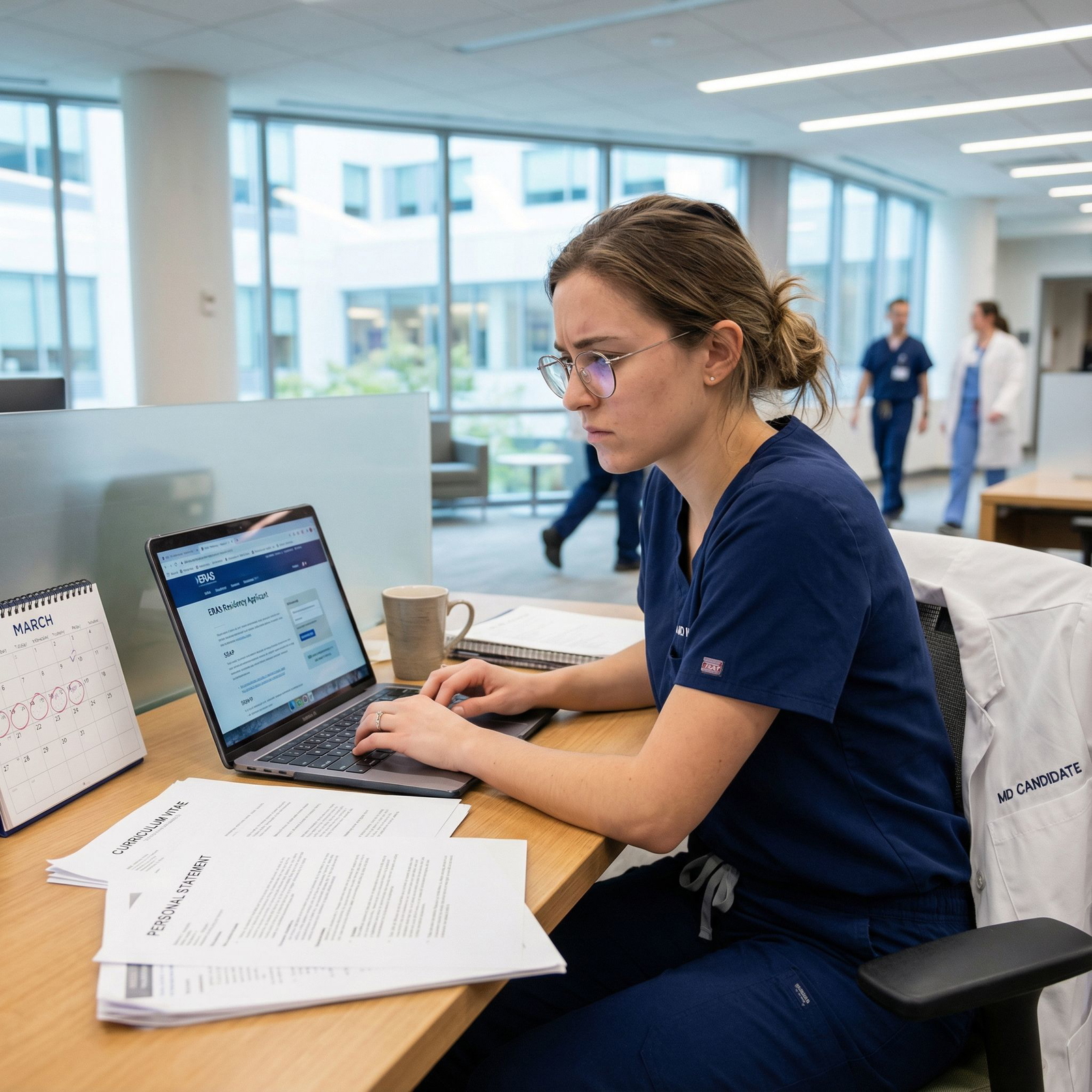
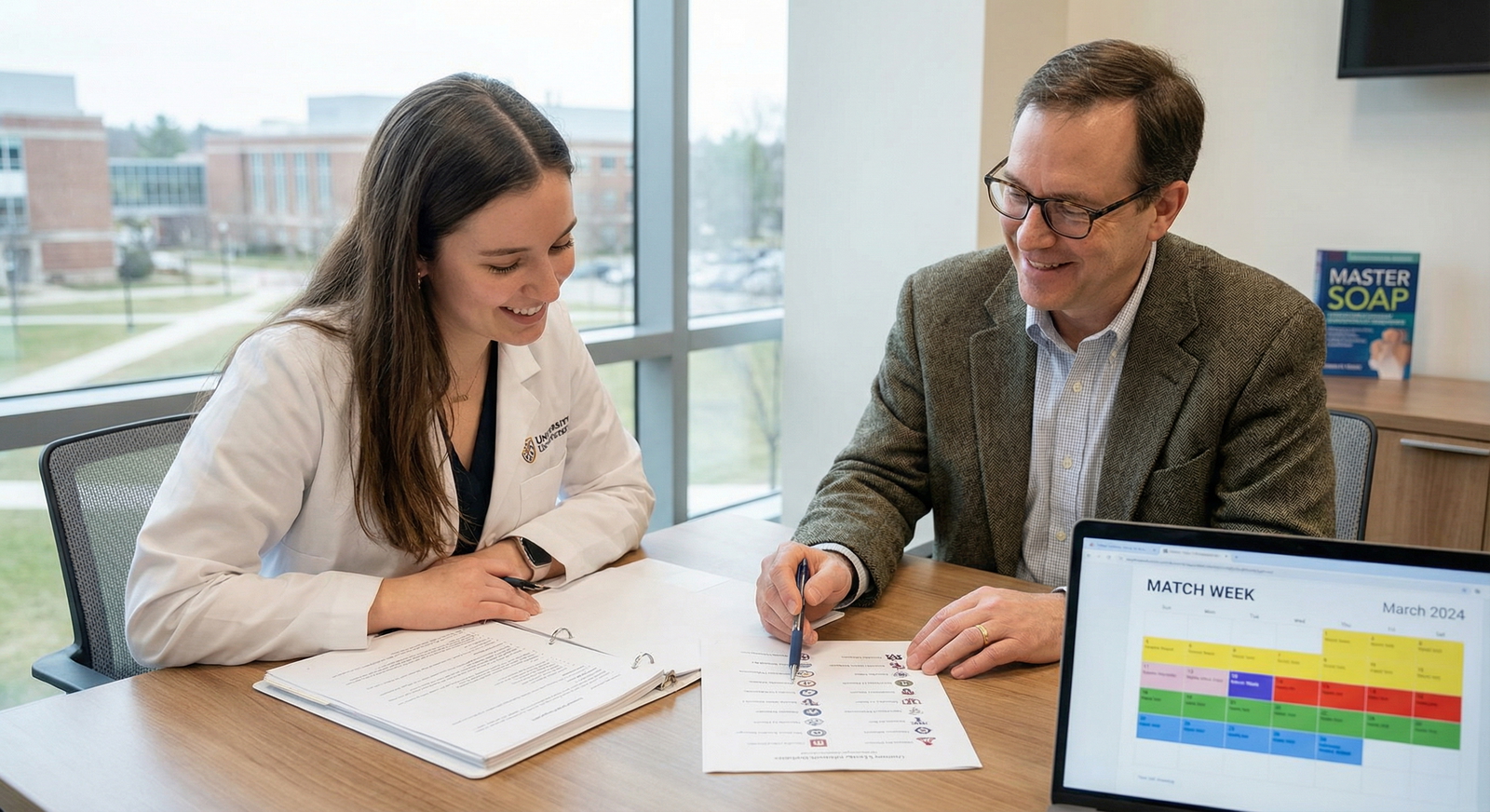
For many Caribbean international medical graduates (IMGs), the Supplemental Offer and Acceptance Program (SOAP) is not a backup you casually “keep in mind”—it is a critical pathway to entering residency in the United States. Preparing for SOAP effectively can mean the difference between starting residency in July or spending another year reapplying.
Before discussing strategy, you must clearly understand:
What is SOAP?
SOAP (Supplemental Offer and Acceptance Program) is an organized, time-limited process that occurs during Match Week for unmatched or partially matched applicants. It allows eligible applicants to apply to and receive offers from residency programs with unfilled positions, before the main Match results are finalized on Friday.
SOAP is:
- Structured and time-bound – multiple application and offer rounds over just a few days.
- Centralized through ERAS® – all communication and applications are managed through ERAS, not directly by email or phone.
- Offer-based – programs choose candidates and extend offers; you do not “rank” programs as in the main Match.
- Binding – once you accept a SOAP offer, you are committed to that position; you are removed from further SOAP consideration and the Main Match.
Why SOAP Is Especially Important for Caribbean IMGs
Caribbean medical graduates, including those from schools like St. George’s University (SGU), Ross, AUC, and others, often face:
- Higher competition for categorical spots in core specialties (IM, FM, Pediatrics, Psychiatry).
- Visa considerations that can limit the number of programs willing to rank or SOAP them.
- Heavier screening on metrics like USMLE scores, attempts, and recency of graduation.
Even successful Caribbean medical school residency outcomes—like a strong SGU residency match track record—are often supported by well-planned SOAP strategies for students who don’t secure a position in the initial Match. Many IMGs underestimate SOAP, thinking of it only as an emergency measure. In reality, SOAP preparation should be integrated into your entire application strategy from the beginning of the season.
Who Is Eligible for SOAP?
You are SOAP-eligible if:
- You are registered for the NRMP Main Match.
- You have an active, certified ERAS application.
- You are unmatched or partially matched (e.g., matched to an advanced position but not a preliminary year).
- You have passed USMLE Step 1 and Step 2 CK (and CS, if applicable for your year).
- You do not have an existing binding Match or pre-Match contract.
NRMP informs you of your SOAP eligibility on Monday of Match Week (the “Did I Match?” day). But waiting until then to start your SOAP preparation is a serious mistake.
Pre-Season SOAP Preparation: Laying the Groundwork Early
Effective SOAP preparation starts months before Match Week. Think of it as building a dedicated, flexible “SOAP tool kit” that you can deploy if needed.
1. Build a SOAP-Ready ERAS Application
Your ERAS application should be designed from the start to serve both the main application season and SOAP.
Key elements:
- USMLE scores and attempts clearly documented
- For Caribbean IMGs, competitive scores are ideal, but if you have lower scores or attempts, your narrative and clinical experiences become even more important.
- Strong, specific personal statement
- Well-organized experiences and meaningful activity descriptions
- Up-to-date CV including all recent U.S. clinical experiences (USCE)
Actionable tip:
Write your main specialty personal statement (e.g., Internal Medicine) early in the season. Then plan, in advance, alternative versions that can be quickly tailored for SOAP to:
- Family Medicine
- Transitional Year (TY)
- Preliminary Medicine or Surgery
- Psychiatry (if your background supports it)
You don’t need fully polished versions for every specialty months in advance, but outline them so you can finalize quickly if SOAP becomes necessary.
2. Identify Realistic SOAP-Target Specialties and Programs
SOAP is not the time to “aim only for dream programs.” It is about realistic, attainable opportunities.
For most Caribbean IMGs, SOAP opportunities are more likely in:
- Family Medicine
- Internal Medicine (especially community and smaller programs)
- Transitional Year (TY)
- Preliminary Medicine or Surgery
- Pediatrics (in some years)
- Psychiatry (occasionally, but often still competitive)
Less likely (but not impossible) through SOAP:
- Dermatology, Ophthalmology, ENT, Ortho, Neurosurgery
- Highly competitive academic programs in large cities
- Many categorical Surgery positions
Actionable planning steps (before Match Week):
- Review historical SOAP vacancies (NRMP and specialty organizations often publish general statistics).
- Ask recent graduates or upper-year colleagues about where Caribbean medical school residency positions have previously gone unfilled.
- Make a list of 30–40 realistic programs/specialties that:
- Have previously participated in SOAP,
- Have a history of accepting IMGs or Caribbean graduates,
- Are in states where your visa status is manageable (if applicable).
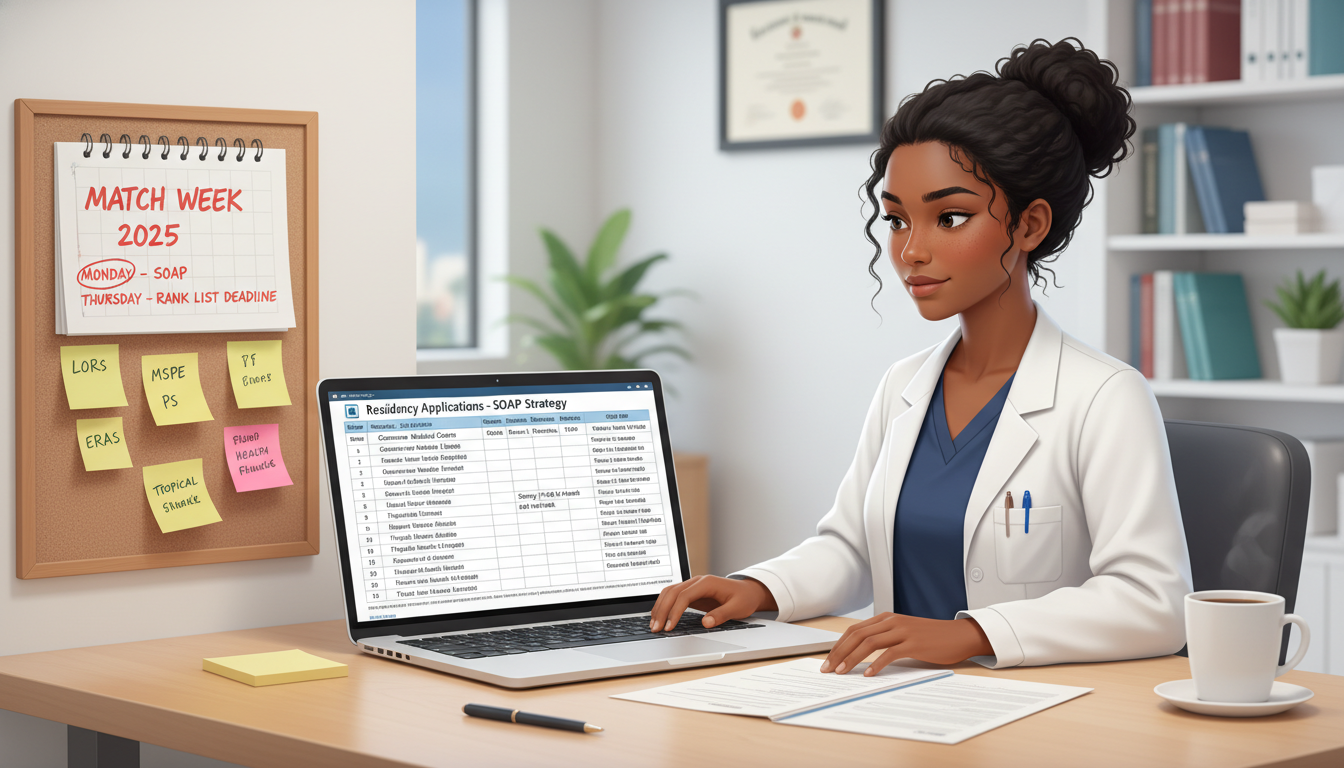
This list is not final, but it will dramatically speed up decision-making when the SOAP vacancy list appears Monday.
3. Prepare Multiple Personal Statements and CV Angles
You may need slightly different narratives for different SOAP specialties. For example:
- Internal Medicine SOAP PS angle
- Highlight continuity of care, complex medical management, and strong IM rotations.
- Family Medicine SOAP PS angle
- Emphasize broad-spectrum care, outpatient/primary care focus, community engagement, underserved populations.
- Preliminary/TY SOAP PS angle
- Focus on strong work ethic, procedural skills, teamwork, flexibility, and readiness to support a variety of specialties.
- Psychiatry SOAP PS angle (if relevant)
- Underscore rotations or electives in psychiatry, mental health interest, communication skills.
Actionable tip:
Draft “modular paragraphs” that you can plug into specialty-specific personal statements:
- A core paragraph about your background, motivation, and training as a Caribbean IMG.
- One paragraph tailored to IM, FM, TY/Prelim, or Psych.
- A closing paragraph about your work ethic, adaptability, and commitment to underserved populations—highly valued in many SOAP-available programs.
This structure lets you rebuild a tailored PS in hours, not days, if SOAP becomes necessary.
4. Line Up SOAP-Suitable Letters of Recommendation (LoRs)
While you generally cannot change LoRs during the short SOAP window, you can plan your letter portfolio ahead:
- At least one or two letters in your main specialty (e.g., IM).
- One or two more general letters that speak to your clinical performance, professionalism, and work ethic (these can be used for multiple specialties, especially FM or TY).
Make sure:
- Letters are uploaded to ERAS and assigned thoughtfully.
- You understand which letters would be best to highlight for different specialties during SOAP.
If your school (e.g., SGU or other Caribbean schools) has a residency advising office, ask them:
- Which LoR combinations previous unmatched students used during SOAP.
- Whether they offer expedited advice during Match Week.
Match Week Execution: Step-by-Step SOAP Strategy
Once Match Week begins, everything happens quickly. You need a clear operational plan.
Monday: “Did I Match?” – Rapid Assessment and Emotional Control
On Monday morning, you receive one of these NRMP messages:
- “You are fully matched”
- “You are partially matched”
- “You are unmatched”
- “You are not eligible for SOAP”
If you are unmatched or partially matched and SOAP-eligible:
Acknowledge your emotions, then pivot to action.
- It is normal to feel disappointed or shocked.
- Set a time limit (e.g., 1–2 hours) to process, then move into action mode.
Contact your school’s advising office immediately.
- Most Caribbean programs (including those with strong SGU residency match infrastructure) have SOAP support teams.
- Ask for:
- Quick review of your SOAP strategy.
- Advice on specialties/program tiers.
- Help refining personal statement edits.
Await the SOAP-Participating Programs List.
- Later Monday, the list of unfilled positions becomes available through NRMP/ERAS.
- This list is confidential; you must not share it publicly or with non-eligible individuals.
Strategically Reviewing the Vacancy List
When you receive the unfilled programs list:
- Sort by specialty and state.
- Flag programs that:
- Historically accept IMGs or Caribbean grads.
- Are community-based or smaller university-affiliated.
- Are in less competitive locations (midwest, south, rural areas tend to be more open to IMGs).
- Match the list against your pre-season program targets.
- Use that pre-prepared spreadsheet to quickly identify top targets.
Crafting Your SOAP Application: Quality Over Panic
During SOAP, you are limited in how many programs you can apply to (usually up to 45). This cap makes strategy essential.
Prioritizing Specialties and Programs
Ask yourself:
- Do I want to prioritize categorical positions (IM, FM, Peds, Psych)?
- Am I open to preliminary or transitional year spots?
- How flexible am I geographically and in terms of hospital type?
For many Caribbean IMGs, an effective SOAP hierarchy might be:
- Categorical IM, FM, Peds, Psych (in programs IMG-friendly and visa-friendly, if relevant).
- Transitional Year (especially if you plan to reapply to competitive specialties later).
- Preliminary Medicine/Surgery (if you are matched to an advanced position, or want U.S. experience and a route to reapply).
Optimizing Your ERAS Application for SOAP
Things you can still adjust during SOAP:
- Personal statement(s)
- Program-specific assignment of LoRs
- Program list and specialty list
- Communication style in any brief, allowed messages (if applicable—remember, your direct outreach is limited by NRMP rules)
Actionable steps on Monday–Tuesday:
Finalize at least two personal statements:
- One for IM/FM (or your primary SOAP specialty).
- One for TY/Prelim (if you are open to those).
Assign LoRs strategically:
- For IM – prioritize IM faculty letters and strong general clinical letters.
- For FM – at least one FM or primary care letter if available; otherwise strong general IM or clinical letters.
- For TY/Prelim – letters emphasizing your reliability, work ethic, procedural skills, and ability to function as a solid intern.
Polish your experiences section:
- Ensure your U.S. clinical experiences are clearly labeled (e.g., “U.S. Clinical Elective – Internal Medicine, XYZ Hospital, New York, NY”).
- Highlight any SOAP-relevant strengths: underserved care, night float rotations, leadership roles, research, quality improvement, teaching experience.

Communication, Interviews, and Offers During SOAP
Interview Dynamics in SOAP
Programs may:
- Reach out quickly once they review your application (via ERAS-approved channels).
- Schedule brief virtual interviews (video or phone).
- Conduct rapid screening calls to assess basic fit (English fluency, understanding of the specialty, visa, start date).
Key communication principles:
- Be constantly reachable (updated phone, email, stable internet).
- Check ERAS messages and email frequently.
- Keep your voicemail professional and ensure your mailbox is not full.
- Have a quiet, neutral interview space ready all week.
Sample SOAP Interview Themes (with Caribbean IMG Angles)
- “Why did you go to a Caribbean medical school?”
- Be honest and confident, without apologizing for your path.
- Emphasize exposure to diverse patient populations, adaptability, and resilience.
- “Why did you not match in the main cycle?”
- Avoid blaming others; focus on factors like competitiveness, score limitations, late exam completion, or application strategy.
- Emphasize what you have learned and how you have strengthened yourself since applying.
- “Why this specialty, especially through SOAP?”
- Give a genuine, specialty-specific answer; do not sound like you are applying just anywhere.
- “Are you open to living in this location?”
- If you apply, be prepared to say yes—and mean it. Programs want commitment.
Handling Offers: SOAP Mechanics
SOAP has multiple rounds of offers (usually four on Wednesday–Thursday). For each round:
- Programs submit a list of candidates they want to offer.
- Applicants receive offers in their NRMP/ERAS account.
- You may:
- Accept one offer,
- Deny offers,
- Or let them expire (not recommended without a clear strategy).
Critical rules:
- Once you accept an offer, the process ends for you; you are matched.
- You may not hold multiple offers waiting for later rounds.
- This is binding—treat it as seriously as signing a contract.
Offer Strategy for Caribbean IMGs
Given the competitive landscape and the reality that SOAP is often your last structured chance to secure a residency spot for the year, a practical hierarchy is:
- If you receive an offer for a categorical position in your realistic target specialty (IM, FM, Peds, Psych) at a reasonably stable program – strongly consider accepting.
- If you receive only TY or prelim offers:
- Consider your long-term goals.
- If you have a plan to reapply to a more competitive specialty, a strong TY with good teaching and networking may be valuable.
- For many Caribbean IMGs, a prelim IM or TY can be an important launching pad—just make sure you understand that categorical transfer is not guaranteed.
- Be cautious about rejecting offers early in hopes of “better” offers in later rounds, unless you have:
- Very strong metrics,
- Excellent interview feedback,
- And guidance from advisors who know your full situation.
Post-SOAP: Next Steps, Regardless of Outcome
If You Match Through SOAP
Once you accept an offer:
- Celebrate—and then transition quickly to preparation:
- Complete onboarding requirements (background checks, immunizations, paperwork).
- Reach out professionally to the program coordinator.
- Clarify any visa processes (if applicable).
- Reflect on your journey:
- What worked in your application?
- What feedback did you receive during SOAP interviews?
Remember, a SOAP match is just as valid as a Main Match position; it goes into your NRMP record as a filled, accredited residency slot.
If You Do Not Match Even After SOAP
This is painful, but it is not the end of your career. Many successful Caribbean IMGs have taken this path and later matched.
Immediate steps:
- Debrief with your school’s advising office.
- Obtain honest, specific feedback on:
- Scores and attempts.
- Specialty choice.
- Timing of exam completion.
- LoRs and clinical experiences.
- Obtain honest, specific feedback on:
- Identify realistic improvement strategies for the next cycle:
- Additional U.S. clinical experience (hospital-based, hands-on, supervised).
- Research positions or quality improvement roles.
- Enhanced language skills, communication skills, or interview practice.
- Additional certifications (e.g., ultrasound courses, ACLS/BLS updates).
- Consider alternative entry points:
- Preliminary or TY programs in the next cycle.
- Strengthening ties with hospitals that host Caribbean medical school students (particularly those with known Caribbean medical school residency pipelines).
Use this year to transform your application, not just to repeat the same pattern.
Common Mistakes Caribbean IMGs Make with SOAP (And How to Avoid Them)
Starting SOAP preparation only after learning they are unmatched
- Solution: Build SOAP PS drafts, LoR plans, and a target program list months in advance.
Over-focusing on location or prestige during SOAP
- Solution: Prioritize opportunity and training over city desirability. Once you are a board-certified physician, you have far more geographic flexibility.
Underestimating visa and IMG-friendliness of programs
- Solution: Research program histories with IMGs and non–U.S. citizens before applying; in SOAP, focus on IMG-friendly programs first.
Ignoring school resources (e.g., SGU residency match support teams, dean’s office)
- Solution: Engage early with any institutional advisors who have experience guiding IMGs through SOAP.
Unprofessional communication or poor interview readiness
- Solution: Practice concise answers to “Why unmatched?”, “Why this program?”, and “Why this specialty?”; test your technology and environment for virtual interviews.
FAQs: SOAP Preparation for Caribbean IMGs
1. How does SOAP differ from the regular Match?
The regular Match uses a rank order list algorithm—you rank programs, they rank applicants, and the algorithm pairs you. SOAP is different:
- It happens only for unfilled positions during Match Week.
- You apply through ERAS, but programs choose whom to offer without your rank list.
- The process runs in several short rounds, and you must respond to offers immediately.
- Once you accept an offer, you are done with SOAP and committed to that program.
2. What are realistic SOAP targets for a Caribbean IMG?
Realistic targets depend on your scores, attempts, clinical experiences, and graduation year, but commonly:
- Primary targets: Internal Medicine, Family Medicine, Pediatrics, Psychiatry (especially community or smaller academic programs).
- Secondary targets: Transitional Year, Preliminary Medicine or Surgery, especially if you can use that year to reapply to another specialty.
- Less realistic (through SOAP): Most highly competitive specialties or top-tier academic programs.
3. Can I change my personal statement and LoRs for SOAP?
Yes, but with constraints:
- You can upload and assign new personal statements for different specialties during SOAP.
- You cannot change the content of existing LoRs, but you can change which LoRs are assigned to specific programs (within your ERAS portfolio).
- Because SOAP is time-sensitive, do not rely on getting brand new LoRs at the last minute—plan your LoR options early.
4. If I accept a SOAP position, will it affect my career long-term?
No in terms of formal recognition—your residency is ACGME-accredited like any other; your board eligibility is the same as if you matched initially. However:
- Your training environment and mentorship will shape your skills and opportunities.
- Some programs may have fewer research or fellowship pathways, so you may need to be more proactive.
- Many Caribbean IMGs who match through SOAP successfully complete residency and pursue fellowships or practice opportunities without issue.
The key is to maximize the training you receive, build strong relationships, and maintain a growth mentality throughout your residency.
For Caribbean IMGs, effective SOAP preparation is not merely crisis planning—it is an integral part of a smart, resilient residency strategy. If you begin preparing months before Match Week, clarify your realistic goals, and use your school’s advising resources wisely, you significantly increase your chances of transforming an initially disappointing Monday into a life-changing opportunity by Thursday.