Understanding SOAP: What It Is and Why It Matters For Non‑US Citizen IMGs
The Supplemental Offer and Acceptance Program (SOAP) can be a pivotal opportunity for a non-US citizen IMG. If you are unmatched or partially matched after the Main Residency Match, SOAP may be your last structured pathway into a US residency position for that cycle.
What is SOAP?
SOAP is a structured, time‑compressed process run by the NRMP during Match Week. It allows eligible unmatched and partially matched applicants to apply to unfilled residency positions using ERAS, and to receive multiple rounds of program offers over several days.
Key features:
- Invitation-only: You must be declared SOAP-eligible by NRMP on Monday of Match Week.
- Limited applications: You can submit up to 45 applications to unfilled programs through ERAS.
- Multiple offer rounds: Programs review applications and extend offers in several timed rounds (typically 3–4).
- Fast decisions: You have 2 hours to respond to each offer. Accepting one offer ends your SOAP participation.
- No direct cold-calling: Contact rules are strict; unauthorized communication can be a violation.
For a foreign national medical graduate, SOAP can be both an opportunity and a challenge. In addition to the usual stress of being unmatched, you must navigate visa requirements, program sponsorship policies, and timing that may affect your chances.
Why SOAP Is Different for Non‑US Citizen IMGs
As a non-US citizen IMG, you face additional constraints during SOAP:
- Visa Sponsorship: Not all unfilled programs sponsor visas, and some sponsor only J‑1 or only H‑1B.
- Licensing and exam timing: You must have ECFMG certification by the start of residency; some programs require it by SOAP. H‑1B programs usually require all USMLE Steps, including Step 3, passed before they can proceed.
- Competition for limited “visa-friendly” seats: The number of unfilled positions open to non‑US citizens may be significantly smaller than the total SOAP pool.
- Less time for credential verification: Programs may hesitate if your documentation seems incomplete or complex given the short SOAP timeline.
Because of these factors, SOAP preparation for a non-US citizen IMG must be deliberate, early, and highly strategic. The sections below outline how to maximize your chances—starting months before Match Week.
Pre‑SOAP Preparation: Laying the Groundwork Months in Advance
SOAP is a high‑pressure event compressed into a few days. The best SOAP preparation starts well before Match Week—ideally 3–6 months ahead. As a non‑US citizen IMG, your strategy should focus on three pillars: eligibility, documentation, and realistic targeting.
1. Confirm Your Eligibility and Status Early
To participate in SOAP, you must meet NRMP and ECFMG eligibility requirements:
- You are registered for the NRMP Match.
- You submitted a certified rank order list or withdrew properly.
- You are unmatched or partially matched after the main Match algorithm runs.
- You meet ECFMG requirements for participation.
Action steps:
- Monitor your ECFMG status:
- Ensure all documents are uploaded and verified.
- Track exam score reports and any pending verifications.
- Resolve any NRMP or ECFMG issues:
- Email or call support if you see any status flags.
- Update personal details (name, email, phone, address) to prevent communication problems.
Example:
If you’re expecting a Step 2 CK result close to Match Week, confirm with ECFMG how quickly it will be processed and visible to programs. Delays can hurt your SOAP chances, especially for programs requiring recent Step 2 scores or certain minimum cutoffs.
2. Plan Visa and Licensing Strategy Before SOAP
Visa status is a decisive factor for many programs during SOAP, because they have little time and limited administrative capacity to navigate complex immigration issues.
Key questions to answer for yourself:
- Are you eligible for J‑1 visa sponsorship through ECFMG?
- Do you need a visa or do you have another status (e.g., green card, EAD, Canadian citizen with TN)?
- Are you a realistic candidate for H‑1B sponsorship?
- Typically requires:
- USMLE Step 1 and Step 2 CK (and often Step 2 CS equivalent if still relevant historically)
- Step 3 passed before H‑1B petition filing
- Some programs refuse H‑1B due to cost/complexity.
- Typically requires:
- What state licensing requirements might interact with your visa situation (e.g., Step 3 required for preliminary license in some states)?
Actionable steps:
- Clarify your primary target visa: For most non‑US citizen IMGs, this will be J‑1, since it’s the most commonly offered.
- Collect and organize:
- Passport copies
- Previous US visa documents (I‑20, DS‑2019, I‑94, prior H‑1B approvals)
- ECFMG record printout
- Before SOAP, build a visa status summary you can reference quickly:
- “Non-US citizen IMG, currently residing in [country], no current US visa, eligible for J‑1, Step 3 not taken yet”
- This helps you filter programs realistically under time pressure.
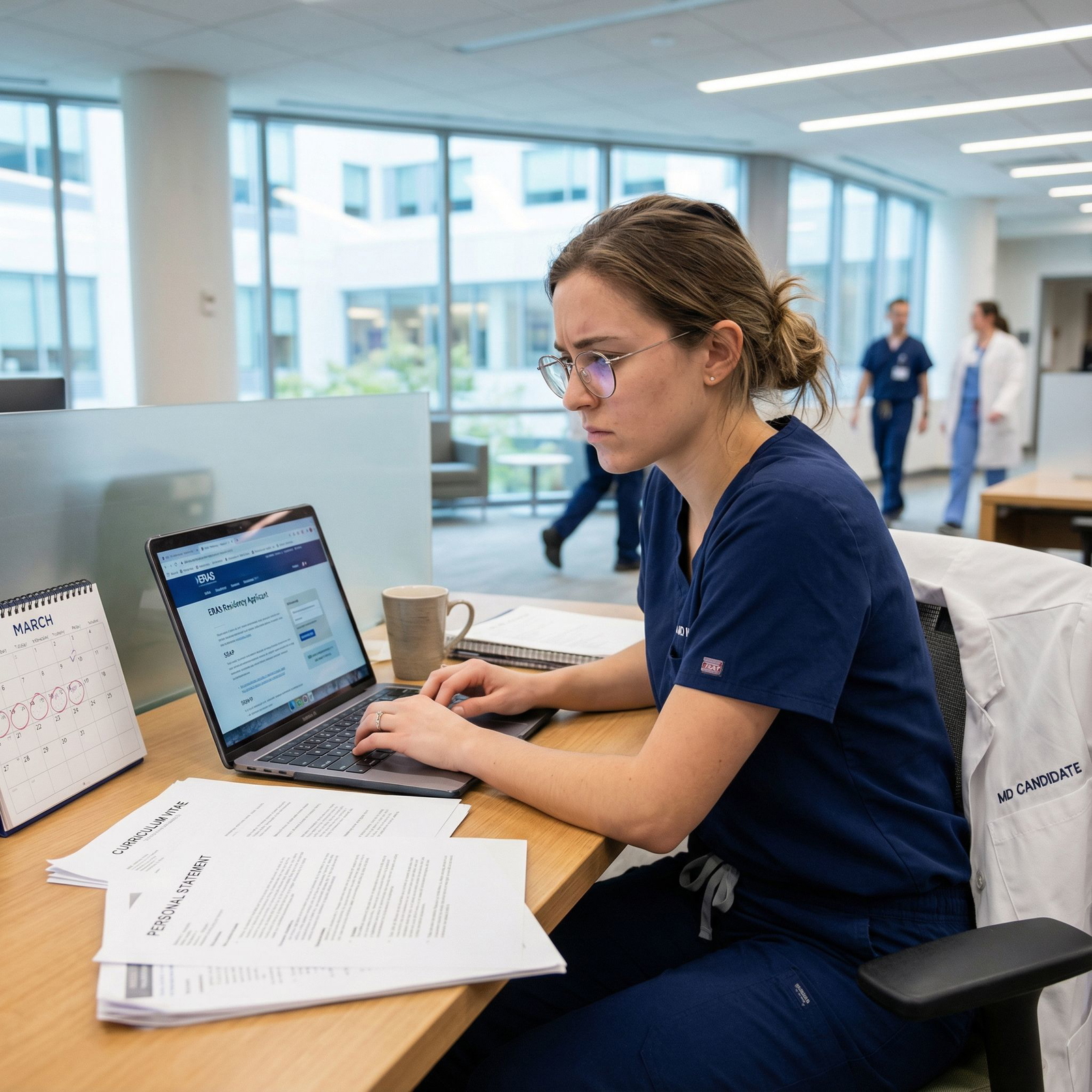
3. Audit and Optimize Your ERAS Application for SOAP
Your ERAS application for SOAP is the same application you used for the main Match, but you can update certain components before SOAP begins.
Your goal is to present a lean, clear, and targeted profile that quickly signals to programs why you are a good fit—especially in a compressed review period.
Focus areas:
- Personal Statement:
- Create at least two versions:
- One for your primary specialty (e.g., Internal Medicine, Family Medicine)
- One for backup SOAP specialties (e.g., Pediatrics, Psychiatry, Transitional Year, Preliminary Surgery)
- Emphasize:
- Readiness to start residency immediately
- Commitment to patient care and team-based work
- Any recent US clinical experience
- Professionalism and adaptability as a foreign national medical graduate
- Create at least two versions:
- Experiences:
- Highlight:
- Hands‑on US clinical experience (USCE): externships, sub‑internships, observerships if well-structured.
- Research, QI projects, audit cycles, teaching.
- Volunteering that shows communication, cultural adaptability, and reliability.
- Remove or downplay:
- Redundant or vague entries.
- Very minor experiences that clutter your profile.
- Highlight:
- LoRs:
- Identify which letters are most valuable for SOAP:
- US faculty letters
- Recent letters (preferably within the last 12–18 months)
- Letters that clearly advocate for your clinical ability and work ethic.
- You can assign different LoRs to different programs during SOAP based on specialty.
- Identify which letters are most valuable for SOAP:
Example:
You’re a non-US citizen IMG with 3 months of USCE in outpatient internal medicine and a strong LoR from a US attending who praises your teamwork and clinical reasoning. That letter should be prioritized for internal medicine, family medicine, and possibly transitional year SOAP applications, as these specialties value general clinician skills.

Building a Targeted SOAP Strategy as a Non‑US Citizen IMG
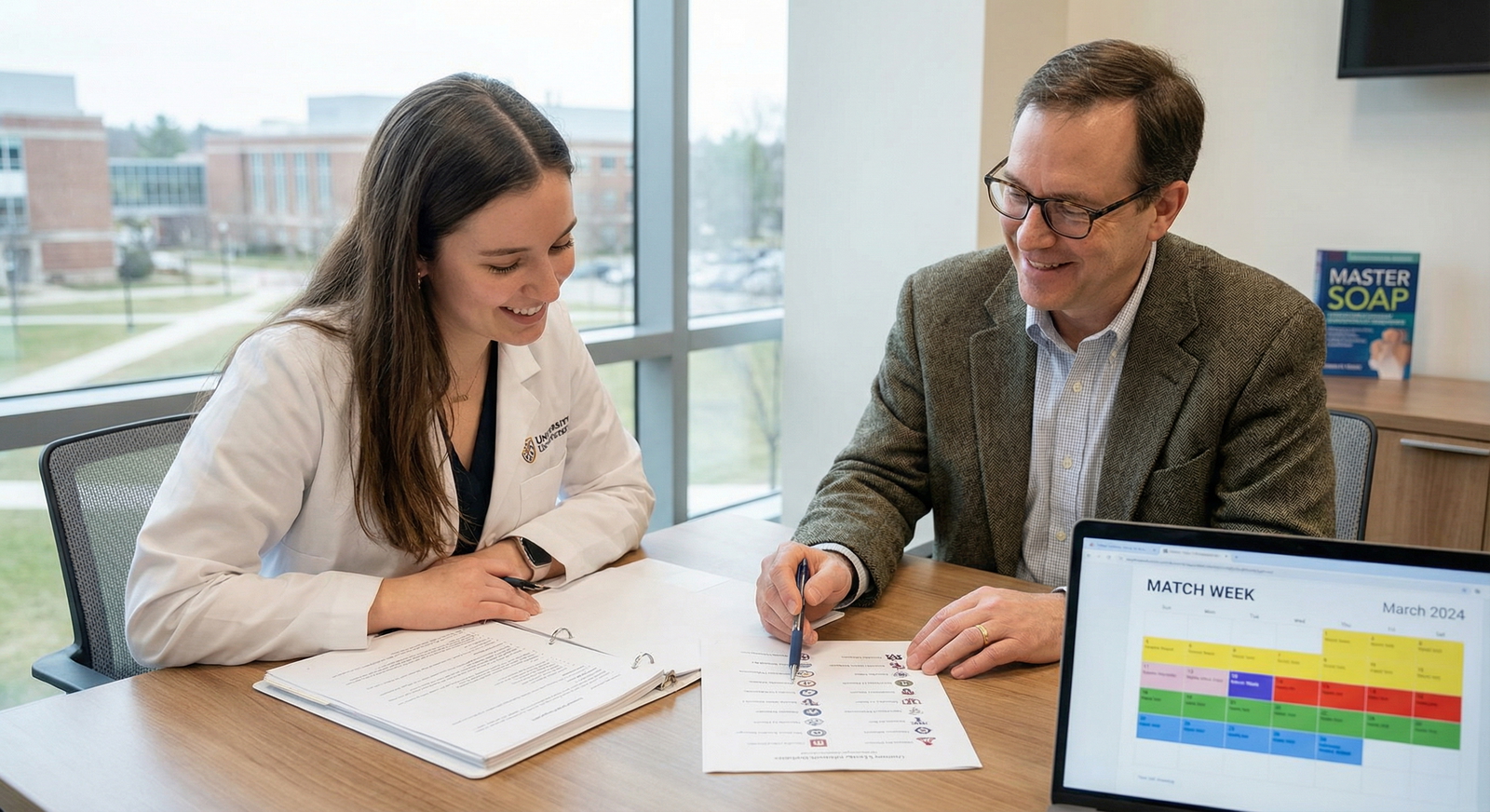
When you reach SOAP Monday, you will have very little time to research programs and decide where to send your 45 applications. For a non-US citizen IMG, random or poorly researched choices can be devastating. Your SOAP preparation should include building a tiered target list and a rapid decision framework.
1. Identify “Visa-Friendly” Programs and States in Advance
Before SOAP, you won’t know which specific programs will be unfilled—but you can:
- Analyze which programs in previous cycles:
- Regularly rank non-US citizen IMGs
- Explicitly state J‑1 or H‑1B sponsorship in their websites or FREIDA profiles
- Are located in states known for higher IMG representation (e.g., New York, New Jersey, Michigan, Pennsylvania, Florida, Texas)
Action steps:
- Review historical data:
- Use FREIDA, program websites, and Reddit/SDN/IMG forums carefully.
- Look for:
- Number/percentage of IMGs in the program.
- Statements like “We sponsor J‑1 visas” or “We do not sponsor H‑1B visas”.
- Create a spreadsheet including:
- Program name, ACGME ID, state, city.
- Specialty and program type (categorical, prelim, TY).
- Visa policy (J‑1 only, J‑1 + H‑1B, no visa).
- IMG-friendliness notes (percentage of IMGs, mention of foreign medical schools, alumni from your region).
- Rank by priority:
- Tier 1: Historically visa-friendly, IMG-inclusive, matches your exam scores and graduation year.
- Tier 2: Possibly visa-friendly, fewer IMGs, or slightly higher score expectations.
- Tier 3: Less data, but no explicit exclusion of IMGs.
During SOAP, when the List of Unfilled Programs becomes available, you can quickly filter that list by matching ACGME IDs or program names against your prepared spreadsheet.
2. Define a Specialty Flexibility Plan
Many non-US citizen IMGs go into SOAP hoping to stay in their original specialty (e.g., Internal Medicine). However, the distribution of unfilled positions may not favor your first choice.
SOAP preparation requires you to answer in advance:
- What backup specialties are you open to?
- Are you willing to take a preliminary or transitional year as a bridge?
- Would you rather:
- Take a preliminary spot now and reapply later, or
- Skip SOAP this year and reapply next year for your preferred categorical specialty?
Common SOAP-relevant backup options:
- Internal Medicine prelim → later reapply for IM, anesthesiology, radiology, etc.
- Transitional Year (TY) → broad general year, then reapply.
- Family Medicine → easier entry in some areas, especially with primary care exposure.
- Pediatrics or Psychiatry → may have unfilled spots, though competition is increasing.
Example decision framework:
“If there are visa-sponsoring categorical Internal Medicine or Family Medicine spots where I meet basic score and grad-year requirements, I will prioritize those. If not, I will consider Transitional Year or Internal Medicine prelim positions in states where I might want to reapply for categorical later.”
3. Develop a 45-Application Allocation Plan
You only get 45 SOAP applications. For a foreign national medical graduate, this is not many, especially when filtered by visa availability.
Plan how you might allocate them before you see the unfilled list:
Example Allocation A (if lots of relevant unfilled positions):
- 20–25: Categorical positions in your preferred specialty (e.g., IM).
- 10–15: Categorical positions in backup specialties (FM, Peds, Psych).
- 5–10: Preliminary/TY positions as safety options.
Example Allocation B (if few categorical options for your visa type):
- 10–15: Categorical in your primary specialty.
- 15–20: Backup categorical specialties showing clear visa sponsorship.
- 10–15: Preliminary/TY with strong track record of placing prelims into advanced programs.
Be disciplined: avoid wasting applications on programs that clearly do not sponsor visas or that have explicitly stated “US graduates only” or “No IMGs” on their sites.
Executing During SOAP Week: Timelines, Communication, and Decision-Making
Once SOAP week starts, you must transition from planning to rapid, organized execution. For a non-US citizen IMG, this includes both standard SOAP tasks and visa-specific risk management.
1. Monday: Status Notification and Immediate Organization
On Monday at 10:00 AM ET, you’ll find out if you are:
- Fully matched (no SOAP)
- Partially matched (eligible for SOAP for unmatched slots)
- Unmatched (eligible for SOAP for all slots)
If unmatched/partially matched:
- Stay calm and shift into “action mode.”
- Download or open the List of Unfilled Programs as soon as it becomes available (usually at the start of SOAP application period).
- Filter the list using your pre-built spreadsheet:
- Identify programs you’ve already researched.
- Mark those known to sponsor your visa type.
- Cross off programs that clearly state “no visas” or incompatible policies.
2. Submitting Your 45 SOAP Applications
During the application window (usually Monday afternoon to mid-week):
- Assign specialty-appropriate personal statements and LoRs.
- Internal Medicine vs Family Medicine vs Psychiatry may each benefit from slightly different emphasis.
- Customize program signaling in your application:
- Even if you cannot write new PS for every program, adjust for specialty and broad goals.
- If the system allows program signals or meaningful preference tags, use them strategically (if applicable in a given year).
- Check time zones and deadlines carefully:
- All SOAP times are in US Eastern Time. Convert them properly if you are outside the US.
Example:
You see 18 Internal Medicine categorical positions across 10 programs that sponsor J‑1 visas. You apply to all 10 programs and dedicate 18 of your 45 slots to these IM positions. You then use 12 for Family Medicine programs with J‑1 sponsorship, and the remaining slots for Transitional Year and prelim IM positions.
3. Managing Communication Rules as a SOAP Applicant
NRMP rules strictly regulate communication during SOAP:
- Programs generally must initiate contact if they want to interview or discuss your application.
- You must not solicit positions directly or ask programs to rank you or promise offers.
- However, if you had prior interactions with a program (e.g., interview, audition rotation) and they contact you, you can communicate openly within NRMP guidelines.
As a non-US citizen IMG, this means:
- Do not email programs asking about visa sponsorship during SOAP unless they have contacted you or guidelines permit such questions.
- Instead, rely primarily on:
- Written visa information on program/FREIDA websites.
- Historical evidence from your research.
- If a program reaches out to interview or talk:
- You can ask brief, specific clarification questions:
- “Does your program sponsor J‑1 visas through ECFMG for incoming PGY‑1 residents?”
- “Is there any limitation on non-US citizen IMGs starting this year?”
- You can ask brief, specific clarification questions:
Always remain professional and concise. Programs have extremely limited time.

Succeeding in SOAP Interviews and Offer Rounds as a Non‑US Citizen IMG
If programs are interested, they may schedule short, focused interviews (often virtual) during SOAP. For non-US citizen IMGs, these are critical moments to show that visa status will not be a barrier and that you are ready to start residency smoothly.
1. Preparing for Short-Notice SOAP Interviews
SOAP interviews are typically:
- Brief (10–20 minutes)
- Highly focused on:
- Fit with the program
- Communication skills
- Professionalism and maturity
- Ability to start on time and integrate quickly
Preparation tips:
- Have a 60–90 second introduction ready:
- Your background as a non-US citizen IMG.
- Key strengths (clinical skills, work ethic, teamwork).
- Very brief explanation of why you are interested in their specialty and type of program.
- Prepare 3–4 bullet points for each of:
- A clinical experience where you made a difference.
- A challenge (such as being a foreign national medical graduate adapting to US healthcare) and how you handled it.
- A teamwork or communication success.
- Anticipate questions about:
- Gap years or delays.
- Exam failures (if any).
- Reasons for being in SOAP / not matching in the main cycle.
For visa-specific issues:
- Be ready to clearly and calmly state your visa situation:
- “I am a non-US citizen currently residing in [country]. I am eligible for J‑1 sponsorship through ECFMG and can complete the required paperwork as soon as needed.”
- If Step 3 is done and you are open to H‑1B:
“I have passed Step 3 and am eligible for an H‑1B, but I am also fully open to J‑1 if that fits your institutional policy.”
- Avoid sounding demanding or inflexible regarding visa type; flexibility increases your chances.
2. Presenting Your Story Professionally
Programs may be wary of applicants who appear to see SOAP only as a “second-best” option. For a non-US citizen IMG, projecting gratitude, resilience, and realistic optimism is crucial.
Demonstrate:
- Maturity about the unmatched outcome:
- “While I was disappointed not to match in the main cycle, I’ve reflected on feedback and remain deeply committed to residency training and patient care.”
- Willingness to work hard:
- Highlight any prior demanding clinical experience, long hours, or call responsibilities.
- Cultural adaptability:
- Mention positive experiences working with diverse patient populations or healthcare teams.
- Clear understanding of the program’s setting:
- Community vs academic
- Urban vs rural
- Patient demographics
Avoid:
- Criticizing other programs or the Match process.
- Over-focusing on your visa struggles; instead, acknowledge them briefly and shift back to your strengths.
3. Navigating SOAP Offer Rounds and Decision-Making
During offer rounds (typically Wednesday–Thursday):
- Programs submit ranked lists of SOAP applicants.
- The NRMP system sends out offers in time-limited rounds.
- You may receive:
- Multiple offers.
- One offer.
- No offers in a given round.
As a foreign national medical graduate, you must quickly evaluate:
- Visa feasibility:
- If the program clearly sponsors J‑1 and your profile fits, this is favorable.
- If H‑1B is required and you don’t have Step 3, it is not realistic; such programs rarely bend their policies under SOAP time pressure.
- Program quality and fit:
- Is this a stable, accredited program?
- Are there IMGs in the current house staff?
- Specialty and career trajectory:
- Does this offer move you toward your long-term goal, even if indirectly (e.g., prelim → categorical later)?
- Risk tolerance:
- Declining an offer might lead to a better one in later rounds—or to no offer at all.
General guidance:
- If you receive an offer from a visa-sponsoring categorical program in a specialty you can see yourself practicing long-term, seriously consider accepting it, especially if your profile is not extremely competitive.
- If the offer is for a preliminary or TY spot:
- Accept if:
- You have no other offers, and
- You believe you can reapply later with stronger credentials.
- Decline if:
- You realistically expect a categorical offer later (e.g., you are a strong candidate with many interview requests already in SOAP).
- You have compelling reasons to wait and reapply next year.
- Accept if:
Remember: Accepting any SOAP offer ends your participation in SOAP and locks in that position. Discuss major decisions with a trusted mentor or advisor if possible—but don’t miss the 2‑hour response window.
After SOAP: Next Steps Whether Matched or Unmatched
If You Match Through SOAP
- Respond promptly to all onboarding communications:
- Visa documents (DS‑2019 requests for J‑1, H‑1B paperwork if applicable).
- Immunizations, background checks, employment forms.
- Clarify visa timelines:
- Work closely with the program’s GME office and ECFMG.
- Avoid delays by preparing your documentation early.
- Plan relocation and arrival:
- Keep in mind embassy appointment wait times in your country.
- Have backup documentation ready in case of visa interview questions.
If You Remain Unmatched After SOAP
For a non-US citizen IMG, not matching through SOAP can be painful, but it is not the end of your pathway.
Constructive next steps:
- Seek honest feedback:
- From program directors (if they are willing), mentors, or advisors.
- Reassess your profile:
- USMLE scores and attempts.
- Year of graduation.
- Clinical experience (especially USCE).
- Visa complexity.
- Strengthen your application:
- Obtain more structured USCE or research experience.
- Improve English communication skills.
- Take/pas Step 3 (if feasible) to broaden H‑1B options.
- Plan a more strategic next-cycle approach:
- Apply earlier.
- Target IMG- and visa-friendly programs more effectively.
- Consider additional or alternative specialties.
Above all, maintain professionalism and persistence. Many successful non-US citizen IMGs matched after one or more unsuccessful cycles, including SOAP attempts, by learning from each round and systematically improving their application.
FAQs: SOAP Preparation for Non‑US Citizen IMGs
1. As a non-US citizen IMG, how can I quickly identify visa-sponsoring programs during SOAP?
Use pre-SOAP preparation to your advantage:
- Before Match Week, build a spreadsheet of programs in your target specialties with:
- Documented J‑1 or H‑1B sponsorship from websites or FREIDA.
- Historical IMG representation.
- During SOAP, when the unfilled list appears:
- Cross-reference it with your spreadsheet.
- Prioritize programs in states and institutions known to match non-US citizen IMGs.
- If a program contacts you for an interview, you may politely confirm:
“May I ask whether your program sponsors J‑1 visas for PGY‑1 residents?”
2. Should I take a preliminary or Transitional Year position through SOAP as a non-US citizen IMG?
It depends on your long-term goals and risk tolerance:
- A preliminary or TY spot:
- Provides US residency experience, salary, and exposure.
- Can strengthen your application for future categorical positions.
- However, it does not guarantee a categorical spot later.
- Consider accepting if:
- You have no categorical SOAP offers.
- The program clearly sponsors your visa type.
- You are prepared to reapply aggressively while in that role.
- Consider waiting if:
- You are a relatively competitive applicant and expect better options next cycle.
- You strongly prefer a specific specialty and are willing to delay.
3. How important is Step 3 for SOAP if I’m a non-US citizen IMG?
For J‑1 visas, Step 3 is not required to start residency.
For H‑1B visas, many programs require Step 3 passed before they can petition for your visa.
- If you have Step 3 passed:
- You may access more H‑1B-friendly programs, even during SOAP.
- If you don’t:
- Focus primarily on J‑1 sponsoring programs during SOAP.
- Consider taking Step 3 before the next cycle to widen your options.
4. Can I change my personal statement and LoR assignments for SOAP applications?
Yes. While the core ERAS application remains the same, you can:
- Upload additional personal statements targeted to different SOAP specialties.
- Reassign existing LoRs to different programs or specialties, as long as they are already in ERAS.
- You cannot obtain completely new LoRs during the short SOAP window, but you can strategically choose which stored letters to send where.
Thoughtful customization—especially by specialty—can strengthen your SOAP applications and show programs that you have prepared carefully, even under time pressure.
By approaching SOAP with early planning, realistic targeting, and a clear understanding of visa implications, a non-US citizen IMG can transform a stressful week into a meaningful opportunity. Thorough SOAP preparation, especially around visa strategy, program research, and professional communication, significantly increases your odds of turning this challenging phase into a successful start of your US residency journey.