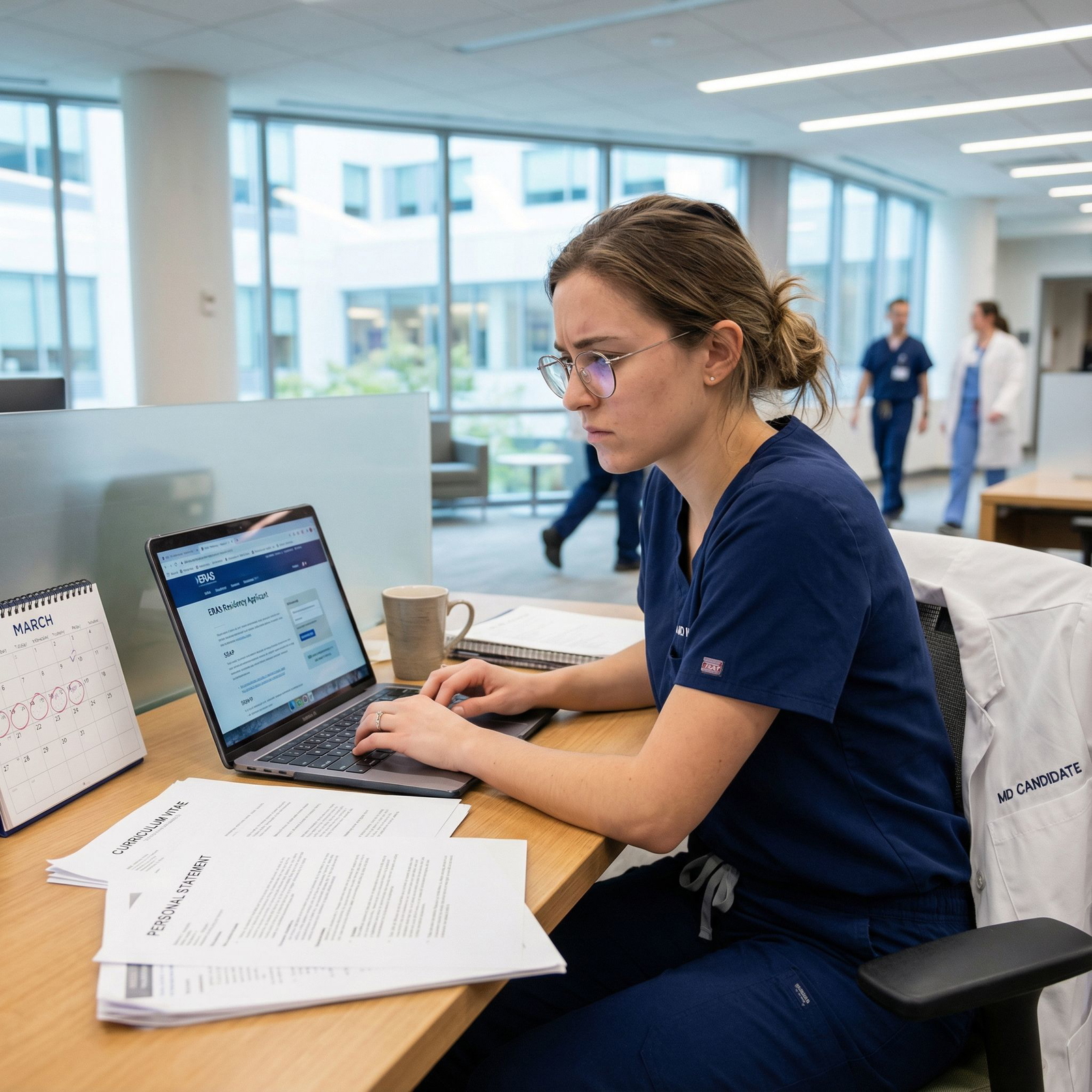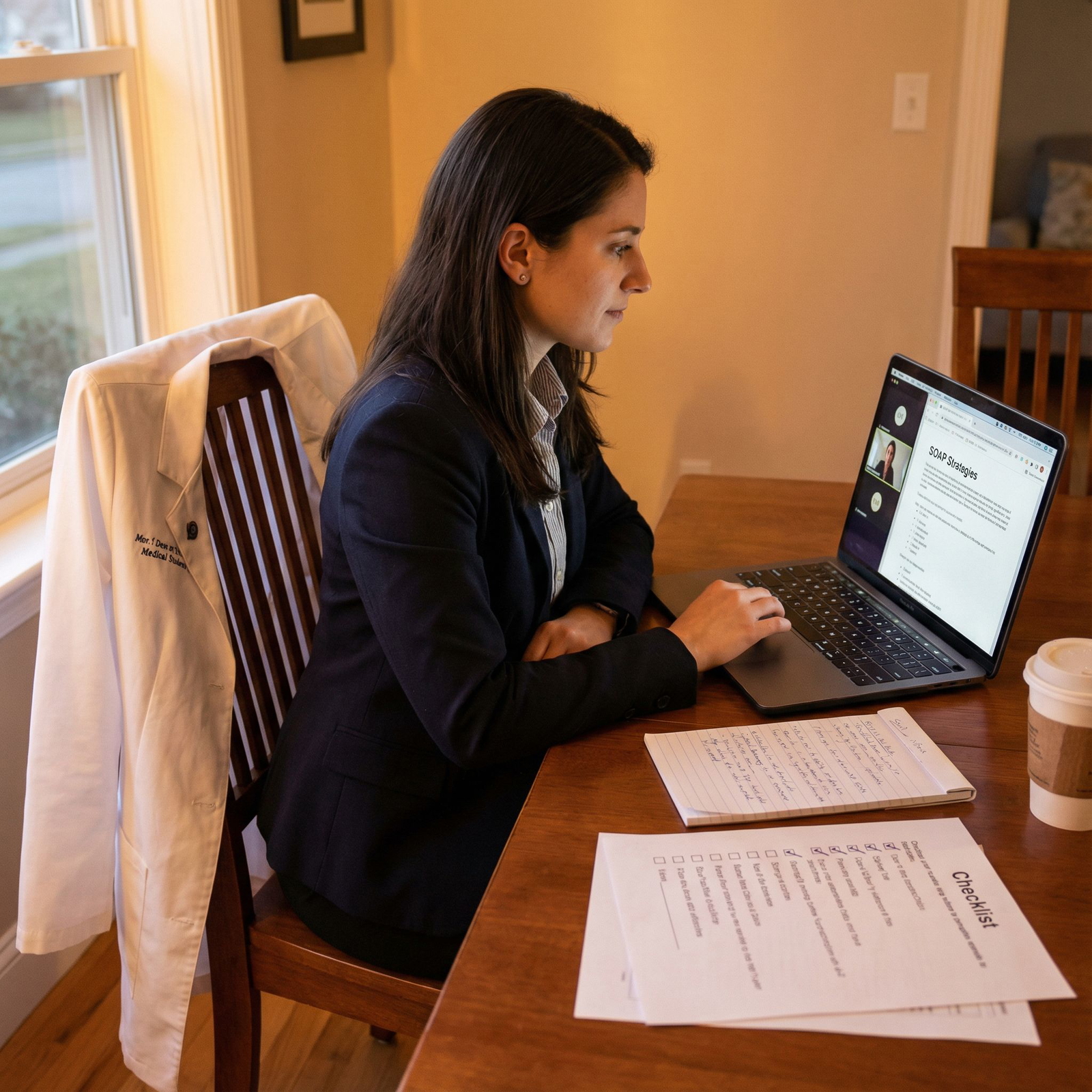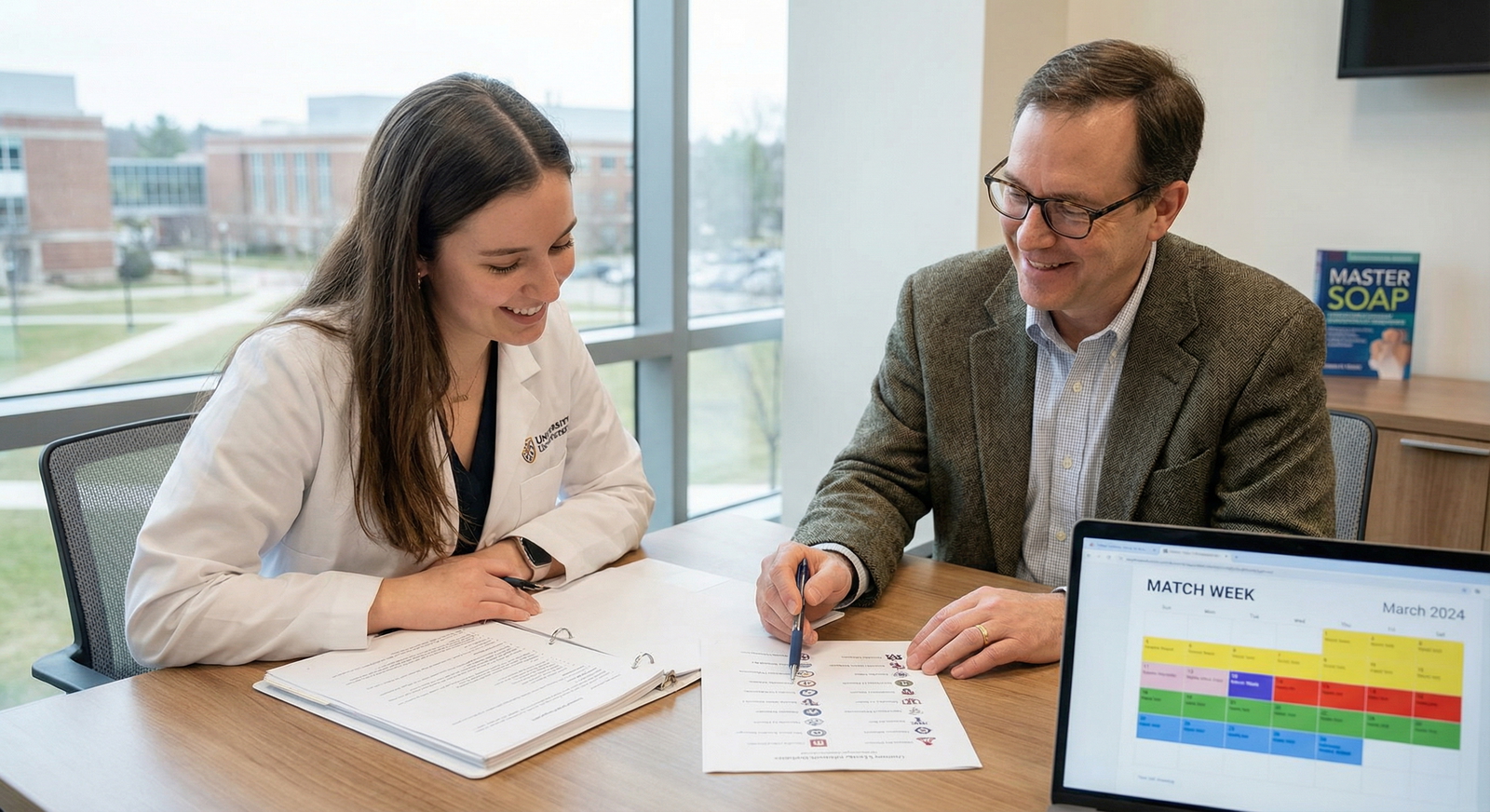
Preparing for the Supplemental Offer and Acceptance Program (SOAP) as a US citizen IMG interested in family medicine can feel overwhelming—but it’s also one of the most structured, predictable processes in the Match. With the right preparation, you can dramatically increase your chances of securing a position in a family medicine residency through the FM match, even if you don’t initially match in the Main Residency Match.
Below is a comprehensive, step‑by‑step guide tailored specifically for a US citizen IMG or American studying abroad who wants to pursue family medicine residency and is planning their SOAP preparation well in advance.
Understanding SOAP: What It Is and Why It Matters for US Citizen IMGs
Before you can prepare effectively, you must clearly understand what is SOAP and how it works.
What is SOAP?
The Supplemental Offer and Acceptance Program (SOAP) is an NRMP‑managed process that allows unmatched or partially matched applicants to obtain unfilled residency positions in the week of Match Week, before the public list of unfilled programs is released.
Key points:
- Conducted through NRMP and ERAS during Match Week (usually March).
- Allows eligible unmatched applicants to:
- View a list of unfilled programs.
- Apply to up to 45 programs total (all specialties combined).
- Receive offers in several SOAP rounds.
- Programs can review applications and create preference lists; NRMP then issues offers based on those lists.
For a US citizen IMG targeting family medicine residency, SOAP is extremely important because:
- Family medicine historically has a substantial number of unfilled positions after the main FM match, many of which are IMG‑friendly.
- Many FM programs are open to US citizen IMGs with solid clinical experience and strong communication skills.
- SOAP can serve as a structured, fair opportunity for those who may have been overlooked in the first pass of the FM match due to late exams, limited US clinical experience, or strategic errors.
Who is Eligible for SOAP?
You must meet all of these NRMP conditions during Match Week:
- Registered for the NRMP Main Residency Match
- Certified a rank order list (even if it’s short) OR
- You did not submit a rank list, but were otherwise fully eligible
- Are partially matched or unmatched on Monday of Match Week
- Have no NRMP violations and are not barred from participation
- Are ERAS‑participating and ready to send applications
For a US citizen IMG, an especially common pitfall is failing to certify a rank list or failing to complete NRMP registration properly—automatically making you ineligible for SOAP. Your SOAP preparation starts long before Match Week by making sure this doesn’t happen.
Pre-SOAP Planning: Laying the Foundation Months in Advance
SOAP is chaotic if you wait until Match Week to think about it. As a US citizen IMG, you can turn it into a controlled, strategic process by preparing 2–6 months before the Match.

1. Confirm Eligibility Early
- Register with NRMP as soon as registration opens.
- Certify a rank order list on time (even if you have only a few family medicine programs ranked).
- Confirm your ERAS account is active and your documents (USMLE scores, MSPE, transcripts) are uploaded and verified well before February.
Ask yourself:
- Have I completed all exams (e.g., USMLE Step 1 and Step 2 CK) and had scores reported to ERAS?
- Is my ECFMG certification status (if applicable) likely to be complete or pending only final verification?
- Are there any red flags (gaps, failures, professionalism issues) I need to explain clearly in my documents?
For an American studying abroad, ECFMG and timing of score reports can be particularly tricky—plan deadlines backward from Match Week.
2. Decide Early: Will You Use SOAP if Needed?
You should have a SOAP contingency plan before you even submit your ERAS applications. This plan should cover:
- Primary target: Family Medicine
- Secondary considerations (if any): Preliminary medicine, transitional year, psychiatry, internal medicine, etc.
- Geographic flexibility: Are you willing to move anywhere in the US for training?
For most US citizen IMGs, the safest and most realistic plan is:
- SOAP primary focus: Family Medicine
- Consider other specialties only if:
- You have strong documents and clear interest in them.
- You fully understand the long-term impact (e.g., reapplying for FM later).
3. Build a SOAP-Ready ERAS Profile
Your existing ERAS application will be used during SOAP. You cannot change some core information during Match Week, so make sure your main application is already strong.
Key elements for family medicine:
- Personal statement geared to family medicine
- Emphasize continuity of care, primary care interest, broad patient population, communication skills, and commitment to community.
- Highlight US clinical experiences that involved outpatient, primary care, or community-based care.
- US Clinical Experience (USCE)
- Ideally, at least one or more FM rotations or primary care IM rotations with strong evaluations.
- Volunteer work and community service
- Family medicine programs value service, leadership, and community engagement.
- Red flag addressing
- If you have exam failures, leaves of absence, or career changes, briefly and professionally explain them in the experiences or additional information sections.
4. Gather SOAP-Specific Documents in Advance
You can upload multiple personal statements and letters of recommendation to ERAS before SOAP, then choose which ones to send to which programs.
Prepare:
- 1–2 SOAP-optimized family medicine personal statements
- One more academic/community oriented, another more rural/community health oriented, depending on where you may apply.
- Additional LORs
- Aim for at least:
- 2 letters from family medicine or primary care physicians (preferably US-based).
- 1 letter from another core specialty (IM, pediatrics, OB/GYN) emphasizing professionalism and communication.
- Upload all to ERAS before Match Week; you will choose which to assign during SOAP.
- Aim for at least:
5. Research and Build a Preliminary SOAP Target List
You can’t see the official list of unfilled programs until SOAP begins, but:
- Review prior years’ data:
- NRMP’s “Results and Data” reports and “Charting Outcomes” show which specialties and program types historically go unfilled.
- Family medicine programs have typically had a sizeable number of unfilled positions, especially in community, rural, or smaller hospital systems.
- Build a spreadsheet including:
- Program name, ACGME code
- Location (city, state)
- IMG friendliness (from prior year match lists, program websites)
- Visa policy (even though you’re a US citizen IMG, programs that sponsor visas are often more IMG‑friendly in general)
- Program type (community hospital, university-affiliated, rural track)
This pre-work lets you respond quickly when the SOAP list opens by recognizing names and selecting programs strategically.
Crafting a Family Medicine SOAP Strategy as a US Citizen IMG
Once you understand the structure and have your foundation ready, you can design a SOAP strategy specifically tailored to family medicine.
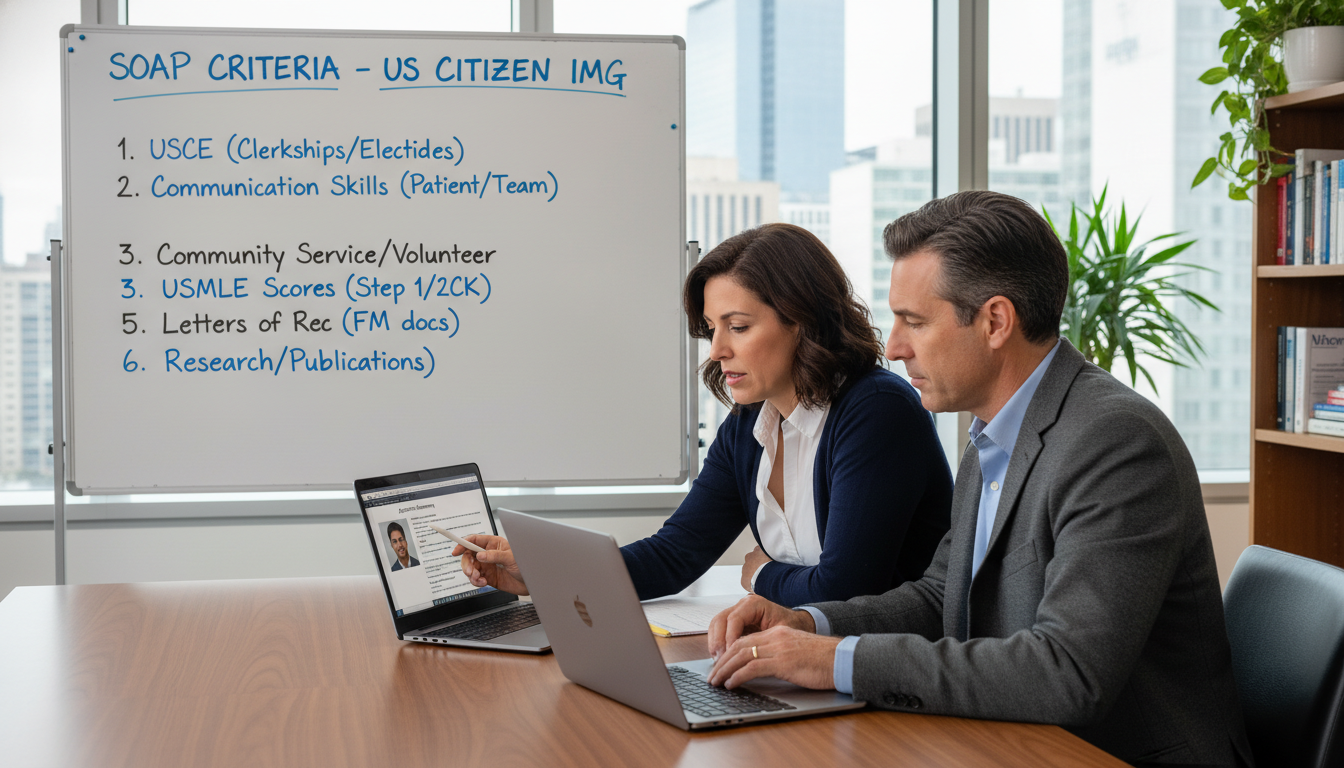
1. Know the Limit: 45 Applications Across All Specialties
During SOAP, you may apply to a maximum of 45 programs total. That includes all specialties.
For a US citizen IMG focused on FM, a common, effective structure is:
- 35–40 applications to family medicine programs
- 5–10 applications to carefully selected alternative options (if and only if it fits your long-term goals)
Alternative options might include:
- Transitional year (TY) – if later planning to reapply to FM or a different specialty.
- Preliminary medicine – if planning a long-term pathway that requires a prelim year.
- Psychiatry or internal medicine – only if you have genuine interest and supporting experiences.
2. Prioritize Programs Strategically
When the SOAP unfilled list opens (Monday of Match Week at 11:00 AM ET), you will have limited time to:
- Analyze programs
- Decide where to apply
- Assign documents
- Submit
Prioritization criteria for US citizen IMGs:
- IMG Friendly
- Have historically matched IMGs (check past rosters or websites).
- Advertise diversity or have a track record of non-US grads.
- US Citizen Advantage
- Programs that struggle with visa issues may appreciate that you do not require visa sponsorship.
- Your Fit with FM
- Emphasize programs valuing:
- Community service
- Longitudinal care
- Underserved populations
- Emphasize programs valuing:
- Geographic Flexibility
- If you’re open to multiple states, you gain a major advantage—many unfilled FM slots are in less competitive or rural locations.
A practical prioritization tiering approach:
- Tier 1 (20–25 programs): Programs that strongly match your profile and are clearly IMG‑friendly.
- Tier 2 (10–15 programs): Programs where you meet criteria but may be slightly below average scores or limited USCE.
- Tier 3 (5–10 programs): Insurance options—rural or remote locations, newly accredited programs, or less known programs that still offer solid training.
3. Tailor Personal Statements and Letters for SOAP
Many applicants send the same generic personal statement to every SOAP program. You can stand out with moderate but targeted customization.
Approach:
- Create a core FM personal statement that:
- Explains why family medicine.
- Connects your background as a US citizen IMG or American studying abroad with your commitment to US communities.
- Highlights US clinical experiences and systems familiarity.
- Create short, adaptable paragraphs you can adjust quickly:
- Rural health interest
- Urban underserved interest
- Academic interests (teaching, research, QI)
You may not have time for lengthy rewrites during SOAP week, so prepare modular paragraphs you can plug in for different program types.
Assign FM-focused LORs to all FM SOAP applications:
- Prefer letters that:
- Explicitly mention your fit for family medicine.
- Highlight communication, teamwork, reliability, and patient‑centered care.
4. Anticipate SOAP Interviews: Short, Focused, High-Stakes
SOAP interviews are often:
- Short (10–20 minutes)
- Conducted by phone or video (Zoom, Teams, etc.)
- Scheduled on very short notice
Common FM SOAP interview questions for US citizen IMGs:
- Why family medicine specifically?
- Why did you not match in the main cycle?
- What have you done since applying to strengthen your candidacy?
- Why this program / this community?
- How does your background as a US citizen IMG or American studying abroad prepare you to work in our population?
Prepare concise, honest, forward-looking answers. Avoid overly negative comments about prior programs or the match process.
Step-by-Step Timeline: SOAP Week for a US Citizen IMG in FM
SOAP Week typically unfolds over several days. Use this timeline as a blueprint.
Monday: Unmatched Status & Initial Response
11:00 AM ET – You Learn You Are Unmatched or Partially Matched
Immediate steps:
- Control your mindset
- Take a few minutes to process emotions.
- Remember: Many capable US citizen IMGs successfully match into FM through SOAP every year.
- Confirm SOAP eligibility on NRMP dashboard.
- Log into ERAS and make sure:
- All documents are present.
- Personal statements and LORs you prepared are uploaded.
11:00 AM ET: Unfilled Programs List Becomes Available (for SOAP-eligible applicants)
- Export or scan the list quickly
- Filter by specialty = Family Medicine.
- Note programs you had previously researched.
- Begin triaging programs
- Identify your Tier 1, 2, and 3 FM programs (based on prior planning).
- Consider whether you will add any non-FM programs (if part of your strategy).
Afternoon Monday: Application Submission
- Assign personal statements
- Use your main FM personal statement for most.
- Optional quick edits or use of modular paragraphs for specific program types.
- Assign LORs appropriately
- Prioritize FM letters and strong clinical letters.
- Double-check everything carefully
- Ensure you are not exceeding the 45 program limit.
- Submit applications early
- The earlier your application is in, the sooner programs can start reviewing.
Tuesday: Interview Requests and Ongoing Communication
- Keep your phone and email with you at all times.
- Respond promptly and professionally to:
- Interview invitations
- Requests for additional information
- Prepare a quiet, stable internet environment for video calls.
- Have a cheat sheet:
- Key facts about your background (USCE, research, volunteer work).
- Short notes on each program that might call you (location, features).
Remember: Some family medicine programs may not formally interview but still rank you based on application alone. Make your written materials as strong and FM‑specific as possible.
Wednesday–Thursday: SOAP Rounds and Offers
NRMP conducts multiple SOAP offer rounds (historically 3–4 rounds). In each round:
- Programs submit their preference lists.
- NRMP sends out offers.
- You must accept or reject an offer within a short time window (usually 2 hours).
Key guidance:
- If you receive an offer from a solid FM program that you would genuinely attend:
- Strongly consider accepting in the first round. Waiting for something “better” can be risky; there are no guarantees.
- If you receive an offer outside your primary goal (e.g., prelim year only) and you still see a realistic path for an FM SOAP position:
- Consider:
- Your exam scores and competitiveness
- How many FM programs you applied to
- Your tolerance for risk and your backup plan if all SOAP rounds end without another offer
- Consider:
Once you accept an offer, the SOAP process ends for you, and you are bound to that program via the Match Participation Agreement.
Common Pitfalls for US Citizen IMGs in SOAP—and How to Avoid Them
Even well-prepared applicants can stumble during SOAP. Awareness is your best defense.
1. Waiting Until You Go Unmatched to Think About SOAP
- Starting SOAP preparation only on Monday of Match Week guarantees panic.
- Instead, build documents, lists, and strategies in December–February.
2. Applying Too Narrowly or Too Broadly
- Too narrow: Applying to only a small number of FM programs in very specific geographic regions.
- As a US citizen IMG, you may need to be geographically flexible during SOAP.
- Too broad: Randomly applying to 45 programs across many specialties without a clear plan.
- This dilutes your chances of a focused, compelling application to FM.
Focus primarily on family medicine residency while maintaining reasonable geographic flexibility.
3. Underestimating the Value of Being a US Citizen IMG
You may be focused on the IMG label, but in SOAP:
- Programs often struggle with visa timelines and documentation.
- You can highlight that you:
- Do not require visa sponsorship.
- Are familiar with US culture, communication styles, and healthcare expectations.
- Without overemphasizing it, mention this in your personal statement or interviews as a practical advantage.
4. Poor Interview Readiness
SOAP interviews move fast:
- Not having a clear, compelling “Why Family Medicine?” story.
- Not having a concise explanation of why you went unmatched:
- Example: “I applied very regionally and mainly to a small number of programs close to my family, which limited my chances. I’ve since broadened my geographic flexibility and remain fully committed to training in family medicine.”
5. Technological and Logistical Issues
- Poor internet, unavailable phone, or missed emails can cost you interviews or offers.
- During Match Week:
- Keep your phone charged and near you at all times.
- Check email frequently.
- Have Zoom/Teams installed and tested on your devices.
Long-Term Perspective: If SOAP in FM Doesn’t Work Out
Despite good SOAP preparation, not everyone secures a position each year. If you complete SOAP without a match, there are still meaningful next steps.
1. Conduct a Honest Post-Mortem
Assess:
- Were your exam scores significantly below average?
- Was your USCE limited or absent?
- Did you apply to too few FM programs?
- Were there red flags (failures, professionalism issues) that weren’t well addressed?
Use this analysis to create a 6–12 month improvement plan.
2. Strengthen Your Profile for the Next FM Match
For a US citizen IMG, high-yield improvements include:
- Additional US clinical experience (especially in FM or primary care)
- Research or quality improvement projects in primary care
- Meaningful long-term volunteer work in community health, free clinics, or underserved populations
- Improved Step 2 CK score if you have not taken it yet or if your current score is borderline (subject to exam retake rules and timing)
3. Maintain Contact with Programs
Some FM program directors appreciate persistence and growth:
- Thank them for considering you during SOAP.
- Express interest in future application cycles.
- Ask, if appropriate, if they have feedback or suggestions.
Do this respectfully and sparingly; you are building relationships, not asking for favors.
FAQs: SOAP Preparation for US Citizen IMG in Family Medicine
1. As a US citizen IMG, do I have an advantage in SOAP compared to non‑US IMGs?
Often, yes. While programs evaluate everyone holistically, being a US citizen IMG means you do not require visa sponsorship, which removes a significant logistical barrier. Many family medicine programs in the FM match value diversity and are IMG‑friendly; your citizenship can make it easier for them to rank and hire you quickly during SOAP.
2. Should I apply only to family medicine during SOAP or include other specialties?
If family medicine is your clear long‑term goal, your SOAP preparation should focus primarily on family medicine residency. However, you may include a small number of alternative options (e.g., TY, prelim medicine) if:
- You understand how they fit into a long‑term plan.
- You are truly willing to complete training in that role if you accept an offer.
Avoid scattering your 45 applications across many unrelated specialties without a coherent strategy.
3. How different should my SOAP personal statement be from my main ERAS personal statement?
You don’t need to completely rewrite it, but you should have a SOAP-optimized version:
- Shorter, more focused, and clearly aligned with family medicine.
- Emphasizing readiness to start residency immediately.
- Including a brief, professional explanation (if needed) of why you may not have matched and what you’ve learned.
Using modular paragraphs tailored for rural, urban, or community‑focused FM programs is especially helpful.
4. If I accept a SOAP offer in family medicine, can I change later or re-enter the Match next year?
When you accept a SOAP offer, you enter a binding commitment under the NRMP Match Participation Agreement. You are expected to join and complete that residency year, and breaking that contract can have serious professional and NRMP consequences.
If, after completing part or all of your training, you wish to change programs or specialties, there are established processes (transfers, re‑application), but these are separate from SOAP and must be approached carefully with guidance from mentors.
By preparing months in advance, tailoring your application materials to family medicine, and understanding exactly how SOAP works, you can turn Match Week from a crisis into an opportunity. As a US citizen IMG or American studying abroad, your familiarity with US culture and lack of visa needs, combined with thoughtful SOAP preparation, can position you strongly to secure a family medicine residency and launch the career you have worked so hard to build.