Understanding SOAP for the US Citizen IMG Interested in Interventional Radiology
For a US citizen IMG with aspirations in Interventional Radiology (IR), the Supplemental Offer and Acceptance Program (SOAP) can feel like a last‑minute scramble with high stakes. However, with a strategic plan, SOAP can become a structured second chance rather than a chaotic emergency.
This guide focuses on SOAP preparation specifically for:
- US citizen IMG
- American studying abroad (medical school outside the US)
- Interested in interventional radiology residency or related pathways
- Facing the possibility of going unmatched or partially matched
You’ll learn what SOAP is, how it works in the context of IR and IR‑adjacent options, and how to prepare logistically, academically, and emotionally—well before Match Week.
1. What Is SOAP—and Why It Matters for IR‑Focused US Citizen IMGs?
1.1 What is SOAP?
SOAP (Supplemental Offer and Acceptance Program) is NRMP’s structured process during Match Week that allows eligible unmatched or partially matched applicants to apply to and accept unfilled residency positions.
SOAP is NOT:
- Another ERAS season
- A free‑for‑all open scramble
- A way to switch into a completely different specialty after you’re already matched
SOAP is:
- A tightly timed, highly structured application window during Match Week
- Limited in number of programs you may apply to at each application “wave”
- A crucial opportunity to secure a PGY‑1 or PGY‑2 position when the regular Match doesn’t go your way
1.2 Why SOAP Is Especially Important for US Citizen IMGs
As a US citizen IMG or American studying abroad, you often:
- Have limited home‑institution support compared to US MD/DO students
- Face lower initial interview yield for competitive specialties like IR
- Carry significant visa‑independent advantages (no J‑1/H‑1B needs) that are highly attractive in SOAP
- May be overly IR‑focused, risking few backup options in the main Match
SOAP is your safety net, especially if you are:
- Applying directly to Integrated IR (IR/DR)
- Targeting Early Specialization in Interventional Radiology (ESIR) through DR
- Applying with borderline scores or red flags
Having a strong SOAP preparation plan protects your ultimate goal: a viable path to Interventional Radiology, even if not directly through an integrated IR position.
2. How Interventional Radiology Interacts with SOAP
2.1 IR Is Highly Competitive—and Rare in SOAP
Interventional Radiology residency (Integrated IR/DR) is among the most competitive specialties. IR programs usually:
- Fill all spots in the main Match
- Rarely appear on the SOAP unfilled list
- Prioritize applicants with strong US clinical experience, high board scores, and robust letters
For a US citizen IMG, the odds of seeing multiple IR/DR positions in SOAP are low. You should not rely on SOAP to find an integrated IR spot.
So why does SOAP still matter for an IR‑focused applicant?
2.2 SOAP as a Pathway to IR—Without an IR Slot
Your IR career can still be built via alternate and realistic pathways:
Diagnostic Radiology (DR) Categorical or Advanced Positions
- Solid path to ESIR and later Independent IR residency
- DR positions may occasionally be available in SOAP
- High-yield if you can demonstrate radiology interest and strong USMLE scores
Preliminary/Transitional Year (TY) Positions
- TY or prelim medicine/surgery provides a PGY‑1 foothold
- You can reapply to DR or IR/DR in the following match
- Particularly valuable if your application improves (new scores, research, LORs)
Internal Medicine (IM) or General Surgery (GS) Categorical Positions
- May serve as a bridge to:
- Future DR or IR/DR applications
- IR‑adjacent procedural fields (e.g., cardiology, vascular surgery)
- Not the classic IR pathway but can keep you in a procedural and imaging‑heavy environment
- May serve as a bridge to:
Other IR‑Adjacent Specialties
- Vascular surgery, cardiology‑bound IM, neurointerventional pathways (longer, indirect routes)
- Not first‑line SOAP strategy, but may be appropriate depending on your profile and long‑term goals
Your SOAP strategy is less about “finding IR in SOAP” and more about “positioning yourself for IR later through strong radiology or procedural training.”

3. Strategic SOAP Preparation Timeline for an IR‑Focused US Citizen IMG
SOAP preparation starts far before Match Week. Here is a realistic timeline tailored to US citizen IMGs targeting IR.
3.1 6–12 Months Before Match: Pre‑SOAP Mindset
Even if you are optimistic about matching into IR:
- Acknowledge risk: IR/DR is competitive; IMGs are at a disadvantage.
- Decide you will prepare for SOAP in parallel with the main Match, not only if you feel at risk later.
- Discuss with mentors:
- “If I don’t match into IR, what’s my best alternative pathway?”
- “Would DR → ESIR → Independent IR be realistic for me?”
- “Would I accept a TY, prelim IM, or even categorical IM as a bridge year?”
This step ensures you will not make rushed emotional decisions in Match Week.
3.2 3–4 Months Before Rank List Submission
At this stage:
Clarify Your Backup Specialty Hierarchy Rank your realistic options:
- 1st tier: DR (categorical/advanced)
- 2nd tier: TY / prelim IM / prelim surgery
- 3rd tier: Categorical IM or GS in strong academic centers
Adjust Your ERAS and Interviews Accordingly
- Apply to enough DR and backup programs in the main Match.
- If IR/DR interviews are limited, prioritize DR interviews aggressively.
- Obtain at least one strong radiology‑oriented letter (DR, IR, or imaging‑heavy IM/surgery).
These steps reduce your dependence on SOAP but also set you up well if SOAP becomes necessary.
3.3 Before Rank List Certification
Create a SOAP emergency plan document (1–2 pages):
- Your USMLE/COMLEX scores
- Clinical experiences (US rotations, radiology electives, IR observerships)
- Notable research (especially imaging, procedural, outcomes research)
- A quick list of strengths and weaknesses (e.g., old grad, gap years, visa‑independent, US citizen IMG, etc.)
- A pre‑written SOAP‑oriented personal statement for:
- DR
- Preliminary/TY
- Categorical IM (if you’d consider it)
This pre‑planning means less panic if the unthinkable happens on Monday of Match Week.
4. The Week Before Match: Concrete SOAP Preparation Steps
In the week leading up to Match:
4.1 Logistical SOAP Preparation
Confirm Eligibility
- Ensure you meet NRMP SOAP eligibility (registered for Match, verified status, etc.).
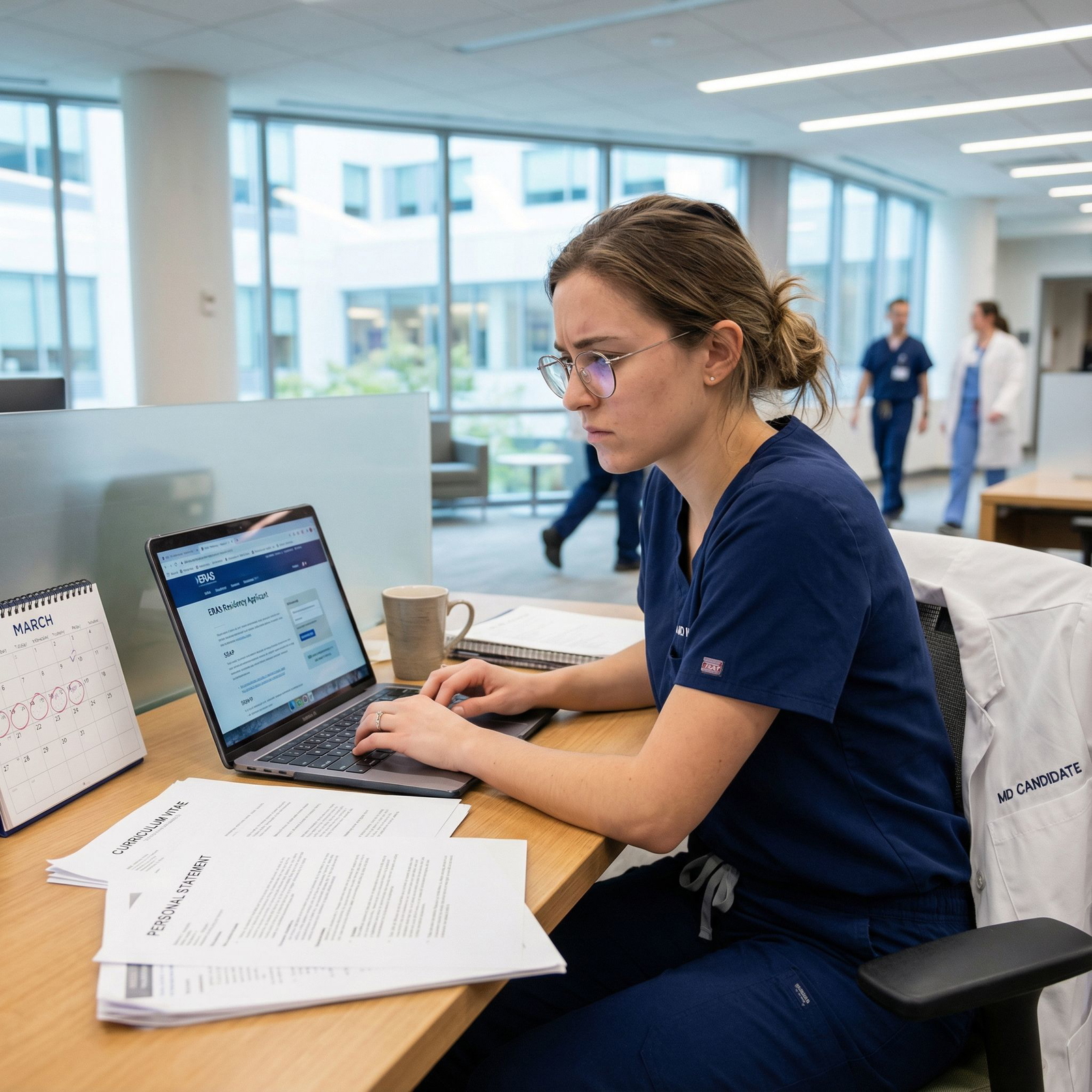
- Check that you are ERAS‑ready (Documents uploaded, LORs assigned broadly, CAF updated).
Ensure ERAS Documents Are SOAP‑Ready
- Personal Statements
- IR/DR‑specific (for DR and any IR spots that might appear)
- General IM and TY/prelim versions
- CV Updates
- Add any recent publications, abstracts, or presentations—especially radiology‑related.
- LOR Allocation
- IR/DR and DR letters assigned to DR/radiology programs
- Broad clinical letters assigned for prelim/TY/IM positions
- Personal Statements
Technical Prep
- Reliable high‑speed internet and backup options (e.g., phone hotspot)
- Quiet space with time blocked off during SOAP‑critical days:
- Monday: Match status email and orientation
- Tuesday–Thursday: Applications, interviews, tracking offers
Communication Plan
- Inform key supportive mentors/attendings that you may need quick help or mock SOAP interviews.
- Have contact info ready for your dean’s office or advising office, even if abroad.
4.2 Psychological Preparation
SOAP is mentally taxing. Prepare by:
- Setting a clear fallback vision:
“If I don’t match IR/DR, I will aim for DR or TY, then reapply to DR/IR later.” - Reminding yourself:
Many IRs do not come from an integrated pathway; DR → Independent IR remains robust. - Planning stress‑management tools in advance:
- Short workouts
- Meals scheduled (avoid skipping)
- Pre‑defined support circle (partner/family/close friend, ideally someone in medicine)

5. Match Week: Executing an IR‑Informed SOAP Strategy
5.1 Monday: You Learn You’re Unmatched or Partially Matched
If you receive the Monday email indicating you are unmatched or partially matched, do the following immediately:
Pause, Breathe, and Accept Reality
- Emotional reaction is normal; allow a brief, time‑limited response.
- Then switch into execution mode—you prepared for this.
Clarify Your Status
- Unmatched: no PGY‑1 or PGY‑2 position.
- Partially matched: e.g., matched to an advanced DR/IR spot but missing a PGY‑1, or vice versa.
Reopen Your SOAP Plan Document
- Review your prioritized backup options.
- Revisit your backup personal statements and target specialties.
5.2 Accessing the List of Unfilled Programs
Once NRMP releases the List of Unfilled Programs:
Filter Strategically for IR‑Relevant Options
- Diagnostic Radiology (DR)
- Categorical (PGY‑1 to PGY‑5)
- Advanced (PGY‑2 to PGY‑5) – requires a PGY‑1 year
- Preliminary/TY
- Transitional year
- Preliminary IM
- Preliminary surgery
- Procedural‑heavy IM or GS programs at academic centers with strong radiology departments
- Diagnostic Radiology (DR)
Realistically Evaluate IR/DR Opportunities
- IR/DR positions may be rare or absent.
- If present, apply aggressively but do not hinge your entire strategy on them.
Identify Programs Friendly to US Citizen IMGs
- Look up previous IMG match histories.
- Prioritize programs without visa restrictions (you already have an advantage as a US citizen).
5.3 Using Your Limited SOAP Applications Wisely
NRMP limits how many programs you can apply to each SOAP round (historically up to 45 programs total, though you should check current rules each year).
For a US citizen IMG targeting IR‑adjacent paths:
Tier 1 Applications (Top Priority)
- All available DR positions (categorical and advanced), particularly:
- University‑based or large teaching hospitals
- Programs with known ESIR opportunities or strong IR divisions
- All available DR positions (categorical and advanced), particularly:
Tier 2 Applications
- Transitional Year and Preliminary IM at:
- Institutions with strong DR and IR departments
- Academic centers with high fellowship match rates
- Transitional Year and Preliminary IM at:
Tier 3 Applications
- Categorical IM or GS positions at:
- Institutions with robust radiology or interventional services
- Locations where you could build strong research and advocacy for future DR/IR reapplication
- Categorical IM or GS positions at:
Approximate split (example):
- 10–20 DR positions
- 15–20 TY/prelim positions
- Remaining slots for categorical IM/GS in IR‑adjacent environments
Adjust this based on what’s actually on the unfilled list.
5.4 Tailoring Your SOAP Personal Statements and ERAS
Each application must show coherence between your IR dreams and your immediate goals:
For DR Programs Emphasize:
- Long‑standing interest in radiology and procedural medicine
- Exposure to IR (rotations, shadowing, research) as motivator, not as a demand
- Openness to broad DR training, with interest in future ESIR or IR but not entitlement
- US citizen IMG perspective and adaptability (global training, diverse patient populations)
For TY/Prelim IM/Surgery Emphasize:
- Desire for well‑rounded clinical foundation to prepare for DR/IR
- Appreciation of holistic patient care and multidisciplinary teams
- Commitment to excelling in general clinical work, not just “a placeholder year”
For Categorical IM/GS Emphasize:
- Genuine interest in internal medicine or surgery as viable long‑term careers
- Interest in procedural or imaging‑heavy subspecialties (e.g., cardiology, GI, vascular surgery)
- Ability to find IR‑adjacent niches (e.g., endovascular procedures, imaging‑guided interventions), even if not pure IR
Programs must feel that you want them, not that you’re settling under protest.
5.5 Performing in SOAP Interviews
SOAP interviews are:
- Shorter
- More focused
- Often same‑day or next‑day
- Frequently virtual and rapidly scheduled
Common questions you should anticipate:
- “Why did you go unmatched?”
- Focus on competitiveness of IR, limited positions, late decision to pursue IR, or interview distribution—not on blaming others.
- “Why our program and this specialty now?”
- Tie back to specific program features (radiology department, procedural exposure, academic environment).
- “If you’re interested in IR, will you leave our program after a year?”
- For TY/prelim: “My plan is to give you a full year of commitment and excellence, while preparing for a future in radiology.”
- For categorical IM/GS: “I can see myself building a strong career in IM/GS here, especially with your subspecialty training opportunities.”
Key advice for US citizen IMG SOAP interviews:
- Highlight visa‑independence confidently: “I’m a US citizen, so I can start without visa delays.”
- Use international training as an asset:
- Resilience
- Cultural competence
- Ability to adapt to new healthcare systems
- Demonstrate humility and maturity about going unmatched:
- “I chose a highly competitive field; I learned a lot from the process and have a clearer sense of what training I need next.”
5.6 Accepting SOAP Offers
When an offer comes:
- You have a time‑limited window to accept or reject.
- Accepting an offer ends your participation in SOAP.
- Do not decline realistic offers because you are hoping a rare IR/DR spot will appear later that week.
For an IR‑focused US citizen IMG, a DR, TY, or prelim IM spot at a solid institution is usually worth accepting. Think in terms of:
“Does this position keep a credible path open toward IR or an IR‑adjacent, fulfilling career?”
6. Life After SOAP: Staying on Track Toward Interventional Radiology
If you secure a position through SOAP, the story isn’t over—it’s just taking a different path.
6.1 If You SOAP into Diagnostic Radiology
You are in an excellent position:
- Seek ESIR opportunities early:
- Meet with IR faculty during PGY‑1/PGY‑2.
- Build a plan for IR‑focused electives and procedures.
- Join IR research projects, QI initiatives, and call pools if allowed.
- Attend IR conferences and society meetings (e.g., SIR).
Your trajectory can look like:
DR (with ESIR) → Independent IR → Attending Interventional Radiologist
6.2 If You SOAP into TY or Preliminary IM/Surgery
Use the year to:
- Strengthen your core clinical skills (makes you a stronger future IR).
- Obtain new letters from US faculty.
- Engage in radiology or IR research at the same institution if possible.
- Reapply to DR (and possibly IR/DR) from a much stronger position.
6.3 If You SOAP into Categorical IM or GS
Decide over the first year:
- Are you falling in love with IM/GS?
- Can you meaningfully connect with IR or endovascular teams at your institution?
- Is a realistic switch to DR/IR feasible later, or is an IR‑adjacent subspecialty more practical (e.g., interventional cardiology, vascular surgery, interventional pulmonology)?
Many physicians carve out procedural, imaging‑guided careers even without formal IR training.
FAQ: SOAP Preparation for US Citizen IMG in Interventional Radiology
1. As a US citizen IMG focused on Interventional Radiology, should I still apply to IR/DR in SOAP if any positions appear?
Yes—but only as part of a broader SOAP strategy. If rare IR/DR spots appear, apply with your strongest IR‑focused materials. However, you should not limit your applications to IR/DR. Prioritize DR and robust prelim/TY programs that keep IR pathways open.
2. How many SOAP applications should I allocate to Diagnostic Radiology vs. prelim/TY vs. IM?
It depends on the unfilled list, but for most IR‑oriented US citizen IMGs:
- Apply to all reasonable DR positions first.
- Fill most remaining slots with TY/prelim IM or surgery at institutions with strong radiology departments.
- Use leftover capacity for categorical IM/GS where IR‑adjacent opportunities exist.
3. Will going unmatched into IR hurt my chances of becoming an interventional radiologist later?
Not necessarily. IR is very competitive, and many future IRs initially train via Diagnostic Radiology, sometimes after a gap year or prelim year. If you use SOAP strategically and build a strong record during DR or a prelim/TY year, you can still match into Independent IR or later IR‑related opportunities.
4. What is the most important SOAP preparation step for an American studying abroad who wants IR?
The single most important step is having a realistic backup pathway planned in advance, usually through Diagnostic Radiology or a strong prelim/TY year, and preparing all relevant personal statements, letters, and strategy before Match Week. This transforms SOAP from a panic response into an orderly contingency plan aligned with your long‑term IR goals.
By preparing early, understanding what SOAP is, and building a flexible IR‑oriented backup plan, you—as a US citizen IMG—can navigate even an initial IR non‑match and still preserve a strong, realistic path toward a rewarding career in Interventional Radiology.