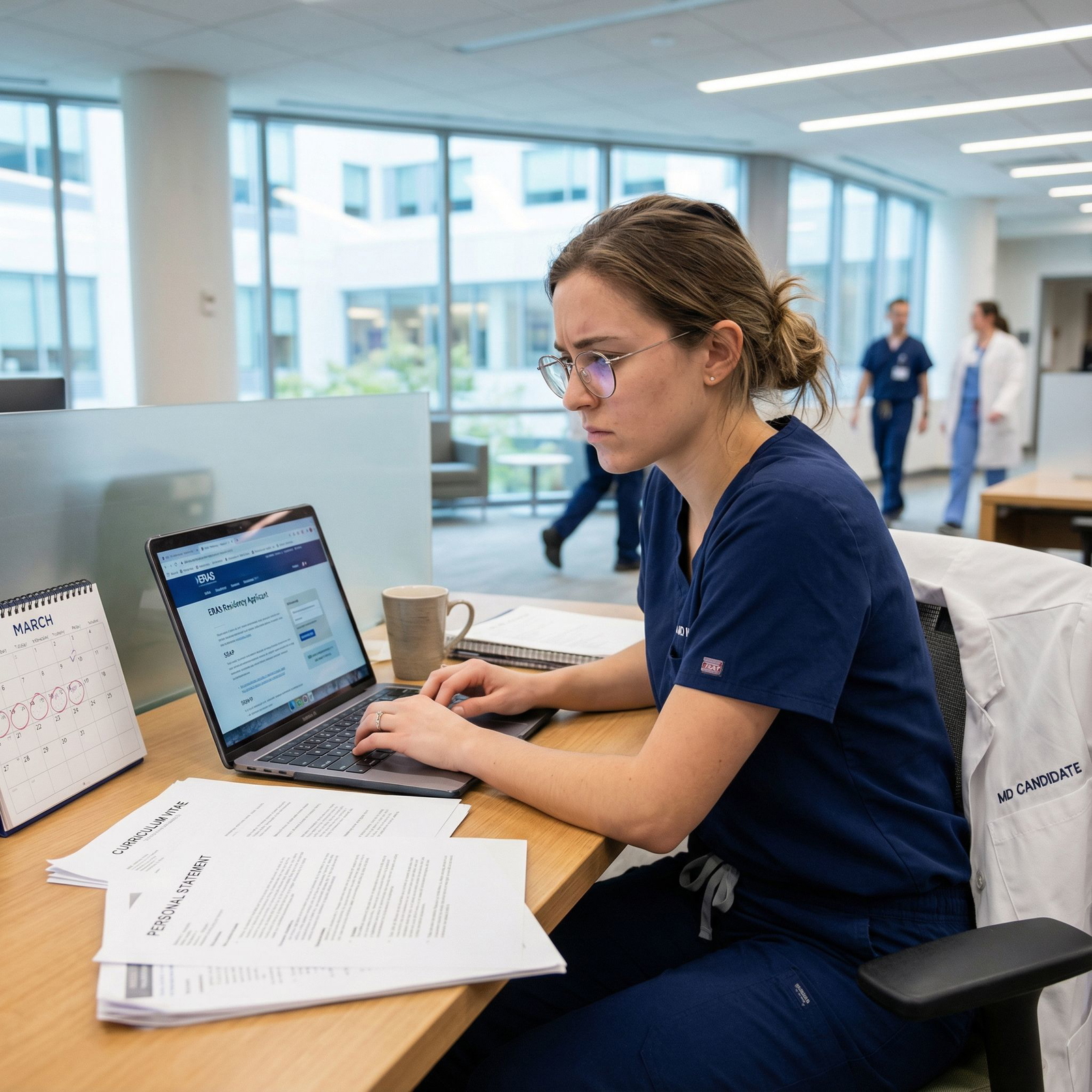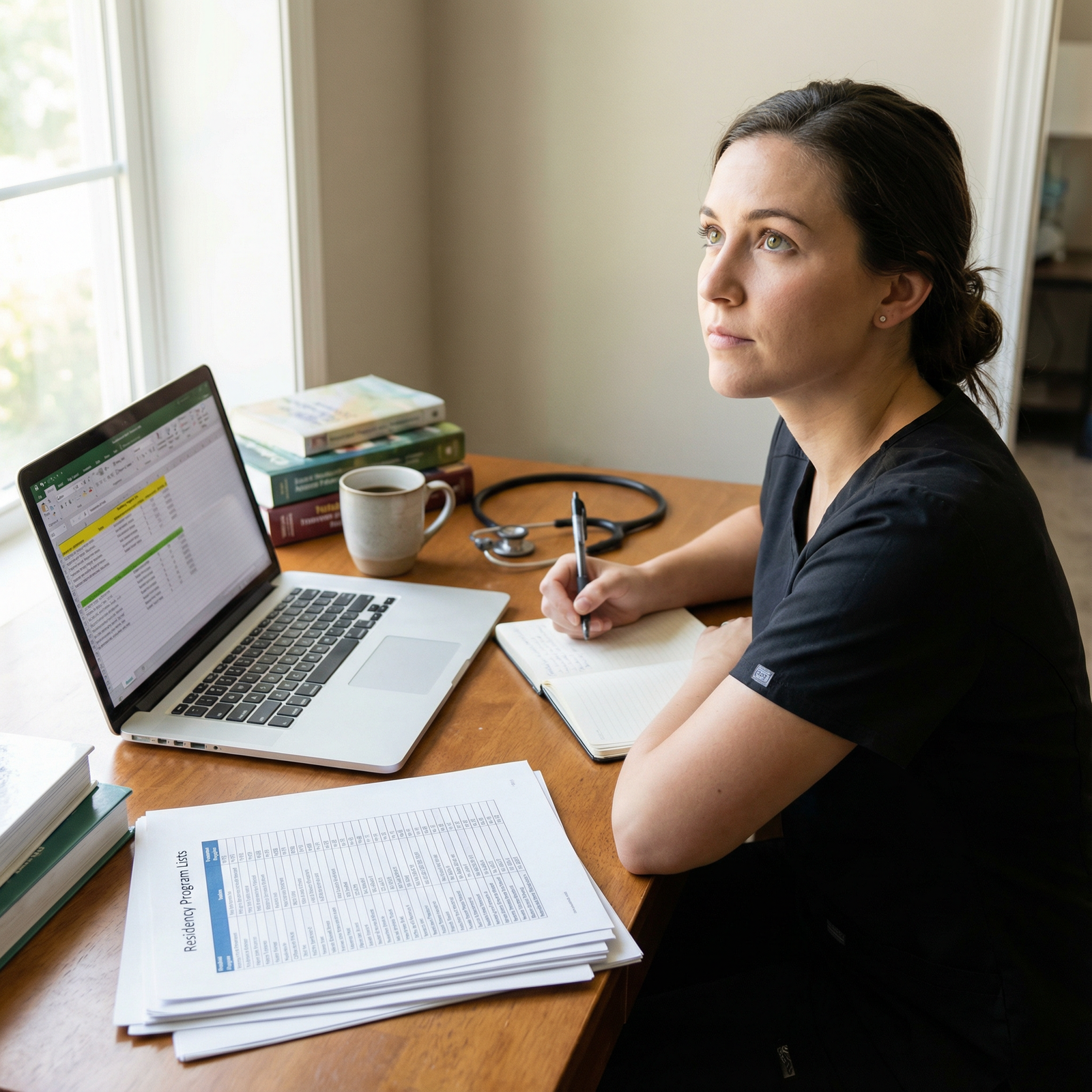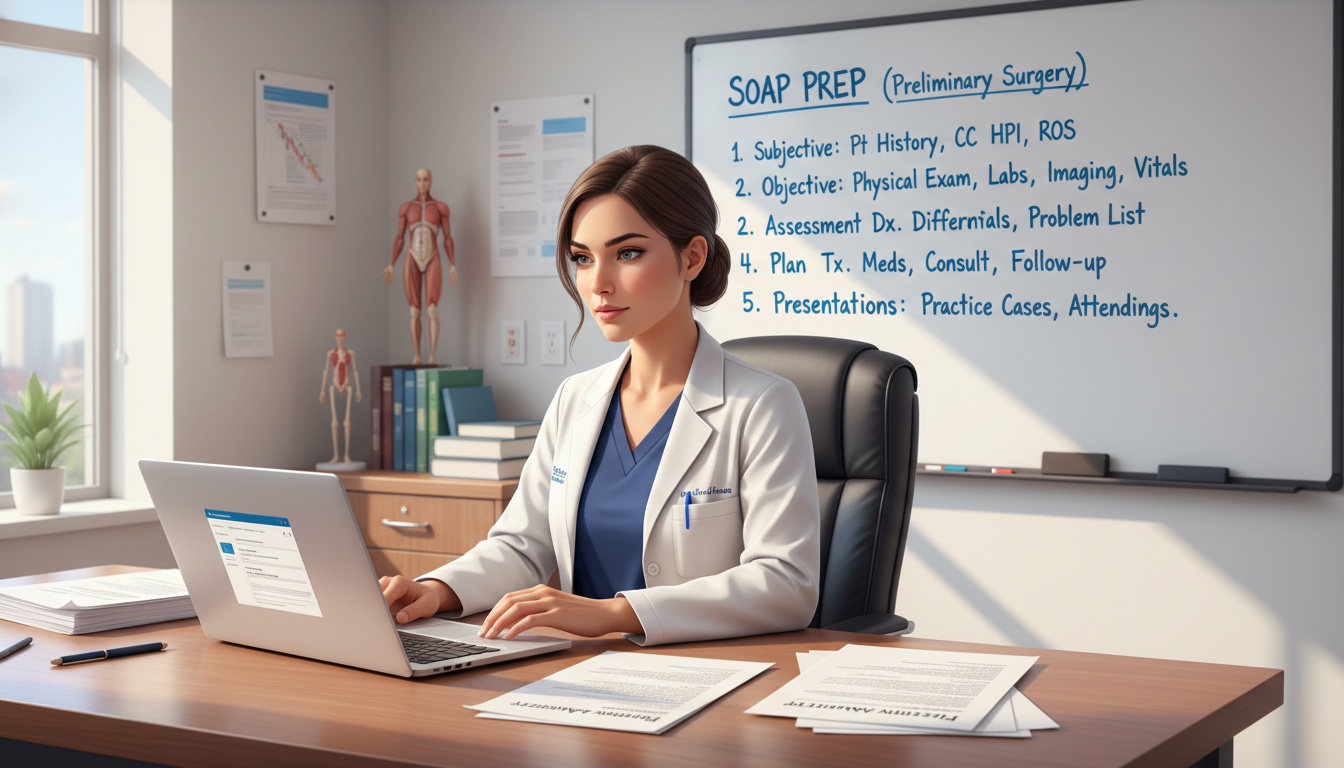
As a US citizen IMG (international medical graduate) or American studying abroad, aiming for a radiation oncology residency is already a bold, competitive path. When the initial Match outcome isn’t what you hoped for, the Supplemental Offer and Acceptance Program (SOAP) becomes your critical second chance.
This guide focuses specifically on SOAP preparation for US citizen IMGs interested in radiation oncology—recognizing that rad onc spots are few, competitiveness is high, and strategy must be realistic and flexible.
Understanding SOAP: What It Is and Why It Matters
Before preparing, you must be absolutely clear on what is SOAP and how it works.
What is SOAP?
SOAP (Supplemental Offer and Acceptance Program) is NRMP’s structured, time-limited process that allows eligible unmatched or partially matched applicants to apply to and receive offers from unfilled residency programs during Match Week.
Key points:
- Happens during Match Week (Monday–Thursday)
- Only for applicants who:
- Are registered for the Match
- Are eligible to start residency by July 1
- Are fully unmatched or partially matched (e.g., prelim only)
- You do not directly contact programs during SOAP—communication must go through ERAS.
- Applications and offers move in rounds, with deadlines and strict rules.
How SOAP Typically Looks for Radiation Oncology
Radiation oncology is a small specialty with relatively few positions nationwide. In many years:
- The total number of PGY-2 radiation oncology residency positions is modest.
- Few, if any, rad onc programs remain unfilled by the time SOAP begins.
- Available rad onc positions in SOAP may be:
- PGY-2 spots (rare)
- Unexpected vacancies
- Occasionally categorical programs (rare in rad onc, more often advanced positions)
For a US citizen IMG aiming at rad onc:
- It is unwise to plan on rad onc positions being available in SOAP.
- You must see SOAP as:
- A safety net for any unfilled position you are willing to pursue (preliminary, transitional year, internal medicine, surgery, etc.).
- A way to stay clinically active in the US and become a stronger future rad onc applicant.
Your main SOAP preparation goal:
Maximize your chance to secure any viable position that keeps you in the training pipeline, while preserving long-term alignment with radiation oncology.
Pre-SOAP Strategy: Foundation Before Match Week
Effective SOAP preparation for a US citizen IMG in radiation oncology starts long before Match Week. The stronger your pre-SOAP strategy, the more options you will have if you go unmatched.
1. Build a SOAP-Aware Application from the Start
Even if you’re confident about your rad onc application, you need contingency planning:
ERAS Personal Statement Strategy
- Have multiple versions ready:
- A radiation oncology–focused statement (core application).
- A broad internal medicine or preliminary surgery statement for SOAP.
- Possibly a transitional year–focused statement.
- This way, you can pivot quickly to other specialties during SOAP without scrambling to write from scratch.
- Have multiple versions ready:
Letters of Recommendation (LoRs)
- Secure:
- 2–3 strong letters from radiation oncologists or related oncology faculty.
- 1–2 letters from internal medicine/surgery/core clerkship faculty.
- This allows you to:
- Present a compelling narrative for rad onc.
- Present a credible, focused narrative for IM or prelim programs during SOAP.
- Secure:
CV and Activities
- Highlight:
- Oncology-related experiences: rad onc electives, tumor boards, oncology research.
- Core clinical performance: sub-internships, inpatient rotations.
- As a US citizen IMG, clearly show:
- US clinical experience (USCE)—clerkships, observerships, or sub-Is.
- Any longitudinal relationships with US academic centers.
- Highlight:
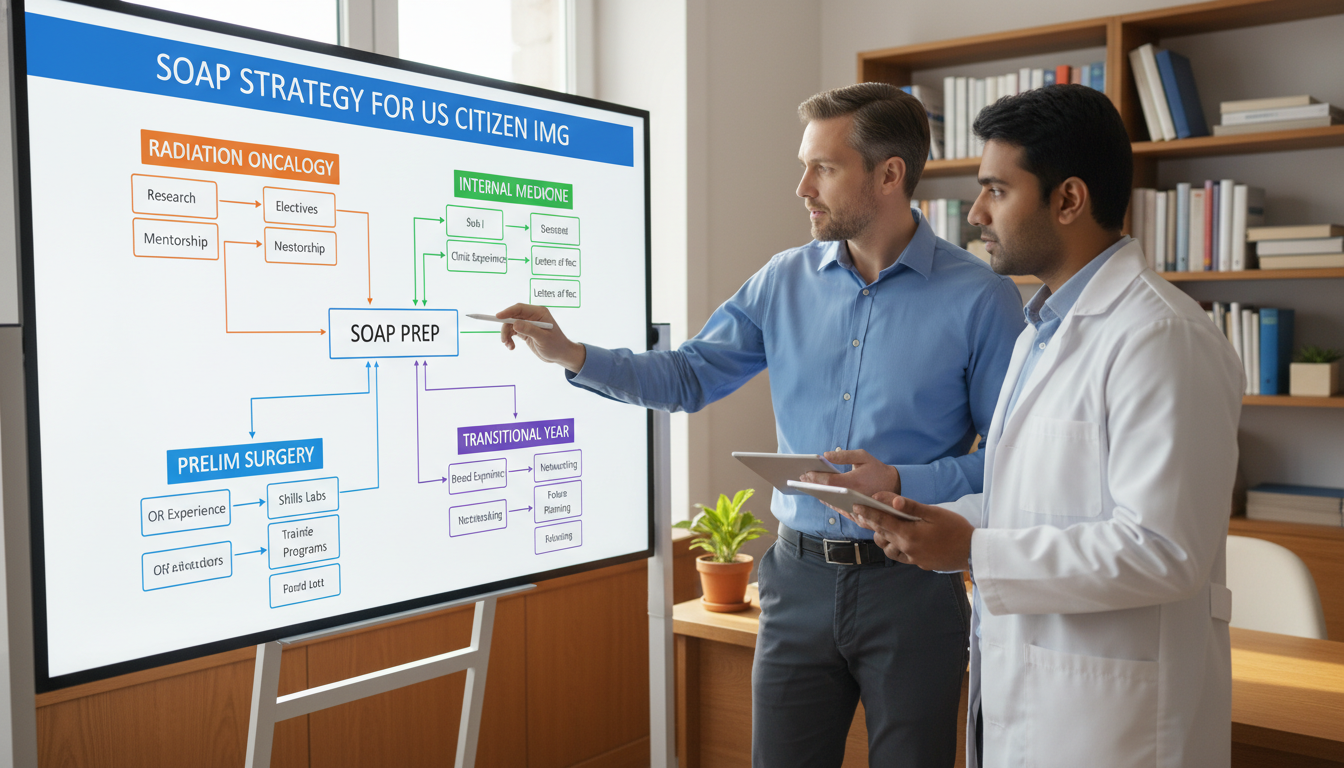
2. Plan a Realistic Specialty Backup Strategy
Because rad onc is small and SOAP positions are rare, identify backup specialties before Match Week.
Common strategic backups for future radiation oncologists:
Internal Medicine (IM) categorical
- Pros:
- Oncologic exposure via heme/onc, palliative care, inpatient oncology.
- Strong platform for oncology fellowships or future rad onc attempts.
- Cons:
- May shift your career permanently toward medical oncology or hospital medicine if reapplying to rad onc is not feasible.
- Pros:
Preliminary Internal Medicine or Surgery
- Pros:
- Keeps you in US GME.
- Provides strong clinical training and letters from US academic faculty.
- Cons:
- Not a guaranteed bridge to rad onc; requires careful planning and outstanding performance.
- Pros:
Transitional Year (TY)
- Pros:
- Balanced exposure; time to continue rad onc research and networking.
- Cons:
- Some TYs are very competitive; fewer may be available in SOAP.
- Pros:
Set your preference order early:
- Would you accept any rad onc position in SOAP, anywhere in the country?
- Would you accept any categorical IM program?
- Would you accept prelim only? Surgery vs IM vs TY?
- Are there geographic or visa restrictions? (As a US citizen IMG, you avoid visa issues, which is an advantage.)
Having this hierarchy ready before SOAP saves precious time and stress.
3. Know Your Data and Positioning as a US Citizen IMG
As an American studying abroad:
- Advantages:
- No visa sponsorship required—this makes you more attractive in SOAP.
- Cultural and communication familiarity with US systems.
- Challenges:
- Some programs still prefer US medical graduates.
- Limited face-to-face time at US academic centers unless you planned multiple electives.
Be realistic about:
- Your USMLE scores and attempt history
- Clinical grades and narrative evaluations
- Research output in oncology or rad onc
- Strength of US letters of recommendation
This reality check shapes which SOAP programs you realistically target.
The Week Before: Concrete SOAP Preparation
By the week before Match Week, you should have all the practical elements ready so you can act quickly once SOAP begins.
1. Technical and Administrative Readiness
ERAS Access
- Confirm you can log in without issues.
- Review your MyERAS documents: CV, personal statements, LoRs, MSPE, transcripts.
NRMP Account
- Verify your NRMP registration and Match participation.
- Ensure your contact info is current (email, phone number).
Document Organization
- Create a SOAP preparation folder (digital) containing:
- Multiple personal statements:
- Rad onc–focused
- IM categorical–focused
- Prelim/TY–focused
- A brief SOAP-specific CV or summary (for quick reference).
- Multiple personal statements:
- Keep a program tracking spreadsheet:
- Program name
- Specialty and type (categorical/prelim/TY/advanced)
- City/state
- Requirements (ECFMG status, USMLE cutoffs, IMG friendliness)
- Your interest level and notes
- Create a SOAP preparation folder (digital) containing:
2. Messaging and Story Prepared in Advance
You must be able to explain your narrative clearly during SOAP—especially if you’re switching from a rad onc primary strategy to another specialty.
Draft and rehearse explanations for:
- Why you initially pursued radiation oncology
- Why you are now open to internal medicine, prelim, or TY positions
- How your oncology interests still fit within the backup path
- As a US citizen IMG, why you’re committed to training in the US system
Example 30–60 second “SOAP pitch” for an IM categorical program:
“I originally applied to radiation oncology because I’m deeply motivated by the intersection of oncology, technology, and long-term patient relationships. Throughout my US clinical experiences on internal medicine and oncology services, I realized how central internists are to cancer care and longitudinal patient management. While I remain passionate about cancer care, I’m very committed to building a strong foundation in internal medicine. As a US citizen IMG with solid US clinical experience on IM wards and oncology rotations, I’m eager to contribute immediately on a busy inpatient service and grow under strong academic mentorship.”
Having this prepared helps you sound focused and deliberate, not desperate.
3. Build Your Support Team
SOAP is stressful. Assemble a small support network:
- A faculty mentor (ideally in oncology, IM, or your home department) who:
- Understands the Match
- Can advise on program targeting and realistic choices
- An advising dean or IMG advisor who knows:
- Historical SOAP outcomes for your school
- Programs that have previously taken your graduates
- A peer support group:
- Other applicants (ideally not directly competing for the same few positions) who can share information and emotional support
Agree on:
- Who you will contact as soon as you learn you are unmatched.
- How they can help you prioritize programs in the first hours of SOAP.
Match Week: Step-by-Step SOAP Execution
Once Match Week starts, everything becomes time-sensitive. This is where careful SOAP preparation pays off.
Monday: Unmatched Status and Program List
On Monday of Match Week:
- NRMP notifies you if you are:
- Unmatched or
- Partially matched (e.g., prelim year only)
- The list of unfilled programs becomes available (for SOAP-eligible applicants).
As a US citizen IMG focused on radiation oncology:
Check for radiation oncology positions first.
- If there are any:
- Note every rad onc program, regardless of location.
- Check:
- PGY level (PGY-2 vs categorical)
- Start date
- Requirements (USMLE, ECFMG status, etc.).
- Plan to apply to all feasible rad onc positions during your first application window.
- If there are any:
Assess your broader backup options.
- Among the unfilled programs, identify:
- Categorical IM or prelim IM programs.
- Transitional year programs.
- Prelim surgery programs, if you are open to that route.
- Use your tracking spreadsheet to mark:
- Programs that historically take IMGs.
- Programs not requiring visas (less relevant as a US citizen IMG, but it may influence competition).
- Among the unfilled programs, identify:
Application Limits and Prioritization
SOAP allows you to apply to up to 45 programs total across all rounds.
Given 45 applications:
Scenario A: Rad Onc Positions Exist
- Apply to all eligible rad onc positions (this might be only a few, or possibly none).
- Fill remaining slots with:
- Categorical IM programs (prioritized by:
- IMG-friendliness
- Oncology exposure
- Geography you can accept)
- Prelim IM or TY positions as a secondary pool.
- Categorical IM programs (prioritized by:
Scenario B: No Rad Onc Positions
- Devote your applications primarily to:
- Categorical IM (if you want a long-term medicine path with oncology potential).
- TY or prelim IM positions (if you want maximum flexibility and time to strategize re-application to rad onc).
- Devote your applications primarily to:
For each targeted group:
- Attach the appropriate personal statement:
- Rad onc PS to rad onc programs only.
- IM-focused PS to IM categorical / prelim IM.
- TY-specific PS to transitional year programs.
Interview Requests During SOAP
Programs can reach out to you only through ERAS-compliant channels (often by email or phone) during SOAP. You must respond promptly.
Prepare for:
- Very short-notice interviews, often:
- Same day
- 15–30 minutes
- Video calls, sometimes phone only
For each interview:
- Review:
- Program website (focus, patient population, oncologic exposure).
- Any rad onc or cancer center connections.
- Have concise talking points:
- Commitment to reliability, work ethic, and teamwork.
- Your specific interest in their patient population or setting.
- For IM/TY/prelim: how your interest in oncology can benefit their program (e.g., motivation for complex cases, interest in academic projects).

Post-SOAP Planning: Radiation Oncology in the Long Term
Whether SOAP leads to a new opportunity or not, think of SOAP as one piece of a longer career strategy. For a US citizen IMG with a passion for radiation oncology, your path may be indirect—but still achievable.
1. If You Secure a Prelim/TY Position in SOAP
This is one of the most common outcomes for strong, specialty-focused applicants who went unmatched in their dream field.
Your goals during this year:
Excel clinically
- Be reliable, hardworking, and collegial.
- Ask for mid-year feedback and address any weaknesses early.
Maintain or build your oncology profile
- Seek oncology or rad onc research projects with:
- Your institution’s radiation oncology department (if present).
- External rad onc contacts (even cross-institutional collaboration).
- Attend tumor boards or oncology conferences when possible.
- Seek oncology or rad onc research projects with:
Strengthen your rad onc application for a future cycle
- Update your CV with:
- US clinical performance
- Research outputs (posters, abstracts, manuscripts)
- Get new letters from:
- Intern year program director
- Oncology-affiliated faculty
- Stay in regular contact with rad onc mentors who can advise your re-application.
- Update your CV with:
This path can make you significantly more competitive in a future rad onc match—or can position you for a long-term IM/oncology career if your plans evolve.
2. If You Secure a Categorical IM Position in SOAP
A categorical IM position gives you a stable, long-term training path and a strong platform in oncology.
Strategic considerations:
- You might:
- Re-apply to rad onc during residency (challenging, but occasionally done for PGY-2 or PGY-3 transfers).
- Develop a strong medical oncology or palliative care focus instead.
- Emphasize:
- Oncology rotations and electives.
- Quality improvement or research projects in:
- Solid tumor management
- Palliative radiation coordination
- Survivorship or symptom management
You may find that IM with oncology subspecialization aligns well with your original motivations for radiation oncology.
3. If You Do Not Match in SOAP
This is emotionally and logistically difficult, but not necessarily the end of your path.
Next steps:
Debrief with mentors and advisors
- Analyze:
- USMLE scores and thresholds.
- Number and type of programs targeted.
- Feedback from any SOAP interviews.
- Analyze:
Strengthen your profile for the next cycle
- Options may include:
- Research fellowships in radiation oncology or oncology, preferably in the US.
- Extended US clinical experience (sub-Is, observerships).
- Additional degrees (MPH, MS in clinical research) tied to oncology research.
- Options may include:
Clarify your timeline for re-application
- Decide:
- Are you reapplying to rad onc only?
- Are you broadening to IM/other fields in parallel?
- Decide:
As a US citizen IMG, your flexibility and lack of visa constraints work in your favor as you plan gap years or research positions.
Practical Tips and Common Pitfalls for US Citizen IMG SOAP Preparation
To close, here are targeted, practical points especially relevant if you are an American studying abroad aiming at radiation oncology.
Targeted Tips
Begin SOAP preparation months before Match Week.
- Multiple personal statements and LoRs ready in advance save time and reduce errors.
Use your US citizenship as a quiet but real advantage.
- While you don’t “sell” citizenship itself, remember:
- Programs do not need to sponsor a visa.
- This may help you in SOAP over equally qualified non-US citizen IMGs.
- While you don’t “sell” citizenship itself, remember:
Think in “pathways,” not “all-or-nothing.”
- Radiotherapy technology and oncology care exist across multiple specialties:
- Internal medicine → heme/onc
- Surgery → surgical oncology
- Palliative care
- You can keep an oncology-centered career, even if your exact specialty changes.
- Radiotherapy technology and oncology care exist across multiple specialties:
Stay organized under pressure.
- Use a spreadsheet to manage applications, interviews, and offers.
- Document:
- Every program you apply to
- Every communication
- Ranking of preferences for quick decision-making during offers.
Align backup narratives with your core interests.
- When pivoting from rad onc to IM or TY, frame it as:
- “I remain deeply committed to oncology patients, and this path lets me serve them broadly and build a versatile clinical foundation.”
- When pivoting from rad onc to IM or TY, frame it as:
Common Mistakes to Avoid
Waiting until Monday of Match Week to start planning.
- Leads to rushed PS, misaligned applications, and missed deadlines.
Applying only to radiation oncology in SOAP.
- Rad onc SOAP spots are rare; this approach is risky and often unsuccessful.
Sending rad onc–specific PS to IM or TY programs (or vice versa).
- Makes you look unfocused or disengaged from the specialty you are applying to.
Ignoring program requirements.
- Some programs have strict score, attempt, or graduation-year cutoffs; applying blindly wastes limited application slots.
Underestimating how quickly SOAP interviews and offers move.
- You may have minutes to decide on an offer. Prepare your preference lists in advance.
FAQs: SOAP Preparation for US Citizen IMG in Radiation Oncology
1. As a US citizen IMG, what is my best SOAP strategy if no radiation oncology positions are available?
Focus on programs that:
- Keep you in US clinical training (IM categorical, TY, prelim).
- Offer oncology exposure (academic centers, cancer centers, strong heme/onc divisions).
Your goal should be to:
- Build strong US clinical credentials.
- Maintain and deepen your oncology focus through research or electives.
- Decide over time whether to reapply to radiation oncology or pivot to a related field like medical oncology.
2. Should I mention my radiation oncology interest when interviewing for IM or TY positions during SOAP?
Yes, but framed carefully:
- Emphasize:
- Your commitment to excellent general clinical training.
- How your interest in oncology makes you:
- Motivated to care for complex patients.
- Likely to pursue academic or QI projects.
- Avoid implying:
- That you see IM or TY as a “backup” you’ll abandon at the first opportunity.
- That you’re not sincerely interested in the specialty.
Example:
“I’m passionate about oncology, and I see strong internal medicine training as essential to caring for complex cancer patients. I’m excited about your program’s oncologic exposure and opportunities to work with heme/onc faculty.”
3. How do I balance rad onc applications and backup specialties during SOAP with the 45-program limit?
General guidance:
- If any rad onc positions exist, apply to all feasible rad onc programs first.
- Use the majority of remaining slots for:
- Categorical IM programs you’d be willing to attend.
- Then TY or prelim IM, based on your predefined priority list.
If no rad onc positions are available:
- Distribute applications among:
- Categorical IM (primary)
- TY/prelim IM (secondary)
Always align the personal statement and LoRs to the specific specialty type.
4. I didn’t match and didn’t secure a SOAP residency. Is it realistic to still aim for a rad onc match in the future?
Yes—but it requires a structured plan and honest self-assessment. Consider:
- Research positions in radiation oncology or oncology at US institutions.
- Enhancing your portfolio with:
- Publications
- Presentations
- Additional US clinical exposure
- Working closely with mentors to:
- Identify realistic programs.
- Time your re-application effectively.
Some applicants eventually match into radiation oncology after a research year or after starting in another specialty, but it is an uphill path. As a US citizen IMG, you have fewer logistical restrictions for staying in the US to pursue these opportunities, which is a real advantage.
Thoughtful, early SOAP preparation puts you in the best position to navigate uncertainty, preserve your long-term vision in radiation oncology, and secure a meaningful next step in your training—even when the initial Match outcome doesn’t go as planned.