Understanding SOAP for US Citizen IMGs in Urology
As a US citizen IMG and an American studying abroad, entering the urology match is uniquely challenging. Urology is competitive, has an early match (through SUO/SAU/ERAS, historically separate from NRMP), and has relatively few positions. If you go unmatched in urology—whether in the early urology match or in the regular NRMP match for preliminary positions—your best safety net is the NRMP Supplemental Offer and Acceptance Program (SOAP).
To prepare effectively, you must understand:
- What SOAP is (and what SOAP is not)
- How SOAP fits into the pathway of an aspiring urologist
- The specific timeline and requirements
- Strategic options that keep the door open to a future urology residency
This article will walk you through SOAP preparation specifically from the perspective of a US citizen IMG targeting urology residency.
What Is SOAP and How Does It Fit Into a Urology Path?
SOAP (Supplemental Offer and Acceptance Program) is the structured, time-limited process the NRMP uses during Match Week to fill unfilled residency positions with unmatched or partially matched applicants.
What is SOAP (in clear terms)?
SOAP is:
- A centralized, time-limited offer system run through the NRMP during Match Week.
- A process that allows eligible unmatched or partially matched applicants to apply to and accept offers for unfilled positions in participating programs.
- Conducted mostly through ERAS (applications/documents) and NRMP (offers/acceptances).
SOAP is not:
- A way to apply to urology positions that participate in the independent/early urology match if they are not part of NRMP.
- A “second full match” with the same flexibility and time as the main match cycle.
- A period where you can freely call programs and negotiate like in the “Scramble” era. Communication is tightly regulated.
Where SOAP falls in the timeline for a urology applicant
As a US citizen IMG targeting urology, you typically have two parallel tracks:
Urology Match (early/independent match system)
- Application/interviews occur earlier in the season.
- You might match into a urology PGY-1 (or PGY-2) position plus a linked preliminary year.
NRMP Match (categorical or preliminary positions)
- Many urology applicants simultaneously apply for a preliminary surgery, transitional year (TY), or preliminary medicine position through the NRMP as a backup.
- SOAP occurs during Match Week after the NRMP releases “Did I Match?” status.
If you go unmatched in urology but have NRMP backup applications, SOAP becomes critical to securing a PGY-1 position that:
- Gives you strong surgical or clinical exposure
- Strengthens your profile as an aspiring urology resident
- Preserves or enhances your eligibility for a future urology match attempt
Eligibility basics for SOAP (high-level)
To participate in SOAP, you must generally:
- Be registered for the NRMP Main Residency Match
- Be eligible to start training on July 1 (ECFMG certified by the start of training; for many programs, this means by rank list deadline or by Match Week)
- Not have accepted a position outside the match that violates NRMP policies
- Be unmatched or partially matched when results are released on Monday of Match Week
As a US citizen IMG, you have an advantage over non-US IMGs regarding visa issues, but you still must meet all ECFMG and NRMP requirements on time.
Strategic SOAP Planning for Urology-Focused US Citizen IMGs
SOAP preparation for a US citizen IMG aspiring to urology is about planning months ahead, not scrambling in March. Think of SOAP preparation in three parallel tracks:
- Maximizing your primary urology application
- Creating a smart, urology-oriented NRMP backup strategy
- Building a SOAP contingency plan well before Match Week
1. Design your backup plan with SOAP in mind
If your top goal is a urology residency, your backup choices through NRMP should support that goal, not derail it.
Common backup options for urology applicants include:
Preliminary General Surgery (Prelim Surgery)
- Strongly aligned with operative skills, perioperative care, and surgical culture
- Viewed positively by many urology PDs on re-application
- Often represented among SOAP positions (though still competitive)
Transitional Year (TY)
- Broad rotations (medicine, surgery, ED, electives)
- Can be structured to include surgical/urologic electives if the program allows
- Good for strengthening clinical skills and US-based evaluations
Preliminary Internal Medicine (Prelim IM)
- Offers solid training in complex medical management
- Less directly surgical, but still acceptable, especially if you engage in urology-related research or electives where possible
For a US citizen IMG targeting urology:
- Make sure in your initial NRMP rank list and applications you include:
- Several prelim surgery and/or TY programs that are IMG-friendly and historically accept US citizen IMG applicants.
- Programs at institutions with urology departments and urology research opportunities.
- Track which programs:
- Sponsor J-1/H-1B visas (if you happen to need one despite US citizenship—less likely, but sometimes relevant if dual citizenship issues arise).
- Have taken IMGs in SOAP or NRMP previously.
This same pool of surgery/TY/IM programs is often where you will aim during SOAP if you remain unmatched.
2. Build a “SOAP-ready” application dossier early
Even if you’re optimistic about matching in urology, prepare your application as if SOAP is a real possibility.
Key SOAP preparation tasks by December–January:
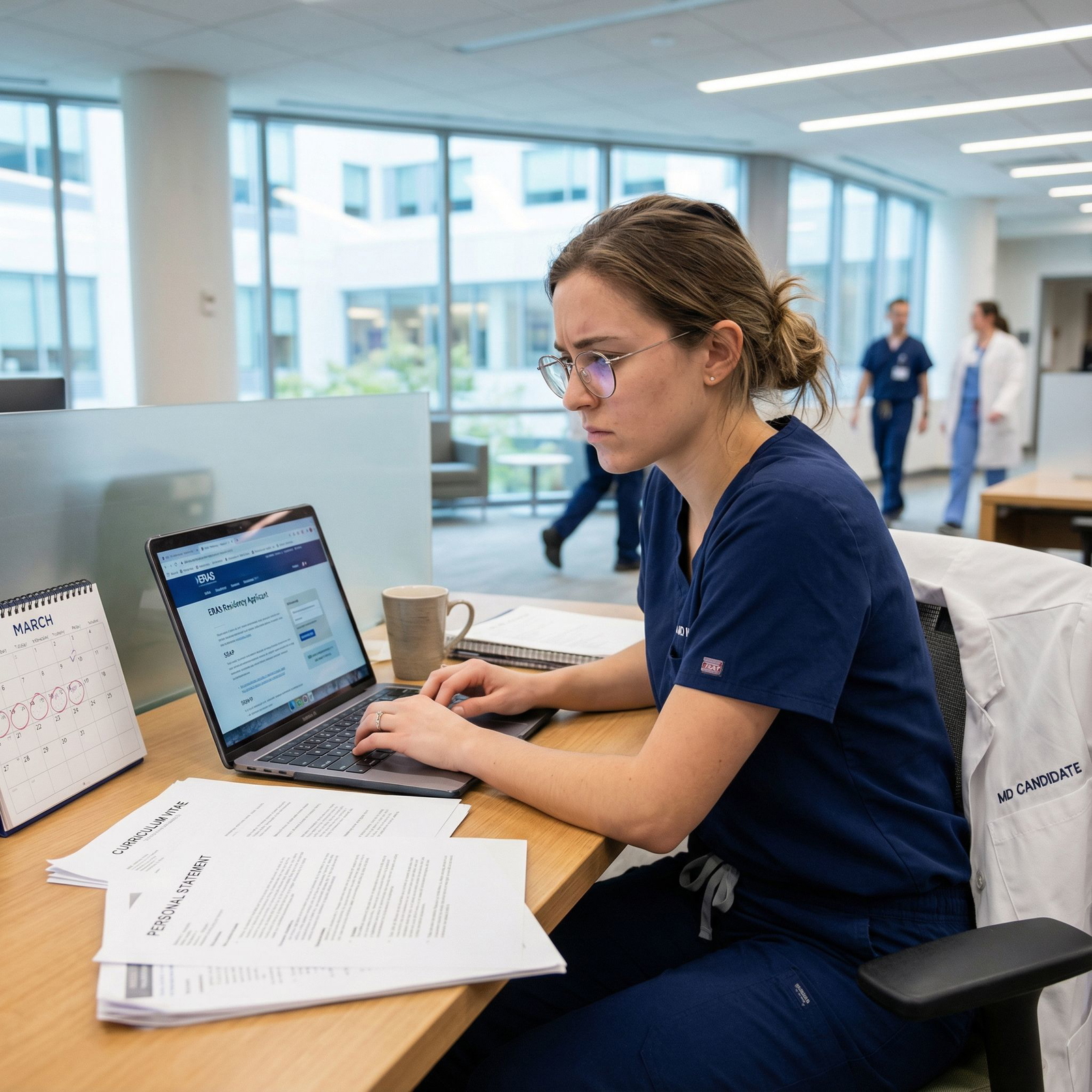
ERAS Personal Statement(s)
- Your urology personal statement may not be ideal for a TY or prelim IM program.
- Create at least:
- 1 urology-focused statement (for the urology match/related prelim surgery programs)
- 1 more general “surgical interest” statement (appropriate for prelim surgery/TY)
- Optional: 1 internal medicine–oriented statement for prelim IM options
- Save each as a separate document in ERAS to avoid hurried rewrites in March.
Letters of Recommendation (LoRs)
- At least 2–3 strong urology letters from US faculty (if possible)
- At least 1–2 non-urology surgical or medicine LoRs for broader SOAP use
- Ensure letters are uploaded in ERAS early; you can choose different combinations during SOAP.
US Clinical Experience Documentation
- Make sure all US rotations (sub-Is, electives) are clearly listed in ERAS.
- Highlight any surgical/urology exposure and performance.
Exam and ECFMG status
- Ensure USMLE Step 1 and Step 2 CK are completed with scores reported well before rank list deadlines.
- For IMGs, aim to complete ECFMG certification before Match Week, or at least before most programs’ deadlines. This is crucial for SOAP eligibility and hiring.
By the time SOAP starts, you should not be editing your core story; you should be deploying it strategically.

The SOAP Timeline and What to Expect During Match Week
Knowing exactly what happens and when is part of effective SOAP preparation.
(Note: Exact times/dates may vary slightly year to year; always verify on NRMP and ERAS websites.)
Before Match Week (January–early March)
- You finalize your:
- Urology rank list (if in an independent/early match)
- NRMP rank list (backup positions like prelim surgery, TY, prelim IM)
- You ensure:
- LoRs, transcripts, MSPE, and USMLE scores are all uploaded
- ECFMG certification is either achieved or on track
- Personal statements for multiple scenarios are in ERAS
Monday of Match Week – “Did I Match?” Day
NRMP tells you one of four statuses:
- Matched (fully matched)
- Partially matched (e.g., prelim year but not advanced position)
- Unmatched
- Ineligible for SOAP
If you:
- Matched into a categorical or advanced position you’re willing to honor, SOAP is irrelevant.
- Unmatched or partially matched and meet eligibility criteria, you are SOAP-eligible.
List of Unfilled Programs Released
- Through NRMP’s R3 system, you see which programs have unfilled positions, including:
- Categorical
- Prelim surgery
- TY
- Prelim IM and others
- Through NRMP’s R3 system, you see which programs have unfilled positions, including:
As an aspiring urologist, your target in SOAP will often be prelim surgery or TY, with prelim IM as a reasonable secondary backup.
Monday–Tuesday – Application Window
- You can submit applications through ERAS to a maximum number of programs (usually 45) across all SOAP rounds.
- You cannot contact programs directly by phone/email unless they initiate contact or policies change—always check the latest NRMP rules.
- You may:
- Assign different personal statements and LoRs to different specialties.
- Prioritize programs with urology departments or research.
This 1–2 day phase is frantic if you aren’t prepared. If you’ve done systematic SOAP preparation, you will:
- Already know which types of programs you want.
- Have a shortlist of likely SOAP targets (prelim surgery/TY/IM) and their program codes.
- Be able to assign documents quickly and thoughtfully.
Wednesday–Thursday – Interview and Evaluation Period
- Programs may:
- Review your ERAS file
- Contact you (phone/Zoom) for brief interviews
- Ask clarifying questions about your goals and willingness to join
As a US citizen IMG with a urology goal:
- Communicate clearly and honestly:
- Emphasize your interest in excellent clinical training, surgical experience, and contributing fully to the program.
- You do not need to hide your long-term interest in urology, but reassure them that you will be fully committed for the duration of your time in their program.
SOAP Rounds (Offer Cycles)
There are multiple short offer rounds (e.g., 4 rounds, 2 hours each, over Wednesday–Thursday).
In each round:
- Programs submit a list of candidates they are willing to offer positions to.
- You may receive zero, one, or multiple offers.
- You can:
- Accept one offer (binding)
- Or reject/allow offers to expire (but that’s risky if you have no better options)
Once you accept an offer, you are removed from SOAP and must withdraw from further consideration.
Crafting a SOAP Strategy That Preserves Your Urology Ambitions
For a US citizen IMG whose primary goal is a urology residency, the main SOAP question is not just “Can I get a position?” but “Which position will best position me for a future urology match?”
Step 1: Know your realistic SOAP target
As a US citizen IMG, you often have a moderately better chance than non-US IMGs, but urology itself almost never participates heavily in SOAP. Your realistic SOAP options will more likely be:
- Prelim General Surgery at community or some academic hospitals
- Transitional Year programs
- Prelim Internal Medicine positions
Prioritize programs that offer at least one of the following:
- A urology department on-site
- Surgical research opportunities, especially outcomes research, quality improvement, or urology-adjacent projects
- Flexibility for electives or research rotations that can be used to strengthen a future urology application
Step 2: Rank your own priorities
Before SOAP begins, decide on your non-negotiables and preferences. Consider:
Clinical relevance to urology
- Does the program offer exposure to operating rooms, perioperative care, or complex medical patients you’ll see in urology?
Program reputation and support
- Are there mentors or faculty supportive of re-applicants to competitive specialties?
- Is there a track record of graduates entering fellowships or switching into other specialties?
Geography and personal factors
- Proximity to family/support systems
- Costs of living, which can affect your well-being in a demanding prelim year
You’ll use these criteria internally to decide which SOAP offers, if any, to accept.
Step 3: Tailor your message and documents
For SOAP, especially when re-targeting prelim surgery/TY/IM:
Personal statement
- Highlight your commitment to strong foundational clinical training.
- Explain that, regardless of ultimate specialty, you are dedicated to being an excellent intern/resident in their program.
- You can briefly reference your interest in urology, framing it as a driver of your work ethic and interest in surgical care.
Interview talking points (if called)
- Emphasize reliability, work ethic, and team spirit.
- Show that you understand the intensity of prelim or TY roles.
- Don’t sound like you’re only “passing through”; programs want residents who will uphold their standards and represent them well, even if you later reapply to urology.

Practical Preparation Steps and Checklists
To translate all this into action, here’s a structured SOAP preparation roadmap tailored for US citizen IMGs targeting urology.
6–9 months before Match Week (June–September)
Clarify your path
- Decide definitively that urology is your first-choice specialty.
- Map out urology application plus NRMP backup strategy (prelim surgery/TY/IM).
Secure strong letters
- Plan US-based urology rotations and sub-Is where you can earn strong LoRs.
- Identify non-urology faculty (surgery/medicine) who may later write SOAP-useful letters.
Start SOAP research
- Look at historical NRMP SOAP data and identify:
- Programs and specialties that regularly have unfilled prelim/TY positions.
- Hospitals with urology departments that might have prelim/TY or IM positions in SOAP.
- Look at historical NRMP SOAP data and identify:
3–5 months before Match Week (October–December)
Complete core application documents
- Finalize ERAS entries, CV, experiences.
- Write and upload multiple versions of your personal statement (urology, surgical/TY, IM if desired).
Confirm exams and ECFMG timeline
- Ensure Step 2 CK is done early enough.
- Check with your medical school and ECFMG about document submission deadlines and certification status.
Talk to mentors explicitly about SOAP
- Ask urology and surgery mentors:
- How to best position yourself for a re-application if needed.
- Which types of prelim or TY programs they respect and recommend.
- Ask urology and surgery mentors:
1–2 months before Match Week (January–February)
Build a SOAP spreadsheet
- Columns might include:
- Program name and code
- Specialty (prelim surgery/TY/IM)
- City/State
- Has urology department? Y/N
- IMG-friendly?
- Visa policy (if relevant)
- Notes on research, electives, reputation
- Columns might include:
Draft quick-contact materials
- A short “SOAP email template” you can adapt if rules allow limited communication (check NRMP’s current policies).
- Bullet-point lists for yourself: strengths, key experiences, and “pitch” for each type of program.
Align expectations with family/support system
- Explain that Match Week can be stressful and time-limited.
- Plan your schedule so you can fully focus on SOAP if needed.
Match Week: Execution
Monday
- Confirm SOAP eligibility status as soon as NRMP releases it.
- Download and review the List of Unfilled Programs.
- Filter your spreadsheet quickly: highlight prelim surgery/TY/IM programs that match your priorities.
Monday–Tuesday
- Submit ERAS applications to carefully selected programs (up to the SOAP limit).
- Adjust personal statements and LoRs to match the specialty.
- Stay reachable by phone and email for potential interview contacts.
Wednesday–Thursday
- Respond promptly and professionally to any interview requests.
- Use structured notes:
- Key program features
- Questions you want to ask
- Your tailored pitch for that program
Offer rounds
- If you receive multiple offers:
- Use your pre-defined priority list (clinical relevance to urology, mentorship, location).
- Accept the offer that best aligns with your short- and long-term goals.
- If offers are sparse:
- Avoid rejecting an offer if there is no clear expectation of a better one.
- Remember that having a solid prelim/TY position is usually better than going unmatched when planning a future urology career.
- If you receive multiple offers:
FAQs: SOAP Preparation for US Citizen IMGs in Urology
1. As a US citizen IMG who went unmatched in the urology match, should I still participate in the NRMP match and SOAP?
Yes. If you went unmatched in urology but are registered for the NRMP match with backup programs (prelim surgery/TY/IM), you should absolutely continue through the NRMP process. If you end up unmatched on NRMP Monday, SOAP offers your best route to a PGY-1 position that keeps you clinically active, builds your CV, and strengthens a future urology re-application.
2. Which SOAP specialties are best if I want to reapply to urology later?
For future urology re-applicants, the most advantageous SOAP options typically are:
- Preliminary General Surgery – best surgical alignment, strong signal for commitment to an operative career.
- Transitional Year – especially if the program allows you to do surgical or urology electives.
- Preliminary Internal Medicine – acceptable backup, particularly if you engage in urology-related research or electives.
Among these, prelim surgery is often the most directly aligned with urology residency expectations, but the best choice also depends on program quality and support.
3. How honest should I be about my urology ambitions when interviewing for SOAP positions?
You should be honest but strategic. It’s fine to say that you are strongly interested in urology as a long-term goal, as long as you emphasize:
- You are fully committed to being an outstanding intern/resident in their program.
- You understand the workload and expectations of that specialty/position.
- You will represent the program positively, whether or not you ultimately enter urology.
Programs generally appreciate transparency, but they prioritize reliability and commitment.
4. If I don’t secure a position through SOAP, can I still pursue urology?
It becomes much more challenging, but it’s not necessarily the end. Options may include:
- Engaging in a dedicated research year in urology or surgical specialties at a US institution.
- Strengthening your academic portfolio with publications, presentations, and additional US clinical exposure.
- Re-applying in a future cycle with improved credentials and fresh letters.
However, for most US citizen IMGs aiming for urology, securing any solid clinical PGY-1 position through SOAP (especially prelim surgery or TY) substantially improves your chances of staying competitive for a later urology application.
By preparing early, building a SOAP-aware backup strategy, and understanding exactly what SOAP is and how it works, you position yourself not just to survive an unexpected unmatched outcome—but to convert it into a meaningful stepping stone toward your ultimate goal of urology residency.