Understanding SOAP for Neurology: What US Citizen IMGs Need to Know
If you are an American studying abroad and targeting a neurology residency, you must be fully prepared for the Supplemental Offer and Acceptance Program (SOAP). Even if you feel confident about your initial Match chances, building a SOAP strategy is essential risk management—especially for a competitive and increasingly popular field like neurology.
This guide is designed specifically for the US citizen IMG neurology applicant. It explains what SOAP is, how it works in the context of the neuro match, and how to build a step‑by‑step SOAP preparation plan so you’re not scrambling on Match Week.
What Is SOAP?
In simple terms, SOAP (Supplemental Offer and Acceptance Program) is the structured, time‑limited process by which unmatched or partially matched applicants can apply to and accept unfilled residency positions during Match Week.
Key features:
- Run by NRMP during Match Week
- Uses ERAS for applications to unfilled programs
- Multiple offer rounds over several days
- Strict rules about communication and offer acceptance
- Free to participate (no extra application fees during SOAP)
For neurology applicants, SOAP is your backup path into neurology or, when that’s not possible, into a preliminary or transitional year that keeps your long‑term neurology goal viable.
SOAP Eligibility: Where US Citizen IMGs Stand
To participate in SOAP, you must:
- Be registered for the Main Match with NRMP
- Be fully or partially unmatched at the start of Match Week
- Have certified a rank order list (even if short)
- Be ECFMG certified (or very close) by the NRMP deadline (most US citizen IMGs fall under ECFMG pathways now)
- Have no Match violations and meet institutional and visa requirements (typically not an issue for US citizens)
For the American studying abroad, your citizenship is a major advantage during SOAP:
- You do not need visa sponsorship—this instantly expands your pool of programs.
- Many programs that do not sponsor visas are more accessible to US citizen IMGs than to non‑US IMGs.
- You still compete with US MD/DO graduates and other IMGs, so your preparation must be rigorous.
Pre‑SOAP Strategy: Setting Yourself Up Before Match Week
Effective SOAP preparation begins months before Match Week. Think of it as building a “break glass in case of emergency” plan.
1. Assess Your Neurology Competitiveness Early
Before the Rank Order List deadline, evaluate your neurology application honestly:
Consider:
- USMLE/COMLEX scores (or Step 1 pass + Step 2 CK performance)
- Number and quality of neurology letters of recommendation
- US clinical experience in neurology (sub-internships, electives, observerships)
- Red flags (exam failures, gaps, professionalism concerns)
- Research and scholarly work in neurology or neurosciences
- Interview count and quality for neurology programs
Ask yourself:
- Did you receive few or no neurology interviews?
- Were most interviews at community programs only?
- Did you have late or no responses from many programs?
- Were interviews heavily back‑up or non‑neuro specialties?
If your answer is often “yes,” you must plan aggressively for SOAP.
2. Decide on Your SOAP Priorities: Neurology vs. Transitional Options
On SOAP Monday, most unfilled positions are not categorical neurology spots. Realistically, your priority list should look like:
- Unfilled categorical neurology positions (top priority)
- Preliminary medicine or transitional year positions at hospitals with neurology programs
- Other prelim/internal medicine, family medicine, or TY spots that keep your neurology goal open for a future re‑application
Your long‑term neurology trajectory remains intact if:
- You enter neurology through SOAP this year, or
- You secure a strong prelim/TY year, then reapply to neurology with enhanced credentials.
3. Build a SOAP‑Ready Application Before Results Day
Your ERAS application does not freeze after you submit for the regular match. In the months leading up to Match Week, prepare a SOAP‑optimized version of your materials.
Key elements:
Updated CV and ERAS entries
- Add any new rotations, electives, research, or publications
- Clarify neurology‑related experience (EEG exposure, neuro ICU, stroke clinics, etc.)
Neurology‑Focused Personal Statement (PS)
- Keep a clear, polished neurology PS on hand
- Emphasize:
- your US education background as a US citizen IMG
- your exposure to neurology patients
- reasons for choosing neurology
- adaptability moving between countries/health systems
Flexible Back‑up PS (IM/TY focus)
- For preliminary or transitional year programs, have a modified PS
- Highlight:
- broad internal medicine skills
- teamwork, reliability, and work ethic
- future plan: neurology fellowship or PGY‑2 entry (word it carefully, not as “I’m only using this program as a stepping stone”)
Letters of Recommendation (LoRs)
- Secure at least 2 neurology letters (preferably from US attendings)
- One strong internal medicine letter can support SOAP apps to TY/prelim programs
- Upload all LoRs to ERAS well before February
Document Readiness
- Ensure USMLE transcript released
- ECFMG certification final or imminent
- Medical school transcript and MSPE uploaded and clean
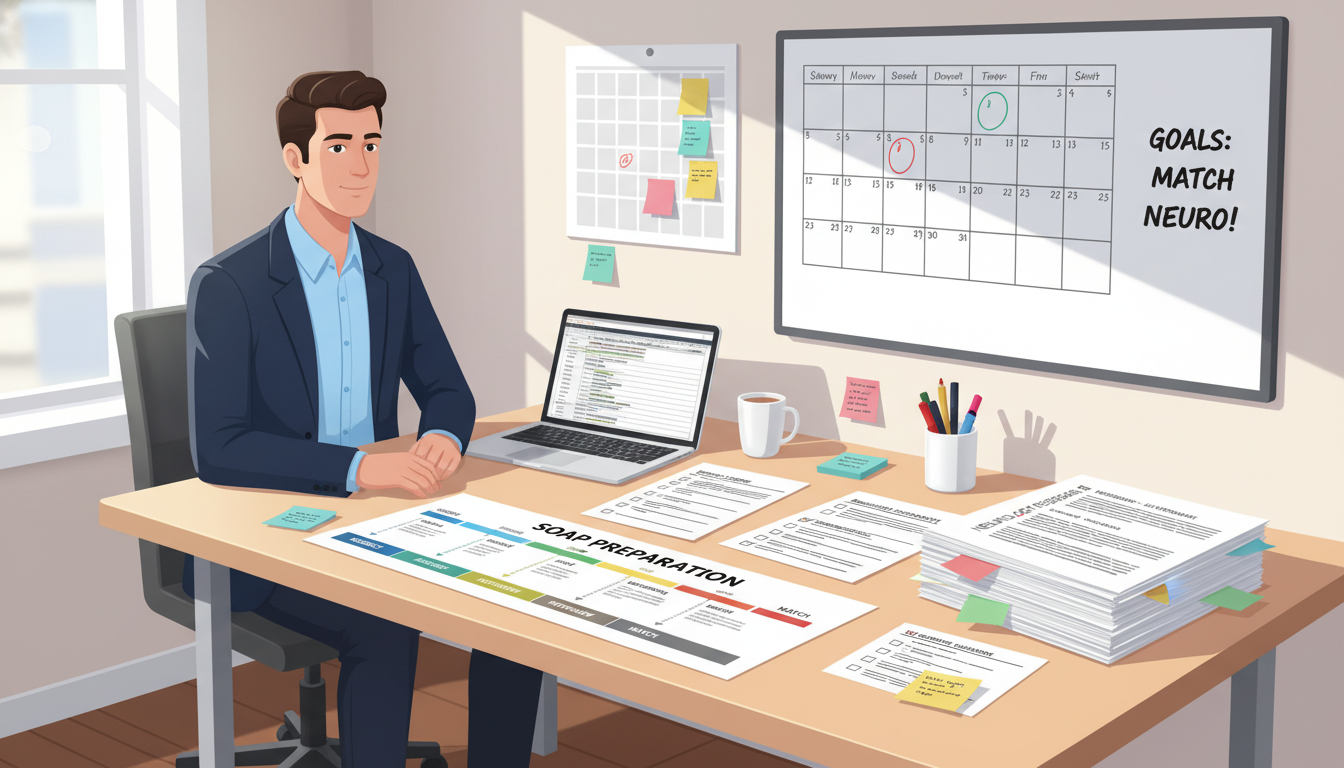
Think of SOAP preparation as making sure that, if you wake up unmatched, you can start applying within minutes, not hours.
The Timeline: How SOAP Works During Match Week
Understanding the minute‑by‑minute structure of SOAP gives you a big advantage.
Monday Morning: Unmatched Notification & List of Unfilled Programs
- 11 AM ET (approx.): You learn if you are
- Fully matched
- Partially matched
- Unmatched
- If you are eligible, you gain access to the List of Unfilled Programs on NRMP/ERAS.
For a neurology‑focused US citizen IMG:
- Immediately scan for categorical neurology unfilled spots.
- Next, identify prelim/TY positions at:
- Hospitals with neurology residency programs
- Programs known to promote into neurology or have strong neuro exposure
Application Limits and Strategy
During SOAP, you can apply to up to 45 programs total, across all specialties and types.
A sample allocation for a neurology‑focused US citizen IMG might be:
- 10–15: Categorical neurology positions
- 15–20: Prelim internal medicine or TY in hospitals with neurology residencies
- Remaining: Other prelim IM/TY programs that offer strong inpatient medicine experience
You must prioritize quickly. Good neurology programs fill fast, even in SOAP.
Monday–Thursday: Application Review & Interviews
After applications are submitted:
- Programs review your application in ERAS.
- Programs may schedule SOAP interviews:
- Usually short, often virtual (Zoom, phone)
- Can be same‑day or next‑day
- Sometimes purely conversational or screening
As a US citizen IMG, emphasize in every interaction:
- No need for visa sponsorship (programs like this)
- Strong US clinical experience
- Clear commitment to neurology
- Flexibility and readiness to start PGY‑1 responsibilities immediately
Offer Rounds and Acceptance Rules
SOAP has multiple offer rounds (usually 4) between Wednesday and Thursday.
- You may receive 0, 1, or multiple offers in a round.
- If you receive one or more offers, you must either:
- Accept one within the time window, or
- Let all offers expire (you cannot reject one and keep others open).
If you accept an offer:
- You are bound to that program (just like the Match).
- You are automatically out of further SOAP participation.
This means your rank list for SOAP is essentially mental and strategic: which categories of offers you would accept, which you would let expire in hopes of a better round later. That decision must be thought through before Wednesday.
Neurology‑Specific SOAP Tactics for US Citizen IMGs
SOAP for neurology is not just about filling any spot; it’s about preserving and advancing your neurology career trajectory.
1. Prioritize Neurology Positions – But Be Realistic
If there are unfilled:
- Categorical neurology positions at community or smaller academic programs
- Newer programs establishing their neurology departments
- Programs in less competitive geographic areas
You should apply to all reasonable options that:
- Accept IMGs historically, and
- Do not have explicit score cutoffs that you fail to meet.
However, unfilled neurology slots often exist for a reason:
- Newly accredited programs
- Less desirable locations
- Weaker academic or research environments
- Heavy service load
As a US citizen IMG, this may still be a valuable entry point into neurology. Training quality can be supplemented later with fellowships, research, and self‑directed learning.
2. Make Prelim/TY Choices That Support Neurology
If categorical neurology seats are scarce or unrealistic, your next goal is a PGY‑1 position that keeps you competitive when you reapply.
Ideal prelim/TY characteristics:
- Affiliated neurology residency or strong neurology department
- Robust stroke, epilepsy, and neurologic ICU services
- Opportunities for neurology electives during PGY‑1
- Reasonable call schedule (leaving time for future ERAS work, Step 3, and research)
During interviews, ask:
- “Will I have opportunities to rotate on neurology wards or stroke units?”
- “Are there neurology residents or fellows in the hospital?”
- “Have past prelim residents been successful in matching into neurology or other specialties later?”
3. Tailor Your SOAP Personal Statements and Messaging
For neurology SOAP applications:
- Emphasize what you’ve learned through:
- Neurology electives, stroke codes, EEG readings, neuro‑ICU exposure
- Working with patients with epilepsy, dementia, movement disorders
- Highlight your ability to think long‑term and follow patients over time
- For US citizen IMGs, briefly note the advantage of understanding both US healthcare and international systems—this is relevant for neurology’s global disease burden.
For prelim/TY SOAP applications:
Maintain honesty:
- State your primary interest in neurology without sounding disinterested in the PGY‑1 role.
- Example:
“My long‑term career goal is to practice as an academic neurologist. I am seeking a strong preliminary internal medicine year where I can build a solid foundation in inpatient medicine, acute care, and multidisciplinary teamwork—skills that are essential for an effective neurology resident.”
Reinforce that you will be fully committed to patient care and team responsibilities in PGY‑1.
4. Use Your US Citizenship Strategically
Program concerns about IMGs often include:
- Visa sponsorship complexity
- Credentialing and start‑date delays
- Communication and system familiarity
You can directly address these:
- Clearly state in your ERAS and interviews that you are a US citizen IMG or American studying abroad.
- Confirm you do not require visa sponsorship.
- Highlight any:
- US undergraduate or prior work experience
- US research roles
- US shadowing, clerkships, or sub‑internships
This combination makes you a more straightforward and lower‑risk hire than many visa‑needing IMGs.
Practical SOAP Preparation Checklist: Week‑by‑Week Plan
To avoid panic during Match Week, convert your preparation into a concrete action plan.
2–3 Months Before Match Week
Confirm Exam and Certification Status
- Ensure Step 2 CK score is reported
- Resolve any outstanding ECFMG items
Secure Strong LoRs
- At least 2 neurology letters
- 1 general internal medicine letter
- Confirm all letters are uploaded to ERAS
Polish CV and Experiences
- Update ERAS with all neurology exposure, research, and volunteer work
- Clarify roles and responsibilities in each rotation
Draft Two Personal Statements
- Neurology‑specific PS
- IM/TY/prelim‑oriented PS that still acknowledges your neuro interest
1 Month Before Match Week
Research Programs Likely Friendly to IMGs
- Identify neurology programs that:
- Historically accept IMGs
- Are in less competitive regions
- Identify prelim/TY programs in hospitals with neurology departments
- Identify neurology programs that:
Prepare Interview Talking Points
- Why neurology?
- What you learned from being an American studying abroad
- How you handle high‑acuity neuro cases
- Strengths you bring to a PGY‑1 team (work ethic, communication, reliability)
Clarify Your Decision Framework
- Will you accept any categorical neurology offer?
- Under what conditions would you prioritize a strong prelim/TY over a weak neurology program?
- How far are you willing to move geographically?
1–2 Weeks Before Match Week
Tech and Logistical Readiness
- Reliable internet, quiet space, professional attire ready
- Updated phone number and email in ERAS
- Time zone awareness for interviews (many programs are EST‑based)
Mock SOAP Interviews
- Practice with mentors, advisors, or peers:
- 10–15 minute fast‑paced interviews
- Focused on neurology insights, PGY‑1 readiness, and teamwork
- Practice with mentors, advisors, or peers:
Mental Rehearsal of Outcomes
- Imagine waking up unmatched and going through the SOAP steps
- Prepare emotionally so you can shift into action quickly
During Match Week
Monday
- If unmatched/partially matched:
- Stay calm; open the List of Unfilled Programs
- Filter for neurology and prelim/TY positions
- Prioritize and submit applications as early as possible
- If unmatched/partially matched:
Tuesday–Thursday
- Respond promptly to all interview requests
- Keep your schedule open—SOAP interviews can be last‑minute
- Stay organized; track which programs interviewed you and your level of interest
Offer Rounds
- Before each round, know exactly which offers you would accept
- Don’t panic‑accept something that doesn’t align with your long‑term neurology strategy unless your alternatives have truly collapsed
Long‑Term Perspective: If You Still Don’t Match Through SOAP
Even with perfect SOAP preparation, some applicants—especially in competitive fields like neurology—may still not secure a position.
For a US citizen IMG neurology aspirant, all is not lost. Your citizenship continues to be a major advantage for re‑application.
If you remain unmatched after SOAP:
Take a Brief Emotional Reset
- Give yourself a few days to decompress; this is a major disappointment, and you need clarity to plan.
Analyze Your Application with an Objective Mentor
- Neurology faculty, graduate medical education advisors, or IMG‑savvy mentors can help identify weaknesses:
- Scores?
- Clinical experience?
- Letters?
- Communication/interview issues?
- Neurology faculty, graduate medical education advisors, or IMG‑savvy mentors can help identify weaknesses:
Build a Gap‑Year Plan That Strengthens a Future Neurology Application
- Options include:
- US clinical experience (neurology observerships, externships if available)
- Neurology research positions (clinical stroke trials, epilepsy research, neuroimaging, etc.)
- Hospitalist scribe or clinical assistant roles in neuro units
- Step 3, if not yet taken, with strong performance
- Options include:
Reapply with a More Diversified Strategy
- Apply more broadly in neurology, including:
- More community programs
- Less popular geographic areas
- Newly accredited programs
- Consider pairing with a back‑up specialty you would genuinely be willing to pursue if neurology continues to be out of reach.
- Apply more broadly in neurology, including:
FAQs: SOAP Preparation for US Citizen IMG in Neurology
1. As a US citizen IMG targeting neurology residency, should I always go through SOAP if I’m unmatched?
If you are eligible and remain interested in residency, you should participate in SOAP. For a neurology‑oriented US citizen IMG, SOAP can either:
- Directly secure a neurology spot, or
- Provide a prelim/TY year that strengthens your future neuro match chances.
Opting out means losing a year of training and delaying your career, which is rarely advantageous unless you have a strategic, time‑sensitive non‑clinical plan (e.g., a fully funded research fellowship you’ve already secured).
2. How many neurology programs actually have unfilled spots in SOAP?
It varies by year and is generally low. Neurology has become more competitive, and most programs fill in the Main Match. However, some positions go unfilled due to:
- New program accreditation
- Location or lifestyle preferences
- Mismatches between applicants and program selection criteria
Because the volume is small, you must be prepared to pivot quickly toward strong prelim/TY options while still applying to every neurology spot that’s realistic for you.
3. Should my SOAP personal statement explicitly mention that I’m a US citizen IMG or American studying abroad?
Yes, it can be advantageous to briefly clarify this in your application—not as the focus of the statement, but as contextual information. US citizenship:
- Signals that you do not require visa sponsorship
- Reassures programs about potential administrative hurdles
- Differentiates you from non‑US IMGs in a positive way
For example, one short sentence in your PS or ERAS biographical section is enough:
“As a US citizen who completed medical school abroad, I have gained valuable perspectives on both US and international healthcare systems.”
4. If I accept a prelim or transitional position through SOAP, will it hurt my chances of matching neurology later?
Not if you use the year strategically. A strong PGY‑1 year can significantly improve your neurology candidacy, especially if:
- You perform well clinically and earn strong new LoRs
- You complete neurology rotations/electives during PGY‑1
- You pass Step 3 with a solid score
- You engage with neurology faculty and, if possible, participate in small research or QI projects
Programs often view candidates who have successfully completed a prelim year as more mature, clinically ready, and lower risk, provided the rest of the application is strong.
By preparing thoroughly for SOAP—from documents to mindset—you turn Match Week from a crisis into a structured opportunity. As a US citizen IMG aiming for neurology, your combination of citizenship advantages, international training perspective, and targeted SOAP preparation can keep your neuro match dream alive, even if the initial Match result is not what you hoped for.