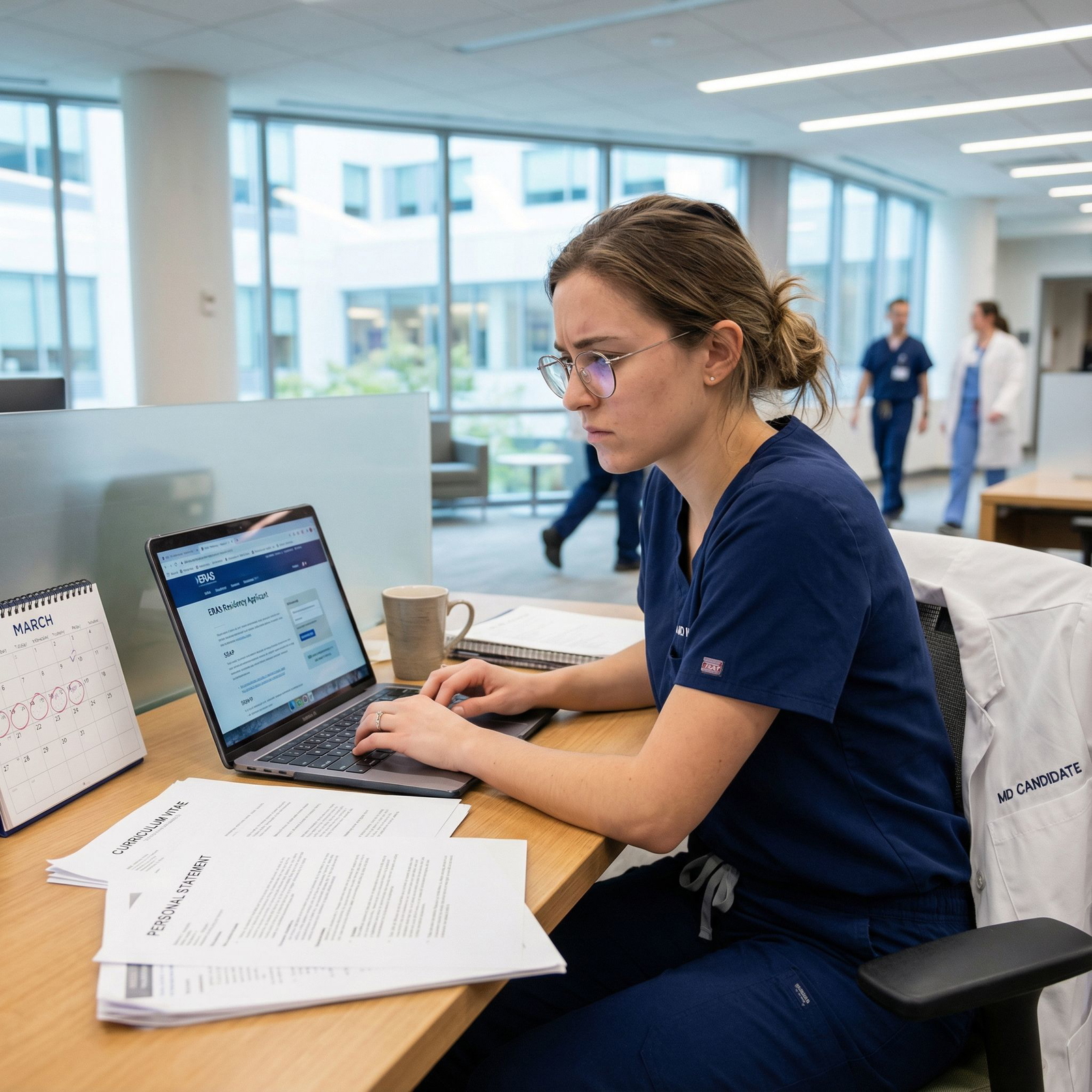
Think Outside the Box: Innovative SOAP Strategies to Stand Out in Residency Applications
Navigating the Supplemental Offer and Acceptance Program (SOAP) can be one of the most stressful, high-stakes weeks in a medical graduate’s journey. After investing years into medical school, facing the reality of not matching on Monday of Match Week can feel devastating. Yet the SOAP process is not just a second chance—it’s a structured, fast-moving opportunity to reframe your application, refine your strategy, and still secure a residency position.
This guide expands on innovative, “outside-the-box” SOAP strategies tailored for unmatched medical graduates who want to maximize their odds. You’ll find practical residency strategies, application tips, and networking in medicine approaches that go beyond the basics and help you stand out in an extremely competitive timeframe.
Understanding the SOAP Process Strategically
Before you can innovate, you need a firm grasp of the rules and structure. Many applicants lose ground in SOAP not because they’re unqualified, but because they underestimate how different it is from the main Match.
What Is SOAP and How Does It Work?
SOAP (Supplemental Offer and Acceptance Program) is the NRMP’s structured process for filling unfilled residency positions during Match Week. It has strict rules and specific time windows, usually unfolding as follows (exact details may vary slightly each year):
- Monday, 11:00 a.m. ET: Applicants learn if they are matched or unmatched.
- Monday–Thursday: SOAP takes place with multiple offer rounds.
- You may only apply through ERAS to unfilled programs listed as participating in SOAP.
- Offers are extended in rounds; you can accept or reject each offer during its time window.
Key constraints that shape your SOAP process:
- You cannot solicit or accept positions outside SOAP from participating programs during SOAP.
- Communication with programs is more restricted than in the main Match.
- Time is compressed—decisions and strategy need to be pre-planned.
Why SOAP Requires a Different Mindset
In the main Match, you craft a months-long application strategy, interview over weeks, and rank based on fit. In SOAP, you have:
- Less time
- Fewer options
- More direct competition from similarly unmatched candidates
To succeed, you need:
- A laser-focused, flexible target list
- Clear messaging about who you are and what you bring
- A proactive, professional networking approach that stays within NRMP rules
- Emotional resilience and support systems to stay functional under pressure
Thinking “outside the box” doesn’t mean ignoring rules; it means using every allowable tool—research, networking, communication, and your personal strengths—strategically and creatively.
Deep-Dive Program Research: Turning Data Into a Competitive Edge
Thorough, targeted research is your foundation. In SOAP, you don’t have time for random applications; you need to understand where you truly add value and where the odds are not impossibly stacked.
Tailored Research on Programs and Specialty Landscape
1. Analyze Program Culture and Priorities
Go beyond program names and locations. For each potential SOAP target:
Website review
- Mission and values statements
- Program aims (e.g., primary care, academic medicine, community focus)
- Resident profiles and alumni outcomes
- Curriculum structure, unique tracks (e.g., global health, underserved care)
Faculty and leadership
- Program Director and core faculty interests
- Recent publications, QI projects, or educational innovations
- Any recent leadership changes (often signals change or growth)
Public presence
- Program Twitter/X, Instagram, or LinkedIn
- Resident-run content: blogs, posts, podcasts, or YouTube videos
- Announcements about expansions, new tracks, or new training sites
Use these findings to:
- Prioritize programs where your interests and background align with their mission (e.g., underserved care, research, community outreach).
- Tailor emails and letters of intent with specific, program-relevant references.
2. Identify Programs With Hidden or Emerging Opportunities
Not all unfilled positions are equal. Look for:
Programs that recently expanded or added new PGY-1 positions
These may have less established applicant pipelines and may be more open to diverse backgrounds.Geographic or specialty trends
- Some specialties and regions (e.g., primary care in rural areas, transitional year, prelim surgery/medicine) may have more SOAP openings.
- If you’re flexible about geography and program type, your chances improve dramatically.
Community vs. academic programs
Community programs may place a higher value on work ethic, communication, and service orientation than on research-heavy CVs. That might align better with your strengths.
Document your research in a simple spreadsheet:
- Program name
- Specialty and PGY level
- Program culture/mission
- Why you’re a fit
- Key faculty/resident names
- Contact details (PD, PC)
- Status/priority ranking (A/B/C tiers)
This spreadsheet becomes your command center during SOAP.

Building Strategic Connections: Networking in Medicine During SOAP
Within NRMP rules, networking in medicine can still be an incredibly powerful differentiator during SOAP—if done thoughtfully and professionally.
Personalized, High-Impact Communication With Programs
1. Craft Targeted, Concise Emails
Program directors and coordinators are inundated during SOAP. Your emails must be:
- Short (8–12 sentences)
- Specific
- Professional and error-free
Structure:
- Subject line: “SOAP Applicant – [Your Name], [Specialty], [Strong Fit for X Aspect of Program]”
- Opening: Introduce yourself (name, medical school, specialty applying to).
- Why this program: 1–2 specific, research-based reasons this program appeals to you.
- Why you’re a fit: 2–3 bullets on your strengths aligned to program priorities (e.g., community service, research, leadership).
- Call to action: Express your interest in being considered for open positions and your availability to provide additional materials.
- Gratitude and professionalism: Thank them for their time.
Avoid:
- Copy-paste generic messages
- Overly emotional or desperate language
- Pressuring or repeatedly emailing within short intervals
2. Use LinkedIn and Alumni Networks Strategically
While direct lobbying for a SOAP position is limited, you can still:
- Reach out to current residents or recent alumni from your school in those programs:
- Ask for insight into program culture and what they value in candidates.
- Request advice on how to present yourself effectively.
- Connect with faculty mentors and ask if they have contacts at your target programs:
- A brief, professional email from a trusted colleague can help your application stand out.
- Provide your CV and a brief summary they can forward.
Example outreach to a resident:
- “I’m a recent graduate from [School], currently in SOAP and strongly interested in [Program]. I’d really appreciate any insight into what your program values in applicants and any advice on presenting my background effectively.”
Finding the Balance: Persistent but Professional
SOAP is intense, but:
- One well-crafted email + one polite follow-up (if you have an update or haven’t heard back after a reasonable time) is usually sufficient.
- More than that risks appearing unprofessional or desperate.
Remember: programs are also under time pressure. Make it easy for them to see your value quickly.
Elevating Your Application Materials Under Time Pressure
Your ERAS application is still the core of your SOAP candidacy, but during SOAP you often need strategic additions and reframing.
Writing Compelling, Program-Specific Letters of Intent
A Letter of Intent (LOI) during SOAP should not be a generic personal statement 2.0. It should be:
- Program-specific
- Concise (1 page max, ideally 3–5 short paragraphs)
- Aligned with concrete program elements
Include:
- Opening: State clearly that you are a SOAP applicant expressing strong interest in their program.
- Why this specialty and this program:
- Highlight 1–2 program features (e.g., heavy underserved population, research focus, specific clinical sites).
- What you bring:
- Concrete experiences: “3 years of community health work,” “multiple QI projects,” “prior career in engineering/data science.”
- Address potential red flags briefly and constructively (if appropriate):
- “Although I did not match in the main cycle, I have used the time since my last application to strengthen my skills in [X] by [Y].”
- Closing: Emphasize your readiness to work hard and contribute positively to the resident team.
Have a mentor or advisor quickly review at least one template LOI so you can adapt it rapidly for multiple programs.
Considering Thoughtful Video Introductions (When Permitted)
Some programs may welcome or even request a brief video introduction. If you use this strategy:
- Length: 60–90 seconds
- Environment: Quiet, neutral background, professional dress
- Content:
- Brief intro: name, medical school, specialty of interest
- One sentence on why their program appeals to you
- 2–3 sentences on what you bring (e.g., strong teamwork, procedural comfort, research background, language skills)
- Close with a professional thank you
Avoid:
- Overly casual tone
- Low-quality sound or lighting
- Reading verbatim from a script (practice instead)
An effective video lets programs see your communication skills, professionalism, and demeanor—critical for residency.
Proactive Engagement and Unconventional Opportunities
Beyond formal ERAS applications, you can use creative yet ethical strategies to uncover and strengthen opportunities.
Exploring Less Obvious or Unattached Opportunities
Even within the SOAP process:
- Some preliminary or transitional year programs may be more open to non-traditional or reapplicant candidates.
- Some community programs may be less inundated with applications than big-name academic centers.
Consider:
- Applying broadly to categorical, prelim, and transitional year positions when appropriate for your career path.
- Exploring related specialties if your primary choice is extremely competitive (e.g., considering Internal Medicine or Family Medicine if you initially applied to a highly competitive subspecialty).
Also:
- Stay in touch with home institution departments. Occasionally, last-minute PGY-1 spots arise due to unexpected changes, and your presence on-site or in ongoing work can put you in a favorable position once SOAP concludes or for the next cycle.
Engaging With Current Residents and Faculty
Arrange:
- Short, respectful Zoom or phone conversations with residents where possible (outside the formal SOAP communication restrictions and always in line with NRMP policies).
- Quick touchpoints with faculty mentors to:
- Workshop your talking points for SOAP interviews.
- Identify any regional or specialty-specific opportunities you may have missed.
During these conversations:
- Ask focused questions: “What traits does your PD prioritize?” “What do successful residents here have in common?”
- Take notes and adjust how you present yourself accordingly.
Showcasing Specialized Skills and Unique Value
One of the strongest residency strategies during SOAP is to stop thinking of yourself as “an unmatched applicant” and start thinking of yourself as “a candidate with distinctive value.” Then, communicate that clearly.
Highlighting Non-Clinical and Transferable Skills
Residency programs are not only training clinicians; they are also building teams, educators, and leaders. Emphasize skills such as:
Digital health, telemedicine, or informatics
- Experience building clinical tools, using EMRs effectively, or working on telehealth initiatives.
Leadership and teamwork
- Leading student organizations, QI teams, curriculum projects, or community outreach events.
Research and data analysis
- Quality improvement projects, retrospective studies, chart reviews.
Communication and teaching
- Tutoring, TA positions, teaching assistantships, patient education materials development.
Language skills and cultural competency
- Fluency in languages spoken by the program’s patient population.
- Work with immigrant or underserved communities.
Integrate these into:
- Your ERAS experiences section (updated where possible prior to SOAP)
- Emails and LOIs
- Interviews and callbacks
Presenting Projects and Initiatives Strategically
Don’t simply list projects—explain outcomes and relevance:
- “Led a QI project that reduced medication reconciliation errors by 20% over 6 months.”
- “Developed a bilingual patient education flyer series used in our free clinic and now accessed by 500+ patients annually.”
- “Built spreadsheet tools for clinic scheduling, improving throughput by one extra patient per clinic session.”
Programs notice applicants who can think systemically and improve processes.
Building and Leveraging a Strong Support System
SOAP is emotionally and cognitively demanding. A well-structured support system will not only preserve your well-being but also sharpen your decision-making.

Mentors, Advisors, and Faculty Champions
Reach out early (ideally before Match Week) to:
- Student affairs or career advisors at your medical school
- Specialty advisors in your field of interest
- Research mentors or attending physicians who know your work ethic
Ask them to:
- Review your target list and help triage realistic options.
- Help you frame red flags constructively (e.g., exam failures, gaps in training).
- Provide rapid-turnaround letters or emails when needed.
Provide them with:
- An updated CV
- Your personal statement
- A concise summary of your SOAP strategy and specialties you’re targeting
The clearer you are about your goals, the more effectively they can advocate for you.
Peer Support and Accountability
SOAP can feel isolating, but your classmates and peers likely share similar stressors. Consider:
Forming a small SOAP support group (virtual or in-person):
- Share program research and application tips.
- Practice interview questions together.
- Hold each other accountable for timelines and self-care.
Setting ground rules:
- Respect confidentiality.
- Avoid unhealthy comparison; focus on collaboration and constructive feedback.
Emotional resilience is a competitive advantage. Clear thinking and steady confidence often translate into better communication with programs and better real-time decision-making when offers appear.
Putting It All Together: A Strategic, Innovative SOAP Playbook
To translate these ideas into action, here is a streamlined SOAP strategy framework:
Before Match Week (ideally)
- Prepare a realistic Plan B and Plan C for specialties and locations.
- Update ERAS with any new experiences or accomplishments.
- Draft base templates for:
- Program-specific email
- Letter of Intent
- Brief your mentors and advisors about your plans.
Monday Morning of Match Week
- Process your emotions—then pivot quickly to action.
- Review NRMP/ERAS SOAP rules to avoid unintentional violations.
- Obtain the list of unfilled positions, filter by specialty and geography, and start populating your spreadsheet.
Monday–Tuesday: Rapid Research and Targeting
- Deep-dive research into top priority programs.
- Finalize and submit applications through ERAS as soon as allowed.
- Begin targeted, professional outreach where appropriate.
Midweek: Active Communication and Adaptation
- Respond promptly to any program contact.
- Refine your talking points for potential interviews.
- Adjust target programs based on new openings or feedback.
Offer Rounds
- Before offers begin, know your ranked preference list clearly—write it out.
- When offers come:
- Evaluate quickly but calmly: training quality, future goals, geography, visa needs, personal circumstances.
- Trust your pre-planned priorities to avoid decision paralysis.
After SOAP (Regardless of Outcome)
- If matched in SOAP:
- Send professional thank-you emails to supporters and mentors.
- If still unmatched:
- Decompress, then schedule a post-SOAP debrief with advisors.
- Develop a concrete 6–12 month reapplication plan (additional clinical experience, research, exam retakes if needed).
- If matched in SOAP:
Throughout, remember: not matching in the main cycle does not define your worth or your future capacity as a physician. Many successful residents and attending physicians went through SOAP or a reapplication year. Programs care deeply about resilience, growth, and how you respond to adversity—SOAP is your chance to demonstrate that.
FAQ: Innovative SOAP Strategies and Residency Application Tips
1. How is my SOAP strategy different from my main Match residency strategy?
In the main Match, you have months to build a broad portfolio of interviews and rank lists. In SOAP, the window is compressed to days, and you apply only to unfilled positions. Your SOAP strategy must:
- Be more flexible about geography and sometimes specialty or program type.
- Focus on rapid, targeted outreach rather than long-term relationship-building.
- Emphasize concise, high-yield communication and quick decision-making. The core principles (professionalism, fit, and clear value) are the same, but execution is much faster.
2. Should I broaden my specialty choices during SOAP, or stay focused?
It depends on your long-term goals and competitiveness:
- If you applied to a highly competitive specialty (e.g., dermatology, orthopedic surgery) and have limited interviews, many advisors recommend considering broader specialties in SOAP (e.g., Internal Medicine, Family Medicine, Transitional Year) that can still support your eventual trajectory.
- If your primary specialty is already broad (e.g., IM, FM, Pediatrics), consider staying within it but expanding your geographic range and considering community programs. Discuss this with a trusted advisor quickly at the start of SOAP to avoid rushed, uninformed decisions.
3. Is it appropriate to send a video introduction to programs during SOAP?
Yes, if:
- The program is open to receiving such materials or has requested them.
- The video is professional, brief, and clearly linked to your application.
- You respect NRMP/ERAS rules about communication. A well-done 60–90 second video can differentiate you positively, but it should never replace a strong, well-structured ERAS application and written communication.
4. How can I address a previous failure to match when talking to programs?
Be honest, concise, and growth-oriented:
- Acknowledge the prior outcome without dwelling on it.
- Emphasize what you learned and how you improved since then (more clinical exposure, research, exam retakes, strengthened letters).
- Frame your story as one of resilience rather than defeat. Programs understand that not all strong physicians match on the first try; they are looking for maturity and reflection in your response.
5. If I don’t match in SOAP, how should I use the next year strategically?
A focused “glide year” can significantly strengthen your application:
- Obtain a structured clinical role (research fellow, clinical fellow, prelim year, or hospital-based position) where you can earn recent letters.
- Address academic or exam gaps (e.g., Step/COMLEX retakes if advised, additional coursework).
- Engage in research, quality improvement, or community health projects related to your target specialty.
- Maintain or expand your networking in medicine through conferences, alumni networks, and faculty mentors. Use the year to build a clear, compelling narrative of growth and readiness for residency.
By combining deep program research, targeted outreach, elevated application materials, and a resilient support system, you can transform the SOAP process from a purely stressful event into a strategic opportunity. Think creatively, act professionally, and remember: your value as a future physician is not defined by a single week, but by how you respond to it and grow beyond it.