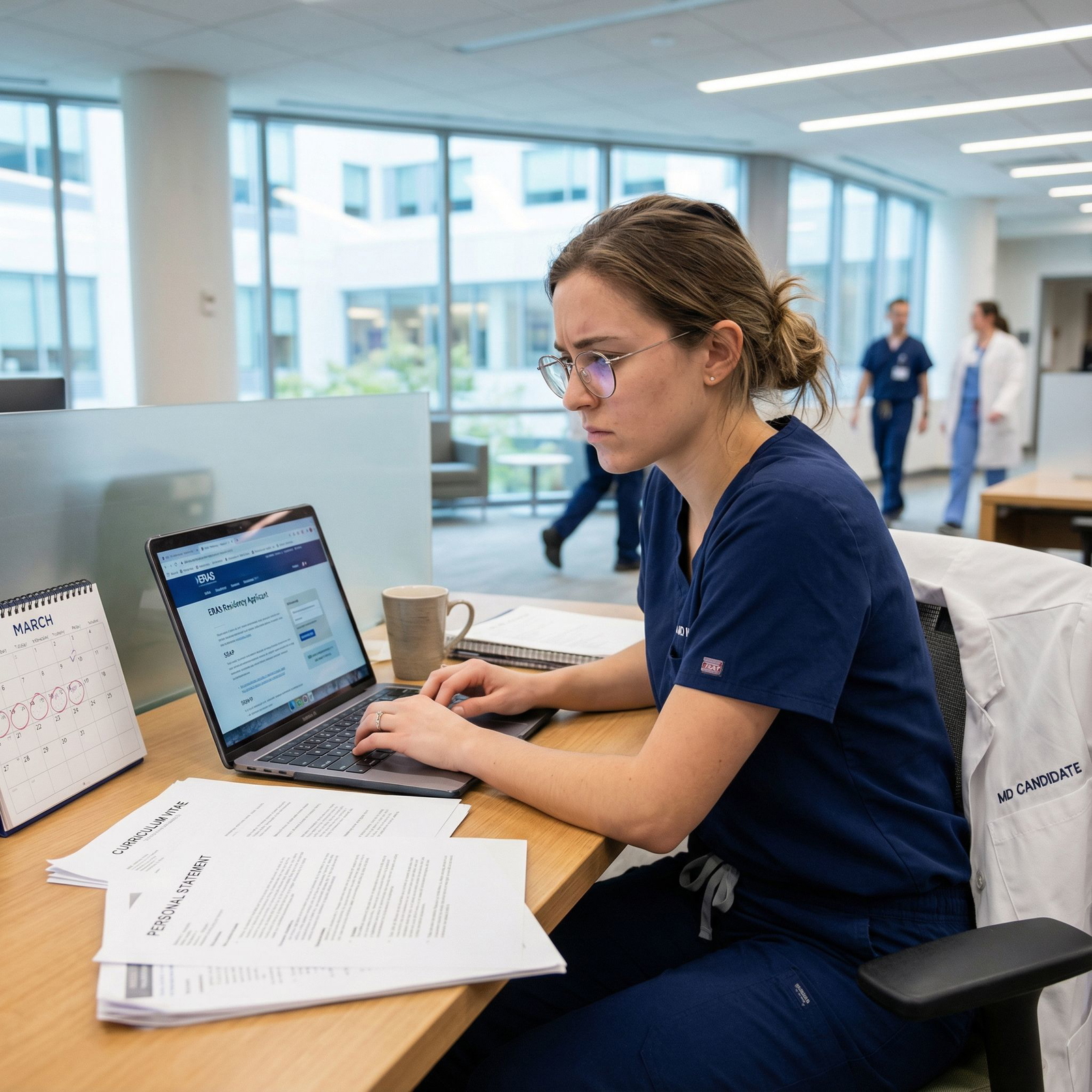
Understanding SOAP: What It Is and Why It Matters for Caribbean IMGs in Urology
The Supplemental Offer and Acceptance Program (SOAP) is the formal process the NRMP uses to fill unfilled residency positions during Match Week. For a Caribbean medical school graduate—especially someone aspiring to a competitive field like urology—SOAP can be both a second chance and a strategic bridge to your ultimate goal.
What is SOAP?
SOAP (Supplemental Offer and Acceptance Program) is:
- A structured, time-limited process during Match Week
- Available to unmatched or partially matched applicants who are SOAP-eligible
- Conducted entirely through ERAS and NRMP systems
- Focused on unfilled, NRMP-participating residency positions (categorical, prelim, transitional, and some advanced)
SOAP is not the same as the “old scramble.” It’s:
- Regulated: strict rules on when and how you can contact programs
- Structured: multiple rounds of offers
- Electronic: applications, offers, and acceptances happen online
For Caribbean IMGs looking at urology, it’s essential to understand that the AUA urology match is separate from the NRMP Main Match and SOAP. However:
- Many urology applicants also apply for preliminary surgery or transitional year positions in the NRMP Match.
- If you didn’t match urology (AUA) and go unmatched or partially matched in NRMP, SOAP may be your route to a solid prelim or TY year, keeping you clinically active and competitive for a future urology match cycle.
Why SOAP Especially Matters for Caribbean IMGs
Caribbean IMGs face unique challenges:
- Visa issues and fewer visa-sponsoring programs
- Potential bias against offshore schools
- Highly competitive specialties like urology being harder to match into directly
SOAP can provide:
- A preliminary surgical or transitional year position that strengthens your profile for the next urology match
- A categorical non-urology specialty (e.g., internal medicine) as a realistic backup and stable training path
- A chance to avoid a full “gap year” without clinical training, which can weaken your future applications
For those from schools known for strong match outcomes—such as those watching SGU residency match data—SOAP is often part of a broader strategy. Even if you aimed for a urology residency and missed, a smart SOAP strategy can still put you in a strong position long-term.
Pre–Match Week SOAP Preparation: Build Your Strategy Early
The most effective SOAP preparation begins months before Match Week. As a Caribbean IMG targeting urology, you must plan for two parallel realities:
- You match urology or secure a strong prelim surgery/TY position.
- You don’t—and you need SOAP to secure a position that keeps you clinically relevant.
1. Know Your Eligibility and Deadlines
To participate in SOAP, you must:
- Be registered for the NRMP Main Match
- Be unmatched or partially matched after the initial algorithmic match
- Have an active, verified ERAS application
- Have no existing binding NRMP contract that precludes SOAP
Key steps before Match Week:
- Confirm your ERAS application is complete and polished (even if you are focused on urology, it must also appeal to potential SOAP specialties).
- Ensure your USMLE scores and ECFMG certification (or pending status) are correctly reflected.
- Double-check your email, phone, and ERAS/NRMP login work and are accessible.
2. Clarify Your Hierarchy of Goals
You need a clear, written priority list before emotions run high during Match Week. For a Caribbean IMG aiming at urology residency, a realistic priority hierarchy might be:
- Urology residency (AUA Match) – if still in play
- Preliminary general surgery in a teaching hospital with strong urology exposure
- Transitional Year (TY) at an institution with a urology program
- Preliminary internal medicine or other prelim year keeping you clinically active
- Categorical non-surgical specialty you would be genuinely willing to continue if urology doesn’t work out (e.g., internal medicine, family medicine)
Write down:
- What you ideally want (e.g., prelim surgery at an academic center with urology)
- What you are willing to accept (e.g., TY at community program with solid procedural exposure)
- What you would not accept (e.g., a program with severe red flags, or a specialty you absolutely don’t want)
This prevents panic-acceptance of an offer that derails your long-term goals.

3. Prepare a SOAP-Ready Version of Your Application
Your original ERAS application may be heavily urology-focused. For SOAP, you might be applying to prelim surgery, internal medicine, or transitional year programs. You must:
Update or Tailor Your Personal Statement
Have at least two versions ready:
Surgery/Procedural Focused PS
- Emphasize hands-on interest, OR experience, procedural skills, surgical clerkships, and comfort with fast-paced environments.
- Example:
“Working with the urology service during my sub-internship confirmed my passion for surgical problem-solving and perioperative care…” - Carefully de-emphasize “urology-only” language and instead emphasize your broader interest in surgical training.
Internal Medicine / Broad Clinical PS (for TY or IM prelim/categorical)
- Emphasize patient continuity, diagnostic reasoning, multidisciplinary care, and comfort managing complex inpatients.
- Example:
“Working closely with patients with chronic kidney disease and prostate cancer taught me the importance of longitudinal care, shared decision-making, and meticulous internal medicine.”
You can swap personal statements by specialty in ERAS. Plan ahead how you’ll assign them once SOAP programs are visible.
Align Your Experiences for SOAP Specialties
Review your ERAS experiences for:
- Operative/Procedural highlights → emphasize for prelim surgery/TY
- Complex medicine or ICU rotations → emphasize for internal medicine / TY
- Research → frame as evidence of discipline, critical thinking, and academic potential
You do not need to rewrite your entire application, but you should:
- Edit activity descriptions (if still allowed) to highlight skills valued broadly (teamwork, reliability, rapid learning, communication, resilience).
- Ensure no section appears urology-exclusive in a way that makes you look uninterested in broader training.
4. LOR (Letter of Recommendation) Strategy for SOAP
Many Caribbean IMGs applying urology have letters from:
- Urologists
- Surgical faculty
- Research mentors
For SOAP:
- Surgery/TY: Urology and general surgery letters are both valuable. They demonstrate comfort in operative settings.
- Internal Medicine / TY: Ideally, have at least one IM letter ready if possible. If not, a strong, detailed letter from any inpatient rotation (e.g., ICU, oncology) can still be helpful.
Actions:
- Before Match Week, decide:
- Which letters to assign to prelim surgery/TY applications
- Which letters to assign for IM/TY applications
- You can manage LoR assignments by program in ERAS, but you cannot change the content last minute.
5. Logistics and Support System
SOAP week is high-stress and fast-moving. Plan logistics now:
- Reliable internet and backup devices (laptop + phone/tablet)
- Quiet call space for interviews
- Professional attire ready for virtual interviews
- Time zone awareness—especially important if you’re still in the Caribbean
Identify your support network:
- A trusted mentor (urology or otherwise) you can email/text for quick advice
- A recent graduate from your Caribbean medical school who went through SOAP
- Career advisors at your school, especially if you’re coming from a place with a robust support structure similar to SGU residency match advising
Match Week: Executing an Effective SOAP Strategy in Real Time
On Monday of Match Week, you’ll receive your status: Matched or Did Not Match. If you are unmatched or partially matched and SOAP-eligible, the real work begins.
1. Reading the List of Unfilled Programs
On Monday, NRMP releases the list of unfilled programs, accessible to SOAP-eligible applicants. For a Caribbean IMG interested in the urology match path, focus on:
- Preliminary general surgery positions
- Transitional Year positions
- Preliminary internal medicine positions
- Any categorical positions in specialties you would seriously pursue if you decide to pivot from urology
Evaluate each program quickly but rationally:
- Visa sponsorship (critical for many Caribbean IMGs)
- Program type: academic vs community
- Existence of a urology department at the institution (can be valuable for future networking or electives)
- Program size and resources
Prioritize:
- Programs at institutions with urology departments or known urology residency programs
- Programs with a track record of supporting residents into competitive specialties after prelim/TY
- Cities/regions where you could realistically see yourself excelling for at least a year
2. Application Allocation Strategy
During SOAP, you have a limited number of programs you can apply to (the number is set by NRMP; check the current year’s rules well before Match Week). For urology-aiming Caribbean IMGs:
Balanced portfolio example (for illustration—adjust to your risk/competitiveness):
- 40–50%: Prelim General Surgery
- 30–40%: Transitional Year
- 10–20%: Prelim Internal Medicine or categorical IM/FM (as backup)
Factors to consider:
- Your USMLE scores and failures/passes
- Strength of your clinical and research experiences
- Whether you currently hold an interview from urology or prelim surgery programs (which might boost your appeal)
3. Tailoring Your Personal Statements and LoR Assignments Quickly
Once you’ve identified your target SOAP programs:
- Assign the surgery-oriented personal statement to prelim surgery and procedural-heavy TY programs.
- Assign the medicine-oriented personal statement to IM prelim/categorical and medicine-heavy TY programs.
- Assign relevant LoRs:
- Surgery/TY: urology + surgery letters
- IM/TY: IM/inpatient letters + one strong urology/surgery letter if needed (shows commitment and work ethic)
4. Communication Rules During SOAP
NRMP has strict rules:
- You may not initiate contact with programs outside the SOAP structure before they contact you.
- Programs can reach out to you for:
- Clarification
- Interviews (usually via phone or video)
- You must be available and responsive: check email and phone constantly, but stay composed.
Never:
- Offer to work for free
- Discuss “side deals”
- Pressure programs to rank or offer you outside the system
All offers must occur within the official SOAP rounds in NRMP.

5. Acing SOAP Interviews as a Urology-Focused Applicant
Many programs will ask: “You applied in urology; why are you now applying here?” Your answer must be:
- Honest
- Strategic
- Future-oriented
Key themes to emphasize:
Commitment to Strong Clinical Training
- “My primary goal is to become an excellent clinician and surgeon. A rigorous prelim surgery year here would be an outstanding foundation, whether I continue toward urology or remain in general surgery.”
Growth Mindset and Professionalism
- “Not matching urology this cycle was disappointing, but it’s also clarified my priorities: I need robust training, mentorship, and opportunities to contribute to patient care and the team from day one.”
Value to the Program
- “Coming from a Caribbean medical school, I’m used to adapting quickly, working hard, and earning trust. I will show up early, stay late, and learn as much as I can to support the team.”
Avoid:
- Sounding like their program is just a temporary stepping stone you don’t respect.
- Saying you will definitely leave after one year if this is a categorical position—this can make programs hesitant.
Balanced example answer:
“I remain very interested in urology as a field, but my immediate priority is to receive excellent surgical training and take care of patients. Your prelim surgery program offers the high operative volume, mentorship, and teaching I need to grow. If I’m fortunate enough to match here, I’m committed to contributing fully to your team and making the most of this year, regardless of what specialty I ultimately pursue.”
Long-Term Strategy: Using SOAP Outcomes to Rebuild Your Urology Path
Whether you land a prelim/TY or pivot to a categorical non-urology specialty through SOAP, you can still position yourself for future success.
1. If You Match to a Prelim Surgery or TY Through SOAP
This is often an ideal outcome for a Caribbean IMG with urology ambitions.
Your goals for that year:
- Excel clinically: strong evaluations, punctuality, technical skills, team player reputation.
- Seek urology exposure:
- Electives or rotations with the urology team
- Assist with urologic procedures when appropriate
- Attend urology conferences/academic meetings at your institution
- Engage in urology-related research or quality improvement:
- Even case reports or QI projects can keep your CV urology-relevant.
- Cultivate urology mentors who can:
- Advise on a re-application strategy
- Write strong, specific letters of recommendation
Timeline example:
- Months 1–3: Adjust to intern duties, build credibility, identify urology contacts.
- Months 4–6: Start or join a small urology-related project; request feedback from attendings.
- Months 7–9: Prepare a new urology application; update CV and personal statement with your intern-year growth.
- Months 10–12: Interview and match (AUA/NRMP, depending on the structure when you apply again).
2. If You Match to a Categorical Non-Urology Specialty
This might feel like a pivot, but it can still be a positive trajectory.
Be realistic:
- Matching into a categorical IM or FM position and planning to reapply to urology is very difficult and uncommon—but not impossible.
- Many residents discover they truly enjoy their new specialty and choose to stay.
If you still want urology:
- Discuss honestly but tactfully with trusted mentors at your new program.
- Consider whether your program has strong ties to surgical/urologic services.
- Continue building a profile that could appeal to urology in the future:
- Urology-related electives
- Research collaborations
- Attending AUA or regional conferences if feasible
But always:
- Give your full commitment to your current program. Your future mentors and letter writers watch your professionalism closely.
3. If You Do Not Secure a Position Through SOAP
This is challenging emotionally, but many successful physicians have walked this path.
Immediate steps:
- Debrief with:
- Your Caribbean medical school advising office
- A urology mentor (if available)
- Recent grads who have remediated a non-match year
Plan a productive gap year:
- US clinical exposure: research fellowship, observer roles with meaningful responsibility, clinical research positions.
- Strong urology exposure if possible: academic urology departments sometimes have research or clinical positions.
- Improve perceived weaknesses:
- USMLE retake (if Step 3 or if allowed for earlier Steps in certain jurisdictions)
- Additional publications, presentations, or advanced degrees (MPH, MSc) if relevant.
Use the year to transform your narrative from “unmatched” to “resilient candidate who grew and improved substantially.”
Special Considerations for Caribbean IMGs Targeting Urology
1. Understanding Your Starting Point
Urology is among the most competitive specialties in the US. Caribbean IMG challenges:
- Fewer US-based home departments compared to US MD schools
- Sometimes weaker built-in research infrastructure
- Need to work harder to show program directors you’re ready for demanding surgical training
Review program data (including SGU residency match style reports if available at your school):
- Where do Caribbean grads most commonly match?
- How often do they match into surgical fields or urology specifically?
- What paths did successful urology-matching graduates follow (e.g., prelim/TY first, research years, etc.)?
Use these examples to shape a multi-year plan, not just a single-cycle strategy.
2. Visa Planning
Programs vary widely in:
- Visa types supported (J-1 vs H-1B)
- Willingness to support visa processing for Caribbean IMGs during SOAP (faster timeline)
Before SOAP:
- Know which visa(s) you are eligible for.
- During SOAP filtering:
- Prioritize programs with a history of sponsoring your visa type.
- Be ready to clarify your visa status concisely if asked in interviews.
3. Mental Health and Resilience
The combination of:
- High competition in urology
- Caribbean IMG stigma in some institutions
- SOAP’s intense pace
…can be emotionally draining.
Protect your mental health:
- Build in micro-breaks during SOAP week (brief walks, meals, hydration).
- Have one or two people who know your situation and can check on you.
- Normalize the experience: many capable Caribbean IMGs end up in SOAP before ultimately securing excellent careers.
FAQs: SOAP Preparation for Caribbean IMG in Urology
1. How does SOAP fit with the separate urology match?
The urology match (AUA) and the NRMP Main Match are separate. Many urology applicants:
- Apply via AUA for urology
- Simultaneously apply via NRMP for prelim surgery or transitional year
If you don’t match urology and also go unmatched or partially matched in NRMP, you may become SOAP-eligible. In that case, SOAP is your chance to secure a prelim/TY or categorical position, which you can use as a foundation to reapply to urology later or pivot to another specialty.
2. Should I be completely honest in SOAP interviews that I still want urology?
Yes, but be balanced and respectful. Programs want residents who:
- Are genuinely committed to excellent patient care and team contribution
- Won’t treat the program as a disposable stepping stone
A good approach:
- Acknowledge your interest in urology
- Emphasize your immediate commitment to being the best intern or prelim resident possible
- Avoid promising that you will definitely leave after one year, especially in categorical roles
3. As a Caribbean IMG, should I prioritize prelim surgery or transitional year positions in SOAP if I still want urology?
For most urology-focused Caribbean IMGs:
- Prelim General Surgery is typically the most directly relevant to urology, offering OR exposure and surgical fundamentals.
- Transitional Year can also be valuable if:
- It includes strong surgical or procedural rotations
- It’s at an institution with a urology department where you can network and gain exposure
Your final decision should depend on:
- Program strength and reputation
- Presence of a urology department
- Visa sponsorship
- Your comfort with each program’s structure and expectations
4. What is the biggest SOAP preparation mistake urology-aiming Caribbean IMGs make?
Common mistakes include:
- Waiting until Match Week to think about backup plans and SOAP strategy
- Having only a urology-specific personal statement with no SOAP-ready alternatives
- Applying to too narrow a set of programs (e.g., only high-prestige prelim surgery spots)
- Failing to consider visa restrictions when selecting programs
- Appearing dismissive of non-urology specialties during SOAP interviews
Proactive planning, realistic self-assessment, and respectful communication with all programs are the best safeguards against these pitfalls.
By treating SOAP not as a last-minute scramble but as a structured, strategic opportunity, you can navigate unmatched status in a way that still supports your long-term urology goals. As a Caribbean IMG, you may face extra barriers, but with solid SOAP preparation, thoughtful specialty flexibility, and a strong work ethic, you can keep your career moving forward—even in a highly competitive field like urology.