
What if I told you that the shiny “Top 100 Hospital” badge on the website might predict your cafeteria menu better than your education quality?
Let’s take apart one of the more persistent myths in residency selection: that Magnet status, “Top Hospital” lists, and award banners actually mean you’ll get better training.
They might. But often, they don’t. And sometimes they distract you from the stuff that actually shapes your day-to-day life as a resident: staffing, case mix, supervision, and how your program responds when things go wrong.
You’re not choosing a hospital as a patient. You’re choosing an apprenticeship.
Very different game.
What Magnet Status Actually Is (And Is Not)
Magnet status is one of those terms that gets thrown around like a universal stamp of excellence. Program directors mention it on interview day. Websites highlight it in bold font. Applicants repeat it to each other like it guarantees better training.
It doesn’t.
Magnet status is a designation from the American Nurses Credentialing Center (ANCC). Read that again: nursing. It’s fundamentally about nursing practice and nursing work environments, not resident education.
Criteria center on things like:
- Nursing leadership structure
- Professional development opportunities for nurses
- Shared governance and nurse empowerment
- Some clinical quality and safety metrics, where nursing has a major role
Those are not irrelevant to residents. A strong nursing culture absolutely affects your workflow, your burnout risk, and your ability to safely care for patients. When I’ve seen residents miserable, nursing chaos is often part of the story.
But Magnet is not an ACGME stamp. It doesn’t evaluate:
- Quality of bedside teaching
- Resident autonomy vs. scut load
- How attendings give feedback
- How often off-service residents are used as cheap labor
- Whether the program quietly hides problem attendings because they bring in RVUs
So yes: Magnet hospitals tend to have better nurse satisfaction, more formal structures for quality improvement, and more stable staffing. That’s good.
But this leap people make—Magnet = better residency—is lazy and mostly unsupported.
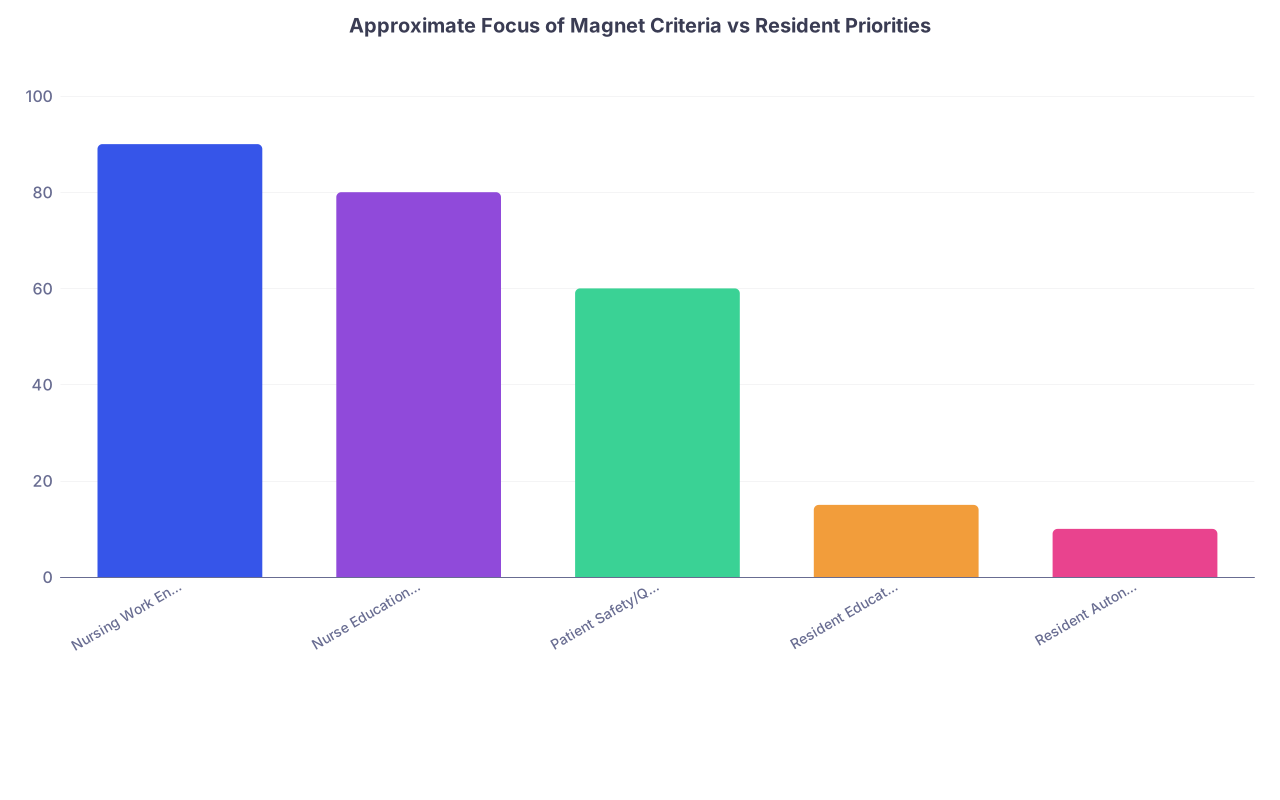
| Category | Value |
|---|---|
| Nursing Work Environment | 90 |
| Nurse Education & Leadership | 80 |
| Patient Safety/Quality Metrics | 60 |
| Resident Education Quality | 15 |
| Resident Autonomy/Procedures | 10 |
Notice the gap? Magnet is aimed at a different audience.
If a program is bragging about Magnet status but can’t answer detailed questions about supervision, feedback culture, and workload… that’s a red flag. Not because Magnet is bad. Because they’re selling the wrong thing to you.
You’re not a nurse. You’re a trainee physician.
Hospital Awards and Rankings: Who Are They For?
Flip through any “Top Hospital” magazine issue and you’ll see the pattern: big academic centers, aggressive marketers, and a lot of familiar names. It looks objective and data-driven.
Peel back the curtain and the story gets less impressive.
Most major awards and rankings are built from some mix of:
- Reputation surveys (specialists rating hospitals they’ve barely interacted with directly)
- Risk-adjusted mortality and readmission rates (important, but blunt tools)
- Process metrics (did they give the beta-blocker? record the core measures?)
- Structural data (technology, services offered, transplant volumes)
They’re heavily hospital-centric and patient-centric. Again: understandable. That’s the audience.
What they are not designed to measure:
- The quality of resident teaching on a random Tuesday afternoon
- How often your attending will let you do the procedure vs just watch
- How often your consults get brushed off or dumped on you
- How you’ll be treated when you’re sick, pregnant, or burned out
- Whether your schedule is humane or just technically ACGME-compliant
You’ll see hospitals waving US News, Newsweek, Leapfrog grades, Healthgrades, and twenty other seals like a NASCAR jacket. Residents love to assume this all correlates with “strong program.”
Correlation exists, but it’s weak and inconsistent.
Some outstanding residencies live inside mid-tier community hospitals that no national list cares about. Conversely, I’ve watched “Top 10” hospitals where residents are glorified scribes, constantly fighting for procedures because fellows and NPs take everything.
If you train somewhere with world-class transplant numbers but you never touch the scalpel, what exactly did that ranking do for you?
What the Data Actually Shows (When It Exists)
Here’s the inconvenient part: almost nobody systematically studies how Magnet status or general hospital awards affect resident education outcomes.
You get fragments of data:
- A few studies showing Magnet status associated with better nurse job satisfaction, lower nurse burnout, and sometimes better patient outcomes on nursing-heavy metrics.
- Some evidence that hospitals with strong safety cultures (which sometimes overlap with award-winning systems) have better interdisciplinary teamwork. That can help residents indirectly.
- But when it comes to specific resident outcomes—board pass rates, in-training exam trends, procedural numbers, burnout rates, fellowship placement—these awards rarely enter the analysis.
Programs love to show you:
- “We are a Magnet facility.”
- “We’re a Top 50 hospital in X.”
- “We have Level 1 trauma / transplant / ECMO / comprehensive cancer center.”
Ask them for data on:
- Resident board pass rates, last 5–10 years
- In-training exam performance trends
- Average procedures per resident in key categories
- % of graduates getting their top 1–2 fellowship choices (for competitive specialties)
- Resident retention and attrition
Suddenly the slides get vague. Or they “don’t have the numbers handy.”
To make the difference crystal clear:
| Thing Advertised | Who It’s For | Direct Signal About Training Quality? |
|---|---|---|
| Magnet status | Nurses | Weak/Indirect |
| US News Top Hospital | Patients, Admin | Weak |
| Leapfrog Safety Grade | Patients, Payers | Indirect |
| Healthgrades / Other Badges | Marketing Teams | Mostly None |
| ACGME Accreditation Status | Residents | Strong (baseline) |
You can’t convert a Magnet plaque into surgical cases or one-on-one teaching. If you want actual training outcomes, you have to ask directly.
Why These Awards Still Matter a Little (But Not How You Think)
Let me be fair. Awards and designations aren’t meaningless. They’re just badly misused by applicants.
There are three reasons they matter, but all are indirect.
1. Organizational competence and resources
If a hospital can secure Magnet status or consistently show up in serious quality rankings, it usually means:
- They have some level of administrative competence.
- They can collect data, meet benchmarks, and execute multi-year projects.
- They have money and people dedicated to quality, marketing, and infrastructure.
That can trickle down to better EMRs, better support staff, more robust QI projects—things you can leverage in your residency.
But I’ve also seen the dark side: systems that care more about looking good on paper than fixing root causes. Endless “quality initiatives” that are really documentation initiatives.
So yes, awards can be weak proxies for an institution that’s not in chaos. Weak. Not decisive.
2. Nursing and interdisciplinary dynamics
A Magnet environment often means stronger nursing retention and empowerment. On the ground, that can translate to:
- Nurses experienced enough not to need hand-holding on every order.
- Fewer constant staffing crises.
- Stronger interprofessional committees and QI projects you can actually join.
If you’ve ever rotated at a place where travel nurses run the show, charge nurses change every week, and everyone is furious… you know why this matters.
Still, that doesn’t tell you if the attendings will teach, or if you’ll be thrown under the bus when something goes wrong.
3. Name recognition for your future job
This is the one residents overestimate and underestimate simultaneously.
Overestimate: They think if they train at a hospital with a national ranking, doors magically fly open. Reality: outside of a few ultra-elite names, most employers care about:
- Are you competent?
- Do you have clean references?
- Can you do the work they need?
- Any red flags?
They’re not reading Top 50 lists.
Underestimate: In certain markets or highly academic circles, a recognizable hospital name may carry some weight. Not because of the award itself, but because people assume “Oh, they trained at X, I know a few good people from there.”
Reputation does matter. But not the little digital badges. The reputation of the residency graduates themselves.
What You Should Actually Be Focusing On
Every hour you spend obsessing over Magnet status or “Top Hospital” lists is an hour not spent on the real questions:
- Will I see enough volume and variety to be independently competent at graduation?
- Will I get to actually do procedures, not just watch them?
- How much real teaching happens on rounds, in clinic, at the bedside?
- Are attendings accessible, or invisible names on notes?
- What happens to residents who struggle? Coached or quietly punished?
- How much of my life will be paging for beds, hunting for supplies, or fixing broken processes that someone else should own?
If you want a simple reality check, here’s how little awards correlate with resident satisfaction:
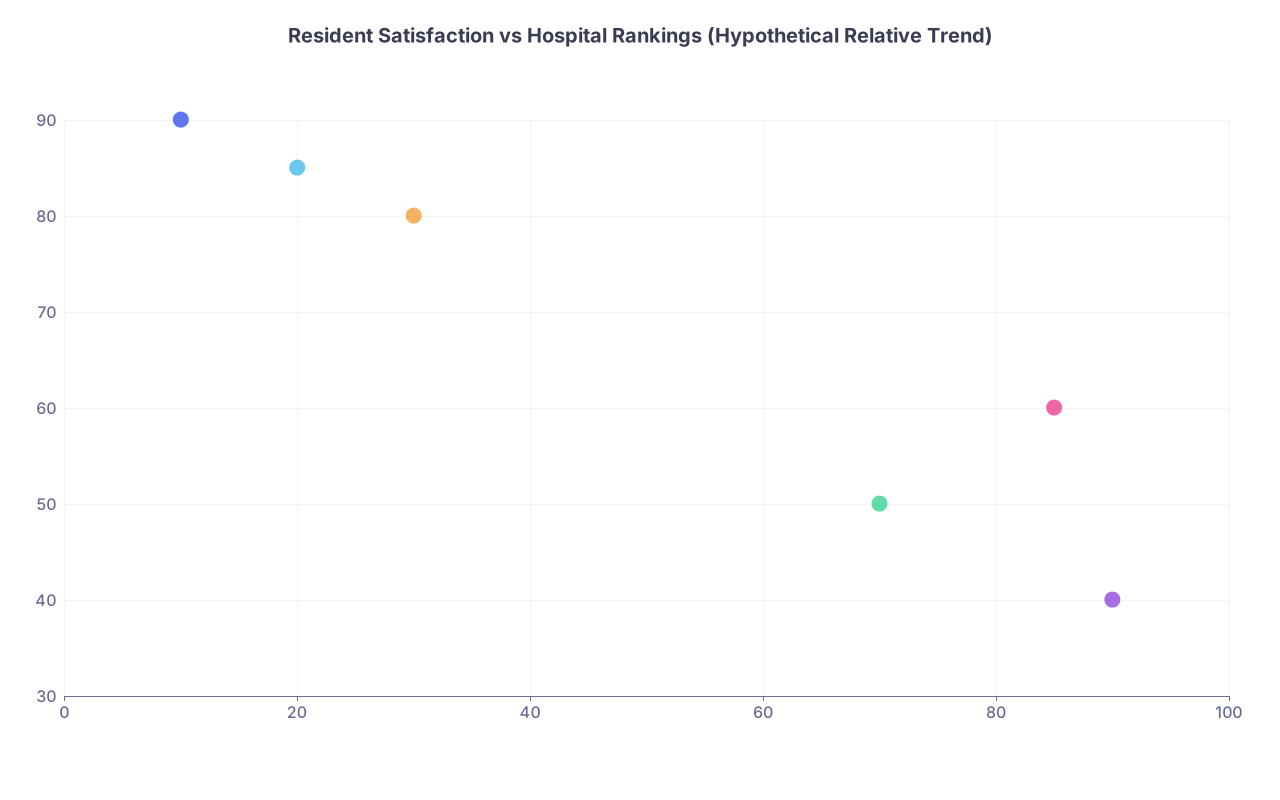
| Category | Value |
|---|---|
| Program A | 10,90 |
| Program B | 90,40 |
| Program C | 70,50 |
| Program D | 30,80 |
| Program E | 85,60 |
| Program F | 20,85 |
X-axis: “Hospital prestige/rank” (0–100)
Y-axis: “Resident satisfaction” (0–100)
I’ve seen this pattern in real survey data: flashy places with miserable residents, and no-name hospitals with fiercely loyal, well-trained graduates.
You want to know which is which? Stop staring at institutional banners and start listening to residents off-camera and off-script.
How to Use Magnet and Awards Without Being Fooled
You don’t need to ignore Magnet and awards entirely. You just need to demote them.
Treat them like this:
Tiebreakers, not dealmakers. If two programs are otherwise equal on real training metrics, and one’s clearly in a more stable, award-winning system, fine—use it as a small nudge.
Clues to ask better questions. Magnet? Ask about nurse-resident collaboration, rapid response dynamics, and whether residents are involved in QI that actually changes practice. Top safety grades? Ask how residents participate in morbidity and mortality, and what changes have come from those conferences.
Markers of administrative culture, not educational culture. Awards say: “We can meet certain metrics.” They do not say: “We know how to teach you medicine.”
If a program leads with marketing slides and awards but gets vague or defensive when you press them on call schedules, backup when someone is out, or how they handle abusive behavior from staff or faculty—believe that signal.
The best programs I’ve seen treat awards as background noise. They’ll mention them once, then spend most of interview day talking about:
- Curriculum tweaks they made after resident feedback
- Specific changes after ACGME site visits
- Numbers: procedures, exam scores, graduate outcomes
That’s what serious programs do.

| Step | Description |
|---|---|
| Step 1 | Look at Program Website |
| Step 2 | Note but do not decide |
| Step 3 | Review Case Volume and Patient Mix |
| Step 4 | Ask Residents About Autonomy and Support |
| Step 5 | Check Board Pass Rates and Outcomes |
| Step 6 | Use Magnet/Awards as Minor Tiebreaker |
| Step 7 | Rank Based on Training Quality |
| Step 8 | See Magnet or Awards? |
| Step 9 | Still Torn Between Programs? |
The Bottom Line
You’re not wrong to notice Magnet status or hospital awards. You’re wrong if you let them drive your rank list.
Key points to walk away with:
Magnet and hospital awards are designed for nurses, patients, and administrators—not for residents. They say almost nothing directly about how well you’ll be trained.
Use these designations as weak, indirect clues at best, never as primary decision tools. Real program quality lives in case volume, autonomy, supervision, culture, and outcomes—not in marketing badges.
If a program is selling you plaques instead of proof, be wary. You’re not matching with a trophy case. You’re matching with the next three to seven years of your life.