
The loudest residency programs about “wellness” are often the ones burning their residents out the fastest.
You are not evaluating slogans. You are evaluating systems. Culture. Power dynamics. Either the program’s structure protects resident well‑being or it does not. Everything else is marketing.
Here is how to cut through the wellness buzzwords and actually figure out if a residency will keep you functional, safe, and growing instead of broken, cynical, and counting down days to graduation.
Step 1: Stop Listening to What They Say. Start Counting What They Measure.
If a program cannot show you hard data about its training environment, it does not take wellness seriously. Period.
There are six core numbers you should care about. Get them from official sources, not just vibes from a happy chief resident.
| Metric | Red Flag Range |
|---|---|
| Average weekly work hours | Routinely > 80 |
| Frequency of 24+ hr calls | Regular, not rare |
| Duty hour violations (per year) | High or “we do not track” |
| Resident attrition (last 5 yrs) | >1–2 residents / year |
| Board pass rates (recent 5 yrs) | Below national averages |
| Psychological safety survey use | Never or “informal only” |
You will not get every number neatly packaged in a PDF, but you can absolutely ask directly or indirectly.
Ask program leadership (or coordinators) questions like:
- “What are your 5-year board pass rates, and how do they compare to national averages?”
- “How many residents have left the program or transferred out in the past 5 years, and why?”
- “What systems do you use to monitor duty hour violations, and what happens when violations are reported?”
- “Do you routinely survey residents about burnout or psychological safety? What concrete changes came out of the last survey?”
If they:
- Dodge
- Get defensive
- Give ultra-vague answers (“We are always improving!”)
- Or say “We do not track that”
You have your answer. They are not serious.
How to decode their answers
- Specific + numerically grounded answers = generally honest program that tracks reality, even if it is not perfect.
- Deflection to external causes (“COVID was tough, so…”) without clear corrective actions = they tolerate structural problems.
- Overly polished answers with no examples of actual changes made = you are talking to a marketing script, not a learning organization.
If they brag about “resilience workshops” but cannot tell you how many residents are leaving mid-training, that is wellness theater.
Step 2: Dissect Their Schedule, Not Their Wellness Events
Yoga nights and ice cream socials will not save you from a malignant call schedule. The actual structure of your work week is the primary wellness policy.
You want to see:
- How many hours you are there
- How many nights you are up
- How often the rules are broken
- How the program responds when they are
Concrete things to ask current residents
Skip the “So how is wellness here?” fluff. Ask questions that force them to reveal reality:
Schedule specifics
- “On your hardest month, how many hours a week are you actually in the hospital?”
- “How many 24+ hour calls do you do per month as an intern? As a senior?”
- “What is the average time you walk out after a 24-hour call? Before 11? After 1?”
Frequency of rule-breaking
- “How often do you actually log true duty hours? Or is there pressure to underreport?”
- “What happens when someone reports a duty hour violation? Can you think of an example?”
- “How common is it for people to stay late after sign-out? Once a week? Every day?”
Backup and cross-coverage
- “If someone is out sick, what happens? Who covers their patients?”
- “Has anyone ever been told not to call in sick? Or made to feel guilty for it?”
You are listening for:
- “We just fix the time in New Innovations” → they falsify hours. That is unsafe and a massive red flag.
- “We report violations, and the PD changed X rotation / added a night float / hired an NP” → they respond to stress with structural fixes.
- “People get sick, chief sends an email, and one of us covers. Happens, but not weekly” → acceptable.
- “We are always short, so everyone just powers through” → you are going to suffer.
Step 3: Separate Real Culture from Interview-Day Acting
The wellness story you get on interview day is choreography. You need to see what leaks out at the edges.
Here is how.
1. Who dominates the conversation?
On your interview day and preinterview dinners:
- Do residents speak freely, including about downsides, while faculty / PD are there?
- Or do they freeze, watch the PD’s reactions, or constantly say, “Everything is great”?
Ask a mildly probing question in front of faculty:
- “What is one thing about the program that you would change if you could?”
Watch who answers:
- Healthy culture: Residents give 1–2 real annoyances (e.g., “The EMR is rough,” “Parking is a problem”), PD nods, maybe adds context, nobody gets tense.
- Toxic culture: Dead silence or canned answers. PD jumps in to “clarify.” You feel the air tighten.
You are not looking for perfection. You are looking for permission to be honest.
2. How do they talk about struggle?
Ask residents privately:
- “What was your hardest month, and how did the program respond?”
- “Has anyone you know here really struggled? What kind of support did they get?”
Green flags:
- Residents openly tell you, “ICU intern year was brutal. We flagged it; they added an extra night float and rearranged caps.”
- Someone mentions a resident taking medical leave or maternity leave and returning successfully, with clear support.
Red flags:
- “Everyone got through it. You just tough it out.”
- “People who struggled… kind of disappeared.”
- “We do not really talk about that.”
If struggle is taboo, wellness is a decoration, not a policy.
Step 4: Audit Their “Wellness Initiatives” Like a Skeptic
A lot of programs will throw a long list of wellness initiatives at you. Half of them are useless. Some are actively insulting.
Here is how to sort the real from the performative.
Real wellness initiatives usually:
- Cost the program money or FTEs.
- Change schedules or workflow.
- Protect resident autonomy and time.
Wellness theater usually:
- Costs almost nothing.
- Focuses on “resilience,” not workload.
- Happens outside work hours and adds to your burden.
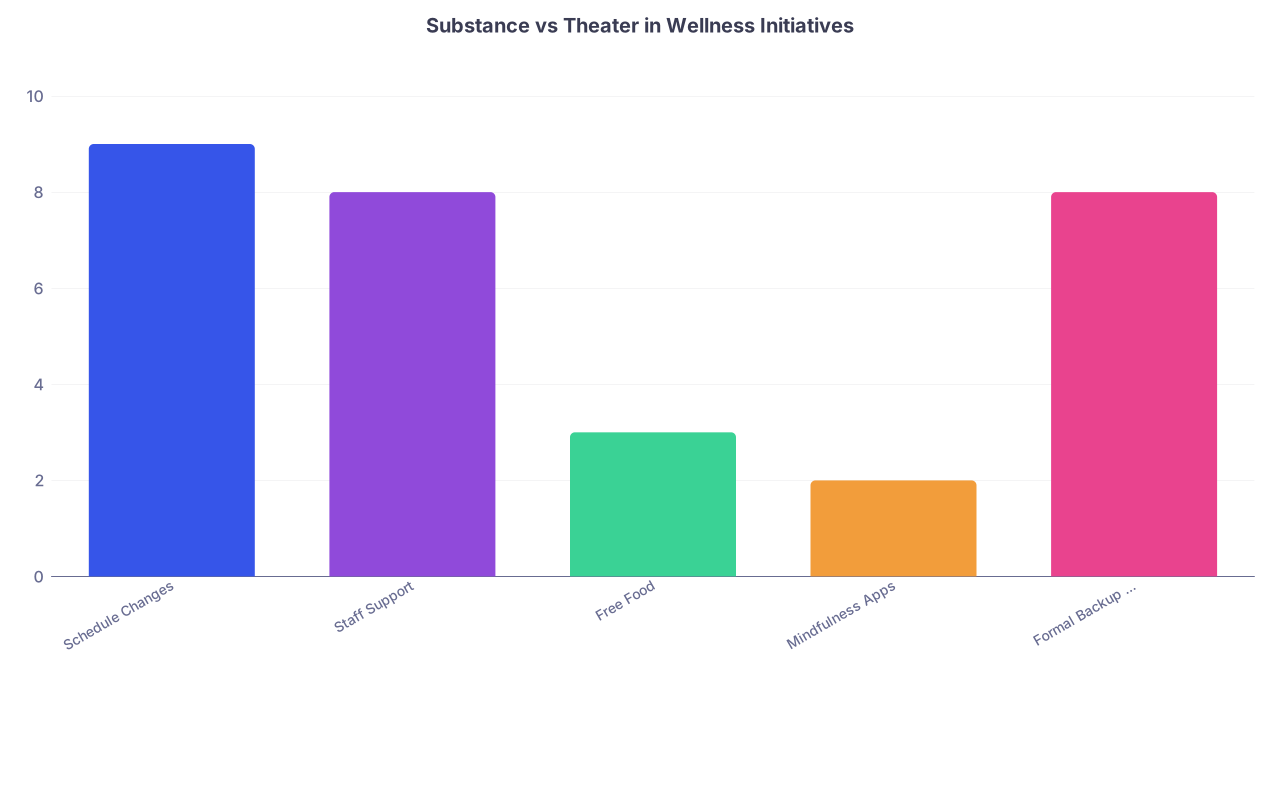
| Category | Value |
|---|---|
| Schedule Changes | 9 |
| Staff Support | 8 |
| Free Food | 3 |
| Mindfulness Apps | 2 |
| Formal Backup Coverage | 8 |
Higher scores = more likely to be genuinely protective.
Examples of substantive wellness policies
You should be actively hunting for these:
- Protected half-day or full-day didactics where pages are held and you are not getting called out constantly.
- Night float or cross-cover structure that reduces 24+ hour calls and allows some predictable recovery.
- Clear, written max caps and admission limits that are enforced.
- Backup / jeopardy systems with scheduled people on backup, not “whoever is unlucky.”
- Coverage for medical appointments, including mental health, without needing to beg.
- Paid mental health support tailored to residents, with protected time to attend.
- Guaranteed post-call days off, not “post-call if the team census allows.”
You can ask very directly:
- “Do you have a jeopardy or backup system? How often do people actually get called in?”
- “What is your system for protected didactics? Are residents routinely pulled out for pages or cross-cover?”
- “If I had a weekly therapy appointment, could I schedule that consistently, or would that be a constant battle?”
Examples of wellness theater
These are not bad by themselves. They are just meaningless if not paired with structural changes.
- Yoga / meditation sessions at 7 pm after a 12-hour day.
- Wellness lectures on resilience while residents are covering each other’s pagers.
- “Pizza nights” after months of chronic understaffing.
- “Wellness committees” without budget or power to change schedules.
If they highlight five social events and zero schedule policies, you know where you stand.
Step 5: Map Out How They Handle Pregnancy, Family, and Crisis
Resident wellness is tested most brutally when life happens: pregnancy, illness, grief, disability. Programs either rise to the moment or expose their true values.
You want specifics.
Maternity / paternity leave
Ask (to PD or senior residents, not just interns):
- “How many residents have taken maternity or paternity leave in the past few years?”
- “How was their schedule adjusted? Did they extend residency or rearrange rotations?”
- “Did anyone feel pressured to delay pregnancy or not take full leave?”
Green flags:
- “We have had several. The program rearranged electives, the chiefs helped with coverage, and they came back integrated.”
- “There is a written leave policy we can email you that outlines options.”
- “Dads and non-birthing parents taking leave is normalized.”
Red flags:
- “It has not really come up.” (In a large program? That means people do not feel safe.)
- “Well, technically you can, but it is complicated.” No details.
- “Most people just take a week or two and come back.” (Translation: pressure.)
Personal crisis or mental health emergencies
Ask residents privately:
- “If someone has a mental health crisis, how is that handled?”
- “Do you know anyone who has taken time off for mental health or serious illness?”
You are listening for an actual process, not vague sympathy.
Look for:
- Clear access points: “We have X confidential resource / physician health program / in-house therapist.”
- Coverage: “Chiefs plug you out of clinical duties and rearrange rotations without punishment.”
If the answer is basically, “People do not do that here,” wellness is hypothetical.
Step 6: Evaluate Psychological Safety: Can Residents Say “No”?
The most powerful wellness indicator is not a policy. It is whether residents can say “no” or “this is unsafe” without paying for it.
You are trying to gauge psychological safety. That is not on the website. You have to ask.
Targeted questions to residents
Ask for recent, concrete examples:
- “Has there been a time a resident raised a safety or workload concern? What happened?”
- “If you tell your attending you are not comfortable doing a procedure, how is that usually received?”
- “Has anyone pushed back on an unsafe admit load or cross-cover situation?”
Healthy culture responses:
- “Yeah, last year the ICU team was drowning. Residents escalated to the PD, and they added an APP / capped census.”
- “Some attendings grumble, but the program leadership backs us if we say we are over the limit.”
- “I have said no to a procedure I was not ready for. My attending taught it instead of shaming me.”
Toxic culture responses:
- “You pick your battles.”
- “People have spoken up… it did not go well.”
- “We do what we have to do. Complaining just makes you look weak.”
If residents never mention a time they successfully changed something, they probably have not. Or they got punished for trying.
Step 7: Compare Programs With a Simple Scorecard
You do not need a giant spreadsheet with 50 columns. You need a blunt tool that prevents you from being seduced by a shiny hospital lobby or free coffee bar.
Take your top 5–10 programs and score them on a few key domains from 1 (terrible) to 5 (excellent). Be ruthless.
| Domain | Program A | Program B | Program C |
|---|---|---|---|
| Schedule realism | |||
| Response to duty violations | |||
| Psychological safety | |||
| Support for leave / crisis | |||
| Structural wellness policies |
Definitions, briefly:
- Schedule realism: Do resident-reported hours match official claims? Is night call humane or absurd?
- Response to violations: Do they fix systems or just tell residents to log fewer hours?
- Psychological safety: Can residents raise concerns and say no without retaliation?
- Support for leave / crisis: Real examples of pregnancy, illness, or mental health leave handled well.
- Structural policies: Actual systems—backup, caps, protected didactics, mental health access—with teeth.
Then force yourself to answer one blunt question for each program:
If I have the worst year of my life here, will this program protect me or break me?
If you cannot confidently pick “protect,” reconsider ranking it highly, no matter how “prestigious” or “impressive” it seems.
Step 8: Use Off-Cycle Conversations and Backchannels (Carefully)
The polished interview day is not your only window into reality.
You have a few other tools:
1. Alumni from your med school
Ask your school’s recent grads:
- “What are the strongest and weakest parts of your program’s culture?”
- “If you had to do it over again, would you pick the same place?”
- “Who thrives at your program, and who struggles?”
You want patterns. When three different interns at three different times tell you, “Everyone is kind but constantly exhausted,” believe them.
2. Off-interview resident contact
Most programs have someone who says, “Reach out if you have more questions.” Take them up on it. Ask for a 10–15 minute call.
You are not bothering them. This is your life.
Tell them explicitly:
“I am trying to understand the real resident experience beyond the official line. I care a lot about program culture and sustainability. Would you be comfortable being candid with me for a few minutes?”
That framing usually unlocks more honest answers.
3. How leadership talks when not on stage
Sometimes you get a small hint:
- A PD who says, “This job is hard, and it will never be 40 hours per week. But here is what we have changed specifically in the last 2 years to prevent breaking our residents.”
- A PD who says, “Wellness is very important to us,” then lists four committees, no schedule changes, no metrics.
Believe the first, not the second.
Step 9: Know the Red Flags That Outweigh Almost Everything Else
Some warning signs are so strong that they should heavily weigh down a program on your rank list.
Here are the ones I would not ignore.
Pressure to falsify duty hours
- “We do not log over 80, no matter what.”
Non-negotiable red flag. This is institutionalized lying and neglect.
- “We do not log over 80, no matter what.”
High unexplained attrition
- Multiple residents leaving per year with vague explanations.
- “Some people realized this specialty was not for them” for three straight years in a row? That is code.
Punitive response to illness or pregnancy
- Residents describing guilt, retaliation, or being labeled “not committed” for using leave.
- Leadership openly complaining about “coverage problems” when someone is out.
Fear of speaking openly
- Residents look over their shoulder before answering basic questions.
- Everyone parrots the same line: “We are just like a family here.”
No changes despite known problems
- Residents mention the same structural issue that “has been that way for years.”
- Leadership acknowledges problems but cannot name a single fix.
You will not find a perfect program. But some flaws are cracks in the paint. Others are structural rot.
Step 10: Translate All of This Into a Final Rank List
When you sit down with your list and your notes, ignore prestige for a moment. Ignore your ego. Ask three blunt questions about each program:
- Can I physically and mentally survive 3–7 years here without losing my health?
- Does this place treat residents as disposable labor or as developing physicians worth investing in?
- If I have a crisis—personal, medical, mental—will I be supported or punished?
If a program fails those, it does not matter how “top tier” it is.
You are not choosing a brand name. You are choosing the people who will control your schedule, your sleep, your exposure to trauma, and your learning environment for years.

| Step | Description |
|---|---|
| Step 1 | Identify Programs |
| Step 2 | Collect Hard Data |
| Step 3 | Talk to Residents |
| Step 4 | Evaluate Culture and Safety |
| Step 5 | Score Using Simple Scorecard |
| Step 6 | Weight Red Flags Heavily |
| Step 7 | Finalize Rank List |
What you should do today
Open your current working rank list. For your top three programs, write down:
- One concrete example you heard of the program changing something because residents were struggling.
- One honest downside residents admitted without leadership in the room.
- Whether any resident told you a story about someone taking leave or needing help and being successfully supported.
If you cannot fill in all three for a given program, you do not know enough yet. Email or message a current resident there today and ask for a 10-minute call this week. Get real answers before you lock in your future.