
The biggest mistake applicants make is ranking programs without a hard, quantitative look at procedural exposure. They pick prestige, location, and vibes. Then they show up as PGY-1s and realize they are fighting three co-residents for a single central line.
You are not doing that.
This is a step-by-step method to assess procedural exposure before you rank. Structured. Aggressive. Numbers-based. Use it, and you drastically cut your odds of finishing residency under-trained.
Step 1: Get Brutally Clear On Your Procedural Priorities
You cannot assess a program if you do not know what you actually need to learn. “Good procedures” means nothing. Be specific.
1. Define your career path first
Where are you headed?
- Hospitalist vs intensivist vs outpatient-focused internist
- Community EM vs academic EM vs fellowship-bound
- General OB vs MFM vs gyn-only
- Bread-and-butter general surgery vs subspecialty vs community practice
- Community FM with lots of procedures vs purely continuity clinic
Your eventual practice environment determines how procedural you must be. A community EM doc needs rapid, independent competency in:
- Airway
- Chest tubes
- Central lines
- Procedural sedation
- Joint reductions
- LPs
- Fast bedside ultrasound
A big-city outpatient internist? Very different skill set.
2. Make a non-negotiable procedure list
Build two lists:
- Must graduate fully comfortable performing independently
- Nice-to-have but not essential
For example, an EM applicant:
- Must-have:
- Intubations
- Chest tubes
- Central lines
- Procedural sedation
- Dislocations/fracture reductions
- LPs
- US-guided IVs
- Nice-to-have:
- ED thoracotomy exposure
- Lateral canthotomy
- Cricothyrotomy (at least in sim/animal lab)
- Perimortem C-section exposure
An IM applicant planning ICU/hospitalist:
- Must-have:
- Central lines (IJ, subclavian, femoral)
- Arterial lines
- Paracentesis
- Thoracentesis
- LPs
- Nice-to-have:
- Temporary transvenous pacer exposure
- Bronch assist/observation
- Bedside echo/POCUS
Write it down. Literally. This becomes your scoring template.
Step 2: Build a Simple Scoring Framework
You are going to turn “vibes” into numbers.
1. Weight your procedures
Assign weights:
- 3 = Critical (you must be independently competent)
- 2 = Important (want strong exposure)
- 1 = Bonus (good if available, not required)
Example for an IM applicant:
- Central line – 3
- A-line – 3
- Paracentesis – 3
- Thoracentesis – 3
- Lumbar puncture – 2
- Temporary transvenous pacer – 2
- Bronch assist/observation – 1
2. Define what counts as “enough” exposure
Do not let programs get away with saying “oh, you get plenty.”
Set your own minimum numbers:
- Central lines: 30–50 by graduation for comfort (more for ICU-focused)
- Intubations (EM/Anesthesia): 100+ is a realistic target
- Chest tubes: 10–20, depending on field
- Paracentesis: 20+
- Thoracentesis: 15–20
- Vaginal deliveries (OB/FM): 200+ for OB, less if FM but still substantial
- C-sections as primary: 50+ if doing OB-heavy practice
These are not sacred numbers, but if a program is way below them, that is a red flag.
Step 3: Extract Hard Data Before Interview Day
You want to hit interview day with a working hypothesis for each program’s procedural exposure.
1. Mine the program’s website and PDFs
Do not just skim. Look for:
- Procedure logs or case logs from current or recent residents
- Graduation requirements (e.g., “Residents must complete minimum of 20 central lines, 15 intubations…”)
- Rotation descriptions that mention procedures:
- “Residents perform all paracenteses and thoracenteses on the wards”
- “High procedure volume MICU with resident-performed central lines and A-lines”
- “OB residents primary on all uncomplicated C-sections”
- Simulation curriculum descriptions:
- How often?
- Which procedures?
- Is it longitudinal or a one-off bootcamp?
If a program publishes actual minimum numbers, capture them into a table.
| Program | Central Lines | A-lines | Paracenteses | Thoracenteses |
|---|---|---|---|---|
| Program A | 20 | 10 | 10 | 8 |
| Program B | 40 | 25 | 25 | 20 |
| Program C | Not listed | Not listed | 5 | 5 |
Program B is serious. Program C is already suspect.
2. Check case mix and environment
Procedural exposure is not just about rules; it is about patient flow.
Look at:
- MICU vs CCU vs stepdown beds
- Trauma level (Level I vs III vs none)
- OB delivery numbers (for OB/FM)
- ED volume and acuity for EM
- Presence of fellowships that might siphon procedures
You can often find:
- Annual reports
- GME presentations
- Hospital quality/volume data
If the MICU is 18 beds with full-time fellows who “prefer to get procedures for their logs,” good luck as an intern.
Step 4: Use Interview Day That Actually Matters (Not Just The Tour)
Most applicants waste interview day. They listen to the same “we’re like a family” speech and ask nothing specific. You are going to run a focused playbook.
1. Targeted questions for residents
You are not asking, “Do you get enough procedures?” They will all say yes.
You are asking questions that force numbers.
Use phrasing like:
- “For you personally, about how many of each of these have you done so far?”
- “Central lines?”
- “A-lines?”
- “Paracentesis?”
- “Thoracentesis?”
- “Intubations?”
- “Do residents ever struggle to meet minimum procedural numbers by graduation?”
- “Who usually gets:
- Central lines on the floor?
- Intubations in the ED?
- Chest tubes in the ICU?”
- “On a typical MICU month, how many procedures do you personally do?”
Push for personal experience, not ideals. If someone says, “Yeah we do lots of lines,” follow up:
“You are a PGY-2. Approximately how many central lines are in your log right now?”
If they hesitate or do not know, that is sometimes an answer.
2. Targeted questions for faculty/PD
Faculty will often give you structure and rules. Again, force specifics.
Ask:
- “What are the required minimum procedural numbers for graduation, and how many residents struggle to reach these?”
- “Are these minimums tracked formally in a log that residents review with their advisors?”
- “For central lines and A-lines, who has priority – residents or fellows?”
- “Are there dedicated procedure services? Who runs them? Do residents rotate there and actually perform the procedures?”
- “Can you give a rough sense of how many procedures a typical graduate logs (central lines, paracenteses, etc.)?”
One more high-yield question:
“If a resident is behind on procedures late in PGY-2, what concrete steps do you take to get them back on track?”
If the answer is vague? They probably do not have a system.
Step 5: Look For Systems, Not Promises
Spot the difference between a program that hopes you get procedures and one that ensures it.
You are hunting for:
- Formal procedure logs, regularly reviewed (semiannual or quarterly)
- Explicit minimum numbers for graduation
- Scheduled ‘procedure weeks’ or rotations where residents cover all bedside procedures
- Clear rules on fellow vs resident priority for procedures
- Simulation curriculum that supplements, not replaces, real procedures
If you hear any of the following, be cautious:
- “We don’t really track numbers, but everyone graduates comfortable.”
- “It kind of depends on the year; some classes are more aggressive.”
- “The fellows do a lot of the lines, but if you speak up you can get your share.”
Translation: you are gambling.
Step 6: Ask the Right People the Right Way
Who you ask matters almost as much as what you ask.
1. Prioritize these perspectives
In order of trust:
- PGY-3s / PGY-4s – They know whether they actually got competent
- Recent alumni (1–2 years out) – If you can find them, they will tell you how prepared they felt
- PGY-2s – Midpoint of training, procedures ramping up
- PGY-1s – Take their input, but they have limited perspective
- Program leadership – Useful for structure, but they will always sell the program
2. How to ask without sounding accusatory
You want honesty, not defensiveness. Use language like:
- “I am very procedure-focused and want to be sure I graduate ready for independent practice. Can I ask roughly how many [X] you have done so far?”
- “If you could go back to PGY-1, would you choose this program again for procedural exposure specifically?”
- “Do residents ever feel like they are competing for procedures? Or is it well distributed?”
If someone answers quietly after walking away from the group, you are getting the real story. Listen carefully.
Step 7: Quantify What You Hear (Not Optional)
Most applicants just “remember vibes” from interview day. That is useless when you are staring at a rank list of 12 programs that all felt “pretty good.”
You need a spreadsheet. Simple, not fancy.
1. Build a basic scoring table
Columns:
- Program name
- For each key procedure: estimated number by graduation
- Systems factors:
- Formal logs? (Y/N)
- Minimum numbers? (Y/N)
- Fellow competition? (Low/Med/High)
- Dedicated procedure rotation? (Y/N)
- Simulation quality (Weak/Average/Strong)
Assign numeric scores:
- Yes = 1, No = 0 for structural items
- Low/Med/High = 2/1/0
- Weak/Average/Strong = 0/1/2
Then for each procedure exposure, score:
- 2 = clearly meets or exceeds your target
- 1 = borderline
- 0 = obviously insufficient / unclear
Multiply by your weight (3/2/1 from Step 2).
You end up with a total “procedural exposure score” for each program.
2. Visualize the gap
Sometimes it helps to see how programs stack up.
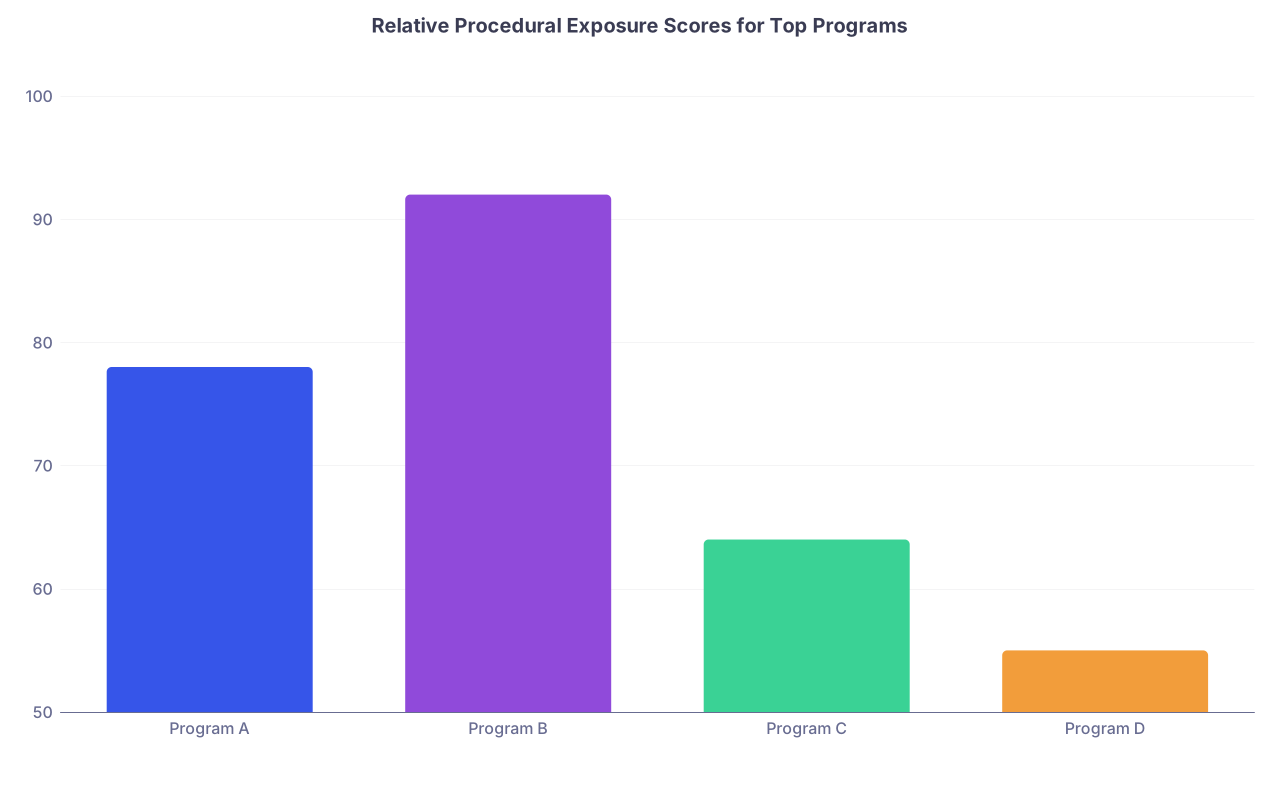
| Category | Value |
|---|---|
| Program A | 78 |
| Program B | 92 |
| Program C | 64 |
| Program D | 55 |
Now you are not arguing with yourself based on who had the better lunch or nicer residents. You see, in plain numbers, who is going to make you competent.
Step 8: Adjust for Specialty-Specific Realities
Different specialties have different traps. You need to know where programs tend to hide their weaknesses.
Internal Medicine
Common pitfalls:
- Fellow-heavy ICUs where residents mostly “write notes” while fellows do the lines and procedures
- Hospitalist-run procedure teams that cut residents out “for efficiency”
- Weak tracking of procedure numbers
You want to see:
- MICU where residents place the majority of lines and A-lines
- Wards where paracenteses and thoracenteses are explicitly resident-owned
- Formal logs and remediation when residents are behind
Emergency Medicine
Pitfalls:
- Anesthesia owning the airway – EM gets leftovers at 3 am
- Trauma services that hoard chest tubes and procedures
- Low-acuity EDs with lots of “URI and abdominal pain” but limited critical care
You want to ask:
- “Who owns airway in the ED?” If the answer is “usually anesthesia,” that is a warning.
- “What is the annual ED volume and admission rate?” Low admission rate = lower acuity.
- “Approximately how many intubations and chest tubes do most graduates log?”
Also ask about:
- Ultrasound: Are there dedicated US rotations? Are residents required to log US procedures?
General Surgery
Pitfalls:
- Too many fellows – you become retractor holder #4
- Big-name programs with great research but limited junior resident autonomy in the OR
- Weak exposure to bread-and-butter community cases
Ask:
- “As a PGY-2 and PGY-3, what are you primary on?”
- “Do fellows ever take cases that would otherwise go to chief or senior residents?”
- “How many cholecystectomies / hernia repairs / appendectomies do you graduate with?”
You care about cases as primary surgeon, not “I scrubbed 800 cases.”
Family Medicine
Pitfalls:
- OB volume that drops quietly over time
- Procedures quietly shifted to specialists (GI for scopes, IR for paracenteses)
- Continuity clinic that is 90% medication refills and no procedures
Ask:
- “How many vaginal deliveries do FM residents graduate with on average?”
- “Do FM residents do C-sections as primary or assist?”
- “What procedures do you regularly perform in continuity clinic?” (Nexplanon, IUD, skin procedures, joint injections, etc.)
OB/GYN
Pitfalls:
- Fellows taking gyn onc, MFM, or complex benign cases
- C-section numbers that look fine on paper but are mostly observing or assisting
Ask:
- “How many C-sections as primary surgeon do grads typically have?”
- “Do fellows ever take primary role in key index cases that residents need?”
- “Are there any residents who struggled to meet case minimums recently?”
Step 9: Do Not Overrate Simulation (But Do Not Ignore It Either)
Simulation is useful. It is not a replacement for actual procedures.
Good sim programs:
- Have recurring sessions (not one bootcamp in July)
- Tie simulation to assessment and feedback
- Use sim to prepare you before live procedures, not “in lieu of” them
Ask:
- “How often are procedural sims scheduled?”
- “Are simulation sessions mandatory or optional?”
- “Does sim count toward any graduation requirement or competency evaluation?”
Red flag sentence:
“We do a ton of sim, so residents are still comfortable even if they do not get many real procedures.”
Translation: Their real-world exposure is weak.
Step 10: Re-Weight Your Rank List With Procedural Reality
Once you have your scores, the discomfort starts. You will discover:
- A prestige program that is weak procedurally
- A “mid-tier” community-heavy program that will train the hell out of you
- A local favorite that is actually soft on your must-have procedures
You must decide what you value more: name brand or hard skills.
Here is how I would approach it:
- Eliminate any program where graduates struggle to reach minimums on your must-have list. That is non-negotiable.
- Among the rest, boost programs that:
- Have strong systems (logs, tracking, remediation)
- Have resident-first procedure culture
- Only after that layer in:
- Location
- Research
- Prestige
- Lifestyle
If you reverse this order, you are gambling with your training.
Step 11: Quick Visual Check With a Personal Timeline
The last sanity check: can you reasonably hit your targets over the course of residency?
Map it.
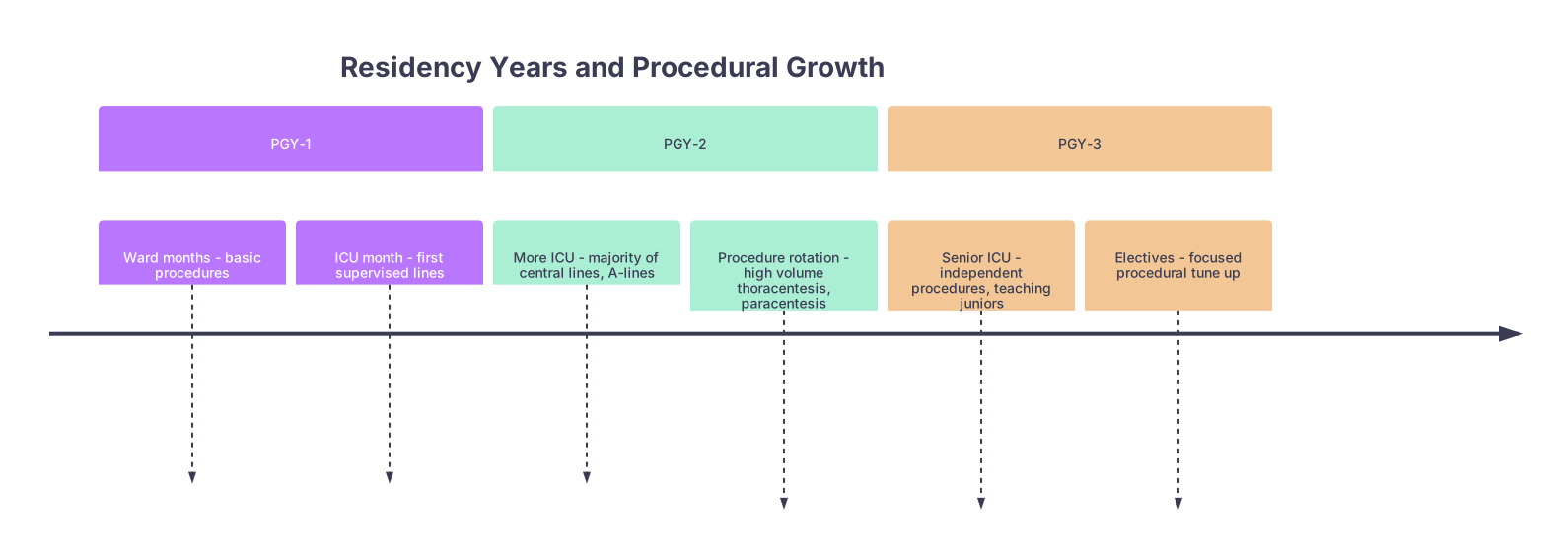
Ask residents if this is realistic at that program. If they laugh at the idea of PGY-1s getting procedures or PGY-3s being independent, recalibrate your expectations.
Step 12: After Interviews – One Final Reality Check
A few weeks after the interviews, email one or two residents you trusted most.
Keep it short:
“I really appreciated your honesty about training at [Program]. I am very procedure-focused because I plan to work in [community EM/hospitalist job/etc]. Before I finalize my rank list, can I ask one blunt question: Do you feel that graduates from your program are truly procedurally prepared for independent practice in that setting? If you had to choose a program again for procedures alone, would you pick [Program]?”
Some will give you generic reassurance. But every year there is at least one resident who replies with, “Procedures are decent but if that is your number one priority, I would strongly consider [Program X or Y], which has more ICU exposure / resident-driven procedures.”
That kind of comment is gold.
Three Things To Remember
- Vague answers are red flags. If no one can give you numbers, they are not tracking them. If they are not tracking them, residents fall through the cracks.
- Systems beat promises. Procedure logs, minimums, and resident-first culture matter far more than, “We get plenty of procedures.”
- Rank for the skills you need to practice, not the brand you want on LinkedIn. A lesser-known program that turns you into a competent, hands-on physician beats a prestige badge with weak procedural exposure every single time.