
The way most applicants use site visits and second looks is a waste of time.
You do not need more catered lunches or another tour of the call rooms. You need targeted, ruthless information to break ties on your rank list. That means turning these visits into structured data-gathering missions, not social field trips.
I am going to walk you through exactly how to do that.
Step 1: Decide If You Actually Need a Site Visit or Second Look
First fix: stop reflexively saying yes to every invitation.
Use visits only when they will change your rank list in a meaningful way. Ask yourself three questions before you commit:
Am I truly torn between:
- Two or more programs in the same tier, or
- A “dream” program vs a safer, more supportive one?
Is the tie about factors that can realistically be clarified in person (culture, workload, teaching, vibe), not things that are already in writing (salary, vacation, case numbers)?
Is this program realistically rankable in your top 3–5?
If you cannot answer “yes” to at least two of those, skip the visit. Save the money and the cognitive bandwidth.
Here is when a visit is worth it:
- You are splitting hairs between Programs #1 and #2 for your top rank.
- You felt uneasy on interview day and want to confirm if it was a fluke.
- You have a partner / family and need to see if the hospital and city actually work for them.
- You are switching specialties or have non-traditional needs (childcare, visa issues, specific niche interest) and must verify support in real life.
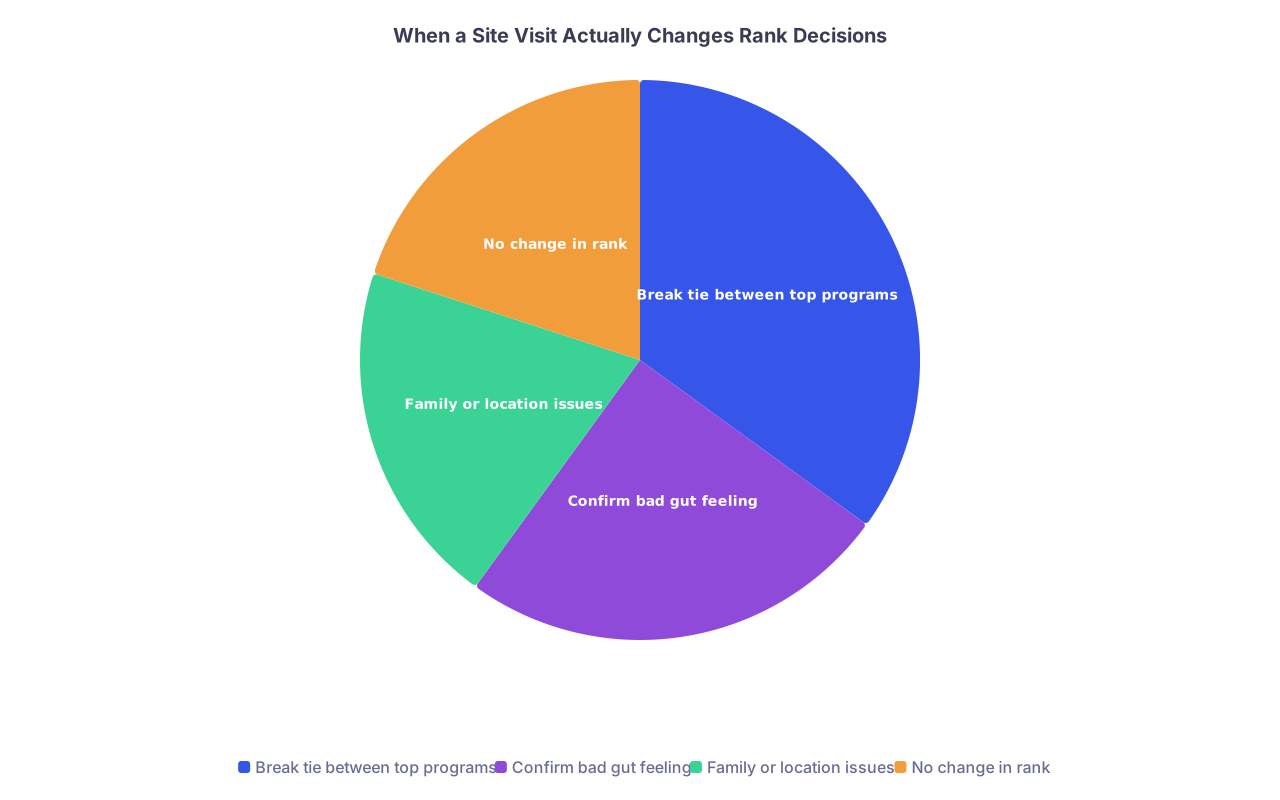
| Category | Value |
|---|---|
| Break tie between top programs | 35 |
| Confirm bad gut feeling | 25 |
| Family or location issues | 20 |
| No change in rank | 20 |
Step 2: Clarify the Tie You Are Trying to Break
If you walk in with a vague goal like “see how it feels,” you will walk out with vague impressions. Useless.
You need a specific tie-break question before you arrive.
Examples of real tie questions I have seen:
- “Program A is stronger academically. Program B feels more humane. Which environment will actually let me thrive enough to match into a competitive fellowship?”
- “Program X has absurd research output. Program Y has surgical volume through the roof. Which one will make me more competent in the OR without burning me out?”
- “I like both cities. I cannot tell which program is genuinely supportive of residents with kids vs just saying they are.”
Write down 1–3 concrete decision questions per program. Not 15. Just the true conflicts.
Then break each into observable elements:
Example: “Will I actually be supported as a new intern here?”
Look for:
- Senior-resident attitude to teaching
- How attendings speak about mistakes and near-misses
- How people talk about struggling residents (“we help them vs we weed them out”)
- Evidence of formal mentoring, check-ins, wellness that is not just lip service
This becomes your mission: collect evidence for or against your decision questions.
Step 3: Build a Simple Comparison Framework Before You Go
You are trying to compare programs under stress, fatigue, and emotional bias. So do yourself a favor: standardize what you look for.
Make a one-page grid you will fill out the moment you leave each visit.
| Domain | Program A | Program B | Program C |
|---|---|---|---|
| Resident culture | |||
| Workload honesty | |||
| Teaching quality | |||
| Autonomy vs support | |||
| Leadership trust | |||
| City / lifestyle |
Under each domain, decide what matters to you, not to your classmates or Reddit:
- Resident culture – Do they seem tired-but-bonded or tired-and-bitter? Do they talk about backing each other up or about being abandoned?
- Workload honesty – Are they clear about the worst services or are answers vague and overly positive?
- Teaching – Are there specific teaching structures (protected didactics, feedback systems) or just generic “we emphasize education” language?
- Autonomy vs support – Are you terrified you might be left alone too early, or smothered and blocked from actually learning?
- Leadership trust – Do you believe the PD and chair when they say they protect residents? Or does something feel off?
- City / lifestyle – Can you see yourself living there with your actual budget and support system?
Use a simple 1–5 scale per category, but force yourself to write one sentence of justification for each score. That is where the real data lives.
Step 4: Plan the Visit Like a Tactical Operation
Second looks and site visits are not social events. They are fact-finding missions. Treat them that way.
A. Who You Must Talk To
You want at least one honest conversation with:
- A current intern – for the rawest version of day-to-day life
- A mid-level resident (PGY-2/3) – for workload trends, how intern year changes
- A senior / chief – for leadership, autonomy, fellowship match culture
- If applicable:
- A fellow in your target subspecialty
- A faculty member in your interest area (research, global health, medical education)
- A resident with your specific life situation (kids, partner in another city, visa)
You do not need 20 conversations. You need 4–6 high-yield ones.
Reach out ahead of time:
- Email the coordinator: “Could I meet briefly with a current PGY-1 and a chief resident during my visit? I am specifically trying to understand culture and support in the first year.”
- Ask for emails of residents you clicked with on interview day and set up coffee/quick chat.
B. What You Must See in Person
Strongly prioritize:
- Resident work areas – are they actually functional, safe, and not closet-sized?
- Call rooms – will you actually sleep here? Is it a real bed, or a half-broken couch?
- ICU / ED / main floors you will live in as an intern
- Conference space during real didactics if timing allows
- The surrounding neighborhood – walk or drive a 10–15 minute radius
Skip the glossy showpieces if you are short on time. The brand-new research building tells you less than the actual resident workroom.
C. Timing The Visit
Earlier is better. But late is not useless.
- Ideal window: Post-interview, pre-rank-list finalization (January–early February).
- For NRMP, do not panic about late visits. Programs cannot legally demand them, and they cannot require proof of attendance. Use them for your own clarity, not for signaling.
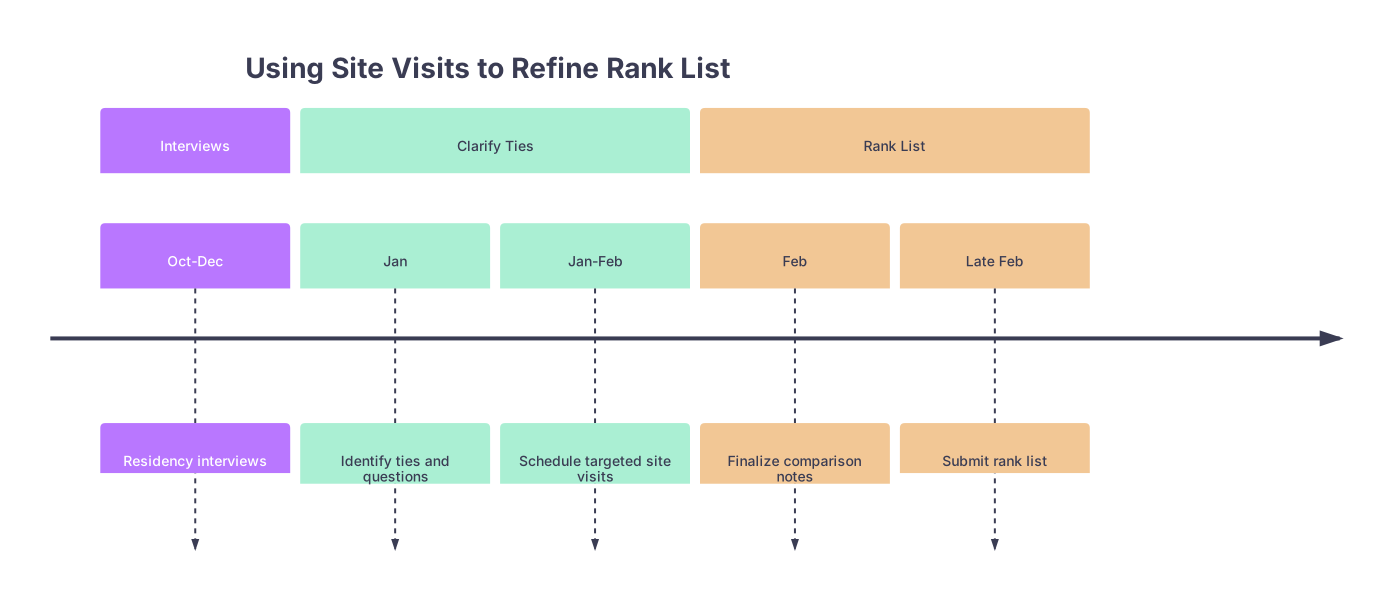
| Period | Event |
|---|---|
| Interviews - Oct-Dec | Residency interviews |
| Clarify Ties - Jan | Identify ties and questions |
| Clarify Ties - Jan-Feb | Schedule targeted site visits |
| Rank List - Feb | Finalize comparison notes |
| Rank List - Late Feb | Submit rank list |
Step 5: Ask the Questions That Actually Reveal the Truth
Most applicants ask uselessly soft questions:
- “Do you like the program?”
- “How is the work-life balance?”
- “Do you feel supported?”
Everyone has a rehearsed, semi-honest answer for those.
You need concrete, behavior-focused questions that force specifics. Use these.
For Residents
Try variations of:
- “What are the top 2 worst rotations for workload, and how do people cope with them?”
- “When a resident is in trouble (performance, mental health, personal crisis), what actually happens here? Can you give me a recent example?”
- “If you could change one thing about this program but you are pretty sure it will never change, what would it be?”
- “Looking back, has anything been significantly worse than what you expected from interview day?”
- “On the flip side, has anything been significantly better than you expected?”
- “Who has your back at 2 a.m. when things go sideways? Be honest.”
- “Have you seen anyone leave or transfer out? Why?”
- “Are there any services that people secretly dread that no one mentioned on interview day?”
For Chiefs / Senior Residents
- “Do you feel like leadership actually listens when residents bring up issues, or just nods and moves on?”
- “What has meaningfully changed in the last 2–3 years because residents pushed for it?”
- “How transparent is scheduling? Do people feel they can ask for changes without paying a price?”
- “If someone wants a competitive fellowship from here, what do they concretely need to do in PGY-1 and 2?”
For Faculty / PD (sparingly)
Use these carefully. You are not trying to interrogate them, just verify big-picture alignment.
- “What changes are you planning over the next 3–5 years for this program?”
- “Where do you think this program is especially strong, and where are you still trying to improve?”
- “How do you think alumni from this program are perceived when they enter fellowship or practice?”
Pay less attention to the exact words. Pay more attention to:
- Do answers feel canned vs real?
- Does anyone admit weaknesses and talk concretely about fixes?
- Does the story from leadership match what residents tell you? If not, side with the residents.
Step 6: Watch What People Do, Not Just What They Say
The highest yield information on a site visit is nonverbal and unscripted. If you only remember one thing from this entire piece, remember that.
Key things to observe:
How residents talk to each other in front of you
- Do they tease each other in a way that feels affectionate or biting?
- When someone is clearly stressed, do others step in to help or ignore it?
Resident–attending interactions
- Is there visible fear when attendings approach?
- Do they ask residents to present, teach, question things, or just dictate orders?
Body language when you ask sensitive questions
- If you mention wellness or burnout, do eyes dart, shoulders tense, quick subject changes happen?
- If multiple people interrupt each other to answer honestly, that is a good sign.
How they talk about other residents
- Do they describe struggling colleagues with contempt or empathy?
- Do they say “we had someone who failed boards, and we…” or “that person was just not cut out for this”?
Workroom vibe
- Does the space look used but functional, or chaotic and neglected?
- Are there schedules, sign-outs, reference materials organized or is everything a mess?
Notice these small details. Your brain will register them; your post-visit notes need to capture them.
Step 7: Debrief Immediately and Quantify Your Impressions
The biggest mistake I see: applicants fly home, go back to rotations, and two weeks later all the programs blur together. Then they rank based on name prestige and half-remembered vibes.
Do this instead:
A. The 30-Minute Post-Visit Debrief
Before you leave the hospital parking lot or your hotel room:
- Open your comparison grid for that program.
- For each domain (culture, workload honesty, etc.):
- Give a 1–5 score. Force yourself to pick; no 3.5 nonsense.
- Write a one-sentence justification with at least one concrete detail.
- Answer these 3 questions in writing:
- “Compared to what I expected coming in, this program is now: higher / same / lower on my list because…”
- “What is the single strongest argument FOR ranking this program higher?”
- “What is the single strongest argument AGAINST ranking this program higher?”
Do not overthink the scores. You are just creating structured memory.
B. Compare Programs Side-by-Side
Once you have visited the 2–4 programs you are torn between, put them in a table.
| Domain | Program A | Program B | Program C |
|---|---|---|---|
| Resident culture | 4 | 3 | 5 |
| Workload honesty | 5 | 2 | 4 |
| Teaching quality | 3 | 5 | 4 |
| Autonomy vs support | 4 | 3 | 3 |
| Leadership trust | 5 | 3 | 2 |
| City / lifestyle | 2 | 4 | 3 |
Now circle the top 2 domains that actually matter most to you. Not all of them.
For example:
- Career-focused, single, want top fellowship -> maybe “Teaching” and “Leadership trust” matter most.
- Parent with young kids -> maybe “Resident culture” and “City / lifestyle” are top.
Weight those domains mentally as you compare. That is how you break ties without overvaluing prestige or tiny differences in case volume.
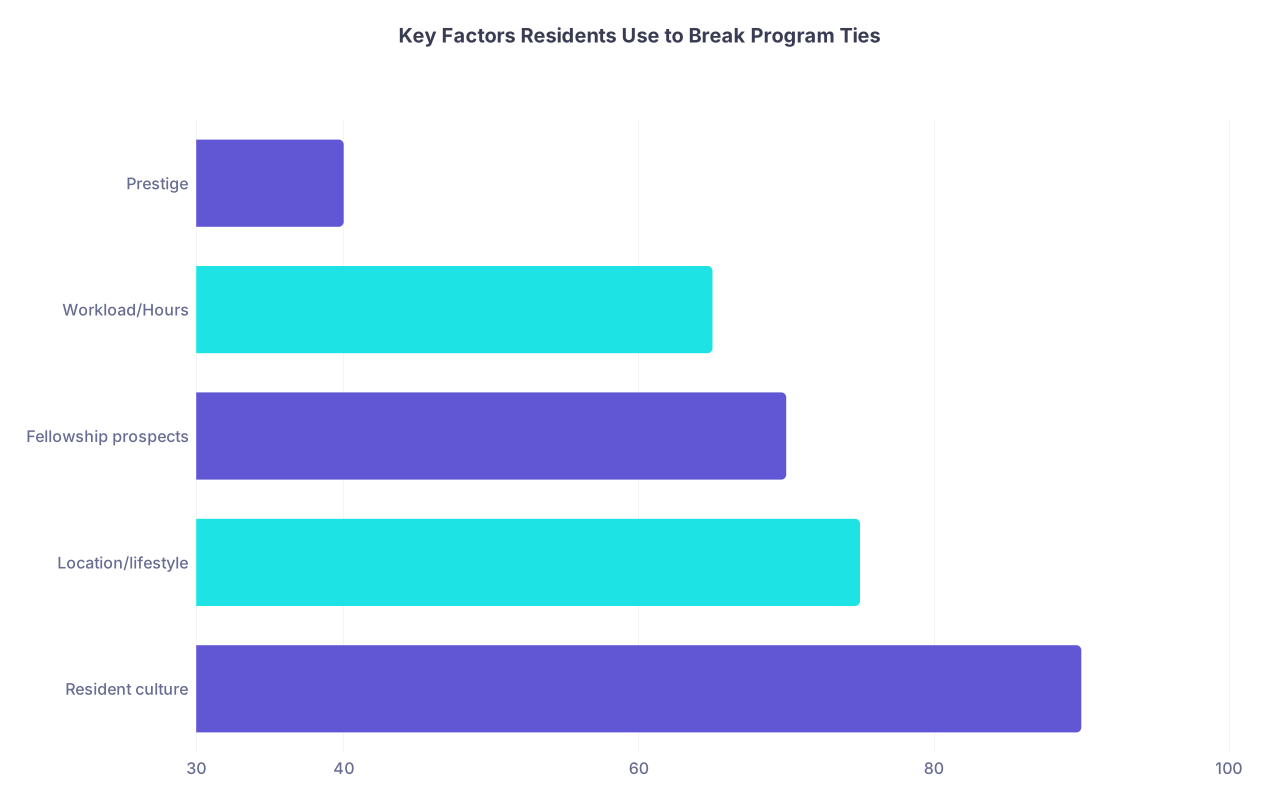
| Category | Value |
|---|---|
| Resident culture | 90 |
| Location/lifestyle | 75 |
| Fellowship prospects | 70 |
| Workload/Hours | 65 |
| Prestige | 40 |
Step 8: Know What a Second Look Cannot Do (So You Do Not Fool Yourself)
Second looks have hard limits. Understand them or you will misinterpret what you see.
They Cannot:
- Guarantee you will get ranked higher. Programs may like interest, but NRMP rules prohibit them from requiring visits or promising anything.
- Show you the absolute worst of the program. No one is going to schedule your visit for the hospital’s worst chaos day.
- Predict your unique chemistry with every attending you will ever work with. Personalities are too variable.
They Can:
- Reveal if your initial good (or bad) gut feeling was real, not a fluke.
- Show whether resident culture and leadership behavior match the marketing.
- Give you enough concrete evidence to separate two apparently “similar” programs.
Do not expect perfection. You are gathering probabilistic evidence, not certainty.
Step 9: Handle Virtual “Visits” Strategically (If You Cannot Go In Person)
Travel is expensive. Life is complicated. You may not be able to show up physically. That does not mean you are stuck.
Treat virtual second looks like compressed, focused intel sessions.
How to Make a Virtual Visit Useful
Request specific small-group or 1:1 time
- “Could I have a 20-minute Zoom with a current intern and a PGY-3 to ask a few follow-up questions?”
Ask for an unfiltered Q&A
- Push for time without faculty present if possible. Residents are more honest that way.
Use your same question list
- Do not soften questions just because it is virtual. Ask about worst rotations, struggling residents, real changes.
Ask for short video walk-throughs
- Some programs have virtual tours of resident spaces, call rooms, ED, etc. They are marketing heavy, but still give clues.
You still do the same post-visit debrief, same scoring, same written reflections. Virtual or not.
Step 10: Make the Final Call and Stop Second-Guessing
At some point, you have to stop collecting data and make the call. Draw the line here:
You have:
- Clear specific decision questions
- At least one focused interaction with residents at each tied program
- Post-visit notes for each
You have:
- Identified which 2–3 domains matter most for your life and goals
- Compared programs side-by-side on those domains, not on name alone
Now do this:
- Rank based on fit and training environment first, then adjust slightly if fellowship / prestige is a critical factor for your specialty.
- If two programs end up truly dead-even on your weighted domains, use:
- City / proximity to support system
- Financial stress (COL, moonlighting options)
- Your raw gut feeling from standing in their workroom at 3 p.m.
Then stop. There is no magic “right” rank order the universe will punish you for missing. There is only your best decision with the information you gathered deliberately.

| Step | Description |
|---|---|
| Step 1 | Identify Program Tie |
| Step 2 | Define 1-3 Decision Questions |
| Step 3 | Plan Site Visit or Virtual Second Look |
| Step 4 | Gather Resident and Faculty Intel |
| Step 5 | Score Key Domains |
| Step 6 | Rank Higher |
| Step 7 | Use Gut and Life Priorities |
| Step 8 | Clear Leader? |
FAQ (Exactly 4 Questions)
1. Does going on a second look actually improve my chances of matching at that program?
No reliable data shows that site visits significantly move you up a rank list by themselves. Programs like to see interest, but NRMP rules prohibit them from requiring or rewarding second looks explicitly. Use visits to refine your own rank list, not as a “signal” strategy. Your application, interview performance, and letters still matter far more.
2. Should I tell the program I am doing a second look because I am planning to rank them highly?
You can say you are very interested and want to understand the program better to make an informed decision. You do not need to (and should not) promise anything. Avoid awkward “You are my #1” games unless you truly mean it and are comfortable following through. Focus on asking good questions and showing genuine engagement during the visit.
3. What if residents and leadership give me completely different impressions of the program? Who do I believe?
Trust residents more. They live the schedule, the call, the culture. Leadership’s job is partly to recruit and put the program in the best light. That does not mean they are lying, but you should give more weight to consistent resident reports, especially about workload, autonomy, and how struggling residents are treated. If there is a major mismatch between the stories, that is itself a red flag.
4. I am exhausted and do not want to do any more visits. Will I ruin my career by not doing second looks?
No. Many residents never do a single second look and match perfectly well into strong programs. If you already have a clear rank order and no real ties, skip them. Use them only when you are truly torn and have specific questions that demand real-life observation. If that is not your situation, close your spreadsheet, trust your interview impressions, and finalize your list.
Open your rank list document and, next to your top 3–5 programs, write one brutal, specific question you still need answered. If you cannot write one, you do not need a site visit. If you can, schedule one focused conversation or visit this week to answer it and then lock in your decision.