
The worst PGY‑0 mistake is simple: assuming your program is “handling it.” They are not. You need a checklist and a timeline, or you will walk into orientation already behind.
Below is the timeline I use when I walk MS4s through what to confirm with their residency programs before they start. Month by month, then week by week, then down to the final days.
3–4 Months Before Start (Right After Match)
At this point you should be moving from “celebrating” to “admin mode.”
1. Confirm the basics: contract, dates, and status
Within the first 2–3 weeks after Match:
- Confirm your official start date and orientation dates (there are often multiple: GME orientation, program orientation, EMR training).
- Ask if you are starting as PGY‑1 or if any prior training is being recognized (prelim year, previous residency).
- Verify contract status:
- Has your contract been sent?
- What is the deadline to sign?
- Is anything contingent (pending USMLE Step 2 CS/US exam equivalents, visa, background check)?
If you have not seen a contract by early April, email GME and your program coordinator. Do not sit and “wait.”
2. Licensure and credentialing – get the timeline in writing
This is where people get burned. States vary. Hospitals vary. At this point you should ask:
- Do I need:
- Training license only?
- Full medical license?
- None (rare now)?
- Who initiates the application?
- You?
- GME?
- A third‑party credentialing service?
Ask your coordinator to spell this out clearly:
- Which license is required.
- Exact application link and forms.
- Deadlines to submit.
- Which documents you must supply (diploma, transcripts, USMLE/COMLEX reports, passport photo, notarized forms).
Then you block time to handle it.
| Item | Usual Deadline Before Start |
|---|---|
| Training license app | 60–120 days |
| Background check/fingerprints | 45–90 days |
| Drug screen | 30–60 days |
| Immunization upload | 60–90 days |
| Hospital privileges forms | 60–90 days |
If your program says “do it as soon as possible,” translate that internally as “within 7 days.”
3. Ask about USMLE/COMLEX requirements and deadlines
At this point you should clarify:
- Are all Steps/Levels required before start?
- Is there a deadline to pass Step 3 (e.g., by end of PGY‑1)?
- Do they pay for Step 3 or give dedicated days off?
If you still have an exam pending, you need:
- A test date on the calendar.
- Written confirmation from the program that this timing is acceptable.
I have seen residents nearly lose positions because their Step 2 CK retake drifted into July with no communication.
2–3 Months Before Start (Early Paperwork and Logistics)
Now you are in the real PGY‑0 planning window. At this point you should be hammering down logistics so you do not spend June in a panic.
4. Lock in onboarding tasks and platforms
Ask your coordinator:
- Which online platform is used:
- New Innovations?
- MedHub?
- Institution‑specific portal?
- When will your onboarding tasks appear?
- How are deadlines communicated (email, portal, both)?
You want a clear list of required items:
- HR paperwork (tax forms, direct deposit, I‑9).
- GME modules (harassment, HIPAA, safety).
- EMR training modules.
- COVID/flu or other annual modules.
Create your own mini‑spreadsheet. Because the portals are usually designed to confuse you.
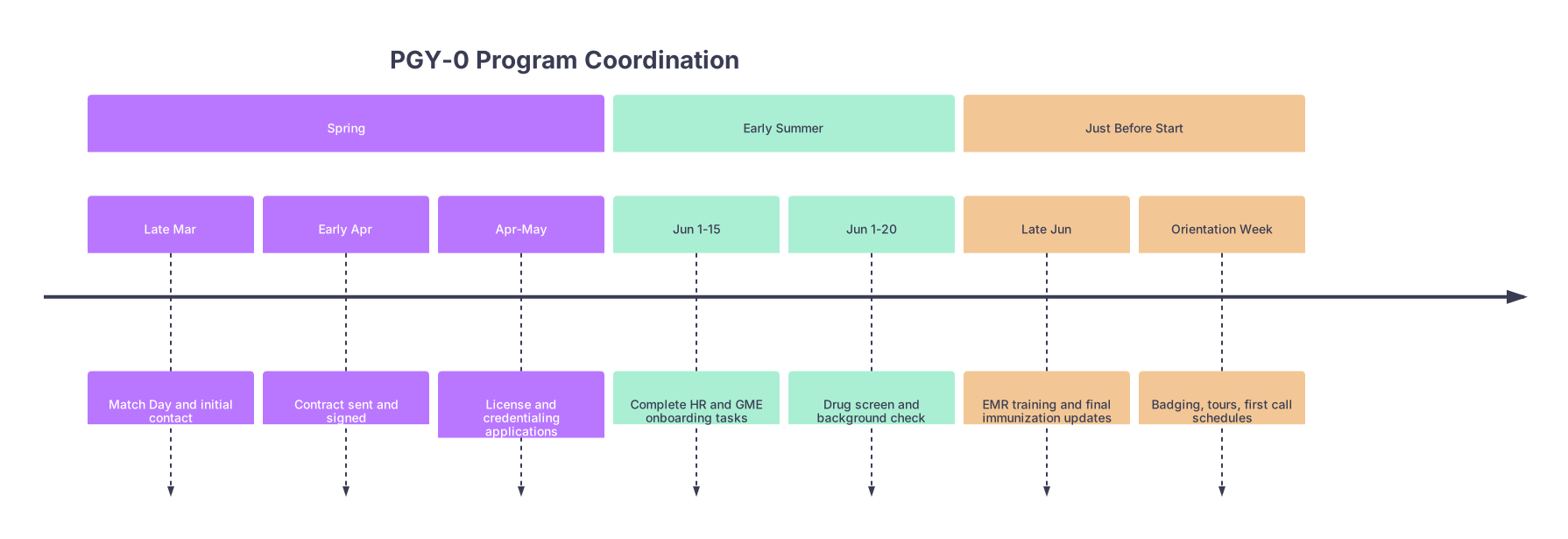
| Period | Event |
|---|---|
| Spring - Late Mar | Match Day and initial contact |
| Spring - Early Apr | Contract sent and signed |
| Spring - Apr-May | License and credentialing applications |
| Early Summer - Jun 1-15 | Complete HR and GME onboarding tasks |
| Early Summer - Jun 1-20 | Drug screen and background check |
| Just Before Start - Late Jun | EMR training and final immunization updates |
| Just Before Start - Orientation Week | Badging, tours, first call schedules |
5. Immunizations, health clearance, and occupational health
At this point you should have a copy of all your med school health records.
Ask your program:
- Which immunization documentation is required:
- MMR, Varicella, Hep B (titers vs prior vaccines).
- TB testing (PPD vs Quantiferon and how recent).
- COVID and influenza policy.
- How to submit:
- Direct upload to portal?
- Through occupational health clinic?
- Do you need an employee physical before start?
Then schedule the labs / boosters early. June immunization clinics get crowded. And yes, people have missed orientation days because they waited until the last week for a TB test.
6–8 Weeks Before Start (Housing, Money, and Schedule Reality)
At this point you should be turning your attention from paperwork to your actual life.
6. Confirm first rotation and call schedule expectations
You do not need the entire year, but you do need the start.
Email your chief or coordinator:
- What is my first rotation?
- Where am I physically located (which hospital / clinic)?
- Where do I report on Day 1 and at what time?
- Will I be on call or nights in the first month?
This informs housing, commuting, childcare, and sanity. I have watched interns sign leases 45 minutes from their “main” hospital and then discover their first three months were at an affiliate two cities away.
7. Clarify pay schedule and relocation support
You should know:
- First paycheck date.
- Pay schedule: biweekly vs monthly.
- How to set up direct deposit and by when for the first check.
- Any sign‑on bonus or moving stipend:
- Amount.
- How/when it is paid (upfront, first check, reimbursement).
- What documentation they want (lease, receipts, mileage).
Use that information to build a simple PGY‑0 cash plan:
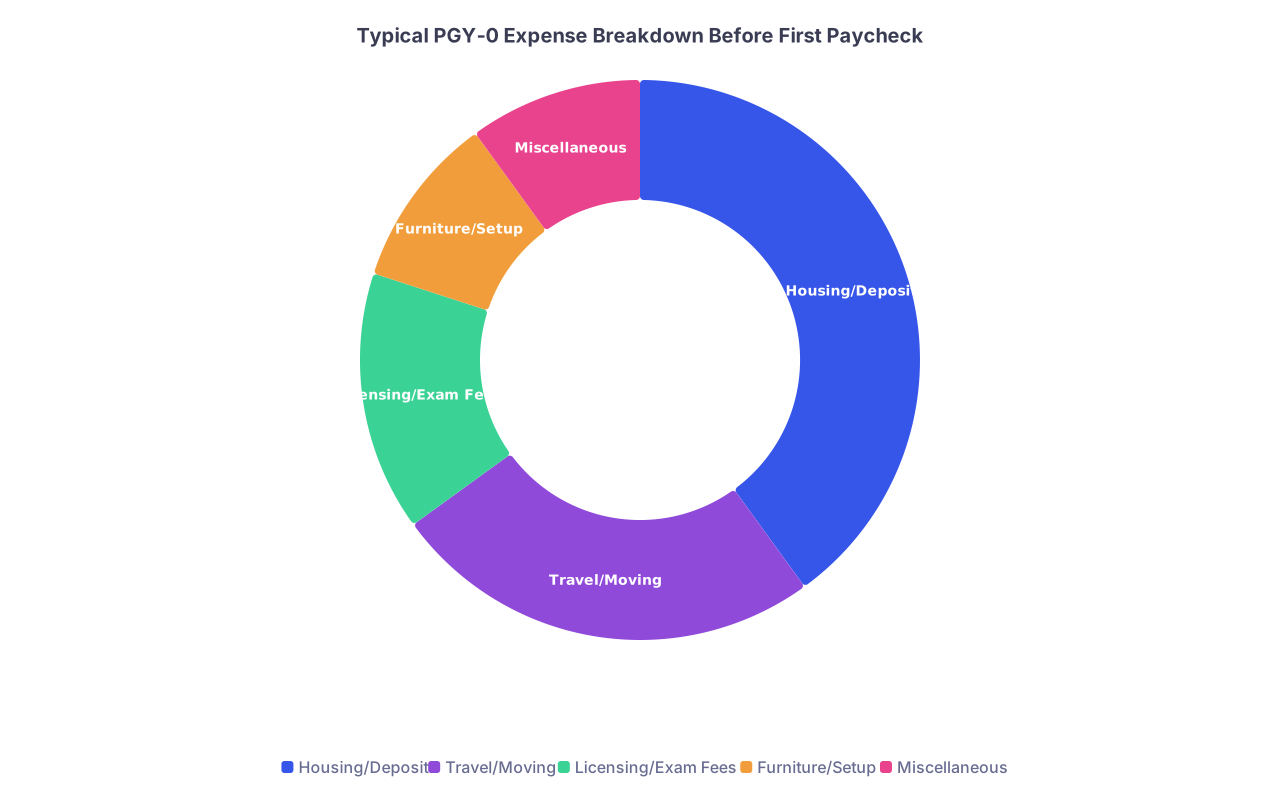
| Category | Value |
|---|---|
| Housing/Deposit | 40 |
| Travel/Moving | 25 |
| Licensing/Exam Fees | 15 |
| Furniture/Setup | 10 |
| Miscellaneous | 10 |
If your first full paycheck is mid‑July and you start in late June, you need savings or short‑term support. The program will not fix that for you.
8. Ask bluntly about educational resources and expectations
Two things to confirm now so you can plan:
- Educational support:
- Do you get funds for books, question banks, conferences?
- How is it accessed (reimbursement vs departmental purchase)?
- Are there required resources (e.g., MKSAP, NEJM Knowledge+) that the program provides?
- Exam expectations:
- In‑service exam dates.
- Required board review sessions.
- Attendance requirements for didactics (and what counts as an “excused” absence).
Knowing this upfront lets you avoid double‑buying resources and overcommitting to side projects.
3–4 Weeks Before Start (The Details That Make or Break Week 1)
You are close now. At this point you should be eliminating surprises.
9. Confirm everything related to IT, badges, and access
Ask your coordinator or IT contact:
- When will your:
- Hospital email be activated?
- EMR login be created?
- VPN access be available?
- How do you:
- Set up remote access for reading notes, results, dictations?
- Reset passwords if locked out on day 1?
For physical access:
- When and where do you get:
- ID badge.
- Parking permit or transit pass.
- Scrub access (scrub machines vs department‑managed).
I have seen new interns sitting in the lobby at 5:30 a.m. on July 1 because their badge did not work and they did not know where security was.
10. Clarify duty hours, moonlighting, and time off policies
You need to know the rules before you accidentally break them.
Ask:
- How does the program handle:
- Duty hour logging (system, frequency, compliance monitoring).
- Short call vs night float expectations for interns.
- Vacation and leave:
- How many weeks?
- How to request dates.
- Are certain blocks “protected” or “blackout” periods in PGY‑1?
- Sick days:
- Who you call first (chief vs attending vs clinic).
- Back‑up system?
- Moonlighting:
- Categorically allowed vs prohibited for PGY‑1.
- Policy if you are already licensed.
Document this in your own words. Policies are often buried in 30‑page manuals that you will not reread in July.
1–2 Weeks Before Start (Tightening the Screws)
At this point you should be past “big ticket” items. Now you are checking for gaps.
11. Run a full checklist with your coordinator
Send one clean, organized email. Something like:
“I want to confirm that everything is complete for my start date. From my end I have:
• Submitted training license application (approved on X date)
• Completed drug screen and background check
• Uploaded immunization documentation
• Finished all GME and HR modules
• Registered for EMR training on [date]Are there any additional items I still need to complete?”
That one email has saved more residents than you think. Coordinators appreciate it because you are doing their tracking work for them.
12. Confirm orientation week logistics day by day
You want a simple, written schedule of orientation week:
- Date, start time, and location each day.
- Which days are:
- GME general sessions.
- Program‑specific sessions.
- EMR training.
- BLS/ACLS/PALS renewal (if done on site).
- Dress code each day (business vs scrubs vs casual).
If you have ACLS/BLS expiring soon, clarify:
- Does the program provide renewal before or during orientation?
- Do you need to renew on your own and upload the card before start?

Final 3–5 Days Before Start (The Last Pass)
The big stuff is done. At this point you should shift to fine‑tuning how your first week will actually feel.
13. Confirm clinical reporting details with your senior or chief
Send a short message to your incoming senior resident or chief:
- Where exactly do I:
- Meet on Day 1 of my first rotation?
- Find the work room, sign‑out room, or unit?
- What time should I be there?
- Is there a pre‑rounding expectation for Day 1 of wards/ICU?
- Any specific things I should bring or review (e.g., sign‑out template, order sets)?
This prevents the classic PGY‑0 story: wandering around the hospital at 6 a.m. asking nurses where the team room is.
14. Double‑check all access and logins
At this point you should be able to:
- Log into:
- Hospital email.
- EMR (even if in training mode).
- Duty hours / evaluation system.
- Access:
- VPN from home.
- Any required learning platforms.
If you cannot log in, message IT/support before orientation day. Solving it during a group session wastes your first impression.
The Core “What to Confirm” List – Condensed
Here is the PGY‑0 pre‑start confirmation list I push every MS4 to run through:
| Domain | Critical Items to Confirm Before Start |
|---|---|
| Contract | Start date, orientation dates, PGY level, signed |
| Licensure | License type, deadlines, who initiates, status |
| Credentialing | Background check, drug screen, privileges |
| Health | Immunizations, TB, physical, upload method |
| Schedule | First rotation, first day location/time, call |
| Money | First paycheck, pay cycle, relocation support |
| Access | Email, EMR, VPN, badge, scrubs, parking |
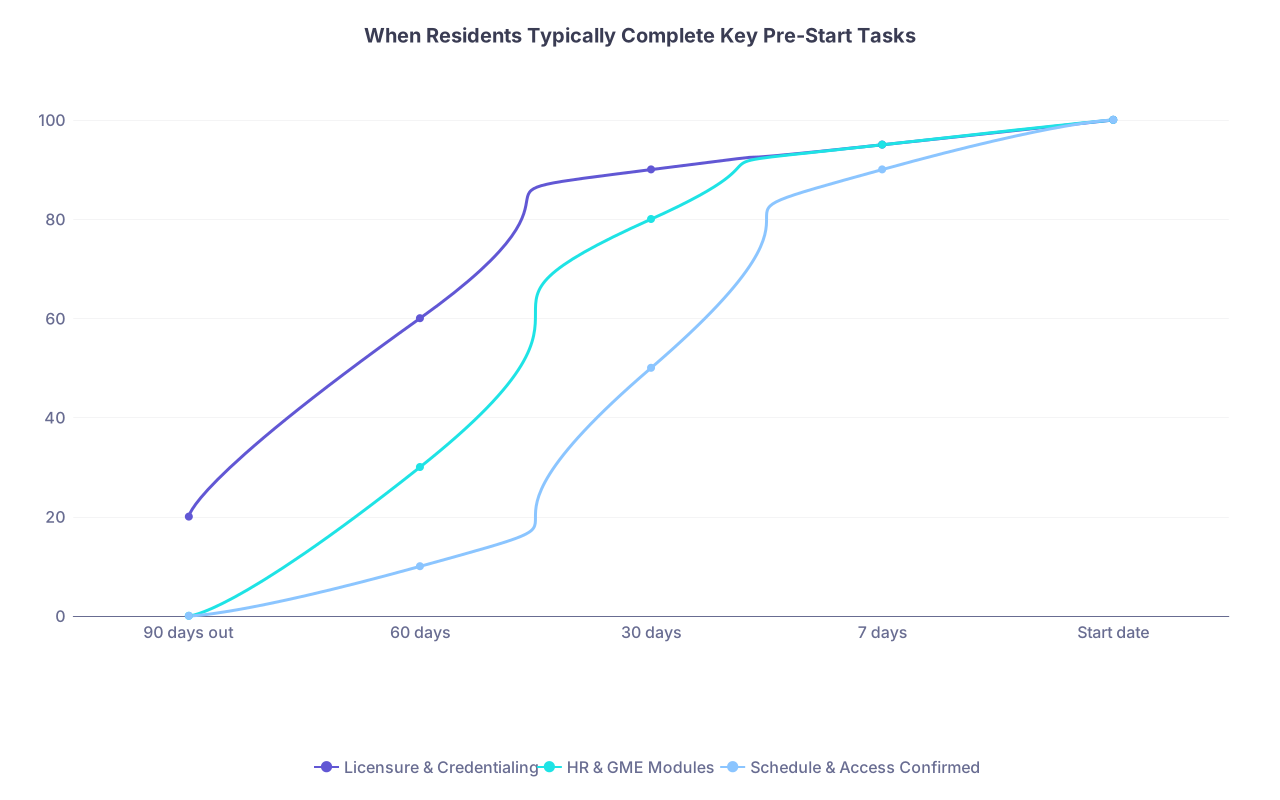
| Category | Licensure & Credentialing | HR & GME Modules | Schedule & Access Confirmed |
|---|---|---|---|
| 90 days out | 20 | 0 | 0 |
| 60 days | 60 | 30 | 10 |
| 30 days | 90 | 80 | 50 |
| 7 days | 95 | 95 | 90 |
| Start date | 100 | 100 | 100 |
You want to be on the left side of those curves, not compressing everything into the last 10 days.
Common PGY‑0 Missteps to Avoid
I have seen versions of these every year:
- Assuming your med school immunization record automatically transfers. It usually does not.
- Waiting on the license board while doing nothing. If they ask for additional documents, every week you delay is a week closer to not starting on time.
- Ignoring emails from random addresses like “noreply‑[email protected].” Those are often your actual HR tasks.
- Not asking about first paycheck timing and then panicking mid‑July.
- Showing up to day 1 without a badge, EMR access, or clear meet‑up plan because “they did not send details.” Your job is to ask, not wait.

Final 24–48 Hours Before Start
You do not need more emails at this point. You need a simple, calm plan.
At this point you should:
- Print or save:
- Orientation week schedule.
- First rotation details (location, team contact).
- Parking instructions or transit plan.
- Pack:
- Basic gear (stethoscope, penlight, small notebook).
- Photo ID, any temporary access cards.
- Re‑scan:
- Email for any last‑minute orientation changes.
- Program WhatsApp/GroupMe/Slack if your class uses one.
You are not trying to “learn all of medicine” in the last 48 hours. You are trying to start Day 1 without an avoidable administrative fire.
The Bottom Line
- PGY‑0 planning is not about studying; it is about removing administrative landmines before you hit the wards.
- The programs are busy; coordinators are human. You must own the timeline—license, health clearance, onboarding tasks, access, and schedule.
- If you leave this to chance, you will waste your first month fixing problems that a few targeted emails and a checklist could have prevented.